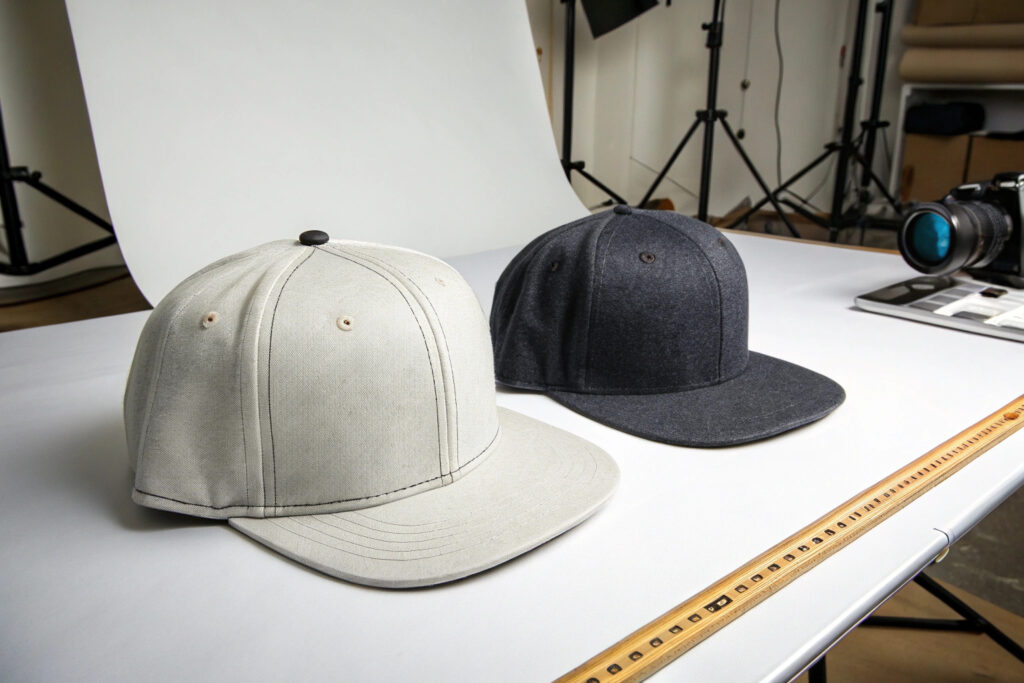
You see a snapback in a department store. It sits high. The front panel is a perfect vertical wall. The fabric is thick like a suit jacket. The stitching is invisible. You pick it up. It has weight. You see another snapback at a discount store. The crown slouches. The fabric is thin and shiny. The visor has a crease where the plastic is buckling. You can see the glue where the snap is attached. Both are "high-profile snapbacks." One costs $45. One costs $12. The difference is not the logo. The difference is the architecture, the material, and the construction.
A premium high-profile snapback cap distinguishes itself from a cheaply made one through five structural and material choices: the weight and composition of the crown fabric, the quality and thickness of the internal buckram, the construction of the visor, the finish of the snap closure, and the density and neatness of the stitching. A premium cap uses a 280 to 350 GSM wool-blend or heavy cotton twill with a high-density buckram that creates a perfectly flat, vertical front panel. A cheap cap uses a 160 to 200 GSM polyester with a low-density buckram that warps after a few wears. The premium cap has a stitch count of 10 to 12 stitches per inch. The cheap cap has 6 to 8.
At Global-Caps, I produce both. Not because I want to sell cheap caps, but because I need to show clients the difference side by side. When they hold both in their hands, they understand the price gap instantly.
What Role Does Fabric Weight Play in the Crown Structure?
You design a high-profile snapback. You pick a fabric color from a swatch card. The factory sends the sample. The crown slouches. The front panel has a ripple. You blame the buckram. The buckram is fine. The fabric is too light. A high-profile crown is a tall, flat wall. A thin fabric is a bedsheet hung on a frame. The wind blows, and it ripples. A heavy fabric is drywall. It is solid.
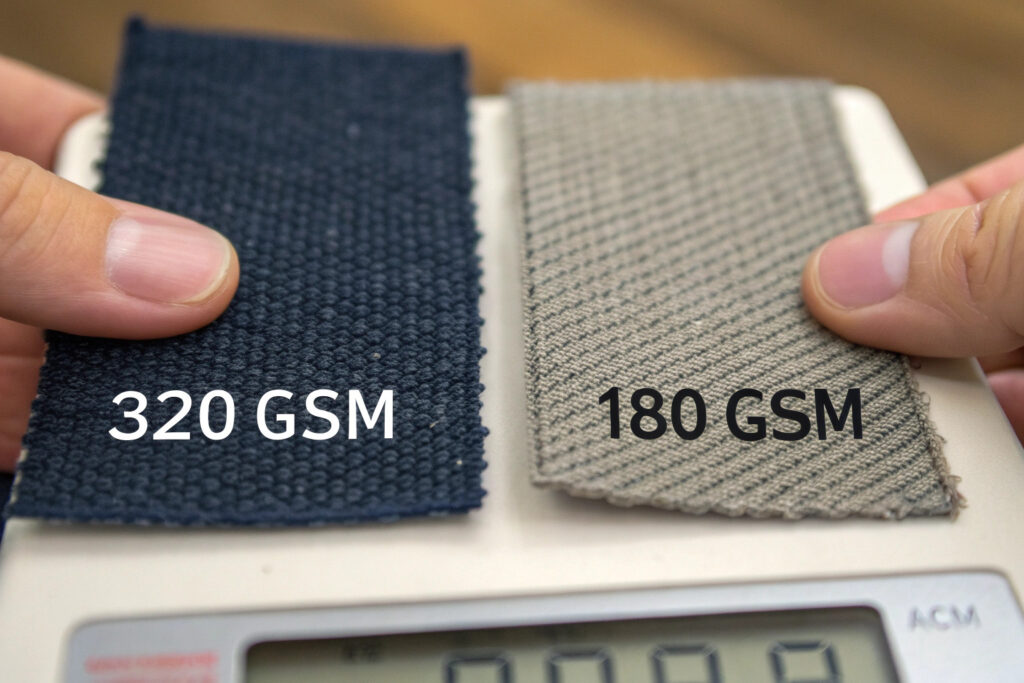
Fabric weight plays the primary role in the crown structure of a high-profile snapback. The fabric weight, measured in grams per square meter, determines the drape, the opacity, and the ability to hold the shape over the buckram frame. A fabric below 200 GSM is too light for a high-profile crown. It will ripple, wrinkle, and show the texture of the buckram through the surface. A fabric above 280 GSM provides a smooth, rigid, opaque surface.
I use 300 to 350 GSM wool-blend melton for my premium snapbacks. The weight is immediately noticeable. The cap feels substantial in the hand. It stands up empty on a table.
The fiber content and the finishing process also contribute to the perceived quality. Wool is the traditional premium choice.
Why Is Wool-Blend Melton Preferred for Premium High-Profile Crowns?
Wool-blend melton is a heavily felted, dense fabric. The wool fibers are matted together through a process of heat, moisture, and pressure. The fabric has no visible weave. It has a smooth, almost leather-like surface. It cuts cleanly without fraying. It holds a crease. It resists pilling.
The weight is the key. Melton is heavy, typically 300 to 500 GSM. The density gives the front panel a structural integrity that complements the buckram. The matte finish absorbs light rather than reflecting it. Shiny fabrics look cheap. Matte fabrics look expensive.
I source my wool-blend melton from a mill that specializes in headwear fabrics. The blend is typically 60% wool and 40% polyester. The wool provides the density and hand feel. The polyester provides durability and shape retention.
How Does the GSM of Cotton Twill Affect the Snapback's Durability?
Cotton twill is the alternative to wool for a more casual, washable premium snapback. The GSM of cotton twill directly affects how the cap holds up after repeated washing and wearing. A 200 GSM cotton twill is a standard dad hat fabric. It is too soft for a high-profile crown. A 280 to 320 GSM cotton twill is a heavy-duty fabric.
The heavier twill resists abrasion. The visor does not fray at the edge. The crown does not soften and collapse. The color holds better because the denser weave absorbs the dye more deeply.
I use a 320 GSM brushed cotton twill for my premium cotton snapbacks. It has a soft hand feel but a rigid body. It is pre-shrunk to prevent distortion.
How Does Buckram Thickness and Density Define the Front Panel Shape?
You feel a premium snapback. The front panel is a flat, hard wall. You tap it. It sounds solid. You feel a cheap snapback. The front panel has a soft give. You can push it in. The difference is not the fabric. It is the buckram inside. The buckram is the skeleton. A weak skeleton makes a weak cap.
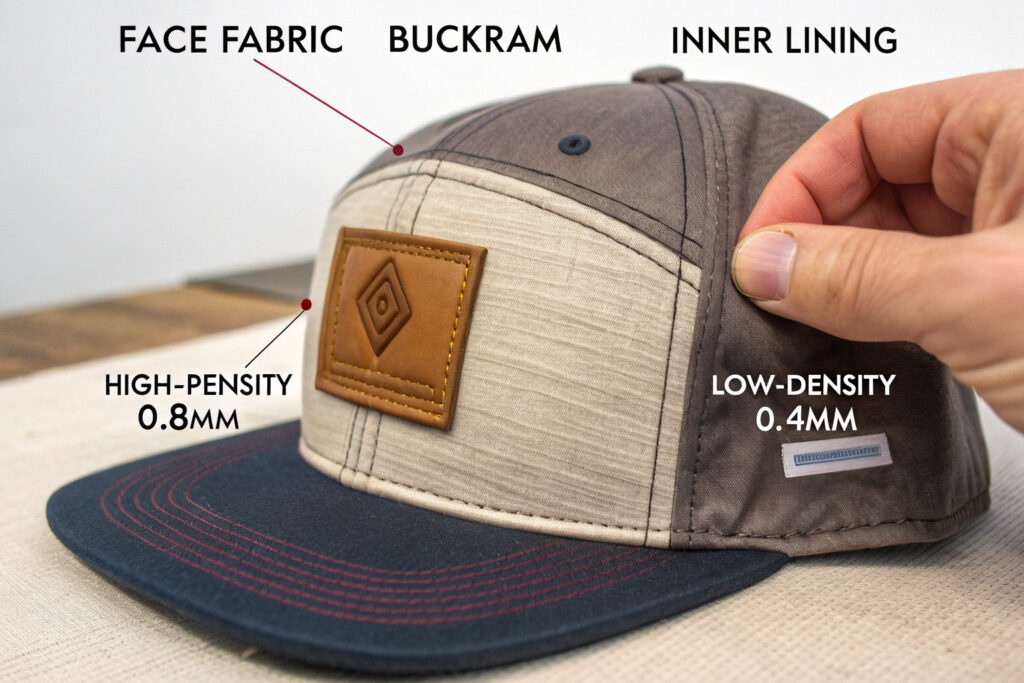
Buckram thickness and density define the front panel shape by providing the rigid substrate that the face fabric is fused onto. Premium high-profile snapbacks use a high-density woven polyester buckram with a thickness of 0.6 to 1.0 millimeters. This buckram resists bending and retains its flat vertical shape permanently. Cheap snapbacks use a low-density non-woven buckram or a thin 0.3-millimeter buckram that warps, buckles, and softens after minimal wear.
My premium buckram is imported. It is a woven polyester base saturated with a thermoset resin. It is die-cut to an exact shape. It is fused under heat and pressure. It creates a panel that is structurally rigid.
The buckram must also be washable. A cheap water-soluble stiffener will dissolve.
What Is the Difference Between Woven and Non-Woven Buckram?
Woven buckram is made from a woven cotton or polyester fabric impregnated with resin. The weave provides a directional strength. The fabric has a warp and a weft. It resists tearing along the grain. It has a high tensile strength.
Non-woven buckram is made from random fibers bonded together with a chemical binder. It has no directional strength. It tears easily along any axis. It is cheaper to produce. It is used in low-cost caps where the stiffener is only needed for the initial retail appearance.
I exclusively use woven polyester buckram for my structured caps. The non-woven buckram fails the wash test. It delaminates and clumps. The cap is ruined.
How Can You Test the Rigidity of a Snapback Crown by Hand?
There are two simple tests a buyer can perform. The pinch test: pinch the center of the front panel between your thumb and forefinger. A premium cap will resist compression. The panel will feel like a solid board. A cheap cap will collapse inward with little pressure.
The flick test: flick the front panel with your finger. A premium cap will produce a tight, high-pitched sound. A cheap cap will produce a dull, flat sound. The acoustic difference is the density of the buckram.
I teach my QC inspectors these two tests. They are subjective but reliable when calibrated against a master standard. The panel rigidity is a key quality parameter.
Why Does Stitch Count Determine the Perceived Quality of a Cap?
You look at a cap from a distance. The stitching looks fine. You look closer. The stitches are far apart. The thread is loose. The seam has gaps. You look at another cap. The stitches are packed tight like a zipper. The seam is a solid line. You cannot see the fabric between the stitches. One cap looks like a car with panel gaps. One cap looks like a precision instrument.
Stitch count determines the perceived quality of a cap because it affects the seam strength, the visual neatness, and the overall impression of craftsmanship. The industry standard for a premium cap is 10 to 12 stitches per inch. A cheap cap has 6 to 8 stitches per inch. The difference is visible to the naked eye. A high stitch count creates a smooth, continuous seam. A low stitch count creates a dotted, gapped seam.
I set my sewing machines to 11 SPI for all visible seams on premium caps. The machine speed is slightly slower. The thread consumption is slightly higher. The visual result is dramatically better.
The stitch type also matters. A flatlock seam looks different from an overlock seam. The application must be intentional.
How Does the Double-Needle Topstitching Enhance the Visor and Crown?
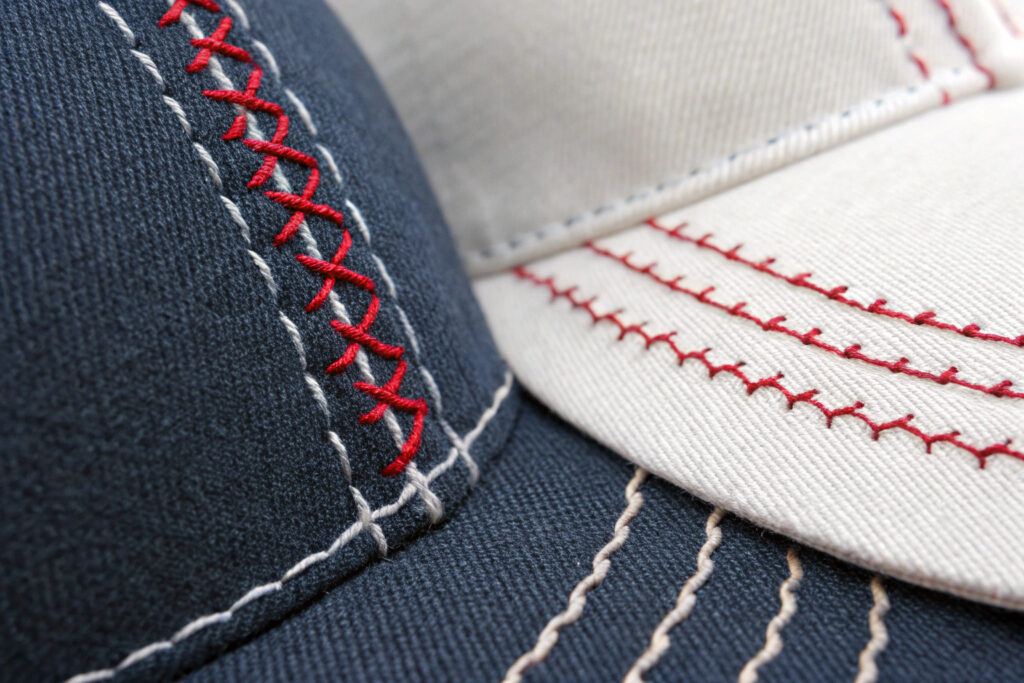
Double-needle topstitching uses two parallel needles to sew two parallel rows of stitching simultaneously. It creates a clean, symmetrical, athletic look. It reinforces the seam. It prevents the fabric edge from curling.
On a premium snapback, the visor edges are finished with double-needle topstitching. The center front seam of the crown is covered with a double-needle topstitch. The visual is clean and intentional.
I use double-needle machines for all my premium snapback finishing. The spacing between the needles is typically 6 millimeters. The stitch line is perfectly parallel. The cheap alternative is a single-needle stitch or, worse, a glued edge.
What Thread Type Prevents Breakage and Fraying on Premium Caps?
The thread on a premium cap must be strong, colorfast, and smooth. Continuous filament polyester thread is the industry choice. It has a high tensile strength. It resists abrasion. It does not lint or fray. It passes through the needle eye with low friction.
Spun polyester thread is a cheaper alternative. It is made from short staple fibers twisted together. It has a fuzzy surface. It generates lint. It breaks more frequently at high sewing speeds.
I use Madeira continuous filament polyester thread for all visible stitching on premium caps. The thread sheen is a quality signal. The color range is vast.
How Does the Snap Closure Finish Signal Quality or Cost-Cutting?
The cap body is beautiful. The fabric is heavy wool. The stitching is dense. Then you turn it around. The snap closure is a thin, shiny piece of plastic with a sharp edge. The logo is a cheap print that will scratch off in a week. The snap attachment has glue smeared around the stitches. The closure is the last thing the wearer touches. A cheap closure is the final impression. It erases all the premium work that came before it.
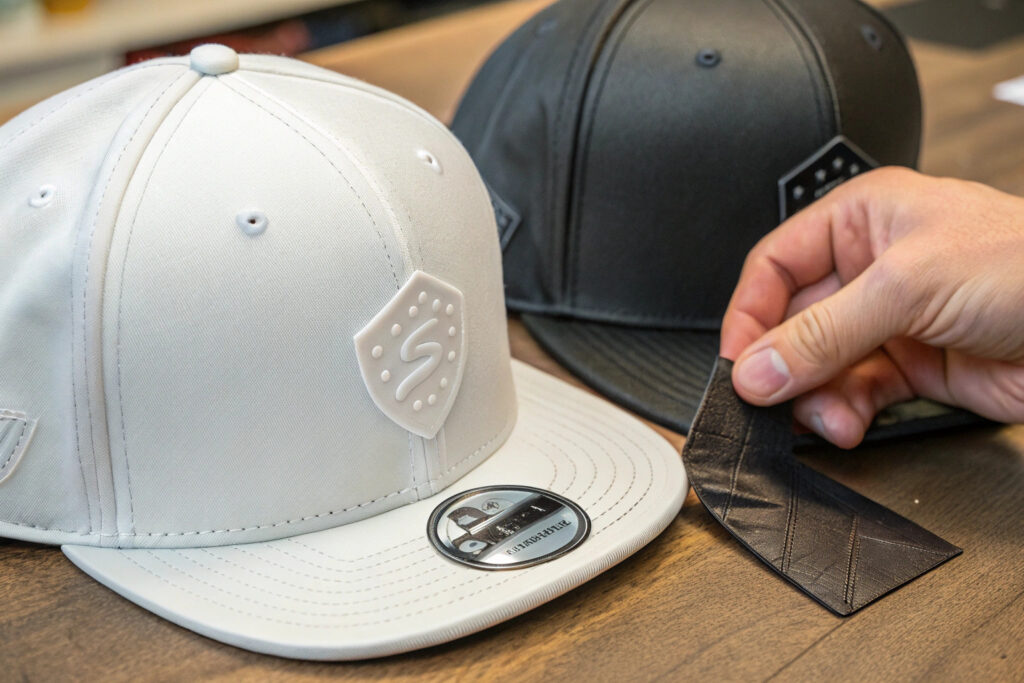
The snap closure finish signals quality or cost-cutting through the material, the molding quality, the logo application method, and the attachment cleanliness. A premium snap is made of thick, matte-finish injection-molded nylon or polypropylene. The edges are smooth and radiused. The logo is debossed or embossed into the plastic, not printed. The snap is sewn to the cap with matching thread and no visible glue. The snapping action is firm and secure.
I source my premium snaps from a specialist injection molding supplier. The mold is polished. The material is virgin nylon, not recycled regrind.
The logo on the snap is a branding opportunity. The application method determines its lifespan.
What Is the Difference Between a Debossed and a Screen-Printed Snap Logo?
A debossed logo is pressed into the hot plastic during the injection molding process. The mold cavity has the logo in reverse. The plastic flows into the logo cavity and solidifies. The logo is a permanent, tactile feature of the plastic. It cannot scratch off. It cannot fade. It has a three-dimensional quality.
A screen-printed logo is ink applied to the surface of the finished plastic snap. The ink sits on top. It can scratch off with a fingernail. It can fade with UV exposure. It can dissolve with sweat or sunscreen.
My premium snaps use a debossed logo. The mold cost is higher, but the per-unit cost is the same as printing. The visual and tactile result is far superior.
How Does the Strap Material and Weave Affect the Adjustability Feel?
The strap on a premium snapback is not an afterthought. It is a continuation of the cap's material language. A premium strap is made of the same fabric as the crown, folded and stitched cleanly. The weave is tight. The edge is folded under, not left raw.
A cheap strap is made of a thin, mismatched polyester webbing. The edge is heat-cut and slightly melted. The weave is loose. It feels abrasive against the back of the head.
I cut my premium straps from the crown fabric. The strap is a folded tube with the seam hidden inside. It feels substantial. It matches the cap perfectly.
Conclusion
A premium high-profile snapback looks premium because of substance. The fabric is a heavy 300-plus GSM wool-blend melton or cotton twill. The buckram is a thick, woven, high-density polyester with a permanent resin that survives washing. The stitching is a tight 10 to 12 stitches per inch, finished with double-needle topstitching and continuous filament thread. The snap closure is injection-molded virgin nylon with a debossed logo, sewn cleanly with no glue. The strap is cut from the crown fabric.
A cheap snapback cuts every one of these corners. The fabric is thin and shiny. The buckram is thin non-woven material that delaminates. The stitching is sparse. The snap is shiny, sharp-edged, and screen-printed with a logo that scratches off. The strap is mismatched webbing.
The difference is felt in the hand. It is seen on the shelf. It is experienced by the customer every time they wear the cap. Premium is a sum of details. Cheap is the absence of them.
At Global-Caps, I build premium high-profile snapbacks for brands that compete on quality, not price. My fabric library, my buckram stock, my sewing specifications, and my snap supplier network are all calibrated for the premium tier. I know where to spend the extra 50 cents and where the extra 50 cents is invisible to the customer.
If you need a high-profile snapback that looks and feels premium from the first touch to the hundredth wear, contact my Business Director Elaine. She can send you a premium sample alongside a standard sample so you can feel the difference yourself. Email Elaine at elaine@fumaoclothing.com. Let's build a cap that justifies its price tag.