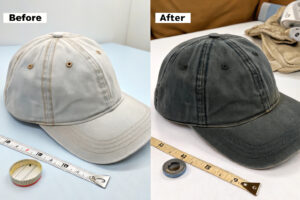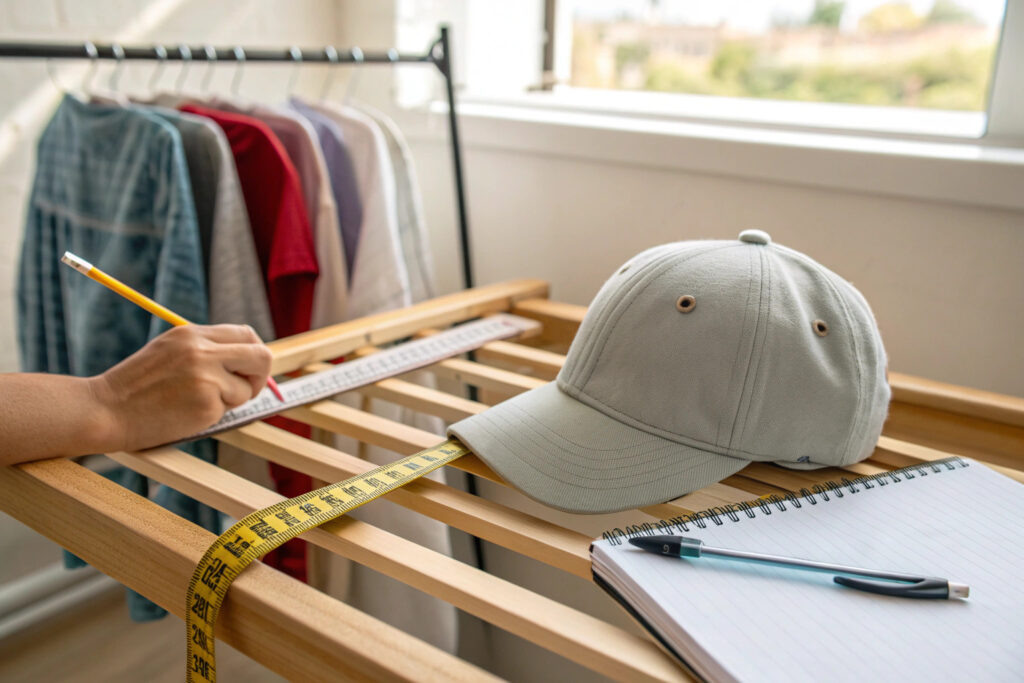
A customer from Toronto once sent me a photo of three fitted caps lined up on his kitchen table, each with a measuring tape wrapped around the inside of the sweatband. The tags said 7 1/4, but the measurements were all different. One had shrunk so much it no longer fit his head. He was not angry, just confused. He had washed them exactly as the care label instructed, and now they were smaller. He asked me a simple question: "What is happening to my hats?" I gave him an answer that changed how he bought headwear forever.
Some fitted hats measure slightly smaller than their tagged size after washing because the materials inside the hat absorb water and change shape during the wash cycle. Cotton sweatbands shrink, buckram stiffening material warps, and the hat's crown fabric can contract if it is not pre-shrunk before cutting. Even a cold water wash and air dry can cause a permanent size reduction of one to two centimeters if the hat was not properly stabilized during manufacturing.
At AceAccessory, we make fitted caps for brands across North America and Europe, and the shrinkage problem is one of the most common complaints we help our clients solve. The issue is not usually the customer's washing technique. The issue is whether the factory used pre-shrunk materials and proper construction methods. Let me explain exactly why this shrinkage happens, what materials are most at risk, and what we do in production to prevent it.
What Happens to Fitted Hat Materials During a Wash Cycle?
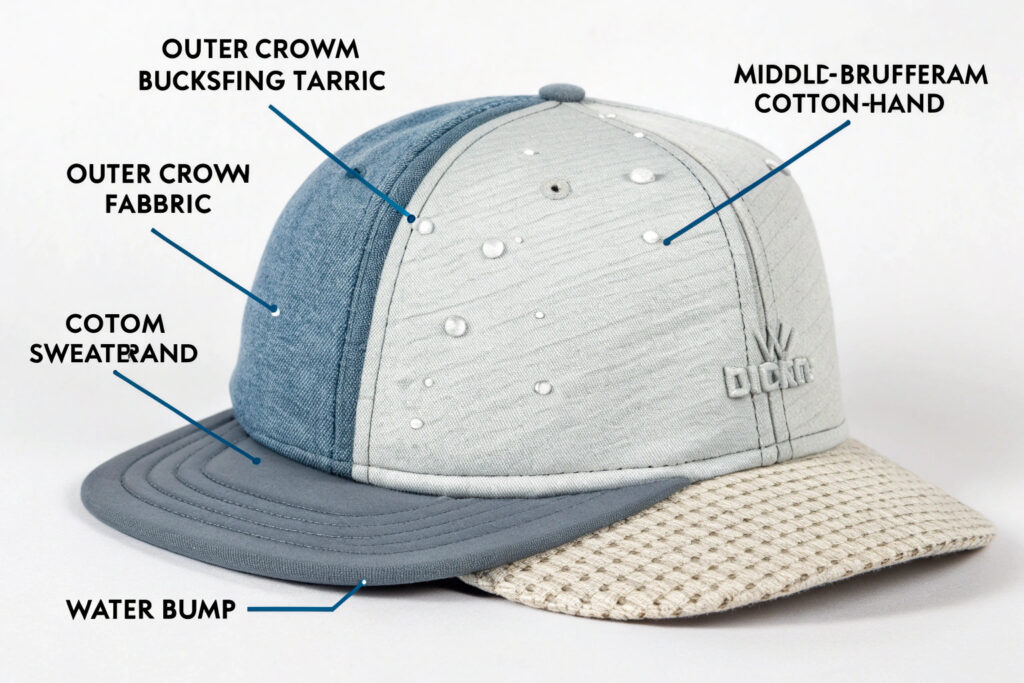
A fitted hat is not a single piece of fabric. It is a complex laminate of different materials, each with its own reaction to water and heat. When you submerge the hat in water, every layer absorbs moisture at a different rate and shrinks by a different amount. The differential shrinkage between these layers is what causes the overall size change. Understanding this layered structure is the first step to understanding the shrinkage.
Why Does the Cotton Sweatband Shrink More Than the Crown Fabric?
The cotton sweatband is the hat's inner ring, the part that touches your forehead. It is usually made from cotton twill tape or a cotton-polyester blend. Cotton is a hygroscopic fiber, meaning it absorbs water and swells. When cotton fibers absorb water, they expand in diameter. As they dry, they contract, and the yarn twists tighter. This cycle of wet expansion and dry contraction causes the cotton fabric to shrink permanently if it has not been pre-shrunk before construction. The crown fabric of a fitted hat is often a polyester or poly-cotton blend, which is far less hygroscopic. Polyester absorbs almost no water and does not shrink. The result is that the sweatband shrinks while the crown fabric stays nearly the same size. The sweatband pulls the hat's circumference inward, making the whole hat measure smaller. This is why a hat can shrink even when the outer fabric looks exactly the same.
How Does Buckram Stiffening React to Water and Heat?
Buckram is a stiff cotton or synthetic fabric that is impregnated with a starch-based or resin-based stiffening agent. It is inserted between the crown fabric and the lining to give the hat its structured shape. When buckram gets wet, the stiffening agent softens and the cotton base fabric can shrink. When the hat dries, the buckram does not return to its original dimensions. It dries slightly warped and smaller, and because it is fused to the crown fabric, it drags the crown inward as it shrinks. This is why a fitted hat can lose both its circumference and its crisp silhouette after washing. High-quality hat factories use a heat-set, water-resistant buckram that is pre-shrunk before it is cut into crown shapes. Cheap factories use a basic starch buckram that is unstable in water. The type of buckram used is invisible to the customer until the hat is washed, and then the difference becomes obvious.
How Does the Manufacturing Process Affect Post-Wash Shrinkage?
Shrinkage after washing is not just a material problem. It is a manufacturing process problem. A factory that uses non-pre-shrunk materials and rushes the construction will produce hats that shrink no matter how carefully the customer washes them. The prevention happens before the first stitch is sewn. A quality factory builds shrink resistance into the hat from the cutting table onward.
What Is Pre-Shrinking and Why Does It Matter for Fitted Hats?
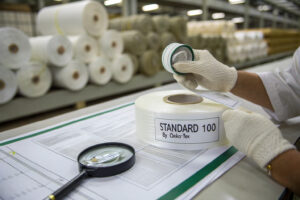
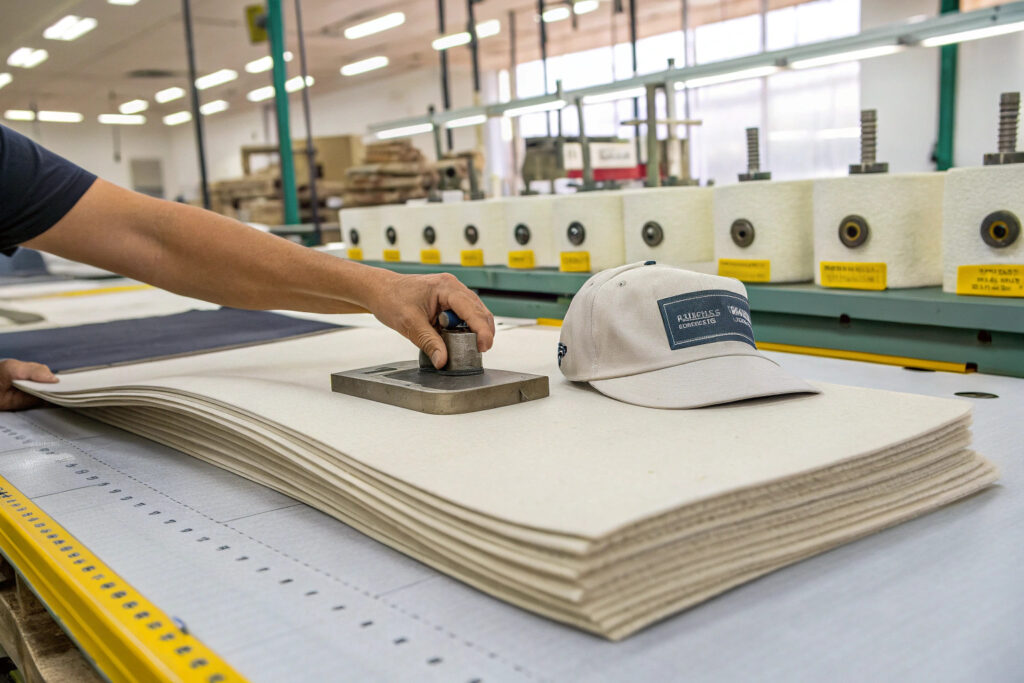
Pre-shrinking is a fabric treatment process that mimics the conditions of washing before the fabric is cut into garment pieces. For cotton sweatband tape and cotton crown fabrics, the material is washed and dried under controlled conditions, sometimes with steam and heat, to force the fibers to complete their shrinkage cycle in the raw material stage. The pre-shrunk fabric is then cut and sewn. When the finished hat is washed by the customer, the fabric has already exhausted most of its shrinkage potential, so the size change is minimal. A factory that skips pre-shrinking is essentially shipping a hat that has a hidden time bomb inside. The first wash triggers the shrinkage that should have happened in the factory. We require pre-shrunk certification from our fabric suppliers for every fitted hat order, and we perform our own shrinkage tests on incoming fabric rolls before cutting. The test is simple. We cut a measured square of fabric, wash it in hot water, dry it, and measure it again. If the shrinkage exceeds 3 percent, the fabric is rejected and returned to the supplier.
How Does the Sewing Tension and Blocking Process Stabilize the Hat Size?
Even with pre-shrunk materials, the sewing and blocking process affects how the hat behaves in water. If the sweatband is sewn under high tension, the stitches act like tiny springs that pull the fabric together when the hat gets wet. The thread itself can also shrink. We use a low-tension sewing setting for sweatband attachment and a high-quality polyester thread that does not shrink in water. After sewing, the hat is placed on a heated blocking machine that uses steam and pressure to set the crown shape and the circumference to the exact size specification. This blocking process also helps to settle the pre-shrunk materials into their final, stable configuration. A hat that is blocked correctly and then washed will retain its size far better than a hat that is sewn together and shipped without proper blocking. The blocking step is where the hat's tagged size is locked in.
What Can a Factory Do to Guarantee Minimal Shrinkage?
A factory that takes the shrinkage problem seriously does not just hope for the best. It builds shrinkage testing into its standard quality control protocol. Every fitted hat order should be tested for post-wash dimensional stability before the bulk shipment leaves the factory. This testing provides documented proof that the hats will perform as expected when the customer washes them at home.
What Is the Standard Shrinkage Test for Fitted Hats?
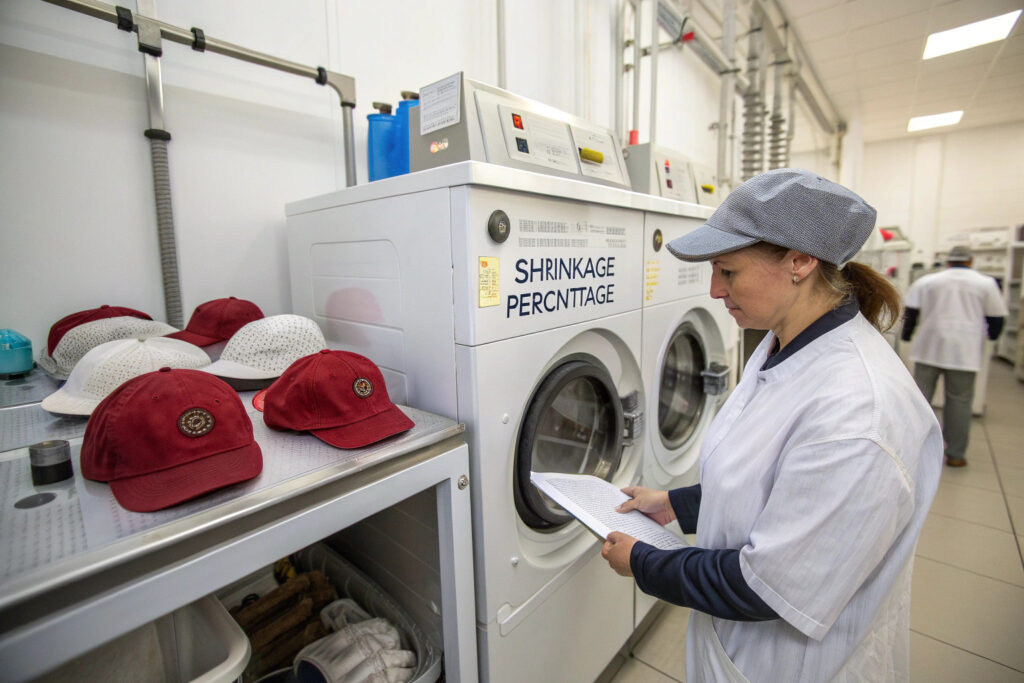
We perform a wash test on a random sample of finished hats from every fitted hat production batch. The standard test protocol uses a domestic-style washing machine set to a cold water, gentle cycle, followed by air drying on a flat surface. This simulates the most careful washing method a customer is likely to use. After the hat is completely dry, we measure the inside circumference of the sweatband and compare it to the pre-wash measurement. We also measure the crown height and the brim curve. The acceptance criterion is a total shrinkage of no more than 3 percent. For a 7 1/4 hat, which measures approximately 58.7 centimeters in circumference, a 3 percent shrinkage equals about 1.8 centimeters, or roughly one hat size. If the test sample exceeds this limit, we investigate the material batch and the construction process before shipping. The test report, including the pre-wash and post-wash measurements, is available to the buyer as part of the pre-shipment inspection package.
How Do You Educate Buyers on Realistic Care Expectations?
Even the best-made hat will not survive aggressive washing unscathed. Hot water, machine drying, and harsh detergents will break down the fibers and the stiffening materials over time. We include a care instruction card with every fitted hat order, and we recommend that brands print these instructions on the hangtag as well. The instructions are simple: hand wash in cold water with mild detergent, reshape the hat to its original form, and air dry on a flat surface away from direct heat and sunlight. Never put a fitted hat in a hot dryer. The tumbling action and heat will distort the brim and shrink the sweatband. A customer who follows these instructions should see no noticeable size change in a properly made hat. A customer who ignores them and uses hot water and a hot dryer will see shrinkage no matter what the factory did.
How Can You Verify That a Factory Produces Shrink-Resistant Fitted Hats?
If you are sourcing fitted hats and you want to avoid the shrinkage problem entirely, you need to ask the right questions before you place the order. The answers will tell you whether the factory treats shrinkage as a serious quality issue or as an afterthought. A factory that cannot answer these questions clearly is not one you should trust with your brand's reputation.
What Specific Questions Should You Ask About Materials and Testing?
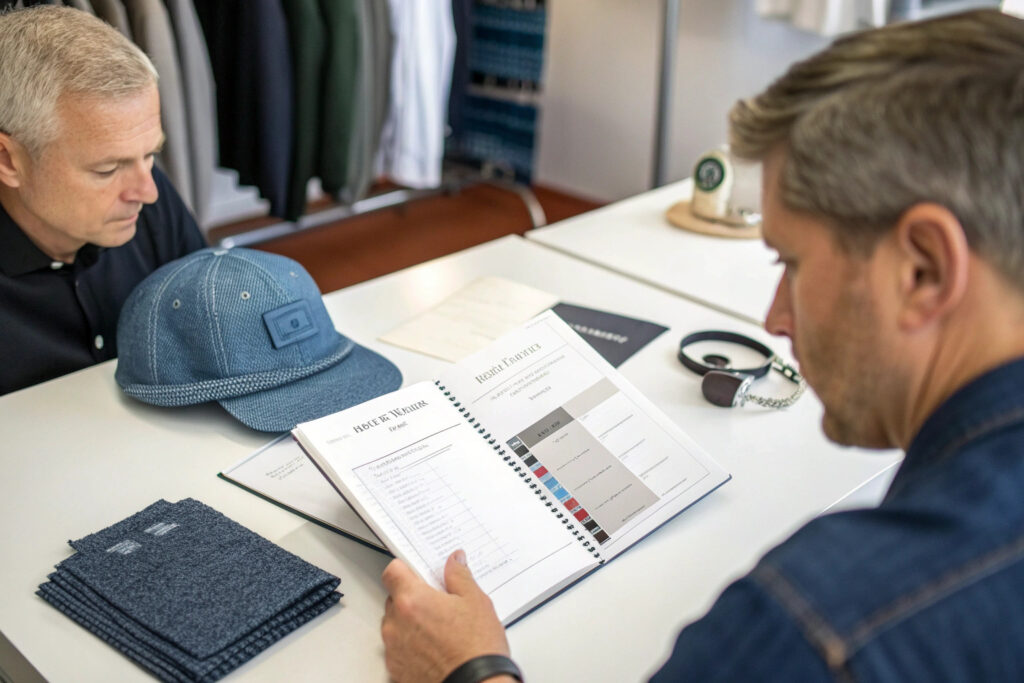
Ask these four questions directly. First, do you use pre-shrunk cotton for the sweatband and pre-shrunk fabric for the crown? Ask for the supplier's pre-shrunk certificate. Second, what type of buckram do you use? The answer should be a water-resistant, heat-set buckram, not a basic starch buckram. Third, do you perform a wash test on finished hats before shipping? Ask to see a sample test report with actual measurements. Fourth, what is your acceptable shrinkage tolerance? The answer should be 3 percent or less. A factory that gives vague answers or says "this has never been a problem" is not managing the issue. A factory that can produce certificates, test reports, and clear tolerances is one that has built shrinkage resistance into its process.
How Can a Pre-Production Sample Help You Evaluate Shrink Resistance?
Before committing to a bulk order, order a pre-production sample and do your own wash test. Put the sample through a cold water hand wash and air dry, exactly as the care label instructs. Measure the inside circumference before and after. If the sample shrinks more than 3 percent, ask the factory to investigate and adjust their materials or process before production. If the sample passes, you have a baseline for what you can expect from the bulk order. This simple test takes a few days and costs nothing, and it gives you direct, hands-on evidence of the factory's quality. I always encourage our new clients to do this. It builds confidence in the product and in the partnership.
Conclusion
Some fitted hats measure slightly smaller than their tagged size after washing because the materials inside the hat respond to water and heat in different ways. The cotton sweatband absorbs water and contracts. The buckram stiffening layer softens and warps. The crown fabric may shrink if it was not pre-shrunk before cutting. These material behaviors are magnified by poor manufacturing practices, such as skipping pre-shrinking, using cheap starch buckram, or sewing under excessive tension. A properly made fitted hat, built with pre-shrunk materials and water-resistant buckram, and tested in a washing machine before shipping, will retain its size through normal washing.
The responsibility for shrink resistance sits with the factory, not the customer. A customer who follows a reasonable care label should not have to worry about their hat changing size. A factory that understands this builds the prevention into the production process and proves it with documented wash tests.
At AceAccessory, we treat fitted hat shrinkage as a preventable defect, not an inevitable consequence of washing. Our materials are pre-shrunk and certified, our buckram is water-resistant and heat-set, and our finished hats are wash-tested before they ship. We provide our buyers with the test reports and the care instructions they need to set realistic expectations with their customers.
If you have experienced shrinkage complaints with your current fitted hat supplier, or if you want to source hats that hold their size, please reach out to us. We can share our material specifications and a sample wash test report for your review.
To discuss your fitted hat production requirements, please contact our Business Director, Elaine. You can reach her directly at elaine@fumaoclothing.com. Let us make hats that stay true to their size.