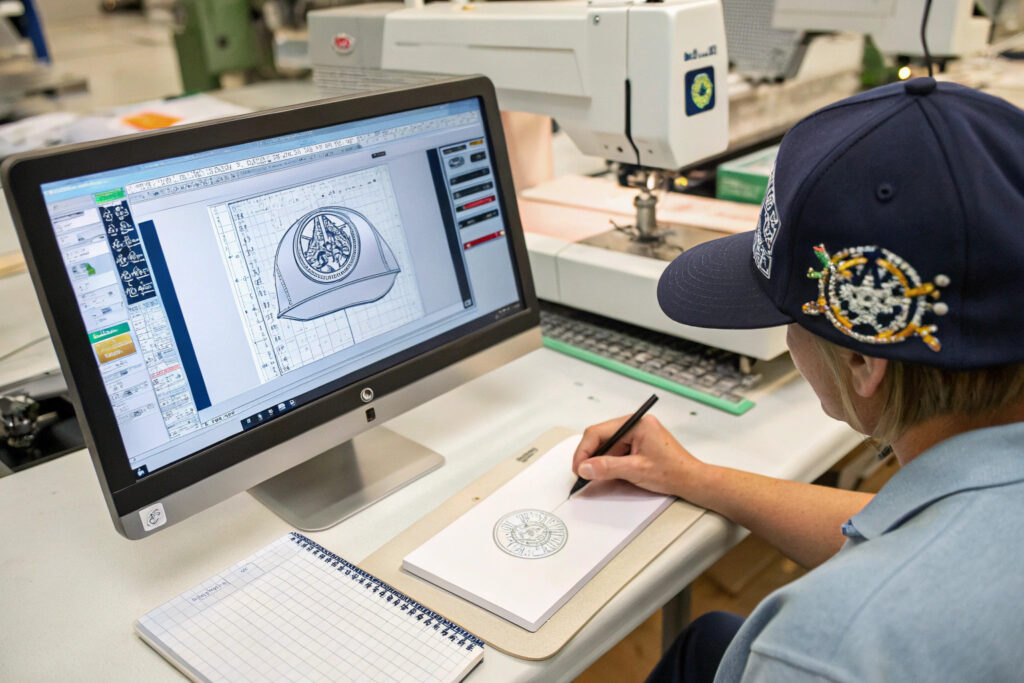
You request a custom sample with your logo. The factory quotes you $95. You ask for a breakdown. They say $45 for the sample cap and $50 for the digitizing. You push back. "Why am I paying extra? The sample should include the logo." The factory agrees to waive the digitizing fee to win your order. The sample arrives. The embroidery is a disaster. The logo is puckered. The small text is illegible. The outline is jagged. You complain. The factory says, "We used the auto-trace function. Proper digitizing would have cost $50." The free digitizing was a free disaster. The digitizing fee is not a surcharge. It is the cost of a skilled technician spending an hour mapping your logo so the embroidery machine can sew it correctly.
The digitizing fee is charged separately from the sample fee because digitizing is a distinct, skilled service that produces a digital asset—the embroidery file—which you own and can reuse on all future orders. The sample fee covers the physical cap: the fabric, the cutting, the sewing, the finishing, and the labor to assemble one prototype. The digitizing fee covers the intellectual and technical work of converting your logo artwork into a stitch file that the embroidery machine can read. The digitizer manually maps every stitch type, stitch direction, underlay stitch, pull compensation, and density. This work takes 30 to 90 minutes of specialized labor. The resulting file is a reusable digital asset. The sample is a physical prototype. They are separate deliverables with separate costs.
At Global-Caps, I quote the digitizing fee separately from the sample fee. The client pays the digitizing fee once. The file belongs to the client. I archive it. I use it on all future orders with no additional digitizing charge. The separation of the fees reflects the separation of the deliverables: the physical sample and the digital embroidery file.
What Is Embroidery Digitizing and Why Is It a Skilled Manual Process?
You think digitizing is automatic. You send a JPEG. The factory presses a button. The software converts it to stitches. The machine sews it. You are thinking of auto-trace. Auto-trace is what a factory uses when they do not charge a digitizing fee. Auto-trace maps the outline of your logo and fills it with a default stitch. Auto-trace does not understand fabric. It does not understand the curved surface of a cap crown. It does not know that small text needs a different stitch type than a large filled area. It does not compensate for the pull of the thread on the fabric. Auto-trace produces an embroidery file in 30 seconds. A skilled digitizer produces an embroidery file in 45 minutes. The results are not comparable.
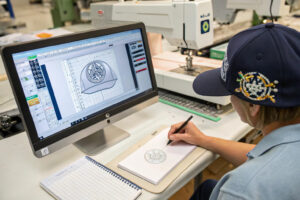
Embroidery digitizing is the manual process of creating a stitch file that instructs the embroidery machine where to place every needle penetration. The digitizer imports the logo artwork, then manually draws the stitch paths, assigns stitch types—satin for borders and small text, fill for large solid areas—sets the stitch direction to control light reflection and prevent puckering, adds underlay stitches to stabilize the fabric, adjusts pull compensation to account for fabric contraction, and sets the stitch density. The process requires knowledge of fabric behavior, thread physics, and machine mechanics. It is a craft, not a conversion.
My head digitizer has 15 years of cap-specific experience. He hand-maps every logo. The auto-trace button is disabled on his software.
The stitch types, directions, and densities are all manual decisions that affect the final appearance and durability.
How Do Stitch Type, Direction, and Density Affect the Final Embroidery Quality?
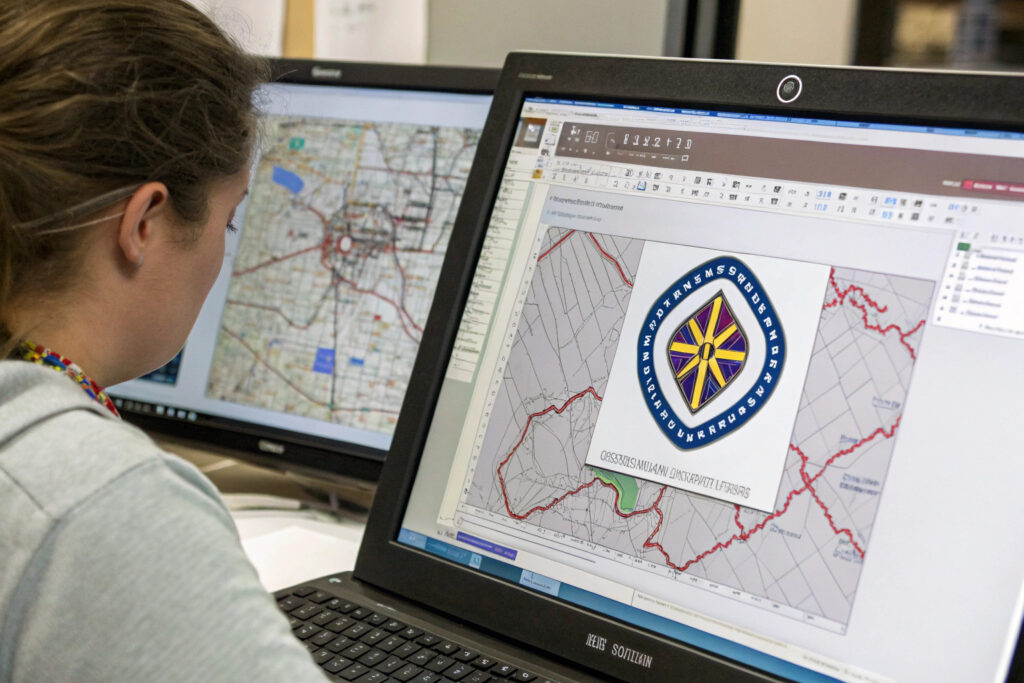
Stitch type determines the visual texture. A satin stitch is a series of parallel stitches that create a smooth, shiny surface. It is used for borders, lettering, and thin elements. A fill stitch, also called a tatami stitch, is a series of stitches that fill a large area with a textured, matte surface. Choosing the wrong stitch type for an element ruins the look.
Stitch direction controls how light reflects off the thread. All stitches in an element should run in the same direction to create a uniform sheen. Changing direction mid-element creates a patchy, unprofessional appearance. The stitch direction also affects how the thread pulls on the fabric. Stitches should run outward from the center of the cap crown to prevent the fabric from buckling.
Stitch density controls the coverage and the stiffness. A density of 0.4 millimeters between stitches is standard for satin stitches on caps. Too dense, and the embroidery becomes stiff and causes puckering. Too loose, and the fabric shows through.
My digitizing standards specify the stitch type, direction, and density for every element of the logo. The settings are documented in the file notes.
Why Can't Auto-Trace Software Replace a Human Digitizer for Cap Embroidery?
Auto-trace software detects the edges of shapes in a digital image and applies a default satin stitch. The software does not understand that a cap crown is a curved, tensioned surface. It does not add underlay stitches to stabilize the fabric. It does not adjust pull compensation. It does not optimize stitch direction for the cap curvature. It does not recognize that small text needs a reduced stitch density to avoid thread buildup.
The result of auto-trace on a cap is a logo that looks acceptable on the screen and terrible when sewn. The stitches sink into the fabric. The small text becomes a solid blob of thread. The outline is jagged. The fabric puckers around the design. The human digitizer prevents these failures through manual adjustments based on experience.
My digitizing workflow requires a human sew-out review on every new file. Auto-trace files are not used in production.
What Costs Are Included in a Sample Fee vs a Digitizing Fee?
You think the digitizing is part of the sample. The sample has a logo. The logo required digitizing. Therefore, the digitizing is part of the sample cost. Your logic is understandable. It is also wrong. The sample is a physical object produced by the sewing line. The digitizing is a digital asset produced by the digitizing department. They are made by different people, using different equipment, in different parts of the factory. The sample maker cannot digitize. The digitizer cannot sew. The costs are separate because the work is separate.
The sample fee covers the physical construction of one prototype cap: the fabric and material costs, the cutting of the pattern pieces, the sewing of the cap by the sample room, the finishing and trimming, the QC inspection, and the administrative cost of managing the sample order. The digitizing fee covers the creation of the embroidery file: the digitizer's labor time, the use of specialized digitizing software, the test sew-out to verify the file, and the archiving of the approved file. The sample fee produces a cap. The digitizing fee produces a file. You can order a sample without embroidery. You cannot embroider a sample without a digitized file.
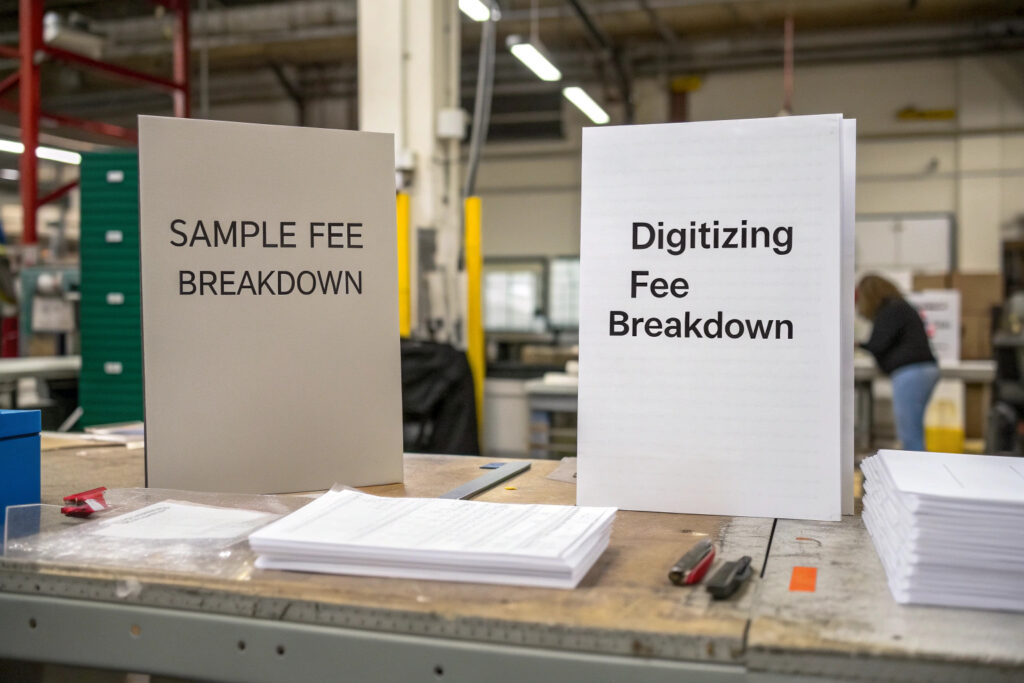
My sample and digitizing quotes are always itemized. The client sees the separate line items. The transparency builds trust.
The digitizing fee is a one-time charge for a reusable asset. The sample fee is a per-sample charge.
Why Is the Digitizing Fee a One-Time Charge While Samples May Need Multiple Rounds?
The digitizing fee is a one-time charge because the digitizing work is done once. The digitizer maps the logo. The file is test-sewn and approved. The approved file is the final digital asset. It can be used on 1 cap or 100,000 caps. The digitizing work does not need to be repeated for a reorder or a larger quantity.
Samples may require multiple rounds because the physical cap construction may need adjustments. The first sample may have the wrong fabric. The second sample may have the wrong visor curve. The third sample may have the wrong label placement. Each physical sample incurs a new set of material and labor costs. The digitizing file, once approved, is applied to each new sample with no additional digitizing charge.
My reorder policy applies the approved digitizing file at no additional charge. The client pays the digitizing fee once.
Does the Digitizing Fee Include the Test Sew-Out and File Adjustments?
Yes, a professional digitizing fee includes the test sew-out and the adjustments that follow. The digitizer creates the initial file. The file is loaded onto an embroidery machine. A test cap is sewn. The digitizer inspects the sew-out. Adjustments are made: the pull compensation is tweaked, the small text density is reduced, the underlay is modified. A second sew-out is performed. The process repeats until the embroidery matches the quality standard. The test sew-outs are part of the digitizing service. The fee covers the iterative refinement, not just the initial file creation.
A factory that charges separately for each test sew-out is unbundling the service. The digitizing fee should be all-inclusive for the file development.
My digitizing service includes up to two rounds of test sew-outs and adjustments. The client approves the final sew-out.
How Does the Digitizing Fee Benefit You on Future Bulk Reorders?
You pay the $50 digitizing fee on your first order. You feel the cost. Six months later, you reorder the same cap. The factory does not charge the digitizing fee again. The file is in their archive. They load it onto the machine. The embroidery is identical to the first order. The $50 you paid once is saving you $50 on every reorder. The digitizing fee is an investment in a reusable asset. The asset pays for itself on the second order.
The digitizing fee benefits you on future bulk reorders by giving you ownership of a proven, approved embroidery file. The file is archived by the factory with your name and style number. When you reorder, the file is retrieved, loaded onto the embroidery machine, and sewn. There is no additional digitizing charge. The embroidery on the reorder is identical to the embroidery on the first order because the same approved file is used. The quality is consistent. The cost is eliminated.
My file archiving system stores every approved digitizing file by client name, style number, and approval date. The file is backed up to a cloud server.
File ownership is a legal and practical question. You should confirm who owns the file.
Who Owns the Embroidery File After You Pay the Digitizing Fee?
You own the embroidery file. The digitizing fee is a work-for-hire arrangement. You paid for the digitizer's labor and expertise to create a file of your logo. The resulting file is your intellectual property. The factory is the custodian of the file, not the owner.
If you switch factories, you have the right to request a copy of your embroidery file in a standard format such as .DST or .EMB. The factory should provide the file promptly. A factory that refuses to release your file is holding your intellectual property hostage.
My file ownership policy states that the client owns the file. I provide the file upon request in .DST format.
Can the Same Digitized File Be Used Across Different Cap Styles?
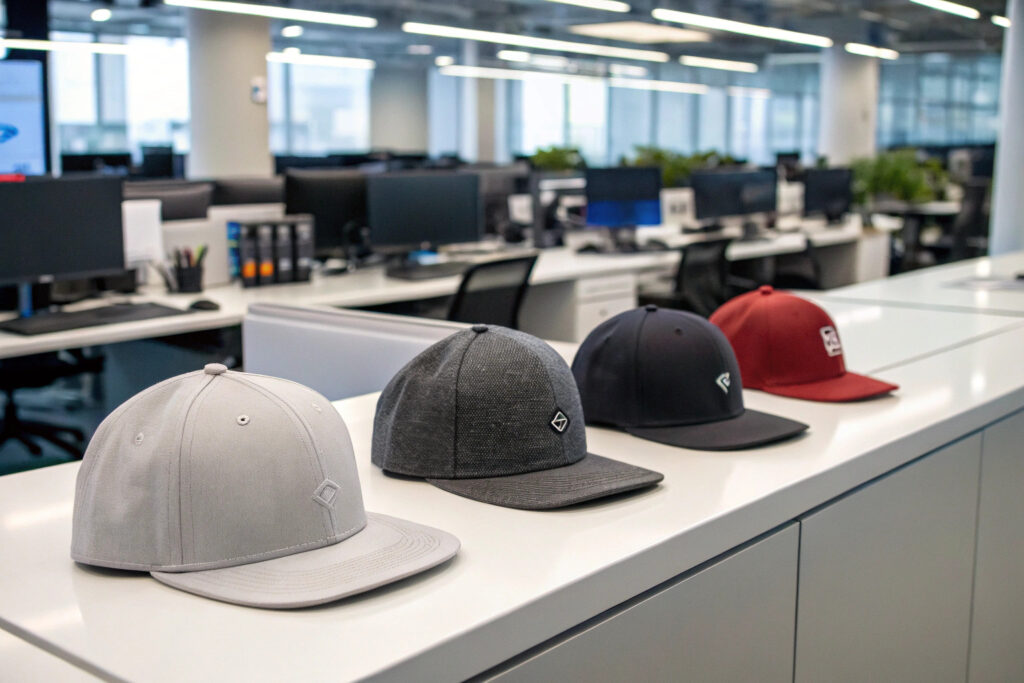
Yes, with a qualification. The digitized file is created for a specific logo design. The file can be used on different cap styles—a six-panel structured cap, a five-panel unstructured cap, a dad hat—provided the embroidery area and the fabric type are similar. The file may need minor adjustments for a significantly different fabric, such as switching from cotton twill to wool blend, or for a cap with a different seam structure that interrupts the embroidery area.
The digitizer can adapt the approved file for a new cap style with a reduced fee, typically 50 percent of the original digitizing fee. The adaptation is faster than creating a new file from scratch.
My file adaptation policy charges 50 percent of the original digitizing fee for adapting an existing file to a new cap style.
Conclusion
The separate digitizing fee exists because digitizing is a skilled, manual service that produces a reusable digital asset—the embroidery file—which is distinct from the physical sample cap. The digitizer spends 45 to 90 minutes hand-mapping stitch types, directions, underlay stitches, and pull compensation to create a file that will sew correctly on the curved, tensioned surface of a cap crown. Auto-trace software cannot replace this human expertise. The digitizing fee covers the labor, the test sew-outs, and the file archiving.
The sample fee covers the physical construction of the prototype cap. The costs are separate because the work is performed by different people in different departments. The digitizing fee is a one-time charge. On future reorders, the approved file is retrieved from the archive and used at no additional cost. The client owns the file and can request a copy at any time.
A factory that bundles the digitizing fee into the sample fee is not doing you a favor. They are either using auto-trace, which will produce inferior embroidery, or they are hiding the digitizing cost in a marked-up sample fee that you will pay again on every reorder. The separate, transparent digitizing fee is the honest pricing model.
At Global-Caps, my digitizing fee is quoted separately. The fee includes manual digitizing, test sew-outs, adjustments, and file archiving. The file belongs to the client. Reorders use the same file at no additional charge. The embroidery is consistent. The cost is transparent.
If you need custom embroidery with professional digitizing and transparent pricing, contact my Business Director Elaine. She can provide a sample and digitizing quote with a clear fee breakdown, and a demonstration of the sew-out quality from our manually digitized files. Email Elaine at elaine@fumaoclothing.com. Let's digitize your logo once, correctly, and use it forever.