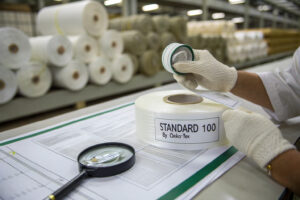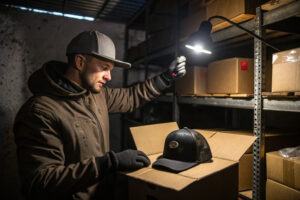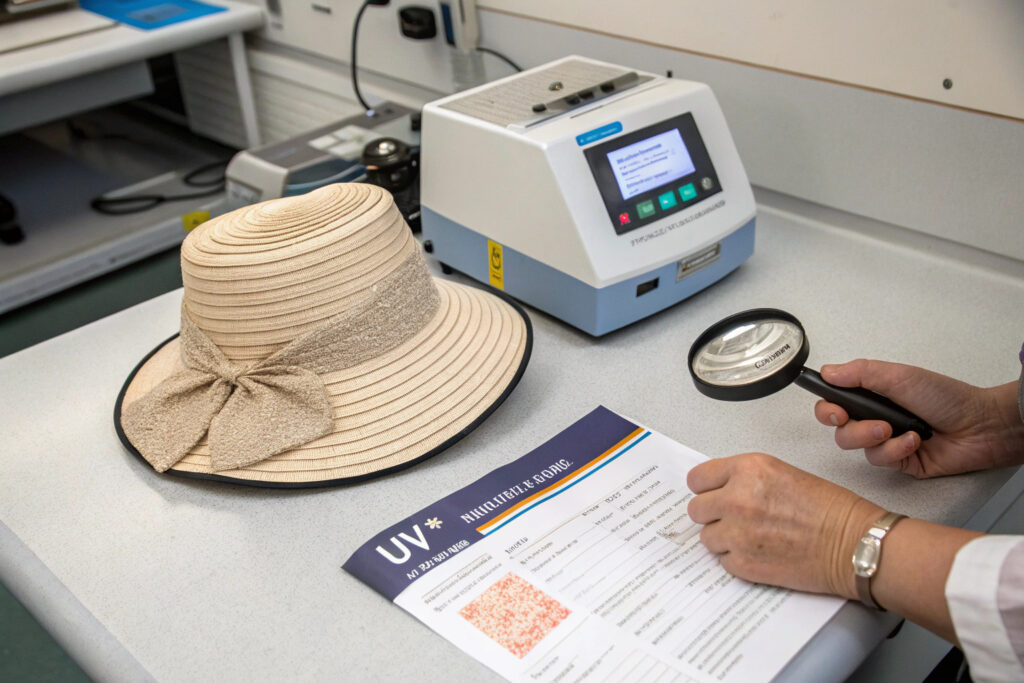
You launch a sun-safe hat brand. The supplier sends a beautiful UPF 50+ test report. The logo is from a famous lab. The numbers look perfect. You market the hat as "Maximum Sun Protection." A customer gets a sunburned scalp. They complain. You send the hat to your own lab. It tests UPF 15. The factory's report was a Photoshop job. Your brand is now a liar.
You avoid fake UV protection test reports by demanding the original PDF from the testing lab, not a scanned copy from the supplier, and by verifying the report number directly on the lab's public database or customer service portal. You also conduct your own random pre-shipment UPF testing using an independent third-party lab. You never trust a single sheet of paper. You trust a verifiable chain of evidence that links the specific fabric lot to the test result.
I have been in the headwear factory business for over a decade. I know which labs are strict and which are loose. I know the tricks some suppliers use. I want to arm you with the questions that make a fake report supplier stumble and confess.
What Is the Difference Between UPF and SPF Labeling on Hats?
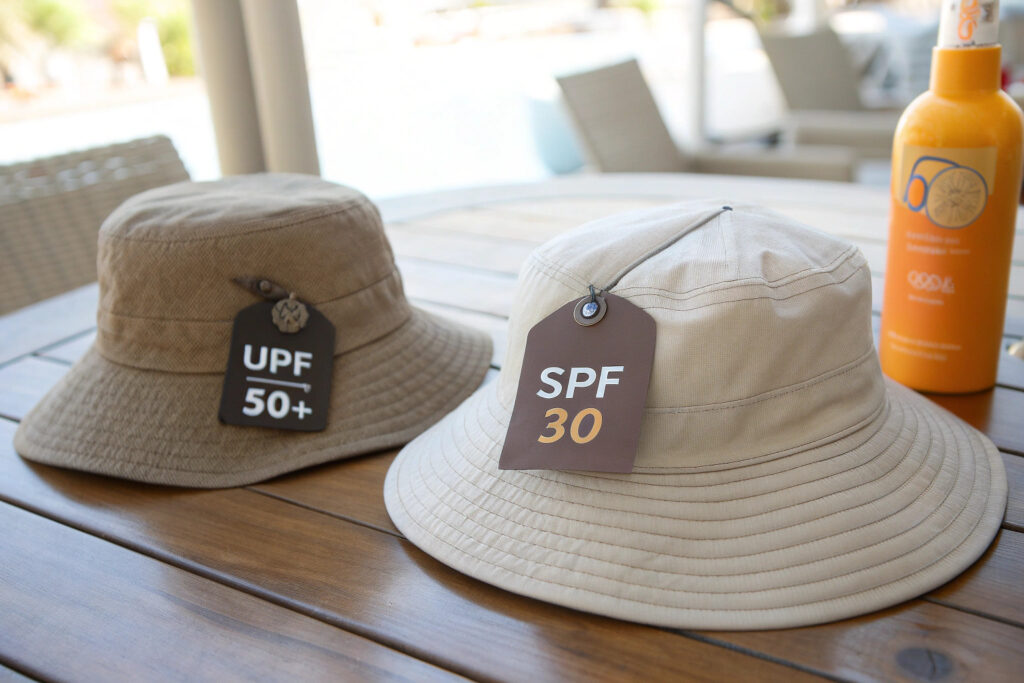
You see a hat labeled "SPF 50." You assume it blocks 98% of UV rays. You are wrong. SPF is a chemical rating for skin lotion. UPF is a fabric rating for clothing. A supplier who labels a hat "SPF" instead of "UPF" does not understand the product. Or worse, they are deliberately misleading you. This confusion is a goldmine for scammers.
UPF (Ultraviolet Protection Factor) measures how much UV radiation penetrates a fabric and reaches the skin. UPF 50 blocks 98% of UV rays. SPF (Sun Protection Factor) measures the time it takes for skin to redden with a chemical sunscreen applied. Fabric does not have an SPF. A hat labeled "SPF" is illegal in the US under FTC regulations and in Australia under the ARPANSA standard. The correct label is "UPF."
I always correct my clients when they use the term "SPF hat" in their brief. I tell them the legal terminology. A smart supplier does the same. A dodgy supplier uses the wrong term to sound impressive.
You need to understand the specific testing standards that give the UPF number legal meaning. A UPF claim without a test standard reference is just a wild guess.
How Does the AS 4399 Standard Differ From the AATCC 183 Test Method?
Two major standards govern UPF testing. AS 4399 is the Australian standard. It is the strictest in the world. AATCC 183 is the American standard. They test the same physics but have different labeling thresholds and pre-treatment requirements.
The AS 4399 standard requires the fabric to be tested after 40 home launderings and exposure to chlorinated pool water and salt water. The hat must still block 98% of UV after this abuse. The AATCC 183 standard tests the fabric in its original state. It does not mandate the harsh pre-conditioning. A hat that passes AATCC 183 might fail AS 4399 after a summer of swimming lessons.
I ask my fabric mill which standard they tested to. If a supplier says "UPF 50+ tested," I ask, "Under which standard? And was it tested after the 40-wash protocol?" The Australian standard also requires the label to state the UPF rating and a classification category like "Excellent Protection." The American standard requires a UPF label but the wording is less rigid. For a global brand, I recommend testing to the Australian AS 4399 standard. It covers you in the strictest markets.
Why Does Fabric Color and Stretch Affect the Actual UV Blocking?
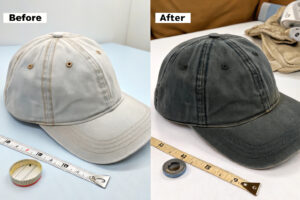
A white hat is a summer classic. It is also a UV sieve. Dark colors absorb UV. Light colors reflect visible light but often let UV pass through. A tight weave blocks UV. A stretched knit lets UV through the holes.
The factory sends you a UPF 50 test on a black, non-stretch polyester hat. You order the same hat in white and in a stretchy cotton blend. The white stretch hat has a UPF of 15. The test report is for the best-case scenario, not your actual product. This is a classic bait-and-switch.
I test every color and every fabric variant separately. A spectrophotometer measures the UV transmission across the spectrum. The UPF rating is the weighted average. A black 300gsm polyester hat might score UPF 80. A white 180gsm cotton hat might score UPF 20. The fabric weight and the porosity are the main drivers. I also test the hat while it is stretched. A beanie stretches on the head. The knit holes open. The UPF drops by 30%. You should ask the supplier, "Was the UPF test conducted on the exact color and fabric weight I am ordering, in a stretched state?" If they hesitate, the test is a decoy.
How to Verify a UPF 50+ Lab Report Is Authentic and Not Fabricated?
The report looks official. It has a logo. It has a signature. It has a stamp. You trust it. You should not. PDF editing software can fake all of these in five minutes. I have seen reports where the lab name was "SGS" but the phone number on the letterhead was a mobile number. The fraud is easy to commit and hard to detect without a verification step.
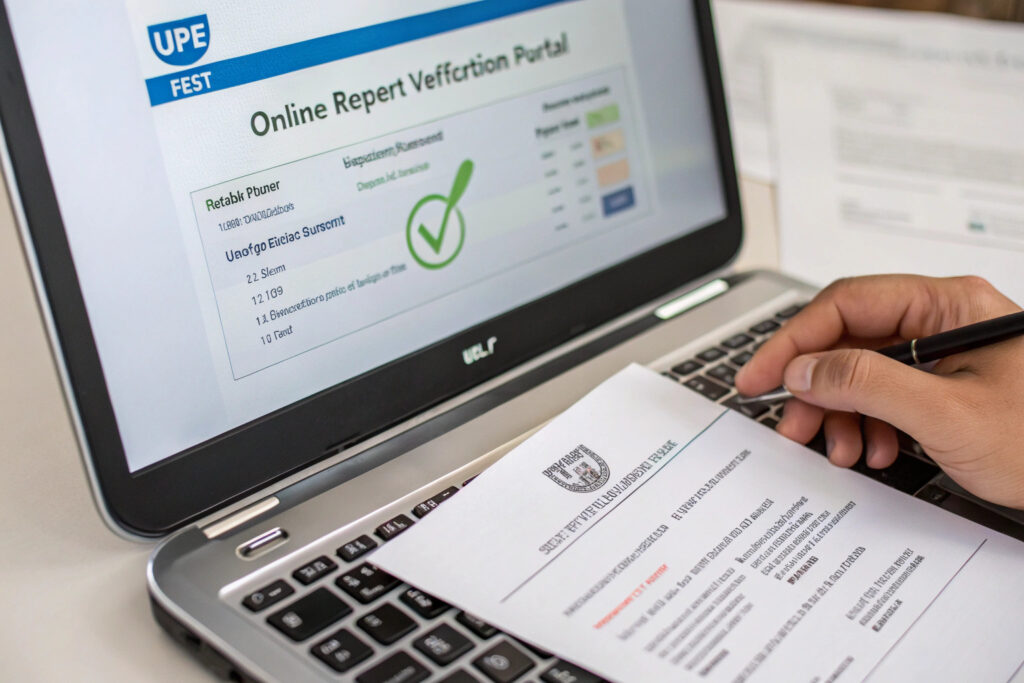
You verify a UPF 50+ lab report by calling the testing lab directly using the phone number from their official website, not the number on the report. You ask them to confirm the report number, the sample description, and the test result. Reputable labs like Intertek, SGS, and Bureau Veritas have online portals where you can input the report number and instantly see the status. If the report number returns "Not Found," the document is fake.
I send my clients the direct link to the lab portal for their report. I invite them to check. I want them to verify. A supplier who refuses to give you the report number or makes excuses is hiding something.
You need to act like a detective. The report has specific security features. A genuine test report has a narrative flow that a fake report often misses.
What Are the Security Features of a Genuine Intertek or SGS Test Report?
Genuine lab reports have layered security. They are not just a table of numbers. Intertek reports have a specific paper type with a watermark visible when held up to light. The digital PDF has a digital signature embedded in the metadata. SGS reports use a unique QR code that links to the live report on their server.
You should download the PDF and right-click to check the "Document Properties." Look for the digital certificate. It shows who signed the document and whether the signature is valid. If the signature panel says "Not Trusted" or is missing, the PDF has been altered.
I also check the report format. Intertek uses a specific layout. The font is consistent. The lab address is correct. I call the lab. I ask, "Did you test a batch of navy polyester hat fabric for Global-Caps last month?" The lab confirms. I also check the chain of custody on the sample submission form. It shows who submitted the sample and the date. If the supplier says "The lab collected the sample" but the form says "Sample submitted by customer," the story does not match.
How to Conduct a Random Pre-Shipment UPF Verification Test?
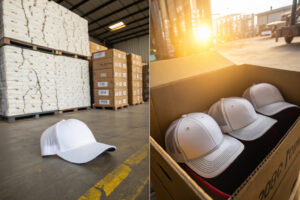
You do not need a full lab to protect yourself. You order a pre-shipment inspection. You instruct the inspector to cut a swatch from a finished hat in the bulk carton. They seal it in a bag. They ship it to your independent lab.
This is the ultimate verification. The supplier does not know which carton the inspector will open. They cannot prepare a "special sample." The test result on the random swatch reflects the true bulk quality. I recommend using a third-party inspection service like QIMA or AsiaInspection. They have a standard operating procedure for "UPF verification sampling."
The cost is about $200 for the inspection and $150 for the UPF test. It is the best insurance against a brand recall. I tell my clients to do this on the first order. If the random swatch passes, the supplier earns your trust. If it fails, you cancel the order and save your reputation. The random sampling method follows ANSI ASQ Z1.4. It is statistically valid. It is not a guess. It is proof.
Why Are Some Fabric Mills Selling "Inherently UPF" Polyester That Fails?
You buy "UPF polyester" from a mill. They say the protection is "inherent" to the fiber. You believe it. You make the hats. You test them. They fail. Polyester absorbs UV. That is true. But a thin, loosely woven polyester mesh does not block UV. The yarn chemistry is not the only factor. The fabric construction is the physics.
Some mills sell "inherently UPF" polyester that fails because the yarn denier is too fine or the knit is too open. Polyester fiber has a benzene ring that absorbs UV radiation. But the space between the fibers lets UV through. A sheer polyester mesh has a UPF of 5. A dense polyester twill has a UPF of 50. The "inherent" claim is a marketing shortcut that skips the construction quality.
I test every new fabric roll even if the mill claims it is "inherently UPF." I test it unstretched and stretched. I test it after washing. The yarn is just the promise. The weave is the delivery.
You need to look at the physical measurements of the fabric. A UPF claim without a fabric weight and construction spec is a red flag.
What Fabric Weight and Weave Density Are Required for True UPF 50+?
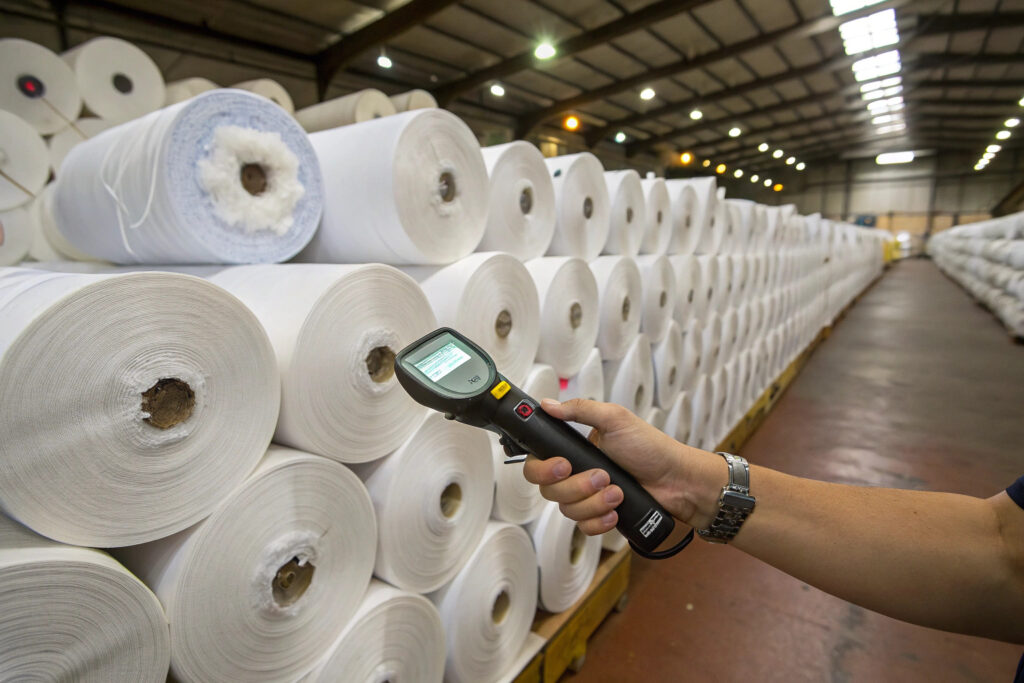
A good rule is weight over 200 grams per square meter and a tight plain or twill weave. Knits are riskier than wovens. A knit has loops. The loops open when pulled. A woven has a flat grid. The grid stays closed.
For a polyester hat to reliably achieve UPF 50+, the fabric weight should be above 180 GSM for a tight weave, and above 220 GSM for a knit. The cover factor is the scientific measure. It combines the yarn thickness and the number of threads per inch. A high cover factor means less UV transmission.
I use a fabric density glass to check the weave. I count the threads per centimeter. A poplin weave with 100 ends and 80 picks is dense. A voile weave is loose. The voile looks airy but fails UPF. I also check the yarn type. Textured polyester yarn has more bulk than flat filament yarn. The bulk blocks light. A bright, round filament yarn acts like a fiber optic cable. It channels the light through. I test blackout lining as a backup. If the fashion fabric fails, a black polyester lining behind it can boost the system UPF to 50. This is a design hack.
How Does Washing and Stretching Degrade a UPF 50+ Hat to UPF 15?
The customer washes the hat in a machine. The fabric relaxes. The weave opens slightly. The UPF drops. They stretch the hat onto a ponytail holder. The fabric distorts. The holes double in size. The UPF drops by 20 points.
The Australian AS 4399 standard simulates this. It requires 40 wash cycles and a stretch test. A UPF 50 hat that is only tested in pristine condition is a false promise. I ask the mill for the "washed and stretched" UPF rating. The honest mills provide it. It is always lower than the pristine rating.
We sew a care label inside the hat. It says "Machine wash cold, lay flat to dry, do not stretch." This is a legal disclaimer. It also helps the customer keep the hat effective. We also use elastane-free fabrics for the crown. Elastane degrades in chlorine and loses its stretch memory. A saggy hat lets UV through. A UPF hat is a system. The fabric, the structure, and the care instructions must work together.
Where Can I Find ISO 17025 Accredited Labs That Test UPF for Hats?
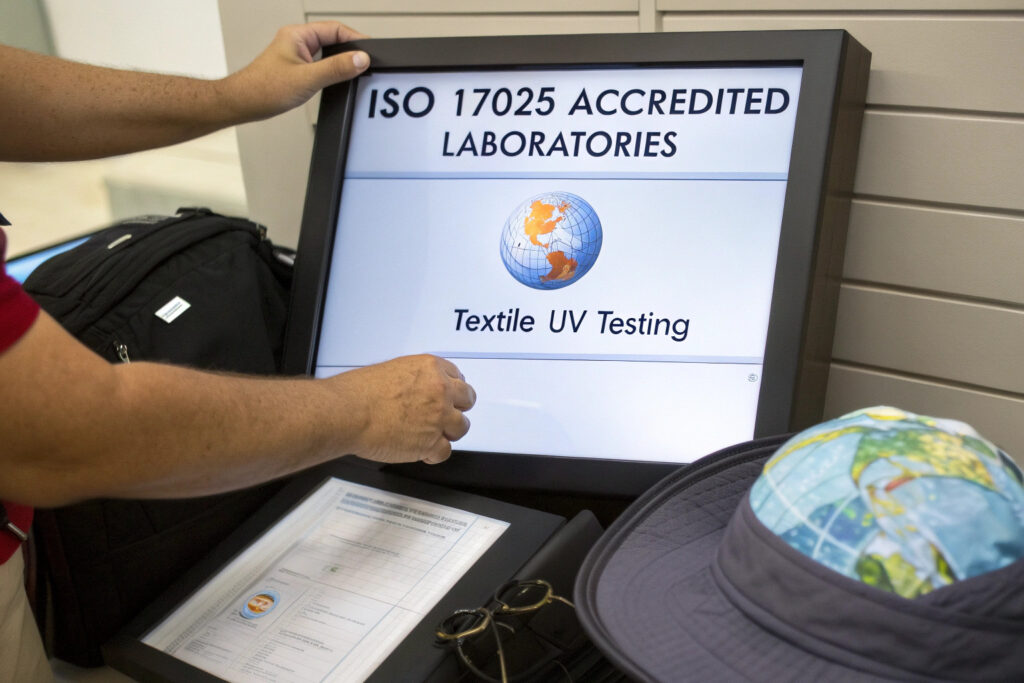
You ask the supplier for a test report. They say they use a "local lab." The report is cheap. The name is unknown. The lab might be the supplier's cousin with a UV lightbox in a garage. The accreditation is everything. A lab without ISO 17025 accreditation is just a room with equipment. The result has no legal weight.
You find ISO 17025 accredited labs for UPF hat testing through the directories of ILAC (International Laboratory Accreditation Cooperation) signatory bodies. In the US, use A2LA or ANAB. In Europe, use UKAS or DAkkS. In China, use CNAS. The lab's accreditation scope must specifically include "textile UV protection testing" or the relevant ASTM/AATCC/AS standard. You check the lab's accreditation certificate online.
I maintain accounts with SGS and Intertek. Both are globally accredited. Their reports are accepted by US Customs and the EU market surveillance authorities.
You need a lab that understands hats, not just flat fabric. A hat has seams, a brim, and a crown. The UV performance varies across the surface.
Which Independent Labs Specialize in Textile UV Protection Globally?
A few global lab networks dominate the textile testing market. Intertek, SGS, and Bureau Veritas are the three biggest. They have offices in every major textile manufacturing country. TÜV Rheinland is strong in Europe. Boken is a specialist in Japan.
I use Intertek for my US-bound orders. They have a testing lab in Shanghai that is ISO 17025 accredited. Their turnaround time is 5 working days. SGS has a similar setup in Guangzhou. For Australian orders, I use a lab that is NATA accredited and recognized by ARPANSA.
You can search the ILAC directory for "textile UV protection." The database lists every accredited lab globally. You can filter by country. You call the lab. You ask for a quote. You do not need the supplier to arrange the test. You can buy the sample from the supplier and send it to the lab yourself. This is called blind testing. It is the highest form of verification.
How Much Does a Valid UPF 50+ Certification Test Cost for a Hat Batch?
The cost is a barrier for very small orders but a necessity for any serious brand. A UPF test to the AATCC 183 standard costs between $150 and $300 per fabric swatch. The Australian AS 4399 standard costs more, around $250 to $400, because it includes the pre-conditioning.
If you have four colors, you multiply the cost. This is why stock colors are cheaper to certify. I help my clients batch their tests. We test the white and the black first. These are the worst-case and best-case scenarios. If both pass, the middle shades usually pass.
The test fee is a fixed cost. You amortize it over the batch. For a 500-hat order, a $300 test adds $0.60 per hat. For a 5,000-hat order, it adds $0.06. The cost is minimal compared to the cost of a sunburn claim. I always advise clients to budget for third-party testing in their first production run. It is not an extra. It is the cost of making a medical claim.
Conclusion
Avoiding fake UPF test reports is a discipline. You start with the terminology. The label says UPF, not SPF. You check the standard. The Australian AS 4399 is stricter than the American AATCC 183. You ask about color, stretch, and washing. A UPF 50 claim on a black swatch means nothing for a white hat.
You then verify the paper. You call the lab using their official number. You check the report number on their online portal. You look for the digital signature in the PDF. For absolute certainty, you conduct a random pre-shipment test using an ISO 17025 accredited lab. You cut a swatch from the bulk carton. You send it blind.
You also inspect the fabric itself. You weigh it. You count the threads. You understand that polyester is not magic. The weave matters. The washing matters. The care label matters.
At Global-Caps, we treat sun protection as a serious health claim. We do not fake reports. We do not hide behind "inherent" properties. We test every batch. We label accurately. We educate our buyers on the science.
If you need a sun-protective hat supplier who hands you verifiable truth instead of Photoshop fiction, let's connect. Contact our Business Director Elaine. She can walk you through our latest UPF test reports, show you the lab portal links, and arrange your own independent verification test. Email Elaine at elaine@fumaoclothing.com. Let's protect your customers from the sun and your brand from the liars.