As a buyer for a children's clothing brand, you know the fear. That late-night email from a testing lab. A batch of kids' hats failed for lead content. Your shipment is stuck at the port. Your launch date is dead. I have seen this panic in my clients' eyes. It is a nightmare. You need a supplier who understands US safety laws. You need a partner who treats compliance as the foundation. You are not just buying hats. You are buying peace of mind.
You find a reliable CPSIA-compliant supplier for kids' baseball caps by auditing their quality control system directly. You should ask for physical Children's Product Certificates for each component. You need a partner with a dedicated in-house lab or a long-term relationship with a CPSC-accepted third-party testing lab. The supplier must track raw materials from certified mills. A clean, modern factory with a professional QC team like ours at Global-Caps removes the risk.
I understand this process is stressful. A simple search on Google or Alibaba will give you thousands of factory names. Most of them will say "yes" to everything you ask. But talk is cheap. I want you to stop gambling with your reputation. In this guide, I will walk you through the exact steps I use every day as a hat manufacturer. I will show you what happens behind the walls of a factory that takes safety seriously.
What Are the CPSIA Testing Requirements for Children’s Baseball Caps?
Sourcing kids' accessories is high-risk. You are one snap button away from a recall. I have seen a single batch of cheap metal snaps ruin a brand's summer season. The danger is invisible. Lead and phthalates hide in the paint, the elastic, and the plastic sizing strap. If your supplier does not understand substrate testing, you are the one holding the liability. You need to know the rules better than the factory making the caps.
The CPSIA requires total lead content in surface coatings to be under 90 ppm and in substrates to be under 100 ppm. Phthalates must be below 0.1 percent for specific chemicals like DEHP, DBP, and BBP. You need a Children’s Product Certificate that lists the CPSC-accepted lab used, the production date, and the batch number. The testing must cover every component. That means the main fabric, the sweatband thread, the plastic strap, and the metal buckle all require lab analysis.
Think of safety as a chain. The chain breaks at the weakest link. It is not enough to test the cotton front panels. What about the button on top? What about the inner lining mesh? When I supervise our production runs, I track the lot numbers of our snap buttons back to the certified supplier.
Let’s unpack the specific steps needed to secure your supply chain. We need to look deeper at how a factory manages the documentation. Most factories fail here. They have a test report, but it is a generic file. It does not match the specific HTS code or the actual physical cap they shipped you.
What Specific Certificates Must a Factory Provide for CPSIA?
The paperwork is your legal shield. If the US Consumer Product Safety Commission knocks on your door, you need the right papers instantly. I always tell my partners to look for a CPC issued with valid accreditation. A simple piece of paper does not protect you. The data behind it does.
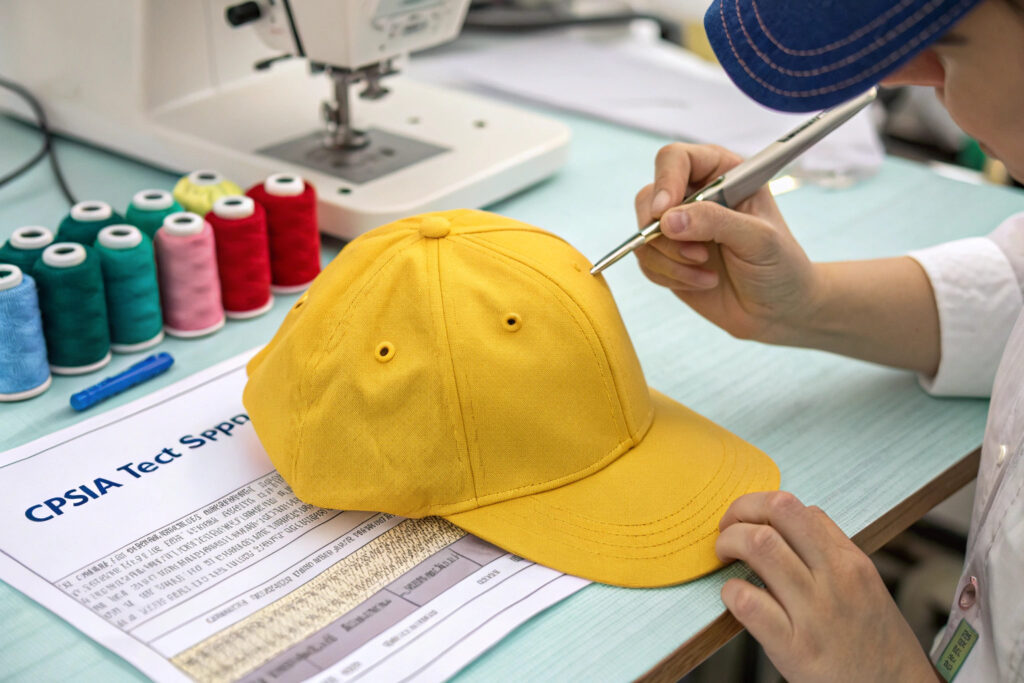
You must demand a Children’s Product Certificate from your supplier. This document is not a lab report. It is a legal affidavit. It lists the specific batch you are buying. A valid CPC states the product name, the specific list of safety rules applied, the US importer of record, and the contact info for the individual maintaining the records. I always show my clients the difference between an expired heavy metals test and a live CPC. Many factories try to trick buyers with a general REACH report from Europe. That does not prove US compliance.
We also include the physical test reports from CPSC-accepted labs like Bureau Veritas or SGS. For a kid's baseball cap, you need the physical and mechanical safety tests. Check the small parts test. A snap button should withstand 15 pounds of pull force. If it rips off, a toddler swallows it. We triple-lock our stitching on snaps and use prong-less, safe-edge buckles. You need a supply chain audit to trace the yarn lot number to the specific finishing agent used.
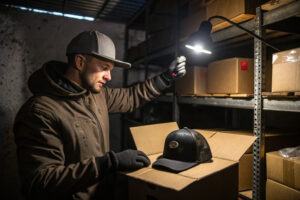
I advise clients to open every shipment and scan it with an XRF analyzer gun. I do this in my own warehouse. It verifies the surface lead right there. If a factory refuses to let you do random check-in testing, walk away. Trust your own verification.
How to Identify Non-Toxic Dyes and Finishes in Kids Headwear?
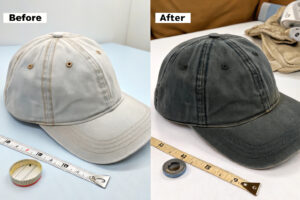
The hidden danger in colorful caps is the dye. Bright red and yellow pigments often need heavy metals to stabilize the color. A few years ago, a buyer asked me to match a neon orange shade. My dye house refused because the standard recipe used leaded pigment. We spent two weeks reformulating using non-toxic reactive dyes. It cost more, but the cap is safe for a baby to chew on.
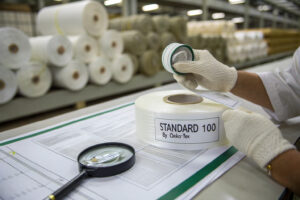
You have to ask for OEKO-TEX Standard 100 certificates for the fabrics. Look for Class I certification. Class I means the textile is safe for babies under 36 months. This goes beyond just lead. It tests for formaldehyde, heavy metals, and prohibited azo dyes. When you source a hat, the sweatband is the most critical zone. Sweat and friction can leach chemicals out of the fabric and onto the forehead skin.
I recommend using water-based screen printing inks. Plastisol inks are made with PVC. PVC is a red flag for kids' products because of phthalate risks. In my factory, we run a dedicated kids' line with segregated sewing machines. We do this to prevent cross-contamination from adult fashion items that might use different finishes. Ask your supplier if they segregate kids and adult production runs. If they look confused, they are not the right partner for your brand's baby line.
How Do Tariffs Affect the Landed Cost of Importing Hats from China?
The 2024 tariff situation changed the game. Many buyers assume everything from China carries a 25 percent penalty. They panic. They shift to other countries with lower production quality. But they are missing a critical legal distinction. You might be overpaying taxes on your kids' baseball caps right now. This frustrates me when I see my clients paying duties they do not legally owe. The money comes straight out of your retail margin.
Baseball caps shipped directly from China to the US under the correct Harmonized Tariff Schedule code may not be subject to Section 301 tariffs if they fall under specific exclusions or de minimis rules. We work closely with licensed customs brokers to classify goods correctly. The key is the material composition. A cotton twill baseball cap with a plastic snapback has a different duty rate than a polyester performance cap. You must review the HTS chapter 6505 heading. If you are a registered brand, you also need to handle trademark recordation with customs.
I want to walk you through the strategy we use to keep logistics costs predictable. A cheap unit price from a factory means nothing if the shipping and duties erase your profit. We will look at how to structure your purchase orders to make cash flow easier.

How to Use HTS Code 6505.00 to Minimize Import Taxes?
The number you need to know is 6505.00. This is the universal highway for caps. Yet within this code, there are branches. A baseball cap is generally 6505.00.50. But if it has a fancy adornment or a medical purpose, the code might shift. You must check if your product qualifies for Chapter 98 provisions if it is a sample or a low-value return.
My favorite strategy for new brands is utilizing the Section 321 de minimis entry. If your shipment value is under $800 USD, you pay zero duties. We have clients testing the market with small batches. We ship 150 caps via air express. It lands tax-free. This is impossible for big container orders but perfect for an online store validation. For large orders, I advise buyers to engage in tariff engineering. Move the snapback closure from metal to plastic to change the essential character, ensuring the HTS classification stays in a lower-duty bracket.
We also separate the cost of the cap from the cost of shipping on the commercial invoice. Customs valuation is based on FOB price. By keeping the packing and freight costs listed as separate line items, you lower the ad valorem taxable base. I work with my project managers to prepare these invoices meticulously. One mistake on the invoice, and Customs flags your container for a manual exam, which costs thousands in demurrage fees.
What Are the Best Incoterms for Safe and Cost-Effective Cap Shipping?
FOB Shenzhen. That is my starting recommendation for all new partners. You do not want the factory to book the freight and hide the profit in the shipping cost. You want control. When I quote FOB, I am responsible for getting the caps to the port and clearing export customs. You pick the freight forwarder.
This transparency protects you. Some traders offer DDP (Delivered Duty Paid). It sounds easy. You pay one price and the box arrives at your door. But this hides the tariff breakdown. I have seen DDP deals where the supplier is essentially smuggling the goods by undervaluing the shipment. If Customs catches it, they seize your caps. The fine is yours. The liability is yours. Not the supplier's.
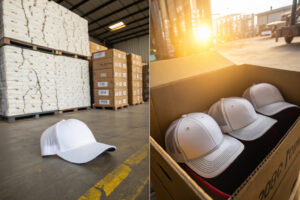
I recommend EXW (Ex Works) only if you have a sourcing agent in China. Otherwise, the coordination of trucking inside China is a headache. For sea freight, we use DAP terms with shipping lines that allow consignee billing. You pay the ocean freight directly to the carrier. You know the exact cost. Your payment to me is just for the hats. For air freight, we use FCA (Free Carrier). This is cleaner. I hand the goods to your designated carrier like DHL or FedEx.
The biggest cost trap is the "destination charge" at US ports. Always ask your forwarder for an all-in quote including the pier pass and chassis fee. It saves you a surprise bill for $1,200 before the truck even picks up the container. Plan this before the caps leave our factory floor.
Why Does In-House Sampling Speed Up Kids' Caps Development?
Time kills trends. A kid's character-themed baseball cap is a short game. You get a license for a movie that premieres in June. If the caps arrive in September, you have lost millions. I once watched a brand lose their back-to-school window by three weeks simply because the factory had outsourced the pattern printing. You cannot afford these delays. The sample stage dictates your entire marketing calendar.
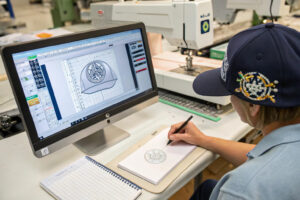
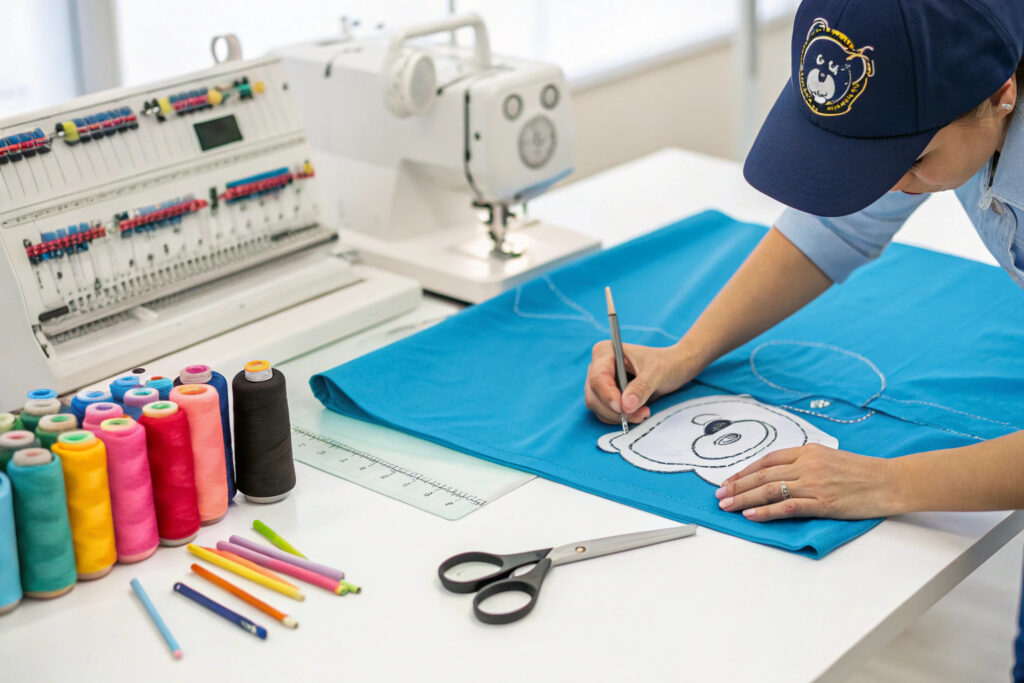
Moving the sampling room inside the manufacturing plant cuts the development cycle by 70 percent. At Global-Caps, we do not send your design to a third-party cutting service. Our 12-person design team sits 20 steps from the production line. When you request a new crown shape for a toddler fit, our pattern maker adjusts the curve instantly. We test the seam tolerance on a live machine. A traditional factory takes 7 days to send you a digital photo of a first fit sample. We can ship a physical sample via express within 48 hours for simple modifications. This speed directly translates to a faster shelf debut for your products.
Let’s break down how this in-house system works. It is not just about having a sewing machine in the corner. It is about integrating the design logic with the safety constraints of kids' wear.
Why Is Physical Prototyping Crucial for Toddler Cap Fit?
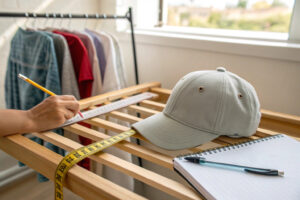
Digital 3D renderings look sexy. But they lie about gravity. A toddler's head is shaped differently than an adult's. The crown depth must be shallower. The brim stiffness must be softer to prevent injury during falls. You cannot test this on a computer screen. You need a fabric mock-up on a child's head block.
In my office, I keep a collection of 3D head forms for ages 2T, 3T, and 4T. When we develop a curved brim cap for a toddler, we cut a single sample and stitch it. We put it on the form. We let it sit for 24 hours. This tests the fabric memory. Does the front panel collapse inward? If the interfacing is too heavy, the cap falls over the eyes. This makes the child trip. We often switch to a lightweight fusible interfacing that holds the shape without weight.
I always send a video of the cap on the physical head form to the buyer. You should ask for this. Don't accept a photo lying flat on a table. You need to see the height of the crown. You need to see the angle of the visor. A good kids' baseball cap has the visor angled slightly down to shield the eyes from the sun but not so low it blocks vision. We also test the elastic strap tension. Our standard is a stretch-and-recovery test. The strap must return to its original shape after 100 pulls. Otherwise, it becomes a loose hazard. You only know this by physically pulling the sample with your hands during a live video call with the factory.
How Do Fabric Testing and Shrinkage Affect Pattern Grading?
Here is a mistake that kills your inventory. You approve a perfect size 5-6 years cap. You go to bulk production. The fabric shrinks 5 percent. Suddenly your size 5 fits a 3-year-old. You cannot sell it. You are stuck with $20,000 in dead stock. This happens when the factory skips the fabric relaxation step.
We always pre-shrink the roll before cutting. Cotton wovens shrink. Cotton twill baseball caps are notorious for this. We do a wash test on every new dye lot. We cut a square of fabric, measure it, wash it at 40 degrees Celsius, and dry it. Then we measure again. The pattern maker adjusts the digital grading immediately. If the shrinkage is 3 percent, we make the pattern 3 percent bigger. This is called compensatory grading.
You need to demand a shrinkage report. Not just a promise. A report with the lot number of the fabric matched to your specific order. I pair this with a bank of fabric stock. We keep 10,000 yards of standard twill in our warehouse conditioned at the right humidity. This way, the fabric is "relaxed" before the laser cutter touches it. We also use interlock knit for winter beanies. Knits relax differently. They spiral. We must straighten the grain before cutting or the seam twists in the wash. This care in pattern grading ensures every cap fits perfectly right out of the bag, and stays that size after the parents wash them three times a week.
Why Does an In-House QC Team Reduce Defects for Apparel Brands?
I visited a factory in another province last year. The owner walked me through the stitching floor. The workers were skilled. But the QC team was just two old men at a dusty table at the end of the line. They missed a loose thread on a black cap. The owner said, "We can ship and the buyer will just hope it passes." That is a gamble. A professional apparel brand cannot gamble with Amazon reviews and chargeback rates. You need a scientific barrier between the production line and the shipping box.
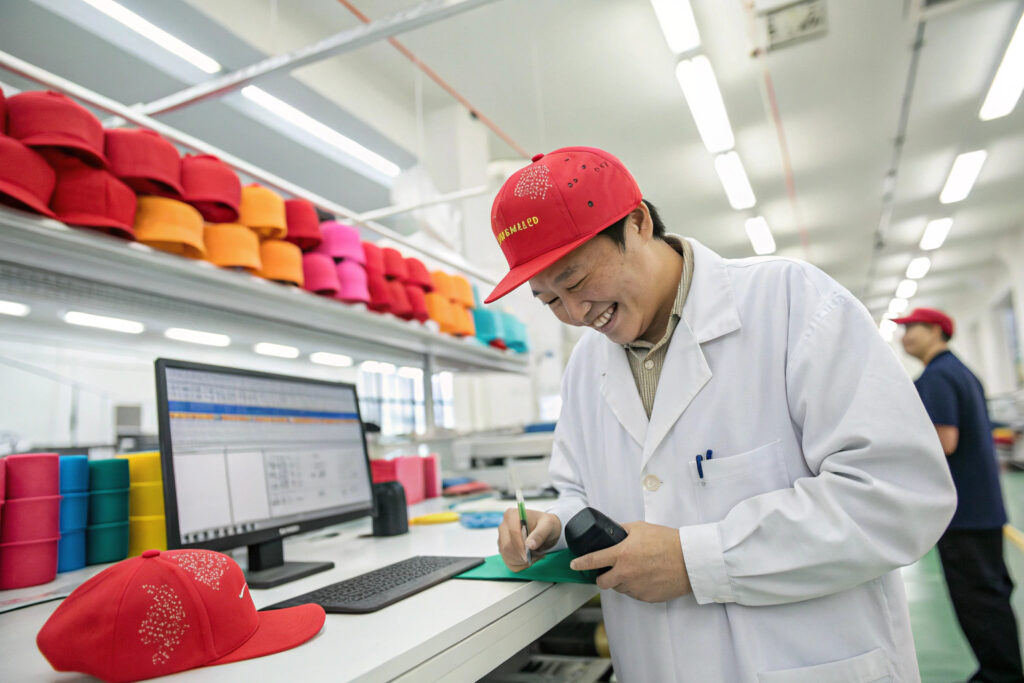
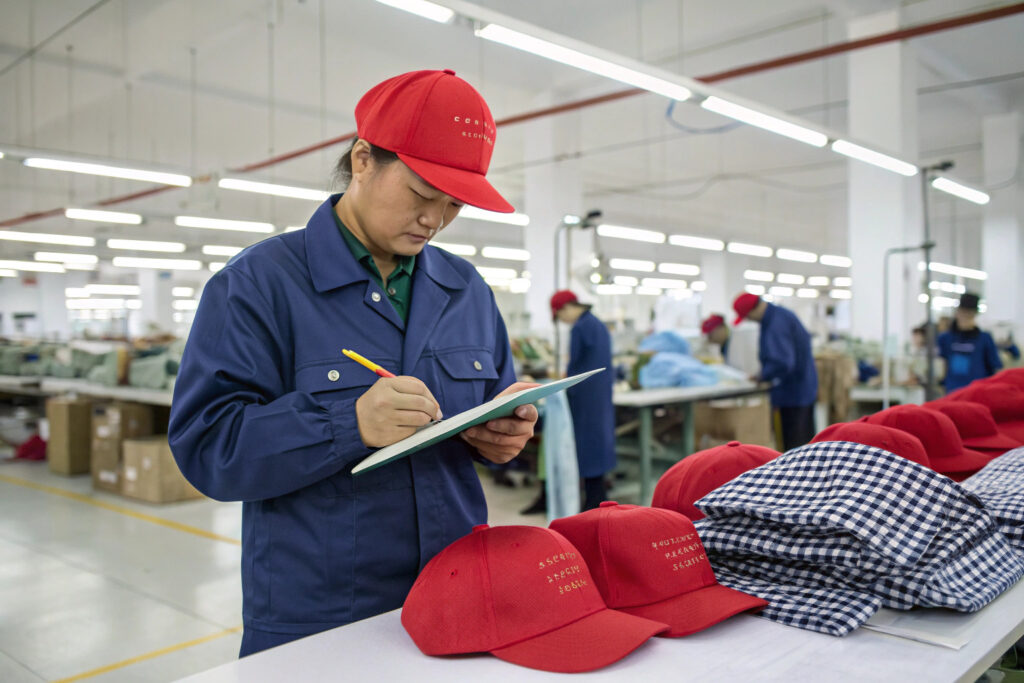
An in-house quality control team that reports independently from the production manager reduces defect rates to below 1.5 percent. At our factory, the QC team reports directly to the technical director, not the workshop supervisor. This conflict of interest is the secret killer in many factories. If the production manager can pressure the QC to pass a defective hat to meet the shipment date, you lose. Our inspectors have a single mission: stop the line if the stitches are wrong. We check at four gates: incoming fabric, cutting, in-line sewing, and final audit. This system catches 90 percent of issues before the sweatband is even sewn in.
Let me take you inside our inspection flow. We use a military-style checklist adapted for high-fashion and supermarket clients alike. The goal is not just finding bad hats. It is stopping the root cause immediately.
What Is the AQL 2.5 Sampling Process for Custom Caps?
AQL stands for Acceptable Quality Level. For caps, the global standard is 2.5. This does not mean 2.5 percent bad quality. It means you are sampling a batch size based on the risk of a specific defect. For a run of 10,000 caps, we pull 200 random caps for a normal inspection level.
Our team does this on a lightbox table. We check the main seam first. The seam must not pucker. We use a pull test for the top button. We measure the sweatband depth with a digital caliper. I tell my inspectors to look at the hat from the customer's eyes. If you pick it up in a store, does your eye go straight to a crooked logo? That is a visual defect. That is a "Major" finding even if the hat is structurally sound.
We separate defects into critical, major, and minor. A critical defect is a needle tip stuck in the sweatband. That is zero tolerance. A major defect is a broken stitch line or a color mismatch on the panels. A minor defect is a loose thread end. If we find 3 major defects in 200 pieces, we hold the shipment. We do a 100 percent check. We fix it. We do not ship and pray. We send you a photo of the pulled sample with a ruler against the defect. You see what we see.
We also use an AQL audit specifically for the embroidery. If your logo has an outline, we measure the offset. We check for thread breaks in the satin stitch. A bad embroidery makes a hat look counterfeit, even if the cap is made of the best Italian wool. Inspection is not a cost. It is cheaper than a return label.
How Do You Ensure Consistent Color Matching Across Batches?
This is a headache for established brands. Your e-commerce photo shows a crisp navy blue. The customer opens the box and sees a faded dark teal. That is a return. A pantone number is not a guarantee. The fabric texture changes the light reflection. The dye bath temperature changes the shade.
I invested in a spectrophotometer for our in-house lab. We do not just look at the fabric under a light box. We measure the Delta E value. Delta E is the mathematical distance between colors. Our standard is Delta E < 1.0 for the crown panels and the visor. The human eye can spot a difference of 1.5. We only ship below 1.0.
For a kid's cap, the visor and the crown are often different materials. The visor is a stiff composite board wrapped in fabric. The crown is a soft washed cotton. If you dye them in separate batches, they clash. We call it "metamerism." The colors match in the factory light but look different in the mall lighting. We test under D65 artificial daylight and warm white store light. We also keep a physical "master standard" cap locked in a dark cabinet. Every new production is compared to the master. If the lab dip fades after a lightfastness test, we reject the dye lot. You should ask your factory to send you a lab dip card before bulk. Do not skip this step. Keep the card. If the bulk cap does not match the card you signed off, you have a legal right to a discount.
Conclusion
Finding the right kids' baseball cap supplier is a journey through a maze of regulations, logistics, colors, and fit. You start with the legal baseline. CPSIA compliance is not a sticker. It is a document trail that starts at the yarn spinner and ends at your warehouse. You must check the lead limits, the phthalate limits, and the physical pull tests. Then you look at the money. Tariff codes like 6505.00 and smart shipping terms like FOB can save you a significant amount on landed costs. You need to understand de minimis entry for small orders.
Next, you look at the factory process. Time is your currency. An in-house sampling room with physical prototyping for toddler head forms gets you to market faster. It prevents the fit disasters that come from guessing on a computer screen. You also need to verify that the fabric is pre-shrunk and the pattern grading is compensated. Otherwise, the sizing is worthless. Finally, you need a QC system that has teeth. An independent in-house team using AQL 2.5 and spectrophotometer color checks will keep your defect rate low and your color consistent across every shipment.
You do not need to manage five different suppliers to achieve this. You can centralize everything under one roof in Zhejiang. At Global-Caps, we built our factory to remove your stress points. We handle the compliance paperwork. We structure the shipping. We cut and sew the prototype in 48 hours. We lock the quality gates.
If you are tired of chasing suppliers who only care about the production volume and want a partner who cares about your sell-through rate, I want to talk. Let’s discuss your next collection of kids' baseball caps. Reach out to our Business Director, Elaine. She has guided hundreds of brands through this exact process. She can break down your costing sheet and show you where the hidden risks sit. Email Elaine at elaine@fumaoclothing.com today. Let's make a safe, beautiful cap together.