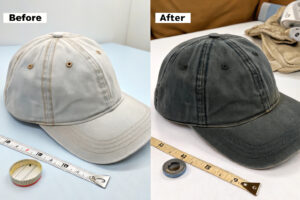
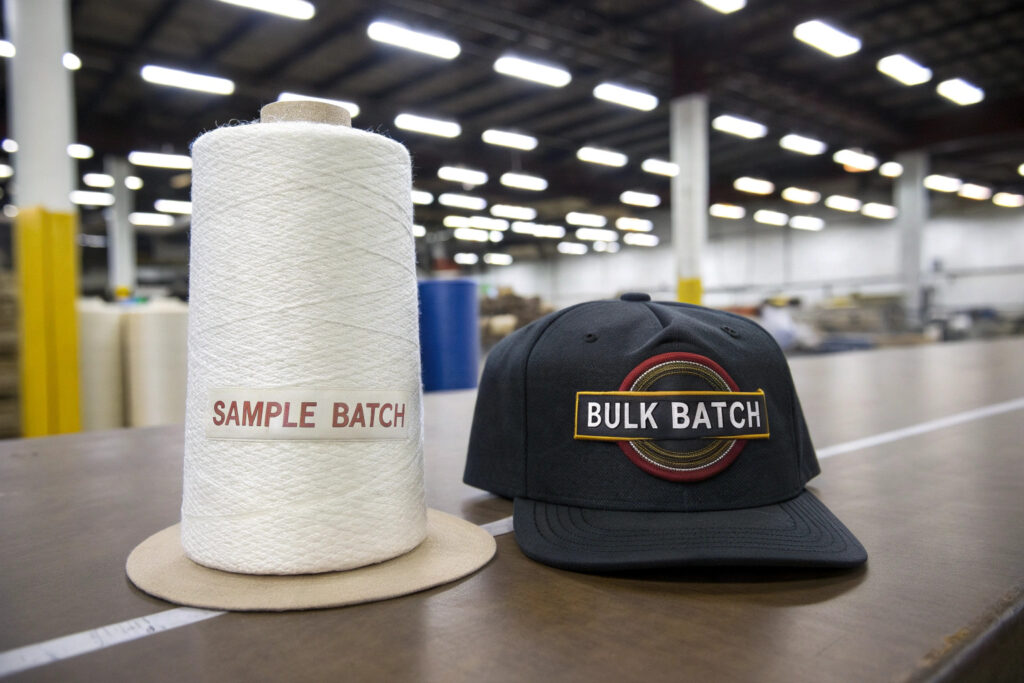
You approve a pre-production sample. The embroidered logo on the cap is perfect. Every letter is crisp. The satin stitch edges are razor-sharp. The small text is readable. You sign the approval form and release the bulk order. Weeks later, the shipment arrives. You open a carton, pull out a cap, and your heart stops. The same logo looks soft. The edges are fuzzy. The small text is a smudged blob. The 3D puff foam is peeking through the stitches. You grab another cap. Same problem. You grab ten more. The defect is random. Some are acceptable, some are terrible. You have a bulk quality problem that the sample never predicted.
This is one of the most frustrating experiences in custom headwear sourcing. The sharp sample, blurry bulk phenomenon has specific, diagnosable causes. It is rarely a mystery once you understand the physical differences between making one perfect cap by hand and making five thousand caps on a production line. I run Global-Caps, and I have seen this issue from both sides of the factory floor. The sample is a promise. The bulk is the fulfillment of that promise. When they do not match, the factory failed at process control, not at embroidery skill. In this article, I will walk you through the exact technical reasons this happens, the shortcuts that cause it, and the factory-level controls that prevent it.
What Technical Factors Cause Embroidery Quality to Degrade From Sample to Bulk?
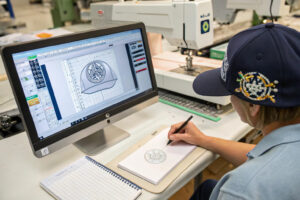
A sample is made in a controlled, low-speed environment. The factory's best digitizer programs the file. The most experienced machine operator runs it on a single head, often at a reduced speed. They use a fresh needle. They use the exact thread cone that was set aside for sampling. They trim the jumps by hand. They inspect every stitch. They re-hoop the cap if the placement is off by half a millimeter. The sample is a masterpiece of attention, not a model of mass production reality.
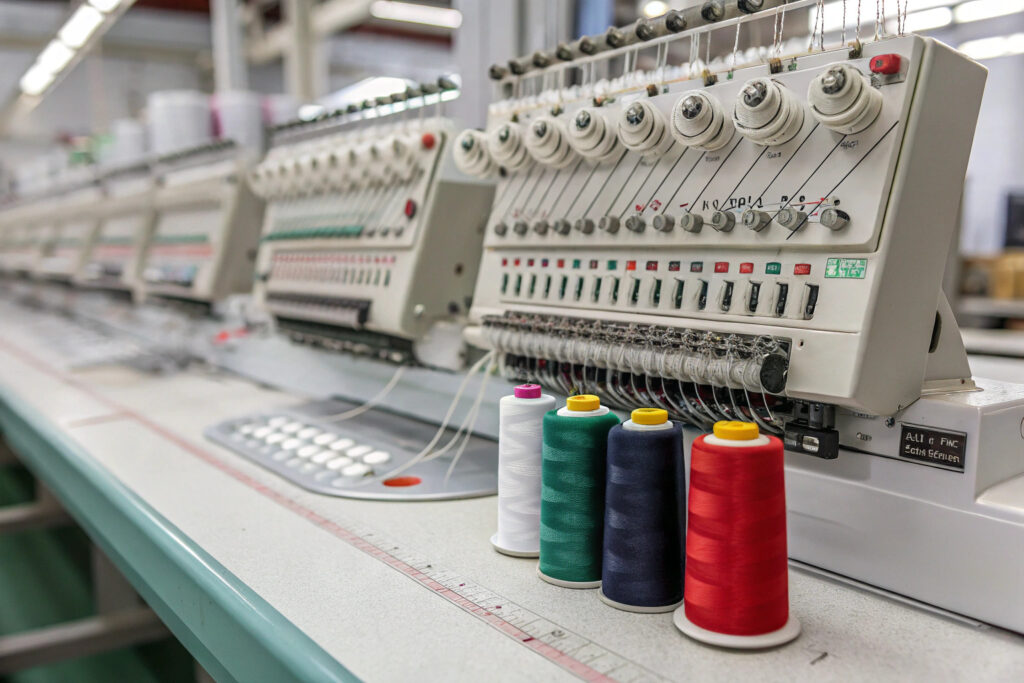
Bulk production operates under different physics. The same embroidery file is now running on twelve heads simultaneously. The machines are set to a commercially viable speed, often 800 stitches per minute or higher, to meet the shipment deadline. The operators are loading and unloading caps as fast as possible. The needles are running hot. The thread is coming off large industrial cones, which may come from a different dye lot than the sample thread. The backing material might be a bulk shipment with a slightly different stiffness. These variables interact with the digitized file in ways that degrade the embroidery quality. The most common technical culprits are needle wear and heat, thread tension drift, backing material substitution, and machine speed. Each of these factors alone can blur a logo. When they combine, the result is the random, inconsistent quality you see in your carton.
The worst part is that the factory often does not notice the drift in real time. The operator's focus is on keeping the machines running. A gradual increase in fuzziness across hundreds of caps is hard to spot from three feet away. It is only when the caps are inspected side-by-side under a bright light that the degradation becomes obvious. This is why inline QC checkpoints are essential. A factory that relies only on a final inspection will ship blurry caps. A factory that stops the machines every two hours to pull a sample and compare it to the gold-seal sample under magnification will catch the drift early.
How Does Needle Wear Create Blurry Edges?
The embroidery needle is a consumable item. It pierces the cap fabric, the buckram backing, and the stabilizer thousands of times. With each penetration, the needle point wears down microscopically. A worn needle no longer cleanly separates the fabric yarns. It tears through them, creating a ragged hole. The stitch thread does not sit cleanly in a torn hole. It wobbles. The edge of the satin stitch, which should be a crisp line, becomes a fuzzy, uneven border.
In bulk production, a needle should be changed at regular intervals, typically every eight hours of run time or after a certain number of stitches. In a rushed factory, operators stretch needle life to avoid the downtime of a changeover. They keep running until the thread starts shredding or the needle breaks. By that point, thousands of caps have been embroidered with a degrading needle point. The blurry logo is literally the scar of a dull needle tearing through polyester. On the sample, the needle was brand new. On the bulk run, the same needle might have been running for three shifts. This is a pure process control failure.
Why Does Thread Tension Drift in Multi-Head Machines?
Thread tension controls the balance between the top thread and the bobbin thread. Correct tension pulls the stitch smoothly into the fabric. Incorrect tension, either too tight or too loose, distorts the stitch. In a multi-head embroidery machine, each head has its own tension adjustment. The operator sets all heads to the same tension at the start of the run. But as the machine runs, heat builds up. The thread path warms up. The tension mechanisms can drift.
Furthermore, the thread itself can vary slightly between cones. A cone from a new dye lot might have a slightly different coefficient of friction. It pulls through the tension disks differently. A skilled sample operator compensates for these subtle differences intuitively. A bulk operator running twelve heads cannot micro-adjust each head continuously. The result is that heads 1, 3, and 8 are sewing at perfect tension, but heads 5 and 11 are slightly off. The caps coming off heads 5 and 11 will have blurry, unbalanced stitches. The defect is not in every cap, which is why you see random quality variation in your shipment. The root cause is an untended machine, not a bad file.
How Do Material Substitutions Between Sample and Bulk Affect Logo Sharpness?
The embroidery file is designed for specific materials. The digitizer sets the stitch density, the underlay, and the pull compensation based on the fabric weight, the buckram stiffness, and the stabilizer type used on the sample. If any of these materials change between the sample and the bulk run, the embroidery will not sew out the same way. This is called a material variance, and it is one of the most common causes of blurry bulk logos.
A cap is a material sandwich. You have the fashion fabric on top, the stiff buckram interlining in the middle, and the tear-away or cut-away stabilizer on the back. The embroidery needle must penetrate this entire stack. The digitizer calibrates the file for a specific stack thickness and density. If the bulk buckram is softer than the sample buckram, the needle will push the fabric down instead of piercing it cleanly. This creates a pucker. If the bulk stabilizer is thinner, it will not support the stitch column adequately. The stitches will sink into the fabric and lose their definition. These material switches often happen without the buyer's knowledge. The factory's purchasing department finds a cheaper buckram or a faster-delivery stabilizer and substitutes it. The production manager does not inform the digitizer. The file runs as-is on the new materials, and the logo quality collapses.
The same principle applies to the thread. Embroidery thread has a twist direction and a luster level. A high-quality viscose or polyester embroidery thread has a tight twist and a consistent diameter. A cheaper bulk thread might have a looser twist, which fuzzes more under high-speed friction. The needle's eye acts like an abrasive tunnel. A loose-twist thread will shed micro-fibers that accumulate in the needle eye, increasing tension and causing the thread to break or loop irregularly. The logo looks hairy and blurred because the thread itself is literally fraying as it sews. The sample was sewn with a premium thread. The bulk was sewn with a cost-reduced substitute. The buyer sees the visual difference immediately, even if they cannot articulate the technical cause.
What Role Does the Backing Stabilizer Play in Edge Definition?
The stabilizer is the hidden foundation of the embroidery. It prevents the cap fabric from stretching and puckering under the density of the stitches. For a structured cap with a heavy logo, a cut-away stabilizer is standard. The stabilizer should be hooped tightly with the cap. After embroidery, the excess stabilizer is trimmed away, but a layer remains permanently behind the logo to support it.
If the bulk stabilizer is a lighter weight, it will not hold the fabric flat. The needle's penetration action will push the fabric downward, creating a trampoline effect. The stitches will not lock into a tight column. They will sit loosely on the surface, and the edges of the letters will look soft and undefined. I have seen factories switch from a 3-ounce cut-away to a 2-ounce one to save pennies per cap. The result is a logo that looks five years old right out of the box. The consumer does not see the stabilizer, but they see the blurry logo. The structural integrity of the embroidery depends entirely on this hidden layer.
How Do Fabric and Buckram Batch Variations Impact Sharpness?
Cap fabrics, even with the same spec, vary between dye lots. One batch of brushed cotton twill might be slightly softer and more loosely woven than another. The buckram, a thermoplastic stiffener, can vary in thickness and melt point between production runs. A digitizer sets the pull compensation, which is the amount the file shrinks the design to counteract the fabric pulling inward, based on the specific fabric used for the sample.
If the bulk fabric has more mechanical stretch, the pull compensation will be insufficient. The stitches will pull the fabric inward, squeezing the logo. Small text counters will close up. The logo will look condensed and blurry. If the bulk buckram is thicker, the needle will deflect more, causing the stitch placement to be microscopically off. The edges of the satin stitch will not align perfectly. The fix is simple: the digitizer should run a sew-out on the actual bulk fabric batch and adjust the file before full production. This is called a production sew-out. It is a critical step that many factories skip in the rush to start the order. The sample sew-out proves the design works. The production sew-out proves the design works on the actual bulk materials.
What Are the Process Control Differences Between Sample Making and Bulk Production?
The technical factors I have described, needle wear, tension drift, material variance, are symptoms. The root cause is the process control gap between the sample room and the production floor. The sample room operates like a laboratory. The production floor operates like a factory. Bridging this gap requires written procedures, measurable standards, and relentless in-line inspection. A factory that treats the sample as a one-time art project will never reproduce that quality in bulk. A factory that treats the sample as the definitive quality standard and builds its entire production workflow around matching it will ship consistent logos.
At Global-Caps, we have closed this gap with a simple rule: the production line cannot start without a "first-off" production sample approved by the same QC manager who approved the original sample. The first-off is the first cap that comes off the multi-head machine during the bulk run, sewn with the bulk thread, bulk fabric, and bulk stabilizer. It is placed on the inspection table right next to the gold-seal sample. If the QC manager sees any difference in edge sharpness, letter clarity, or stitch density, the line is stopped. The technician adjusts the tension, replaces the needle, or calls the digitizer to tweak the file. Only when the first-off matches the sample within the defined tolerance does the full production run begin. This single checkpoint prevents thousands of defective caps from being made.
After the first-off approval, the process control continues. We perform in-line audits every two hours. A roving QC inspector walks to each embroidery machine head, pulls the most recently finished cap, and performs a 30-second side-by-side comparison with the first-off, not just the original sample. This creates a chain of quality: the bulk matches the first-off, and the first-off matches the sample. If any drift is detected, the inspector has the authority to stop the machine. This is a critical empowerment. In many factories, the QC inspector can only report problems; they cannot stop production. The production manager, pressured by the schedule, overrules them. The bad caps keep coming. In our factory, quality has veto power over speed.
How Does Machine Speed Setting Directly Impact Stitch Precision?
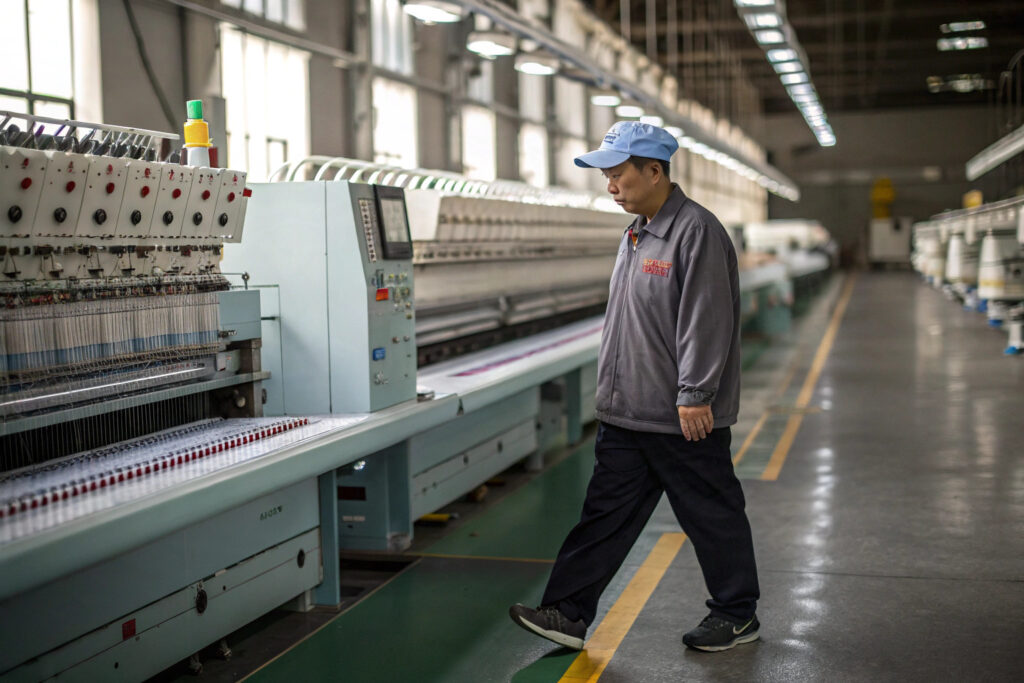
Speed is the enemy of precision in embroidery. When a machine runs at 850 or 1000 stitches per minute, the physics of the needle and thread change. The needle generates more heat. The thread is pulled off the cone more aggressively. The pantograph that moves the cap frame accelerates and decelerates rapidly. On sharp corners and small lettering, the frame must stop precisely, pivot, and accelerate again. At high speed, the frame can overshoot the corner slightly due to inertia, rounding off what should be a sharp point.
Sample rooms typically run machines at 600 to 650 stitches per minute. The operator watches every stitch. Production floors want to run at 800 or higher to meet output targets. I cap our bulk production speed at 750 stitches per minute for logos with fine detail, and lower for small text. This is a deliberate sacrifice of output for quality. A factory that pushes speed will produce blurry logos on complex designs. The cost of the extra machine time is far less than the cost of a rejected shipment. Buyers should ask their suppliers about the running stitch speed for their specific logo. A factory that cannot answer or says they run everything at maximum speed is likely the source of the blur.
Why Is Regular Needle Replacement a Non-Negotiable Standard?
I touched on needle wear earlier, but the process control aspect is worth detailing. A single embroidery needle costs a fraction of a cent. The labor to replace it takes thirty seconds. Yet needle replacement discipline is one of the hardest standards to enforce because the operator's productivity metric is often based on machine uptime and output count. Stopping to change a needle feels unproductive to an operator under pressure.
We have solved this with a mandatory, scheduled needle replacement policy. Every needle on every head is changed at the start of every shift, no exceptions. For high-density logos with over 8,000 stitches, we change needles mid-shift as well. The used needles are collected and counted by the QC team to verify compliance. This is auditable. The cost of the extra needles is a line item in our production overhead, absorbed into the unit price. The result is that our logos never degrade due to a dull needle. This standard is one you can ask any supplier about. "What is your needle replacement interval for my order?" If they look confused, they do not have one.
How Can a Buyer Contractually Prevent the Sample-to-Bulk Quality Gap?
You can have the best quality conversation in the world, but without contractual teeth, it is just a conversation. The purchase agreement between you and the factory should explicitly link the bulk production quality standard to the approved pre-production sample. The sample should be sealed, signed by both parties, and designated as the "gold-seal reference sample." The contract should state that all bulk production units must match the gold-seal sample in embroidery sharpness, stitch density, color, and placement within a defined tolerance.
A strong contract also specifies the consequence of deviation. It might state that if a random inspection reveals more than an agreed AQL percentage of units with embroidery quality below the gold-seal standard, the factory is responsible for either reworking the defective units at their cost or issuing a discount against the invoice. This clause transforms the sample from a visual reference into a legally binding quality specification. It focuses the factory's management attention on process control because the financial risk of failure is now explicit. I have found that when this clause is present, the production manager is much more likely to listen to the QC inspector who wants to stop the machine.
Beyond the contract, the buyer should also specify the inspection protocol. A common standard is the ANSI/ASQ Z1.4 AQL 2.5 for major defects, but embroidery sharpness can be classified as a major or critical defect depending on the brand's requirements. I advise clients to define what constitutes a "blurry logo" with objective, measurable criteria. For example, "Letter counter openings must be clearly visible without magnification. Satin stitch edges must not show fuzzy thread breakout exceeding 0.5mm when viewed from a distance of 30cm under standard retail lighting." This level of specificity removes the subjectivity from the inspection. The inspector is not judging "sharpness." They are measuring a physical characteristic against a documented standard.

What Should a Gold-Seal Sample Package Contain?
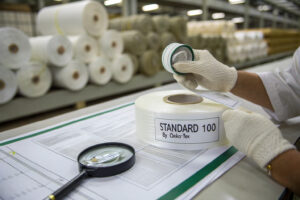
The gold-seal sample package is more than one cap. It should include the approved cap itself, sealed in a tamper-evident bag with a signed and dated label across the seal. It should also include a specification sheet listing the embroidery thread brand and color codes, the digitized file name and version number, the stabilizer brand and weight, and the needle size used. This spec sheet becomes part of the contract appendix.
Any deviation from these specifications during bulk production is a contract breach, even if the cap looks "close." The spec sheet locks in the material inputs, not just the visual output. This prevents the material substitution issues I described earlier. I prepare these packages for clients as a standard service. It takes extra time during the sampling phase, but it saves weeks of dispute resolution later. The gold-seal sample becomes the objective truth that both parties have agreed upon.
How Can Third-Party Inspection Be Structured to Catch the Drift?
Relying on the factory's internal QC is necessary but not sufficient for high-stakes orders. An independent third-party inspection adds a layer of verification. The key is to structure the inspection to occur during production, not just at the end. An "inline" or "during production" inspection allows the inspector to witness the embroidery machines running and pull samples directly from the output.
The inspector should be given the gold-seal sample and the spec sheet. Their protocol should include a side-by-side photographic comparison of the bulk cap and the gold-seal under a standardized magnification. They should also check the embroidery machine settings, such as the running speed and the needle installation date. If the inspector finds a quality drift, they can issue a corrective action report immediately, before the factory has produced thousands of defective units. This real-time intervention is far more valuable than a final inspection that just documents a failure. I welcome third-party inspectors on our production floor. They are an extension of our own quality commitment, and they provide independent validation to the client.
Conclusion
The gap between a sharp sample and a blurry bulk logo is not a mystery. It is a measurable, preventable failure of process control. Needle wear degrades stitch hole quality. Thread tension drifts across multi-head machines. Material substitutions alter the foundation the embroidery is built on. Machine speed is pushed past the precision limit. The sample was a promise made under ideal conditions. The bulk is that promise delivered under commercial pressure. Only a factory with disciplined needle replacement schedules, thread tension monitoring, mandatory production sew-outs, and empowered in-line QC inspectors can keep the two identical.
You, as the buyer, have the power to close this gap contractually. A sealed gold-seal sample with a detailed material spec sheet, a purchase agreement that defines the sample as the binding quality standard, and a structured third-party inspection plan create a system of accountability. This system rewards factories that invest in process control and exposes those that rely on sample room luck.
If you are tired of approving beautiful samples only to receive disappointing bulk shipments, I invite you to experience a different approach. At Global-Caps, we treat the gold-seal sample as a production target, not a sales tool. We build the process controls, the machine settings, and the QC checkpoints around matching that target thousands of times over. Reach out to our Business Director, Elaine, at elaine@fumaoclothing.com. Send us your logo file, and we will walk you through our first-off approval process and show you how we guarantee bulk sharpness. Let's make sure the hats your customers open are exactly the hats you approved.