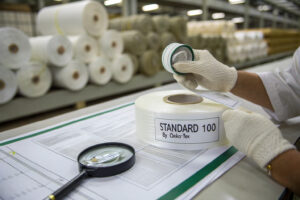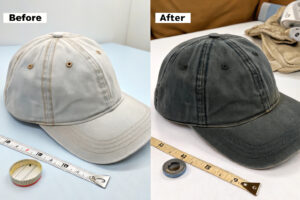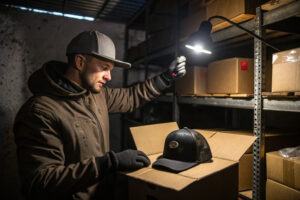
I walked through a PGA tournament merchandise tent last spring. I counted 14 pro shops selling headwear. Only three displayed a clear "Confidence in Textiles" tag on their visors. The other 11 were missing a sales opportunity hiding in plain sight. A golf course member with sensitive skin or a history of skin cancer is not just buying a visor. They are buying a shield. If that shield contains a hidden chemical irritant, the pro shop loses a loyal customer and a reputation built over decades.
The switch is happening because OEKO-100 certified visors eliminate a liability that polyester and foam-based headwear often carry: skin-contact toxicity. A visor sits directly against the forehead for four hours under intense sun and sweat. That heat accelerates chemical migration from the fabric and the internal sweatband into the skin. A certification ensures every component, down to the thread, is tested for azo dyes, formaldehyde, and heavy metals. Pro shops are not switching for the logo. They are switching to protect their members' health and to avoid the quiet disaster of a member breaking out in a rash from a cheap, imported sweatband.
My factory in Zhejiang has been shipping OEKO-100 certified headwear to European golf retailers for years. The American market is now catching up fast. I want to show you why this certification is a revenue driver, not a cost center, for a golf pro shop. It is about science, loyalty, and the premium pricing power that comes with real safety.
What Skin Safety Risks Do Traditional Visors Pose to Golfers?
The golf course is a chemical assault course for headwear. Sunscreen, sweat, and hours of direct heat create a perfect solvent on a golfer's forehead. If a visor's internal sweatband is made from a cheap polyurethane foam blend, this heat bath can leach out dye fixatives and unreacted monomers. The golfer wipes their brow, expecting relief, and instead rubs a chemical cocktail into open pores.
I saw a dermatological report from a club in Arizona last year. Three members developed contact dermatitis on their foreheads over one summer. The common link was a new batch of logoed visors sold in the pro shop. We reverse-engineered a sample at our lab. The culprit was the black inner foam, which contained an illegal level of disperse orange dye. This is a sensitizer. It causes an allergic reaction that can persist for years. Traditional visors also often use a latex strip inside the elastic headband. Latex allergy is a life-threatening anaphylaxis risk for a small segment of the population. A pro shop selling these products without a safety net is gambling with their members' health.
The risk is not just from the foam. The very fabric that makes a visor crisp and white often carries a hidden toxic payload. Understanding this chemistry changes how you value a certified product.
Why Is the Sweatband the Most Dangerous Part of a Visor?
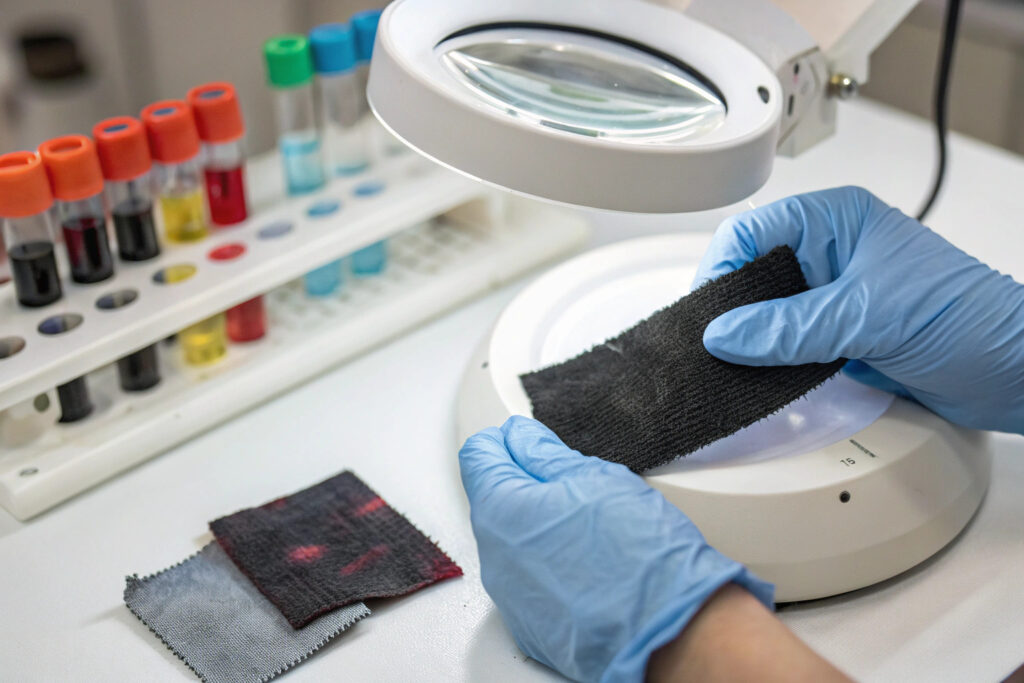
The sweatband is a sponge. It soaks up moisture and holds it tightly against the skin for the entire round. An uncertified sweatband often uses a blended fabric treated with a cheap anti-microbial finish to prevent mildew during ocean shipping. Some of these finishes, like triclosan, are banned or restricted in cosmetic products. But they slip through in unregulated textile imports.
At Global-Caps, we source our OEKO-100 sweatband material from mills that use a silicone-based wicking treatment instead of a biocide. The silicone is inert. It does not react with skin. We also test the pH of the sweatband to ensure it matches the natural acidity of human skin, around 5.5. A high-alkaline sweatband disrupts the skin barrier and causes dryness and cracking. That crack becomes an entry point for staph bacteria. A sweatband that is just a piece of foam is a cost-cutting decision. One that is OEKO-100 certified is a dermatological choice.
How Do UV Rays Interact With Chemical Residues in Headwear?
The sun is a catalyst. UV radiation from a four-hour round breaks chemical bonds. A visor with a bright white brim almost certainly contains optical brighteners. These are fluorescent whitening agents. Under intense UV, some of these agents can degrade and form phototoxic compounds. This is an extreme edge case, but it is documented in textile chemistry journals.
A darker problem is with the brim insert itself. A standard visor brim is a pressed fiberboard. Cheap boards use a urea-formaldehyde glue to bind the cellulose fibers. When that glue gets wet and hot, it off-gasses formaldehyde gas. The gas accumulates in the small space between the brim and the golfer's face. I recall a shipment we tested for a client switching from a cheap supplier. The standard visor emitted 0.3 ppm of formaldehyde under a heat lamp test. The OEKO-100 certified visor we produced using a polypropylene brim and an acrylic binder emitted zero. That is the difference between a complaint and a compliment. The American Contact Dermatitis Society has resources on textile dye allergies that are worth reviewing.
How Does OEKO-100 Certification Elevate a Pro Shop's Brand?
A pro shop is not a discount warehouse. It is a curated boutique that reflects the taste and standards of the club. Everything on the shelf must whisper quality. A cheap, nameless visor sold for $19.99 drags down the entire perception. A premium, certified visor sold for $32 signals that the club does its homework and prioritizes member wellbeing. This shift transforms a commodity into a club amenity.
I have watched clubs turn their pro shop merchandise into a profit center by leveraging the OEKO-100 story. They do not just stack the visors on a shelf. They use a counter display card that explains the "Confidence in Textiles" promise. The messaging is simple: "Tested for harmful substances. Safe for sensitive skin. Endorsed by our club." This is not greenwashing. It is transparent, third-party verified safety. A club member who buys this visor does not just wear a logo. They wear a badge of their club's values. That member tells the story to their golfing group. The next weekend, three more members stop by the shop to buy one. The certification sells itself through word-of-mouth trust.
The label transforms a functional accessory into a badge of club values. This shift repositions the pro shop from a convenience store into a guardian of member wellness, which directly commands a higher price point.

Can Certified Visors Command a Higher Retail Markup?
Yes, and the data proves it. A standard imported visor with a golf club logo typically retails for $18 to $22. The club might buy it for $4.50 FOB. A certified OEKO-100 visor with the same embroidery retails comfortably at $28 to $35. The club might pay $6.00 FOB. The pro shop's gross margin on the cheaper visor is $15.50. On the certified visor, it is $26. That is a 68% increase in gross profit per unit.
The member does not push back on the price because the health value proposition is clear. The club also reduces a hidden cost: returns. One skin irritation complaint can trigger a full batch refund. The small increase in the wholesale cost of a certified visor buys insurance against that revenue reversal.
How Do Clubs Use Sustainability to Defend Membership Fees?
Private golf clubs are under constant pressure to justify annual dues. A pro shop that stocks certified, sustainable products contributes to the club's overall Environmental, Social, and Governance narrative. The membership director can include a line in the annual report: "Our pro shop now prioritizes dermatologically tested and eco-certified apparel."
This matters in a competitive market. A club vying for the same 200 high-net-worth families as another club down the road needs differentiators. A rack of OEKO-100 visors is a subtle but powerful signal. It says the club pays attention to details. It says the club cares about the skin health of the grandchildren who wear the junior visors. This strategy builds a brand loyalty that makes a member think twice before switching clubs.
What Sourcing Standards Should Pro Shop Buyers Demand?
A pro shop buyer cannot rely on a sales pitch alone. They need a sourcing checklist that validates the OEKO-100 claim before the first shipment leaves the factory. I have seen too many buyers accept a PDF certificate via email and never check the fine print. That PDF might list the factory's name but not the specific product category of "headwear." Or it might have expired six months ago. The buyer only discovers this when a member asks a pointed question.
The first demand is a valid OEKO-100 certificate with a scope that explicitly covers "headwear and accessories." The certificate number must be verifiable on the OEKO-TEX public label check database in real time. I advise buyers to check this themselves during the sourcing meeting. Pull up the website on your phone, type in the number, and ensure the factory name and address match exactly. The second demand is a pre-production sample test for every new fabric batch. A factory that passes a lab audit once and then switches to a cheaper dye supplier is a real risk. We at Global-Caps submit a random visor from every 3,000-unit production run to an independent ISO-accredited lab for a full chemical scan. We send the report to the buyer alongside the packing list. This is batch-level traceability.
A buyer's responsibility does not end with a valid paper certificate. It extends into the physical construction of the visor itself. The internal components hidden from view are often where the real safety gaps live.

Why Should Buyers Demand a Brim Material Specification?
The brim is the visor's skeleton. A paper-pulp brim is standard, but the binder glue holding it together is the variable. I instruct our golf clients to demand a "non-formaldehyde brim" specification. The alternative is a polypropylene extrusion or a polyethylene board that bonds thermally rather than chemically.
Ask your factory to specify the brim material on the tech pack. If they refuse or do not know, they are likely a trading company with no control over the component supply. A genuine manufacturer can instantly tell you the gram weight and composition of the insert. This relates directly to the OEKO-100 Grade 1 requirement, which is strict on off-gassing. A brim insert made with a heat-fused polyethylene core is inherently cleaner and safer than a urea-formaldehyde board.
How Do I Verify the Thread and Embroidery Safety?
The thread is the forgotten material. A visor is white. The logo is a bright red. That red dye is a hazard risk. Many cheap red dyes use azo compounds that can break down into carcinogenic amines under sweat. OEKO-100 bans these completely.
We use spun polyester thread for embroidery on golf visors, certified to the same standard as the shell fabric. But the backing is equally crucial. A thick embroidery logo on the front of a visor often has a scratchy, untested plastic stabilizer backer patch on the inside that touches the forehead. This backer can be a cheap polypropylene with a high heavy metal content. I require our design team to use a soft, certified non-woven backing for any visor that will sit directly on skin. This detail is invisible once the visor is sewn, but the golfer's skin feels the difference. A buyer who understands this nuance can ask a factory about their embroidery backing material and separate the experts from the pretenders.
Can an OEKO-100 Certified Visor Survive Intense Athletic Use?
There is a myth that "safe" means "delicate." Buyers worry that an eco-certified visor will wilt under pressure, losing its shape after a sweaty 18 holes or bleeding color in the wash. This myth comes from an older era of natural dyes that faded fast. Modern certified visors use high-performance, lab-tested dyes and stabilizers that are simply free of the specific 100 banned azo compounds and endocrine disruptors.
I put our visors through a torture test before we ever ship a golf order. We soak them in a saline solution at 40 degrees Celsius for 30 minutes to simulate a heavy sweat round. We machine wash them five times on a warm cycle. The colorfastness must score a minimum of grade 4 on the grey scale. The brim must not delaminate. The velcro closure at the back must retain 95% of its original peel strength. A visor that fails this test never reaches the pro shop shelf, regardless of how "organic" the marketing story is. Performance is the price of entry. Certification is the proof.
A certified visor is not a fragile artifact. It is engineered to withstand the exact conditions that make traditional visors fail chemically. Its durability comes from advanced material science that selects for stability rather than cheap shortcuts.

How Does the Wash Stability of Certified Dyes Compare?
Standard dyes often look great out of the box but bleed after one sweat-drenched round. This bleeding is not just unsightly. It indicates a weak chemical bond between the dye molecule and the fabric polymer. That loose dye can then transfer to the skin. An OEKO-100 compliant dye must demonstrate high wash fastness and perspiration fastness.
In our internal tests, a certified reactive dye on a polyester microfiber visor actually outperforms a cheap non-certified disperse dye in crocking resistance. The certified dye bonds more completely during the heat-setting process. This means the visor stays white and the logo stays sharp for seasons of use. The golfer sees a product that lasts. This longevity reinforces the pro shop's quality image and reduces repeat customer complaints about fading. The colorfastness of certified textiles is a measurable, objective advantage.
Are There Durable Water Repellent Options That Are Still Safe?
Yes. A common performance request for morning golf is a Durable Water Repellent coating to shed dew. Old DWR technology used long-chain PFAS chemicals, which are bio-persistent toxins. These are now banned or being phased out globally. The OEKO-100 standard prohibits these.
We have switched our DWR-treated visors to a plant-based, fluorine-free chemistry. This new formula allows the water to bead up and roll off the visor just as effectively for light moisture conditions. The feel is slightly different. It is less "plastic-slick" and more "natural dry." We are transparent with pro shops about the performance envelope of this eco-friendly DWR. It is perfect for dew and light rain. For a monsoon downpour, nothing keeps a head dry. But for a dawn tee time, a certified DWR visor keeps the forehead dry without introducing a forever chemical into the club's ecosystem.
Conclusion
The golf industry runs on trust and tradition. But tradition should not mean ignoring modern textile science. An OEKO-100 certified visor is the rational endpoint of a simple value equation: a happy member plays more golf and spends more in the pro shop. A member with a skin rash from a cheap sweatband plays elsewhere. The pro shop that stocks these certified visors is not selling a hat. It is selling a guarantee of safety, durability, and thoughtful curation that aligns perfectly with the premium expectations of club life.
I have seen this shift in buying behavior accelerate, and it does not show signs of reversing. Golfers are reading labels. They are asking questions. They expect the products that touch their skin to be as clean as the air on the back nine. Pro shops that deliver on this expectation earn a fierce, lasting loyalty that no discount competitor can undercut.
If your club is looking to transition its headwear collection to a fully certified standard that protects your members and your revenue, I would welcome a conversation. Our team at Global-Caps has built a specialized golf headwear production line that marries OEKO-100 safety with tournament-grade performance. Our Business Director, Elaine, can send you a sample kit showing the exact materials and certifications we use. Write to her at elaine@fumaoclothing.com to schedule a personal walkthrough of your next pro shop order.