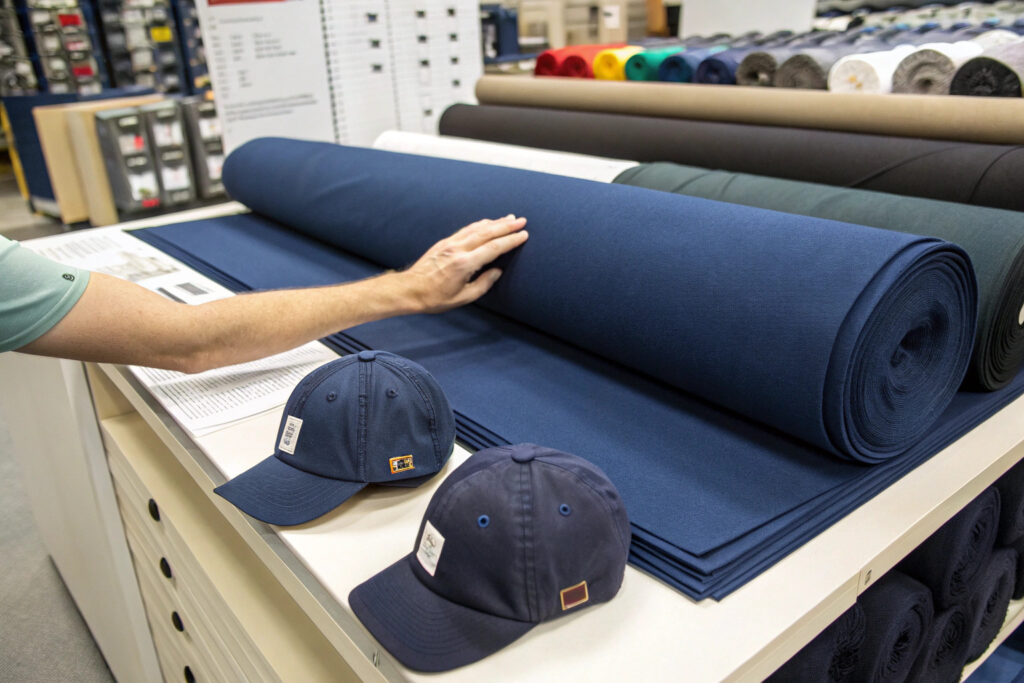
You design a premium dad hat. You want it to feel substantial. You want it to stand up with structure but feel soft to the touch. You order "heavyweight cotton" from your usual supplier. The fabric arrives. It is 260gsm. It is standard twill, not brushed. The cap feels fine. It does not feel premium. It feels like every other dad hat on the market. Your "premium" hat uses the same fabric as a promotional giveaway cap. The fabric is the foundation of the hat. A premium hat starts with premium fabric. The fabric is the first thing the customer touches. The fabric is the difference between a $12 hat and a $35 hat.
You source heavyweight brushed cotton for premium structured dad hats from specialist textile mills that produce apparel-grade cotton fabrics with a weight of 320 to 400 grams per square meter and a mechanical brushed finish on one or both sides. The mills are concentrated in specific textile manufacturing regions: the Jiangsu and Zhejiang provinces in China for cotton woven fabrics, the Tamil Nadu region in India for organic brushed cotton, and specialized mills in Turkey and Portugal for premium European-sourced cotton. The fabric specification must include the weight in gsm, the weave construction—typically a 3/1 or 2/1 twill—the brushing process, the pre-shrinking treatment, and any certifications such as OEKO-TEX or GOTS. A heavyweight brushed cotton suitable for structured dad hats has a minimum weight of 320gsm, with 360 to 380gsm being the sweet spot for structure combined with softness.
At Global-Caps, I have established relationships with two specialist cotton mills that produce heavyweight brushed twill specifically for headwear. My standard premium brushed cotton is 360gsm, OEKO-TEX certified, and pre-shrunk. I stock the core colors—black, navy, charcoal, khaki, and burgundy—and can source custom colors with a minimum order quantity of 300 meters per color.
What Defines "Heavyweight Brushed Cotton" for Structured Dad Hats?
You see "heavyweight cotton" on a supplier's website. You order a sample. The fabric arrives. It is 280gsm. The supplier calls it heavyweight. For t-shirts, 280gsm is heavyweight. For caps, it is midweight. The terminology is relative to the product category. A heavyweight cap fabric starts where a heavyweight t-shirt fabric ends. You need to specify the number, not the adjective.
Heavyweight brushed cotton for structured dad hats is defined by three technical parameters: the fabric weight in grams per square meter, the weave construction, and the mechanical brushing process. The fabric weight must be 320gsm or higher, with 360 to 400gsm considered premium heavyweight. The weave is typically a 3/1 twill, which provides a balance of drape and structure with a pronounced diagonal rib. The brushing process mechanically raises the surface fibers using rotating wire brushes, creating a soft, velvety nap on one or both sides of the fabric. The fabric is then sheared to a uniform nap height and finished with a softener and a pre-shrinking treatment.
My heavyweight brushed cotton specification defines the minimum acceptable weight at 340gsm. Fabrics below this threshold are classified as midweight and are not used for my premium structured dad hat line.
The brushing process is what separates premium brushed cotton from standard heavyweight twill.

How Does the Mechanical Brushing Process Create the Soft Hand Feel?
Mechanical brushing uses rotating cylinders covered with fine wire bristles. The fabric passes over these cylinders under tension. The bristles catch the surface fibers of the cotton yarns and pull them upward, breaking some fibers and creating a raised, fuzzy nap on the fabric surface. The process is repeated multiple times to achieve an even coverage.
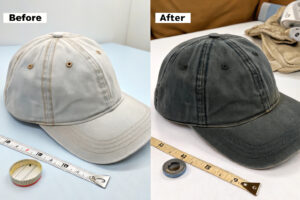
The brushed nap scatters light differently than a smooth twill surface, giving the fabric a softer, more matte appearance. The nap feels velvety to the touch. The brushing also increases the fabric's apparent thickness and improves its thermal insulation. The brushing process is applied to one side—typically the face—or both sides depending on the desired hand feel.
My brushed cotton is single-side brushed on the face. The back remains smooth for clean seam construction and sweatband attachment.
Why Is a 3/1 Twill Weave Preferred Over Plain Weave for Structured Caps?
A 3/1 twill weave floats the weft yarn over three warp yarns, then under one warp yarn. This creates a diagonal rib pattern and a fabric that is thicker, more drapable, and more resistant to wrinkling than a plain weave of the same yarn count. The twill construction provides the structural body that a dad hat crown needs to hold its shape.
A plain weave is a simple over-one, under-one construction. It produces a flatter, less textured fabric. It is less suitable for structured caps because it lacks the body and drape of a twill. The twill weave is the standard for premium headwear.
My fabric construction standard is a 3/1 right-hand twill for all heavyweight brushed cotton.
Where Are the Best Mills for Heavyweight Brushed Cotton Located?
You search "cotton fabric mill" on Alibaba. You get 10,000 results. You contact ten mills. Three can produce heavyweight twill. One can do brushing. None can do both at the required weight with the required certifications. You are searching in a commodity marketplace for a specialty product. The mill that produces standard cotton twill for promotional tote bags is not the mill that produces premium brushed cotton for high-end headwear. The mill matters.
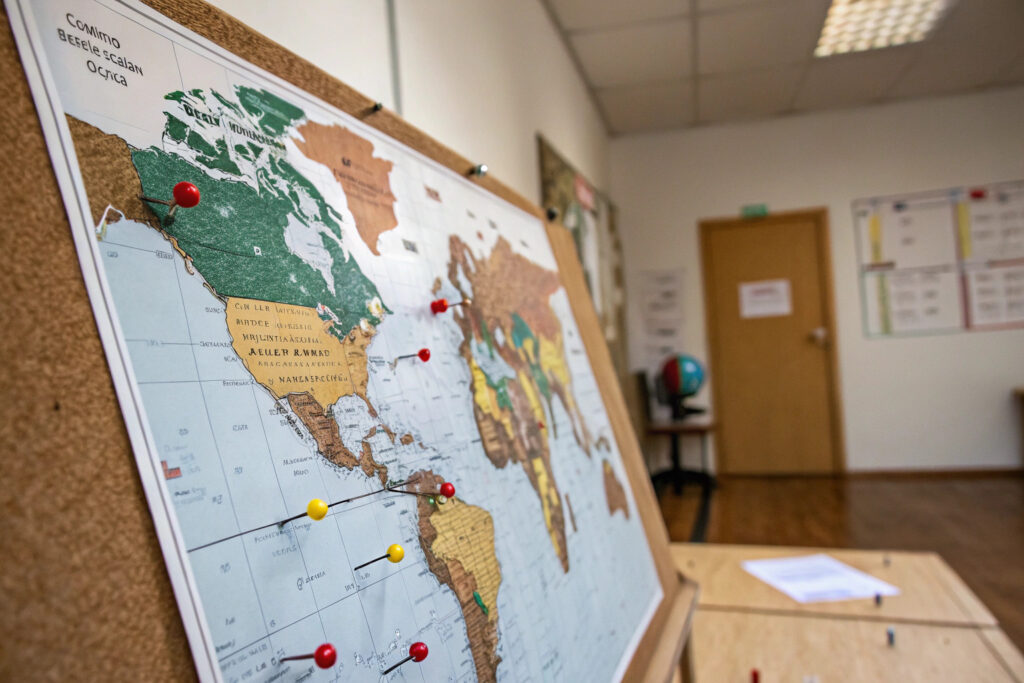
The best mills for heavyweight brushed cotton are located in specific textile manufacturing clusters. In China, the Zhejiang and Jiangsu provinces host mills specializing in woven cotton fabrics for apparel, with several offering in-house brushing and finishing. In India, the Tamil Nadu region around Tiruppur and Coimbatore has mills specializing in organic cotton, with GOTS certification and brushed finishing capabilities. In Turkey, the Denizli and Istanbul regions have mills producing long-staple cotton fabrics with premium brushing. In Portugal, small-batch mills serve the European luxury apparel market. The Chinese mills offer the best balance of quality, capacity, and cost for most premium headwear brands.
My mill network includes two primary partners in Zhejiang and one in Jiangsu. I audit each mill annually for quality consistency and certification compliance.
The mill's brushing capability must be in-house. A mill that outsources brushing has less quality control over the finish.
Why Are Zhejiang and Jiangsu Provinces Key for Brushed Cotton Production?
Zhejiang and Jiangsu provinces are the historical centers of China's textile industry. They have a dense concentration of spinning mills, weaving mills, dyeing houses, and finishing plants. The infrastructure for specialty finishing—including mechanical brushing, sanding, and peach-skin finishing—is well-established. The mills have generations of experience in cotton fabric production.
The proximity of these mills to the major headwear manufacturing centers—also in Zhejiang—reduces fabric transit time and logistics cost. A mill in Zhejiang can deliver fabric to my factory in 2 to 3 days.
My primary mill is located 200 kilometers from my factory. The short supply chain reduces lead time and carbon footprint.
What Questions Should You Ask a Mill About Their Brushing and Pre-Shrinking Process?
Ask the mill: "What is the maximum fabric weight you can brush uniformly? What type of brushing machine do you use—single-cylinder or multi-cylinder? Do you brush one side or both sides? How do you control the nap height consistency across the width of the fabric roll? Do you perform pre-shrinking before or after brushing? What is the residual shrinkage percentage after your pre-shrinking process? Can you provide a batch-specific shrinkage test report? Do you have OEKO-TEX or GOTS certification for your finishing process?"
The answers reveal whether the mill has genuine in-house brushing expertise or is a trader reselling fabric from an unknown finisher.
My mill audit questionnaire includes these questions. I visit each mill annually to inspect the brushing and pre-shrinking equipment.
How to Specify and Order Heavyweight Brushed Cotton Fabric for Caps?
You email the mill: "I need heavyweight brushed cotton for caps. What do you have?" The mill sends you their stock list. You pick a fabric from a photo. The fabric arrives. It is the wrong weight, the wrong weave, and the wrong finish. Your email did not specify the technical parameters. The mill gave you what they had, not what you needed. The fault was in the specification, not the fabric.
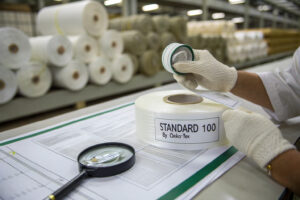
You specify and order heavyweight brushed cotton by creating a technical specification sheet that defines every parameter of the fabric. The specification includes the fiber composition, the yarn count, the weave construction, the fabric weight with an acceptable tolerance, the fabric width, the brushing type, the finishing treatments including pre-shrinking and any softeners, the color with a physical Pantone chip or lab dip reference, the required certifications, the quantity, the roll length requirements, the packaging, and the delivery date. The specification is a technical document, not a descriptive email.
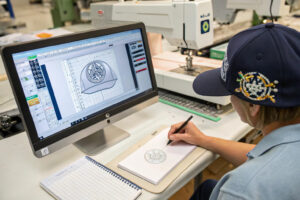
My fabric specification template is a two-page document. I complete it for every custom fabric order. The mill signs the specification as a confirmation of their capability to meet it.
The physical reference standard is the legal benchmark for the fabric quality.
What Is the Minimum Order Quantity for Custom-Dyed Heavyweight Brushed Cotton?
The minimum order quantity for custom-dyed heavyweight brushed cotton is typically 300 to 500 meters per color. The MOQ is driven by the dye house minimum batch size for the dye machine and the setup cost for the brushing machine. A dye run requires a minimum volume of fabric to fill the dye machine and circulate the dye liquor evenly. A brushing run requires a minimum length of fabric to thread the brushing machine.
At 360gsm and a fabric width of 150cm, 300 meters of fabric yields approximately 1,200 to 1,500 dad hats depending on the pattern efficiency. The MOQ per hat is approximately 1,200 units per custom color. For stock colors that the mill produces regularly, the MOQ can be lower because the mill combines orders from multiple buyers.
My custom color MOQ is 300 meters. I offer a stock color program with an MOQ of 100 meters for my core color palette.
Should You Request a Pre-Shrunk Certificate or Perform Your Own Shrinkage Test?
You should do both. Request the mill's pre-shrinking certificate that states the residual shrinkage percentage. The standard is less than 3 percent residual shrinkage after pre-shrinking. Then, perform your own shrinkage test on the received fabric according to AATCC 135 or ISO 6330. Cut a measured square of fabric, wash it according to the care label instructions, dry it, and re-measure. Calculate the shrinkage percentage.
The mill's certificate is a process document. Your test is a verification document. If your test shows shrinkage above the specified limit, the fabric lot can be rejected before cutting. The test is a quality gate that prevents a shrinkage problem from becoming a production problem.
My incoming fabric QC includes a shrinkage test on every new fabric lot. The test result is recorded against the mill's certificate.
How Does the Fabric Weight Affect the Structure and Durability of a Dad Hat?
You order a structured dad hat. The factory uses 280gsm cotton. The hat arrives. The crown flops over. The front panel wrinkles. The hat does not stand up on the shelf. You complain. The factory says, "We used the fabric you approved." The fabric was midweight. The hat was supposed to be structured. The structure comes from the fabric weight combined with the buckram. A lightweight fabric on a buckram frame looks like a sheet on a skeleton. The fabric must have enough body to work with the structure.
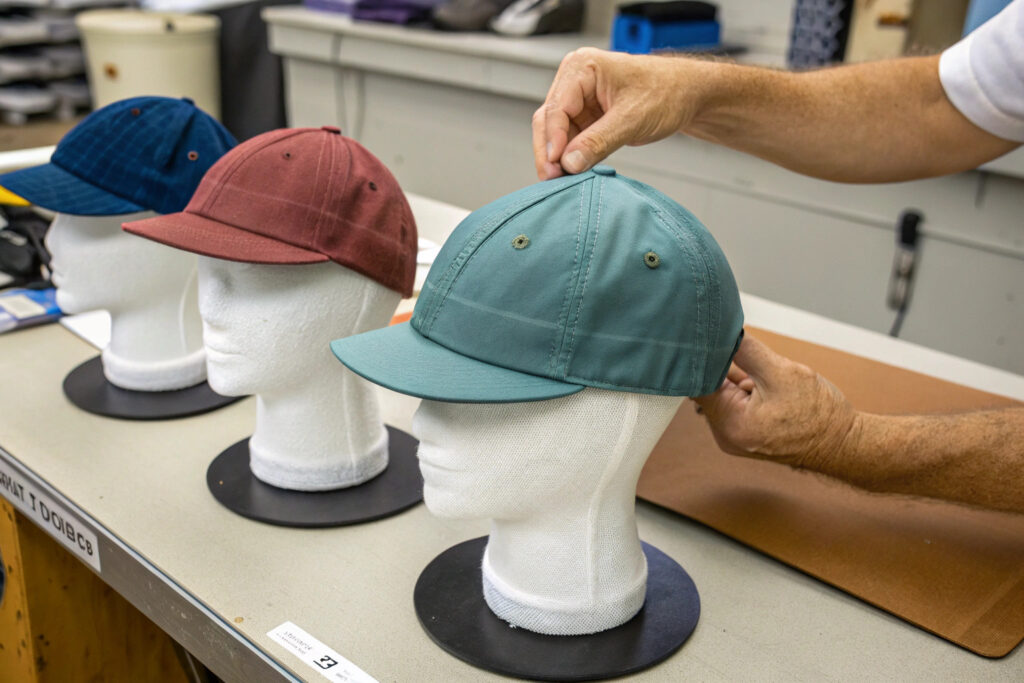
Fabric weight directly affects the structure and durability of a dad hat. A heavyweight fabric of 340gsm and above provides inherent body and rigidity that complements the internal buckram structure. The crown stands upright on the shelf and maintains its shape during wear. The heavier fabric resists wrinkling, abrasion, and premature softening after washing. A midweight fabric of 260 to 300gsm produces a softer, more casual dad hat that may wrinkle and lose its shape over time. The heavyweight fabric extends the hat's useful life. The hat looks newer for longer. The premium price is justified by the premium durability.
My structured dad hat uses a minimum 340gsm brushed cotton. The combination of the heavyweight fabric and the buckram interlining produces a crown that holds its shape through repeated wear and washing.
The 360gsm fabric provides enough body that the buckram can be a lighter grade, creating a structured look with a softer, more comfortable feel.
Why Does Heavier Fabric Reduce the Risk of Crown Wrinkling Over Time?
Crown wrinkling occurs when the face fabric is stretched and compressed during wear and washing. A lightweight fabric has less fiber mass to resist these forces. The fibers fatigue. The fabric relaxes. Wrinkles form and become permanent.
A heavyweight fabric has more fiber mass per square meter. The fibers distribute the stress of stretching and compression across a larger volume of material. The fabric is more resistant to permanent deformation. The crown maintains its smooth appearance for longer.
My durability testing includes a repeated compression test that simulates the crown being pressed and released 500 times. The 360gsm fabric shows minimal wrinkling. The 260gsm fabric shows visible creasing.
How Does the Fabric Weight Interact With the Buckram Interlining for the Perfect Dome?
The buckram interlining provides the rigid shape. The face fabric provides the visible surface. If the face fabric is too light, it conforms passively to the buckram and can show the buckram's texture through the surface. If the face fabric is heavy enough, it provides its own body that blends with the buckram structure, creating a smooth, organic dome shape.
The ideal combination for a premium structured dad hat is a medium-weight buckram—0.6 to 0.8mm thick—paired with a heavyweight 340 to 380gsm brushed cotton. The buckram provides the architectural framework. The heavyweight fabric provides the surface substance. The two layers work together.
My buckram specification for heavyweight cotton caps is a 0.7mm woven polyester buckram. The combination with 360gsm brushed cotton produces a dome that is structured but not rigid, premium but not stiff.
Conclusion
Heavyweight brushed cotton for premium structured dad hats is sourced from specialist textile mills in Zhejiang, Jiangsu, Tamil Nadu, and Turkey. The fabric is defined by its weight—320gsm minimum, 360 to 380gsm ideal—its 3/1 twill weave construction, and its mechanical brushed finish that creates the soft, velvety hand feel. The brushing process and the pre-shrinking treatment are critical quality parameters that must be specified in the purchase order.
The fabric is ordered with a technical specification sheet that defines every parameter. Custom-dyed colors have a minimum order quantity of 300 to 500 meters per color. Stock colors are available at lower MOQs. The fabric weight directly affects the hat's structure, wrinkle resistance, and durability. A 360gsm brushed cotton combined with a medium-weight buckram produces a premium structured dad hat that holds its shape through repeated wear.
At Global-Caps, my heavyweight brushed cotton is 360gsm, OEKO-TEX certified, and pre-shrunk. I stock core colors and offer custom dyeing. My mill partners are audited annually. The fabric specification is documented. The quality is consistent.
If you need premium dad hats made from heavyweight brushed cotton, contact my Business Director Elaine. She can send you our fabric swatch book with stock colors, our fabric specification sheet, and a sample hat for your evaluation. Email Elaine at elaine@fumaoclothing.com. Let's build a hat with the weight and softness your customers expect from a premium product.