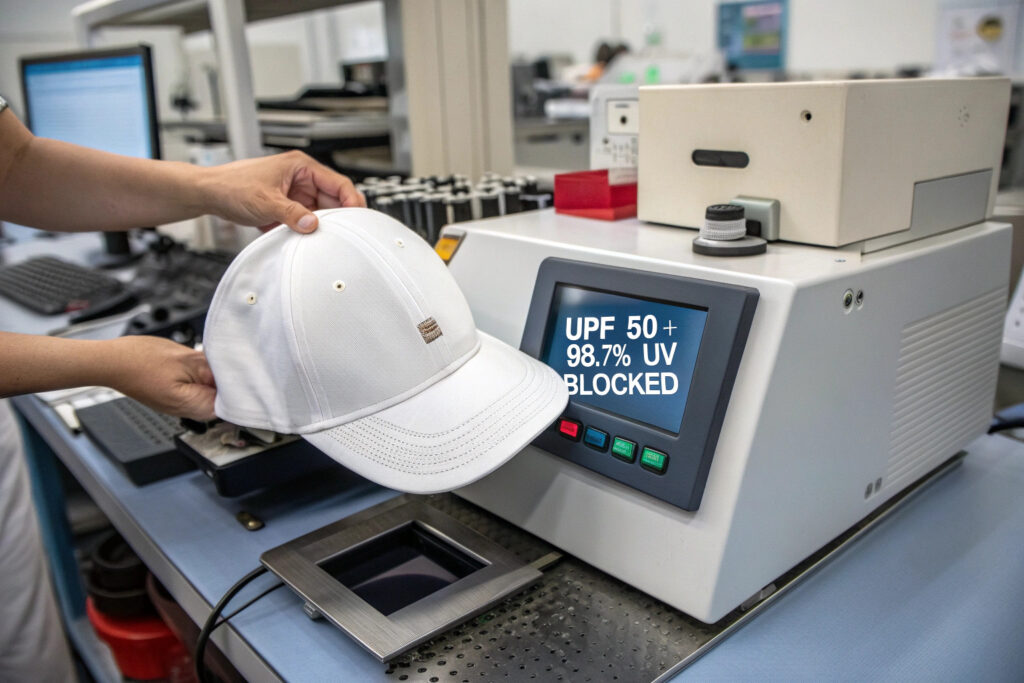
You search "wholesale UPF golf caps" on Google. You get 50,000 results. You request samples from five suppliers. The samples arrive. Three feel like regular polyester caps with a UPF hangtag stapled on. You ask for the UPF test report. One supplier sends a PDF with a blurry lab logo. Another sends a report from a lab you cannot find online. The third says "Our fabric is inherently UPF 50, no test needed." None of them send a verifiable, accredited UPF test report that matches the exact fabric and color of the sample cap. The UPF 50+ claim is printed on the hangtag. The claim is not backed by a test report. The market is full of sun protection claims without sun protection proof.
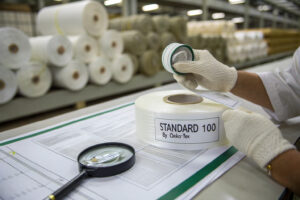
You buy wholesale golf caps with genuine UPF 50 plus fabric certification from a manufacturer who provides an ISO 17025 accredited laboratory test report that confirms the UPF rating for the specific fabric and color of your cap. The test must be conducted according to a recognized standard—AS 4399, AATCC 183, or EN 13758—and the report must include the UPF value, the UV-A and UV-B transmission percentages, and the fabric identification details. The manufacturer should also provide a UPF certification label program membership, such as the ARPANSA UPF Certification Scheme in Australia. A UPF 50+ rating means the fabric blocks at least 97.5 percent of UV radiation. The certification is specific to the fabric, not the cap style. A factory that cannot produce a test report for the exact fabric you are ordering is selling a claim, not a certified product.
At Global-Caps, I test every UPF-rated fabric in my inventory. The test reports are from Intertek and SGS, accredited to ISO 17025. The report matches the fabric composition, the color, and the weight. I do not sell "UPF caps" based on a generic mill certificate. I sell UPF-certified caps backed by a specific, verifiable lab report.
What Is a UPF 50 Plus Rating and How Is It Tested in a Laboratory?
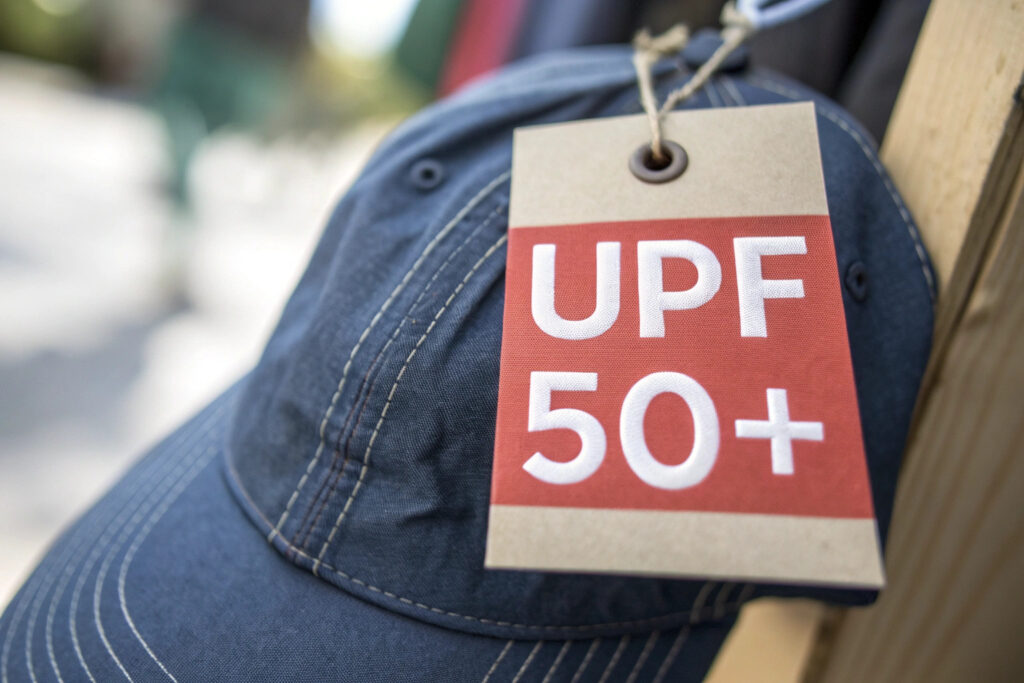
You see "UPF 50+" on a hangtag. You think it means the cap was tested once by someone somewhere. You do not know what the number means, what standard was used, or whether the test was on the exact fabric you are buying. The UPF 50+ claim is a number. The number is meaningless without the context of the test method, the test conditions, and the fabric identification.
A UPF 50 plus rating means the fabric blocks at least 97.5 percent of ultraviolet radiation, allowing less than 2.5 percent of UV rays to penetrate. The rating is determined by a laboratory test using a spectrophotometer that measures the spectral transmittance of the fabric across the UV-A and UV-B wavelengths. The measured transmittance values are weighted against the solar spectrum and the erythemal action spectrum to calculate the UPF value. A fabric must achieve a UPF of 50 or higher and a UV-A transmission of less than 5 percent to be labeled UPF 50+. The test is destructive if the fabric requires pre-conditioning, such as washing or stretching, which is required by the AS 4399 standard.
My UPF testing protocol uses the AS 4399 standard, which requires testing after 40 home launderings and exposure to chlorinated water and salt water. The rating reflects real-world use, not pristine fabric performance.
The test standard determines how rigorous the testing conditions are. Not all UPF 50+ claims are equal.
What Is the Difference Between AS 4399, AATCC 183, and EN 13758 Testing Standards?
AS 4399 is the Australian standard for sun protective clothing. It is the strictest standard globally. It requires the fabric to be tested after 40 home launderings, exposure to chlorinated pool water, and exposure to salt water. The label must state the UPF rating and a classification category. A fabric that achieves UPF 50+ under AS 4399 has proven durability under harsh conditions.
AATCC 183 is the American standard. It tests the fabric in its original, unwashed state. It does not mandate pre-conditioning. A fabric that achieves UPF 50+ under AATCC 183 may drop to UPF 25 after washing and stretching. The standard is less rigorous.
EN 13758 is the European standard. It requires a UPF of 40 or higher and a UV-A transmission of less than 5 percent. It does not mandate the 40-wash pre-conditioning required by AS 4399.
I test to AS 4399 for all my UPF golf caps. The standard covers the strictest requirements.
Why Must the Test Report Specify the Exact Fabric Color and Weight?
A UPF test on a black, heavyweight polyester fabric will show a high UPF value because dark, dense fabrics absorb UV radiation. A white, lightweight polyester fabric of the same construction will show a much lower UPF value. The UPF rating is color-dependent and weight-dependent. A test report for a black fabric does not prove a white cap is UPF 50+.
The test report must identify the fabric by its color, weight in grams per square meter, fiber composition, and construction. Each color variant must be tested separately, or the worst-case color—typically white or the lightest pastel—must be tested as representative of the color range.
My color-specific UPF testing covers every color in my golf cap range. The test report lists the fabric color and weight.
How to Verify That a Supplier's UPF Certificate Is Authentic and Not Fabricated?
You receive a UPF test report. The lab name is "Global Testing Services." You search for the lab. The website looks professional. You accept the report. The fabric you ordered is a light blue cotton twill. The report says "UPF 50+." You do not notice that the sample description on the report says "Black Polyester Knit." The report is for a different fabric. The supplier used a valid report for a different product. The report is real. The application to your fabric is fake.
You verify a supplier's UPF certificate by checking three things. First, confirm the testing laboratory is ISO 17025 accredited for UPF testing by looking up the lab on the accreditation body's directory. Second, verify the report number on the laboratory's online verification portal. A genuine report will be retrievable. A fabricated report will not appear. Third, confirm that the sample description on the report matches the fabric of your cap—the fiber composition, the color, the weight, and the construction. A mismatch between the sample description and your product invalidates the certificate.
My UPF certificate verification guide for clients includes the direct portal links for Intertek, SGS, and Bureau Veritas. I provide the report number and invite the client to verify independently.
The sample description field on the test report is the most commonly overlooked verification point.

What Should the "Sample Description" Field on a UPF Test Report Include?
The sample description field must include the fiber composition—100% polyester, the fabric construction—woven twill or knitted interlock, the fabric weight in grams per square meter, and the color. A complete description reads: "100% Polyester Woven Twill, 180gsm, Color: Navy Blue."
A vague description like "Textile Fabric" or "Polyester Cap" is insufficient. The description must be specific enough to confirm that the tested fabric is the same fabric used in your cap. If your cap uses a 180gsm white polyester twill and the report describes a 220gsm black polyester knit, the report does not apply to your cap.
My test report review checks the sample description against the production spec sheet before the report is shared with the client.
How Can You Check the Lab's ISO 17025 Accreditation Status for UPF Testing?
Every ISO 17025 accredited laboratory is listed in the directory of its national accreditation body. In the United States, the accreditation bodies are A2LA and ANAB. In Europe, UKAS, DAkkS, and COFRAC. In China, CNAS. The accreditation body's website has a searchable directory of accredited laboratories.
Enter the laboratory name. Confirm the accreditation scope includes the specific UPF test standard—AS 4399, AATCC 183, or EN 13758. A laboratory accredited for textile colorfastness is not necessarily accredited for UPF testing. The accreditation is standard-specific.
I verify my lab partners' accreditation annually. The accreditation certificate is included in the test report package.
What Golf Cap Fabrics Naturally Achieve UPF 50 Without Chemical Treatment?
You assume polyester equals sun protection. You order a lightweight polyester mesh golf cap. The mesh has large holes for ventilation. The holes are perfect for airflow. The holes are also perfect for UV transmission. The cap feels cool. The cap offers minimal sun protection. The fiber type is polyester. The construction is a sieve. The construction defeats the fiber.
Fabrics that naturally achieve UPF 50 without chemical treatment are dense, tightly woven or knitted fabrics with a high cover factor. A polyester microfibre twill with a weight above 180 grams per square meter, a tight nylon supplex with a plain weave, and a heavy cotton canvas with a weight above 250 grams per square meter can all achieve UPF 50 through their physical structure alone. The fiber type is less important than the fabric density. A tightly woven cotton blocks more UV than a loosely knitted polyester. A fabric with inherent stretch, like a spandex blend, can lose UPF when stretched because the yarns separate and the holes open.
My UPF fabric library includes pre-tested fabrics that achieve UPF 50 without chemical treatments. I recommend the appropriate fabric for each golf cap design.
The fabric color is a significant independent variable. The same construction in white and black will have different UPF ratings.
How Does Fabric Color Impact the UPF Rating of a Golf Cap?
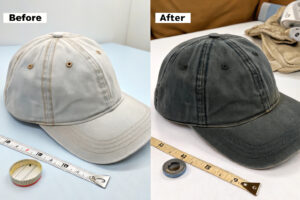
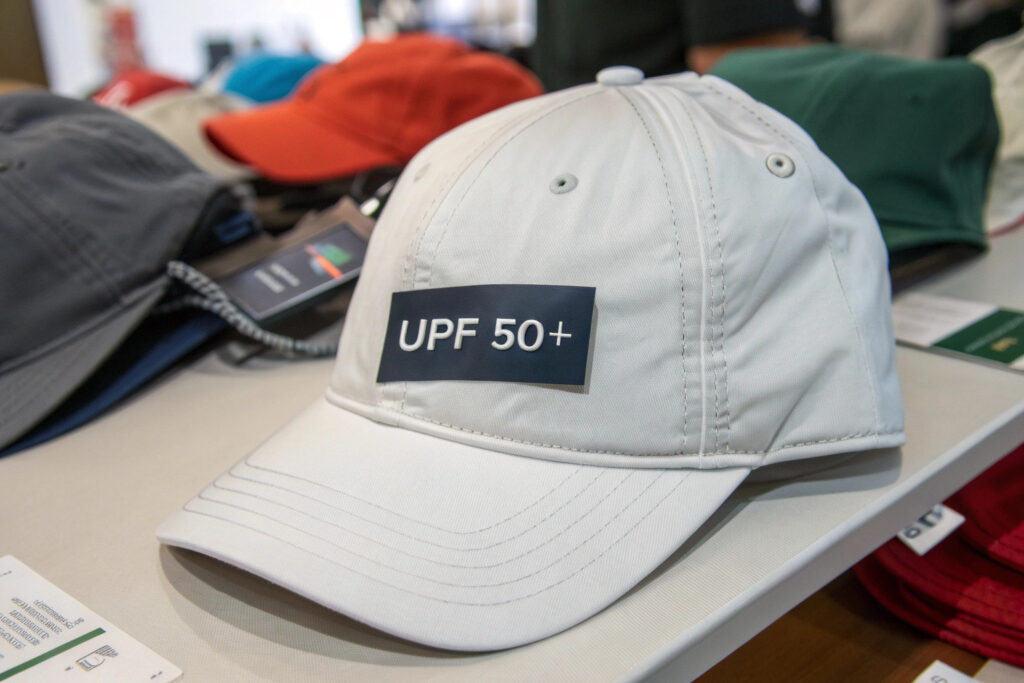
Dark colors absorb UV radiation. Light colors reflect visible light but often transmit UV radiation. A black polyester twill cap may achieve UPF 80, while an identical white polyester twill cap achieves UPF 25. The color difference alone can mean the difference between passing and failing the UPF 50 threshold.
For a cap to achieve UPF 50 in white, the fabric must be exceptionally dense and thick. A white cap that achieves UPF 50 is a premium, engineered product. A black cap that achieves UPF 50 is common.
My white UPF 50 fabrics are specially developed with a high-density weave and a heavier weight to compensate for the lack of UV-absorbing pigment.
Can a Lightweight Laser-Perforated Cap Still Achieve UPF 50?
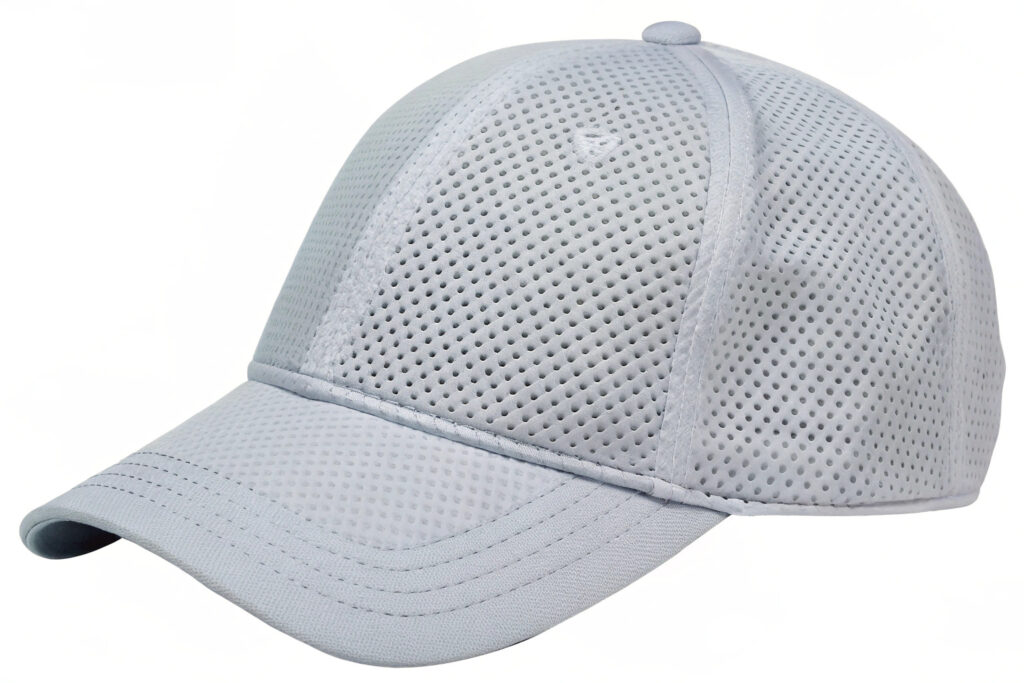
No. Laser perforations are holes cut through the fabric for ventilation. Each hole transmits 100 percent of UV radiation. A fabric that achieves UPF 50 as a solid sheet will have its overall UPF rating significantly reduced when perforated. The perforated area has a UPF of 1. The unperforated area has a UPF of 50. The overall cap UPF is a weighted average of the two.
A cap with extensive laser perforation for ventilation cannot achieve UPF 50 overall. The ventilation defeats the sun protection. A cap can have a solid crown and a perforated side panel, with the solid crown providing UPF 50 protection for the top of the head and the perforated panel providing ventilation at the cost of sun protection.
My product design guidance for UPF golf caps advises limiting perforations to areas that are not critical for scalp protection.
How Should a Golf Cap Be Labeled to Meet International UPF Certification Standards?
You print "UPF 50+" on a hangtag. You think that is the label. Under the Australian standard, that label is illegal without the ARPANSA certification license number. Under the European standard, the minimum rating for sun protective clothing is UPF 40, and the label must reference EN 13758. A generic "UPF 50+" claim without the appropriate certification logo and standard reference is a labeling violation in regulated markets.
A UPF 50+ golf cap must be labeled according to the requirements of the target market. In Australia, the label must include the ARPANSA UPF Certification Scheme logo, the UPF rating, the classification category—"Excellent Protection" for UPF 50+—and the certification license number. In Europe, the label must include the UPF 40+ rating, the EN 13758 standard reference, and the pictogram specified in the standard. In the United States, the label should follow ASTM D6603 guidelines, referencing the AATCC 183 test method and the UPF rating. A cap sold in multiple markets may require multiple labels.
My UPF labeling guide provides the specific label artwork for each target market. The labels are reviewed by the certification body before printing.
The Australian ARPANSA certification is the gold standard for UPF labeling and requires a license from ARPANSA.
What Is the ARPANSA UPF Certification Scheme and Why Does It Matter?
ARPANSA is the Australian Radiation Protection and Nuclear Safety Agency. It operates the UPF Certification Scheme for sun protective clothing. Manufacturers apply for a license. The manufacturer's fabric testing and quality control processes are audited. The license authorizes the use of the ARPANSA UPF Certification label on products that have been tested and verified.
The ARPANSA label is recognized and trusted by Australian consumers. It is frequently required by Australian retailers. The certification provides independent assurance that the UPF claim is valid and the product has been tested to the rigorous AS 4399 standard.
My ARPANSA license covers my UPF golf cap range. The license number is printed on every certified label.
Does a UPF 50 Rating Cover Both UV-A and UV-B Radiation?
For a UPF 50 rating to be valid, the fabric must block at least 97.5 percent of UV radiation across both the UV-B and UV-A spectrum. The AS 4399 standard requires a UV-A transmission of less than 5 percent for a UPF 50+ rating. The EN 13758 standard has the same requirement.
A fabric can block UV-B effectively but transmit significant UV-A. UV-A penetrates deeper into the skin and contributes to aging and long-term skin damage. A UPF test report that only measures UV-B transmission is incomplete. The report must include the UPF value, the UV-A transmission percentage, and the UV-B transmission percentage.
My UPF test reports include the complete spectral transmission data, not just the single UPF number.
Conclusion
Wholesale golf caps with genuine UPF 50 plus fabric certification are available from manufacturers who provide ISO 17025 accredited laboratory test reports for the specific fabric and color of the cap. The test must follow a recognized standard—preferably AS 4399, the strictest global standard—and the report must include the UPF value, the UV-A transmission percentage, and a detailed sample description matching the cap's fabric.
The UPF certificate is verified by checking the laboratory's ISO 17025 accreditation status, entering the report number on the laboratory's online verification portal, and confirming the sample description matches the fabric composition, color, and weight. The UPF rating is fabric-specific, not style-generic. A report for a black polyester knit does not validate a white cotton twill cap.
Fabrics that naturally achieve UPF 50 without chemical treatment are dense, tightly woven, and heavier weight. Dark colors achieve higher UPF ratings than light colors. Laser-perforated fabrics lose UPF protection in the perforated areas. The golf cap must be labeled according to the target market's standards—ARPANSA in Australia, EN 13758 in Europe, ASTM D6603 in the United States.
At Global-Caps, my UPF golf caps are tested to AS 4399 by Intertek and SGS. The test reports are color-specific and fabric-specific. The ARPANSA license is current. The labels are compliant. The sun protection claim is verifiable.
If you need wholesale golf caps with documented UPF 50 plus fabric certification, contact my Business Director Elaine. She can provide our UPF test report library, our ARPANSA license details, and a UPF-certified golf cap sample for your evaluation. Email Elaine at elaine@fumaoclothing.com. Let's protect your customers from the sun with certified, not claimed, protection.