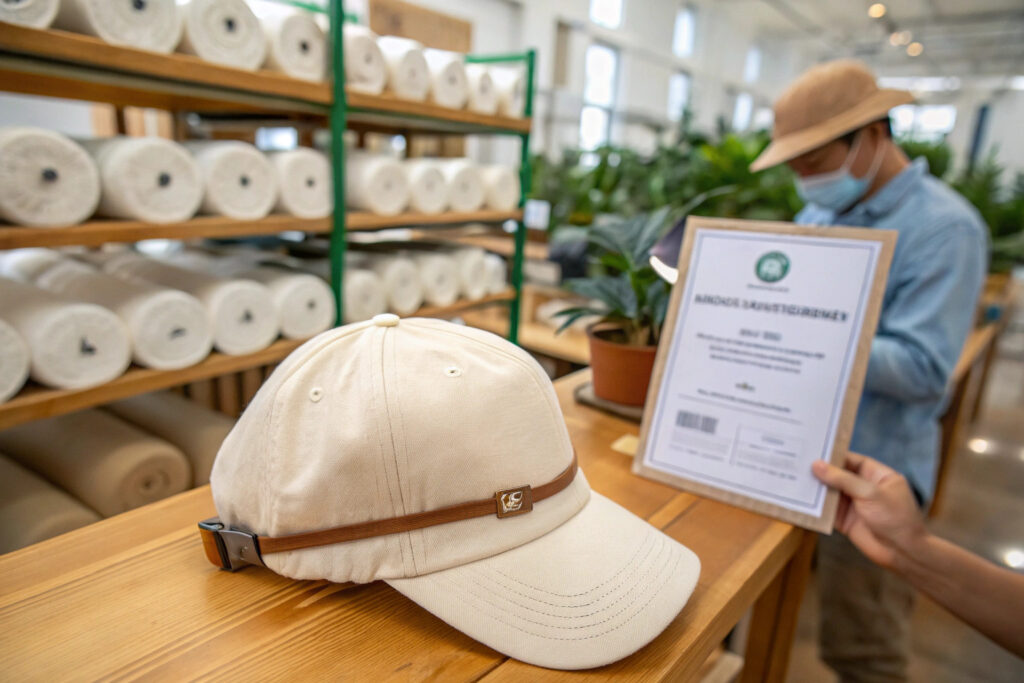
You find a supplier selling "green" hats. The price is right. You launch the eco-friendly collection. A customer emails you. "Send me your GOTS transaction certificate." You ask the supplier. They send a blurry PDF of a generic cotton certificate. It doesn't match your batch. Your brand reputation is on the line. I have seen buyers lose stockists over this. A yoga chain dropped a vendor because the "organic" cap failed an audit.
You buy certified organic cotton dad hats wholesale from a supplier who holds a valid Scope Certificate and can issue a Transaction Certificate for your specific order. You do not just look for a product. You look for a partner with a chain of custody. The Global Organic Textile Standard checks the entire process. It looks at the farm, the dye house, the sewing floor, and the warehouse. Your supplier must be listed on the GOTS public database. We at Global-Caps keep our certification current. We also keep the organic cotton physically separated from our conventional cotton in labeled bins.
The organic market is full of liars. A tag saying "natural" is not a legal standard. I will show you how to read the paperwork so you don't get fooled. This guide walks you through the certificate codes, the fabric feel, and the dying rules that separate a real GOTS dad hat from a fake.
What Does a Valid GOTS Certificate Look Like for Headwear?
You receive a certificate. You feel relieved. But you didn't check the validity. The factory's certification expired three months ago. Or it only covers woven fabric, not the knits for your hats. You are now selling a non-certified product. The risk is a legal one. Greenwashing lawsuits are real.
A valid GOTS certificate for headwear must have a specific license number issued by an accredited certification body like Ecocert or Control Union. It is not just a paper. It is a digital record. You must check the 'Scope Certificate' to see if the activity "manufacturing of finished textile products" is listed under the factory's name. The address on the certificate must match the exact building where the caps are sewn. The certificate also lists the product categories. You need to see "accessories" or "headwear." If it only says "cotton fiber," they cannot legally sell you a finished certified dad hat.
I always show my clients my live link on the GOTS public database. Paper can be Photoshopped. The database doesn't lie. You also need a Transaction Certificate for the specific batch.
I want to help you understand the two main documents. Most buyers get confused here. They think a raw material certificate covers the finished cap. It does not. Let's break down the specific document types.
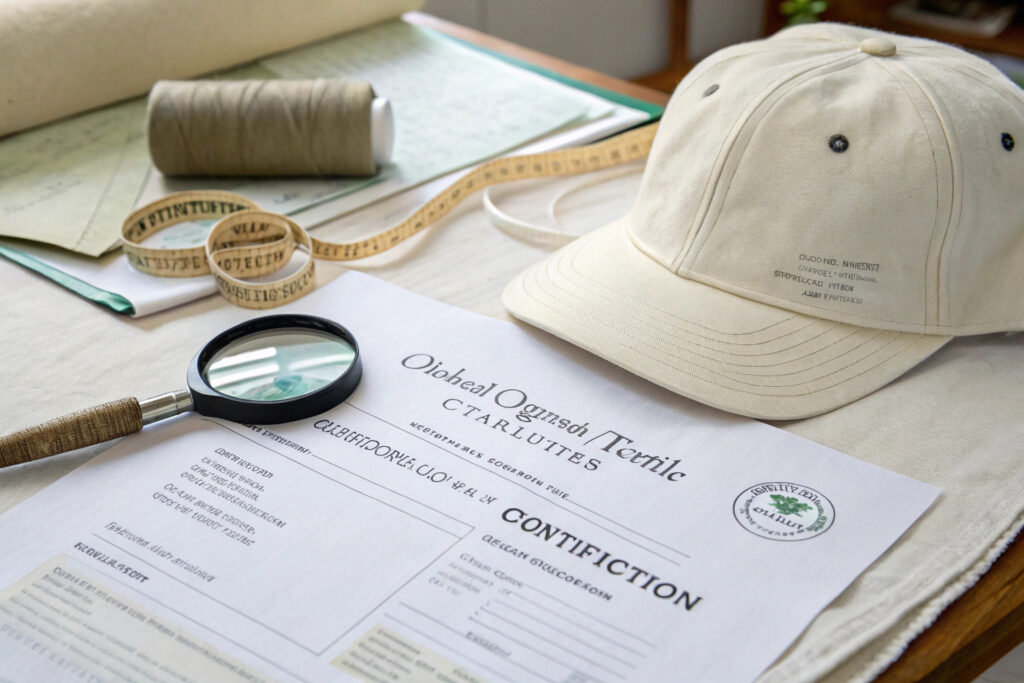
What Is the Difference Between a Scope Certificate and a Transaction Certificate?
This is the biggest source of fraud. A factory shows you a Scope Certificate. You think the deal is done. But a Scope Certificate just means they are allowed to handle organic goods. It does not prove the specific hats you bought are organic.
The Scope Certificate is a license to operate. It lists the company name, address, and certified processes. You look at section 2.2 on the certificate. It will say "Manufacturing, Trading, or Retail." You check the products section. It will say something like "Finished Textile Products for Headwear." This is your baseline. Without this, stop. Don't even ask for a sample.
The Transaction Certificate is the proof of purchase for your specific order. It has your unique invoice number. It tracks the flow of goods from the certified fabric mill to the cutting table to your box. If I sell you 1,000 organic dad hats, I issue a TC that says "1000 units GOTS organic cotton caps." The weight of the cotton is listed. The certification body matches the input weight of fabric to the output weight of hats. This mass balance is the heart of GOTS. If a factory buys 100 kg of organic cotton, they can only ship 95 kg of caps. Loss happens. They cannot buy 10 kg of organic cotton and magically sell 1000 kg of organic caps. That is the red flag.
You also need to check the certification body. Look for Ecocert, Control Union, or Soil Association. These are approved certifiers. Go to their website. Type in the license number from the certificate. It will show the current status. You can do this on your phone during a call with the supplier.
How Can You Verify the Certification Number Online in Real Time?
I love doing live verification with skeptical buyers. I share my screen. I go to the GOTS public database. I type in our company name. The record pops up. The certificate is active. The skepticism disappears.
You don't need to be a compliance expert. The database tool is free. Type the license number into the search bar on the official GOTS website. If the factory says their certificate is "under renewal," be careful. Renovation happens. But it should take days, not months. If the database shows "Expired" or "Suspended," do not place the order. The goods become conventional the moment the certificate lapses.
You should also check the product category. I saw a case where a factory had a GOTS certificate for "Home Textiles." They sold organic caps. That is not covered. The certification body can shut them down. When I ship your order, I also provide a link to the live database. The Transaction Certificate has a QR code. You scan it. You see the exact shipment. This is your shield against fashion watchdog groups. If a customer asks for proof, you scan the code and show them. Don't accept a simple paper PDF. The live link protects your brand from greenwashing.
What Are the Wholesale MOQs for Organic Cotton Dad Hats?
You want to launch an organic line. But you are a small brand. You hear "5,000 units minimum." Your heart sinks. You cannot afford the risk of dead stock. Every hat you buy is cash sitting on a shelf. This fear stops many beautiful brands from starting their sustainable journey.
Standard wholesale MOQs for custom organic dad hats range from 100 to 300 pieces per color. But the fabric dyeing stage has its own minimum. If you want a custom Pantone shade on organic cotton, the dye house might require you to dye 50 kilograms of fabric. That fabric turns into about 350 hats. If you choose stock colors like natural unbleached, black, or navy, the MOQ can drop to 100 pieces total. At Global-Caps, we keep a stock of undyed organic twill. We can cut a small batch of 100 units for your trial order. We combine our orders to meet the dye house minimums.
Your cash flow matters more than the factory's convenience. A good partner finds a way to say "yes" to a small batch without killing your margin.
You need to understand why the MOQ exists. It's not arbitrary. The minimum order quantity is built on two cost centers: raw material procurement and machine setup time. I will break these down so you can negotiate smarter.
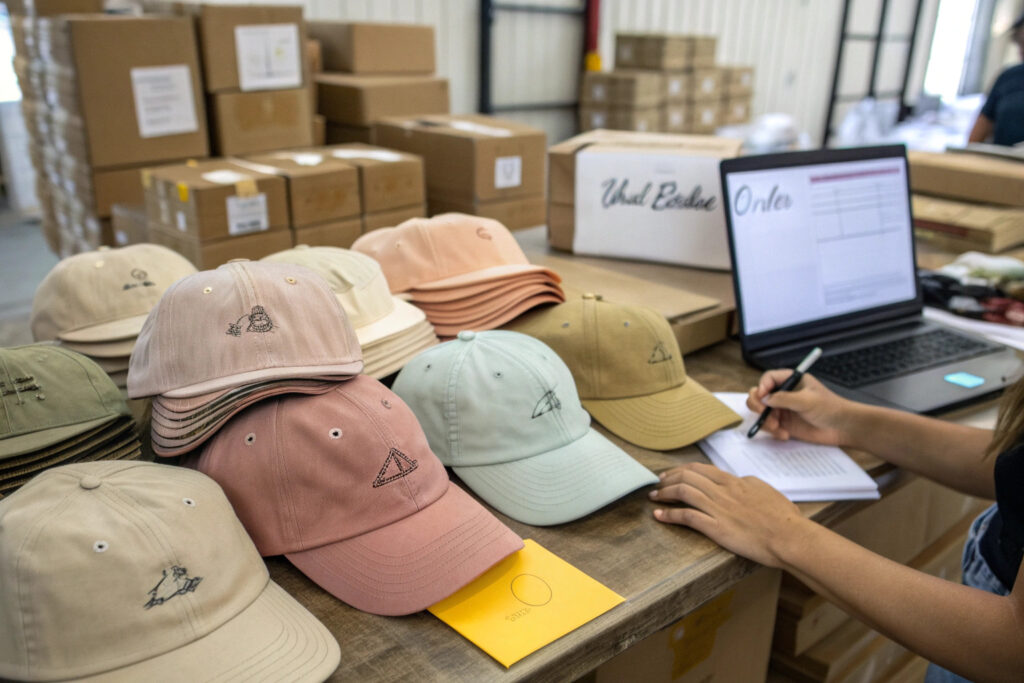
Why Does Organic Cotton Fabric Dyeing Have Higher Minimums?
Organic cotton processing is a dedicated line. You cannot throw a 10-kilo organic test roll into a vat full of conventional dye. That contaminates the batch. The dye machine has to be cleaned completely. That deep-cleaning process takes hours. It takes water. It takes chemicals that are also certified under GOTS.
The dye house charges a "setup fee" for the dye bath. The fixed cost of cleaning and mixing the approved low-impact dyes is the same for 10 kilos as it is for 100 kilos. If you spread that fixed cost over 10 kilos, the fabric price per hat triples. It makes your retail price uncompetitive. That is why we suggest stock service for new brands. We accumulate orders for basic black and natural. We run a big dye lot. We keep the fabric in our conditioned warehouse.
For the dyeing process, we only use low-impact fiber reactive dyes. These dyes have high absorption rates. That means less waste water. I also advise clients to consider piece-dyed hats versus yarn-dyed hats. A solid dad hat is piece-dyed. The fabric is dyed after weaving. This is cheaper for small batches. Yarn-dyed organic cloth is needed for melange or heather looks. The minimums for yarn-dyed organic cotton are higher because the mill has to spin the specific colored yarn. Don't design a heather grey organic cap for your first 100-unit test. It is a supply chain trap.
How Can Mixed Style Bundles Help You Meet the Supplier MOQ?
You don't want 300 units of the exact same hat. You want 50 beige, 50 navy, 50 olive, and 50 rust. I understand. Sticking to one style is how you miss the market. But you can bundle them to reach the factory's floor minimum.
The factory's real fear is sewing line downtime. Changing the thread color and the size of the panel on a machine takes time. If you keep the fabric quality the same—say, 280gsm organic brushed twill—you can cross different dad hat styles. You can do 50 unstructured six-panels and 50 structured five-panels. The fabric rolls are identical. The cutter just loads a different marker file. This allows us to group your order into one production run.
I often tell clients to choose a "base hat body" strategy. You pick one premium organic body. Then you vary the accessories. You add a leather strap on one, a coconut button on another. This is called SKU rationalization. You get 4 unique retail listings, but the raw fabric input is a single bulk purchase. This meets the mill's minimum without forcing you to buy 1,200 hats. Ask your supplier if they allow "style mixing" on a single purchase order. If they refuse, they are likely just a trading company reselling blank hats. A real manufacturer has the flexibility to mix styles on the cutting room floor.
How Does GOTS Packaging Comply With the "Plastic-Free" Movement?
You found the perfect organic hat. It ships in a clear polybag. Your store's zero-waste policy rejects it. The irony is painful. A pure, natural product wrapped in petroleum. I have unwrapped samples where the cap was lovely, but the packaging stank of cheap PVC plastic. The end customer sees this. They photograph it and post it on Instagram. Your "green" brand becomes a meme.
GOTS packaging compliance requires that polybags and hangtags do not contaminate the organic product. If you use plastic, it must be certified recycled or certified compostable. Paperboard inserts and swing tags must be made from recycled paper or certified virgin paper from sustainable forestry. The printing inks on the packaging are also restricted. You cannot use PVC-based inks. At my factory, we have switched our standard organic line to compostable cornstarch polybags and FSC-certified hangtags. This costs a bit more, but it secures the full integrity of the supply chain.
Your packaging speaks louder than the label. Let me show you the specific materials that satisfy both the auditor and the customer.
The packaging shift is difficult. You want the product to look crisp on the shelf. You don't want it arriving dusty. But a plastic bag around a GOTS product is a contamination risk. Here is the way we handle this sensitive stage.
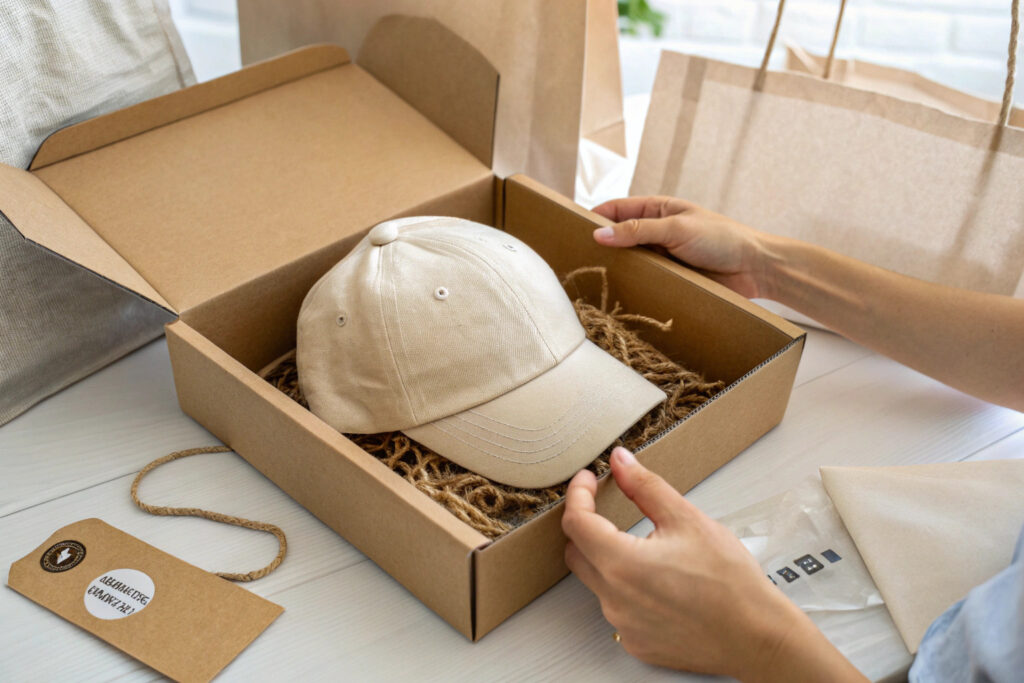
What Are the Approved Polybag Alternatives for GOTS Organic Hats?
The standard polybag is polyethylene. It is cheap. It is banned under zero-waste store policies. GOTS does not completely ban plastic, but the risk of plasticizer migration and landfill waste is high. A total ban is cleaner for the brand.
I offer three alternatives. The first is PLA (polylactic acid) bags made from corn starch. These are certified compostable. They look like clear plastic but degrade in industrial compost. The seal is strong. The second is recycled LDPE bags with a GRS (Global Recycled Standard) certificate. You take waste plastic, you reuse it. This fits a circular economy narrative. The third is no polybag. We fold the hat onto a recycled cardboard sheet and slide it into a kraft mailer box. This is the most premium unboxing experience.
You must check the compostability certificate for PLA bags. Some PLA bags look the part but only degrade under intense heat. They just float in the ocean like regular plastic. Ask for the EN 13432 certificate. This is the standard for industrial compostability. We also have to consider the humidity in transit. If the shipment goes by sea, the kraft box can get soggy. We often use a very thin glassine paper sleeve. It resists moisture. It is fully biodegradable. The feeling of the customer opening a glassine sleeve is much more luxurious than ripping a sticky plastic bag.
Why Must Hangtag Strings and Adhesives Be Chemically Verified?
The string is a tiny detail. You think "it's just a string." But a hangtag attached with a cheap nylon string contaminates the product. The auditor deducts points. The store might classify it as a mixed material and recycle the hat as "general waste."
GOTS evaluates the "accessories" of the product. The string that attaches the swing tag is an accessory. We use hemp twine or natural undyed cotton thread. We do not use metal eyelets to attach the string because the metal could have heavy metals. We attach the tag using a simple knot. The adhesive on the sticker is a bigger trap. Standard stickers have acrylic adhesives. We use a self-adhesive paper with a water-based gum. It is certified for direct food contact, so it is safe for textiles.
For our printed belly bands, we use FSC-certified paper and soy-based ink. The plate cleaning solvent in a standard printer is a VOC (volatile organic compound). I audit my printing vendor. I check their GOTS compatibility. I also tell my clients not to use glitter. Bio-glitter exists, but it's a microplastic. It flakes off. It kills the organic vibe. A simple blind deboss on a recycled tag looks better and has zero chemical risk. You pass customs with zero issues.
How to Verify the Traceability of Organic Cotton From Farm to Factory?
You buy an organic hat. The label says "100% Organic Cotton." But where did it grow? Was it picked by forced labor in Xinjiang? Did the cotton pass through a conventional gin? You don't know. You just trust the sticker. That trust is a liability. Modern consumers want to scan a QR code and see the farmer.
You verify traceability through a chain of custody documents. This includes the GOTS Transaction Certificate, the organic farming license, and the ginning trace. At Global-Caps, we use a digital traceability platform. We map the journey from the organic farming cooperative in India to the spinning mill, to the knitting house, to our cutting table. Each supplier uploads a block of data. We link it to a scannable QR code on the hangtag.
This is the future. A brand that can prove its supply chain wins. The brand that cannot prove it loses the shelf space.
The supply chain for cotton is long and dirty. You have to separate the organic fiber from the conventional fiber at the gin, the spinner, and the knitter. One mishap in the sliver process ruins the organic integrity.
What Role Does the Organic Cotton Ginning Process Play in Purity?
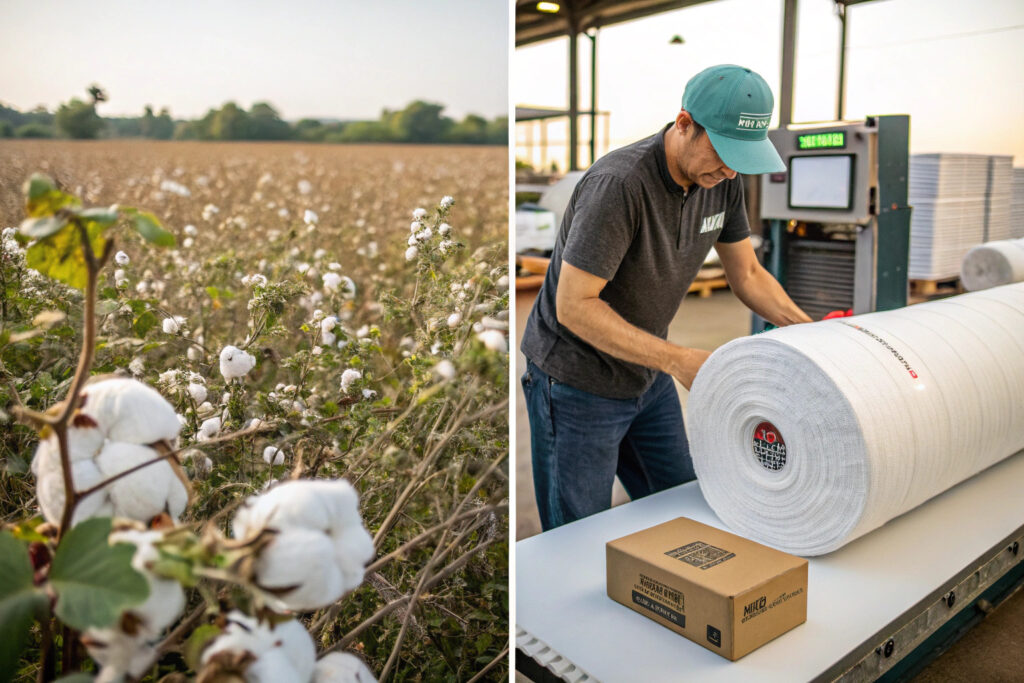
The cotton gin removes the seed from the fiber. It is a violent, dusty machine. If a gin processes conventional cotton in the morning and organic cotton in the afternoon without a deep clean, the organic lint gets contaminated. This is the first point of failure.
You cannot just trust the farmer. You need a clean gin documented in the scope certificate. The certificate must cover "post-harvest handling." We ask for the "ginning weight-out" tally. It is a spreadsheet. It shows the exact weight of seed cotton in and the lint cotton out. Then we match that to the yarn spinner's intake weight. The mass balance must reconcile.
For truly clean cotton, we look for organic cotton from co-ops that use segregated ginning lines. This is rare. It costs more. But it eliminates the risk of blending. I like to work with Turkish or Indian yarns that are traced through the Cotton made in Africa or similar initiatives. The key is the "seed to shelf" documentation. If the cotton is organic, it must be non-GMO. The gin must document the cleaning flush. We ask the gin manager to sign an affidavit of purity. We attach that to your TC file.
How Can a QR Code on the Hangtag Show the Cotton's Journey?
A static tag says "Organic." A digital tag tells the story. I push all my clients to adopt a traceability QR. It is a marketing weapon. The customer scans it. They see a farmer's face. They see the knitting machine. They see the sewing line.
The technology is simple. We use a blockchain-backed platform. We enter the purchase order number. The spinning mill uploads the yarn lot number. The knitter uploads the fabric roll number. Our cutting floor uploads the production batch. The QR code aggregates all these data points into a timeline. The customer scrolls through it.
This builds a radical transparency loop. If a brand claims organic, the customer can poke it. It must be true. I believe the QR traceability will be mandatory for organic claims in Europe by 2027. You need to start now. We can integrate this for an extra cost of about 15 cents per hat. It turns a $25 dad hat into a premium experience. It eliminates the "Greenwashing" doubts. You sell the product. You sell the proof.
Conclusion
Buying a real organic cotton dad hat wholesale is a verification game. You start with the license. Check the Scope Certificate for the activity "manufacturing of finished textile products." Don't stop there. Demand the Transaction Certificate that matches your invoice. Verify the certification number live on the GOTS public database. Watch for expired licenses or wrong product categories.
Then you face the order minimums. Don't let the dye house minimums stop you. Use stock colors. Bundle styles together. Ask for a base hat body strategy to keep the fabric rolls consistent while varying the accessories. And don't kill your organic vibe with toxic packaging. Switch to PLA bags, glassine sleeves, or recycled mailer boxes. Check the hangtag string. Check the adhesive. Every detail counts.
Finally, protect your story. Trace the cotton from the gin to the QR code. Know the farmer. Know the gin flushing process. Put that journey on a scannable tag. It sells the hat and protects your brand from the greenwashing police.
If you are ready to launch a certified organic dad hat collection without the stress of verifying five different vendors, we should work together. At Global-Caps, we handle the GOTS certification, the low-impact dyes, the compostable packaging, and the digital traceability. It is all under one clean, modern roof in Zhejiang.
Contact our Business Director Elaine. She can walk you through our stock organic colors and the exact MOQ for your custom design. She can also share a sample of our traceable hangtag QR system. Email Elaine at elaine@fumaoclothing.com. Let's build a hat that looks good, feels soft, and carries a true organic promise.