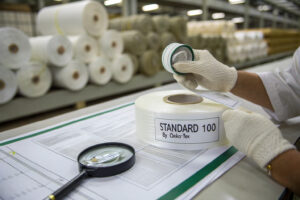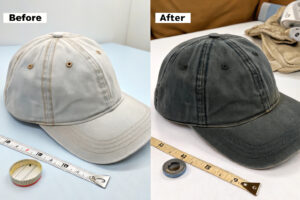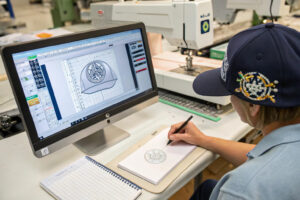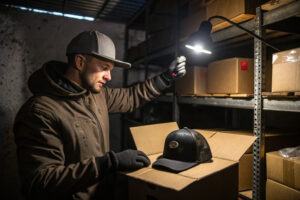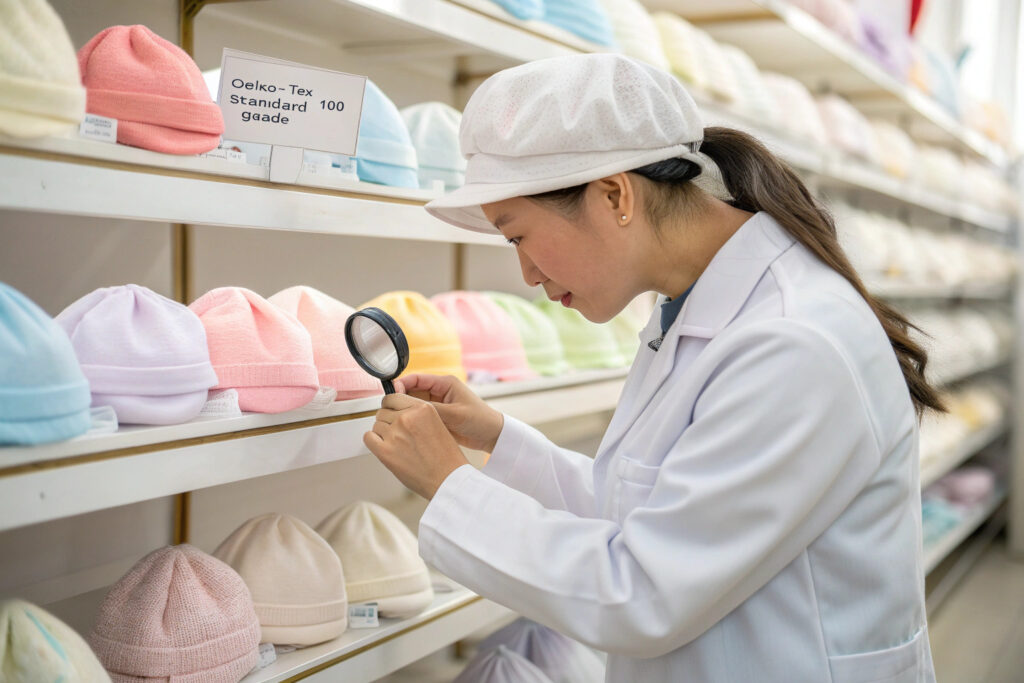
You have a beautiful design for a baby hat line. The cotton feels soft. The colors are perfect. But then you ask the supplier for safety docs. They send you a test report that looks generic. You read it. It says "OEKO-TEX Standard 100." You feel relief for a second. But then you notice something missing. There is no mention of "Grade 1." Your stomach drops. You suddenly realize you almost ordered 5,000 units of baby hats that are certified only for adults. That is a recall waiting to happen. The legal exposure makes you sick. Parents trust you. Retailers trust you. One mistake here ends your business.
OEKO-100 Grade 1 certification is the strictest level of the standard. It is specifically written for baby items. This grade covers products for infants up to 36 months old. The limits on harmful chemicals are far tighter than for adult clothing. A baby’s skin is thinner. Babies put everything in their mouths. They sweat differently. The certification proves your custom baby hats are tested for heavy metals, formaldehyde, pesticides, and allergenic dyes at levels safe enough for a newborn to chew on. If your certificate does not say "Product Class 1" or "Grade 1," you legally cannot market those hats as safe for babies in most Western countries.
I have spent years guiding brands through this specific safety maze. The confusion between a general certificate and a baby-grade certificate is the most common and dangerous error I see. Let me explain the real technical meaning behind Grade 1. I will share the lab process and help you write a specification sheet that leaves zero room for error.
How Strict Is the Chemical Limit for OEKO-TEX Grade 1 Baby Items?
Brand owners often think a “safe” hat is just a clean hat. They don't realize the microscopic level of scrutiny Grade 1 demands. You fear the invisible dangers. The heavy metals that seep out of a cheap dye when a baby chews on the brim. The formaldehyde used to stiffen fabric that irritates the skin. That fear is rational. Standard adult limits allow traces that might be fine for a scalp but toxic for a teething infant.
Grade 1 chemical limits are brutally low. The pH value of the fabric must sit strictly between 4.5 and 7.5. This matches the natural acidity of baby skin. Formaldehyde detection must be below 16 parts per million. That is practically non-detectable. Heavy metals like lead have limits tighter than 1.0 mg/kg. To pass, you cannot just use standard dyes. You must source specialized auxiliary chemicals approved for infant goods. Every seam, every label, and every tiny snap button undergoes the same rigorous testing. A single non-compliant thread fails the entire hat.
The strictness goes beyond just the final fabric. It controls the whole manufacturing environment. The real challenge is avoiding cross-contamination during the production run. Let's break down what happens on the factory floor.
Why Are Saliva and Sweat Resistance Tests Critical for Baby Hats?
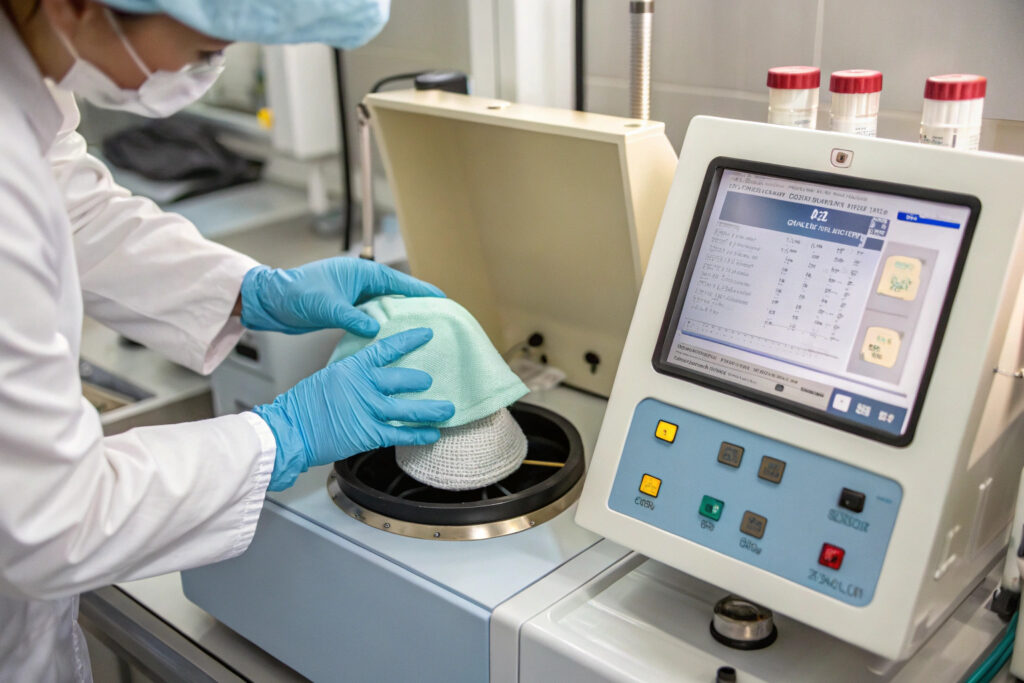
Babies do not just wear hats. They chew them. They drool on them. A chemical might stay locked inside a dry fiber. But when saliva hits it, that chemical can leach out. Grade 1 testing simulates this exact scenario. The lab creates an artificial saliva solution and a synthetic sweat solution. They soak the hat components in these liquids for hours at body temperature. Then they measure what chemicals escaped. An adult beanie does not go through this simulation. Your custom baby cap must. If the dye bleeds or a metal coating dissolves in this test, it fails instantly. I worked on a range of kids sun visors where the supplier used standard rivets that passed the dry test. We had to switch to surgical-grade stainless steel because the cheap rivets released nickel traces during the artificial sweat test. Always ask for the "extraction solution" report.
What Are the Specific Heavy Metal Limits for Infant Headwear?
The numbers are incredibly small. Total lead content must be below 1.0 mg/kg. For context, a grain of salt weighs about 0.05 mg. You need highly sensitive equipment to even measure this. Cadmium sits tight at 0.1 mg/kg. Chromium VI, which is often found in cheap leather straps or adjusters, is limited to under 0.5 mg/kg. This is why genuine Grade 1 hats rarely use leather backstraps unless they come from a certified tannery. I insist on using only plastic buckles made from virgin, phthalate-free polyoxymethylene. The cost of the raw material is higher. But the alternative is a material that fails the heavy metal screen. There is no middle ground with infant chemistry.
Why Doesn't a Standard OEKO-TEX Certificate Cover Newborn Headwear?
I have seen this mistake destroy a shipment. A buyer finds a cheap factory. The factory says "Yes, we have OEKO-TEX." The buyer assumes that covers the baby line. It does not. You feel a sense of betrayal when customs tests the product and finds it illegal for infant use. The factory was technically telling the truth. But they omitted the class. You are the one holding the seizure notice.
A standard certificate falls under Product Class 2. This class covers items that have only surface contact with adult skin. Think T-shirts, adult caps, and scarves. The limits are safe for mature skin that has a strong barrier. Baby skin is porous. It has a higher surface area to body weight ratio. Anything that touches a baby's skin gets absorbed more deeply. Standard certificates also ignore the "mouthing" risk. Babies don't mouth adult clothes. They definitely mouth hat brims. A Class 2 certification does not account for ingestion of dyes or finishes. It is a different test protocol entirely.
The grading system exists to differentiate risk levels. Ignoring this grading is like using a seatbelt for an adult on a newborn. It looks like safety, but it fails under the specific stresses of the situation.
What Is the Technical Difference Between Product Class 1 and Class 2 Testing?
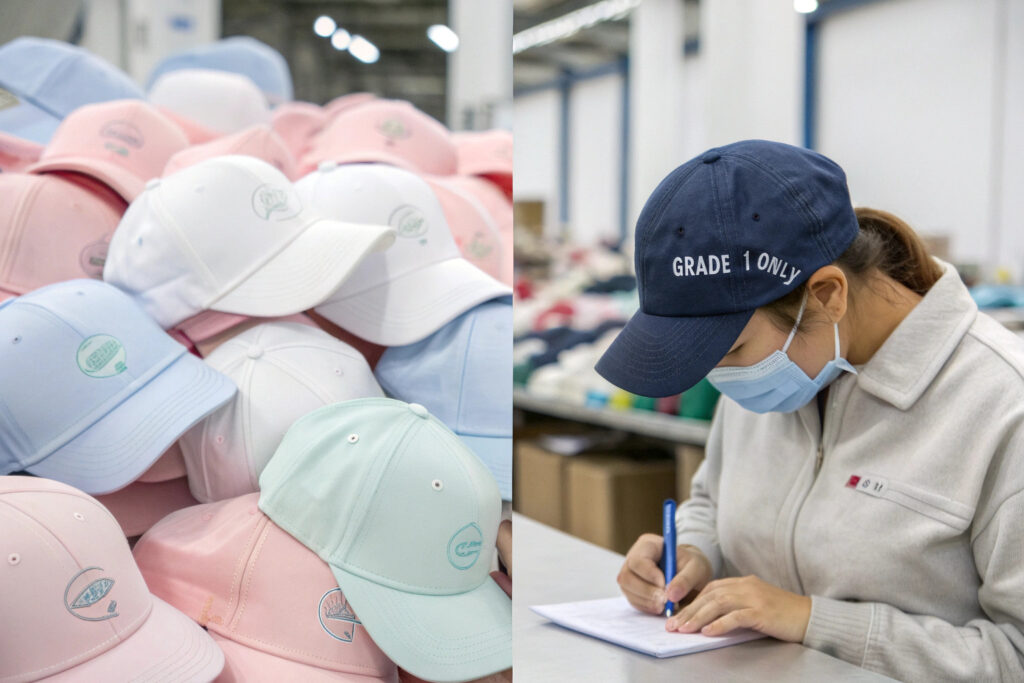
The difference is in the extraction methods and the target list of substances. Class 2 checks for chemical leaching based on surface contact. Class 1 checks for ingestion and mucosal contact. The lab aggressively shakes the sample in a warm solution to mimic the sucking action of a child. The list of banned substances is also expanded. Class 1 pays extremely close attention to arylamines from azo dyes, certain allergenic disperse dyes, and chlorinated phenols. A Class 2 certificate might not even list tests for specific phthalates like DNOP or DIDP because they are not considered high-risk for surface contact. But for a baby hat that can be chewed, those plastic softeners are a top priority. You need the certificate to show the "Product Class 1" sub-label clearly.
How Does SGS or Bureau Veritas Differentiate the Audit Scope?
When we commission a test, we don't just send a hat and say "test this." We submit a Bill of Materials. Every ingredient goes on the list. The lab assigns a scope based on the declared use. If I declare a hat as "infant use, ages 0-24 months," the technician at SGS flips to the Grade 1 checklist automatically. If I just declare "hat," I might get the adult standard. This is where a supplier's experience matters. A generic factory might just fill in the form wrong. A specialized baby hat manufacturer knows the exact keywords to trigger the correct audit scope. I always review the lab's "Testing Application Form" before our clients pay for the test to make sure "Infant Use" and "OEKO-TEX 100 Class 1" are stamped on the request. This avoids paying for a useless certificate.
Can Organic Cotton Baby Hats Fail an OEKO-TEX Grade 1 Test?
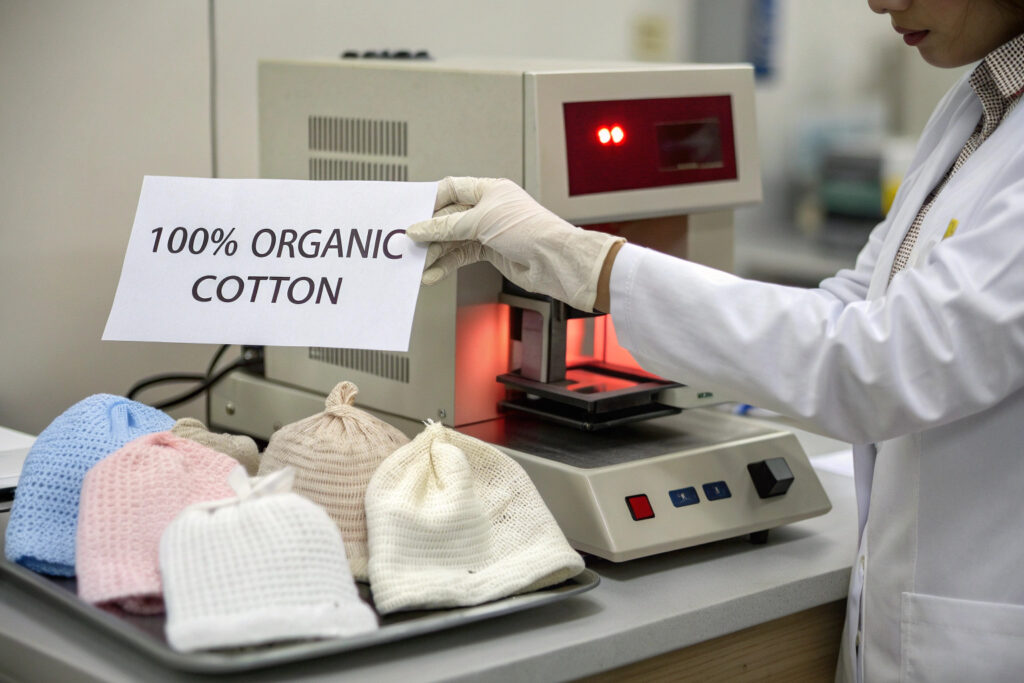
Organic cotton is a huge selling point for baby brands. You market it as pure, clean, and from nature. You assume it will automatically pass the chemical test. You might even skip budgeting for lab fees because you think organic guarantees safety. That is a dangerous bet. Nature is not chemically sterile. Organic land can still have heavy metal contamination from previous farming cycles. Mold can grow during storage.
Yes, 100% certified organic cotton can fail OEKO-TEX Grade 1. The OEKO-TEX standard cares about the final chemical state of the fabric. It does not care about the farming method directly. Organic certification controls pesticides during growth. It does not control heavy metals in the groundwater. It does not control the dyes or the formaldehyde-based finishing agents used to prevent wrinkles during shipping. I have seen organic cotton fail for high pH levels because the dye house used a fixing agent that was too alkaline. The cotton itself was pure, but the chemical processing ruined the safety profile. You cannot let your guard down.
Natural fibers bring unique chemical risks that synthetic fibers sometimes avoid. The supply chain for natural materials is longer and harder to control completely unless you verify it.
What Contaminants Are Most Likely Found in Natural Fibers?
Natural fibers act like sponges. Cotton plants absorb heavy metals like lead and cadmium from contaminated soil. Even if the farm stops using pesticides, the soil itself might contain decades-old arsenic residues. Then comes the ginning process. Cheap ginning factories use mineral oils to lubricate the machines. Those oils can contaminate the fiber permanently. If the oil contains polycyclic aromatic hydrocarbons, the fabric will fail. I have also seen natural vegetable dyes, like logwood or turmeric, cause a failure because they mordant with heavy metals to fix the color. A beautiful natural brown hat looked perfect but contained unsafe chromium levels from the natural mordant. You need to test the undyed greige fabric first, then test again after dyeing.
How Do You Control Chemical Residues During the Printing Process?
The screen printing paste is often the villain. Even if the fabric is safe, the ink sitting on top of the hat is a direct contact point with the baby's forehead. Standard plastisol inks contain phthalates. These make the ink soft and stretchy but are banned under Grade 1. We use water-based, phthalate-free inks specifically certified for infant wear. The curing process matters too. A low-cure additive stays in the film if not baked correctly. We run all printed baby hats through a second heat treatment just to drive off any residual volatile organic compounds. If you are doing a puff print or a rubber patch on a kids' trucker hat, you are adding a thick layer of complex chemistry. Always ask the factory if the ink supplier has a current "Grade 1 compatible" certification from the ink manufacturer. Don't just trust the printed word.
How to Write a Spec Sheet That Ensures OEKO-TEX Grade 1 Compliance?
The biggest gap between a brand and a factory is the technical language. You think you asked for safe baby hats. The factory thinks you asked for soft hats. These are not the same thing. You fear the factory will cut corners because the spec sheet was too vague. You fear the factory will use cheaper, non-compliant accessories because you forgot to mention the plastic zipper bag they pack the hat in. Those fears come true when the spec sheet fails.
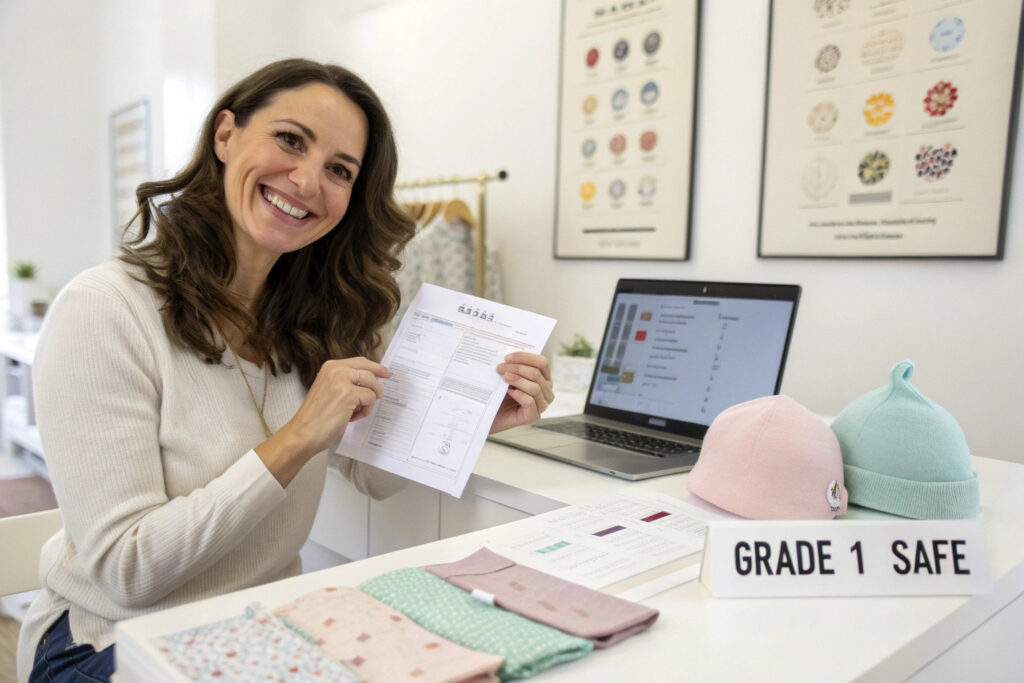
A bulletproof spec sheet does not just describe the design. It mandates the chemical boundaries and references specific regulatory documents. You must create a section titled "Chemical Compliance" separate from "Measurements." This section needs to list the exact certification required. Do not write "safe for babies." Write: "Must be certified to STANDARD 100 by OEKO-TEX, Product Class 1, Annex 6." Annex 6 is the specific list of restricted substances relevant to baby items. You must also list the banned processes. State clearly: "No flame retardants of any kind allowed. No nanoparticle silver anti-odor treatments allowed." These are often added without asking and will immediately void a Grade 1 certificate.
Moving from a vague purchase order to a precise technical document protects both sides. It stops the factory from making assumptions and gives your QC team a hard checklist for the final inspection.
Why Should You Specify the "Annex 6" List in Your Purchase Order?
Annex 6 is the secret weapon. It is the extended criteria for baby products. A general OEKO-TEX certificate might test against Annex 4, which is shorter. Annex 6 specifically covers chemicals not typically found in adults but possible in baby environments. This includes specific pesticides, certain chlorinated solvents, and critical phthalates. If you just ask for "OEKO-TEX," the supplier could provide a certificate that skipped these tests. By adding "Annex 6" to your contract, you create a legal requirement for the deep scan. I put this term directly into the product code. For example, "INF-BEANIE-G1-ANNEX6." The production team sees this code every day on the job sheet. It serves as a constant reminder that this batch is special and that shortcuts on chemicals are not allowed.
How Does a Packaging Requirement Affect Your Grade 1 Pass Rate?
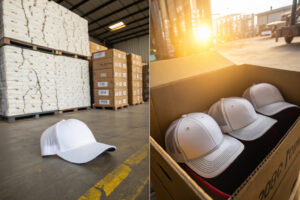
The hat can be perfect, and the bag can ruin it. PVC zip-lock bags are the enemy. PVC contains lead stabilizers and phthalates that evaporate in a closed environment. The fumes condense on the fabric. Your clean hat sits in a toxic cloud for three weeks at sea. It arrives with a surface contamination that fails the safety test. A strict spec sheet bans PVC entirely. It demands polypropylene or polyethylene bags. It also bans sharp metal staples used to attach hang tags. If a staple falls into the crib, it's a physical hazard. For Grade 1, we mandate safety pins with a protective plastic cover or tissue paper wraps. These small clauses make the difference between a compliant shipment and a returned cargo. Write it down: "Packaging must be phthalate-free and infant-friendly."
Conclusion
OEKO-100 Grade 1 certification is not a simple upgrade. It is a complete overhaul of production logic. It changes the dyes you use, the snaps you buy, and the air inside the shipping carton. You cannot just assume a factory's general textile certificate covers a newborn's headwear. The physical chemistry of a baby is different. The ingestion risk changes every safety limit. Organic cotton gives you no free pass. You must test the soil, the water, and the printing paste separately. The only way to guarantee success is to remove any ambiguity from your technical specification. You must demand the specific Product Class 1 Annex 6 checklist in writing.
Safety is not expensive. Failure is expensive. A recall costs you hundreds of thousands of dollars and destroys the trust of mothers. A correct certificate costs a few hundred dollars per batch. It secures your position in the premium baby market. The factories that understand this are the ones who treat baby garments with medical-grade seriousness.
We have built our factory processes around this level of strict separation. We handle the complicated chemical documentation so you can focus on the cute designs. If you want to discuss a new range of infant caps that meet Grade 1 from day one, I am ready to help.
Reach out to our Business Director, Elaine, directly. She can walk you through our specific baby hat protocols and the documentation you will receive. Email her at elaine@fumaoclothing.com. Let's make sure your baby hats are the safest ones on the shelf.