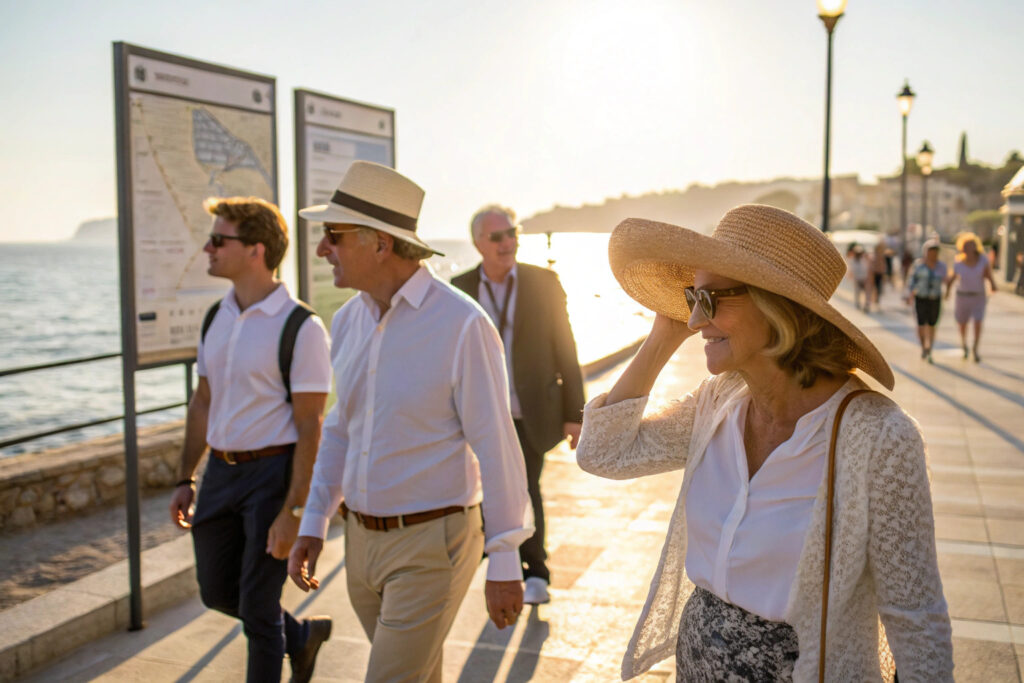
Three summers ago, a boutique chain buyer from Hamburg visited our factory showroom. She held a wide-brim raffia hat in her hands and said, "Five years ago, I could not sell this to a woman under fifty. Now my twenty-something customers ask for it by name." That shift in one sentence captures a continent-wide transformation. The wide-brim sun hat has crossed from a practical beach accessory into a year-round fashion statement, a health tool, and a political symbol of sustainable consumption.
Four converging trends are driving the surge in European demand. First, the skin health and sun safety movement has moved from medical advice into mainstream social behavior, accelerated by heatwaves across the continent. Second, the "quiet luxury" and slow fashion aesthetics have embraced the wide-brim hat as an investment accessory that elevates a simple linen outfit. Third, a new generation of eco-conscious consumers demands full traceability of natural materials, rejecting plastic-based sun protection in favor of biodegradable straw and organic cotton. Fourth, European travel culture has shifted toward outdoor leisure, hiking, and garden socializing, where a hat is not optional but essential. Each of these trends has a measurable impact on order volumes from our Zhejiang factory to warehouses in Rotterdam, Hamburg, and Barcelona.
Our design team tracks these cultural shifts through trade show feedback, buyer conversations, and sell-through data from our retail partners. I want to share what we are seeing from the production side, why certain materials and silhouettes are outperforming others, and how you can position your next sun hat collection to catch this wave. The European consumer is not just buying a hat. They are buying skin protection, a fashion identity, and an environmental conscience, all in one wide-brim shape.
How Is the Skin Health Movement Influencing Sun Hat Design?
The European skin cancer statistics are sobering, and the public knows it. Melanoma incidence rates across Western Europe have risen steadily over the past two decades. Public health campaigns in Germany, France, and the Netherlands now explicitly recommend wide-brim hats as part of a complete sun protection strategy. This is not an Instagram trend. It is a public health directive filtering into daily consumer behavior. A hat is no longer just a fashion choice. It is a health product with a UPF label.
This medical endorsement has reshaped the technical specifications we receive from European buyers. A sun hat five years ago needed to look good. A sun hat in 2026 must carry a verifiable UPF 50+ rating on the hangtag. The fabric must be tested to the European standard EN 13758-2 for ultraviolet protection. The brim must measure a minimum of 7.5 centimeters to shade the ears and the back of the neck effectively. Some buyers now request a "neck cape" attachment or a longer back-brim silhouette inspired by the classic French gardening hat. We have even developed a lightweight polyester microfiber brim insert that blocks 98% of UVA and UVB rays without adding weight to the hat. The skin health movement has turned the sun hat into a functional wellness product. The consumer is willing to pay a premium for certified protection.
The medical validation of sun hats has permanently upgraded the minimum quality standard expected by European consumers. A hat without a proven protection rating is now a liability for a retailer. This shift has forced factories to invest in lab testing and transparent labeling.

Why Is UPF 50+ Becoming a Non-Negotiable Hangtag Requirement?
A hat with a UPF 25 rating provides decent protection, but a UPF 50+ rating provides near-total blockage. The difference matters to a consumer who has had a skin cancer scare or who is buying a hat for a young child. European retail buyers now regularly write "UPF 50+ mandatory" into their tech packs. They know their customers read labels with the same scrutiny they apply to sunscreen SPF ratings.
We test our sun hat fabrics at an ISO-accredited lab in Shanghai. The test report measures the ultraviolet protection factor of the fabric in a dry state and, critically, in a stretched and wet state. A loosely woven straw hat may have a high dry UPF but drops sharply when the sun shines through the weave gaps. We have switched to a double-layer brim construction for our raffia hats to close those micro-gaps. The UPF testing certificate is now a standard attachment to every bulk shipment confirmation we send to European clients.
How Are European Public Health Campaigns Shaping Hat Silhouettes?
The Dutch "Smeren, Kleren, Weren" campaign, which translates to "smear, clothe, shield," visually promotes wide-brim hats in its posters. The German Cancer Aid organization distributes educational materials showing hats with neck flaps. These images enter the consumer's mind and define what a "safe" hat looks like.
This has created a surprising demand for historically utilitarian silhouettes, like the French bob with a neck veil and the Australian Bunnings-style wide-brim straw, now fashionable in European garden centers and outdoor markets. We are shipping these styles in organic cotton and recycled paper straw, materials that align with the sun safety message without looking clinical. The consumer wants a hat that looks like a thoughtful choice, not a medical device.
How Is the Quiet Luxury Aesthetic Reshaping Hat Materials?
The loud logo and the neon trim are dead in the premium European sun hat market. The aesthetic that has replaced them is "quiet luxury." This look values impeccable materials, neutral palettes, and construction details that are felt rather than announced. A wide-brim hat in this aesthetic does not scream a brand name. It whispers quality through the thickness of the straw braid, the softness of the internal sweatband, and the precision of the edge finish. The consumer who buys this hat pairs it with a white linen shirt and leather sandals. They want to look effortlessly elegant, not branded.
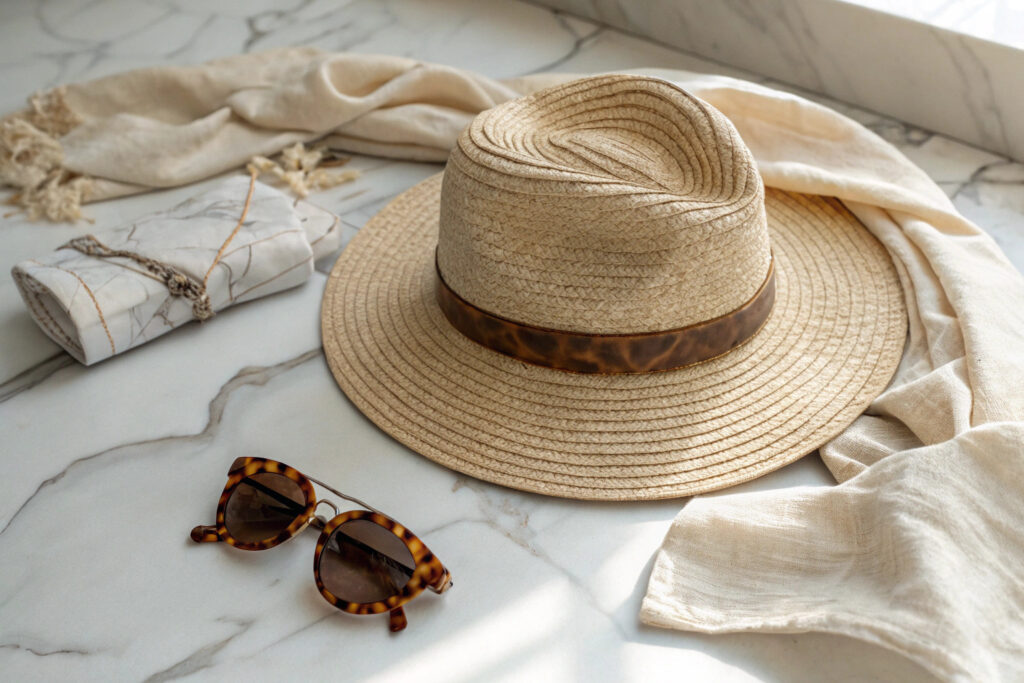
This trend has driven a sharp pivot in our raw material procurement. Our European buyers now demand natural, undyed fibers with visible texture. Raffia straw from Madagascar has become a premium staple because of its long fiber length, which allows for a tighter, silkier braid. Organic cotton canvas with a washed, slightly slubbed texture is replacing the smooth, dyed twills for fabric sun hats. The color palette has narrowed to ecru, sand, chalk white, and soft olive, colors that feel unprocessed and authentic. Even the trims have changed. The shiny gold metal badge has been replaced by a narrow, self-fabric tie or a matte leather cord. The hat itself is the logo. This is a fundamental shift from fast fashion's "wear it once and toss it" logic to a "buy it for a decade" investment mindset. A quiet luxury hat commands a retail price point of €55 to €95, compared to €18 to €25 for a fast-fashion alternative. The margin structure at that higher price point is far healthier for both the factory and the retailer.
The material shift is not just about appearance. It is about the consumer's sensory experience. The hand feel of a hat is the first quality signal a shopper notices in a boutique. A plastic-feeling straw hat instantly loses the sale. A soft, natural fiber hat invites a try-on.
Why Is Raffia Overtaking Paper Straw in the Premium Segment?
Paper straw is made from shredded wood pulp extruded into a thin, uniform strip. It is inexpensive and consistent, but it feels dry and slightly synthetic to the touch. Raffia is a natural palm fiber. It has a waxy, flexible surface that feels cool and smooth against the skin. It also holds a shape beautifully after being crushed in a suitcase, a practical advantage for a traveling European consumer.
The braid quality of raffia allows for a finer, more intricate weave pattern. This elevates the hat from a beach commodity to a city-appropriate accessory. We are seeing raffia hats in Parisian street-style photography paired with tailored trousers and silk blouses, not just swimsuits. The material itself has become aspirational.
How Does Organic Cotton Canvas Fit Into the Quiet Luxury Story?
Organic cotton canvas offers a structured, fabric-based alternative to straw. It appeals to the consumer who wants sun protection in a material that feels more urban and less resort. The quiet luxury version of this hat is unlined or lined in a soft, contrasting organic muslin, with a slightly oversized, floppy brim that frames the face softly.
The certification is key. A GOTS or OEKO-100 hangtag on a cotton sun hat communicates the same values of purity and responsibility that the quiet luxury consumer seeks. We have developed a washed-canvas finish that gives the hat a lived-in softness from day one. This organic cotton narrative adds a layer of meaning to the purchase. The consumer is not just buying a hat. They are buying into a philosophy of mindful consumption.
Why Is Sustainability Certification a Decisive Buying Factor Now?
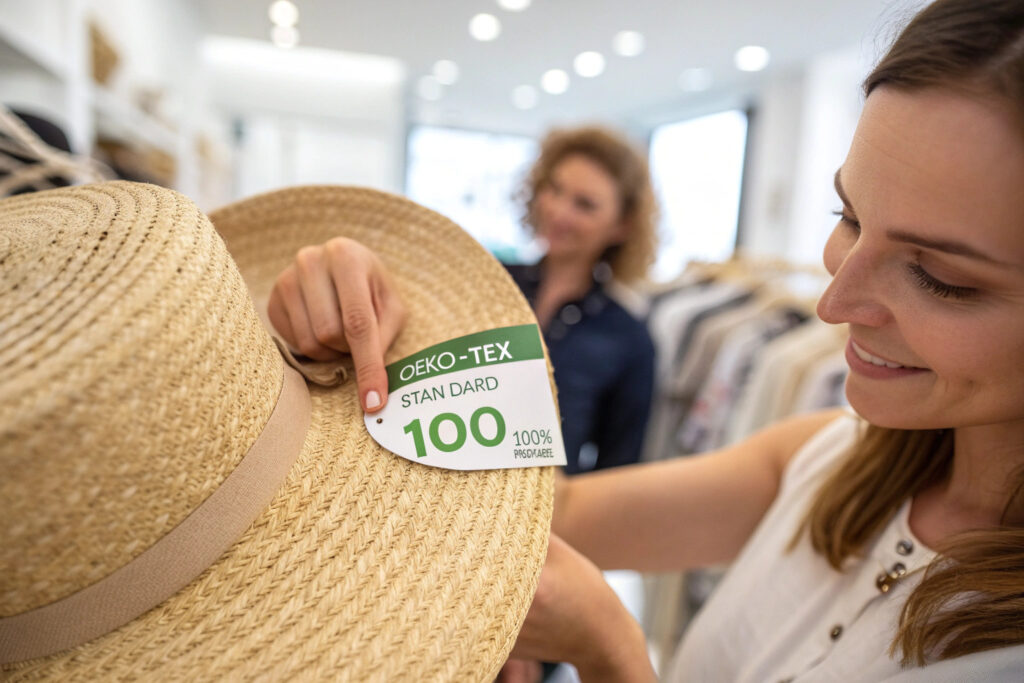
European consumers have moved past wanting a "green story." They now demand a verifiable green fact. A hangtag that says "eco-friendly" without a third-party logo is viewed with suspicion. The generation that reads ingredient labels on food has started reading textile certification labels on hats. An OEKO-TEX Standard 100 label or a GOTS logo is now a decisive buying factor, especially in the DACH region of Germany, Austria, and Switzerland, and across Scandinavia.
This demand has forced a bifurcation in the market. Factories without certification are competing on price in the low-margin, fast-fashion segment. Certified factories like ours are capturing the mid-to-premium segment where the margin allows for investment in traceable materials. Our European wholesale customers explicitly require us to list the certification number on the commercial invoice. They photograph the certification hangtag for their e-commerce product pages. The certification is not a back-of-the-box footnote. It is a front-and-center marketing asset. We have also seen a rise in demand for a secondary sustainability claim: biodegradability. A natural straw or organic cotton hat can be positioned as a plastic-free, compostable alternative to a synthetic sun visor. This end-of-life story completes the circle for a consumer who is trying to minimize their environmental footprint.
The certification itself is a piece of paper. Its value lies in the trust it transfers to the consumer at the point of sale. A retailer who can explain what the label means builds a customer relationship that lasts beyond the single hat purchase.
How Do Retailers Use OEKO-TEX Labels in Their Marketing?
Smart European retailers do not just hang the tag and hope the customer notices. They create a small in-store display card that explains the OEKO-TEX promise: "Tested for harmful substances. Safe for your skin. Certified by an independent laboratory." This educational moment transforms a commodity hat into a curated, health-conscious choice.
Online, they add a "Certifications" filter to their headwear category page. A customer can tick a box to see only OEKO-TEX certified hats. This filter directly drives sales to certified products and rewards manufacturers who have invested in the audit process.
What Is the Consumer Appeal of a Fully Biodegradable Sun Hat?
A synthetic sun hat made from polyester and foam will sit in a landfill for centuries. A natural raffia or organic cotton hat will decompose in soil within a few years at the end of its useful life. This narrative has a powerful emotional appeal for the European consumer who is grappling with climate anxiety.
We have started providing a "biodegradability statement" with our natural fiber hats, based on independent lab tests for compostability. A retailer can use this as a unique selling proposition. The biodegradable claim is the final chapter in the product's lifecycle story. It means the hat's beauty does not leave a permanent scar on the planet.
How Has the European Outdoor Leisure Boom Expanded the Hat Market?
The European outdoor leisure market has exploded, and hats are a direct beneficiary. The pandemic-era shift toward outdoor socializing has not receded. It has become a permanent cultural fixture. Garden parties, vineyard tours, hiking weekends, and al fresco dining are now central to the European lifestyle across all age groups. Each of these activities is a sun-exposed occasion that demands a hat. But not just any hat. The consumer wants a hat that transitions from a mountain trail to a terrace bar without a costume change.
This trend has expanded the hat market beyond the traditional beach and resort segment. A woman who once bought one straw hat for her annual two-week holiday in Mallorca now owns three hats for the garden, the farmers' market, and the walking club. The hat has become an everyday accessory for a life lived outdoors. We are seeing this in the order patterns. Volume is up, and the variety of styles within a single wholesale order is broader. A typical buyer now orders a classic wide-brim raffia hat, a packable fabric sun hat, and a narrower-brim fedora shape for the same season, often in coordinated natural colorways. The outdoor leisure boom has also expanded the male hat market. European men, particularly in Italy and France, are adopting wider-brim straw fedoras and Panama-style hats for garden parties and summer events. This gender expansion is a significant volume driver.
The outdoor lifestyle has blurred the line between functional gear and fashion. A hat that performs in the garden but looks chic at a café has the highest sales velocity. This dual-use demand dictates the materials and the design details.

What Features Make a Sun Hat Suitable for Both Hiking and Social Events?
The packability is the killer feature. A hat that crumples into a backpack and springs back into shape is invaluable for a hiker who then joins friends for lunch. We use a crushable, memory-shape brim insert made from a flexible polypropylene that does not crease permanently.
The sweatband must be genuinely functional, not just decorative. A moisture-wicking, machine-washable sweatband is essential. The color must hide sweat stains, which is why natural ecru and heathered grey are so popular. The hat also needs a discreet, adjustable internal drawcord to secure it in a breeze, a feature borrowed directly from outdoor headwear gear. These performance details make the hat genuinely versatile.
How Is the Male Sun Hat Aesthetic Evolving in Europe?
The European male consumer is increasingly comfortable with a wider brim. The classic narrow-brim trilby is losing ground to the wider-brim fedora and the Panama hat with a 6 to 7.5-centimeter brim. The colors are masculine and earthy: tobacco, charcoal, olive, and unbleached natural straw.
The detailing is minimal. A matte leather band, a single feather, or a fabric tie in a tonal color. The look is "artisanal gentleman," not "costume party." This men's sun hat trend is driving orders for premium, hand-braided Panama straw hats that wholesale at a significantly higher price point than women's fabric hats, creating a new high-margin revenue stream for retailers.
Conclusion
The European sun hat market in 2026 is the product of a profound cultural alignment. Public health authorities are telling citizens to shield their skin. The fashion industry is telling them to invest in natural, beautiful materials. The environmental movement is telling them to buy certified, biodegradable products. And the outdoor leisure culture is giving them daily occasions to wear these hats with joy and purpose. A wide-brim sun hat sits exactly at the intersection of these four powerful forces.
Our factory has been adapting to each of these trends with specific, measurable actions. UPF 50+ testing as a standard service, a full raffia and organic cotton supply chain with traceability certificates, OEKO-TEX certification as a baseline, not an upsell, and design features that support an active, outdoor lifestyle. The result is a product category that feels essential rather than seasonal, and premium rather than disposable.
If you are sourcing sun hats for the European market and need a factory that understands the UPF requirements, the material trends, and the certification landscape, let us prepare a customized sample set for your next collection. Our Business Director, Elaine, can share our latest European trend report and fabric swatch book. Contact her at elaine@fumaoclothing.com to schedule a video walkthrough of our wide-brim sun hat capabilities. The European consumer is ready to invest in a hat that protects, endures, and tells a story. Let us make sure that hat is yours.