You order 5,000 caps for your streetwear brand's Fall/Winter 2026 drop. You pick the same six-panel cotton twill cap you ran last year. You change the embroidery colors. You call it the new season. The drop goes live. Your competitor drops a heavyweight wool blend five-panel with a custom woven jacquard strap. Your cap looks like last season's leftover stock. The streetwear consumer is not loyal. They chase the new silhouette, the new fabric, the new proportion. Your "safe" choice was the riskiest choice you could have made.
The streetwear headwear styles that will dominate the Fall/Winter 2026 season are heavyweight wool blend five-panel camp caps with unstructured crowns, oversized chunky knit beanies with folded cuffs, textured corduroy six-panel caps with tonal embroidered logos, balaclava-style hybrid headwear with removable face coverage, and high-profile snapbacks with 3D puff embroidery returning in dark, moody color palettes. The overarching trend is a shift from lightweight, summer-driven mesh and nylon to substantial, cold-weather fabrics with tactile texture. The silhouette is moving away from the shallow, short-crown dad hat and toward deeper, roomier crown proportions. The color palette is anchored in charcoal grey, dark burgundy, forest green, and black with contrast stitching in cream or neon green.
At Global-Caps, my design team tracks streetwear trends through multiple channels: the bulk orders placed by my largest brand clients six months before the season, the fabric mills' seasonal forecast presentations, and the samples requested by influencers and emerging labels. The trends I see in my order book today are the trends that will be on the retail shelf in October.
Why Are Five-Panel Camp Caps Returning as the Dominant Streetwear Silhouette?
You have been running six-panel dad hats for three years. The sales are declining. You don't know why. The cap is well-made. The embroidery is clean. The price is fair. The problem is not the quality. The problem is the silhouette. The dad hat was the dominant streetwear cap from 2020 to 2024. The consumer has seen it on every brand, every influencer, every fast-fashion rack. The eye is bored. The consumer wants a new proportion.
Five-panel camp caps are returning as the dominant streetwear silhouette because they offer a deeper, roomier crown that sits differently on the head than the ubiquitous shallow six-panel dad hat. The five-panel construction creates a clean, uninterrupted front panel that provides a larger canvas for minimalist logo placement. The crown height of 10 to 12 centimeters creates a more substantial presence than the 8 to 9 centimeter dad hat. The silhouette references 1990s skate and outdoor culture, which aligns with the broader Y2K and archival fashion trend cycle.
I cut my five-panel camp cap pattern with an 11-centimeter center front height and a slightly tapered crown shape.
The construction details are what separate a premium five-panel from a basic promotional cap.
What Crown Depth and Panel Construction Define the FW26 Five-Panel Look?
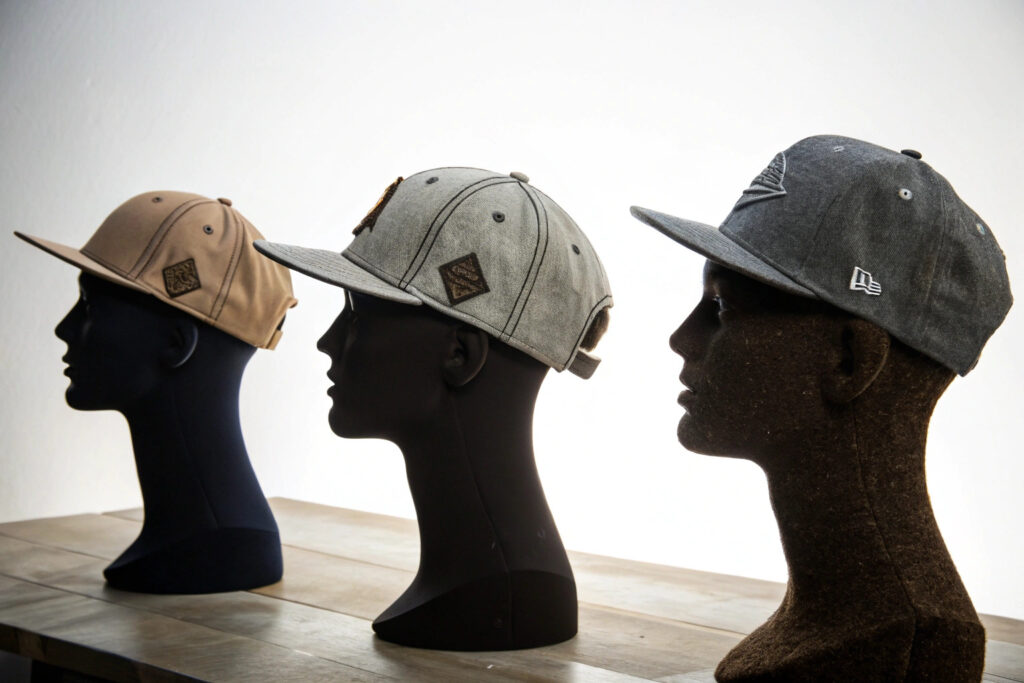
The FW26 five-panel camp cap has a crown depth of 10 to 12 centimeters at the center front, tapering slightly toward the back. The side panels are cut with a gentle curve that follows the shape of the head rather than standing straight up. The front panel is a single large piece of fabric with no center seam, providing a smooth, uninterrupted surface for embroidery or a woven patch.
The closure is a fabric strap with a metal slide adjuster or a low-profile plastic buckle. The visor is pre-curved with a moderate deflection of 60 to 65 millimeters. The overall look is clean, substantial, and utilitarian.
My FW26 five-panel spec uses a 320gsm wool blend melton for the crown and a tonal embroidered logo on the front panel.
How Does the Y2K Archival Trend Influence Camp Cap Branding and Logos?
The Y2K archival trend draws from the visual language of late 1990s and early 2000s outdoor brands, skate brands, and tech companies. Logos are small, centered on the front panel, and often rendered in a simple sans-serif font or a geometric emblem.
Embroidery is tonal—dark grey thread on a black cap—or uses a single contrast color. Woven patches with merrowed edges are replacing direct embroidery for some brands. The overall aesthetic is understated and archival, not loud and promotional.
My embroidery digitizing team has developed a tonal stitch technique that creates a subtle, embossed effect on the wool fabric.
How Are Oversized Beanies With Folded Cuffs Redefining Winter Headwear?
You order standard beanies. The cuff is 6 centimeters. The crown depth is 28 centimeters. They fit close to the head. Your competitor drops an oversized beanie. The cuff is 12 centimeters. The crown is 35 centimeters. It slouches at the back. It covers the ears completely. It looks like a statement piece. Your standard beanie looks like a free giveaway at a corporate event. The consumer wants volume.
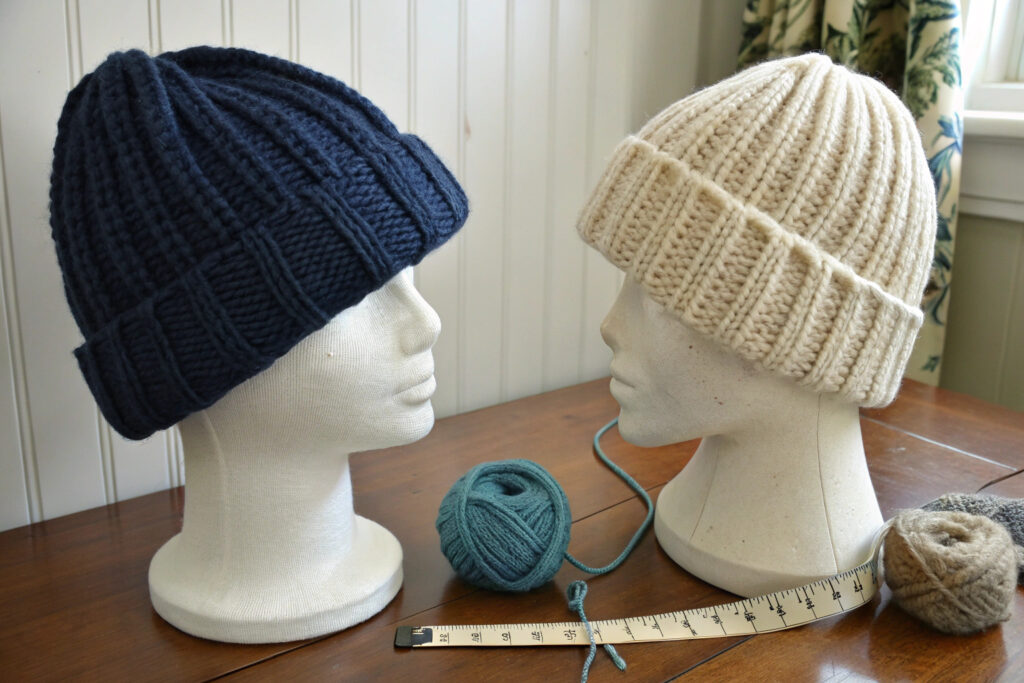
Oversized beanies with folded cuffs are redefining winter headwear by shifting the proportion from a fitted, close-to-the-head silhouette to an exaggerated, voluminous shape. The crown depth is 32 to 38 centimeters compared to the standard 26 to 28 centimeters. The extra length creates a slouch effect at the back of the head. The folded cuff is 10 to 15 centimeters wide, covering the entire ear and sitting low on the forehead. The knit gauge is chunky, with a gauge of 3 to 5 stitches per inch compared to the standard 7 to 9.
I knit my oversized beanies on a 5-gauge flat knitting machine using a thick acrylic-wool blend yarn for maximum volume.
The cuff width is not just a style choice. It is a functional cold-weather feature.
What Gauge and Yarn Weight Create the Slouchy Oversized Beanie Structure?
The slouchy structure is achieved with a combination of a low-gauge knit and a heavy yarn weight. A 3-gauge or 5-gauge knitting machine produces a loose, open knit structure that drapes and slouches rather than standing stiff. The yarn weight is 200 to 300 grams per beanie, significantly heavier than the 100 to 150 grams of a standard beanie.
The extra yarn weight adds mass. The mass pulls the crown downward, creating the slouch. The low gauge allows the knit to stretch and conform to the head shape while maintaining the oversized volume.
My yarn supplier provides a chunky acrylic-wool blend in 2/8 Nm count for the FW26 oversized beanie program.
Why Are Chunky Rib and Cable Knit Textures Preferred Over Fine Gauge?
Chunky rib and cable knit textures provide visual depth and tactile interest. A 2x2 rib creates vertical columns that stretch and contract. A cable knit creates a twisted rope pattern that adds surface texture. These textures are visually dominant. They make the beanie the focal point of the outfit.
Fine gauge knits are smooth and uniform. They look like a basic accessory. The chunky texture signals quality, craftsmanship, and intentional design. The streetwear consumer touches the beanie before they buy it. The texture must feel substantial.
My knitting program for FW26 includes 2x2 rib, fisherman rib, and a large-scale cable pattern.
What Role Does Corduroy Play in the FW26 Streetwear Fabric Story?
You use cotton twill. Every brand uses cotton twill. The consumer cannot distinguish your cap from a blank wholesale cap. The fabric is a commodity. Corduroy is a textile with texture. It has a wale—a raised rib—that catches the light and feels different to the touch. It signals vintage, academic, and workwear heritage. It photographs with depth and shadow. It is not a commodity fabric. It is a storytelling fabric.
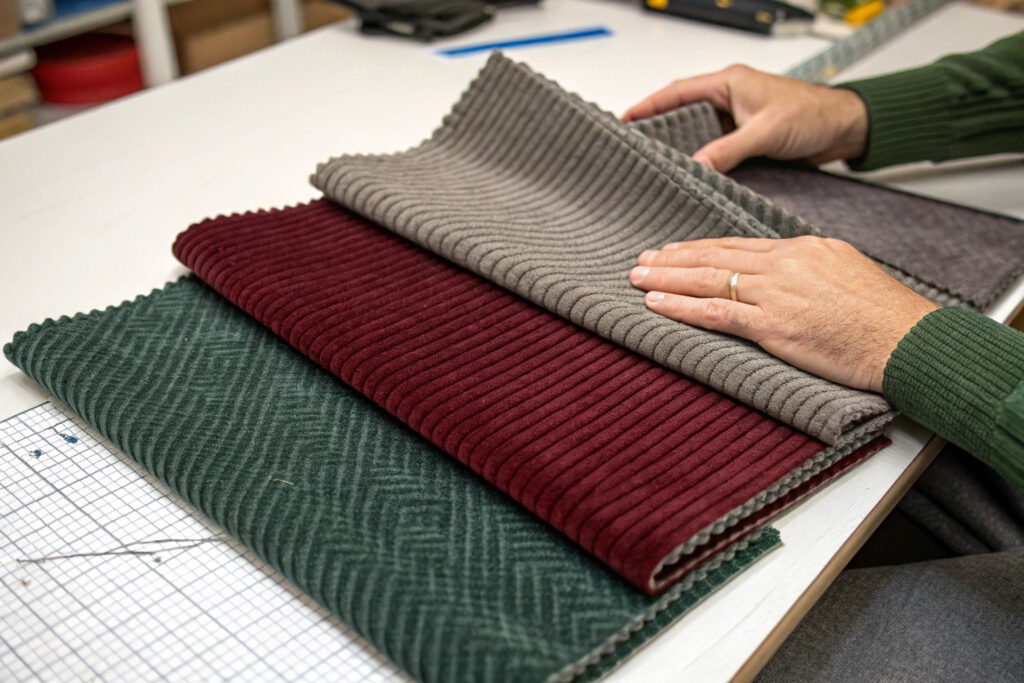
Corduroy plays the role of the tactile, heritage-driven fabric in the FW26 streetwear story. It provides a textural alternative to the smooth wool and cotton twills that have dominated recent seasons. The wale count determines the visual effect: a wide 6-wale corduroy creates bold, vintage-inspired stripes, while a fine 14-wale corduroy creates a subtle, sophisticated texture. The fabric is used for full six-panel caps, for visor-only accents on wool crowns, and for bucket hats.
I stock corduroy in 8-wale and 14-wale constructions, sourced from a mill that specializes in premium apparel corduroy.
The wale count is the key specification that determines the look of the finished cap.
What Is the Difference Between Wide-Wale and Pinwale Corduroy for Caps?
Wide-wale corduroy has 6 to 8 wales per inch. The ribs are bold, wide, and deeply textured. The fabric has a vintage, 1970s aesthetic. It works best for six-panel caps and bucket hats where the bold texture is a design feature.
Pinwale corduroy has 14 to 21 wales per inch. The ribs are fine, narrow, and subtle. The fabric has a more refined, modern look. It works well for structured caps where a heavy texture might distort the embroidery.
I recommend 8-wale corduroy for streetwear caps and 14-wale for premium lifestyle caps.
How Does Corduroy's Pile Direction Affect Embroidery and Print Placement?
Corduroy has a directional pile. The ribs run vertically or horizontally depending on how the pattern is cut. Embroidery stitched onto corduroy can sink into the valleys between the wales, causing the logo to appear uneven or distorted. A topping film must be used during embroidery to hold the stitches on top of the ribs.
Screen printing on corduroy is difficult. The ink can fill the valleys and create a solid block. The preferred decoration method for corduroy is a woven patch sewn onto the crown, or a tonal direct embroidery with a topping film.
My embroidery protocol for corduroy uses a water-soluble topping film and a slightly increased stitch density.
Why Is the Balaclava-Style Hybrid Cap Emerging as a Statement Piece?
The balaclava was a ski accessory. Then it became a pandemic face covering. Then it became a streetwear staple during the 2022-2024 balaclava trend. Now it is evolving into a hybrid product that combines the structure of a cap with the face coverage of a balaclava. The consumer who bought the standalone balaclava two years ago wants the next iteration.
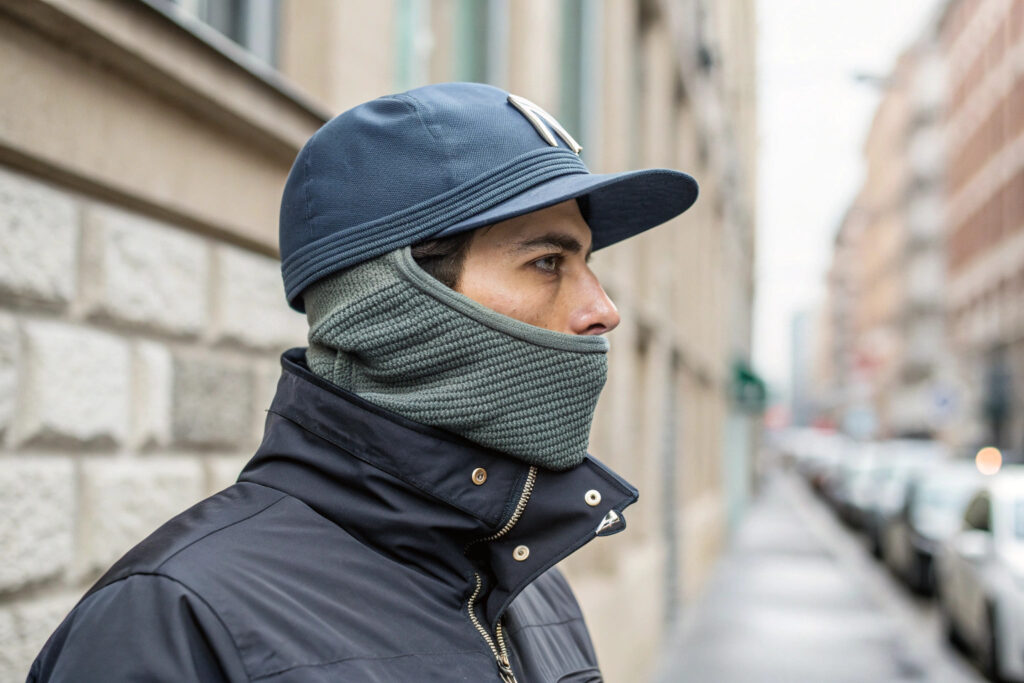
The balaclava-style hybrid cap is emerging as a statement piece because it merges the visual architecture of a structured cap with the cold-weather functionality and the masked aesthetic of a balaclava. The hybrid typically features a five-panel or six-panel cap crown with a built-in, detachable or foldable face covering that extends from the sweatband area. The face panel can be worn pulled up for full face coverage, worn loosely around the neck as a gaiter, or removed entirely with hidden snaps or zippers. The design appeals to the streetwear consumer who values versatility, functional layering, and an aggressive, futuristic silhouette.
My hybrid cap pattern is in development for FW26 with a detachable face panel secured by low-profile magnetic snaps.
The attachment mechanism is the critical design detail that determines usability and durability.
What Attachment Mechanisms Allow the Face Covering to Be Removable?
The face covering can be attached with hidden sew-on snaps, magnetic Fidlock-style closures, a lightweight YKK zipper concealed in the sweatband seam, or buttonholes that attach to buttons sewn on the inside of the crown. The attachment must be secure during wear but easy to operate with one hand.
Magnetic closures are the premium option. They provide a clean, seamless look. Snaps are the most cost-effective option.
I am testing magnetic Fidlock closures for my premium hybrid cap and matte black sew-on snaps for the standard version.
Does the Hybrid Design Impact the Cap's Aerodynamics for Outdoor Wear?
The hybrid design adds a layer of fabric below the sweatband that can catch wind. If the face panel is worn loosely, it can act as a small sail. For cycling and high-wind outdoor activities, the face panel should be worn pulled tight or fully detached.
For casual streetwear use, the wind resistance is not a significant factor. The visual statement outweighs the minor aerodynamic impact.
My product testing protocol includes a wind tunnel comfort test for outdoor performance versions.
Conclusion
The Fall/Winter 2026 streetwear headwear season is defined by a shift to heavier fabrics, deeper crown proportions, and hybrid functional designs. The five-panel camp cap returns as the dominant silhouette, replacing the shallow dad hat with a roomier, 1990s-inspired crown. The oversized chunky knit beanie with an extra-wide folded cuff redefines winter proportions. Corduroy enters the streetwear fabric story as a tactile, heritage-driven alternative to cotton twill. The balaclava-style hybrid cap merges headwear with face coverage, creating the season's statement piece.
The color palette is dark, moody, and grounded: charcoal grey, dark burgundy, forest green, and black. Embellishment is tonal and understated. The overall aesthetic is substantial, textured, and archival. The streetwear consumer is moving away from lightweight, logo-driven seasonal basics and toward weightier, more considered pieces that justify a premium price point.
At Global-Caps, my design team has developed patterns, sourced fabrics, and prototyped samples for each of these FW26 trends. I am cutting bulk orders for five-panel camp caps, oversized beanies, corduroy caps, and hybrid balaclava caps for brands that will drop them in October. The trends are not predictions. They are already in production.
If you need streetwear headwear that leads the FW26 season rather than follows it, contact my Business Director Elaine. She can send you our FW26 trend sample kit, our fabric swatch library, and our development timeline for your custom designs. Email Elaine at elaine@fumaoclothing.com. Let's make next season's statement piece, this season.