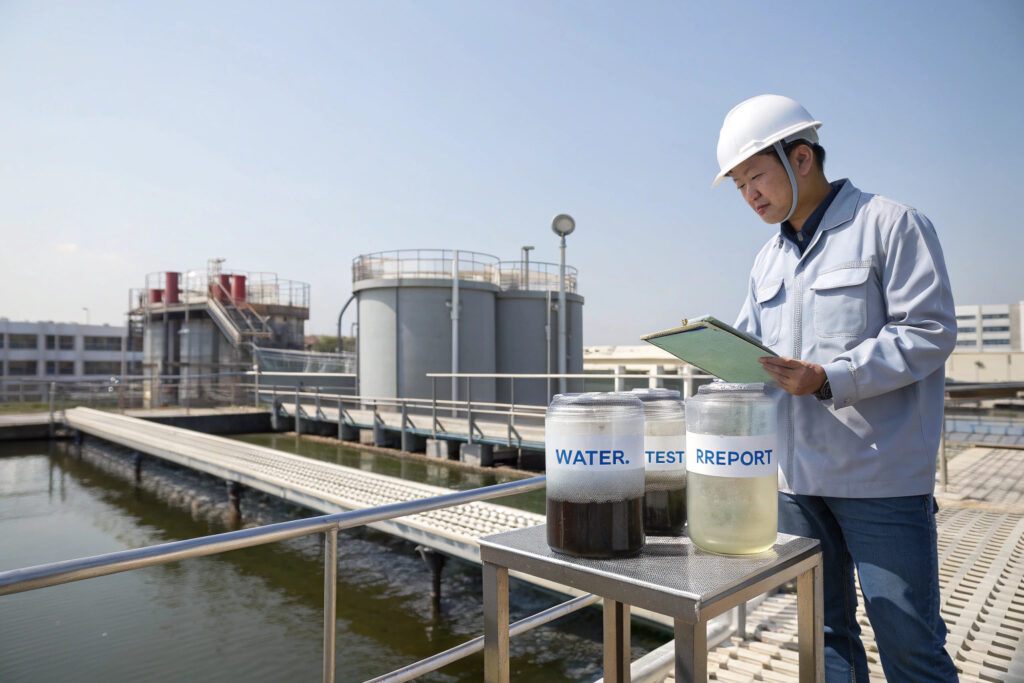
A Scandinavian brand owner sat in my conference room two years ago. She had visited three factories in Zhejiang before mine. At each one, she asked the same question: "Can I see your wastewater treatment system?" Two factory owners made excuses. One said the system was offsite for maintenance. Another said the area was closed for a safety inspection. She walked away from all of them. When she asked me, I handed her a hard hat and walked her to the treatment tanks on the roof. She placed her order before she left the building. The question about wastewater is not an environmental nicety. It is a stress test that reveals whether a factory is a legitimate, compliant operation or a regulatory time bomb waiting to disrupt your supply chain.
You should ask a Chinese hat factory five specific, verifiable questions about their wastewater treatment process. First, ask to see the valid Environmental Protection Bureau discharge permit and the most recent third-party effluent test report. Second, ask to physically walk to the treatment system and see it operating during a production shift. Third, ask what specific dye chemistry they use and whether it includes azo-free and heavy-metal-free certifications for the effluent stream. Fourth, ask what percentage of treated water is recycled back into the production process versus discharged. Fifth, ask for a copy of their most recent government environmental inspection report and any corrective action notices. A factory that answers these five questions with documents, a walking tour, and specific data is managing environmental compliance as a core business function. A factory that deflects, delays, or provides vague verbal assurances is hiding a regulatory or financial liability that could shut down production without warning.
I have invested over $200,000 in our on-site wastewater treatment and recycling system. I did this not because I am an environmental activist, but because I am a business owner who understands that environmental enforcement in China is now real, strict, and escalating. A factory that is shut down for a wastewater violation cannot ship your order. That risk is now as real as a fabric shortage. I want to share the exact questions, the documents to demand, and the physical evidence to look for during a factory visit. This is the due diligence that protects your order book from a sudden supply chain interruption.
Why Is a Factory's Wastewater Compliance Now Critical for Supply Chain Stability?
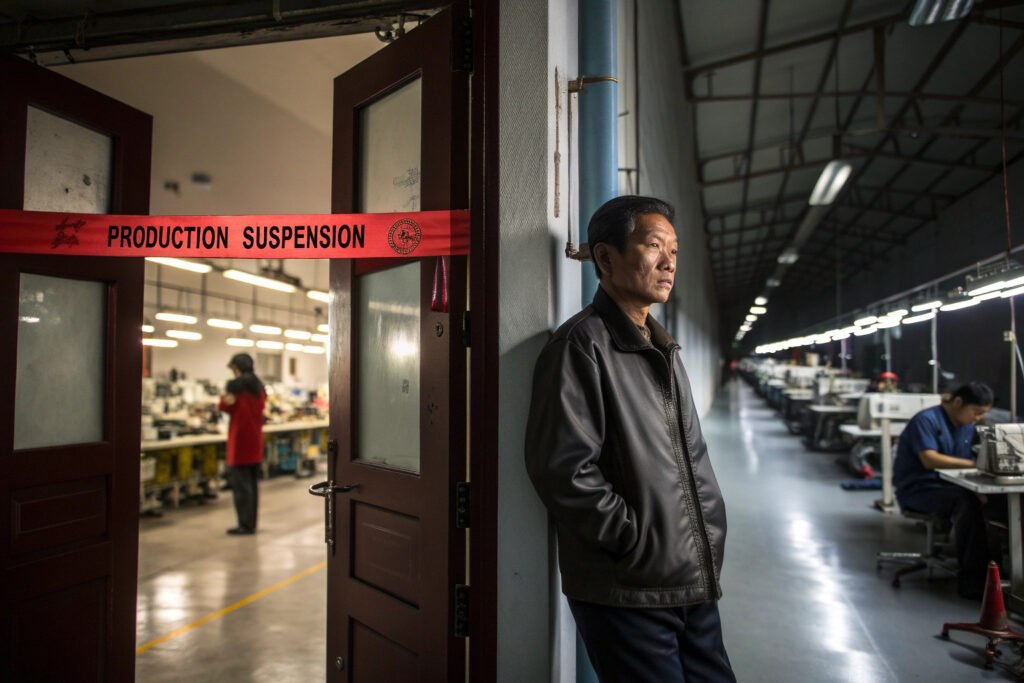
The Chinese government's environmental enforcement posture has transformed in the last decade. The old pattern of occasional, negotiable fines has been replaced by a systematic, technology-driven enforcement regime. The central government has empowered local Environmental Protection Bureaus to conduct unannounced inspections, install real-time effluent monitoring sensors, and impose immediate production shutdowns for violations. A factory that discharges untreated dye wastewater into the municipal sewer system or, worse, directly into a nearby river, will be caught. The penalties are severe. A production suspension order can close a factory for weeks or months. For a foreign buyer with a container on the water and a retail launch date approaching, a factory shutdown is a commercial catastrophe.
I track environmental enforcement actions in our industrial zone. Last year, three hat factories within a 20-kilometer radius were issued 30-day suspension orders for wastewater violations. Their foreign customers were not notified until the factory was already closed. One US brand lost its entire spring season because the factory could not ship finished goods from a sealed facility. The brand had no contingency plan because they had never asked the wastewater question. Asking the question is not about being environmentally conscious. It is about supply chain risk management. A factory that treats its wastewater legally is a factory that will be open next month. A factory that cuts environmental corners is a factory that can be shut down by a single government inspector on a single Tuesday morning.
The enforcement risk is the immediate business case for asking the question. But the specific dye chemistry used in hat manufacturing creates a particularly toxic effluent stream. Understanding this chemistry helps you ask more informed, technical questions during a factory audit.
What Toxic Substances Are Typically Found in Hat Factory Wastewater?
Hat manufacturing wastewater contains several pollutant categories that are strictly regulated. Reactive dyes, which bond chemically to cotton fibers, have a fixation rate of only 60% to 80%. The remaining 20% to 40% of the dye is discharged in the wastewater. These hydrolyzed dyes are highly visible, even at low concentrations, and many are toxic to aquatic life. Disperse dyes used for polyester are often applied with carrier chemicals that are phenolic compounds, known endocrine disruptors. The scouring and bleaching processes for cotton fabric generate wastewater with high biochemical oxygen demand and chemical oxygen demand. The finishing processes, including water repellent treatments and anti-microbial finishes, discharge perfluorinated compounds and biocides that persist in the environment.
A factory that treats this cocktail properly uses a multi-stage system. The first stage is chemical coagulation and flocculation to remove the dye molecules. The second stage is biological treatment using activated sludge to consume the organic pollutants. The third stage is advanced oxidation or membrane filtration to remove the trace, persistent chemicals. A factory that skips these stages is discharging toxic, colored, high-organic-load wastewater directly into the public water system. The textile wastewater composition is well-documented in environmental engineering literature.
How Do Chinese Environmental Regulations Differ From EU Standards?
Chinese environmental regulations for textile wastewater are governed by the GB 4287 standard, which sets discharge limits for chemical oxygen demand, biochemical oxygen demand, total suspended solids, color, pH, and specific heavy metals. The EU equivalent is the Integrated Pollution Prevention and Control directive, which often sets stricter limits for certain parameters but operates on a different enforcement mechanism.
The key operational difference is that Chinese regulations now mandate real-time monitoring for large-scale factories. A government sensor continuously measures the effluent pH, flow rate, and sometimes chemical oxygen demand, and transmits the data directly to the Environmental Protection Bureau. Any exceedance triggers an automatic alert. The China environmental protection law enforcement framework now includes personal criminal liability for factory owners who knowingly discharge toxic wastewater. This legal risk makes many factory owners extremely nervous about discussing their wastewater. A factory that is open and transparent about its system is a factory that has nothing to hide.
What Documents Should You Request to Verify Wastewater Compliance?
The document request is the first filter. A factory that cannot produce a valid environmental permit within an hour is a factory that either does not have one or has an expired one. Neither scenario is acceptable. The documents are not secret. They are issued by the local Environmental Protection Bureau and are required to be maintained on file. A legitimate factory treats these documents the way a driver treats a license. They are always accessible. The specific documents you should request are the Environmental Discharge Permit, a third-party Wastewater Test Report from an accredited laboratory, and the most recent Government Environmental Inspection Report.
The discharge permit is the foundational document. It is issued by the local EPB and specifies the factory's permitted discharge volume, the pollutant concentration limits, and the permit validity period. Check the factory name on the permit. It must exactly match the factory name on the business license and the purchase order. Check the validity date. An expired permit is the same as no permit. The third-party test report should be from an ISO 17025 accredited laboratory, not an internal factory lab. The report should test for the parameters specified in the GB 4287 standard: chemical oxygen demand, biochemical oxygen demand, total suspended solids, color, pH, ammonia nitrogen, and heavy metals. Compare the measured values against the standard limits. A report where every value is barely under the limit is suspicious. It suggests the sample was taken under ideal conditions, not during normal production. The government inspection report is the most revealing document. It is the EPB inspector's notes from the last site visit. It will list any violations found, any corrective actions required, and the deadline for correction. Ask for this report specifically. A factory with a clean inspection report and no corrective actions is a factory that is genuinely compliant.
The documents are the paper evidence. But a document can be forged. The physical verification during a factory visit is the evidence that cannot be faked easily. The walk to the treatment system is the single most important step in the audit.

What Does a Valid Environmental Discharge Permit Look Like?
A valid Chinese environmental discharge permit is a multi-page document with a red government stamp on the final page. The permit number is listed on the first page. The permit specifies the legal entity name of the factory, the exact factory address, the permitted discharge location, the discharge standards applicable, and the permitted annual discharge volume.
The permit also lists the specific monitoring requirements. Some permits require continuous online monitoring. Others require periodic manual sampling and reporting. The permit is public in the sense that it is issued by a government agency, but it is not typically published online. The factory should have the original or a certified copy on file. I keep our original discharge permit in a fireproof safe in the compliance office. A copy is framed in the lobby. Transparency is a deliberate choice. The environmental permitting process in many countries follows similar structures. The key is to verify the permit is current and matches the factory identity.
How Often Should a Third-Party Wastewater Test Be Conducted?
The regulatory requirement varies by jurisdiction and permit conditions. I consider a minimum of quarterly third-party testing to be the standard for a responsible factory. Some large factories test monthly. Some small factories test annually to save money. Annual testing is not adequate for a dyeing operation where the effluent composition changes with every dye batch.
I commission a monthly third-party test from an ISO 17025 accredited laboratory. The lab technician comes to our factory unannounced, collects a composite sample from the discharge point over a 24-hour period, and tests the full GB 4287 parameter list. The report is sent directly to me and to our compliance manager. We share the most recent report with any buyer who requests it. The wastewater testing frequency guidance from environmental agencies emphasizes that the testing schedule should be risk-based. A factory that dyes fabric presents a higher risk and should test more frequently.
What Should You Look for During a Physical Inspection of the Treatment System?
The walk to the treatment system is a moment of truth. A factory with a real, operational system will be proud to show it. A factory with a decorative system built for show, or no system at all, will create barriers to the visit. You should look for five physical signs during the walk. The sound of pumps and aerators running. The smell of a biological treatment process, a slightly earthy, pond-like odor, not a chemical solvent smell. The color of the water at different treatment stages, moving from dark and colored at the inlet to clear at the outlet. The presence of a flow meter that records the volume of water being treated. And the maintenance logbook kept at the treatment system operator's station. If the system is silent, the water is stagnant, and the logbook is blank, the system is non-operational and exists only for photographs.
I take visitors to the roof of our factory where the treatment tanks are located. I show them the inlet pipe where the dark, colored water from the dyeing and washing stations enters the first coagulation tank. I show them the sludge press where the dye sludge is separated and stored in sealed containers for hazardous waste disposal. I show them the final ultrafiltration membrane unit and the clear, transparent water that exits it. I fill a glass jar with this treated water and hold it up to the sky. The water is clear, colorless, and odorless. Then I show them the recycling pipeline that returns 70% of this treated water back to the washing stations for reuse. The physical walk answers the question more completely than any document.
The visual and sensory inspection confirms the system is running. But the most common deception is a "bypass pipe," an illegal connection that allows untreated wastewater to be diverted around the treatment system and discharged directly to the sewer. Knowing where to look for this pipe is a critical skill.

How Can You Spot a Bypass Pipe That Diverts Untreated Wastewater?
A bypass pipe is often a simple T-junction installed before the treatment system inlet. One branch goes to the treatment system. The other branch goes directly to the external discharge pipe. A valve controls which branch the water flows into. During a buyer visit, the valve is turned to send water to the treatment system. During normal production, the valve is turned to bypass the system and save the electricity cost of running the pumps and aerators.
You spot a bypass pipe by following the plumbing. Start at the dyeing machine drain pipe. Follow it as it exits the production building. Before it reaches the treatment system, look for any secondary pipe that branches off. A legitimate system has all wastewater flowing through the treatment inlet. An illegitimate system has a shortcut. Ask the engineer to open the valve on the suspect pipe. If dark, untreated water flows out, you have found the bypass. This is a definitive finding of non-compliance. The industrial wastewater bypass detection guidance describes this common violation pattern.
What Should the Treated Water Look and Smell Like?
Treated water that meets the discharge standard for a textile factory should be clear and colorless to the eye. A slight pale yellow tint may be acceptable if the color standard is met. The water should have no detectable odor. A chemical odor indicates incomplete treatment. A foul, rotten-egg odor indicates anaerobic decomposition in a poorly maintained biological treatment unit.
The pH of the treated water should be between 6.0 and 9.0. You can test this instantly with a pH test strip from any laboratory supply store. I keep pH strips in my audit kit. A quick dip into the treated water sample gives an immediate reading. A water sample that is colored, smelly, or has a pH outside the 6 to 9 range is physical evidence of treatment failure. The treated water quality indicators provide a general reference for what constitutes acceptable discharge quality.
What Questions Reveal a Factory's Long-Term Environmental Investment?
The documents and the physical inspection answer the compliance question. The strategic questions answer the partnership question. A factory that is investing in environmental improvements is a factory that is planning to be in business for the long term. A factory that treats environmental compliance as a minimum-cost burden is a factory that will cut other corners, including quality and delivery, when margins tighten. The environmental investment question is a proxy for management quality.
I ask my own factory team two strategic questions every quarter. What percentage of our treated water are we recycling, and can we increase it? What technology is available to reduce the sludge waste from our dyeing process? The answers drive capital investment decisions. A buyer should ask the factory owner these same questions. How much have you invested in your treatment system in the last three years? What percentage of your annual revenue do you allocate to environmental compliance? Do you have a five-year environmental improvement plan? The factory owner's ability to answer these questions with specific numbers and a coherent plan reveals whether environmental management is a core business function or a grudging regulatory response. A factory that has a documented five-year plan to achieve zero liquid discharge or carbon neutrality is a factory run by a professional management team. That factory is a reliable long-term supplier.
The investment questions reveal the factory's trajectory. The recycling rate question, in particular, is a single number that captures a factory's entire attitude toward resources. A factory that recycles water is a factory that measures, manages, and improves. A factory that discharges 100% of its wastewater is a factory that treats water as someone else's problem.

What Water Recycling Rate Indicates a Responsible Factory?
In the Chinese textile industry, a zero percent recycling rate was standard a decade ago. Today, a recycling rate of 50% to 70% is the mark of a modern, responsible factory. Some leading factories have achieved 90% to 95% recycling through membrane bioreactor technology and reverse osmosis.
Our factory currently recycles 70% of our treated wastewater. The recycled water is used for the first and second wash cycles after dyeing, where potable water quality is not required. The remaining 30% is discharged to the municipal sewer in full compliance with our permit. We have a capital plan to increase the recycling rate to 85% within three years by adding a reverse osmosis polishing unit. I share this plan with buyers because it demonstrates continuous improvement. The industrial water reuse best practices are documented by environmental agencies and industry associations.
How Should a Factory Dispose of the Sludge Generated by Wastewater Treatment?
The treatment process removes pollutants from the water, but those pollutants do not disappear. They are concentrated into a sludge. This sludge is classified as hazardous waste under Chinese regulations if it contains heavy metals or toxic dyes. The factory must contract with a licensed hazardous waste disposal company to collect, transport, and incinerate or landfill the sludge in a permitted facility.
You should ask to see the hazardous waste disposal contract and the waste transfer manifests. These manifests are multi-part forms that track the sludge from the factory to the disposal facility. Each shipment of sludge generates a manifest with a unique tracking number. The factory should have a file of these manifests. A factory that cannot produce sludge disposal manifests is either illegally dumping the sludge or storing it on-site. Illegal dumping is an environmental crime. On-site storage is a future liability. The hazardous waste disposal regulations require cradle-to-grave tracking of toxic industrial waste.
Conclusion
The question about wastewater treatment is the single most revealing question you can ask a Chinese hat factory. It cuts through the sales pitch and exposes the reality of the operation. A factory that invites you to walk to the roof and see the treatment system running, that produces a valid discharge permit and current third-party test reports with values comfortably within limits, that has a documented sludge disposal chain and a recycling rate above 50%, and that can describe a five-year environmental investment plan, is a factory that manages its business professionally. That factory will not be shut down by an environmental inspection next month. That factory will be your supplier for years.
I answer the wastewater question at least once a week. I answer it with pride because our investment in water treatment reflects the investment we make in quality control, in delivery reliability, and in customer relationships. A factory that is clean with its water is a factory that is clean with its business practices. The correlation is not perfect, but it is strong enough to bet your supply chain on it.
If you are evaluating Chinese hat factories and want a partner whose environmental compliance is documented, auditable, and demonstrated with an on-roof tour, let us schedule a video walkthrough of our treatment facility. Our Business Director, Elaine, can share our current discharge permit, our latest third-party wastewater test report, and our sludge disposal manifests before you even request a sample. Email her at elaine@fumaoclothing.com and ask for the Environmental Compliance File. We will show you where our water goes, how we clean it, and why your order is safe with us.