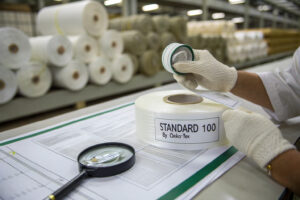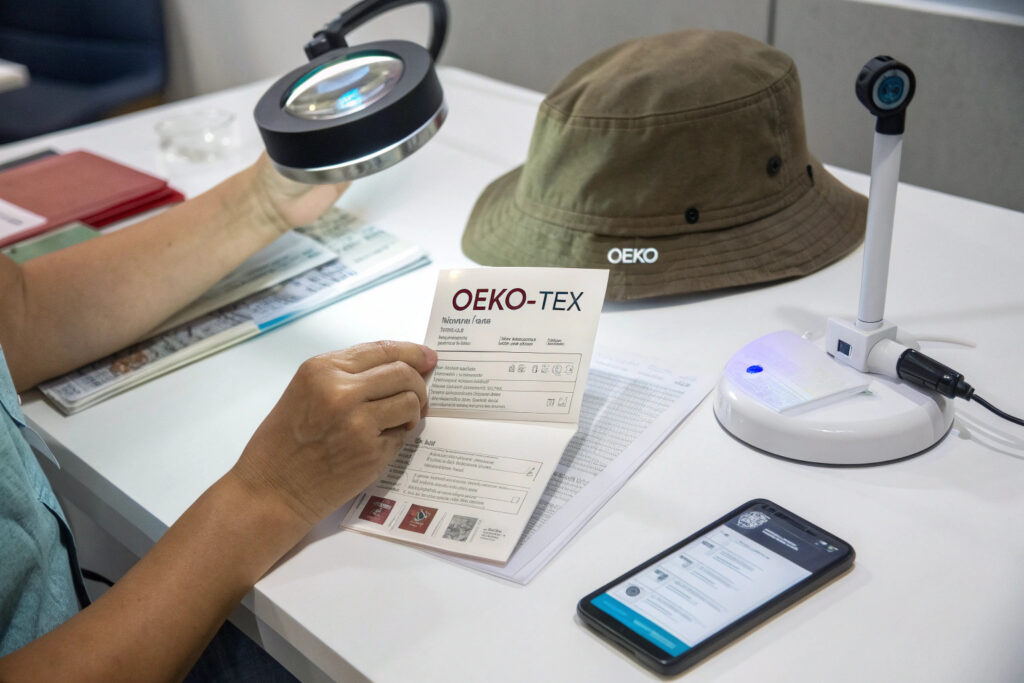
You receive the compliance email from your new hat supplier. It says, "We use OEKO-100 certified dyes for all our products." This is exactly what you want to hear. Your brand's marketing promises chemical safety. Your retail partners require OEKO-TEX certification. The supplier's claim gives you comfort. But a small voice in your head asks: How do I know this is true? The email has no attachment. There is no certificate number. The claim is just words. You realize you need to verify this claim before you attach your brand's reputation to this supplier. You are not a chemist. You do not run a testing laboratory. What specific questions should you ask to separate a genuine, certified dye supply chain from a hollow marketing statement?
Verifying a supplier's claim of using OEKO-100 certified dyes is a structured interrogation of their supply chain, not a single yes-or-no question. The OEKO-TEX Standard 100 certification applies to finished textile products, not specifically to dyes in isolation. However, the dyes used in a certified product must themselves be approved and listed within the OEKO-TEX system. I run Global-Caps, and I navigate this certification ecosystem daily. I know the documentation that exists, the gaps where suppliers hide, and the questions that force transparency. In this article, I will give you the exact questions to ask, the documents to demand, and the verification steps to take so you can be certain that your supplier's dye claim is factual and auditable.
What Specific Certification Documents Prove the Dyes Are OEKO-100 Compliant?
The first and most fundamental question to ask is: "Please provide the OEKO-TEX Eco Passport certificate for the specific dyes used in my order." This is the precise, targeted question that separates a legitimate dye compliance claim from a vague assurance. Many buyers mistakenly ask for the factory's OEKO-TEX Standard 100 certificate and assume it covers the dyes. It does not, at least not in the traceable, auditable way you need.
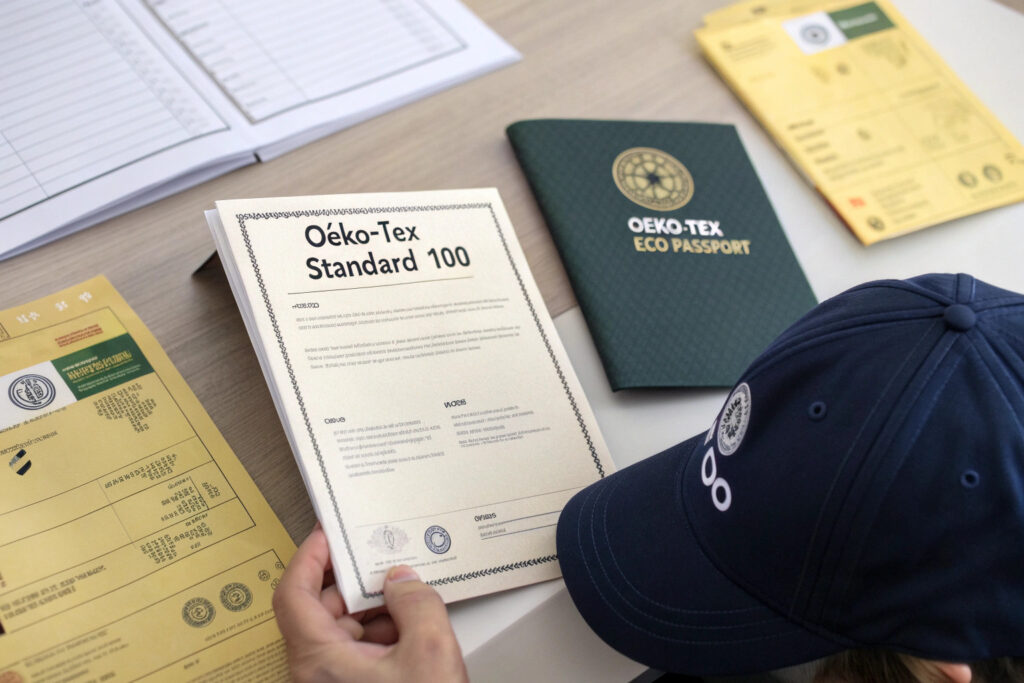
The OEKO-TEX Standard 100 is a product certification. It certifies that the finished hat has been tested and is free from harmful substances. The factory's certificate is important, but it does not name the specific dyes used. The OEKO-TEX Eco Passport is a chemical certification. It certifies that a specific chemical product, such as a dye, an auxiliary, or a finishing agent, has been assessed by an OEKO-TEX institute and is approved for use in the production of OEKO-TEX certified textiles. The Eco Passport is the dye's individual passport. It names the dye manufacturer, the dye product name, and the certification number. A dyehouse that genuinely uses certified dyes will have a library of Eco Passport certificates from its dye suppliers, one for each dye product in its inventory. Ask for the Eco Passport certificate for the specific dyes used in your color. This is the targeted evidence. If the supplier cannot produce it, their claim of using certified dyes is unsubstantiated.
A second critical question is: "Please provide a copy of your factory's valid OEKO-TEX Standard 100 certificate, specifically the appendix that lists the certified product types, and confirm that my hat style falls within the certified scope." The certificate has an appendix that defines the scope. It lists the specific product categories, the material compositions, and the product classes, such as Class 1 for baby articles or Class 2 for adult articles. If the appendix does not list headwear or the specific fiber composition of your hat, the certificate does not cover your product. I have seen buyers accept a generic factory certificate without checking the appendix, only to discover later that the certification was for a completely different product category, like unbranded fabric rolls, not finished caps. This is a common and easily avoided gap.
What Is the Difference Between a Dye Supplier's SDS and an Eco Passport?
A Safety Data Sheet is a regulatory document that describes the chemical composition, hazards, and safe handling procedures for a chemical product. An SDS is required by law for industrial chemicals. A dye supplier will have an SDS for each dye. Some factories will offer the dye supplier's SDS as proof of safety. It is not. The SDS tells you what is in the dye, but it does not certify that the dye has been independently tested and approved by OEKO-TEX. The SDS is a hazard communication document, not a certification document. The Eco Passport is the independent certification that the dye meets OEKO-TEX's stringent ecological criteria. Accepting an SDS as proof of OEKO compliance is equivalent to accepting a car's owner's manual as proof it passed an emissions test. It is the wrong document.
How Can I Verify an Eco Passport Certificate Is Genuine?
Every OEKO-TEX certificate, including the Eco Passport, has a unique certification number. The certificate is issued by an accredited OEKO-TEX institute, such as Hohenstein, Testex, or OETI. You can verify the certificate's authenticity on the OEKO-TEX website. Go to the certificate check portal. Enter the certificate number. The portal will confirm whether the certificate is valid, the name of the certificate holder, and the product scope. If the supplier's certificate number does not return a valid result, or if the certificate holder name does not match the dye manufacturer's name, the certificate is fraudulent or expired. This verification takes two minutes. I actively encourage my clients to verify every certificate I provide. It is their right and my obligation as a transparent supplier.
What Questions Reveal the Traceability Between the Dye Certificate and My Specific Production Batch?
A valid Eco Passport certificate proves that a specific dye product, manufactured by a specific company, is OEKO-TEX approved. It does not yet prove that this specific dye was used to dye the fabric in your specific caps. The next set of questions establishes the chain of custody, the traceability link between the certificate and your production batch. This is where many supplier claims break down. They have a certificate for a dye they bought once, but they cannot prove they used that dye on your order.
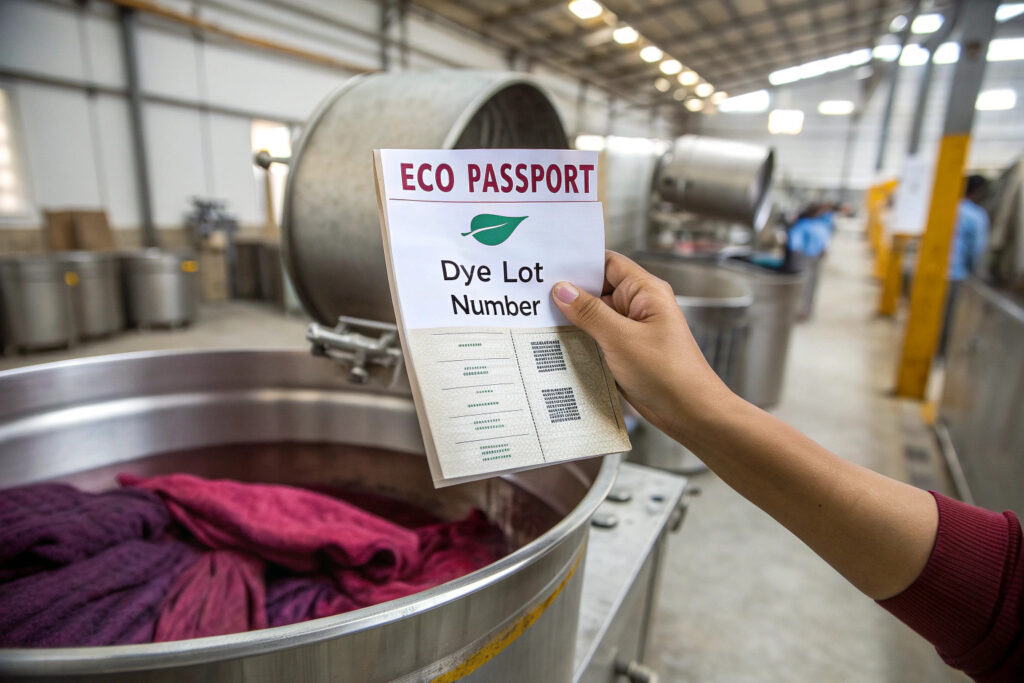
The key question is: "Please provide the dye batch ticket or production record for my specific order, showing the dye product names used, and cross-reference those dye names to the Eco Passport certificates provided." A professional dyehouse maintains batch records for every dyeing run. These records list the order number, the fabric type, the dye recipe, the dye product names and lot numbers, and the process parameters. This batch ticket is the physical evidence that the certified dye was actually used. Ask for a copy of this ticket for your order. Match the dye product names on the ticket to the Eco Passport certificates. This is the closed-loop verification. If the supplier provides Eco Passports for Dye A, Dye B, and Dye C, and the batch ticket for your order lists Dye X, Dye Y, and Dye Z, the traceability chain is broken. The certified dyes were not the ones used on your fabric.
A supporting question is: "Do you have a documented incoming material verification procedure for dyes, and can you provide a sample record showing that the Eco Passport was verified for the dye lot received?" A quality dyehouse verifies the Eco Passport status of every dye shipment before it is accepted into inventory. This is an incoming quality control check, the same as verifying the weight and color of the fabric. The record of this check, a simple log entry or a sticker on the dye drum, demonstrates that the dyehouse has a systematic process, not a one-time exercise. The absence of this procedure means the dyehouse is relying on trust, not verification.
How Can a Factory Demonstrate Dyehouse Segregation for OEKO Orders?
Some dyehouses handle both OEKO-certified and non-certified production. The risk of cross-contamination or accidental substitution of a non-certified dye is real. Ask the supplier: "How do you segregate OEKO-certified dyes and production batches from non-certified dyes? Please describe your segregation procedure or provide a photograph of your segregated dye storage." A professional dyehouse will have a clearly labelled, physically separated storage area for certified dyes. The production scheduling will include a documented clean-down procedure between non-certified and certified runs. The batch ticket will indicate that the run was an OEKO-certified run. If the supplier cannot describe a segregation procedure, you must assume that certified and non-certified dyes are used interchangeably, and your OEKO claim is at risk of cross-contamination.
What Testing Does the Factory Perform on Incoming Dyes?
Beyond documentation, a factory can perform its own verification testing. Ask: "Do you conduct any in-house testing or third-party testing on incoming dye shipments to verify their OEKO compliance, and can you provide a sample test report?" This is an advanced practice. Some large dyehouses have an in-house spectrophotometer and a chemical testing protocol to verify that the dye received matches the certified standard. More commonly, the dyehouse periodically sends dye samples to an external OEKO-TEX laboratory for confirmatory testing. The test reports for these random audits provide the highest level of assurance. If a supplier can produce these, they are operating at a best-practice level.
How Can I Structure the Purchase Contract to Mandate OEKO-Certified Dye Usage?
A supplier's verbal or email claim of using OEKO-certified dyes is worth nothing if it is not written into the legally binding purchase contract. The contract is the document that defines the supplier's obligations and your remedies if those obligations are breached. The dye certification requirement must be explicit, specific, and linked to defined consequences for non-compliance.
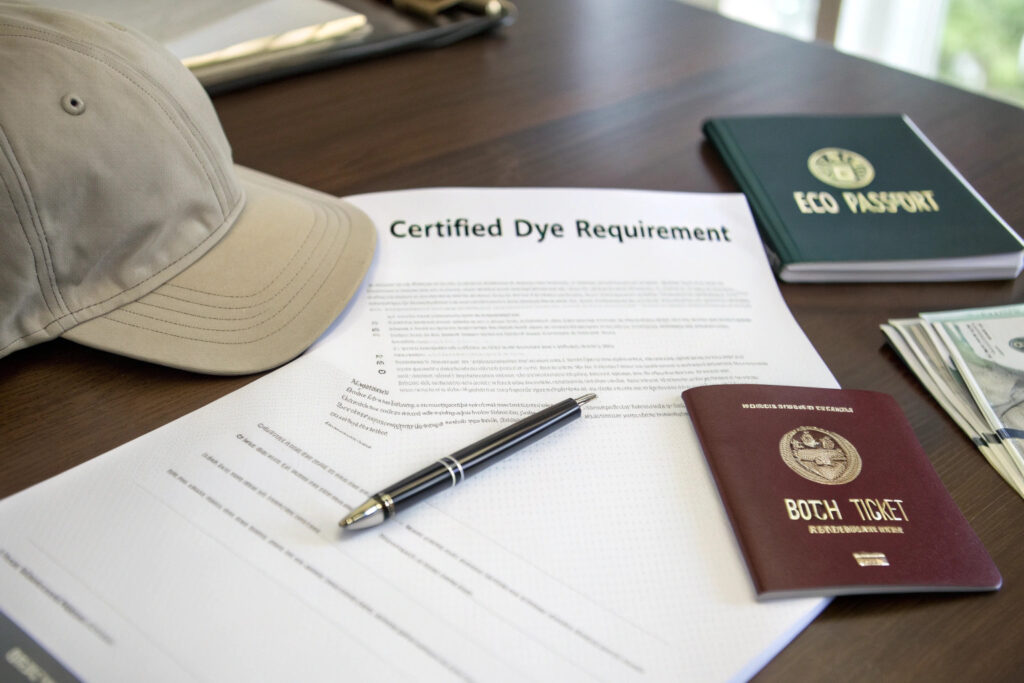
The contract clause should read substantially as follows: "Certified Dye Requirement: The Supplier warrants that all dyes, pigments, and chemical auxiliaries used in the production of the Goods under this Agreement shall be certified to the OEKO-TEX Eco Passport standard. The Supplier shall provide to the Buyer, no less than fourteen days prior to the scheduled shipment date, a compliance package consisting of (i) a valid OEKO-TEX Eco Passport certificate for each dye product used, (ii) the dye batch production records for the specific Goods, cross-referencing the Eco Passport certificate numbers, and (iii) a signed Declaration of Conformity. The Supplier's failure to provide a complete and satisfactory compliance package shall entitle the Buyer to withhold shipment release and, if not cured within ten business days, to cancel the order without penalty and receive a full refund of any deposit paid." This clause ties the compliance documentation to the shipment release and provides a clear remedy for non-compliance.
The contract should also include a right to audit. "The Buyer, or a designated third-party auditor, shall have the right to audit the Supplier's dye storage, dye batch records, and dye procurement records upon reasonable notice to verify compliance with the certified dye requirement." This audit right is a powerful deterrent against fraudulent claims. A supplier that knows the buyer can show up and inspect the dye inventory is far less likely to substitute non-certified dyes. I welcome these audits. They validate my quality systems to my clients.
What Is a Declaration of Conformity for Dyes?
A Declaration of Conformity is a formal, signed legal statement from the supplier, declaring that the goods conform to specific standards. In the context of dyes, the DoC would declare that all dyes used in the production of the specific order are OEKO-TEX Eco Passport certified. The DoC lists the order number, the product description, the dye product names, the Eco Passport certificate numbers, and the signature of an authorized company representative. This document is a legal warranty. If the dyes are later found to be non-certified, the DoC is evidence of a breach of warranty. I provide a DoC with every shipment of OEKO-certified products. It is a standard document in a professional compliance package.
How Should You Handle a Supplier That Claims Their Dyes Are "Equivalent" to OEKO-100?
Sometimes a supplier will say, "Our dyes are not OEKO Eco Passport certified, but they meet the same standards." This is a red flag. "Equivalent" is not certified. There is no independent verification. There is no audit. There is no certificate number you can check. The claim is self-declared and unverifiable. Your response should be a polite but firm refusal. "Thank you, but our brand requires third-party certification, not self-declared equivalence. Can you source OEKO Eco Passport certified dyes for our order, or should we consider alternative suppliers?" This communicates that the requirement is non-negotiable. A supplier that is serious about your business will find a certified dye source. A supplier that resists or makes excuses is revealing that their chemical management is not at the standard you require.
What Additional Questions Can Uncover Hidden Risks in the Supplier's Dye Supply Chain?
Beyond the core certification and traceability questions, there are deeper questions that reveal the maturity of the supplier's chemical management system and the hidden risks in their dye supply chain. These questions probe areas that less sophisticated suppliers often overlook, and the answers, or lack of answers, are highly informative.
Ask: "Who is your primary dye supplier? Please provide their company name and location." A transparent supplier will name their dye supplier without hesitation. A secretive supplier will say "it's confidential." Transparency about the upstream supply chain is a hallmark of a responsible manufacturer. If the dye supplier is a well-known, reputable chemical company with a strong OEKO-TEX portfolio, that is a positive signal. If the dye supplier is an obscure trader or the factory cannot name them, the traceability is weak and the risk of uncertified substitution is high.
Ask: "What is your procedure for managing dye lots that have passed their OEKO certification expiry date?" Eco Passport certificates are valid for a specific period, typically one year, and must be renewed. A responsible dyehouse tracks expiry dates and quarantines dyes whose certification has lapsed. An irresponsible dyehouse continues using expired dyes and relies on the old certificate. This question exposes the dyehouse's ongoing compliance management, not just a snapshot in time.
Ask: "Have any of your dye products ever been flagged in a REACH or OEKO-TEX alert for non-compliance, and if so, how did you respond?" This is a question about the supplier's history and their corrective action process. A supplier with a perfect, incident-free history is either very good or very new. A supplier that honestly discloses a past issue and describes a robust corrective action is demonstrating integrity and a learning culture. A supplier that denies any possibility of ever having an issue is either uninformed or evasive. The answer to this question reveals a great deal about the supplier's relationship with the truth.
How Can a Factory Audit Verify the Dye Compliance Claims?
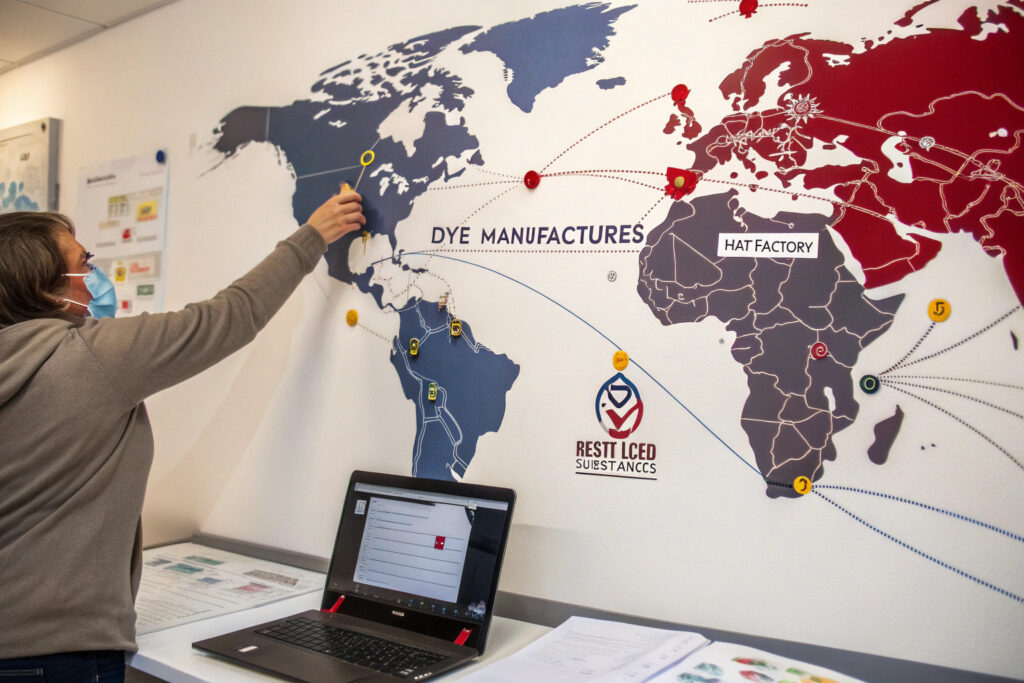
The ultimate verification is an on-site audit of the dyehouse. During the audit, the auditor should physically inspect the dye storage area. They should check the labels on the dye drums. The label should display the dye product name, the Eco Passport logo, and the certification number. The auditor should select a random sample of dye drums and request the corresponding Eco Passport certificates. The auditor should trace a specific dye drum from the storage rack to the batch ticket of a recent production run. This physical-to-documentary trace is the gold standard of verification. I have guided client auditors through this exact process in my facility. A factory that can demonstrate this live trace has a genuine, embedded OEKO-certified dye system. A factory that cannot has a paper certificate and a hope.
What Is the Role of Third-Party Laboratory Dye Testing as a Final Verification?
As a final, independent verification, you can commission your own chemical testing on a finished product sample. Send a cap to an OEKO-TEX accredited laboratory and request an OEKO-TEX Standard 100 test. If the cap passes, it confirms that the finished product meets the chemical safety standard, which is the ultimate goal. The test does not specifically identify the dye manufacturer, but it validates the outcome. If you commission this test yourself, the factory has no control over the result. This is the strongest possible verification of the finished product's chemical safety. It is an additional cost, but for a high-stakes order or a new supplier relationship, it provides absolute peace of mind. I support and encourage independent third-party testing by my clients. It is the final proof that our system works.
Conclusion
Verifying a supplier's claim of using OEKO-100 certified dyes requires a progression of increasingly specific questions and documentation demands. You begin by asking for the OEKO-TEX Eco Passport certificate for each specific dye product, not just the factory's Standard 100 certificate. You then demand the batch ticket that links those certified dyes to your specific production order, closing the traceability chain. You write the certified dye requirement into the purchase contract with defined consequences for non-compliance, and you reserve the right to audit. You probe the supplier's dye supply chain transparency, their expiry date management, and their incident history. Finally, you can commission your own independent laboratory testing as the definitive verification.
A genuine OEKO-certified dye supply chain is documented, traceable, and auditable. A fake one is built on vague claims, missing documents, and a refusal to provide specifics. The questions I have given you will quickly separate one from the other.
If you are sourcing headwear and want a manufacturing partner whose OEKO-TEX certified dye claims are backed by a complete documentation package, auditable traceability, and a welcome attitude toward independent verification, I invite you to contact Global-Caps. We maintain a library of current Eco Passport certificates for all dyes in our approved palette. We provide dye batch tickets and signed Declarations of Conformity as a standard part of our OEKO compliance package. We welcome buyer audits of our dye storage and dye records. Reach out to our Business Director, Elaine, at elaine@fumaoclothing.com to request a sample compliance package for your review. Let's build your hat program on a foundation of documented, verified, and transparent chemical safety.