You have made the marketing decision to go green. Your brand's next collection of knit hats will use recycled polyester yarn. You find a supplier who offers it at a price that fits your margin. They send you a spec sheet with the words "Recycled Polyester" and a green leaf icon. You approve the sample. The hats feel fine, maybe a bit scratchy. The order ships. Then, a few weeks after launch, an investigative journalist contacts your PR team. They tested your "ocean-bound plastic" beanie and found no chemical markers of ocean exposure. Or worse, they trace the yarn back to a processor accused of using virgin plastic chips instead of post-consumer bottles. Your green story becomes a liability. Your brand is now part of the greenwashing news cycle.
This nightmare scenario happens more often than the industry admits. The recycled polyester supply chain is long, complex, and opaque. It begins with the collection of plastic waste and ends with a spool of yarn on my factory floor. Between those two points, there are many opportunities for dilution, fraud, and wishful documentation. I run Global-Caps, and I have sat across the table from yarn agents who cannot answer basic questions about the bottle source. I have learned that asking the right technical questions is the only way to protect your brand's integrity. In this article, I will give you the exact questions you should ask, the documents you should demand, and the red flags that signal you are being sold a story rather than a genuine recycled material.
How Can I Verify the Authenticity of Recycled Polyester Certifications?
Certification is the foundation of trust in recycled yarn. But a certificate is a piece of paper or a PDF, and both can be faked or misapplied. You need to verify not just that a certificate exists, but that it applies to the specific yarn lot being used in your hats. The most recognized standard is the Global Recycled Standard. There is also the Recycled Claim Standard and the SCS Recycled Content Standard. Each has a different scope and audit rigor. A supplier who waves a generic ISO certificate at you and says "we are certified" is either ignorant or deliberately misleading you. An ISO 9001 certificate says nothing about recycled content; it certifies a quality management system.
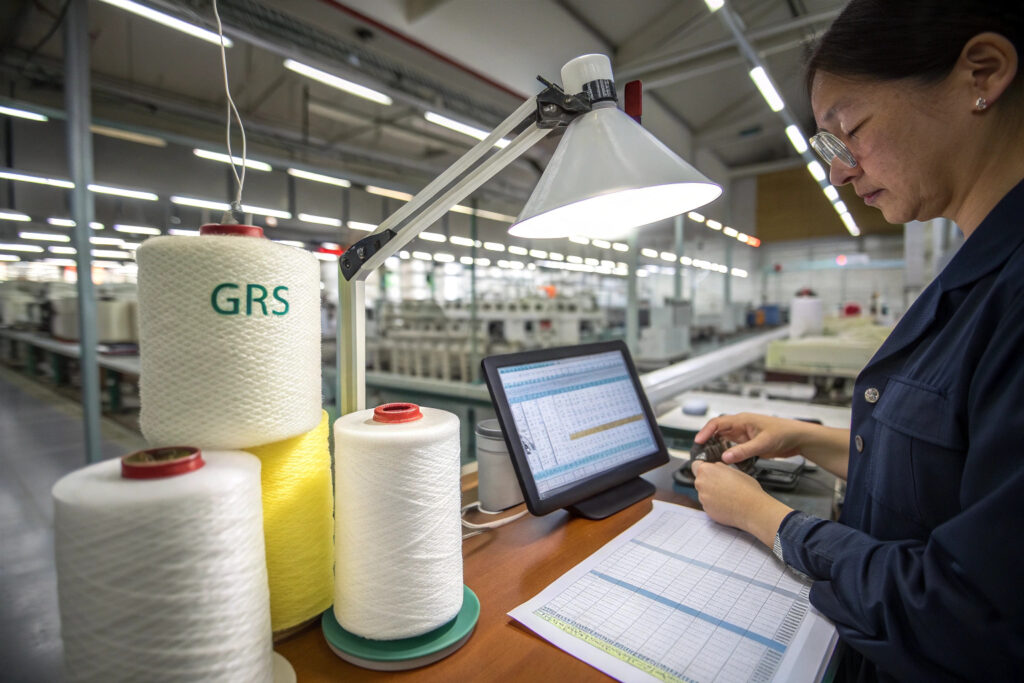
At Global-Caps, when we source recycled polyester for a client like Ron, we demand a valid transaction certificate, not just a scope certificate. A scope certificate means the yarn spinner has been audited and is capable of making recycled yarn. A transaction certificate is issued for a specific sale of a specific batch of yarn to a specific buyer. It contains the batch number, the claimed recycled content percentage, and the name of the certification body. This document follows the material through the supply chain. Without it, you have no chain of custody. You are just taking someone's word. I ask my yarn suppliers to provide a TC that matches the lot number printed on the physical yarn cones. I then cross-check the certificate number on the certification body's public database. Control Union, SGS, and Intertek all have online portals where you can type in a TC number and verify its validity in seconds. If the supplier hesitates, stalls, or says the TC is "confidential," walk away.
A deeper layer of verification is the transaction certificate's declared composition. GRS allows different claim levels. A yarn can be labeled "GRS certified" but contain only 50% recycled content if it is blended with virgin polyester. You must look at the percentage on the TC. For a hat marketed as "100% recycled polyester," the TC must state 100% recycled content. If you are buying a blend, you must market it as a blend. Making a 100% claim based on a 50% certified yarn is a clear violation of FTC Green Guides in the US and similar consumer protection laws in the EU. I have seen buyers get burned by this because they assumed the certificate meant 100%. It does not automatically.
How Do I Read a GRS Transaction Certificate Correctly?
The TC is dense with codes, but a few fields are critical. Look at Box 1, the "Certified Organization" name. Ensure this name matches the entity you are buying from. Look at Box 6, the "Certified Material" description. It should explicitly say "Recycled Polyester Yarn" and state the recycled percentage. Look at the "Lot/Batch Number." This must match the stickers on your yarn cones. A mismatch means the TC does not belong to your material.
Also, check the certification body's logo and accreditation code. A genuine TC will have a clear logo from a body like Control Union (CU), SGS, or Intertek. There is a scam of fake TCs circulating with generic logos or logos of certification bodies that do not exist. I always right-click the digital TC PDF and check the document properties. A genuine TC from an accredited body often has digital certificate signing. A fake one is usually a flat scanned image with no metadata. These are simple digital forensics that take two minutes and can save you from a disaster. I train my QC team to do this check on every incoming yarn shipment before it reaches our knitting machines.
What Other Certifications Matter Beyond GRS?
GRS is the dominant standard, but others have specific strengths. The Recycled Claim Standard is a simpler version focused only on the chain of custody and recycled content, without the social and environmental processing requirements that GRS includes. The SCS Global Services Recycled Content Standard is often used for materials entering the North American market and is accredited by ANSI. For ocean-bound plastic specifically, look for the Zero Plastic Oceans certification or similar programs that certify the coastal collection radius.
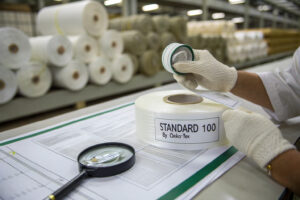
Some yarns use a dual certification strategy. They will have a GRS TC for the mechanical recycling process and an OEKO-TEX Standard 100 certificate for chemical safety. This matters because recycled polyester can carry chemical residues from its previous life. A yarn might be genuinely recycled but fail European REACH standards for certain restricted substances. I always request a valid OEKO-TEX certificate alongside the GRS TC. The OEKO-TEX certificate must list the specific yarn product and be within its one-year validity window. A recycled claim without chemical safety testing is a half-finished compliance package.
What Questions Should I Ask About the Waste Stream Source?
The word "recycled" is an umbrella, but under it are very different waste streams with very different environmental profiles and performance characteristics. Post-consumer waste means the plastic came from products that consumers used and then disposed of, like water bottles collected through municipal recycling programs. Post-industrial waste means the plastic came from factory scrap, like the trimmings from making virgin polyester fabric, which was never turned into a consumer product. Both are technically recycled, but the environmental narrative is completely different. Using post-industrial scrap does not solve the plastic pollution crisis; it just makes the factory more efficient.
You must ask your supplier to specify the waste stream on the transaction certificate and in their technical data sheet. The question is simple: "Is this yarn made from post-consumer or post-industrial waste?" If the answer is post-industrial, that is not necessarily bad, but it must be disclosed. You cannot market it with language about ocean plastic or saving bottles from landfills. The FTC Green Guides in the US require you to substantiate the specific environmental claim. If you say "made from recycled bottles," you must have proof the input was bottles. A general recycled claim without specifying the source is less risky legally, but it also has less marketing power. Consumers are increasingly sophisticated. They want to know the origin story of the material.
For the highest sustainability impact, post-consumer bottle-grade PET is the gold standard. But even within post-consumer, there are grades. You should ask about the collection geography. Is it collected from a single country with a regulated deposit system, like Germany or Norway, where the bottles are relatively clean? Or is it collected from an informal waste-picking economy where bottles may be mixed with other plastics and organic waste? The collection geography affects the purity of the input stream, which affects the mechanical recycling efficiency and the final yarn whiteness. Contaminated input requires more washing, more chemicals, and more energy, and it can leave invisible residues in the yarn.
Why Is Ocean-Bound Plastic a Specific and Difficult Claim?
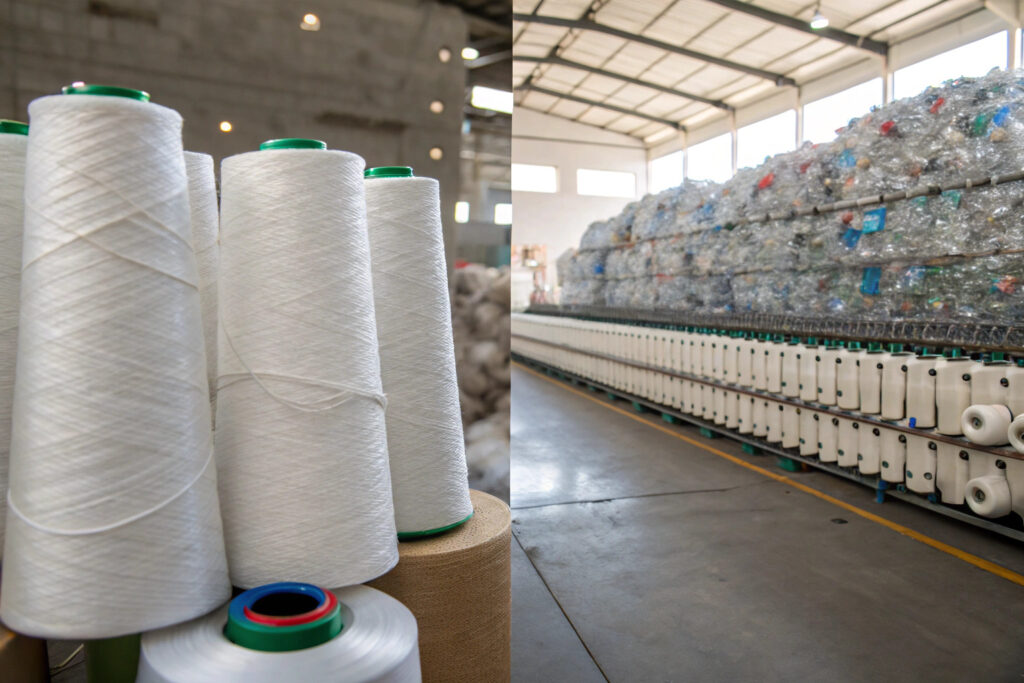
Ocean-bound plastic is a powerful marketing term, but it has a specific technical definition. Generally, it refers to plastic waste collected within a certain distance, often 50 kilometers, of a coastline where there is no formal waste management system. The idea is that this plastic is at high risk of entering the ocean. Verifying this claim is extremely difficult. You need a chain of custody that starts at the coastal collection point, not at a municipal recycling facility in an inland city.
I am cautious with ocean-bound plastic claims. The chemical tracer technology to prove ocean exposure exists, but it is not yet standard. Some certifiers use a mass balance approach, which means your yarn might not physically contain any ocean-bound plastic, but an equivalent amount was collected. This is a legitimate accounting method, but it is confusing to consumers. If a yarn agent tells me their material is ocean-bound, I ask for the GPS coordinates of the collection point and the certification from an organization like OceanCycle or Zero Plastic Oceans. If they cannot provide this, I advise my clients to avoid the ocean-bound claim and stick to the verifiable post-consumer recycled claim. Making a false ocean-bound claim is one of the fastest ways to get a greenwashing lawsuit.
How Do I Verify the Input Material Type?
Recycled polyester yarn is predominantly made from PET bottles because the polymer is relatively clean and consistent. But technically, recycled polyester can be made from other PET sources, like food trays or textile waste. Textile-to-textile recycled polyester is an emerging technology. It is chemically different from bottle-to-yarn. If your supplier claims their yarn is from a specific source, like "100% recycled from plastic bottles," ask for the input material specification sheet from the recycling facility.
This spec sheet should list the input material as "Clear PET Bottle Bales, Grade A" or similar. You can also ask for a traceability audit report. Some advanced recyclers now embed chemical tracers into their recycled chips. These tracers are detectable in the finished yarn using a handheld scanner. Companies like Haelixa and Source Certain offer this DNA-based tracking. If your volumes are large, you can request this tracer service. It adds cost but provides incontrovertible proof. For most promotional and mid-market cap orders, this level of forensic tracing is not necessary, but you should know it exists for high-stakes campaigns where the brand's entire sustainability reputation is built on the recycled story.
How Does the Recycling Method Affect Yarn Quality and Compliance?
Not all recycled polyester is created equal, even if the input bottle is identical. The recycling method determines the fiber length, the color consistency, the chemical purity, and the spinning performance on my knitting machines. There are two main methods: mechanical recycling and chemical recycling. Mechanical is dominant. It involves washing, grinding the bottles into flakes, melting the flakes, and extruding them into new polyester chips or staple fiber. This process is energy-efficient but degrades the polymer chain slightly each cycle. The resulting fiber can be a bit weaker and less uniform than virgin polyester.
Chemical recycling depolymerizes the PET back to its monomer building blocks and then repolymerizes it. This yields a recycled polyester that is chemically identical to virgin polyester. It can be white, strong, and soft. However, chemical recycling is currently more expensive and less available. When I discuss yarn specs with a supplier, I ask them to declare the recycling method. If the yarn is mechanically recycled, I expect a slightly lower tensile strength and a possible off-white base color, which might require more dye to achieve a bright white cap. If they are charging a high price for a yarn they claim is "virgin quality" without declaring chemical recycling, I am suspicious. Achieving virgin-like quality from mechanical recycling requires very clean input feedstock and precise process control. Few recyclers can do it consistently.
The recycling method also affects the compliance risk. Mechanically recycled yarn can contain trace contaminants from the bottle labels, caps, and residual contents. A good recycler has a triple-wash and hot-float separation process that removes PVC, glue, and other impurities. A cheap recycler skips these steps. The impurities end up as tiny black specks in the yarn or, worse, as restricted chemicals. I have seen mechanically recycled yarn fail REACH testing for phthalates because the input bottle stream was contaminated with PVC labels that were not properly separated. This is why chemical safety testing on the finished yarn is non-negotiable.
What Are the Visual and Tactile Signs of Low-Quality Recycled Yarn?
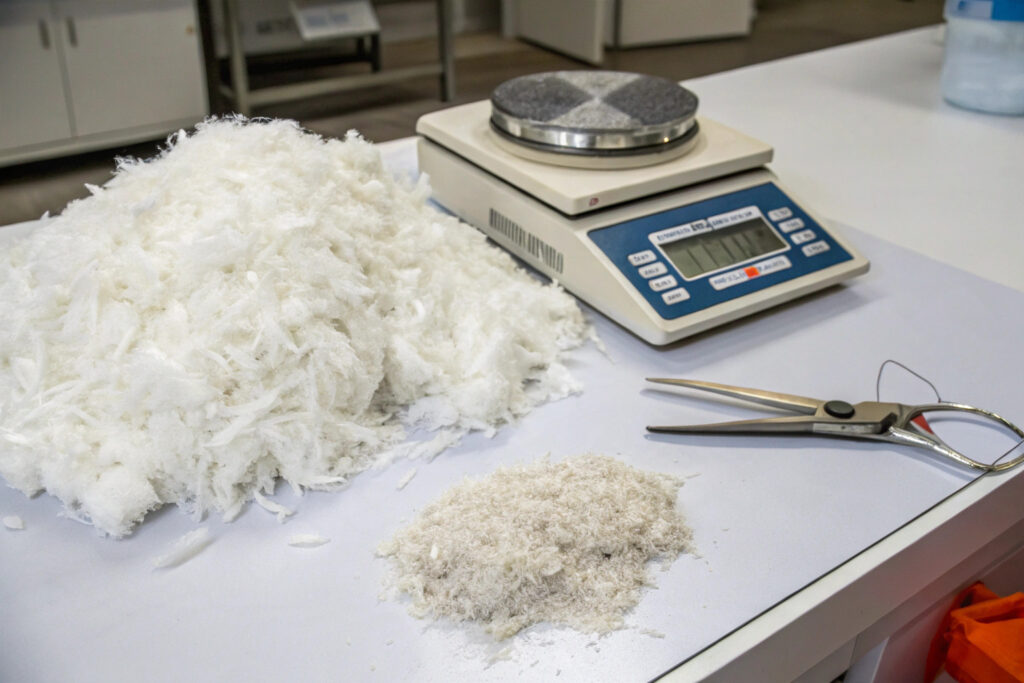
You can learn a lot by simply unspooling the yarn and examining it. High-quality recycled polyester yarn should be a consistent shade of bright white or a uniformly dyed color. Low-quality yarn will have a greyish or yellowish cast, indicating the input material was not properly sorted or washed. Run the yarn between your fingers. It should feel smooth and even. If you feel thick-and-thin slubs, it means the extrusion process was unstable, possibly because the melt contained impurities.
Look closely for tiny dark specks. These are unmelted contaminants, bits of bottle cap plastic, or label residue. In a knit beanie, these specks will be visible and will look like dirt. A customer will notice them. Pull the yarn until it breaks. A clean break with some resistance is normal. If it snaps immediately with very little force, the polymer is too degraded. On our knitting floor, we test every incoming batch of recycled yarn by knitting a small test tube. We measure the grams per meter, check the stitch clarity, and wash the tube to see if the hand feel remains stable. If a yarn cannot pass our internal knitting test, it will not produce a hat that meets our quality standards, regardless of how "green" it is.
How Does Recycled Yarn Quality Affect the Hat Manufacturing Process?
A weak or uneven recycled yarn creates real problems on the production floor. On a circular knitting machine, the yarn is under constant tension. If the tensile strength varies, the yarn breaks. Each break requires an operator to stop the machine, rethread the needle, and tie a knot. This creates a seam in the hat body that can cause a weak point or a visual defect. A high breakage rate slows production, increases labor cost, and generates more waste. This directly impacts your order's delivery time and the final cost.
Low-quality recycled yarn can also cause dyeing issues. Recycled polyester absorbs dye differently than virgin polyester. If the recycling process is inconsistent, the yarn can have varying dye affinity across a single cone. This results in a hat with a streaky, uneven color, a disaster for a brand trying to achieve a specific Pantone shade. Our dyeing team adjusts their recipes specifically for each lot of recycled yarn. We conduct dye trials on 100-gram samples before committing to a bulk dye bath. This is a necessary step that a supplier using cheap recycled yarn will often skip, leading to color rejection at the QC stage. You should ask your hat supplier if they perform lot-level dye trials on their recycled yarn.
How Do I Audit the Supply Chain Transparency Beyond the Certificate?
Certificates are a snapshot. Supply chain transparency is a continuous process. A genuine recycled yarn supplier should be able to describe the physical journey of the material from the waste collector to the yarn spinner. If they cannot name the recycling facility, they are likely buying from a trader who aggregates yarn from multiple sources. This aggregation is where fraud creeps in. A trader might buy a small amount of GRS-certified recycled yarn and mix it with uncertified virgin yarn, selling the entire batch with the GRS paperwork of the original small lot.
I ask my yarn suppliers a direct, open-ended question: "Can you provide a full list of all facilities in the chain, including subcontractors, with their certification status?" A transparent supplier will provide a supply chain map. This map should include the name and address of the recycling plant, the spinning mill, and any intermediary processors. I then cross-reference these facilities on the certification body's database. If a facility is not listed, it means it has not been audited. An unaudited facility in the chain breaks the chain of custody. It is a red flag. You have the right to know where your material is physically transformed. Do not accept "confidential supply chain" as an answer when the claim is a public-facing sustainability story.
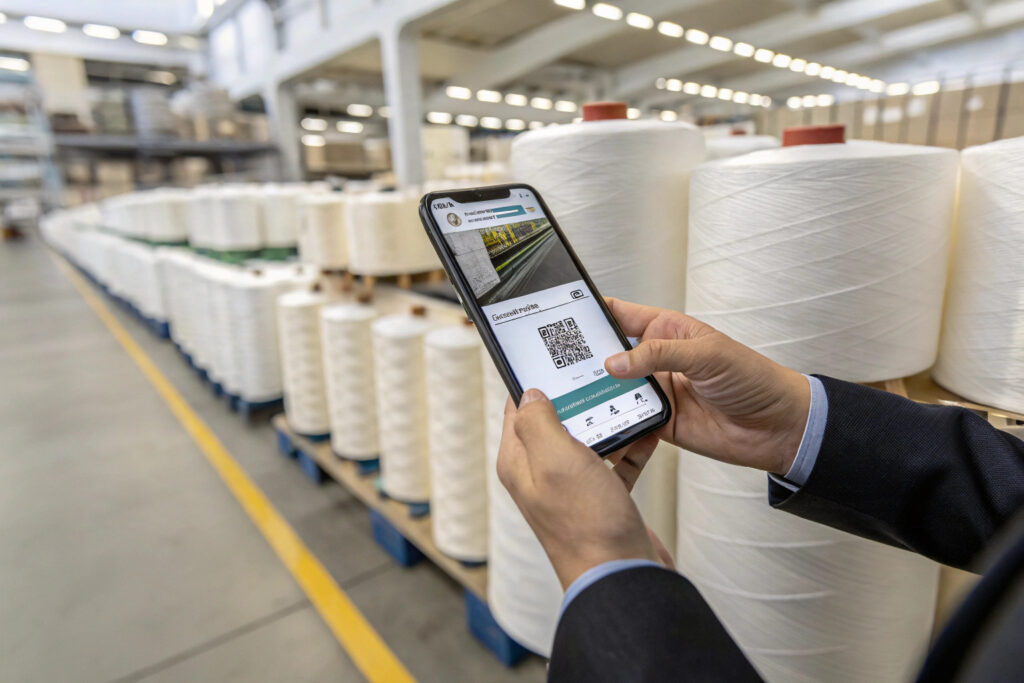
Another powerful tool is the QR code on the yarn cone. Some advanced spinners now print a unique QR code on each cone that links to a blockchain-backed traceability platform. When I scan the code, I can see the batch number, the recycled content percentage, the certificate validity, and sometimes even the collection point of the bottles. This technology is not yet universal, but it is spreading fast. We prioritize partnerships with spinners who offer this digital traceability because it allows us to share the data directly with our clients. Your end customer, the European brand, can scan a QR code on the hat's hangtag and see the yarn's origin story. This turns compliance from a defensive exercise into a marketing asset.

What Should a Supply Chain Map Include?
A credible supply chain map should start with the collection point. It should state, for example, "Post-consumer PET bottles collected through municipal recycling in Yokohama, Japan, sorted at XYZ Sorting Center." Then, it should trace the material to the recycling facility: "Washed, ground, and pelletized at ABC Recycling Co., GRS Certificate Number CU 123456." Then to the spinning mill: "Melt-spun into 32s/2 yarn at DEF Textile Mill." Finally, it should end with the hat factory: "Knitted and finished at Global-Caps, Zhejiang, China."
Each node should have a contact name and a certification reference. If any node is missing or described vaguely, like "our partner in Southeast Asia," the transparency is incomplete. I have used supply chain maps in my own communications with clients to prove the provenance of our recycled yarn. The map becomes part of the purchase contract. If the supplier cannot provide a map, I ask for a tour. A virtual tour of the recycling facility, conducted live via video call, is a powerful verification tool. I can see the bottle bales, the washing line, and the extrusion machine in real time. A facility that allows this is confident in its operation. One that refuses is hiding something.
How Do I Evaluate the Social Responsibility of the Recycling Chain?
GRS certification includes social criteria, such as no forced labor, safe working conditions, and fair wages. However, the audit depth can vary between certification bodies. You should ask your supplier for the social audit report summary from the recycling facility. A transparent supplier will share a redacted version of the audit, showing the non-compliance findings and the corrective actions taken.
The informal waste collection sector, particularly in developing countries, is a sensitive social issue. There is a difference between exploitative child labor in waste picking and formalized, dignified employment in recycling cooperatives. If your yarn's input material comes from an area with an informal waste sector, ask what social programs the recycler supports. Some advanced recyclers partner with NGOs to formalize waste picker cooperatives, providing health insurance, safety equipment, and fair wages. This is a positive story to tell. If the recycler has no answer, the social risk sits in your supply chain. I always frame this question as a positive inquiry: "Can you tell me about the social impact programs at the collection level?" A good supplier will share stories and photos. A bad one will go silent.
Conclusion
Asking the right questions about recycled polyester yarn is not about being difficult. It is about protecting the story you tell your customer. The difference between a genuine recycled yarn and a greenwashed one is found in the transaction certificates, the waste stream definitions, the recycling method data, and the supply chain transparency. You now have a clear checklist: verify the TC against the physical lot number, demand the post-consumer versus post-industrial distinction, check for chemical safety certifications alongside the GRS, inspect the yarn for visual quality, and ask for a supply chain map that links the bottle collection to the yarn cone. These questions are entirely reasonable. Any legitimate supplier will welcome them because they differentiate the serious operators from the pretenders.
At Global-Caps, we have built our recycled yarn sourcing on these exact principles. We maintain a living library of certified yarn suppliers, and we audit their traceability claims continuously. When we produce a knit hat with recycled polyester for your brand, we hand over the complete compliance dossier: the TCs, the supply chain map, the OEKO-TEX certificate, and the dye lot quality report. You can publish this dossier on your website or give it to your compliance team with confidence. No gaps. No wishful thinking. Just documented truth.
If you are ready to source recycled polyester headwear that is built on a foundation of verifiable data rather than green marketing, let's talk. Reach out to our Business Director, Elaine, at elaine@fumaoclothing.com. She can send you a sample of our certified recycled yarns, along with a redacted compliance pack so you can see the level of documentation we provide as a standard. Let's make your next sustainable collection the one that passes every audit, every journalist's test, and every customer's expectation.