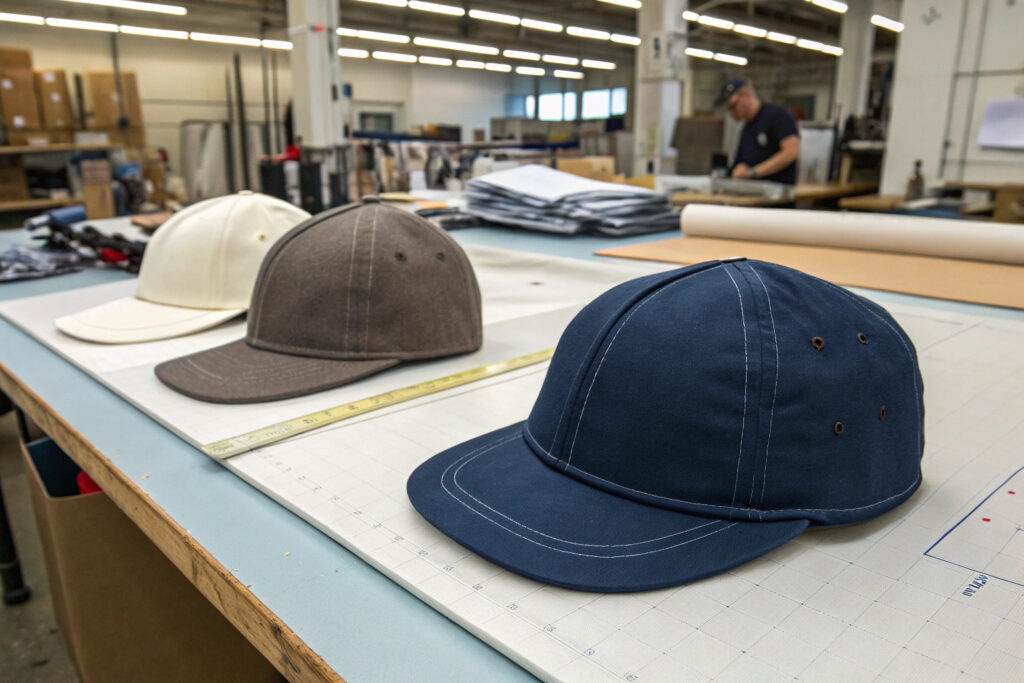
You order "caps" from a factory. You do not specify the panel construction. The factory sends a 6-panel baseball cap. You wanted a 5-panel camp cap. The caps arrive. The front has a center seam. Your logo is embroidered across the seam. The seam distorts the logo. The silhouette is rounder and deeper than you wanted. You assumed all caps are the same. The panel construction determines the shape, the logo placement, and the style category. The 5-panel and the 6-panel are different products with different patterns, different sewing sequences, and different aesthetic outcomes.
A 5-panel camp cap is structurally different from a 6-panel baseball cap in its front panel configuration, its crown profile, and its closure style. The 5-panel cap has a single, continuous front panel with no center seam. The single front panel provides a smooth, uninterrupted canvas for a larger logo placement. The 6-panel cap has two front panels joined by a center front seam. The center seam creates a more rounded, domed crown profile and breaks the front surface into two halves. The 5-panel cap typically has a shallower, more tapered crown and an adjustable strap closure. The 6-panel cap has a deeper, fuller crown and can be fitted or adjustable. The panel count defines the construction sequence, the fabric consumption, and the sewing line setup.
At Global-Caps, I cut both 5-panel and 6-panel caps daily. The patterns are different. The sewing lines are different. The finished products look different. The client must specify the panel construction. I cannot guess which one they want.
How Does the Front Panel Configuration Differ Between 5-Panel and 6-Panel Caps?
You design a logo. It is a wide, horizontal wordmark. The factory embroiders it on a 6-panel cap. The center seam runs directly through the middle of the logo. The letters on the left of the seam do not quite align with the letters on the right. The seam distorts the embroidery. On a 5-panel cap, the same logo would sit on a smooth, unbroken surface. The seam would not exist. The panel configuration changes the logo outcome. The panel configuration must be chosen based on the logo design.
The front panel configuration is the defining structural difference between the two cap types. The 5-panel camp cap has a single front panel that spans the entire front of the crown from left to right. There is no center front seam. The surface is uninterrupted. The 6-panel baseball cap has two front panels separated by a center front seam. The seam runs vertically from the top of the crown to the visor attachment. The seam is a prominent visual element and a structural necessity—it shapes the dome of the crown. The 5-panel is sewn with four main seams: the two sides and the two back seams. The 6-panel is sewn with five main seams: the center front, the two sides, and the two back seams.
My pattern library includes both 5-panel and 6-panel patterns. The cutting ticket specifies the panel configuration.
The center seam on the 6-panel cap is not just a style line. It is a structural element that shapes the dome.
Why Does the 6-Panel Cap Have a Center Front Seam While the 5-Panel Does Not?
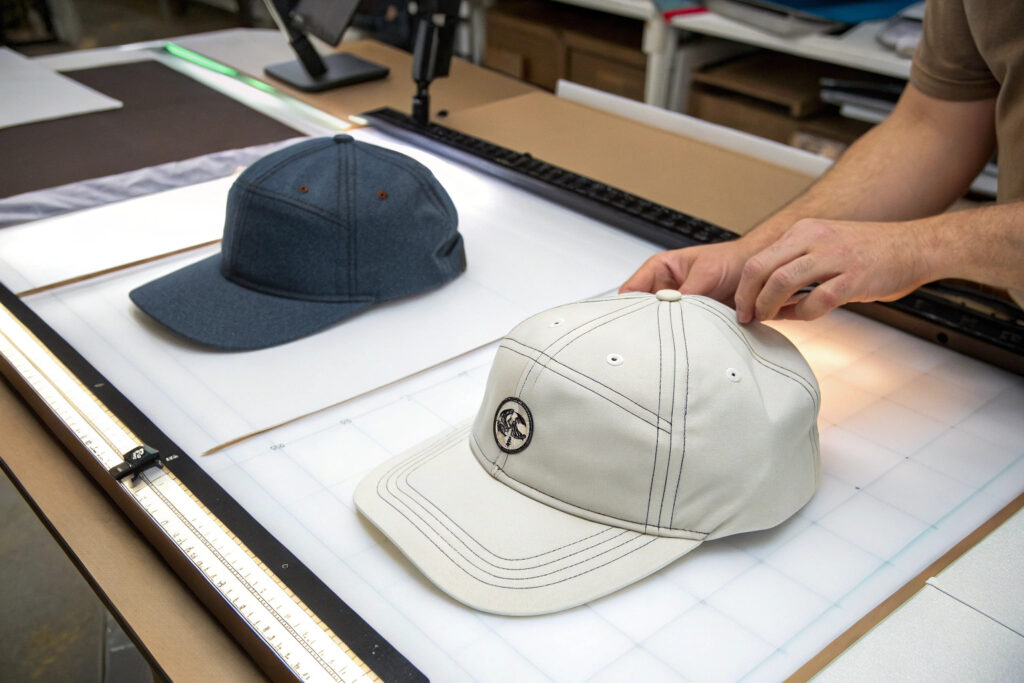
The 6-panel cap has a center front seam because the crown dome is created by joining two curved front panels. The seam follows the curvature of the head, creating a rounded, symmetrical dome shape. The seam is the structural backbone of the front crown. Without it, the two panels would not form the compound curve of the dome.
The 5-panel cap achieves its shape through a different pattern geometry. The single front panel is cut with a curved top edge and tapered sides. The dome shape is created by the darts at the top and the seams at the sides. The center seam is not needed. The single panel wraps around the front of the head. The absence of the center seam gives the 5-panel its distinctive clean front.
My pattern making process for each cap type starts with a different digital model. The 5-panel model has no center front seam line. The 6-panel model has a center front seam line.
How Does the Absence of a Center Seam Affect Embroidery and Print Placement?
The absence of a center seam on the 5-panel cap provides a flat, uninterrupted surface for logo placement. A wide logo, a circular emblem, or a detailed illustration can be centered on the front panel without interference from a seam. The embroidery hoop can be positioned freely. The digitizer does not need to compensate for the seam.
On the 6-panel cap, the center seam must be considered in the logo placement. A logo placed over the seam will have the seam running through it. The embroidery needle must stitch across the seam, which is a thicker, harder area. The stitch quality may be affected. The seam may cause slight puckering around the logo. The digitizer must adjust the file to account for the seam. Alternatively, the logo can be placed to one side of the seam, which changes the visual balance.
My embroidery placement guide for each cap type specifies the recommended logo position relative to the panel seams.
How Do the Crown Depths and Profiles Compare Between the Two Styles?
You order a cap. You do not specify the crown depth. The factory sends a 6-panel cap with a 12-centimeter front height. The cap sits tall on your head. It looks like a baseball uniform cap. You wanted a shallow, relaxed camp cap that sits close to the head. The crown depth is the invisible specification that determines the entire silhouette. The 5-panel and the 6-panel have different depth ranges. The panel count predicts the profile.
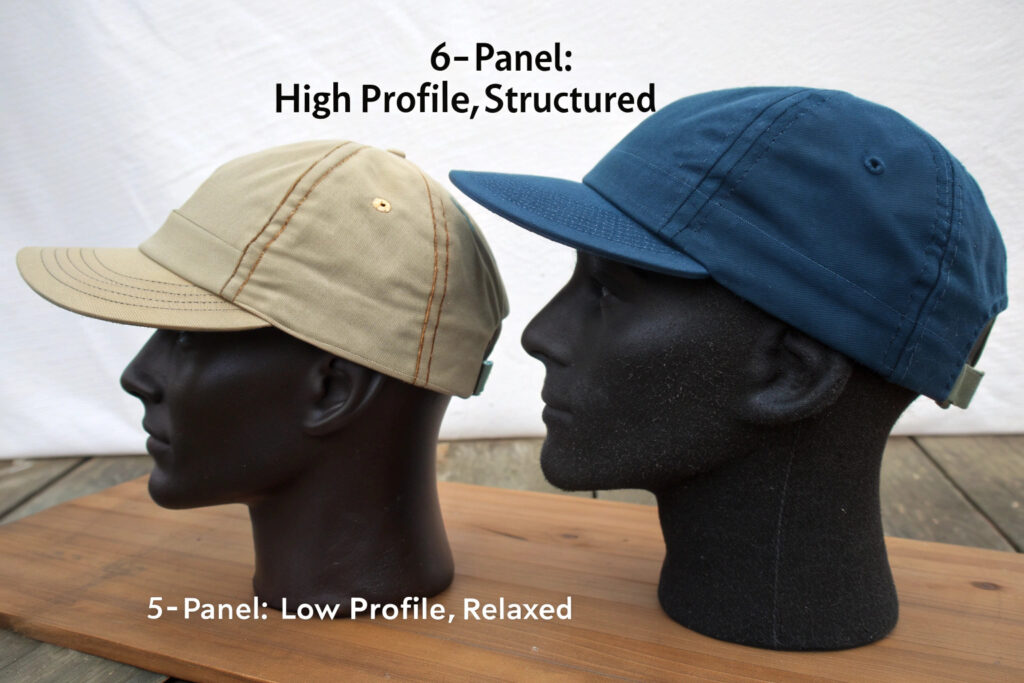
The crown depth of a 5-panel camp cap typically ranges from 8 to 10 centimeters at the center front, creating a shallower, more tapered profile that sits closer to the head. The crown depth of a 6-panel baseball cap typically ranges from 10 to 13 centimeters, creating a deeper, fuller dome that stands taller on the head. The 5-panel profile tapers more aggressively from the front peak to the back, creating a sleeker, more streamlined look. The 6-panel profile is more rounded and symmetrical, creating the classic baseball cap silhouette. The 5-panel is associated with casual, lifestyle, and outdoor aesthetics. The 6-panel is associated with sports, streetwear, and classic Americana.
My crown depth specification for each cap style is documented. The 5-panel camp cap has a front height of 9.5 centimeters. The 6-panel structured cap has a front height of 11.5 centimeters.
The crown depth measurement is taken from the center of the visor attachment seam to the peak of the crown.
Why Is the 5-Panel Cap Often Called a "Low Profile" or "Shallow Crown" Hat?
The 5-panel cap is called low profile because the front crown height is shorter—typically 8 to 10 centimeters compared to 11 to 13 centimeters for a high-profile 6-panel cap. The shorter crown sits lower on the head. The cap does not stand up tall above the wearer's ears. The silhouette is relaxed and understated.
The low profile is achieved through the pattern geometry. The front panel is cut with a shorter center front seam allowance. The side panels are tapered more aggressively. The overall volume of the crown is reduced. The cap conforms more closely to the shape of the head rather than creating a structured dome above it.
My low profile 5-panel has a front height of 9.5 centimeters. The high profile 6-panel has a front height of 11.5 centimeters.
How Does the Profile Shape Affect the Fit on Different Head Shapes?
The 5-panel camp cap, with its shallower crown and more tapered profile, fits closer to the head. It is more forgiving on smaller head sizes and narrower head shapes. The lower profile does not overwhelm the face. It is often preferred for casual, everyday wear.
The 6-panel baseball cap, with its deeper crown and fuller dome, provides more volume inside the cap. It accommodates larger head sizes and rounder head shapes. The structured dome creates a more commanding silhouette. It is the traditional choice for sports and uniforms where the cap is part of a standardized look.
My fit guide recommends the 5-panel for a relaxed, casual fit and the 6-panel for a structured, classic fit.
What Are the Differences in Closure Systems Between Camp Caps and Baseball Caps?
You order a 5-panel camp cap. You specify a plastic snapback closure. The factory says, "Camp caps typically use a strap. Are you sure?" You insist on the snapback. The caps arrive. The snapback looks out of place on the shallow, relaxed camp cap. The thick plastic closure clashes with the slim, understated silhouette. You chose a closure that does not match the style convention. The factory tried to warn you.
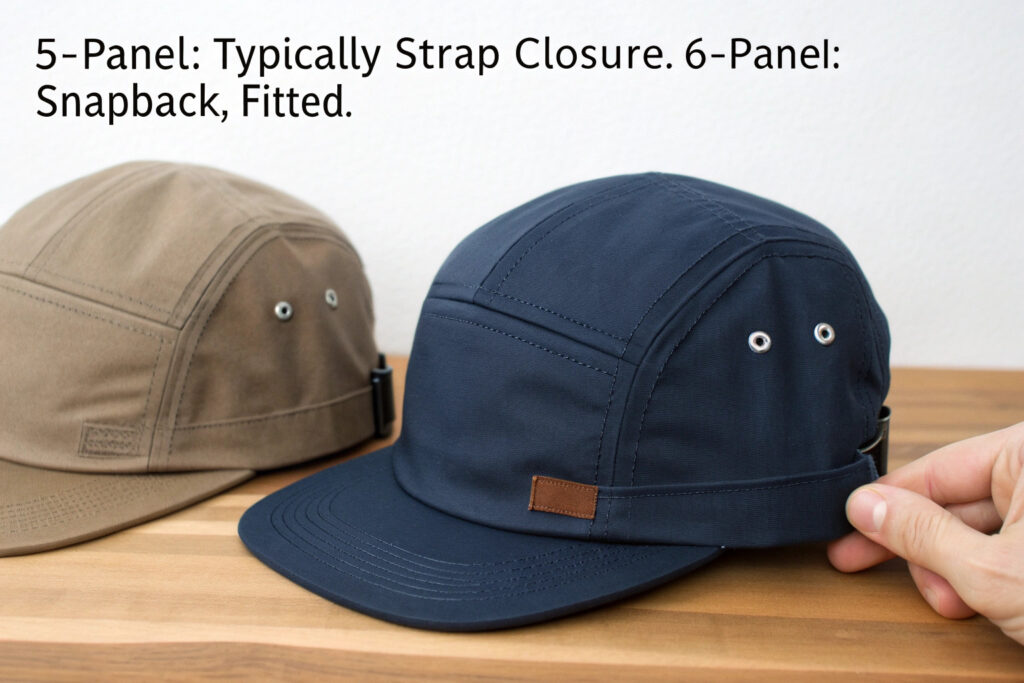
The closure systems differ between the two styles by convention and by structural compatibility. The 5-panel camp cap typically uses a fabric strap with a metal slide adjuster or a low-profile plastic buckle. The strap is thin, understated, and complements the relaxed, casual aesthetic. The 6-panel baseball cap uses a wider range of closures: the classic plastic snapback, a fabric strap with a buckle, a Velcro strap, or a fitted closure with no adjustment. The snapback is strongly associated with the structured 6-panel cap and is rare on a 5-panel. The fitted closure is exclusive to the 6-panel, as the 5-panel is almost always adjustable.
My closure options for the 5-panel camp cap are the fabric strap and the low-profile buckle. For the 6-panel, I offer snapback, strap, Velcro, and fitted.
The closure width and the back opening of the crown must match. A wide snapback requires a wider back opening.
Why Is the Snapback Closure Rarely Used on 5-Panel Camp Caps?
The snapback closure is a wide, prominent plastic band. It measures approximately 2.5 to 3.5 centimeters in width. The back opening of a 5-panel camp cap is narrower than that of a 6-panel cap because the crown tapers more sharply. The wide snapback closure looks disproportionate on the narrow back of the camp cap.
Aesthetically, the snapback is associated with the structured, urban streetwear look of the 6-panel cap. The camp cap is associated with outdoor, vintage, and casual aesthetics. The snapback clashes with the camp cap's design language. The thin fabric strap is the conventional and visually appropriate choice.
My design guidance for clients recommends the fabric strap for 5-panel camp caps. I will produce a snapback on a 5-panel if the client insists, but I advise against it.
Can a 5-Panel Cap Be Made With a Fitted, No-Closure Back?
It is technically possible but rarely done. A fitted cap requires the crown circumference to match the wearer's head size precisely. Fitted caps are typically made in specific sizes—Small/Medium, Medium/Large, or numerical sizes like 7 1/4. The 5-panel camp cap's relaxed, casual positioning does not align with the precision fit of a fitted closure. The camp cap is expected to be adjustable to accommodate a range of head sizes.
A 5-panel fitted cap would be a custom order. The pattern would need to be adjusted to create the correct circumference without the adjustment strap. The back seam would be continuous. The result would be a hybrid product—a camp cap front with a fitted back.
My custom pattern service can produce a fitted 5-panel cap. I have done it for specific brand collaborations. It is not a standard offering.
Which Panel Construction Is Better for Customization and Branding?
You design a large, circular logo. The factory embroiders it on a 6-panel cap. The center seam cuts through the circle. The left half of the logo is on one panel. The right half is on the other. The alignment is slightly off. The circle looks like it was broken and reassembled imperfectly. On a 5-panel cap, the same circle would sit whole and perfect on the smooth front panel. The logo design dictates the panel construction.
The 5-panel camp cap is better for large, centered logos, wide wordmarks, circular emblems, and full-front patches. The single, unbroken front panel provides the maximum branding real estate. The logo can occupy the full width and height of the front panel without interference from a seam. The 6-panel baseball cap is better for smaller, offset logos placed on one side of the center seam, or for logos specifically designed to integrate with the seam. The center seam can be used as a design feature—a logo split symmetrically across the seam, or a logo that frames the seam. The 6-panel also accommodates a traditional left-chest-style logo placement.
My branding guide for clients recommends the 5-panel for large, centered designs and the 6-panel for classic side logos and seam-integrated designs.
The maximum embroidery area is a critical specification that many buyers overlook.
What Is the Maximum Embroidery Area on a 5-Panel Front vs a 6-Panel Front?
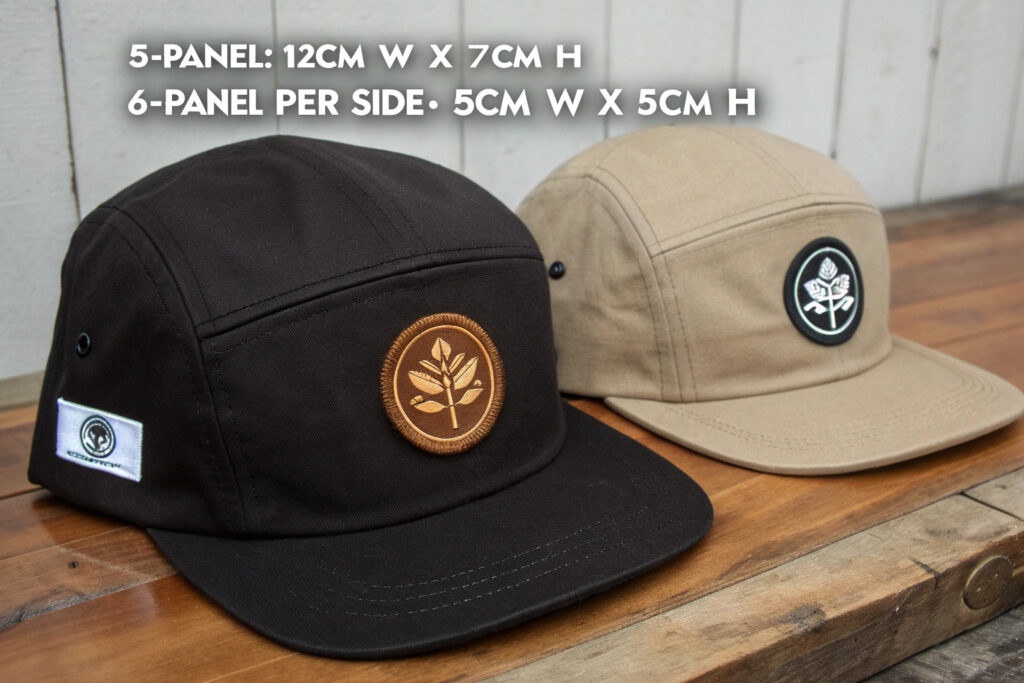
The maximum embroidery area on a 5-panel camp cap is approximately 12 centimeters wide by 7 centimeters high, centered on the front panel. The exact dimensions depend on the crown size and the panel shape. The area is a continuous, unbroken rectangle.
The maximum embroidery area on a single front panel of a 6-panel cap is approximately 5 centimeters wide by 5 centimeters high. The embroidery is constrained by the center seam on one side and the side seam on the other. A logo that spans both front panels across the center seam is possible but technically more challenging and visually affected by the seam.
My embroidery hoop sizes for each cap type are documented. The 5-panel uses a larger hoop. The 6-panel uses a smaller hoop or a split-hoop technique for seam-spanning designs.
How Does the Center Seam Affect the Visual Balance of a Branded Logo?
The center seam on a 6-panel cap creates a vertical line down the center of the front surface. The human eye is drawn to symmetry. A logo that is placed to one side of the seam creates an asymmetrical composition. The asymmetry is intentional and classic—the traditional baseball cap look. A logo that spans the seam is symmetrically centered but interrupted by the seam line.
The visual balance depends on the logo design. A logo designed for the 6-panel seam considers the seam as part of the composition. A logo that was not designed for the seam looks broken by it. The 5-panel offers a neutral, seam-free canvas.
My logo evaluation for each client includes a recommendation on panel configuration based on the logo design.
Conclusion
The 5-panel camp cap and the 6-panel baseball cap are structurally distinct products with different front panel configurations, crown profiles, closure conventions, and branding capabilities. The 5-panel has a single, continuous front panel with no center seam, providing a smooth canvas for large, centered logos. The 6-panel has two front panels joined by a center seam that shapes the dome and divides the front surface. The 5-panel is shallower and lower-profile. The 6-panel is deeper and fuller. The 5-panel typically uses a fabric strap closure. The 6-panel accommodates snapback, strap, Velcro, or fitted closures.
The choice between the two constructions should be driven by the logo design, the desired silhouette, and the brand aesthetic. A large, centered logo belongs on a 5-panel. A classic baseball cap look belongs on a 6-panel. The panel construction is not a minor detail. It is the fundamental architecture of the cap.
At Global-Caps, I produce both constructions daily. My pattern room has both sets of patterns. My sewing line switches between them. The client specifies the panel count. I produce it accurately.
If you need 5-panel camp caps or 6-panel baseball caps, and you want expert guidance on which construction suits your design, contact my Business Director Elaine. She can send you physical samples of both constructions, our embroidery area specifications, and a recommendation based on your logo. Email Elaine at elaine@fumaoclothing.com. Let's build the right cap for your brand.