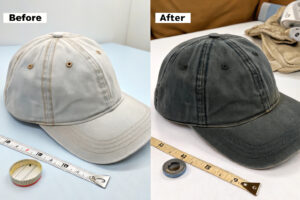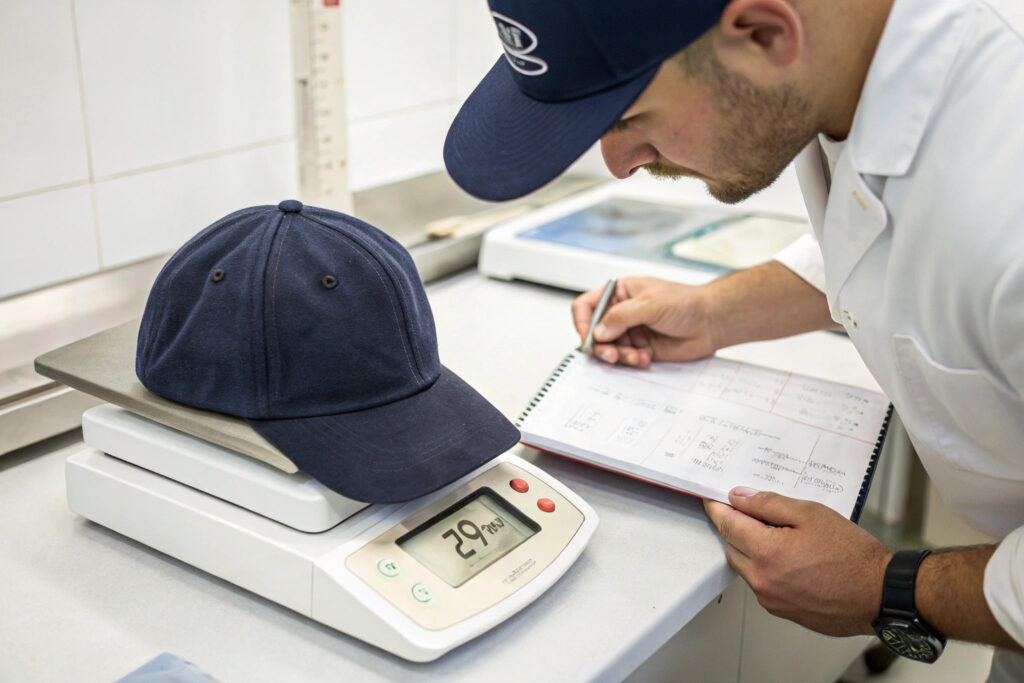
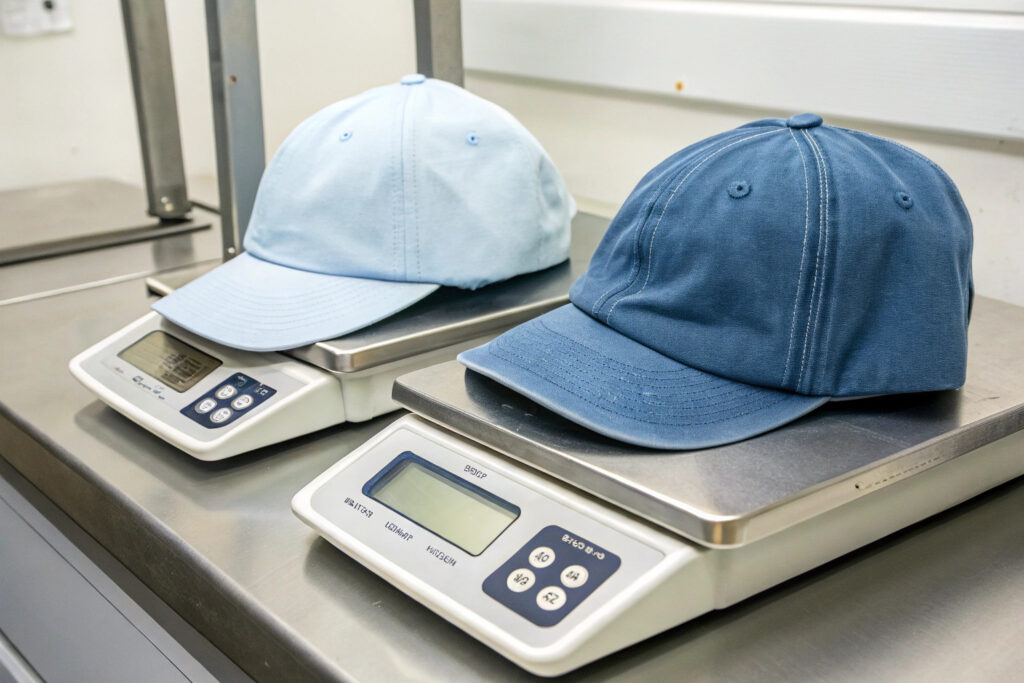
A client once sent me an urgent email the night before a big pitch. His buyer had asked a simple question he couldn't answer: "What does the cap actually weigh?" He had all the style details, the color codes, and the decoration specs, but the physical weight was a missing data point. He was presenting a lightweight summer dad cap and a heavy-duty structured winter cap, but he couldn't articulate the difference. I pulled two blank samples from our stock, a 6-ounce brushed cotton dad cap and an 8-ounce garment-washed twill structured cap, and put them on my scale. The difference was immediately clear, and it had a huge impact on how he pitched both products. The lightweight cap was for the promotional giveaways and resort shops. The heavyweight one was for the durable workwear and premium streetwear lines.
The difference between a 6-ounce and an 8-ounce cotton twill cap is approximately 25 to 35 grams in the finished product weight, depending on the cap's size, the number of panels, and whether it includes a buckram or an internal structure. The "ounce" rating refers to the weight of the fabric per square yard before it is cut and sewn. A 6-ounce cotton twill fabric weighs 6 ounces per square yard. An 8-ounce cotton twill fabric weighs 8 ounces per square yard. This is a 33% increase in raw material weight. A standard, unstructured 6-ounce dad cap typically weighs between 70 and 85 grams. An unstructured 8-ounce cap weighs between 95 and 110 grams. When the cap includes a structured buckram front panel, a heavier sweatband, or a plastic snap closure, the weight difference increases. The weight difference is not just a number. It changes the drape, the breathability, the durability, and the perceived quality of the cap. A 6-ounce cap feels light, breathable, and casual. An 8-ounce cap feels substantial, structured, and premium.
I keep a scale in our sample room specifically for these conversations. I weigh caps with clients on video calls so they can feel the difference through the numbers. I want to explain the exact weight breakdown, the factors that add to the total weight beyond the fabric, and how to choose the right weight for your specific market and customer. This is the science of how a cap feels on the head.
How Is Cotton Twill Fabric Weight Measured and Why Does It Matter?
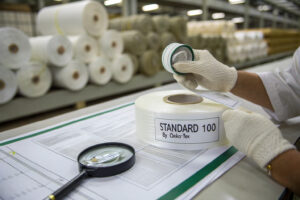
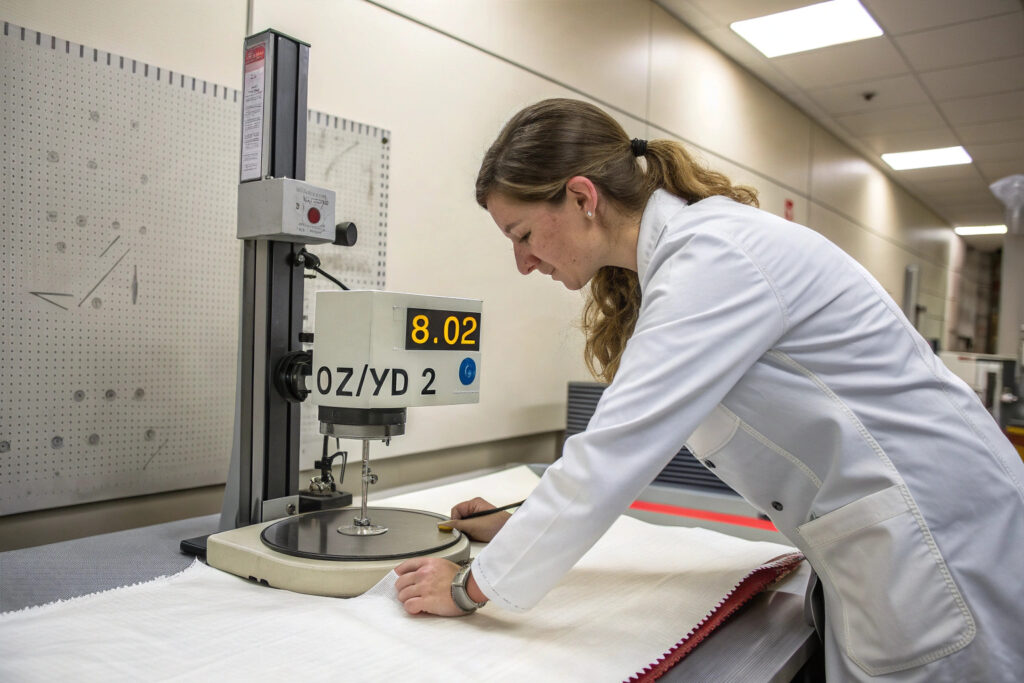
The weight of a cap starts with the weight of the fabric. Cotton twill fabric weight is measured in ounces per square yard. This is an imperial measurement standard used in the textile industry, particularly in the United States. The metric equivalent is grams per square meter, or GSM. One ounce per square yard equals approximately 33.9 GSM. A 6-ounce cotton twill is approximately 203 GSM. An 8-ounce cotton twill is approximately 271 GSM. This measurement is taken from the greige fabric before any dyeing, washing, or finishing processes. The finishing process can change the final weight slightly. A garment wash, which softens the fabric and gives it a worn-in look, can remove some of the sizing and starch, reducing the final weight by a small amount. A heavy pigment dye can add weight.
The fabric weight matters for a cap because it determines the drape, the breathability, the opacity, and the durability. The drape is how the fabric hangs and conforms. A 6-ounce twill is relatively lightweight and drapes softly. An unstructured 6-ounce cap collapses into a soft, relaxed shape. An 8-ounce twill is heavier and stiffer. It holds its shape better, even without internal buckram. The breathability is how much air passes through the fabric. A lighter 6-ounce twill is generally more breathable, making it more comfortable in hot weather. A heavier 8-ounce twill is less breathable but provides more insulation and wind resistance. The opacity is how much light passes through the fabric. A 6-ounce twill, particularly in light colors like white or pastel, can be slightly translucent. The internal seams and the sweatband may be faintly visible. An 8-ounce twill is completely opaque. The durability is the fabric's resistance to tearing, abrasion, and wearing through. An 8-ounce twill is significantly more durable than a 6-ounce twill. It resists tearing at the seams better. It wears longer before developing holes or thinning. The fabric weight measurement is the fundamental specification that determines these performance characteristics.
The fabric weight per square yard is the raw material specification. But the finished cap weight is not simply the fabric weight multiplied by the area of fabric used. The cap includes thread, seam allowances, internal components, closures, and labels. Each of these adds weight.
What Is the Difference Between Ounces per Square Yard and GSM?
Ounces per square yard and grams per square meter are two different ways to express the same physical property: the area density of a fabric. One ounce per square yard equals 33.9057 grams per square meter. A 6-ounce fabric is 203.4 GSM. An 8-ounce fabric is 271.2 GSM. The US market typically uses ounces per square yard. The European and Asian markets typically use GSM. A professional cap factory should be able to provide the fabric weight in both units. The GSM to ounces conversion is a standard calculation in textile sourcing. When a European buyer asks for a 250 GSM cap, I know they want approximately a 7.4-ounce fabric. When a US buyer asks for a 6-ounce cap, I know they want approximately a 203 GSM fabric.
How Does the Weave Density Affect the Perceived Heaviness of the Cap?
The fabric weight is only one factor in the perceived heaviness. The weave density, or the number of yarns per inch, also affects how the cap feels. A tightly woven 6-ounce twill with a high thread count can feel almost as stiff and substantial as a loosely woven 8-ounce twill. Conversely, a loosely woven 8-ounce twill with a low thread count can feel softer and more pliable than expected. The weave density also affects breathability. A tighter weave reduces airflow, making the cap feel warmer. A looser weave increases airflow. When comparing two caps, do not rely on the fabric weight alone. Feel the fabric. Check the stiffness. Check the air permeability. The fabric weave density is a separate specification that interacts with the weight to create the final hand feel.
What Is the Actual Gram Weight Difference Between a 6-Ounce and an 8-Ounce Finished Cap?
The raw fabric weight difference is 2 ounces per square yard, a 33% increase. The finished cap weight difference is not exactly 33% because the cap has components other than the shell fabric. The sweatband, the closure, the visor board, the buckram, the thread, and the labels add a fixed weight that is independent of the shell fabric weight. This fixed weight dilutes the percentage difference in the finished product. The absolute weight difference, measured in grams, is the number that matters for shipping costs, retail perception, and wearer comfort.
I weighed ten samples of each cap type on our calibrated scale to establish the standard weight ranges. An unstructured, 5-panel, 6-ounce cotton twill dad cap with a fabric strap closure weighs between 72 and 82 grams. The same cap in 8-ounce cotton twill weighs between 95 and 108 grams. The weight difference is 23 to 26 grams. A structured, 6-panel, 6-ounce cotton twill cap with a plastic snap closure and a fused buckram front panel weighs between 85 and 95 grams. The same cap in 8-ounce cotton twill weighs between 110 and 125 grams. The weight difference is 25 to 30 grams. The structured cap has a larger weight difference than the unstructured cap because the buckram and the heavier visor board used in the 8-ounce version add additional weight. A high-profile, structured, 8-ounce cap with a rope decoration and a leather strap closure can weigh over 130 grams. This is a genuinely heavy cap that the wearer feels on their head. The finished product weight specification should be part of the tech pack for any cap order. The weight is a quality control checkpoint. A cap that is 10 grams lighter than the standard may have been made with a lighter fabric or a missing internal component.
The finished cap weight difference is the physical reality. The perceived weight difference when the cap is worn is the consumer reality. A 25-gram difference may seem small, but on the head, it is noticeable. The weight distribution, not just the total weight, determines comfort.
How Does the Cap Structure Amplify or Reduce the Fabric Weight Difference?
A structured cap amplifies the fabric weight difference. The buckram front panel and the heavier visor board are themselves heavier in an 8-ounce cap because they are sized to match the larger, stiffer front panel. The fabric weight increase triggers a component weight increase. The result is a total weight difference that is larger than the fabric weight difference alone. An unstructured cap minimizes the fabric weight difference because there is no internal structure to amplify it. The cap consists of the shell fabric, the sweatband, the closure, and the thread. The weight difference is almost entirely the fabric weight difference. For brands that want the premium feel of an 8-ounce fabric but the lightweight comfort of a dad cap, an unstructured 8-ounce cap is the ideal compromise. The cap construction types interact with the fabric weight to determine the final product's feel and performance.
What Is the Weight of a Cap's Components Beyond the Shell Fabric?
The non-fabric components of a cap add a significant and often overlooked weight. A standard cotton twill sweatband adds 8 to 12 grams. A plastic snap closure adds 5 to 8 grams. A metal buckle closure adds 10 to 15 grams. A fused buckram front panel adds 8 to 12 grams. A standard visor board adds 12 to 18 grams. A pre-curved visor with a thicker board adds 15 to 22 grams. The sewing thread adds 2 to 4 grams. The woven label adds 1 to 2 grams. A rope decoration adds 5 to 10 grams. The total non-fabric component weight for a simple unstructured cap is approximately 20 to 30 grams. The total non-fabric component weight for a structured cap with a snap closure is approximately 40 to 55 grams. These component weights are the fixed base. The shell fabric weight is added to this base. The cap component weight breakdown is a useful specification to request from a factory. It allows you to understand exactly where the weight is coming from and to make informed design trade-offs.
When Should You Choose a 6-Ounce Cap Over an 8-Ounce Cap?
The choice between a 6-ounce and an 8-ounce cotton twill cap is not a quality choice. It is an application choice. A 6-ounce cap is not inferior to an 8-ounce cap. It is designed for a different use case, a different customer, and a different climate. Choosing the wrong weight for your market is the mistake. Understanding the optimal application for each weight is the strategy.
Choose a 6-ounce cap when your primary market is warm-weather, summer, resort, or tropical. The lighter fabric is more breathable. The wearer stays cooler. The cap is less likely to feel hot and heavy after hours in the sun. Choose a 6-ounce cap when your product is a promotional giveaway, an event item, or a budget-conscious retail product. The lighter fabric costs less per yard. The cap is less expensive to produce and to ship. The lower cost allows a higher margin or a more competitive retail price. Choose a 6-ounce cap when the style is a dad cap, a relaxed-fit cap, or a vintage wash cap. The softer drape and the unstructured silhouette are characteristic of these styles. A heavy 8-ounce fabric would look stiff and out of place. Choose an 8-ounce cap when your primary market is cool-weather, fall, winter, or workwear. The heavier fabric provides more insulation and wind resistance. The cap feels more substantial and protective. Choose an 8-ounce cap when your product is a premium retail item, a streetwear brand, or a durable workwear brand. The heavier fabric conveys quality, durability, and substance. The consumer associates the weight with a higher price point. Choose an 8-ounce cap when the style is a structured, high-profile, or fitted cap. The heavier fabric holds the structured shape better. The cap looks crisp and sharp on the shelf and on the head. The cap weight selection guide is a practical tool for matching the fabric weight to the product concept and the target consumer.
The application drives the weight choice. But the decoration method also interacts with the fabric weight. A 6-ounce cap is a less stable substrate for heavy embroidery. An 8-ounce cap can support dense, high-stitch-count embroidery without puckering.

How Does Fabric Weight Affect Embroidery and Printing Results?
Heavy embroidery requires a stable fabric base. A 6-ounce twill is relatively thin. Dense embroidery with a high stitch count can cause the fabric to pucker, distort, or even tear. The needle penetrations weaken the fabric, and the thread tension pulls the fabric inward. An 8-ounce twill is thicker and stronger. It resists puckering and distortion. It supports heavier embroidery, 3D puff, and complex multi-layer designs without losing its shape. For caps with large, dense logo embroidery, an 8-ounce fabric is strongly recommended. For screen printing, the fabric weight affects the print surface smoothness. A heavier, tighter-weave 8-ounce twill provides a smoother printing surface. The ink sits on top of the fabric more evenly. A lighter 6-ounce twill may have a slightly more textured surface that affects the print clarity. The embroidery on different fabric weights requires adjusted digitizing settings. A skilled digitizer will adjust the stitch density and the underlay for the specific fabric weight.
What Fabric Weight Do Major Streetwear and Workwear Brands Typically Use?
Major streetwear brands that sell premium, structured, high-profile caps typically use an 8-ounce to 10-ounce cotton twill. The heavier fabric aligns with the brand's premium positioning and the structured silhouette. Workwear brands that sell durable, job-site-ready caps also use heavier fabrics, typically 8-ounce to 12-ounce cotton duck or canvas. These fabrics are chosen for their abrasion resistance and longevity. Lifestyle and fashion brands that sell dad caps, vintage-wash caps, and casual summer headwear typically use a 6-ounce to 7-ounce cotton twill. The lighter fabric aligns with the soft, relaxed, casual aesthetic. Promotional products distributors typically use a 6-ounce cap as their standard option due to cost and the broad applicability across events and climates. The brand fabric weight preferences are established by decades of market testing and consumer feedback.
How Can You Verify the Fabric Weight of a Cap You Received from a Supplier?
A supplier claims the cap is 8-ounce cotton twill. You receive the shipment. The cap feels light. You suspect the fabric is actually 6-ounce. You need to verify the fabric weight objectively. You cannot rely on the feel of the finished cap because the internal components can make a lighter cap feel heavier, or a heavier cap feel lighter. You need to measure the fabric itself. There is a simple destructive test that you can perform with basic equipment.
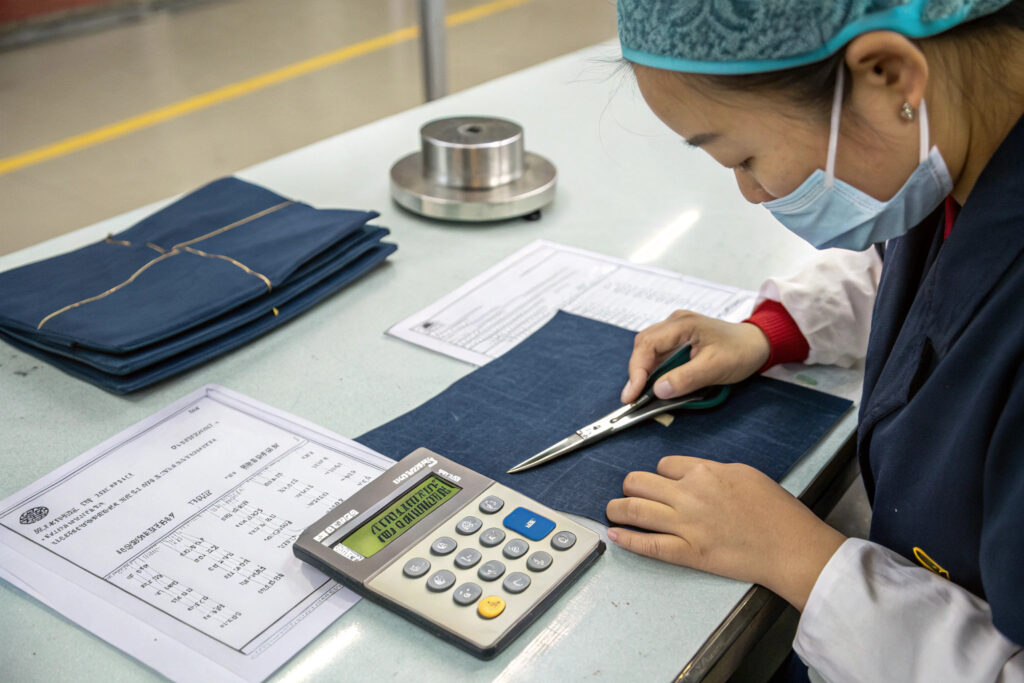
The fabric weight verification method is to cut a precise square of fabric from the cap and weigh it. You will need a sharp pair of fabric scissors, a ruler or a cutting mat with a grid, and a precision digital scale that measures in grams with a resolution of 0.1 grams or better. Step one: identify a flat area of the shell fabric that does not include seams, the sweatband, or the embroidery. The side panel or the back panel is usually a good choice. Step two: using the ruler and scissors, carefully cut a square of fabric that is exactly 10 centimeters by 10 centimeters. Be as precise as possible. Step three: weigh the fabric square on the digital scale. Record the weight in grams. Step four: calculate the GSM. Multiply the weight of the 10-centimeter square by 100. If the square weighs 2.03 grams, the GSM is 203. Step five: convert GSM to ounces per square yard. Divide the GSM by 33.9. A GSM of 203 divided by 33.9 equals 6.0 ounces per square yard. This destructive test provides a definitive measurement of the actual fabric weight. The fabric weight verification method is a standard quality control procedure. Note that the test destroys a small area of the cap, so it should be performed on a pre-production sample or a QC sample, not on a finished product intended for sale.
The cut-and-weigh method is the definitive test. However, it is destructive. If you need a non-destructive estimate, you can use the total cap weight as a proxy, but only if you know the exact component weights.
What Is a Non-Destructive Method for Estimating Fabric Weight?
A non-destructive method uses the total cap weight and the known approximate weights of the non-fabric components. You weigh the entire cap. You subtract the estimated weight of the sweatband, the closure, the visor board, the buckram if any, and the thread. The result is the approximate weight of the shell fabric. You then divide by the approximate area of fabric in the cap, which is typically 0.25 to 0.35 square meters depending on the cap style. This gives an approximate GSM. This method is less accurate than the cut-and-weigh method because the component weight estimates can be off by several grams. It is useful as a preliminary check. If the estimated fabric weight is significantly different from the specification, a destructive test on a sample cap is warranted. The non-destructive testing methods in textile quality control are useful screening tools but are not substitutes for definitive measurement.
How Can a Factory Provide a Fabric Weight Certificate?
A professional factory can provide a fabric weight test report from an ISO 17025 accredited textile testing laboratory. The test report will state the fabric weight in GSM or ounces per square yard, measured according to a standard test method such as ASTM D3776 or ISO 3801. The report will include the test results, the measurement uncertainty, and the laboratory's accreditation details. This third-party certificate is the gold standard for fabric weight verification. I provide fabric weight test reports with every new fabric development. The report is included in the pre-production sample documentation package. The buyer has independent, verifiable proof of the fabric weight before bulk production begins. The fabric testing certificate is a standard document in professional textile sourcing.
Conclusion
The difference between a 6-ounce and an 8-ounce cotton twill cap is approximately 25 to 35 grams in the finished product. It is a 33% increase in raw material weight. It changes the drape, the breathability, the opacity, and the durability of the cap. The 6-ounce cap is lighter, cooler, softer, and less expensive. It is ideal for summer, dad caps, promotional giveaways, and budget-conscious retail. The 8-ounce cap is heavier, more structured, more durable, and more premium. It is ideal for winter, structured caps, workwear, and premium streetwear. The choice between the two is an application decision, not a quality decision. The skilled brand owner selects the weight that matches the product concept, the target customer, and the market positioning.
I weigh caps every day in our sample room. I weigh the fabric. I weigh the components. I weigh the finished product. I know that a cap's weight is part of its identity. A customer who receives a 6-ounce cap that feels substantial and well-made is satisfied. A customer who receives an 8-ounce cap that feels heavy and indestructible is impressed. The weight is a silent quality signal. It communicates value before the customer reads a single word on the label.
If you are trying to decide between a 6-ounce and an 8-ounce cotton twill for your next cap collection and want to feel the physical difference, let us send you the samples. Our Business Director, Elaine, can prepare a Fabric Weight Sample Kit with blank caps in both weights, in the same style and color, so you can compare the drape, the feel, and the scale weight directly. Email her at elaine@fumaoclothing.com and ask for the 6oz vs 8oz Comparison Kit. We will help you choose the weight that feels right for your brand.