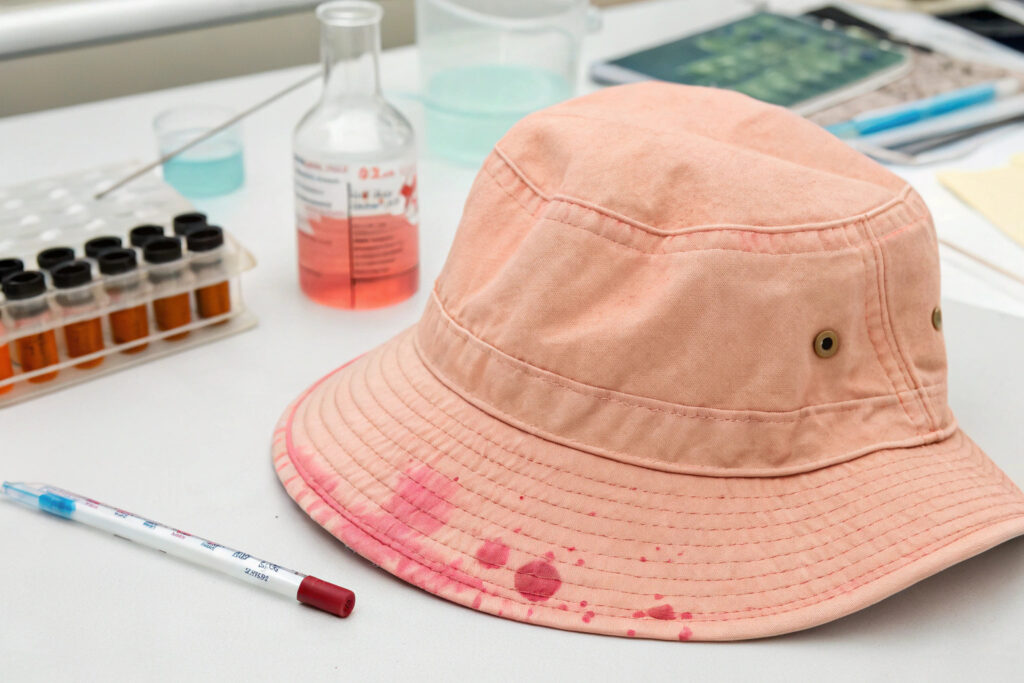
I received a panicked call from an Australian resort brand last January. They had taken delivery of 1,000 custom-dyed coral bucket hats for their summer launch. The hats were beautiful out of the box. The first customer wore one to the beach, sweated lightly, and came home with a pink forehead. The dye had bled. The customer posted a photo on social media. The brand was mortified. They sent me a sample of the hat. I ran a standard crock test in our lab. The dry rub was fine, but the wet rub failed instantly. The dye was not properly fixed. The root cause was almost certainly an incorrect drying and curing temperature at the dye house. The dye molecules were on the fiber, not chemically bonded into it.
The required drying temperature to ensure color fastness on custom-dyed cotton hats is a staged process of progressive heat setting, typically concluding with a final curing stage at 150 to 160 degrees Celsius for three to five minutes for reactive dyes. This is not merely drying the water. It is a thermofixation process. Reactive dyes bond chemically with the cellulose in the cotton fiber, but this reaction requires specific conditions. After the dye is applied, the fabric must be dried slowly and evenly to prevent migration, typically starting at 100 to 120 degrees Celsius. Then, it must be cured at the higher temperature of 150 to 160 degrees Celsius to complete the covalent bond between the dye molecule and the cotton polymer. If the temperature is too low, the reaction is incomplete and the unreacted dye will wash or rub off. If the temperature is too high, the cotton fiber can scorch or yellow.
I have managed the custom dyeing process for years. The color fastness of a hat is not just about the dye quality. It is about the thermal precision of the finishing process. I want to explain the exact temperature ranges, the difference between drying and curing, the testing methods to verify the result, and the questions to ask your factory to ensure your custom-dyed hats won't bleed on your customer. This is the thermal science behind a colorfast hat.
Why Is Heat Setting the Critical Final Step for Reactive Dye Fastness on Cotton?
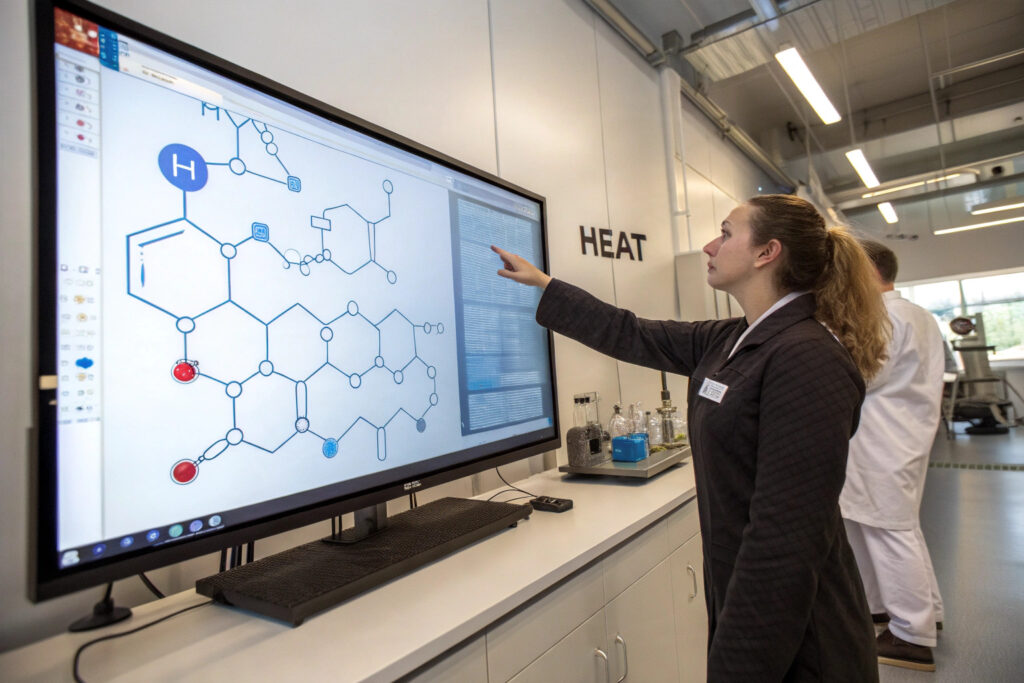
Reactive dyeing is a chemical reaction. The dye is not a paint that sits on the surface. It is a molecule designed to form a permanent covalent bond with the hydroxyl groups on the cotton cellulose polymer. This bond makes the dye part of the fiber. The process has two main stages. The first is the exhaustion and fixation stage, which happens in the dye bath with the addition of salt and alkali. The dye migrates onto the fiber and the alkali initiates the bonding reaction. However, the reaction is not fully complete when the fabric leaves the dye bath. A significant portion of the dye is still hydrolyzed, meaning it has reacted with water instead of the fiber, and is sitting loosely on the surface. The second, critical stage is the heat setting, or curing. The fabric is dried and then heated to a specific temperature. This thermal energy drives the covalent bonding reaction to completion. It also helps to drive off any remaining unfixed by-products. Without this final thermal cure, the loose, unreacted dye will detach from the fiber the first time it encounters moisture or friction. The heat setting is what converts a dyed fabric into a colorfast fabric. It is not just drying. It is chemical finishing. The reactive dyeing mechanism is well-documented in textile chemistry literature.
The chemical bonding is the scientific basis for the heat setting. The exact temperature and duration of this heat setting depend on the specific dye chemistry and the dyeing method. The critical parameter is the temperature the fabric itself reaches, not just the oven air temperature. The process also has an intermediate drying stage that is just as critical, because rapid, uneven drying can ruin the color before the curing even begins.
What Is the Difference Between Drying Temperature and Curing Temperature for Reactive Dyes?
Drying and curing are two distinct thermal processes in the dye finishing line. Drying is the removal of water from the fabric. It is typically done at a moderate temperature of 100 to 120 degrees Celsius. The goal is to evaporate the moisture gently and evenly. If the temperature is too high during drying, the water can boil rapidly and carry unfixed dye molecules to the fabric surface in a process called dye migration. This causes uneven color, blotchiness, and reduced rubbing fastness. Curing is the high-temperature chemical reaction stage. It is done at 150 to 160 degrees Celsius for a specific dwell time, typically three to five minutes. The goal is to provide the thermal energy necessary to complete the covalent bond between the dye and the cotton. A proper dye finish requires both stages. A factory that dries at high temperature and skips a controlled curing stage is producing poorly fixed, likely to bleed, hats. The textile drying and curing processes are standard unit operations in textile wet processing.
How Does Incomplete Heat Curing Lead to Wet Rubbing Color Bleed?
The crocking test measures colorfastness to rubbing. A dry crock test rubs a dry cloth against the dyed fabric. A wet crock test rubs a wet cloth against it. If the dye is properly bonded, very little color transfers to either cloth. If the dye is not properly cured, the unreacted dye molecules are sitting loosely on the fiber surface. They are held by weak physical forces, not a strong chemical bond. A dry rub may not dislodge them, so the dry crock test may pass. A wet rub introduces water, which acts as a solvent. It dissolves the loose dye molecules and transfers them to the rubbing cloth. This is the classic failure mode: passes dry crock, fails wet crock. This failure is almost always a result of incomplete heat curing. The dye bonds were never fully formed. The colorfastness to crocking test is a standard quality control method for textiles.
What Are the Optimal Industrial Drying Temperature Ranges for Dyed Cotton Hats?
The optimal temperature ranges for drying and curing custom-dyed cotton hats are not arbitrary. They are determined by the chemistry of the reactive dye and the thermal sensitivity of the cotton fiber. The process must balance completing the dye bond with avoiding fiber damage. A well-controlled industrial dye house will operate its drying and curing ovens within specific, monitored temperature windows.
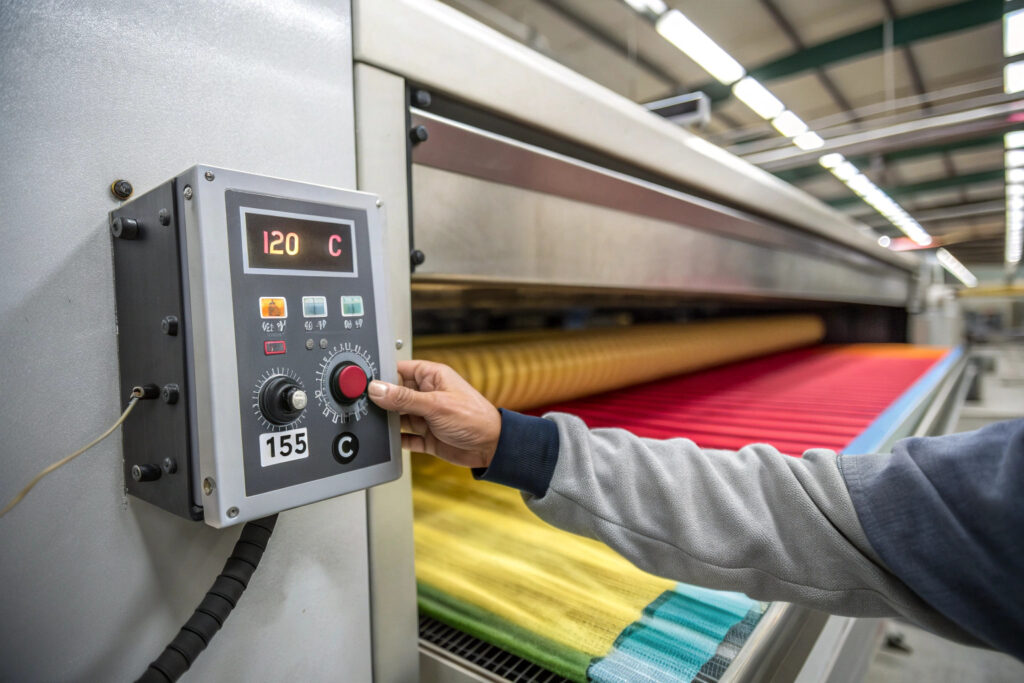
For the initial drying stage, the fabric temperature should be maintained between 100 and 120 degrees Celsius. The goal is to reduce the moisture content of the cotton from approximately 70% to below 10% without causing dye migration. The drying should be gradual. Some modern dye houses use radio frequency dryers for this stage, which heat the water molecules directly and provide very even, low-temperature drying. For the curing stage, the fabric temperature must reach 150 to 160 degrees Celsius and be held at this temperature for three to five minutes. This is the critical window for reactive dye bond formation. Below 150 degrees Celsius, the reaction kinetics are too slow and the cure may be incomplete. Above 160 degrees Celsius, the cotton fiber begins to degrade. It can yellow, lose tensile strength, and become brittle. The temperature control must be precise. A good dye house uses infrared temperature sensors to measure the actual fabric surface temperature as it passes through the curing oven, not just the air temperature inside the oven. The fabric temperature is the process variable that matters.
The temperature ranges are the core of the process. However, a freshly dyed cotton hat that enters a curing oven directly from the dye bath will not cure correctly. The water in the fabric will absorb the heat energy and prevent the fabric from reaching the required curing temperature. The drying stage is a mandatory prerequisite.
What Happens If the Drying Temperature Is Too High Initially?
If the initial drying temperature is too high, above 130 degrees Celsius while the fabric still contains a high moisture content, the water inside the cotton fibers will boil rapidly. This rapid vaporization carries unfixed dye molecules from the interior of the fiber to the surface. This is dye migration. The surface of the hat becomes heavily loaded with loose dye. The color may appear uneven, blotchy, or lighter in the center of the panels and darker at the seams. The loose dye on the surface will fail the wet crock test dramatically. This is an irreversible defect. The hat cannot be re-cured to fix it. The dye has moved physically and the color is permanently damaged. The dye migration defect is a well-known problem in textile finishing.
Can Over-Curing at Excessive Temperatures Damage the Cotton Fibers?
Yes. Cotton is a natural cellulose fiber. It begins to thermally degrade at temperatures above 160 degrees Celsius. The first sign of over-curing is yellowing. White or pastel-dyed hats take on a slight cream or brownish tint. This is particularly damaging for a custom-dyed hat with a specific brand Pantone color. The next sign is a loss of tensile strength. The cotton becomes weak and brittle. The fabric may tear more easily at the seams. The brim may crack when flexed. In extreme cases, the fabric can scorch, leaving brown or black burn marks. Over-curing is a thermal damage defect. It is also irreversible. The thermal degradation of cotton is a function of both temperature and time. A few extra minutes at the correct temperature is generally safe. A few extra degrees above the safe limit can cause significant damage.
How Can You Verify the Factory Achieved the Correct Temperature During Dyeing?
The factory's claim that the hats were properly cured is just a claim unless it is backed by verifiable process data and physical test results. You cannot see the thermal history of a hat by looking at it. You need to request the process documentation and conduct the physical tests that prove the cure was effective. A professional dye house maintains a batch process log for every dye lot. This log records the temperature profile of the drying and curing process. I provide this log, along with the corresponding colorfastness test report, to my clients as part of the pre-production sample documentation.
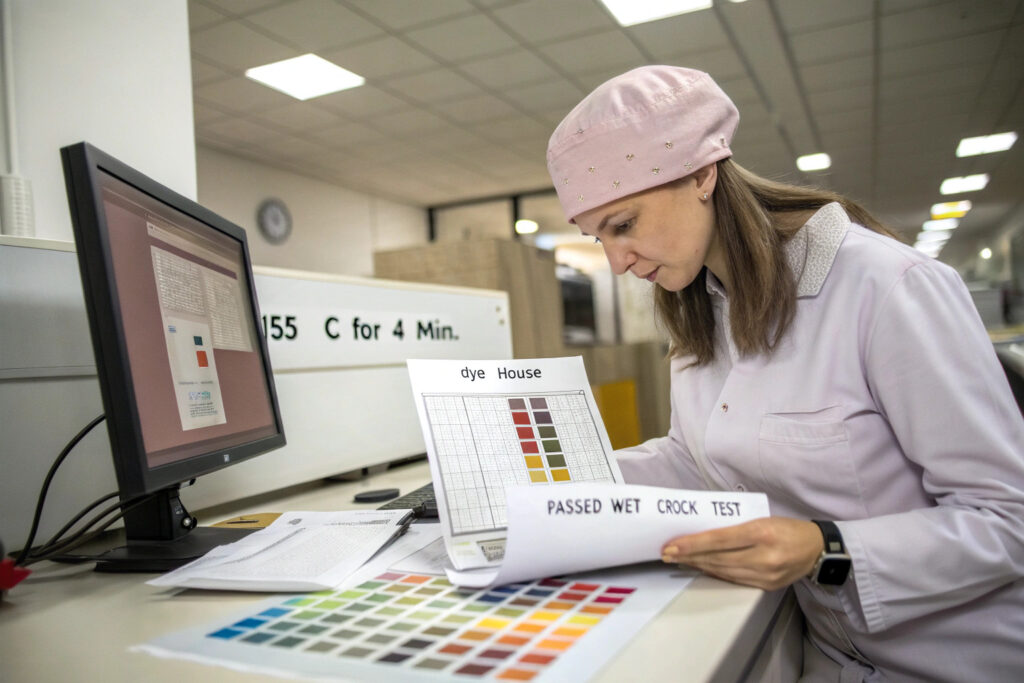
The two essential documents to request are the dye lot process parameter log and the colorfastness test report. The process log is a time-stamped record from the dye house's control system. It shows the drying temperature, the curing temperature, the dwell time, and the fabric speed through the oven. It is the proof that the correct thermal profile was applied. The colorfastness test report should be from an ISO 17025 accredited lab and should include the results for washing fastness, wet crock fastness, and perspiration fastness. The wet crock fastness is the most sensitive test for under-cured reactive dyes. A pass under the relevant standard indicates that the cure was effective. I also recommend that clients perform their own simple wet rub test on a pre-production sample. Rub a clean white cloth dampened with water against a hidden area of the hat. If any significant color transfers, the cure is insufficient. This simple test can save a bulk order from a costly recall. The textile quality control documentation for dyeing processes requires both process data and product test data.
The process log is the thermal history. The test report is the performance verification. The chemical composition of the dye itself is the other critical factor. The factory should also provide the dye safety certification.
What Is a Dye Lot Process Parameter Log and Why Should You Request It?
The dye lot process parameter log is the batch record for the dyeing and finishing process. It is generated by the automated control system on the dyeing and drying machinery. It records the critical process variables for that specific batch of fabric. The log typically includes the date, the dye lot number, the fabric type and weight, the dye recipe reference, the dye bath temperature profile, the drying oven temperature profile, the curing oven temperature profile, the fabric dwell time in each zone, and the operator identification. This log is the proof that the specified thermal process was executed. A factory that cannot provide this log is operating a manual or uncontrolled dyeing process and cannot guarantee consistent colorfastness. The batch process records in textile manufacturing are a requirement of quality management systems.
How Do You Perform a Simple At-Home Wet Rub Test on a Sample Cap?
The at-home wet rub test is a quick, non-destructive way to screen for under-cured dye. You will need a clean, white cotton cloth, such as a piece of an old t-shirt, and a small bowl of lukewarm water. Dampen the white cloth with the water. It should be wet but not dripping. Hold the sample cap firmly on a flat surface. Rub the damp white cloth firmly against a dyed area of the cap, such as the inside of the front panel or an inconspicuous area of the brim. Rub back and forth ten times with moderate pressure. Examine the white cloth. If there is significant color transfer, the dye is not properly fixed. If there is a faint, barely visible tint, the colorfastness may be acceptable but is borderline. If the white cloth remains completely clean, the dye is well-fixed. This test is not a replacement for a certified lab test, but it is a very reliable field indicator. The wet crock test procedure is standardized, but this at-home version provides a useful approximation.
Are There Special Considerations for Drying OEKO-100 Certified Dyed Cotton Hats?
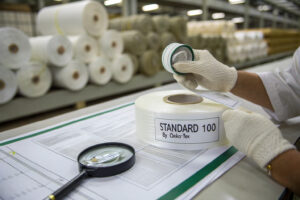
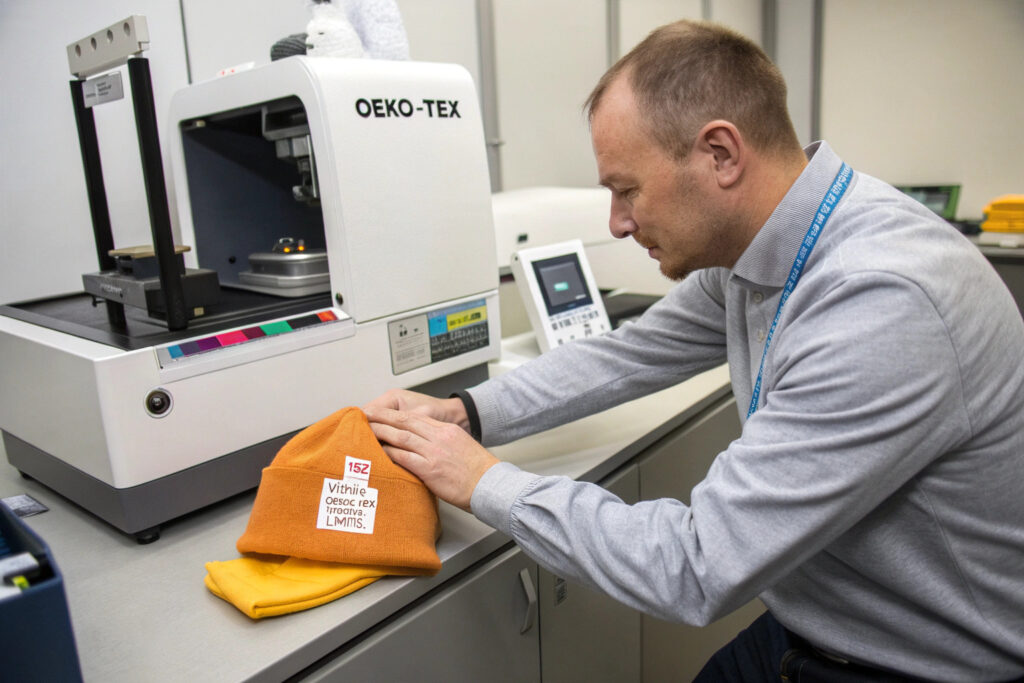
Yes. The OEKO-TEX Standard 100 certification imposes chemical safety limits on the finished product. These limits can be affected by the thermal curing process. If the dye or any finishing chemicals on the fabric contain traces of volatile organic compounds, the high temperatures of the curing oven can cause these compounds to off-gas or decompose into restricted substances. A dye that is OEKO-100 compliant in the dye bath may not be compliant after curing if the process is not managed correctly. The thermal curing step must be validated as part of the certification.
I ensure that our custom dyed and certified hats are produced in dye houses that are also part of our OEKO-TEX certification scope. The specific dye recipe and the curing temperature profile are reviewed and approved by the certification institute. We perform finished product testing on the cured hat, not just on the dyed fabric before curing. This ensures that the entire process, including the thermal cure, produces a chemically safe finished product. The process is also managed to minimize the environmental impact of the thermal energy used. A well-controlled, efficient curing process is both quality-critical and sustainability-relevant. The OEKO-TEX certification for dyed products requires that the entire manufacturing process, including heat setting, is evaluated for chemical safety.
The thermal profile must cure the dye but not create new chemical hazards. The dye recipe itself must be designed for the thermal process. A dye that requires a 160-degree Celsius cure cannot be substituted with a dye that requires a 140-degree Celsius cure, or the fastness will fail. The chemistry and the thermal process are a matched system.
Can the Curing Process Affect the Formaldehyde Content of a Cotton Hat?
Yes. Formaldehyde is sometimes used in dye-fixing agents and after-treatments to improve wet fastness, particularly for dark or bright shades. If a formaldehyde-based fixative is used, the heat of the curing oven can cause residual free formaldehyde to be released from the fabric. However, the curing process can also reduce the formaldehyde content. Formaldehyde is volatile. If the curing oven has good ventilation and the dwell time is sufficient, much of the residual formaldehyde can be driven off as gas. A well-managed curing process, with a formaldehyde-free dye recipe, will result in a finished hat with non-detectable or very low formaldehyde content, well within the OEKO-100 limits. The formaldehyde in textiles is one of the core restricted substances.
Why Should You Request a Finished Product OEKO-100 Test, Not Just a Fabric Test?
The fabric test is performed on the dyed fabric before it is cut and sewn into a hat. The finished product test is performed on the completed hat. The difference is the components. The hat includes the sweatband, the closure, the embroidery thread, and the labels. These components are not part of the fabric test. They are part of the finished product test. The curing process is part of the fabric production. A fabric test after curing confirms the chemical safety of the shell fabric. A finished product test confirms the chemical safety of the entire hat. I recommend requesting the finished product OEKO-100 certificate for the hat, not just the fabric certificate. The OEKO-100 product classes and testing explain the difference between component testing and finished article testing.
Conclusion
The color fastness of a custom-dyed cotton hat is determined in the curing oven. The thermal energy of 150 to 160 degrees Celsius, applied for three to five minutes to dry fabric, is what drives the covalent bond between the reactive dye and the cotton fiber. An incomplete cure leaves loose dye that will bleed onto a customer's skin with the first sweat or rain. An excessive cure can scorch and yellow the cotton. The difference is a few degrees and a few minutes, controlled by a precise, automated, and well-documented thermal process. You verify this process by requesting the dye lot parameter log and the wet crock fastness test report. You screen it with a simple at-home wet rub test. And you ensure the entire process is validated under the relevant OEKO-TEX certification for finished headwear.
I have built our custom dyeing program around the principle that the thermal cure is not an afterthought. It is the final, critical manufacturing step. I work with dye houses that provide full process transparency, batch-level temperature logs, and accredited lab test reports. I do this because I know that a hat that bleeds its color is a brand's reputation dissolving in the rain. I want my clients' colors to stay on the hat, not on their customers.
If you are developing a custom-dyed cotton hat collection and need a manufacturing partner who can guarantee color fastness with documented thermal process control, let us send you our quality assurance protocol. Our Business Director, Elaine, can provide a sample dye lot process log, a corresponding AATCC crock test report, and a sample of our OEKO-100 finished product certification for a custom-dyed style. Email her at elaine@fumaoclothing.com and ask for the Color Fastness Assurance Package. We will show you the data behind a dye that stays put.