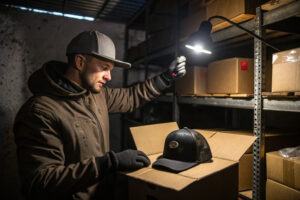
You have a sustainable brand. You have a logo. You have 200 customers who want your beanie. You email ten factories. Nine reply with "MOQ 500 units." One replies with "MOQ 1,000 units." You do not have 500 customers. You cannot afford 1,000 units of inventory. You cannot store them in your apartment. The MOQ is a wall. The wall is built from the yarn mill's minimums, the dye house's minimums, and the knitting machine's setup time. The wall feels immovable. It is not. It is negotiable if you understand which cost drivers push the MOQ up and which strategies bring it down.
The minimum order quantity for private label recycled polyester beanies is typically 100 to 300 units per color when using the factory's stock GRS-certified yarn colors and a standard private label setup. The MOQ increases to 500 to 1,000 units per color if you require custom-dyed yarn, because the dye house has a minimum batch size for the dye machine. Custom packaging, custom labels, and custom embroidery or debossing do not significantly increase the MOQ above the base yarn minimum. The MOQ is driven by the yarn procurement, not by the sewing or finishing.
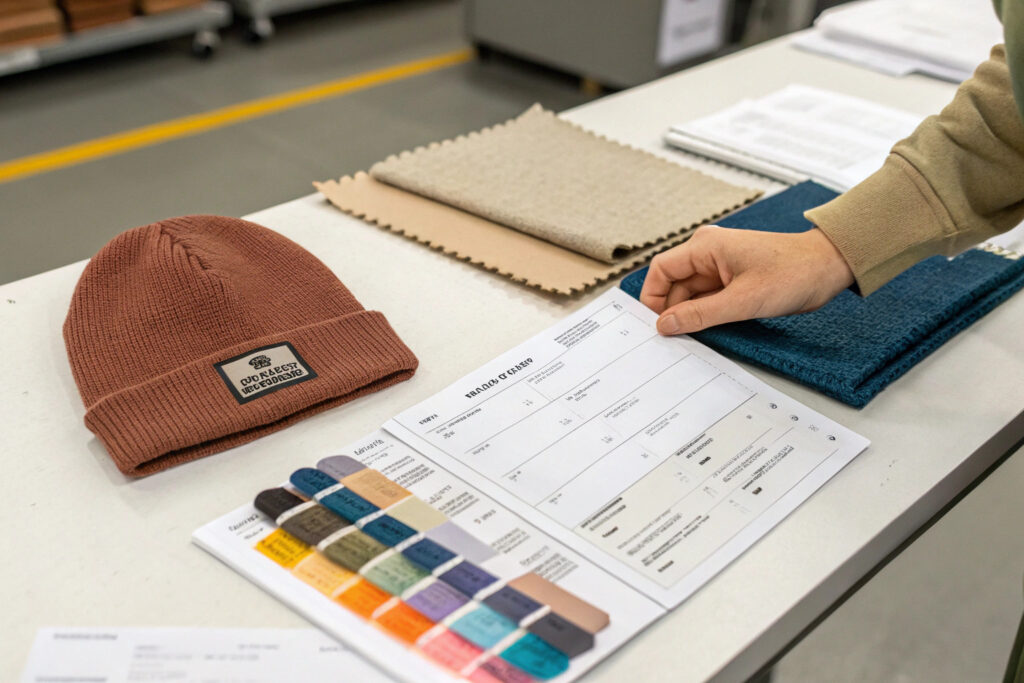
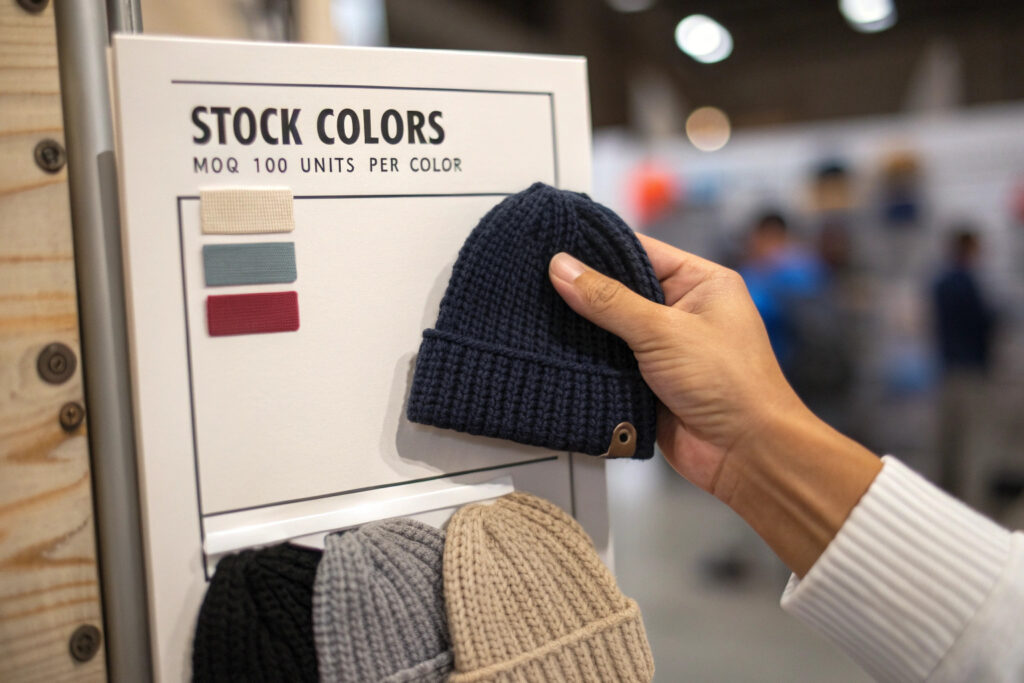
At Global-Caps, I stock GRS-certified recycled polyester yarn in black, white, grey, navy, and beige. The stock color MOQ is 100 units. I have served startup sustainable brands with their first 100-unit order and scaled with them to 10,000 units. The MOQ is not a rejection. It is a starting point.
What Drives the MOQ for Recycled Polyester Beanies Higher Than Standard Acrylic?
You see recycled polyester beanies priced slightly higher than acrylic beanies. You assume the MOQ is the same. You are wrong. Recycled polyester yarn is a specialty product with a narrower supplier base and higher minimum batch requirements at every stage of production. Standard acrylic yarn is a commodity produced in massive quantities by hundreds of mills. Recycled polyester yarn is produced by a limited number of GRS-certified spinners who process post-consumer PET bottles. The supply chain for recycled yarn is shorter in supply and longer in minimum run lengths.
The MOQ for recycled polyester beanies is driven higher than standard acrylic by the recycled yarn spinner's minimum batch size, the GRS certification requirements that add cost and complexity at every stage, and the limited availability of certified recycled polyester in custom colors. A standard acrylic spinner can run a 25-kilogram batch economically. A GRS-certified recycled polyester spinner typically requires a 100 to 200 kilogram minimum batch. The recycled yarn is more expensive per kilogram, so the financial commitment for the factory to stock custom colors is higher.
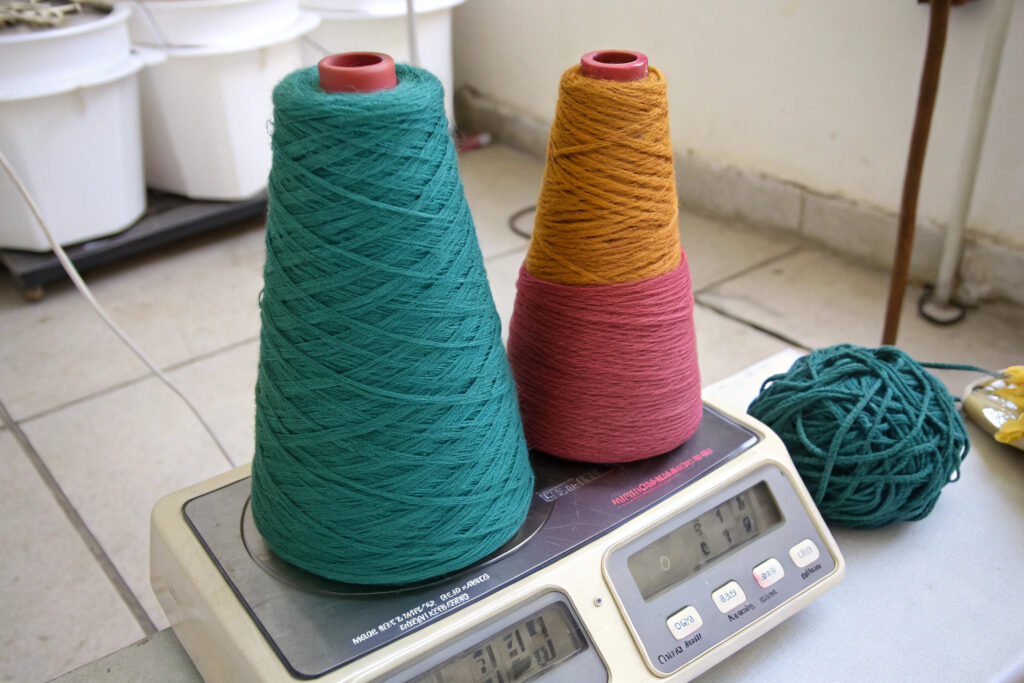
My GRS yarn supplier has a minimum batch size of 150 kilograms per color. That batch produces approximately 1,200 beanies. I stock the yarn to break the MOQ for my small-brand clients.
The GRS certification audit trail adds administrative cost that is amortized over the production batch.
How Does the GRS Certification Requirement Limit the Number of Available Yarn Mills?
GRS certification requires an annual audit of the recycling facility, the spinner, and every intermediary processor. The audit verifies the recycled content percentage, the chain of custody, the chemical management, and the social criteria. The audit cost is significant. Only mills that serve the premium sustainable textile market invest in GRS certification.
There are fewer than 50 GRS-certified recycled polyester yarn spinners globally. There are thousands of standard acrylic yarn spinners. The limited supply of GRS yarn means less competition, less available capacity, and higher minimum order quantities.
I have long-term supply agreements with two GRS-certified spinners. I place blanket orders in January to secure capacity for the full year.
Why Does Custom-Dyed Recycled Yarn Have a Higher MOQ Than Stock White?
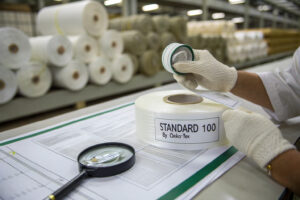
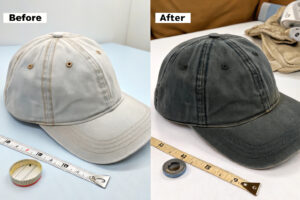
The dyeing process for recycled polyester uses disperse dyes at high temperature and pressure. The dye machine must be thoroughly cleaned before a GRS-certified batch is run to prevent contamination from non-certified fibers. The cleaning cycle and the chemical testing for the certified batch are fixed costs.
The dye house requires a minimum batch of 50 to 100 kilograms of yarn to amortize these fixed costs. This equates to 400 to 800 beanies. Stock white yarn is undyed. It is used directly from the spinner's stock. There is no dye house minimum. The MOQ for stock white is the knitting machine's MOQ, which is much lower.
My custom dye program combines orders from multiple small brands into a single dye batch, allowing each brand to order as few as 100 units in a custom color.
How Can Stock Yarn Colors Reduce the MOQ for Startup Brands?
You have a brand color palette. You want a specific shade of sage green that matches your brand guidelines perfectly. The factory says the MOQ for that custom green is 500 units. You are a startup. You cannot meet that MOQ. You have a choice: compromise on the color to get started, or delay the launch until you can afford 500 units. The stock color compromise is not a failure. It is a launch strategy.
Stock yarn colors reduce the MOQ for startup brands because the factory has already purchased the yarn in bulk and holds it in inventory. The factory absorbed the spinner's MOQ and the dye house's MOQ when they bought the stock yarn. The factory can now sell small quantities to individual brands. The stock color MOQ is determined by the knitting machine's minimum run length and the private label setup time, which are much lower than the yarn procurement minimums.
My stock color program offers five core GRS-certified colors at an MOQ of 100 units. Startup brands launch with stock colors. When they scale, they invest in custom colors.
The stock color palette is curated based on the most popular colors ordered by sustainable brands over the past three years.
What Are the Most Common Stock Colors Available in GRS Recycled Polyester?
The five most common stock colors are black, white, heather grey, navy blue, and beige or natural. Black is the most popular, accounting for approximately 40 percent of all beanie orders. Heather grey is second, favored by minimalist brands. Navy and beige are the premium neutrals.
These five colors are produced in large quantities by GRS spinners. They are always in stock. The lead time for a stock color beanie is 2 to 3 weeks, compared to 6 to 8 weeks for a custom-dyed color.
My stock yarn inventory is replenished monthly. I hold a minimum of 500 kilograms of each stock color.
Can You Mix Multiple Private Label Designs While Staying on One Stock Color Base?
Yes. This is a powerful strategy for startups. You order 200 beanies in stock black yarn. You split the order into four designs of 50 units each: one with a woven label, one with an embroidered logo, one with a debossed leather patch, and one with a screen-printed graphic. The yarn base is identical. The MOQ is met. The design variety is achieved through different decoration techniques.
The knitting machine runs 200 beanies in black. The finishing and decoration are varied. The yarn MOQ is satisfied. The brand gets multiple SKUs from a single production run.
My mixed design program allows up to four decoration variations on a single stock color base at the 100-unit MOQ.
What Private Label Options Add Cost But Not MOQ to Your Beanie Order?
You think every customization increases the MOQ. You avoid woven labels because you think you need to order 1,000. You avoid custom hangtags because you think the printer has a minimum. You settle for a blank beanie. Your brand is invisible. The product is forgettable. You sacrificed brand identity to a misunderstanding of MOQ.
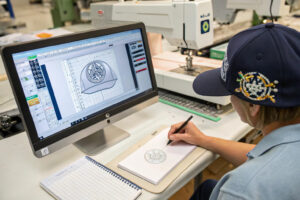
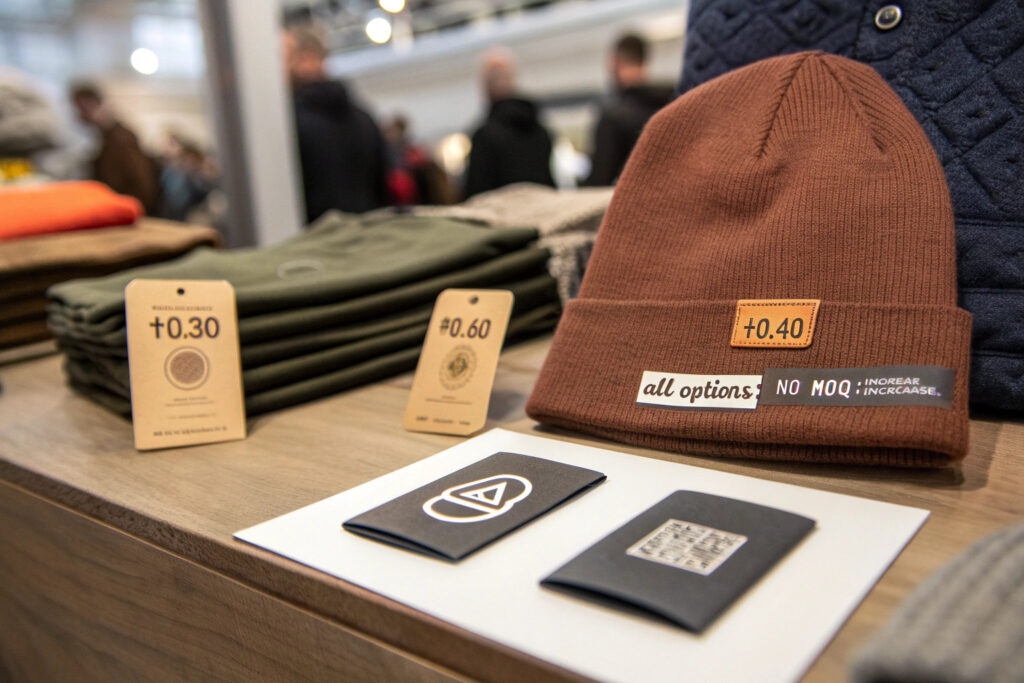
Most private label options add per-unit cost but do not increase the MOQ. A woven label is ordered from a label supplier who specializes in small quantities. The label MOQ is 100 to 200 units. A debossed leather patch is cut and stamped in-house with no external supplier MOQ. An embroidered logo requires a digitizing fee but no additional beanie MOQ. A custom hangtag can be printed digitally in quantities as low as 50 units. The beanie MOQ is driven by the yarn. The branding MOQ is driven by the decoration supplier, and most decoration suppliers are set up for small-batch production.
My private label program itemizes each customization cost. The client chooses the options that fit their brand and budget.
The woven label is the most impactful and most affordable private label option.
How Do Woven Labels, Leather Patches, and Embroidery Compare on Setup Costs?
A woven label requires a setup fee for the label loom, typically $30 to $50. The per-unit cost is $0.25 to $0.40. The label supplier's MOQ is typically 200 units. A debossed leather patch requires a setup fee for the stamping die, typically $50 to $80. The per-unit cost is $0.50 to $0.80. There is no patch MOQ beyond the beanie order quantity. Embroidery requires a digitizing fee of $30 to $50. The per-unit cost is $0.30 to $0.60. There is no embroidery MOQ beyond the beanie order quantity.
The woven label has the lowest per-unit cost and the most standardized setup. The leather patch has the highest perceived value. Embroidery offers unlimited color complexity.
My customization cost guide breaks down the setup fee and the per-unit cost for each option.
Yes. Digital printing has transformed small-batch packaging. A custom hangtag can be printed on demand with a digital press in quantities as low as 50 units. The per-unit cost is higher than offset printing, but there is no plate setup fee and no minimum run.
Custom polybags with a printed logo can be ordered in quantities as low as 500 units from specialist suppliers. Custom tissue paper can be printed in quantities as low as 200 sheets. Kraft mailer boxes with a custom stamp or sticker can be assembled in any quantity.
My small-batch packaging program sources custom hangtags, polybags, and tissue paper with no minimum order quantity beyond the beanie order.
How to Structure a Purchase Order to Test the Market With Minimal Risk?
You believe in your brand. You want to launch big. You order 1,000 beanies in three custom colors with full custom packaging. You spend $8,000. The beanies arrive. You sell 200. The remaining 800 sit in your garage for two years. The styles change. The colors feel dated. You discount the remaining stock to recover cost. You lose money on your first order. The big launch was a big gamble. The phased launch is a calculated investment.
You structure a purchase order to test the market with minimal risk by placing a small first order of 100 units in a single stock color with a simple woven label, shipping by air express for speed to market, and selling through the inventory to validate the design, the price point, and the demand. The second order is 300 units, adding a second stock color and one additional decoration option, shipped by sea freight for lower per-unit cost. The third order scales to 500 units with a custom color and full packaging, once the market is proven.
My phased launch program guides startup brands through three progressively larger orders. The first order is about learning. The third order is about scaling.
The first order should prioritize speed and learning over margin and variety.

What Is the Most Cost-Effective Shipping Method for a 100-Unit Trial Order?
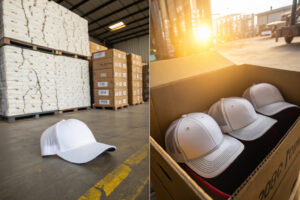
Air express courier—DHL, FedEx, or UPS—is the most cost-effective shipping method for a 100-unit trial order. 100 beanies weigh approximately 10 to 12 kilograms and fit in two or three cartons. The air express cost is $80 to $150. The transit time is 5 to 7 days door-to-door.
Sea freight is cheaper per unit for large orders but has a minimum charge of approximately $300 to $500 for a consolidated LCL shipment. For a 100-unit order, the sea freight minimum exceeds the air express cost. Air express is both cheaper and faster for small trial orders.
My shipping cost calculator compares air express and sea freight for every order size. I recommend the most cost-effective method.
How Do You Plan the Reorder Timeline to Avoid Stockouts After a Successful Test?
A successful test sellout creates a stockout risk. The first 100 units sell in two weeks. The customers want more. The beanie is out of stock for eight weeks while the reorder is produced. The momentum dies. The reorder timeline must be planned before the first order ships.
The reorder production lead time is 3 to 4 weeks for a stock color, plus 1 week for shipping. The reorder should be placed when 50 percent of the first order inventory is sold. This creates a 2 to 3 week overlap where the reorder arrives before the first order sells out completely.
My reorder planning tool calculates the trigger point based on the lead time and the sales velocity.
Conclusion
The minimum order quantity for private label recycled polyester beanies is 100 to 300 units per color when using stock GRS-certified yarn colors. The MOQ increases to 500 to 1,000 units for custom-dyed yarn due to the dye house minimum batch size. The MOQ is driven by the yarn supply chain, not by the knitting, sewing, or finishing. Custom branding options—woven labels, leather patches, embroidery, hangtags—add per-unit cost but do not increase the MOQ.
Startup brands can enter the market with a 100-unit order in a stock color with a simple woven label. The stock color program removes the yarn MOQ barrier. The phased launch strategy—100 units, then 300, then 500—validates the market before committing to custom colors and large inventory. Air express shipping is more cost-effective than sea freight for the small trial order.
The MOQ is not a rejection of small brands. It is a reflection of the yarn supply chain's minimum batch sizes. A factory that stocks GRS-certified yarn in core colors can serve the small brand today and scale with them tomorrow.
At Global-Caps, I stock GRS-certified recycled polyester yarn in five core colors. My private label program starts at 100 units. My phased launch program guides brands from the first 100-unit test to the 5,000-unit reorder. My customization options add branding without adding MOQ.
If you need private label recycled polyester beanies with a startup-friendly MOQ, contact my Business Director Elaine. She can send you our stock color card, our customization cost guide, and a quote for your first 100-unit test order. Email Elaine at elaine@fumaoclothing.com. Let's launch your sustainable beanie brand, one box at a time.