You order 5,000 baseball caps. The sample photo looks sharp. The crown stands tall and proud. The bulk shipment arrives. The caps are flat. The crown flops over. The front panel wrinkles. The embroidery looks saggy. You email the factory. "The sample was structured," they say. "The bulk is unstructured. The price was lower." You didn't specify. You assumed all caps hold their shape. You learned an expensive lesson in cap architecture.
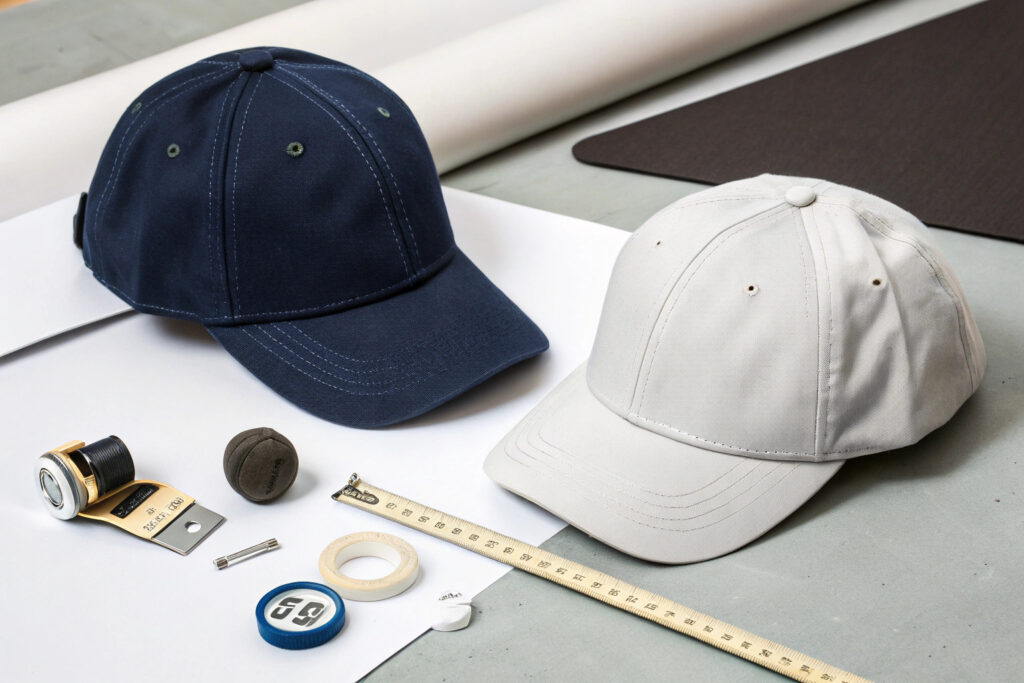
The difference between structured and unstructured baseball caps for bulk production is the presence or absence of a stiff inner support layer called buckram in the front crown panels. A structured cap has a fused buckram backing that makes the crown stand up straight even when not worn. An unstructured cap has no internal support. The fabric drapes naturally and conforms to the wearer's head shape. Structured caps dominate the snapback, trucker, and sports team markets. Unstructured caps dominate the dad hat, relaxed fashion, and beachwear markets.
I produce both types daily in my factory. The cutting table, the sewing line, and the embroidery setup change depending on the structure choice. The production cost, the defect rate, and the minimum order quantity all shift. This is not a minor design tweak. It is a fundamental manufacturing decision.
What Is Buckram and How Does It Create a Structured Cap Crown?
You hear "buckram" and think it's a fancy trim. It is not. Buckram is the skeleton of the cap. It is the difference between a cap that stands at attention and a cap that slouches on the couch. Without buckram, the cap is a fabric bag. With buckram, the cap is architecture.
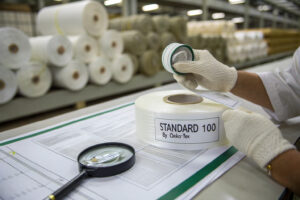
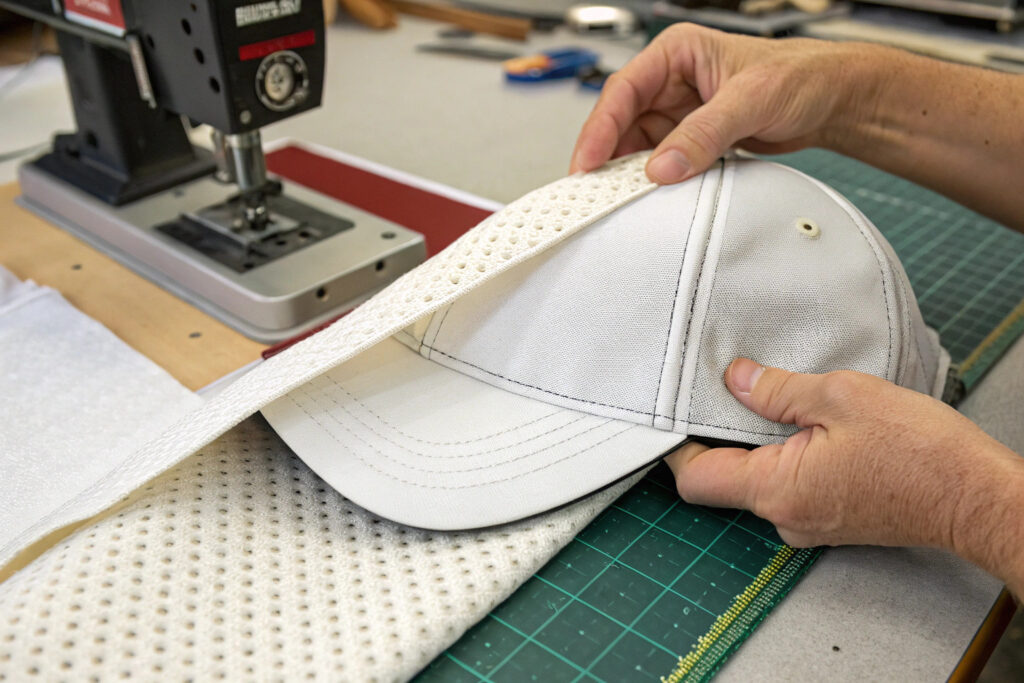
Buckram is a stiff, open-weave cotton or polyester fabric impregnated with a resin or starch-based stiffening agent. It is die-cut to the exact shape of the front two crown panels. It is placed between the face fabric and the lining. Under heat and pressure, the resin melts and bonds the three layers into one rigid, shape-holding panel. The buckram gives the cap its iconic vertical front profile.
I buy buckram from a specialist supplier. The quality of the buckram determines whether the cap holds its shape after washing or collapses into a wrinkled mess. Cheap buckram dissolves in water. Good buckram survives the washing machine.
The buckram attachment method is a critical production step. A poorly fused buckram separates from the face fabric after a few wears, creating a bubbling effect on the front panel.
How Is Buckram Fused to the Front Panels During Hat Manufacturing?
The fusion process uses a flatbed heat press. The operator places the face fabric on the bottom platen, the buckram die-cut on top, and the lining fabric on top of the buckram. A sheet of release paper prevents the resin from sticking to the press. The top platen descends. Heat and pressure activate the resin.
The temperature is typically 130 to 150 degrees Celsius. The pressure is 2 to 3 kilograms per square centimeter. The dwell time is 15 to 25 seconds. The exact parameters depend on the buckram resin type and the face fabric. A polyester face fabric needs a lower temperature than a cotton face fabric to prevent scorching.
I use an automated flatbed press with digital temperature control for bulk production. The operator just loads the layers and hits the pedal. The machine controls the temperature and time. The fusing quality is tested by a peel-strength test. A properly fused buckram requires 500 grams of force to separate from the face fabric.
Does Buckram Quality Affect the Cap's Washability and Longevity?
Yes. The buckram quality is the single biggest determinant of whether a structured cap survives a washing machine. Low-quality buckram uses a water-soluble starch-based stiffener. It washes out in the first wash. The cap collapses. High-quality buckram uses a cross-linked polyester resin that is water-resistant.
I use a polyester buckram with a high-density weave. It is rated for 25 home launderings without delamination or loss of stiffness. The resin is a thermoset, not a thermoplastic. Once cured, it does not re-melt.
I test every new buckram batch with a wash fastness test. We fuse a sample, wash it 5 times, and measure the stiffness with a cantilever tester. The stiffness must retain 80% of its original value. If it drops below 80%, the buckram batch is rejected. A cap that collapses in the wash is a return reason. The buckram is invisible to the consumer, but its failure is very visible.
Why Are Unstructured Caps Faster and Cheaper to Produce in Bulk?
You order unstructured caps thinking the price should be the same as structured caps. It is fabric and thread, right? But the unstructured cap is missing a component and two entire production steps. The factory quotes a lower price. You think they are giving you a deal. They are just passing on the labor and material savings.
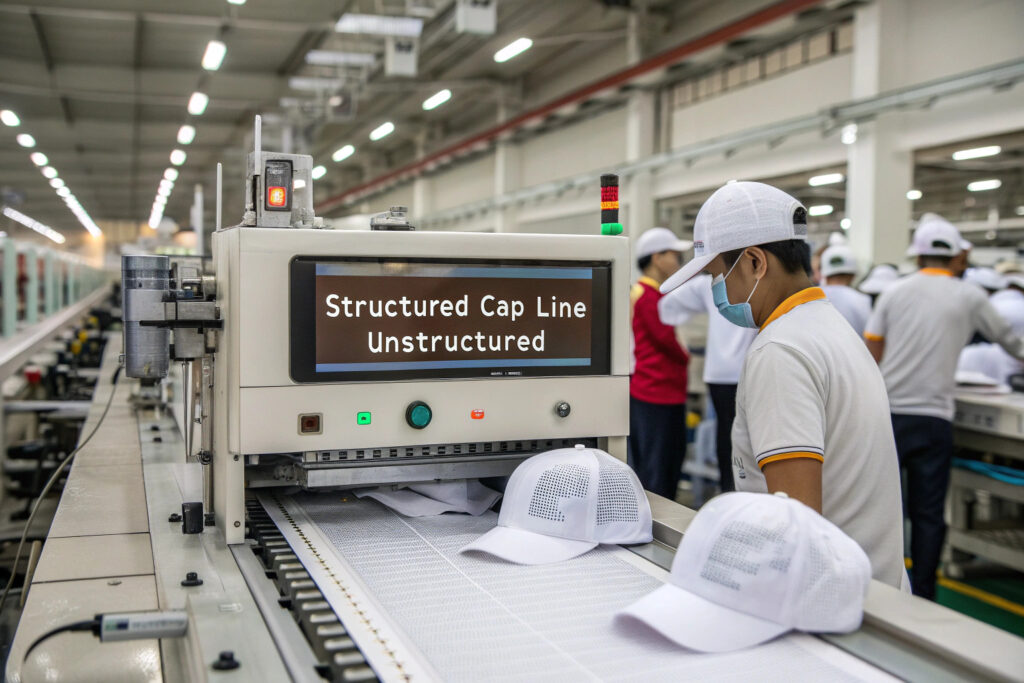
Unstructured caps are faster and cheaper to produce in bulk because they eliminate the buckram material cost, the die-cutting step, and the fusing step. The front panels are just fabric and soft interlining. The sewing operator does not have to manipulate a stiff, fused panel through the machine. The needle does not have to punch through hardened resin. The machine speed can be higher. The reject rate from buckram delamination or scorching is zero.
My unstructured cap production line runs 20% faster than my structured cap line. The material cost is 12% lower. The defect rate is half. For a startup brand, the unstructured cap is the lower-risk, lower-cost entry point.
The labor cost per unit drops because the sewing operator is not fighting the stiff fused panel. The interlining is soft and pliable.
What Interlining Materials Replace Buckram in Unstructured Caps?
An unstructured cap is not completely unlined. The front panels still need a soft interlining to give a slight body to the fabric and to provide a smooth surface for embroidery. The interlining prevents the face fabric from stretching under the needle.
The common interlining materials are a lightweight non-woven polyester fusible, a woven cotton fusible, or a soft canvas. The interlining is fused to the back of the face fabric with a light heat press. It adds minimal stiffness. It just stabilizes the weave.
I use a soft non-woven fusible for my unstructured caps. It weighs about 40 grams per square meter. The structured buckram weighs about 150 grams per square meter. The weight difference is dramatic. The interlining is cut with scissors or a laser, not a heavy die press. The fusing temperature is lower. The energy cost is lower.
How Does the Absence of Buckram Reduce Embroidery Defect Rates?
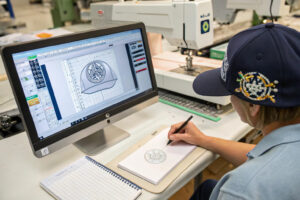
Embroidery on a structured cap is like stitching on a board. The needle must punch through the face fabric, the buckram resin, and the lining. The hard resin dulls the needle faster. A dull needle causes thread breaks and skipped stitches. The stiff panel is harder to hoop tightly. The vibration of the machine can cause the panel to shift.
On an unstructured cap, the needle punches through soft fabric and a thin interlining. The resistance is lower. The needle stays sharp longer. The hooping is easier. The panel conforms to the hoop frame without fighting back.
My embroidery defect rate on unstructured caps is 0.3%. On structured caps, it is 0.8%. The difference is almost entirely due to the buckram. The unstructured cap is gentler on the machine. The needle change interval is longer.
How Do Structure Choices Impact the Minimum Order Quantity for Custom Caps?
You ask for 100 structured caps with a custom logo. The factory says no. The MOQ is 500. You are frustrated. You ask for 100 unstructured caps. The factory says yes. You feel like the factory is being difficult. They are not. The structured cap has a hidden MOQ driver that the unstructured cap avoids.
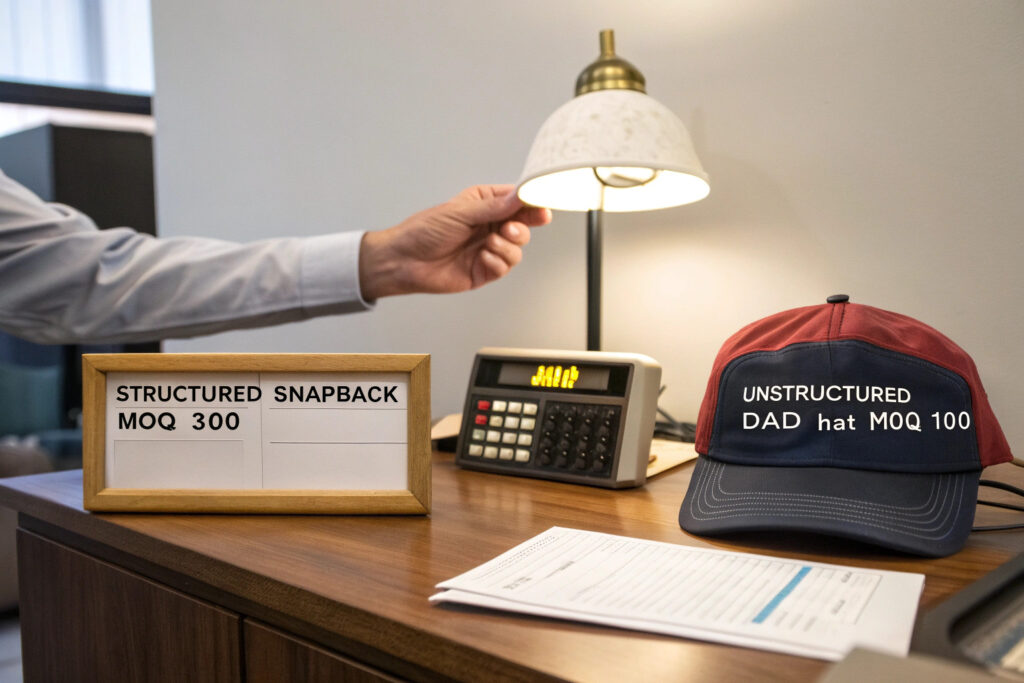
The structure choice impacts the MOQ because the buckram is a die-cut component with its own minimum order from the supplier. The buckram supplier requires a minimum die-cut run of 500 pieces per size. If the factory does not stock your specific size and shape of buckram, they must order it. That order drives the factory's MOQ.
Unstructured caps use soft interlining that can be cut on the factory's own cutting table. There is no external supplier MOQ. The factory can cut 10 pieces or 10,000 pieces. The flexibility is total.
The die-cutting tooling itself has a cost. A custom buckram shape requires a custom steel rule die. The die cost must be amortized.
Why Does Custom Buckram Die-Cutting Have Higher Tooling Costs?
A standard buckram shape is a generic crown pattern. The factory has a library of dies for standard sizes. They use these dies daily. There is no tooling charge for a standard shape.
A custom buckram shape requires a unique die. A steel rule die is made by bending a sharp steel blade into the exact shape and embedding it in a plywood board. The die-making process takes 2 to 3 days. The die costs $80 to $150 depending on the complexity.
I charge a die fee for custom buckram shapes. The fee is a one-time charge. The client owns the die. I store it. The MOQ is driven by the minimum run the buckram supplier will accept for a custom die setup. That minimum is usually 500 pieces.
Can You Order a Mixed Batch of Structured and Unstructured Caps?
Yes. A mixed batch is a common strategy for brands launching a full headwear collection. You order structured snapbacks for the streetwear customer and unstructured dad hats for the casual customer. The fabrics, colors, and embroidery designs can be shared.
The production planning is more complex. The structured caps go through the fusing station. The unstructured caps skip it. The sewing lines are separate. But the raw fabric rolls and the embroidery files are the same.
I accept mixed batch orders with a combined MOQ of 200 pieces per style group. The structured and unstructured caps are grouped under one purchase order. The logistics are shared. This is a good way for a new brand to test both markets without committing to two separate MOQs.
Which Cap Structure Holds Embroidery Better Over Repeated Washing?
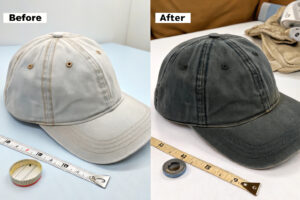
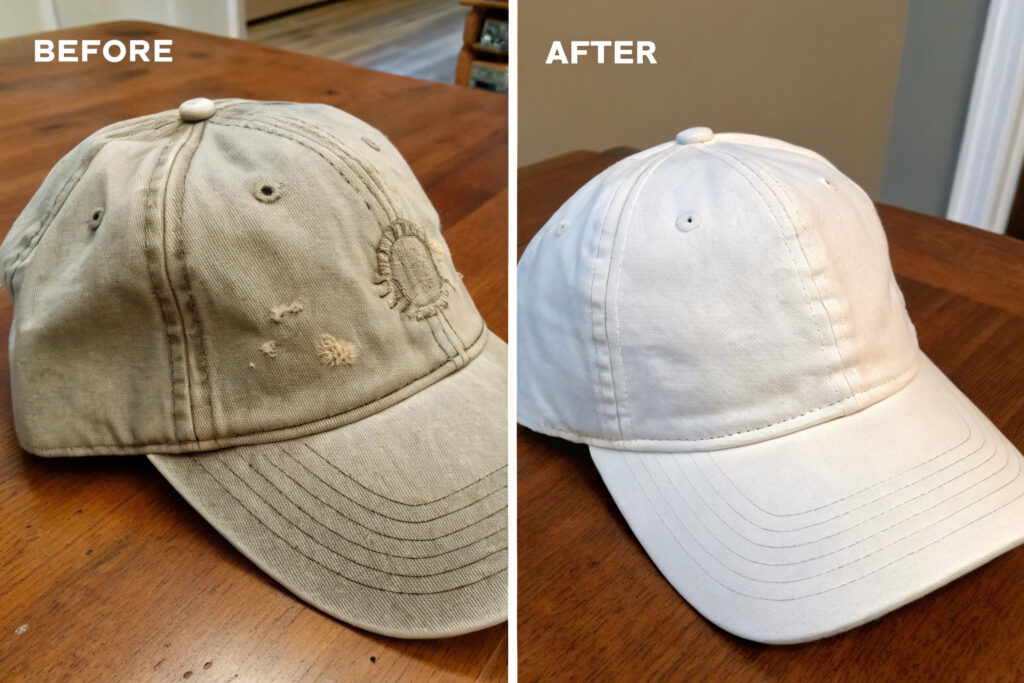
You sell the caps. The customer washes them. The structured cap comes out of the wash looking almost new. The unstructured cap comes out softer, more relaxed, and the embroidery has a slight wave. The customer doesn't complain. But they notice. The structured cap ages like a crisp dress shirt. The unstructured cap ages like a favorite t-shirt. The difference is not a defect. It is a characteristic.
Structured caps hold embroidery better over repeated washing because the buckram stabilizer prevents the front panel fabric from shrinking, stretching, or distorting. The embroidery is locked onto a rigid substrate. Unstructured caps allow the fabric to relax and move with each wash. The embroidery thread does not shrink at the same rate as the cotton face fabric. The differential shrinkage creates a slight puckered texture around the embroidery.
I recommend structured caps for brands where a sharp, consistent logo presentation is critical. I recommend unstructured caps for brands where a vintage, worn-in look is desirable.
The backing material behind the embroidery plays a role alongside the buckram. The two stabilizers work together.
Does a Cut-Away Backing Last Longer Than Tear-Away on Structured Caps?
A tear-away backing is removed after embroidery. The stitches are left unsupported from behind. On a structured cap, the buckram provides some residual support, so the missing backing is less critical. On an unstructured cap, the missing backing leaves the stitches vulnerable to distortion.
A cut-away backing is left in place permanently. It provides lifelong support to the stitches. It prevents the fabric from stretching under the embroidery. On a structured cap, the cut-away backing combined with the buckram creates a double-stabilized system.
I use cut-away backing on all structured cap bulk orders. The cost is $0.03 per cap higher than tear-away. The longevity benefit is measurable. The stitch distortion after 20 washes is virtually zero.
How Does the Sweatband Material Influence the Long-Term Shape of the Cap?
The sweatband is sewn into the base of the crown. It circles the wearer's head. When the sweatband shrinks, it pulls the crown inward. A cotton sweatband shrinks more than a polyester sweatband. The differential shrinkage distorts the cap shape.
On a structured cap, the buckram resists the inward pull of the shrinking sweatband. The crown stays upright. On an unstructured cap, the shrinking sweatband pulls the soft fabric inward. The cap becomes tighter and the crown becomes more rounded and compact.
I use a pre-shrunk cotton sweatband or a poly-spandex blend for unstructured caps. The pre-shrinking prevents the pull. The poly-spandex does not shrink at all. I test the sweatband shrinkage before bulk production. A 2% shrinkage is acceptable. A 5% shrinkage will change the cap size.
Conclusion
The difference between structured and unstructured baseball caps for bulk production is the internal buckram skeleton. Structured caps have a fused buckram layer that creates a stiff, upright front profile. Unstructured caps use only a soft interlining, resulting in a relaxed, conforming fit. The manufacturing processes are different. Structured caps require a die-cutting station and a fusing press. Unstructured caps skip these steps, making them 20% faster and 12% cheaper to produce.
The structure choice directly impacts the minimum order quantity. Buckram is a die-cut component with supplier MOQs. Custom buckram shapes require a custom steel rule die. Unstructured caps use in-house cut interlining with no external MOQ. Mixed batch orders are possible and are a smart strategy for new brands testing the market.
Over time, structured caps hold their shape and embroidery better through repeated washing. The rigid substrate prevents fabric relaxation. Unstructured caps develop a soft, vintage character. Both are valid. Neither is wrong. The choice depends on the brand's aesthetic and the customer's expectations.
At Global-Caps, I produce both structures at scale. My team can guide you through the cost, MOQ, and performance trade-offs for your specific design. I do not push one over the other. I present the facts and let your brand decide.
If you need structured or unstructured baseball caps in bulk and want a clear, honest recommendation based on your market, contact my Business Director Elaine. She can send you a structure comparison kit with physical samples and a detailed cost breakdown. Email Elaine at elaine@fumaoclothing.com. Let's build the right cap for your brand's head.