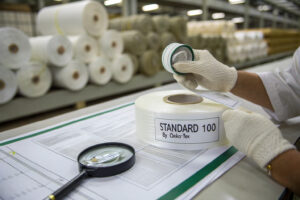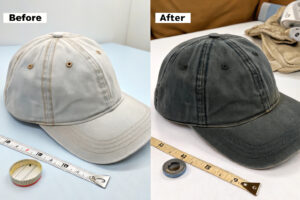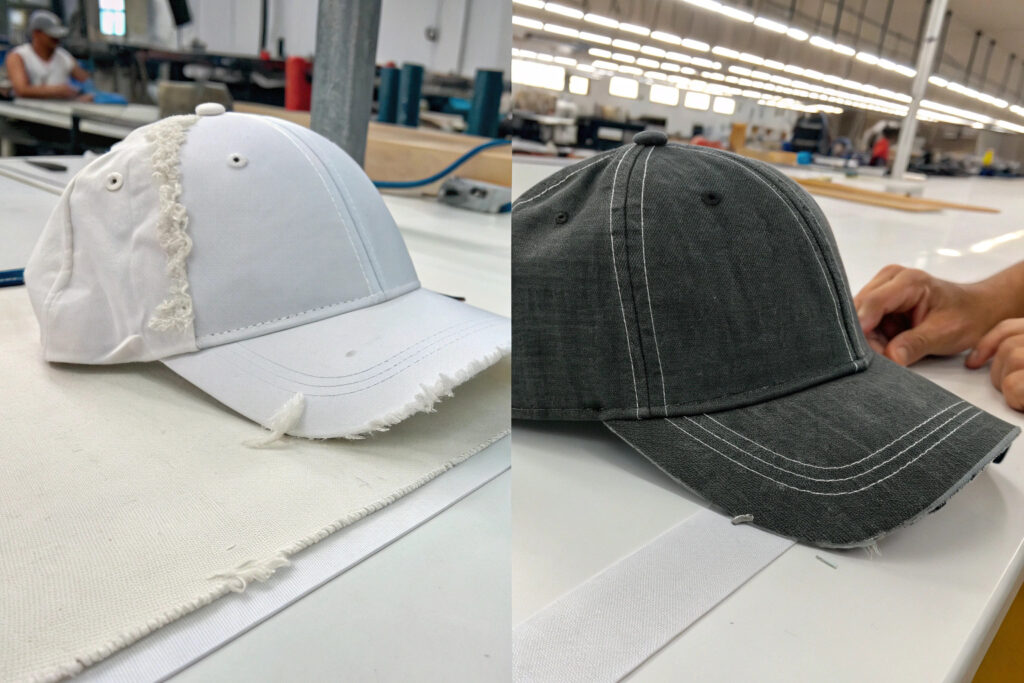
When I started visiting trade shows in Las Vegas and Berlin over a decade ago, I noticed a recurring problem. Buyers from major retail chains would pick up our samples, flip the cap inside out, and immediately rub the sweatband between their fingers. Back then, I didn't fully understand the scrutiny. We were using a standard cotton tape, just like everyone else. But I kept hearing the same feedback: returns were piling up because the sweatband shrank, twisted, or turned yellow after a few wears. It hit me hard. I realized we were losing long-term contracts not because of the outer fabric or the logo embroidery, but because of a strip of material most factories treat as an afterthought. That simple observation changed how I run Global-Caps.
A commercial-grade sweatband is not just a thicker piece of fabric. It is an engineered component designed to manage moisture, resist deformation, and maintain its structure through repeated use and washing. In contrast, a basic cotton tape sweatband is a thin, un-stabilized strip of woven cotton that lacks the internal construction to hold its shape. When we talk about commercial-grade, we are talking about multi-layer composites that often include a foam core or a specialized polyester fiber matrix. These materials stop the band from twisting like a wet noodle after a customer sweats in it. Basic cotton tape has its place in ultra-budget promotional giveaways. But if you are stocking shelves in a department store or selling online with a return policy, basic cotton tape is a liability. At Global-Caps, we phased out basic single-layer tape for our bulk orders years ago because the failure rate simply costs more in brand damage than the few cents you save per unit.
From my experience running this factory, I know the sweatband debate is really about the total cost of ownership. You might save three cents on a basic tape, but you lose ten times that in logistics headaches and damaged reviews. Let's walk through the specific performance metrics that actually matter when you are sourcing headwear. I want to show you how the right choice in this hidden part of the cap can dramatically improve your customer retention.
How to Identify High-Quality Hat Sweatbands for Wholesale Orders
When buyers send me a spec sheet that just says "cotton sweatband," I know they are leaving the door open for factory corner-cutting. I see it all the time. An importer receives a container, opens the boxes, and finds the sweatbands have already started puckering just from the humidity of the ocean freight. They panic. Their retail buyer slaps them with a chargeback. The root cause is usually a lack of identifiable quality markers in the original PO. Without specifying the construction, you get the flimsiest version of "cotton" legally allowed.
A high-quality sweatband in a wholesale context is defined by its dimensional stability, fiber composition, and edge finishing. You need to look for a band that combines natural fibers like cotton or bamboo on the skin-contact side with a synthetic backing layer. This backing layer is what prevents the seam from rippling. A basic tape is a single-ply deadstock cotton strip that will shrink at a different rate than the polyester crown of the hat, causing separation. When I supervise a production run for a big-box store, we use a needle-punched composite that locks the fibers mechanically without using cheap glue that dries out and cracks.
Why Does Sweatband Construction Matter More Than Fabric Weight in Baseball Caps?
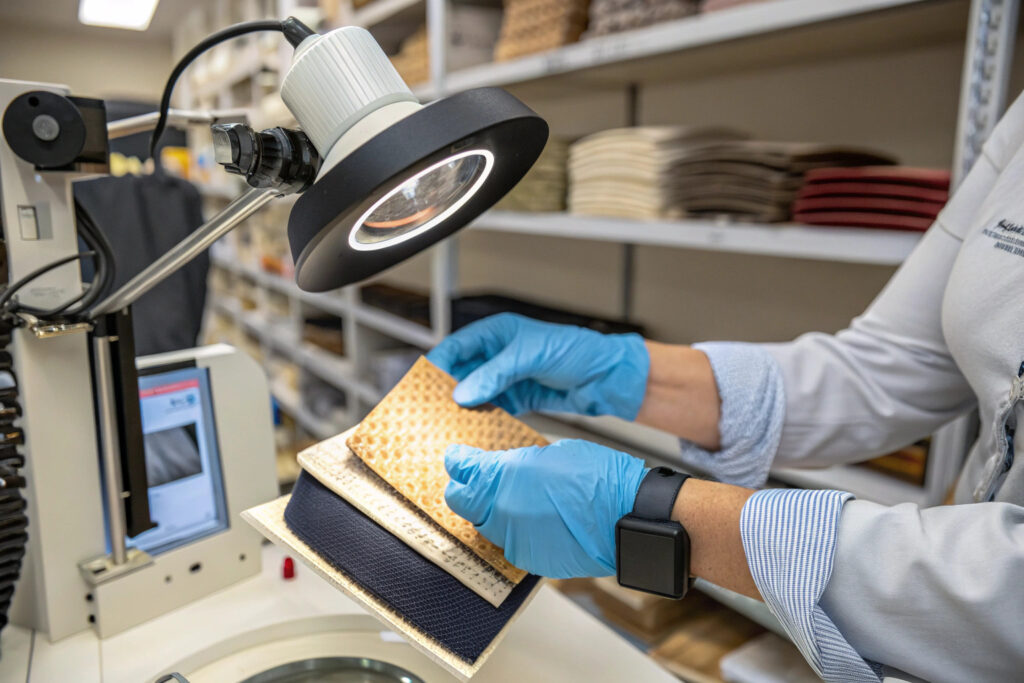
Weight is a vanity metric. I have had clients tell me they want a "heavy 4-ounce sweatband," thinking the weight automatically means quality. But if that weight comes from dense, un-stabilized cotton yarn, it just acts like a sponge. It soaks up sweat, gets heavy, and loses its shape instantly. Construction matters more because it determines how the fabric reacts to tension. A woven edge with a monofilament stitch prevents the sewing thread from slicing through the soft cotton fibers under tension. When we switched our luxury line to a tip construction, where the ends are folded and heat-sealed internally, the return rate for "wavy sweatbands" dropped to near zero. You want to ask your supplier if they are using a cut-edge or folded-edge construction. A cut edge on a basic cotton tape is the first thing to fray. A folded edge, even on a budget blend, extends the life of the hat by a year.
Think about how a customer puts on a cap. They grab the front two panels and yank it down, pulling the sweatband tight against the stitching of the closure. A poorly constructed sweatband with just a raw edge will start to detach from the crown stitching right there. It is not about the grams per meter. It is about the tensile strength of the seam. For our fishing and outdoor adventure brands, we don't even use heavy materials. We use a lightweight, ventilated microfiber with a high-density weave. It dries in minutes and never warps the front panel structure. Weight doesn't stop the twisting. Cross-directional stability stops the twisting.
Why Does Sweatband Edge Finishing Affect Durability in Retail-Grade Caps?
Edge finishing is where good factories separate from mediocre ones. When a sweatband ends in a raw scissor cut, the cotton fibers start unraveling the moment you sew it into the hat. In a retail environment, a customer picks up a cap and inspects the inside. If they see a fuzzy, frayed edge, they subconsciously associate that with low quality and put the cap back on the shelf. That is a lost conversion directly caused by bad finishing.
At Global-Caps, for our retail-grade projects, we enforce a requirement for laser-cut edges or tightly folded hems. A laser-cut edge seals the synthetic microfibers instantly, creating a smooth rim that never pills. For cotton-rich bands, we use a hemming fold that hides the raw material against the fabric shell of the hat. This creates a clean arch inside the cap. A folded edge also adds structural memory. It acts like a spring mechanism. When the wearer stretches the cap over their head, a well-finished edge helps the band snap back to its original shape instead of remaining stretched out. A basic cotton tape without this edge finish stays floppy and wide after just one afternoon of gardening or golfing. In our production meetings, we treat the sweatband edge as a safety compliance issue, not just a cosmetic one. A sharp frayed edge can irritate a scalp, causing a justified return.
Can Premium Hat Sweatbands Reduce Customer Returns Due to Shrinkage?
I cannot count the times a client has called me, frustrated, saying their customers complain the hat felt perfect in the store but turned into a tourniquet after a workout. This is the classic shrinkage nightmare. Shrinkage happens because the untreated natural cotton fibers in a basic tape contract when they absorb sweat and then rapidly dry in the sun. The customer is left with a cap that no longer fits. This single issue drives a massive percentage of clothing refunds in the headwear category.
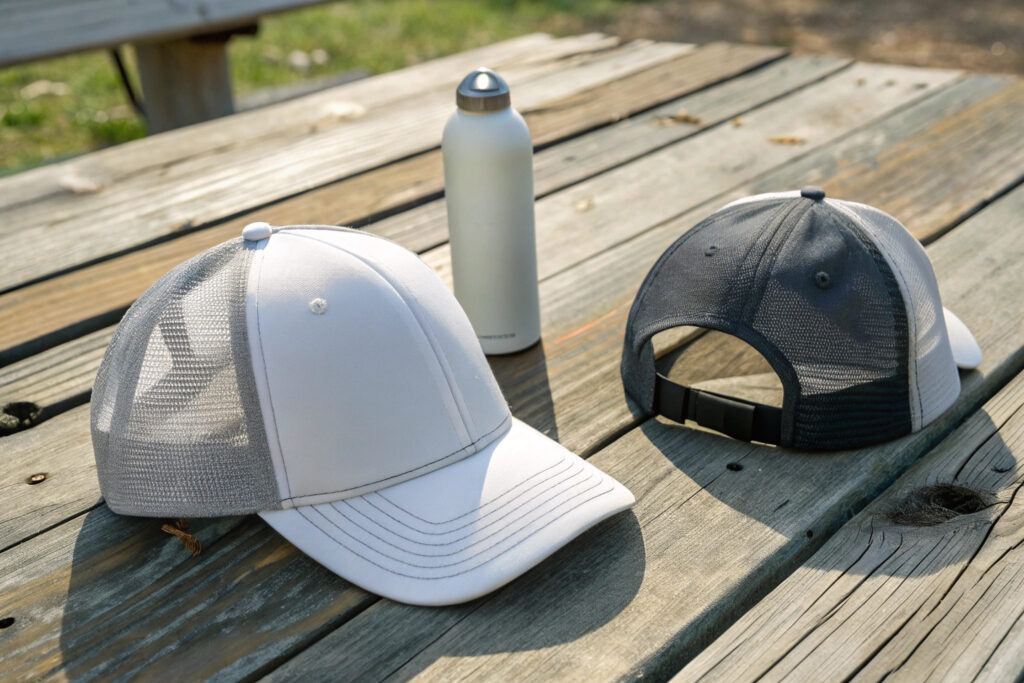
Yes, premium sweatbands directly reduce returns by eliminating the primary mechanism of failure: differential shrinkage. A premium sweatband uses pre-shrunk composites or fully synthetic microfiber materials that have a negligible shrinkage rate compared to cheap, untreated cotton. We invested in a steam shrinkage testing protocol in our factory just to prove this to our import partners. With a polyester-foam-nylon composite, the dimensional change is less than 1% after wash and wear simulation. A basic cotton tape can shrink between 5% and 12% depending on the twist of the yarn. That 12% reduction in circumference is the difference between a comfortable fit and a painful squeeze. That cap comes flying back to your warehouse with a "defective size" tag, costing you shipping both ways and a damaged reputation.
How Does Moisture Wicking Technology Prevent Sweatband Shrinkage in High-End Caps?
Moisture wicking is not just about keeping the forehead dry. It is a structural defense mechanism. When a fiber wicks moisture, it transports it away from the source and spreads it over a wide surface area to evaporate quickly. This prevents localized saturation. Localized saturation is what causes the cotton fibers to swell and lock into a shrunken state when they dry. By using a hydrophobic core, usually a fine polyester, we ensure the structural backbone of the sweatband doesn't absorb the water weight. The moisture sits on the skin-contact layer and is pulled to the surface to dry.
For our premium athletic line, we use a three-layer system. The inner layer is a cool-touch nylon that feels dry instantly. The middle layer is an open-cell foam that acts as a transit channel for the vapor, and the outer scrim is a thin polyester that holds the stitch perfectly. The nylon layer never shrinks because it is not absorbent in the traditional sense. The performance wear industry has known this for years, but basic hat factories ignore it because cotton tape is cheap and always available. When a brand calls me asking why their competitors' hats last a season and theirs don't, the first place I look is whether the competitor is hiding a wicking barrier in their sweatband. It blocks the sweat from soaking into the front panel interfacing, which also prevents the front of the crown from collapsing into a bacon-y mess.
How Does Pre-Shrunk Cotton Compare to Standard Cotton in Sweatband Longevity?
There is a giant difference, and it lies in the finishing process of the yarn before it even hits the loom. Standard cotton yarn is under tension from spinning. When you get it wet, it relaxes and shrinks back to its natural state. Pre-shrunk cotton, or mechanically compacted cotton, has already been forced to relax through a controlled process involving steam and compression rollers. This removes the tension in the yarn. A standard cotton sweatband ages out quickly. Three hand washes, and it looks like a ruffle. A pre-shrunk cotton band stays relatively flat, even if it doesn't have the absolute zero-shrinkage of polyester.
However, I have to be honest here. Pre-shrunk cotton still rots if you leave it wet in a gym bag for two days. Longevity is not just about shrinkage. It is about fiber degradation. Cotton is a natural cellulose fiber that bacteria and sweat acids will eventually destroy. A pre-shrunk band will hold its size longer than a standard tape, but it will still yellow and stiffen over time faster than a synthetic composite. For brands that trade on being 100% natural, this is an acceptable trade-off. We tell them the natural aging is part of the product story, as long as the fit doesn't alter drastically. But if your brand promises performance and durability, skip the cotton entirely and go pre-shrunk polyester microfiber. It saves you the headache of explaining why a "natural" product failed naturally.
How Do Large Retail Chains Inspect Sweatband Quality for Bulk Headwear Imports?
I used to dread the third-party inspection days when I first started exporting to the big Western European retailers. These aren't the cursory checks where you just count the boxes and look at the logo. These are invasive physical tests. Large retail chains use a standardized system of defect classification. The sweatband falls under specific "Critical" or "Major" defect categories depending on the inspector's manual. If the sweatband shows waviness, loose stitching, or twisting, they don't just fail that sample. They can quarantine the entire lot. And that lot is sitting in a bonded warehouse accruing demurrage fees while you argue over whether a 2mm twist is a major or minor defect.
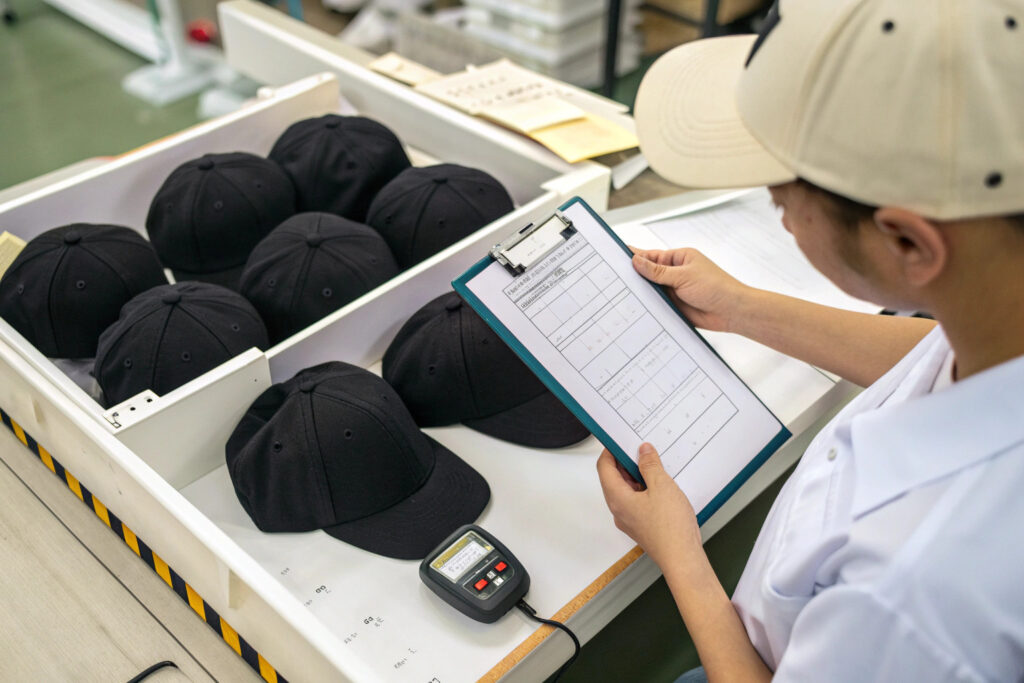
The primary tool large chains use is the AQL, or Acceptable Quality Level, statistical sampling method. An inspector might take 125 units out of a 5,000-unit shipment. They stretch the sweatband, measure its circumference, check for adhesive bleed-through, and verify the seam security. They also check the chemical compliance. This is the hidden monster. Many cheap sweatbands use azo-dyes or formaldehyde finishes to keep the cotton looking crisp white. In the EU and increasingly in the U.S., these chemicals are restricted. A retailer like Target or Costco will run a chemical extraction test on that sweatband because it sits against the skin for hours. If it fails the REACH or California Proposition 65 standards, the entire shipment is rejected and likely destroyed. This is why our factory has a full-time compliance officer who only handles sweatband chemistry certifications.
What Is the AQL Standard for Sweatband Defects in Commercial Hat Production?
AQL is the contract between the factory and the buyer on how many defects are "acceptable" statistically. But here is the reality: for the sweatband, the acceptable number is usually zero for critical defects and very low for major ones. Under the standard AQL 2.5 level, you might accept a certain number of minor stitching anomalies. But a "broken sweatband" or a "twisted seam that distorts the headband shape" is classified strictly. These are often locked at a zero-tolerance policy within a Sampling Plan set to c=0, meaning even one defective unit in the sample size can fail the entire shipment.
In a typical inspection, the tester uses a specific protocol. They place the cap on a head form and check if the sweatband lays flat against the shell of the cap without gaps. They pull the band away from the crown to check the breakage limit. A commercial-grade band must withstand a tensile pull of 10 to 15 Newtons without the stitching tearing. The inspector also performs a "twist cycle test." They twist the band ten times and see if it springs back. A cheap tape will stay twisted. A memory-foam-infused band returns flat. I always advise my clients to ask their sourcing agents to explicitly list "sweatband lay-flat recovery" as a critical defect on the Inspection Checklist. Don't let it hide under a general "stitching" category, because the inspector might just look for skipped stitches and miss the structural twisting that ruins the hat on the shelf.
Why Do Major Importers Require Anti-Bacterial Testing for Hat Sweatbands?
This requirement has exploded in the last three years. It used to be only the medical scrub brands that cared about this. Now, golf brands, fitness apparel labels, and even fashion streetwear companies demand antibacterial or antimicrobial testing for their sweatbands. The reason is simple: odor management. A hat that stinks after two sweaty wears is a one-star review waiting to happen. Basic cotton tape is a breeding ground for bacteria. Cotton holds moisture, and moisture plus dead skin cells equals microbe growth and ammonia-smelling hats.
Major importers require testing against strains like Staphylococcus aureus and Klebsiella pneumoniae. These are standard textile tests that prove the sweatband inhibits the growth of gram-positive and gram-negative bacteria. We often recommend a zinc pyrithione-based finish or a silver ion treatment embedded in the yarn. This isn't marketing fluff. It is a functional necessity for hats that will be worn in the summer. A commercial-grade sweatband with silver ion technology can survive 50 washes and still kill 99% of bacteria. The testing adds a few cents to the cost, but it removes the risk of a "smelly hat" viral trend destroying your brand reputation on TikTok. When a buyer says they are selling to the American wholesale market, I automatically pull out the antimicrobial certs before they even ask, because I know their legal team will ask for them eventually. It is proactive quality control that saves the sale.
Where Can You Source Custom Sweatbands with Heat-Transfer Logo Printing?
Finding a factory that can execute a heat-transfer logo on a flat knit sweatband without scorching the fabric or melting the internal foam is harder than it sounds. Most generic suppliers will try to talk you out of it. They will push for a woven label stitched in the center back instead. They do this because heat transfers on sensitive materials require precise dwell time and exact pressure calibration. If the operator rushes, the heat seal wrinkles and looks cheap. If they hold the press too long, the foam core collapses and you get a permanent dent that the customer can feel on their forehead.
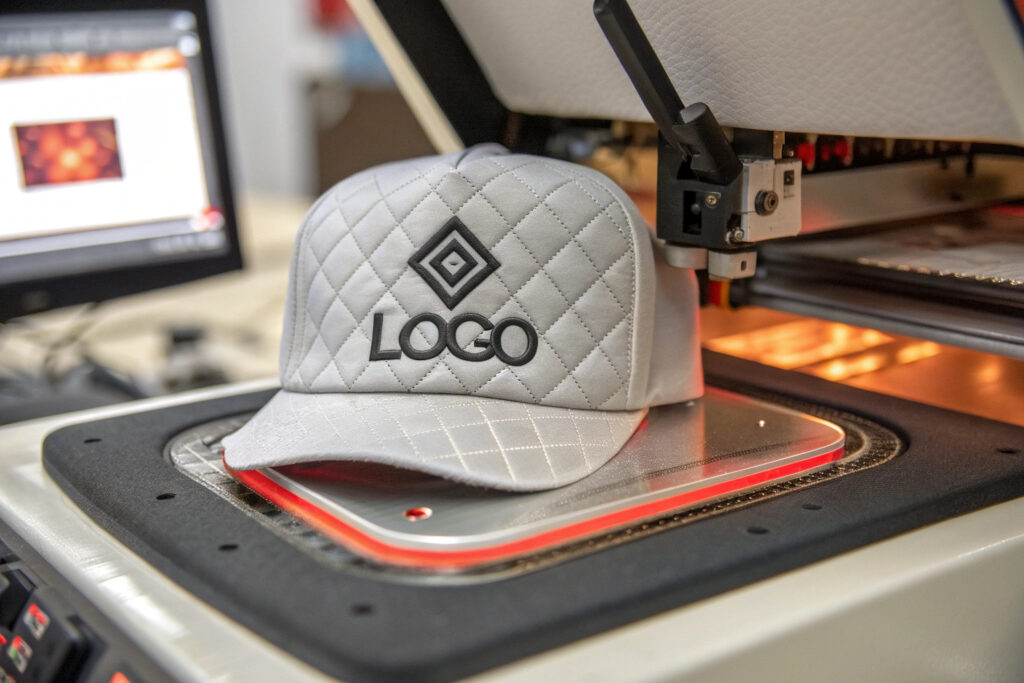
We handle this in-house at Global-Caps because we control the tooling. We use a two-step process. First, we laminate the inner foam with a dense satin or microfiber cover that can withstand 150 to 170 degrees Celsius without melting. Then, we apply a matte or glossy silicone transfer. The result is a logo that is flush with the fabric, flexible, and doesn't scratch the skin. If you source this from a general trading company, they usually outsource the sweatband to one factory and the printing to another. The communication gap leads to wrong tension or incompatible melting points. By keeping it under one roof, we ensure the printed sweatband stretches exactly with the fabric of the crown and doesn't crack when the hat is worn by someone with a slightly larger head size.
What Are the Best Fabric Options for Custom Printed Sweatband Labels?
The surface texture dictates the print quality. Rough, open-weave cotton is terrible for fine detail in heat transfers. The transfer sits on the peaks of the weave, leaving gaps that crack open when stretched. For crisp, legible printing, you need a closed-surface material. Our most popular option is a brushed polyester microfiber satin. It has a slight sheen but, more importantly, a tight weave that allows the silicone or polyurethane transfer to adhere completely. It feels luxurious against the skin and holds a fine font without bleeding.
Another excellent option is a nylon-spandex blend. This gives a super-smooth, almost spongy texture that is perfect for athletic brands. It stretches four ways, so the print needs to be high-elongation to match. We use a specific type of stretchable polyurethane transfer for this. A third option is a densely packed flat knit polyester. This looks more matte and organic but still has enough yarn density to hold an image. I always recommend avoiding 100% natural cotton if you want a long-lasting printed brand mark inside the hat. The cotton fibers lift after washing and take the print with them. If your branding strategy relies on an immersive, full-logo unboxing experience, polyester or nylon-based materials are the only safe technical bets.
How Does Sweatband Branding Enhance Perceived Value for Private Label Caps?
Sweatband branding is a psychological trigger. It signals completeness. When a customer buys a blank wholesale cap, they immediately recognize it as generic. The first thing an influencer does when reviewing a cap on a live stream is flip it inside out. If they see a branded, quilted sweatband with a printed logo, they subconsciously file that product under "Premium." It is a sign of intentional design. Basic cotton tape without branding screams "unbranded factory surplus."
For private label owners, this small detail can justify a 20-30% higher retail price. It raises the Minimum Advertised Price the market will bear. Customizing this interior element protects your brand equity too. It is harder for competitors to copy a custom logo heat-sealed into a specific satin composite than it is to sew on a generic woven label. We often pair the heat-transfer logo with a strip of matching colored trim piping. This creates a tailored, high-fashion interior. It also ties the accessory to a specific collection. When customers see that kind of detail, they trust the quality assurance behind the entire garment. It tells them you didn't just slap your logo on a stock item. You engineered the part that touches their skin most intimately. That converts a one-time buyer into a loyal repeat customer.
Conclusion
Looking back at the thousands of shipments that have left our loading dock here in Zhejiang, I can tell you the conversation has shifted dramatically. A decade ago, buyers simply asked if a hat had a sweatband. Yes or no. Now, the conversation is about recovery rates, chemical compliance, wicking barriers, and branding opportunities. This is a positive change for the industry. It separates disposable fast-fashion accessories from genuine high-quality headwear that earns its place on someone's head day after day.
The difference between a commercial-grade sweatband and a basic cotton tape comes down to intent. A basic cotton tape is a placeholder. It exists so the factory can say the hat has a sweatband. A commercial-grade sweatband solves problems. It stops the fabric from twisting after a wash cycle. It prevents the uncomfortable skin irritation that leads to a chargeback. It allows a brand to project its identity even on the hidden parts of the product. Whether you need a moisture-wicking performance band for a professional sports league or a soft, pre-shrunk natural cotton band for an eco-conscious lifestyle brand, the internal construction matters.
At Global-Caps, we don't treat the sweatband as an afterthought because we know our clients' returns depend on it. We keep the specialized materials in stock and our machines calibrated for the precise heat and tension required to install these bands correctly. You don't need to worry about the technical confusion of delamination or formaldehyde limits. That is what our experienced project managers handle daily.
If you are currently developing a new line of caps and want to eliminate the common failure points of cheap sweatbands, let us help you. We can guide you through the material selection and ensure your product stands up to retail-level scrutiny. For personalized assistance with your next order and to discuss how we can incorporate these features into your headwear line, contact our Business Director Elaine. She has the technical knowledge to translate your quality requirements into a production-ready spec sheet. You can reach her directly at elaine@fumaoclothing.com.