As a factory owner who has shipped thousands of children's hats to the USA, I often lie awake at night thinking about one thing: safety. I know that if a single hat we make hurts a child, my business is finished. It is not just about money. It is about responsibility. The US market has strict rules, and fleece beanies for kids fall under specific fire safety laws. I have spent years learning these rules. I want to share what I know with you.
To sell children's fleece beanies in the USA, you must meet the CPSIA flammability standards under 16 CFR Part 1610. The beanie fabric must achieve a Class 1 or Class 2 rating during testing. Class 3 material, which burns too fast, is illegal for kids' clothing. Fleece is usually made of polyester, which tends to melt rather than burn. But you still need a lab test report. You must also keep a Children's Product Certificate on file. This is not optional. This is the law.
I remember the first time a buyer asked me for a flammability certificate. I was confused. I did not know which test applied to a simple fleece hat. But I learned. And I built a system in my factory so that every shipment is safe. Let me walk you through the details. I will explain the test standards, the specific risks for fleece, how to build a compliant supply chain, and how we at Global-Caps handle this for our partners.
Why Do US Flammability Rules Apply to Kids’ Fleece Hats?
The US government does not distinguish between a T-shirt and a beanie when it comes to fire safety. The law sees them the same way. If it is clothing that touches a child’s skin, it must pass the test. I know this sounds strict. But these rules exist because of real accidents. Synthetic fabrics like fleece have unique melting behaviors that regulators watch closely.
Fleece beanies are classified as wearing apparel by the US Consumer Product Safety Commission (CPSC). Therefore, they fall directly under the Flammable Fabrics Act. The specific technical rule is 16 CFR Part 1610. You cannot use the general adult headwear exemption for children under 12. The reason is simple: kids are more vulnerable to burns. Their skin is thinner. A melting fabric can stick to their skin and cause deep injuries.
What Is the Difference Between 16 CFR Part 1610 and 1611?
When you start exporting to the USA, you will see many numbers. Two of the most common are 1610 and 1611. It is easy to mix them up. But the difference is critical for a hat factory. I had to learn this the hard way during an audit years ago.
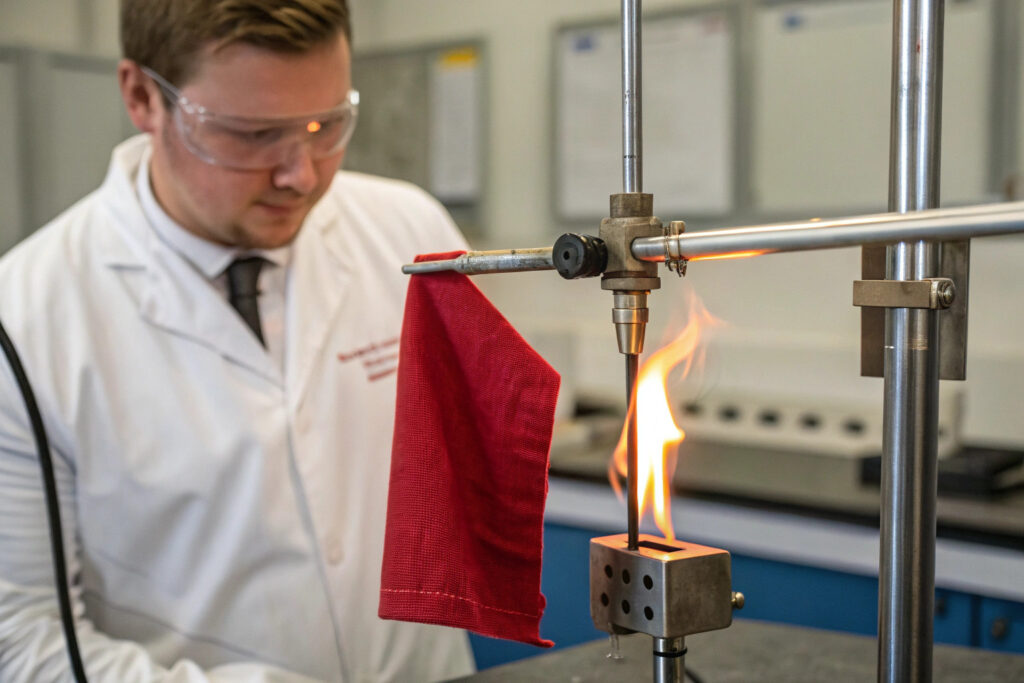
16 CFR Part 1610 is the standard for general clothing textiles. This is the rule for your standard fleece beanies. The test uses a small flame applied to a fabric strip at a 45-degree angle. The lab measures the burning speed. The results give you three classes: Class 1 for normal flammability, Class 2 for intermediate, and Class 3 for rapid and intense burning. Class 3 is banned. Full stop.
16 CFR Part 1611 is for vinyl plastic film. It is a separate rule. Sometimes, people use shiny plastic decorations on hats. If your beanie has a large plastic patch or is made entirely of smooth plastic film, you might look at 1611. But for standard deep-pile polyester fleece, it is 1610. The test for 1611 is stricter because plastic burns differently. If you are unsure, you can check the official CPSC documentation on 16 CFR Part 1610 and 16 CFR Part 1611 to see the legal text.
How Does the 45-Degree Burn Test Work on Fleece?
If you have never seen a flammability test, it looks simple. But the data it gives is powerful. A technician cuts a piece of your fleece fabric. The size is 2 inches by 6 inches. They put it inside a special metal cabinet. The fabric is held at a 45-degree angle. A small gas flame touches the bottom edge for one second.
The machine then records how fast the fire travels up the fabric. For a normal fleece beanie, you want the burn speed to be slow. Class 1 requires a burn time of more than 3.5 seconds for 5 inches. Or the fabric simply does not ignite easily. The machine also checks how the fabric surface changes. Does it flash? Does the flame spread quickly across the fuzzy surface? This is important for fleece.
We learned that the raised fiber surface on fleece can catch fire faster than flat cotton. The air between the fibers helps the fire spread. Before we ship, we send our fabrics to recognized labs in the USA like SGS or Bureau Veritas. They use the standard test method described in ASTM D1230 for clothing textiles. I keep those reports ready so my customers never have to worry.
How to Source CPSIA-Compliant Kids’ Beanies from Asia
Buying from Asia saves you money, but only if the goods are legal. I see many buyers try to find the cheapest price on Alibaba. They skip the safety checks. Then their cargo is stopped at the US port. I do not want you to face that. Sourcing compliant hats requires a partnership, not just a transaction.
When you work with a factory in China, you need to trust their material sourcing. Fleece is a synthetic polymer. It comes from petroleum. The base yarn is usually safe on its own. But cheap factories add low-quality recycled fillers or chemical finishes that change the flammability. You need a factory that controls the supply chain from the yarn stage.
Is Your Factory’s BOM Traceable to the Chemical Level?
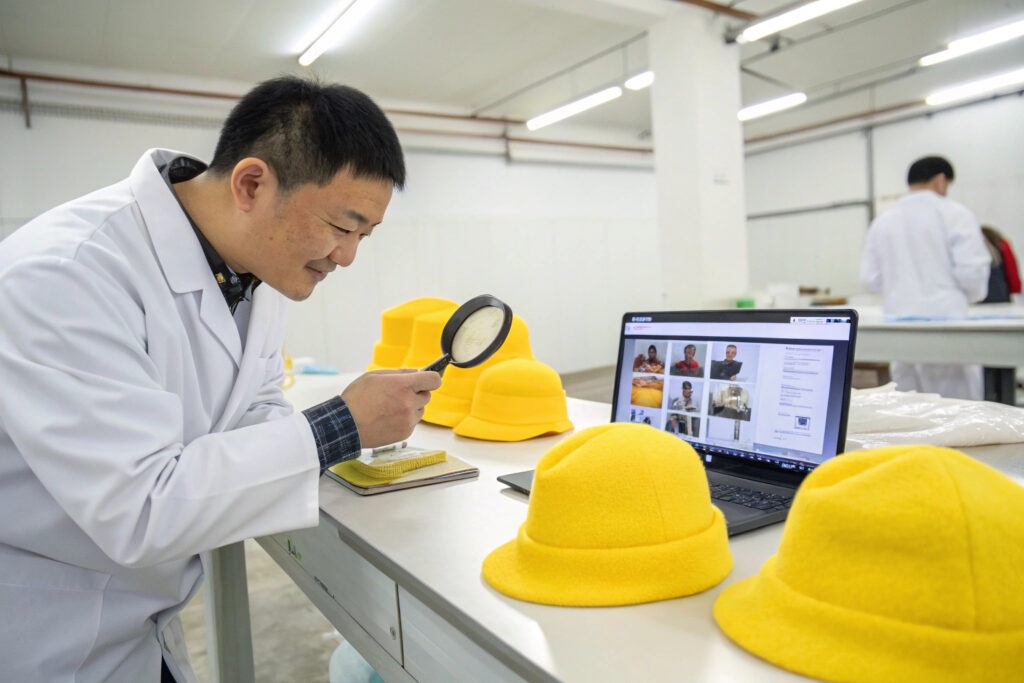
A Bill of Materials (BOM) for a beanie looks simple. It is just the yarn, the label, and the thread. But the chemical composition matters. The flammability of a hat changes drastically if the factory changes the supplier of the polyester staple fiber. I have strict rules in my factory. We only buy from certified petrochemical suppliers who provide a Technical Data Sheet (TDS) and a Safety Data Sheet (SDS).
You should ask your factory for the exact composition of the fleece. Is it 100% virgin polyester? Or is it a cotton-poly blend? Cotton burns, while polyester melts and self-extinguishes. The law focuses on the burning rate. A cotton-polyester blend might create a scaffold effect where the cotton burns and the polyester drips dangerously. You need a lab report for the specific blend.
The Consumer Product Safety Improvement Act (CPSIA) requires that children’s products have traceability labels. You must know the batch number. If a fire happens, you need to trace it back. We print a unique batch code inside every beanie we make. This links the hat to the exact roll of fabric we used and the exact test report we received.
How Do You Ensure Consistent Lab Testing for Every Shipment?
I learned that one test report is not enough for a lifetime. Fabric batches vary. Humidity and finishing oils can change the burn time. A responsible factory does batch testing. I explain to my American clients that we use a "golden sample" system. We pre-test a sample before bulk production. Then we pull random samples from the bulk shipment and send them for final testing.
We often work with CPSC-accepted third-party labs for the final certificate. It costs a few hundred dollars, but it is the price of security. If a factory tells you they can guarantee safety without a new test, walk away. They are lying. Customs and Border Protection (CBP) has the right to destroy goods that cannot prove compliance. I protect my customers by booking the test early so we get the results before the sailing date.
Material Safety Data vs. Physical Test Results
| Factor | Paper Certificate Only | Physical Lab Test |
|---|---|---|
| Reliability | Low. Does not reflect current batch conditions. | High. Reflects actual burning speed. |
| Customs Acceptance | High risk of rejection or port inspection. | Smooth clearance with valid report. |
| Cost | Low initially. | Medium. Prevents costly port delays. |
| Real Safety Assurance | None. Dangerous for kids. | Concrete proof of Class 1 or 2. |
What Makes Polar Fleece Risky Despite Being Synthetic?
Many people think polar fleece is safe because it is plastic. They think it will just melt, not burn. This is a dangerous mistake. The structure of polar fleece makes it flammable in a specific way. The "pile" or fuzzy surface acts like kindling. I design hats every day, and I have to balance warmth with safety.
The air pockets in fleece trap oxygen. When you hold a flame to a thick fleece beanie, the surface fibers ignite quickly. They flash over the surface. This is called surface flash. Even if the core of the fabric does not burn completely, the rapid flash can injure a child’s face. The CPSC standards check for this. You cannot sell a hat that exhibits abnormal surface flash.
Does the Density of the Fleece Impact Fire Spread?
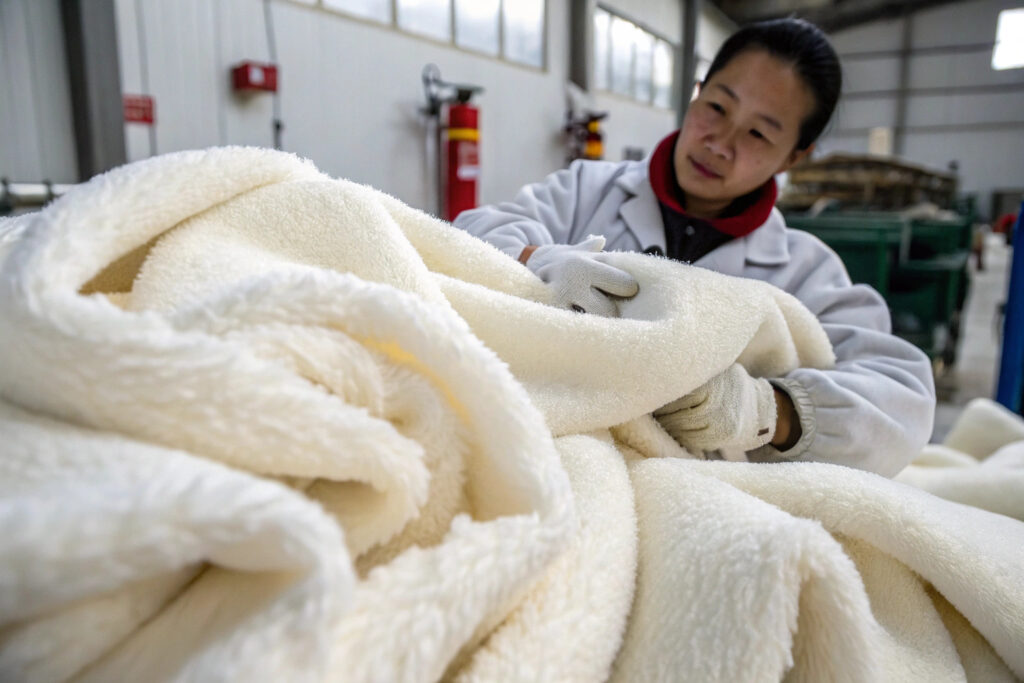
The density of the fabric is a big factor. A low-density, fluffy beanie burns faster than a high-density, tightly knitted one. We test different weights. A 200gsm (grams per square meter) fleece will react differently than a 400gsm fleece. The heavier the fabric, the more fuel is available, but the air flow might be less.
I teach my team to look at the "pile height." A deep, shaggy pile is cute, but it is more dangerous. The long fibers stand up and catch fire instantly. For children’s items, I usually recommend a short-sheared fleece or a brushed fleece that lies flat. It reduces the surface area available for the flame to travel.
The American Association of Textile Chemists and Colorists (AATCC) provides standards for testing these effects. Understanding these standards helps us design safer hats. We do not rely only on the lab. We do our own preliminary burn tests in the development room. If a fabric looks suspicious, we reject it before making a sample.
How Does Dyeing and Printing Affect Flammability?
Some buyers ask for dark colors. Some want digital printing on the fleece. These processes add chemicals. Dyes and pigments can act as carriers for flame. Some reactive dyes contain heavy metals that change the combustion temperature. Others leave a residue that makes the fabric stiffer and more flammable.
Water-based printing is safer than plastisol for fleece. Plastisol is a rubbery ink that sits on top of the fabric. It contains PVC and phthalates, which are fire accelerants. We use Oeko-Tex certified water-based inks for printing to minimize this risk. But we still test the printed area. Sometimes, the print creates a thicker zone that burns slower, but the surrounding plain fleece burns fast. The fire finds the weakest path. We always cut the test specimen from the part of the hat with the most print.
Comparing Fleece Types for Flammability Safety
| Fleece Type | Surface Texture | Burn Behavior | Safety Verdict |
|---|---|---|---|
| Micro-fleece | Flat, smooth, anti-pill | Slow ignition, melts away. | Safest option for kids. |
| Polar Fleece | Thick, deep pile | High surface flash risk. | Needs Class 1 testing. |
| Sherpa Fleece | Furry, long fibers | Very fast surface spread. | High risk; use for adults. |
| Printed Fleece | Variable, chemical coating | Depends on ink chemistry. | Test final printed panel. |
How Do I Certify My Shipment for US Customs Clearance?
Securing the certificate is half the battle. The other half is convincing the US Customs officer. I have shipped to America for over a decade. I know the paperwork must be perfect. A missing checkmark on a form can cost you thousands of dollars in demurrage fees.
You need a Children's Product Certificate (CPC). This is a document you, the importer, issue. But it is based on the passing test reports from the factory. I help my customers draft this certificate. We provide the underlying lab data. The CPC must list the exact 16 CFR Part 1610 rule. It also needs to show the factory address, the testing lab address, and the contact information for the record keeper.
What Are the Mandatory Elements of a Valid CPC?
A CPC is not just a letter. It must contain specific data points. I keep a template ready for my clients. It must identify the product. For a fleece beanie, it might say "Children's Acrylic Knit Fleece Beanie, Style GB-202." It needs to list every safety rule that applies. For fleece, it is mainly 16 CFR Part 1610. But if the beanie has a drawstring, it must also meet the drawstring rule.
You must include the date and place of manufacture. This is where our batch code system helps. We record the exact production line and date. The certificate needs the dates of the tests. And it needs the contact info for the person holding the test records. That person is usually me, the factory owner.
You can use the CPSC CPC form template to build your document. I double-check every detail. If the spellings don't match the packing list, the CPSC investigator might flag the shipment. My project managers, like Elaine, cross-reference the CPC with the commercial invoice and the bill of lading.
What Happens During a CPSC Port Exam?
You hope it never happens, but you must be ready. CBP officers can detain a container. They pull a sample of the hats. They might send it to a CPSC lab near the port. If your hat fails the spot check, you get a Notice of Detention. You have a short time to challenge it or re-export the goods.
Destruction is a real outcome. I have seen competitors lose entire containers because they used fake certificates. If your goods are destroyed, you lose the product and the customer. Usually, we can avoid this by participating in the C-TPAT (Customs-Trade Partnership Against Terrorism) program. It shows the customs that we are a low-risk factory.
The key to passing a port exam is to have your lab report match the physical sample exactly. The color, the weight, the fiber content, and the stitching must match. We take a "sealed seam" sample from the bulk and keep it. If customs asks, we courier the matching sample to the lab for comparison. This has saved us twice in my career.
CPC Data Cross-Reference Checklist
| Document Field | Source Document | Risk if Mismatched |
|---|---|---|
| Product Name | Style Sheet & Invoice | Detention for misdeclaration. |
| Factory Address | Business License | Non-compliance with CPSIA traceability. |
| Test Report Number | Lab Test Report | CBP cannot verify safety; automatic failure. |
| Importer Address | ISF Filing | Legal liability shifts; fines. |
Can I Import Fire-Resistant Fleece Without Chemical Treatments?
Many parents worry about chemicals near their children's skin. They want fire safety, but they do not want brominated flame retardants. I understand this. The news about toxic pajamas scared everyone. The good news is that polyester fleece does not usually need added chemicals to pass the clothing standard.
Polyester is an inherently thermoplastic fiber. It shrinks from the flame. When you remove the flame, the molten polymer often drops away. It does not usually continue burning like cotton. To pass 16 CFR Part 1610, standard polyester fleece usually achieves a Class 1 rating without any topical coating. This is one reason I recommend polyester fleece for babies.
How Do Inherently FR Fibers Compare to Treated Fabrics?
There are two paths to safety. One is to add a chemical finish to the fabric. The other is to use a fiber that is naturally resistant to high heat. For industrial safety hats, you might use treated cotton. For fashion beanies, we try to use inherent protection.
Modacrylic is an example of a naturally fire-resistant fiber. It is soft and blends well with cotton. However, it is expensive. For standard retail, 100% polyester works. We test the untreated greige fabric first. If it passes, we do not change it. If a customer insists on a specific fluffy yarn that fails, we sometimes look at a phosphate-based wash. But we try to avoid this.
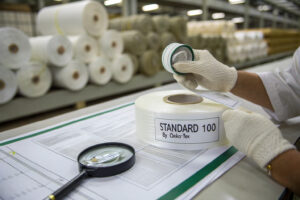
The OEKO-TEX Standard 100 certification is useful here. It tests for harmful chemicals. A product can be both Class 1 burn rated and free of harmful flame retardants. I tell my clients to look for this combination. It gives parents peace of mind. Our standard fleece beanie for kids passes the burn test without the classic "pajama chemicals" like chlorinated Tris.
How Do You Verify the "No Chemicals" Claim from a Supplier?
Distrust is healthy in this business. A factory can say "no chemicals." But you need proof. Ask for a chemical inventory list. Ask for the SDS of the yarn finish. Spin oils are used to lubricate the yarn during knitting. We wash them out. Our washing process uses only mild detergents.
You can test the final hat for restricted substances. The CPSC does not mandate a chemical test for flammability treatments in hats, but the federal hazardous substances act applies. You want to avoid a recall.
I recommend using a lab like Intertek or Bureau Veritas to run a phthalate and heavy metal screen alongside the flammability test. It adds a small cost, but it gives a clean bill of health. If a factory refuses to let you do a random third-party test, they are probably hiding something. My facility is open. We film our washing machines and drying lines. You can see there is no chemical bath being applied.
Inherent vs. Treated Fire Safety
| Feature | Inherent FR Polyester | Chemically Treated Fleece |
|---|---|---|
| Mechanism | Polymer shrinks from flame. | Chemical releases gas to stop flame. |
| Durability | Permanent. Lasts forever. | Washes out after 20-30 washes. |
| Health Risk | Very low. No toxic additives. | Potential skin irritation. |
| Cost | Low to Medium. | Medium to High. |
Conclusion
The safety of children is the only thing that matters. The US flammability standards are clear. 16 CFR Part 1610 requires that your fleece beanies do not burn too fast. They must be Class 1 or Class 2. You cannot use Class 3 fabrics. The test is a 45-degree angle burn. Fleece is tricky because of its fuzzy surface, but standard polyester usually passes. You do not need harsh chemicals. You just need good manufacturing and honest testing.
The paperwork is as important as the product. A CPC must be accurate. You must trace the fabric from the yarn supplier to the sewing line. If you miss a detail, customs can destroy your shipment. This is not a game. The costs of a recall or a port hold are massive. They can destroy a small brand.
But these strict rules are also an opportunity. They create a barrier for cheap, careless factories. They reward professional manufacturers like us. At Global-Caps, we have built our entire workflow around compliance. Our factory in Zhejiang is clean, modern, and organized. Our design team chooses safe materials. Our quality control team checks every batch. We have a perfect record with the US Consumer Product Safety Commission. We know how to make hats that look great and protect the child wearing them.
If you are a brand owner or a buyer in America, Europe, or anywhere else, I want to hear from you. I want to help you build a safe, profitable headwear line. Do not risk your business with a factory that does not understand these standards. Contact our Business Director, Elaine, today. She will answer your questions about materials, safety, and design. She will make the process easy and professional. Reach out to her at elaine@fumaoclothing.com. Let’s work together to keep kids warm and safe.