You have been waiting six weeks for this shipment. Your production coordinator sends you the message: the third-party inspection is scheduled for tomorrow morning. You feel a mix of anticipation and anxiety. The next day, your phone buzzes. It is the inspection report. You open the PDF with hope. The status at the top of the page is not the green "PASS" you expected. It is a red "FAILED." The inspector has rejected the shipment. Your launch date is in two weeks. Panic sets in. What went wrong? The factory told you everything was on track. The pre-production sample was perfect. How could the bulk production fail at the final hurdle?
Final-stage inspection failure is a scenario I have seen hundreds of times from the factory side. I run Global-Caps, and while our internal quality systems are designed to catch and correct issues long before the third-party inspector arrives, I understand the common failure modes that plague less rigorous factories. Knowing these failure modes is your best defense against them. In this article, I will walk you through the most frequent reasons third-party hat inspections end in a red stamp. I will explain the technical causes, how to spot the warning signs early, and how to structure your quality assurance plan to prevent these failures from ever reaching the final inspection stage.
What Quality Defects Are Most Frequently Found During Final Hat Inspections?
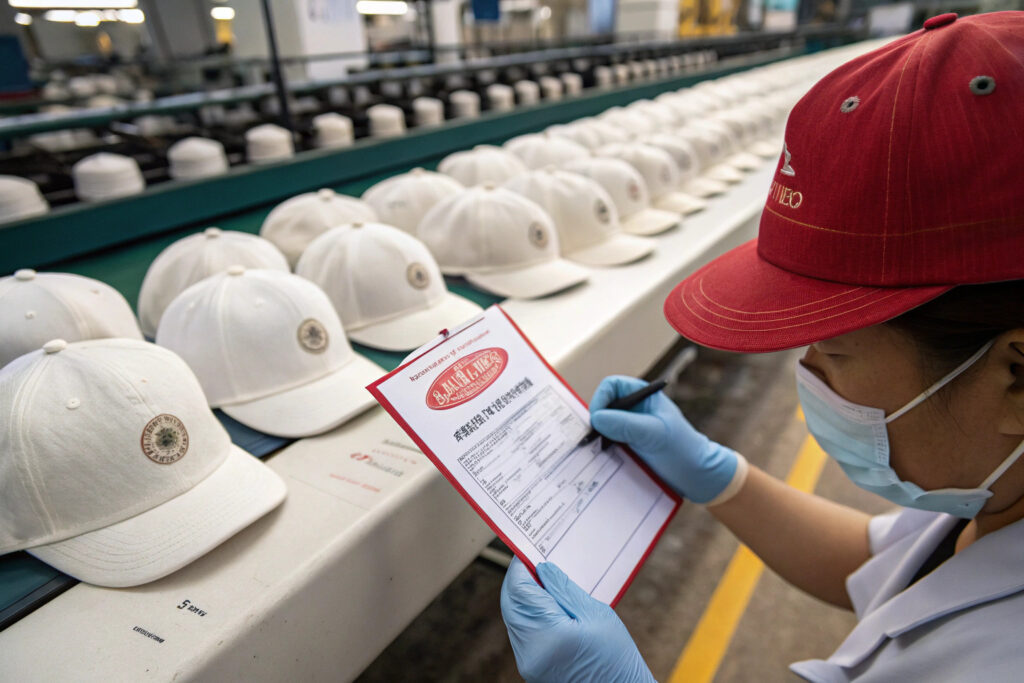
The final inspection is based on a statistical sampling plan, typically ANSI/ASQ Z1.4, with an acceptable quality level agreed upon in the contract. The inspector selects a random sample of finished caps from the packed cartons. Each cap is examined individually against a detailed checklist. The defects found are classified as critical, major, or minor. A critical defect is one that could harm the user or render the product illegal, such as a sharp metal burr on a snap button. A major defect is one that significantly affects the product's appearance, function, or saleability, such as a visibly crooked logo or a color mismatch. A minor defect is a small workmanship flaw that does not significantly affect function, such as a single loose thread. The shipment fails if the number of critical or major defects found exceeds the AQL limit.
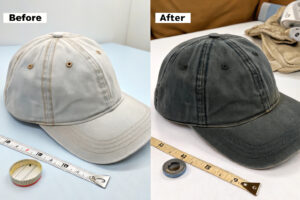
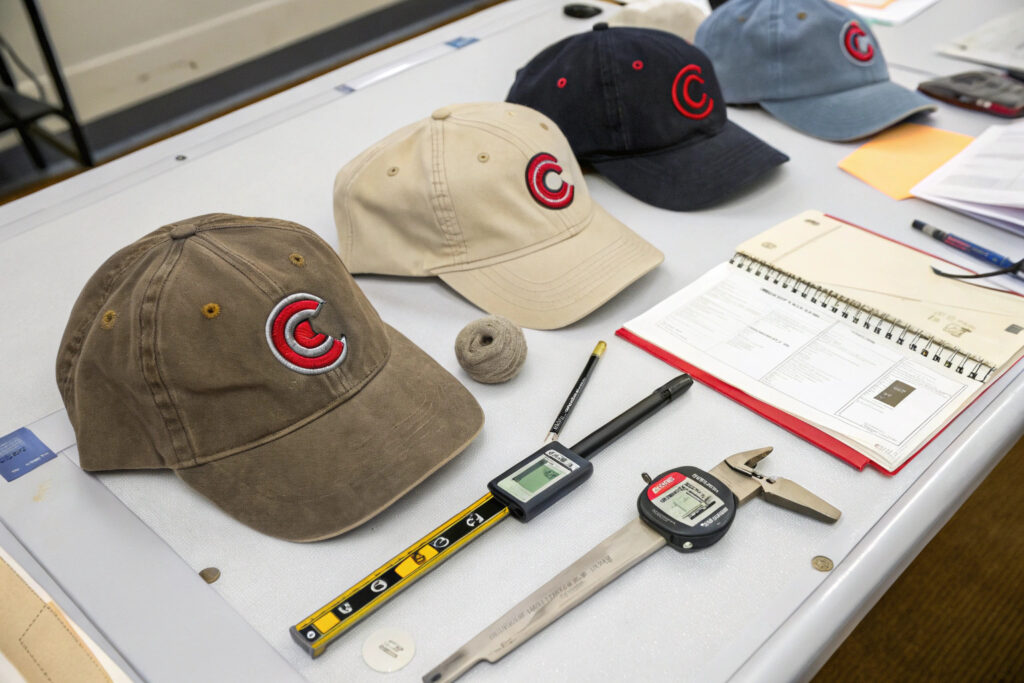
The most common major defect that triggers a final inspection failure is embroidery or print placement deviation. The logo is positioned too high, too low, off-center, or rotated. The tolerance for placement is typically plus or minus 3 millimeters. A deviation of 5 millimeters is a major defect. In a rushed production run, embroidery hooping becomes sloppy. Operators work too fast. The placement drifts. This defect is immediately visible and is counted strictly by inspectors. The second most common major defect is color variation, also called shading. Caps within the same carton or across different cartons show visible color differences. This is often caused by mixed dye lots in the fabric or mixed production batches in the dyeing process. The inspector lays out all the sampled caps on a table and scans for shading. It is an obvious failure.
The third most common category is assembly and workmanship defects. These include crooked seams where the crown panels do not meet symmetrically at the center front, sweatbands that are twisted or only partially sewn, brim curves that are inconsistent or flattened, and closures that are off-center or malfunctioning. These defects indicate a lack of in-line quality control during the sewing and finishing processes. The fourth category is trimming and cleanliness defects. Loose thread tails, stray threads trapped in seams, and dirt or oil marks on the fabric. These are considered minor defects individually, but a high number of them across the sample can cause the overall AQL to fail. A cap that looks dirty or unfinished is not saleable.
Why Is Embroidery Placement the Leading Cause of Inspection Failure?
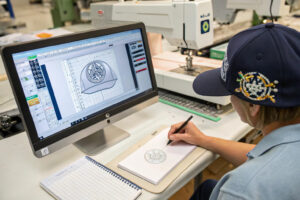
Embroidery placement is a high-frequency operation. On a multi-head embroidery machine, twelve caps can be embroidered simultaneously. Each cap is manually hooped onto a frame by an operator. The operator must align the cap's center seam and the brim curve with reference points on the hooping jig. This is a repetitive, physically demanding task. As operator fatigue sets in, especially in the long shifts common before a shipment deadline, the alignment becomes less precise.
The embroidery machine itself can contribute to placement drift. If the machine's pantograph is not calibrated, or if the hooping jigs are worn and no longer hold the cap securely, the sewn design will shift. A factory with a rigorous preventive maintenance schedule calibrates machines weekly and replaces worn jigs. A factory rushing to ship will skip this maintenance. The result is a batch of caps with logos that drift from one cap to the next, a pattern the third-party inspector will catch immediately.
How Does Color Shading Slip Through Factory QC?
Color shading is a failure of material management. The fabric for a bulk order should come from a single dye lot. If the factory's purchasing department sources fabric from multiple lots to meet a tight deadline or to save cost, shading is inevitable. The fabric may look identical under the warehouse's fluorescent lights but will show a clear difference under the inspector's D65 daylight lamp.
A competent factory inspects incoming fabric with a light booth and segregates dye lots. Panels for a single order are cut from a single lot. If multiple lots must be used, the factory informs the buyer and obtains approval before cutting. A factory that does not have this incoming material control is gambling with color consistency. The gamble is usually lost, and the loss is discovered at the final inspection.
How Do Packaging and Labeling Errors Cause Inspection Failures?
A cap can be perfectly sewn, perfectly embroidered, and still fail final inspection because of a packaging or labeling error. The third-party inspector checks the packaging and labeling just as thoroughly as the product itself. These errors are especially frustrating because they have nothing to do with the manufacturing quality of the cap. They are administrative and logistical failures, but they are still failures that will hold the shipment.
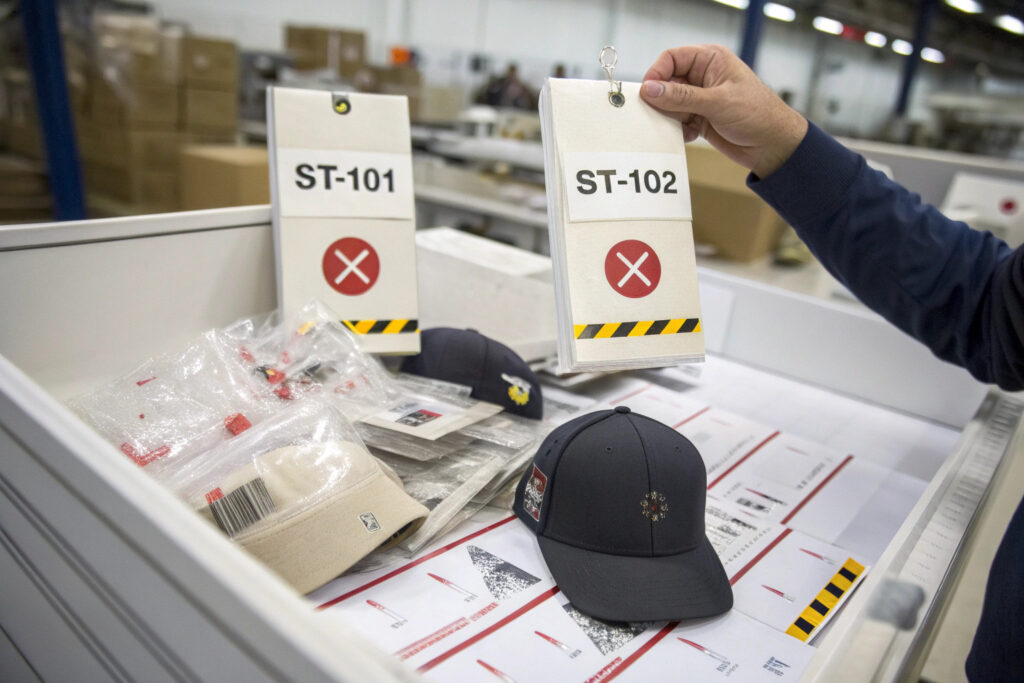
The most common packaging failure is incorrect or missing labels and hangtags. The inspector checks that the brand label, size label, care label, and country of origin label are present, correctly placed, and correctly printed. A missing care label is a major defect. An incorrect fiber content statement is a critical defect in some jurisdictions because it is a legal violation. The hangtag must be the correct design, correctly printed, and correctly attached. A hangtag that falls off in the polybag is a defect. The polybag itself must meet safety requirements, with the required warning printing for bags with an opening larger than a specified size.
The second most common packaging failure is carton marking errors. The shipping marks on the carton, the style number, color code, quantity per carton, and destination, must match the packing list and the purchase order exactly. A mismatch can cause the goods to be refused by the buyer's warehouse, even if the caps inside are correct. The inspector checks the carton markings against the documentation. A single digit wrong in the style number is a major discrepancy. The third common failure is quantity and assortment errors. The inspector counts the pieces per carton and checks the color and size assortment. If a carton is short-packed, or if the wrong color is packed inside the marked carton, it is a major defect.
Why Are Hangtag Attachment Methods a Common Point of Failure?
A hangtag is attached to the cap with a plastic swift-tack, a piece of string, or a safety pin. Each method has failure modes. A swift-tack that is not fully inserted will fall out during shipping. The hangtag will be loose in the polybag. A string that is too short will pull the cap fabric into a pucker. A safety pin that is not closed properly can open and become a sharp hazard, which is a critical defect.
The attachment method must be specified in the tech pack. The factory's packing team must be trained on the correct method. A final inspection will catch a batch of caps with missing hangtags or dangerous safety pins. This is a purely procedural failure, easily avoided with a clear packing specification and a packing-room QC checkpoint.
How Does Barcode Scanning Verification Prevent Carton Mismatches?
Many third-party inspectors now use barcode scanners as part of the final inspection. They scan the barcode on the carton label. The scanner verifies that the barcode is scannable and that the encoded data matches the purchase order. A barcode that does not scan, or that encodes the wrong style number, is a major defect.
This is a modern supply chain reality. A carton that arrives at an automated warehouse and cannot be scanned disrupts the entire receiving process. The buyer may charge back the supplier for the handling costs. A factory that does not verify its barcodes before packing is exposing the buyer to logistical costs and exposing itself to an inspection failure.
What Documentation and Compliance Discrepancies Are Caught at Final Inspection?
The final inspection is not just a product inspection. It is also a documentation audit. The inspector verifies that the physical shipment matches the documentation that will accompany it to the buyer and to customs. A documentation discrepancy can fail the inspection even if the caps are perfect. The shipment cannot be released with incorrect paperwork.
The most common documentation failure is a quantity discrepancy. The physical count of cartons and pieces does not match the packing list. The factory may have packed the wrong quantity, or the packing list was generated from an earlier version of the order and was not updated. The inspector counts the cartons and the pieces in the sampled cartons. A significant shortfall is a major defect. The second common failure is a product specification discrepancy. The cap in the carton does not match the approved gold-seal sample or the signed-off specification sheet. This could be a different fabric weight, a different sweatband material, or a different closure type. The inspector compares the bulk product against the reference sample and the spec sheet. A substitution that was not approved by the buyer is a major non-conformity.
The third common documentation failure is missing or invalid test reports. The purchase contract may require the factory to provide a valid OEKO-TEX certificate, a chemical migration test report, or a product safety test report. If these documents are not presented to the inspector, or if they are expired or do not cover the shipped product, the documentation check fails. The goods cannot be shipped to the EU or US market without the required compliance documentation.
How Can a Factory's Internal Documentation Audit Prevent These Failures?
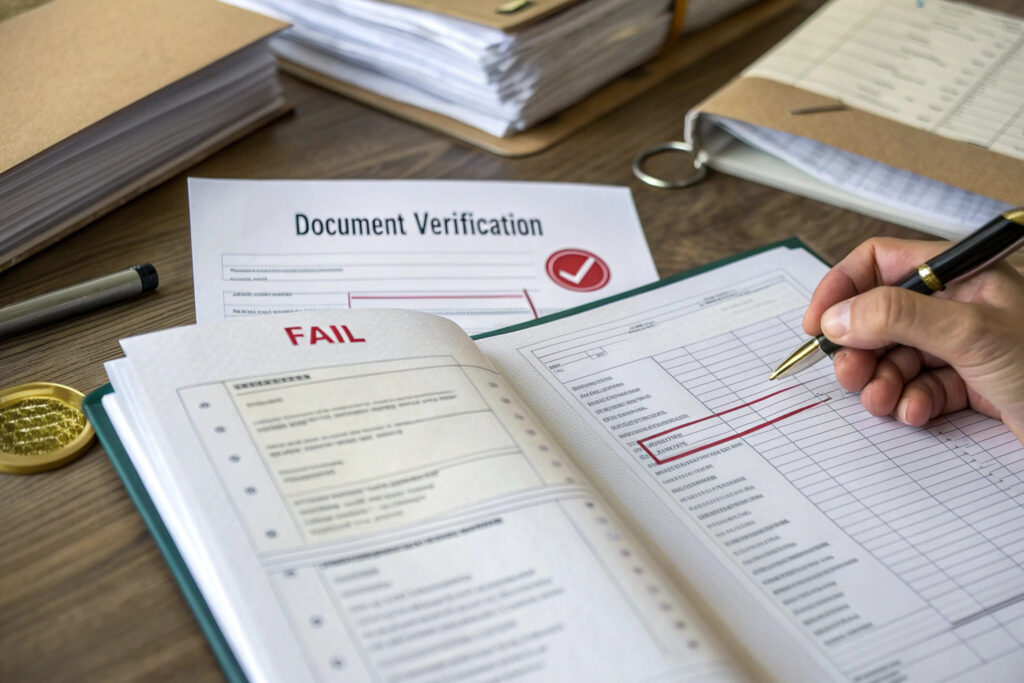
A factory with a disciplined quality system performs a pre-inspection documentation audit before the third-party inspector arrives. An internal quality assurance person reviews the packing list against the physical cartons. They verify that the carton markings are correct. They assemble the compliance documentation package and check that all certificates are valid. This internal audit catches and corrects documentation errors before they become inspection failures. I conduct this internal pre-audit on every shipment that leaves Global-Caps. It is a simple, effective practice that prevents a significant percentage of final inspection failures.
What Role Does the Purchase Order Play in the Inspection?
The purchase order is the master reference document for the inspection. The inspector checks the product against the PO specifications, not against the buyer's informal emails or WhatsApp messages. If a specification change was agreed upon verbally but not updated in the PO, the inspector will flag the product as non-conforming.
This is a critical discipline for buyers. Every specification change must be documented in a revised purchase order or a formal amendment. A factory that produces to an outdated specification because the buyer "mentioned it on a call" is at risk of inspection failure. The documentation discipline protects both parties.
How Can a Buyer Use Inspection Failure Data to Improve Their Sourcing Process?
An inspection failure is a crisis, but it is also a source of valuable data. The failure report identifies the specific defects, their quantities, and their classification. This data tells you exactly where your supplier's quality system is breaking down. A smart buyer uses this data to drive systemic improvement, not just to resolve the immediate shipment crisis.
If the failure is driven by embroidery placement defects, the root cause is likely a training or equipment maintenance issue in the embroidery department. Your corrective action request to the factory should require them to retrain their hooping operators, recalibrate their embroidery machines, and implement an inline placement check every two hours. If the failure is driven by color shading, the root cause is a material management failure. Your corrective action request should require the factory to implement incoming fabric shade banding and to provide you with a shade continuity report before cutting. The failure data allows you to target your corrective action precisely, rather than sending a generic "improve your quality" message.
Over multiple orders, you can trend the inspection data by supplier. A supplier whose inspection failure rate is increasing is deteriorating. A supplier whose failure rate is consistently low is a valuable partner. This data informs your sourcing decisions. You allocate more volume to the high-performing suppliers and reduce volume or exit the low-performing suppliers. This is data-driven supplier management, and it is the standard practice of professional sourcing organizations.

How Should a Corrective Action Report Be Structured?
A corrective action report is a formal document you send to the factory after an inspection failure. It should include the inspection report reference and date. A summary of the failure, including the defect categories and quantities. A root cause analysis section, where the factory must identify the root cause of each defect category, not just the symptom. A corrective action section, where the factory details the specific actions they will take to prevent recurrence. A verification section, where the factory specifies how they will verify the effectiveness of the corrective actions. And a commitment to re-inspect the reworked or re-produced goods at the factory's expense.
I respond to CARs from clients seriously and thoroughly. A factory's response to a CAR tells you a great deal about their quality culture. A factory that blames the buyer, the material supplier, or "unavoidable circumstances" is not taking responsibility. A factory that honestly identifies the root cause, implements a specific process change, and invites a follow-up audit is a factory worth keeping.
Can a Failed Inspection Ever Be Resolved Without a Total Rework?
In some cases, yes. If the failure is due to a correctable defect, such as loose threads or missing hangtags, the factory can rework the shipment under the inspector's supervision. The inspector will witness the rework, re-inspect the affected cartons, and issue a revised report. This is called an "inspection with rework." It is faster and less costly than a full shipment rejection.
If the failure is due to an uncorrectable defect, such as a wrong fabric or a permanent color shading issue, rework is not possible. The shipment must be rejected, and the goods must be re-manufactured or the buyer must accept a concession. A concession is a formal agreement where the buyer accepts the non-conforming goods, usually at a discounted price. Concessions should be rare and formally documented. A pattern of concessions indicates a factory that is not capable of meeting the specification.
Conclusion
Third-party hat inspections fail at the final stage for reasons that are known, measurable, and largely preventable. The most frequent product defects are embroidery placement drift, color shading, assembly workmanship failures, and trimming errors. The most frequent packaging and labeling failures are incorrect labels, missing hangtags, and carton marking errors. The most frequent documentation failures are quantity discrepancies and missing test reports. Each of these failures has a root cause in a weak process control: inadequate operator training, skipped machine maintenance, poor incoming material inspection, and lack of a pre-shipment documentation audit.
A final inspection failure is a symptom of a factory that does not have robust in-line quality control. The best factories do not wait for the third-party inspector to find defects. They find and fix defects at every stage of production, so that by the time the inspector arrives, the result is a foregone conclusion.
If you are tired of the stress and cost of final inspection failures, I invite you to experience a different quality culture at Global-Caps. Our internal quality system is designed to prevent the common failure modes before the third-party inspector arrives. We conduct pre-inspection internal audits on every shipment. We provide our clients with in-line production updates and inspection data so there are no surprises. Reach out to our Business Director, Elaine, at elaine@fumaoclothing.com to discuss your quality requirements and how we can build a sourcing program that delivers consistent, inspection-ready shipments, order after order. Let's make the red "FAILED" stamp a thing of the past.