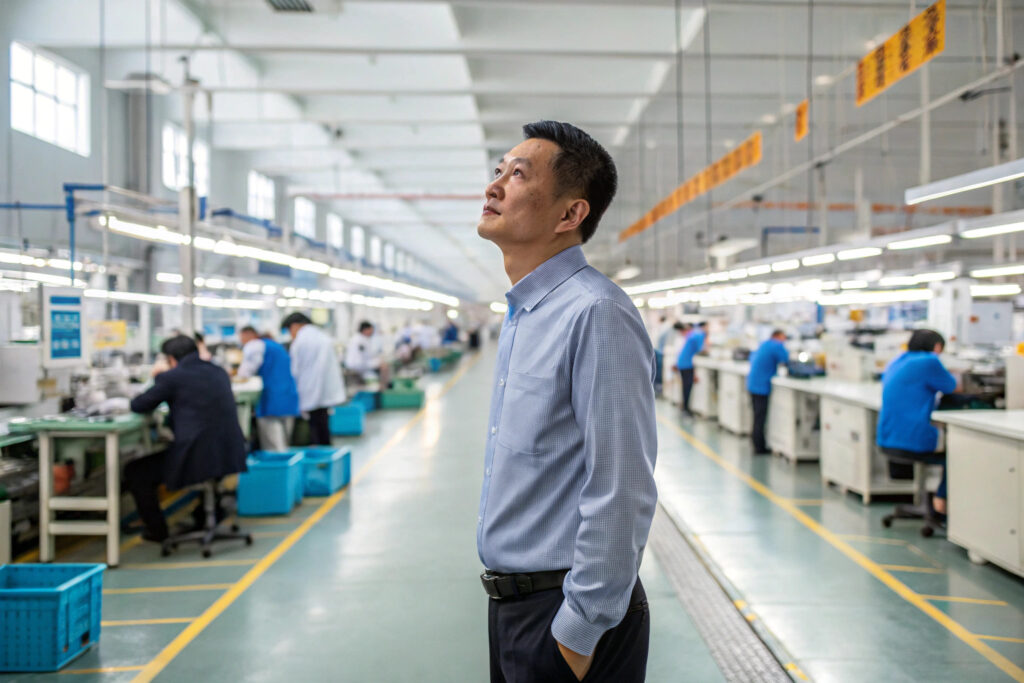
I received a distressed message from a startup brand owner in Toronto last month. She had paid a 50% deposit to a supplier she found on Alibaba for 2,000 custom embroidered snapbacks. The supplier had a beautiful website, a responsive salesperson, and a glossy catalog. The sample arrived, and it was perfect. She wired the deposit. Then the problems started. The production update emails went unanswered for two weeks. When she finally reached the salesperson, he blamed a "factory delay." She asked for the factory's contact information to speak to them directly. He refused. She asked for photos of the production in progress. He sent a blurry image of a few caps on a table. The delivery deadline passed. The caps arrived three weeks late, with inconsistent stitching, off-color embroidery, and a chemical smell. She had no factory address to send an inspector to. She had no legal leverage. Her "supplier" was a trading company. The real factory was a mystery.
The hidden risks of ordering custom hats from a trading company are a lack of production transparency that prevents you from verifying quality, a markup of 15% to 30% on the factory price that reduces your margin, zero control over which sub-contractors actually make your hats, an inability to audit the factory's social compliance or chemical certifications, and a communication chain that inserts a middleman between your design feedback and the production floor, causing errors, delays, and misinterpretations. The trading company does not manufacture anything. It sources your order from a network of factories, often the cheapest available at the time. You pay a premium for a service that hides the factory from you. The sample you approved may have been made by a skilled sample room, not the bulk production factory. The certifications you requested may be borrowed from a different factory. The delivery date you were promised is a guess, not a commitment from the factory's production planner.
I have competed with trading companies for twenty years. I know their model because I have seen the consequences walk through my door as new clients. I want to share the specific risks, the price structure, the quality control gaps, and the communication failures that make trading companies a high-risk choice for custom hat orders. This is the knowledge that protects your brand from a supply chain you cannot see.
Why Can't a Trading Company Guarantee Which Factory Makes Your Hats?
A trading company is a sourcing agent. It does not own a factory. It does not employ production workers. It does not have a cutting table, a sewing line, or an embroidery machine. It has an office, a sales team, and a network of factories that it uses to fulfill orders. When you place an order with a trading company, you do not know which factory in its network will receive your order. The trading company may not know either, until it solicits quotes from its network after receiving your deposit. The factory that made the beautiful sample may not be the factory that makes the bulk order. The factory that made your last order may not be the factory that makes your next order. The trading company shops your order around. The factory selection is driven by price and availability, not by a consistent production partnership. This is the fundamental opacity of the trading company model.
I have seen the consequences of this opacity repeatedly. A brand orders 1,000 caps. The sample is stitched by a skilled sample room that specializes in perfect single units. The bulk order is routed to a high-volume, low-cost factory that specializes in speed, not precision. The bulk caps do not match the sample. The brand complains. The trading company apologizes and offers a discount on the next order. The brand never knows which factory made the defective caps. The brand cannot audit the factory to determine the root cause. The brand cannot build a relationship with the factory to improve quality over time. The brand is trapped in a cycle of inconsistent quality, managed by a middleman who has no direct control over production. The supply chain transparency requirements of modern retail demand that brands know their manufacturers. A trading company model makes this transparency impossible.
The factory opacity is the root cause of most trading company risks. It creates a chain of uncertainties that affect quality, compliance, and communication. The price you pay is the first and most visible consequence of this opacity.
How Does the Trading Company's Factory Sourcing Process Create Quality Inconsistency?
The trading company's factory sourcing process is a bidding process. The trading company sends your tech pack to several factories in its network. Each factory quotes a price and a delivery time. The trading company selects the factory that offers the best combination of low price and acceptable delivery. This factory may be different for each order. The factory that produced your order in March may be busy in June, so the trading company selects a different factory. The new factory has never seen your product. It has no experience with your quality standards. It has no relationship with your brand. It interprets your tech pack from scratch. The result is batch-to-batch quality variation that is inherent in the sourcing model. A direct factory relationship eliminates this variation because the same production team produces every order, learns your standards, and improves over time. The supplier sourcing variability is a well-documented risk in multi-tier supply chains.
What Happens When a Trading Company Changes Factories Mid-Production?
A trading company may change factories mid-production if the original factory misses a deadline, demands a higher price, or has a quality dispute with the trading company. The partially finished order is physically moved from Factory A to Factory B. Factory B has different machines, different worker skills, and different quality standards. The transition is rarely seamless. Components get lost. The thread color on the second batch does not match the first batch. The sewing quality changes visibly. The brand receives a shipment with two different quality levels in the same cartons. The brand may never be told that the factory changed. The trading company presents the shipment as a single batch and hopes the brand does not notice the inconsistency. A direct factory relationship prevents this because there is no intermediary to switch production without your knowledge. The supply chain disruption management best practices emphasize the importance of direct visibility into production transitions.
What Is the Real Price Difference Between a Trading Company and a Direct Factory Order?
A trading company is a for-profit business. It must buy the hats from the factory at the factory's wholesale price and sell them to you at a higher price to cover its operating costs and profit margin. This markup is the trading company's business model. It is not a hidden fee. It is the entire purpose of the trading company's existence. The markup on custom hat orders typically ranges from 15% to 30% of the factory price, depending on the order volume, the product complexity, and the trading company's overhead. On a $3.00 factory price cap, the trading company markup is $0.45 to $0.90 per unit. On a 2,000-unit order, that is $900 to $1,800 in additional cost. This markup does not buy you better quality. It does not buy you better materials. It buys you the trading company's service, which includes sourcing, communication, and logistics coordination. Whether that service is worth the premium depends on your specific needs, but you should know the cost clearly.
I quote my clients a direct factory price. There is no intermediary markup. The price I quote covers the materials, the labor, the factory overhead, and my profit. When a client compares my price to a trading company's price, the difference is the trading company's margin. The client can invest that difference in better materials, more complex decoration, or a higher retail margin. The direct versus intermediary pricing comparison is a fundamental sourcing calculation that every brand should perform.
The unit price markup is the direct financial cost. The indirect financial costs of the trading company model include the inability to negotiate material upgrades, the hidden logistics fees, and the lost margin opportunities. The price comparison should include these indirect costs.

How Does the Trading Company Markup Affect Your Ability to Upgrade Materials?
A direct factory relationship allows you to negotiate material upgrades transparently. You want an 8-ounce cotton twill instead of a 6-ounce? The factory quotes the exact additional cost per yard, and you see the price difference clearly. You want an OEKO-100 certified sweatband? The factory provides the certified component cost. With a trading company, the material upgrade request goes through the salesperson to the factory. The factory quotes an upgrade price to the trading company. The trading company adds its markup to that upgrade price and quotes it to you. The upgrade costs more through a trading company because the markup is applied at every layer. This markup structure discourages material upgrades and encourages you to accept the trading company's standard, often lower-quality, specifications. The cost transparency in sourcing is a key advantage of direct factory relationships.
Are There Hidden Logistics Fees That Trading Companies Add to Shipments?
A trading company often handles the logistics as part of its service. It arranges the freight forwarding, the customs clearance, and the delivery. For this service, it may add a logistics management fee, a documentation fee, or a currency exchange margin that is not disclosed in the initial quote. The final invoice may include line items such as "handling charge," "consolidation fee," or "agent fee" that were not discussed. A direct factory can also arrange logistics, but the charges are typically more transparent because the factory has a direct relationship with the freight forwarder. I provide my clients with the forwarder's original invoice. I do not add a logistics markup. The freight cost transparency is a standard expectation in professional logistics management.
How Does a Trading Company Communication Chain Cause Design Errors?
Every time your design instruction passes through an additional person, the risk of miscommunication increases. This is the "telephone game" effect. The brand owner describes the design to the trading company salesperson. The salesperson translates the description into an email or a purchase order in a different language. The salesperson sends it to the factory's salesperson. The factory's salesperson translates it for the factory's production manager. The production manager explains it to the embroidery operator or the sewing line supervisor. There are four or five communication handoffs between your vision and the person executing it. Each handoff is an opportunity for error. A direct factory relationship reduces the handoffs to two: you communicate directly with the factory's project manager, who communicates directly with the production team. The error rate drops dramatically.
I have seen trading company communication errors produce logos in the wrong color, caps in the wrong size, and labels in the wrong language. The error is discovered at the final inspection, or worse, by the customer. The blame game begins. The trading company blames the factory. The factory blames the trading company's unclear instructions. The brand owner is left with a shipment of defective caps and no clear path to resolution. The communication chain risks in multi-party projects are well-documented. Reducing the number of communication nodes is a fundamental risk mitigation strategy.
The communication chain risk is the cause of specific design errors. The most damaging of these errors is the sample mismatch, where the approved sample is not representative of the bulk production. This error is almost always a result of a broken communication chain.

Why Is the Sample-to-Bulk Mismatch More Common With Trading Companies?
The trading company often has a dedicated sample room or a preferred sample factory that produces the pre-production sample. This sample room is skilled at making one perfect unit. The bulk order is then sent to a different, higher-volume, lower-cost factory. The bulk factory may not have the same fabric stock, the same thread colors, the same embroidery digitizing file, or the same sewing machine settings as the sample room. The bulk product does not match the sample. The brand approved a sample from one production source and received bulk goods from a different source. A direct factory produces the sample and the bulk in the same facility, using the same materials, the same machines, and the same workers. The sample is a genuine preview of the bulk production. The sample-to-bulk consistency is a core quality assurance principle that is difficult to achieve in a multi-source trading company model.
How Can Language Barriers Amplify the Trading Company Communication Problem?
If the brand owner speaks English, the trading company salesperson speaks English and Chinese, and the factory worker speaks only Chinese, the design instructions must pass through a language translation step. Technical terms like "merrow edge," "buckram," "satin stitch," and "twill tape" may not have direct, universally understood translations. The trading company salesperson may not have deep technical knowledge of hat manufacturing. They may paraphrase, simplify, or mistranslate the instruction. The factory worker receives an instruction that is slightly different from the original. The error is baked into the production. A direct factory that assigns an English-speaking, technically knowledgeable project manager to your account eliminates the translation step. The instruction travels from you to the production floor in one language, with one person responsible for accuracy. The technical translation in manufacturing is a specialized skill that is not always present in trading company sales teams.
Can a Trading Company Provide Valid OEKO-TEX or Social Compliance Certifications?
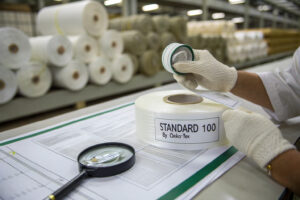
A trading company does not manufacture products. Therefore, it cannot hold a manufacturing certification like OEKO-TEX Standard 100 in its own name. The certification is issued to the factory that produces the goods. The trading company can provide you with a copy of a factory's certificate, but this certificate has significant limitations. The certificate may belong to a factory that is not the one producing your order. The certificate may be expired. The certificate's product scope may not cover your specific product. The certificate may be for a factory that the trading company used once, two years ago, for a different client. The trading company has no legal obligation to ensure that the factory actually making your caps holds a valid certification. The trading company's incentive is to provide you with a certificate that looks acceptable so you will place the order. Verifying the certificate's validity for your specific order is your responsibility, and it is difficult when you do not know which factory is making your hats.
I hold our OEKO-TEX certificate in my company's name, for our factory address, with a product scope that lists headwear. When a client asks for the certificate, I provide the original document, the certificate number, and a link to the public verification database. The client can verify the certificate in 60 seconds and know that it covers the exact factory producing their order. This transparency is only possible in a direct factory relationship. The certification authenticity in supply chains is a critical verification step that trading company customers often skip or fail to perform correctly.
The certification risk extends to social compliance audits. A trading company cannot provide a valid social compliance audit report for a factory it has not yet selected. The audit report provided at the quotation stage may be for a factory that will not produce your order.
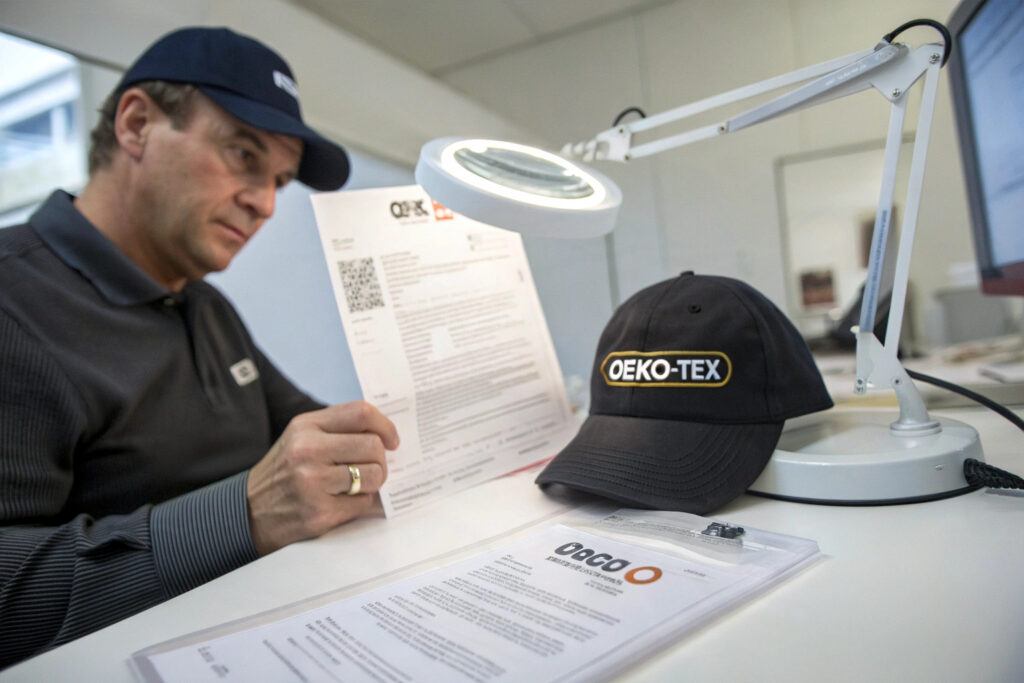
How Can You Verify That a Certificate Belongs to the Factory Making Your Caps?
You can only verify this if you know the identity and address of the factory making your caps. A trading company that refuses to disclose the factory identity makes this verification impossible. A trading company that discloses the factory identity allows you to verify the certificate. Enter the certificate number on the OEKO-TEX Label Check website. Check the certificate holder name. Does it match the disclosed factory name? Check the certificate holder address. Does it match the disclosed factory address? If the trading company refuses to disclose the factory, you cannot perform this check. Assume the certificate is not valid for your order. The certificate verification process is simple and public. The barrier is the trading company's opacity, not the verification process.
Some trading companies use a "borrowed" certificate. They have a relationship with a certified factory and they use that factory's certificate for all their orders, regardless of which factory actually produces the goods. The certificate is a sales document, not a production guarantee. The caps you receive may be made in an uncertified factory with uncertified materials. The OEKO-TEX hangtag on your cap is fraudulent. If your customer tests the cap and finds restricted chemicals, your brand is liable. The trading company will disclaim responsibility. The borrowed certificate is a serious ethical and legal risk. The certificate fraud in textile supply chains is a known problem that brands must actively guard against.
Conclusion
The choice between a trading company and a direct factory is a choice between opacity and transparency. The trading company offers convenience, a glossy catalog, and a responsive salesperson. It hides the factory, the production process, the cost breakdown, and the certification chain behind a wall of intermediary communication. The brand that orders from a trading company pays a 15% to 30% premium for this opacity and accepts the risks of inconsistent quality, design miscommunication, and invalid certifications. The direct factory offers transparency. The brand knows the factory address. The brand communicates directly with the production team. The brand pays the factory price. The brand can audit the factory, verify the certifications, and build a long-term quality improvement partnership.
I am a factory. I own my production floor, my embroidery machines, and my cutting tables. I employ my workers. I hold my certifications in my own name. When a client asks me a question, the answer comes from the person who will actually make the hats. When a client has a problem, I fix it on the production line, not through a chain of emails to an unknown workshop. This directness is not just a marketing slogan. It is the fundamental structural advantage of the factory model. The trading company is a middleman. The factory is the source. In a world where supply chain transparency is increasingly required by law and demanded by consumers, the source is the only safe place to buy.
If you have been burned by a trading company, or if you want to avoid that experience entirely and build a direct relationship with the factory that makes your hats, let us show you what transparency looks like. Our Business Director, Elaine, can provide a video tour of our production floor, a copy of our OEKO-100 certificate with our factory name and address, and a direct quote with no intermediary markup. Email her at elaine@fumaoclothing.com and request the Factory Transparency Package. We will show you exactly where your hats will be made and who will make them. That is the direct factory promise.