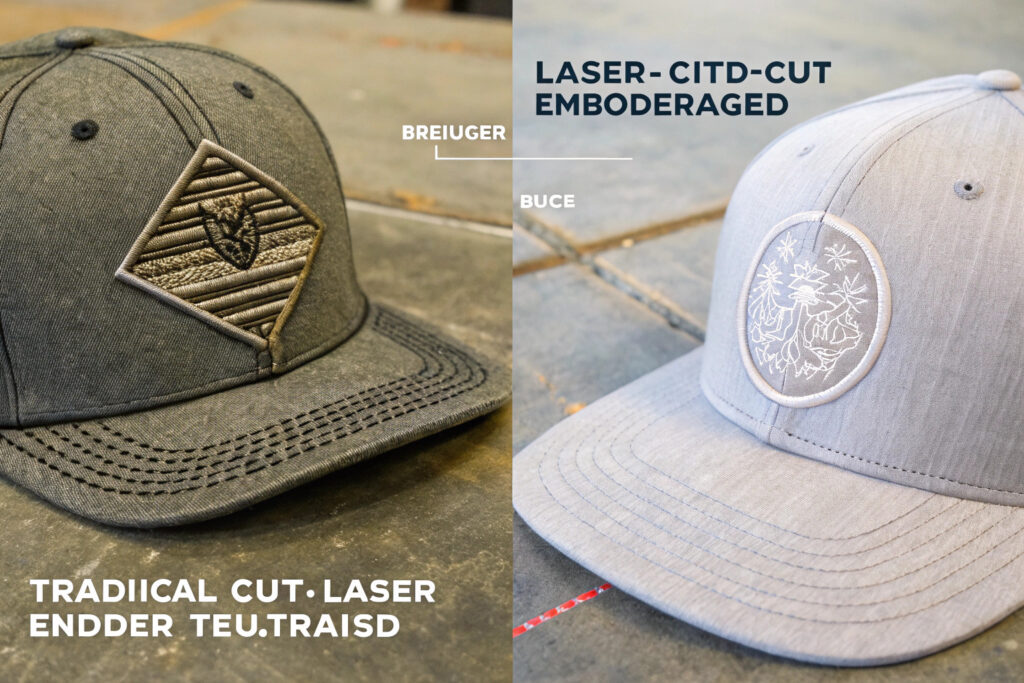
Your new cap collection needs a front patch. The design is intricate: a bold geometric logo with fine cut-out details and sharp, angular edges. You request samples. The first is a traditional embroidered patch. The logo is rendered in thick thread, the fine details are filled in and lost, and a heavy merrow border frames the whole thing. It looks like a classic scout badge, not the modern, minimalist statement you envisioned. The second sample is a laser-cut patch. The edges are impossibly crisp. The cut-out details are precise, showing the cap fabric beneath. The surface is smooth, almost sculptural. The patch looks like it grew from the cap itself, not like it was sewn on top. You have just discovered the fundamental aesthetic and functional divide between two patch technologies.
The choice between a laser-cut patch and a traditional embroidered patch is not just about looks. It is about manufacturing precision, material behavior, durability, and production economics. I run Global-Caps, and I have produced both patch types for brands across the fashion and promotional spectrum. Each has its place. But the advantages of laser-cut patches for modern, detail-driven designs are substantial and often misunderstood. In this article, I will break down the technical, aesthetic, and practical advantages of laser-cut patches so you can make an informed decision for your next cap project.
What Is the Fundamental Manufacturing Difference Between Laser-Cut and Embroidered Patches?
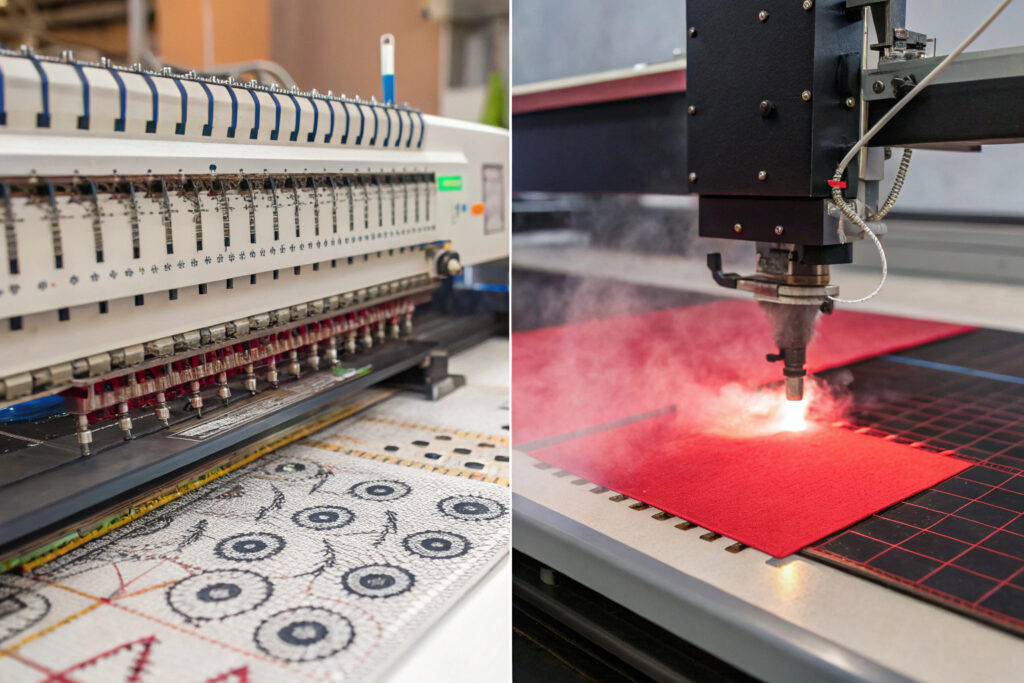
An embroidered patch is an additive process. It builds the design by adding thread onto a fabric substrate. A digitized embroidery file drives a multi-head machine that stitches the background fill, the design elements, and the border. The thread is the structure and the surface. The quality of the patch depends on the digitizer's skill, the thread density, the thread quality, and the tension control of the embroidery machine. After embroidery, the patch is cut from the bolt of fabric, typically with a die press or a hot knife, and the edge is finished with a merrow overlock border or a satin stitch border. This border finishing is a separate, labor-intensive step.
A laser-cut patch is a subtractive process. The patch begins as a solid sheet of material, typically a synthetic like polyurethane, thermoplastic polyurethane, silicone, or a dense felt. The design is created by a computer-controlled laser beam that vaporizes or melts the material along a precise vector path. The laser cuts the outer perimeter of the patch, creates any internal cut-out holes, and can engrave surface textures and details at varying depths. There is no thread, no digitized stitch file in the traditional sense, and no separate border finishing step. The edge is created by the laser itself, and it is sealed by the heat of the laser. The entire process is digital-to-physical, driven by a vector design file, with minimal manual intervention.
This fundamental difference in manufacturing philosophy has cascading consequences. The additive embroidery process is limited by thread physics: minimum feature size, stitch density limits, and edge roughness. The subtractive laser process is limited by the laser's spot size and the material's thermal properties. The laser spot can be as small as 0.1mm, allowing for far finer detail than embroidery thread. The laser-cut edge is smooth and sealed, not rough and fibrous. The manufacturing tolerance of a laser-cut patch is an order of magnitude tighter than an embroidered patch.
How Does the Digital-to-Physical Workflow Differ?
An embroidered patch requires a digitized stitch file. The design must be interpreted by a digitizer who decides stitch types, stitch directions, and thread colors. This is a skilled manual interpretation step. Two digitizers given the same artwork will produce different stitch files, and the physical patches will look different. There is artistic translation involved.
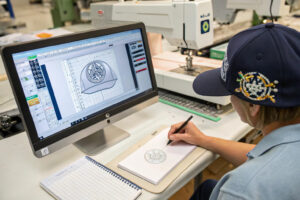
A laser-cut patch requires a vector design file, typically an .ai, .eps, or .dxf format. The laser cutter reads the vector paths directly. There is no interpretation step. The laser follows the math. If the vector file is correct, the cut patch will be geometrically identical every time. This direct digital-to-physical workflow eliminates the human variability of digitizing. It also allows for much faster prototyping. A new design can be laser cut within minutes of the vector file being created. An embroidered patch prototype requires a digitizer to program the file and an embroidery machine to sew it out, a process that takes hours or days.
What Materials Are Used for Each Patch Type?
Embroidered patches are made of thread on a fabric backing, typically cotton twill, polyester felt, or a non-woven stabilizer. The material palette is essentially thread and fabric. The colors come from the dyed thread, which has a specific, limited color gamut.
Laser-cut patches open up a much wider material palette. PU and TPU are the most common, offering a smooth, rubber-like texture that can be colored in any Pantone shade. Silicone patches provide a soft, matte, high-grip surface ideal for athletic wear. Felt patches offer a soft, woolly texture with a different aesthetic. Reflective materials can be laser-cut for safety applications. Cork, genuine or synthetic leather, and even thin wood veneers can be laser-cut for unique premium patches. Each material has a different hand feel, durability profile, and aesthetic character. The laser-cut process allows a hat designer to choose the patch material based on the desired tactile and visual experience, not just the thread color.
What Aesthetic and Detail Advantages Do Laser-Cut Patches Offer?
The most immediate advantage of a laser-cut patch is its aesthetic. It communicates precision, modernity, and technical sophistication. An embroidered patch communicates tradition, craft, and texture. Neither is inherently better, but for brands that want to project a clean, contemporary, or minimalist image, the laser-cut patch is a powerful design tool.
The level of detail achievable with laser cutting far exceeds what is possible with embroidery. A laser can cut a sharp, internal 90-degree corner. Embroidery thread rounds off sharp corners because the thread has a physical width. A laser can create small cut-out voids in a design, islands of cap fabric showing through the patch. Embroidery cannot create true voids; the background fill thread covers the entire patch area. A laser can engrave fine surface lines, micro-textures, or even braille-like dots onto the patch surface. Embroidery creates surface texture through stitch variation, but the resolution is limited by the needle and thread. A laser-cut patch can include a logo that is essentially a stencil, the design is formed by the negative space of the cut-outs, revealing the cap fabric beneath. This creates a striking, integrated look where the patch and the cap are visually unified.
The edge finish is another defining aesthetic feature. An embroidered patch edge is a merrow border, a thick, rounded, rope-like edge that adds about 2mm to 3mm to the perimeter and creates a distinct visual frame. A laser-cut edge is flush with the patch surface, precisely following the design contour, and is often slightly beveled or sealed with a subtle gloss line from the laser heat. This edge disappears visually. The patch seems to emerge directly from the cap fabric. For a minimalist logo, this frameless, flush-edge aesthetic is far more contemporary.
How Does Thickness and Profile Compare?
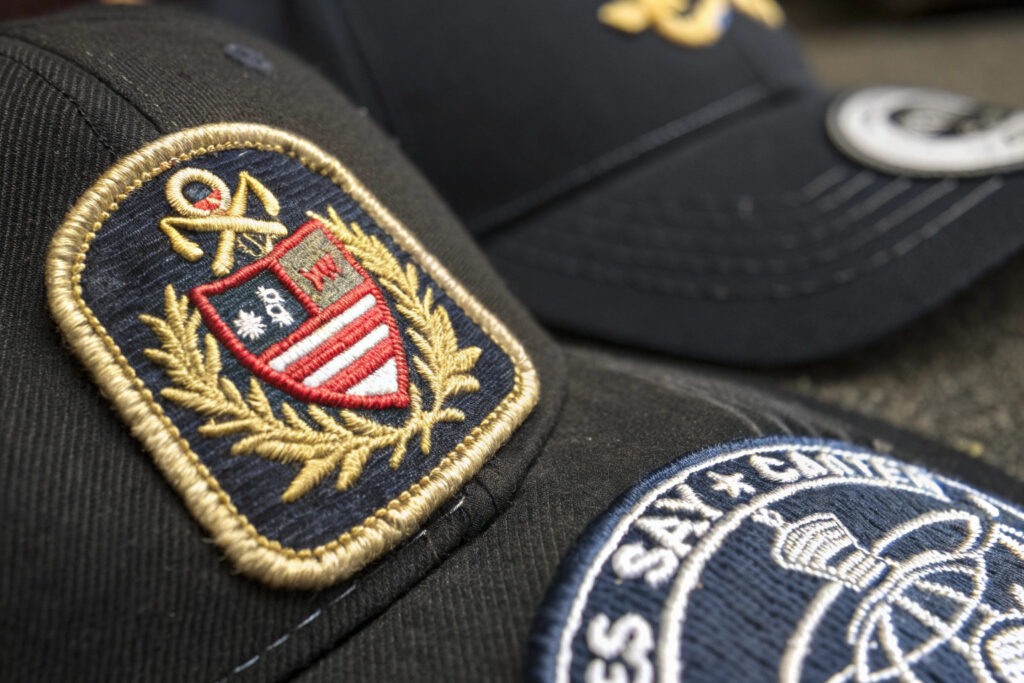
An embroidered patch has inherent thickness and bulk. The thread layer, the underlay stitches, and the fabric backing combine to create a patch that is typically 1.5mm to 3mm thick. This thickness gives the patch a proud, raised profile that catches the light and stands away from the cap. It feels substantial.
A laser-cut patch can be thin, as thin as 0.5mm for a lightweight PU film, or thick, up to 3mm or more for a molded silicone or layered construction. The thickness is a material choice, not a process limitation. A thin laser-cut patch hugs the cap fabric closely, moving and flexing with it. It does not feel like a separate object attached to the cap; it feels like part of the cap. A thick laser-cut silicone patch can be deeply sculptural, with 3D topography created by multiple layers or by engraving the laser at different depths. The profile control with laser-cut patches is more versatile.
Can Laser-Cut Patches Achieve Multi-Color Designs?
An embroidered patch achieves multiple colors by changing the thread color. A single embroidered patch can include a dozen or more thread colors, each precisely placed. This is a strength of embroidery: multi-color designs are straightforward, if the number of colors is kept within the machine's needle count.
A laser-cut patch is typically a single piece of material with a single color. Multi-color designs can be achieved through several methods. The most common is to laser-cut multiple interlocking pieces from different colored materials and assemble them like a jigsaw puzzle on the cap. This creates a striking, segmented patch. Another method is to use a base patch with a laser-engraved recess, and then fill the recess with a different colored material, a technique called inlay. A third method is to print a multi-color design onto the patch material using UV printing, and then laser-cut the printed sheet. UV printing on laser-cut patches produces vibrant, full-color graphics with the precision edge of laser cutting. This hybrid approach combines the color versatility of printing with the structural precision of laser cutting.
What Are the Durability and Performance Advantages of Laser-Cut Patches?
A patch on a cap lives a hard life. It is exposed to sun, sweat, friction from backpacks and car headrests, and repeated washing. Durability is a functional requirement, not just an aesthetic preference. Laser-cut patches have several inherent durability advantages over embroidered patches due to their material and construction.
An embroidered patch is made of thousands of individual thread loops. If one loop is snagged by a zipper or a sharp edge, it can pull loose. The thread can fray. The merrow border can unravel if the overlock thread breaks. Repeated abrasion against the back of a chair can wear away the raised thread surface, causing the design to become faded and thin over time. An embroidered patch is durable, but it has a finite mechanical life determined by the thread's resistance to abrasion and snagging.
A laser-cut patch is a monolithic piece of material. There are no individual fibers to snag. The edge is a solid, sealed wall of material, not a wrapped thread. Abrasion wears away the material surface uniformly, like a tire wearing down. There is no catastrophic single-thread failure. A high-quality TPU or silicone laser-cut patch can outlast multiple embroidered patches in abrasive environments. The surface of a laser-cut patch can also be easily wiped clean of dirt, sweat, and sunscreen. An embroidered patch's textured thread surface traps dirt and is difficult to clean. For sports caps, workwear caps, and caps intended for outdoor use, the cleanability and snag-resistance of laser-cut patches are significant functional advantages.
Color fastness is another durability dimension. Embroidered thread can fade over time with UV exposure and washing, especially certain dye colors. A laser-cut patch made from UV-stabilized TPU or pigment-colored silicone will retain its color far longer. The pigment is distributed throughout the entire material volume, not just on the surface of a thread. As the surface slowly abrades, fresh, identically colored material is exposed. The patch maintains its color intensity for the life of the product.
How Do the Patches Behave After Repeated Washing?
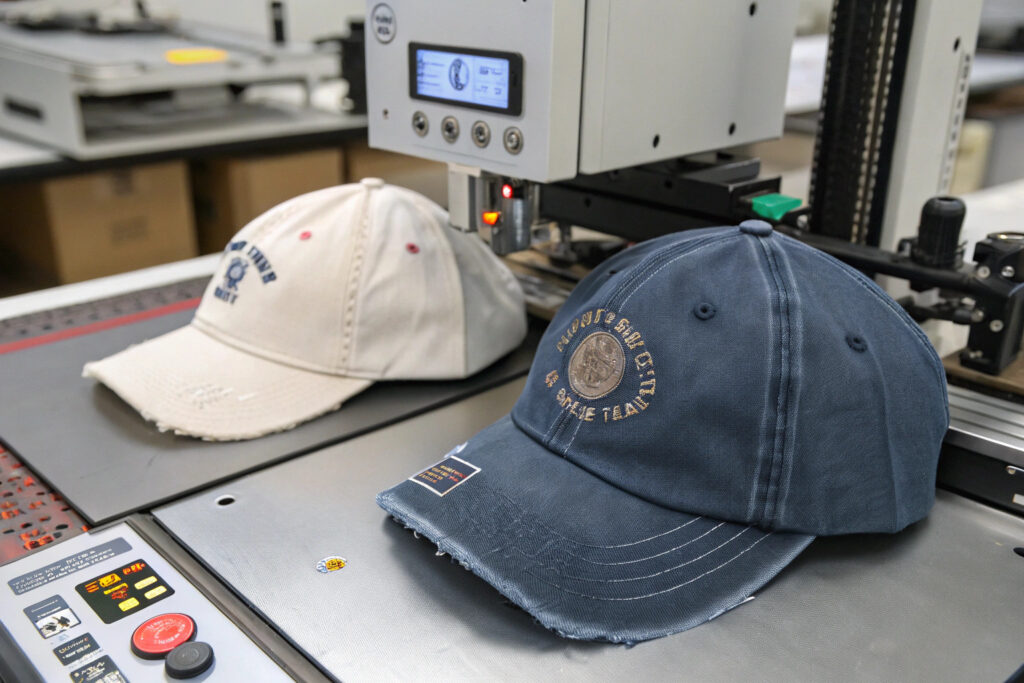
Repeated washing and drying is a harsh test for any garment embellishment. An embroidered patch, if not properly backed with a cut-away stabilizer, can pucker the cap fabric as the cotton crown shrinks and the patch backing does not. The thread itself is dimensionally stable polyester, but the fabric it is sewn to is not. The patch can also develop a halo of loose fibers from the fabric backing along the merrow edge.
A laser-cut patch, being a solid, impermeable film, does not absorb water. It does not swell, shrink, or change dimension in the wash. The bond between the patch and the cap, if heat-sealed or sewn, remains stable. The smooth surface sheds water and detergent quickly. The patch dries rapidly. There is no fabric backing to fray. For a cap that will be washed frequently, an athletic cap, a kids' cap, a work cap, the wash-down performance of a laser-cut patch is superior.
What Is the Difference in UV Resistance and Fading?
UV radiation from sunlight breaks down the chemical bonds in dyes and polymers. A traditional embroidered patch uses dyed polyester thread. The dye is on the surface of the fiber. UV exposure causes the dye molecules to degrade, resulting in fading. This is a slow process, but noticeable over a season of outdoor wear.
A laser-cut patch can be made from UV-stabilized materials. TPU formulations exist with built-in UV inhibitors that significantly slow the photodegradation process. Silicone is inherently highly UV resistant. The color in a pigmented TPU or silicone patch is integral to the material, not a surface coating. A silicone patch will show virtually no color change after years of sun exposure. For outdoor brands, workwear brands, and sports brands, the UV stability of laser-cut patches is a compelling technical advantage.
What Are the Production Cost and Lead Time Differences?
The cost and lead time comparison between laser-cut and embroidered patches is not a simple "one is cheaper" equation. It depends on the design complexity, the order quantity, and the material. Understanding the cost drivers allows you to make the right economic decision for your project.
The primary cost driver for an embroidered patch is the stitch count. More stitches mean more machine time, more thread, and more labor for trimming and finishing. A large, densely embroidered patch with many thread colors can have a high stitch count and a high cost. The digitizing setup cost is a one-time fee per design. The per-patch cost decreases as the order quantity increases, but the thread and machine time costs are linear. The merrow border finishing is a manual step that adds labor cost.
The primary cost driver for a laser-cut patch is the material cost and the laser machine time. High-performance TPU or silicone sheet material is more expensive per square meter than embroidery thread. However, the laser cutting process is extremely fast. A complex design that would take 15 minutes to embroider might be laser-cut in 30 seconds. The per-patch labor cost is dramatically lower for laser cutting, as the machine runs unattended and there is no manual finishing step. The setup cost for laser cutting is essentially zero, as it reads the vector file directly. For small order quantities, laser-cut patches are often cheaper because there is no digitizing setup fee to amortize. For very large quantities, the material cost of laser-cut patches may make embroidered patches more economical, as thread is a lower-cost consumable than sheet polymer.
The lead time advantage of laser-cut patches is significant for urgent orders. The direct digital workflow eliminates the digitizing step. A vector file can be sent to the laser cutter immediately. Production can begin on the same day. Embroidered patches require a digitizing and sample sew-out approval cycle that typically adds three to five days to the timeline. For a brand that needs caps for a fast-approaching event, the laser-cut patch offers a speed advantage that can be the deciding factor.
How Does Design Complexity Affect the Cost of Each Method?
Design complexity affects the two methods in opposite ways. For embroidery, complexity increases cost. More colors, more fine details, more stitches mean higher cost. The relationship is direct and proportional.
For laser cutting, complexity, within reason, does not significantly increase cost. The laser beam traces the vector path. A complex path with many internal cut-outs takes longer to trace than a simple circle, but the time difference is measured in seconds, not minutes. The material cost is the same whether the laser cuts a simple shape or a complex one from the same sheet area. This makes laser cutting particularly cost-advantageous for highly detailed, intricate designs that would be prohibitively expensive to embroider. If your brand's logo is a complex mandala, a detailed geometric pattern, or an intricate typographic lockup, a laser-cut patch will be both more beautiful and significantly more affordable than an embroidered patch.
What Are the Minimum Order Quantity Differences?
Embroidered patches typically have a minimum order quantity driven by the setup labor. The digitizer must be paid for their time whether you order 10 patches or 10,000. The merrow border machine must be set up. Many patch manufacturers have MOQs of 100 to 300 pieces to cover these fixed costs.
Laser-cut patches can be produced in very small quantities, even single prototypes, because there is essentially no setup. The vector file is loaded, the material sheet is placed in the machine, and the laser cuts. The MOQ for laser-cut patches can be as low as 10 or 20 pieces from some suppliers. This makes laser-cut patches the ideal choice for limited-edition drops, player-exclusive caps for sports teams, influencer collaborations, or any project where the order quantity is small but the design impact must be maximum.
Conclusion
Laser-cut patches offer a distinct set of advantages over traditional embroidered patches that make them the superior choice for many modern cap applications. Aesthetically, they deliver unmatched precision, with razor-sharp edges, intricate cut-out details, and a smooth, contemporary surface that cannot be achieved with thread. Functionally, they outperform embroidered patches in durability, with no threads to snag or fray, a sealed edge that does not unravel, and superior cleanability and UV resistance for active, outdoor use. From a production standpoint, the direct digital workflow eliminates digitizing setup costs and lead time, making laser-cut patches faster to prototype and often more economical for small to medium quantities and highly complex designs.
The choice ultimately depends on the brand's identity. If your brand is traditional, heritage-focused, or craft-oriented, an embroidered patch with its textured, tactile presence and classic merrow border may be the perfect fit. If your brand is modern, technical, minimalist, or detail-focused, a laser-cut patch will communicate those values instantly. The two technologies are not competitors; they are different tools for different creative visions. The key is to understand the capabilities of each and to choose the one that best serves your design.
If you are developing a cap with a patch and want to explore the possibilities of laser-cut technology, I invite you to contact Global-Caps. We have in-house laser cutting capabilities and a wide library of materials, TPU, silicone, felt, reflective, and more. We can take your vector artwork and produce a laser-cut sample for your evaluation, often within 24 hours. Reach out to our Business Director, Elaine, at elaine@fumaoclothing.com with your design concept. Let's turn your logo into a precision-cut emblem that elevates your cap from a simple accessory to a statement of manufacturing excellence.