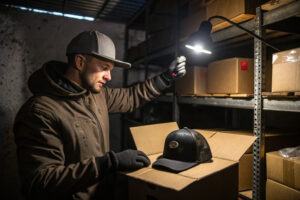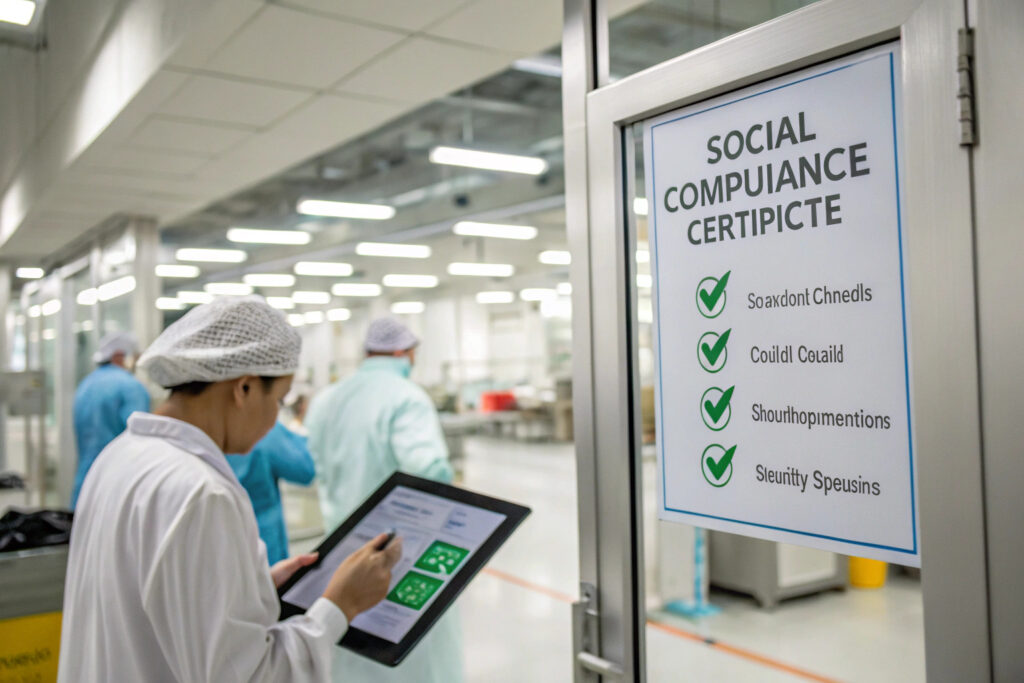
You find a factory with beautiful caps. The price is sharp. The samples are perfect. You place the order. Then your retail buyer asks for the factory's social compliance audit. You forward the request. The factory goes silent for a week. Then they send a blurry, expired certificate from another company. Your buyer rejects it. You lose the shelf space. This nightmare is common. A beautiful product from an invisible sweatshop is a brand liability.
A BSCI factory audit is not a legal requirement for importing caps from China. But it is essential if you sell to major European or American retailers, if you market your brand as ethical, or if you want to sleep peacefully knowing your supply chain is clean. The Business Social Compliance Initiative audit checks for forced labor, safe working conditions, fair wages, and environmental compliance. Without it, you are trusting a stranger with your brand's reputation.
I decided to invest in BSCI certification for my factory five years ago. It was a hard process. It changed how we treat overtime, fire exits, and chemical storage. But it also opened the door to the biggest retail chains in Europe. It is a signal that the factory plays by the rules.
What Exactly Does a BSCI Audit Cover in a Hat Factory?
You hear "BSCI" and think it is just another paper exercise. You assume the auditor walks around for an hour and signs a form. The reality is a two-day interrogation of the factory's soul. The auditor interviews workers in private. They check the payroll software for ghost employees. They measure the brightness of the emergency exit signs.
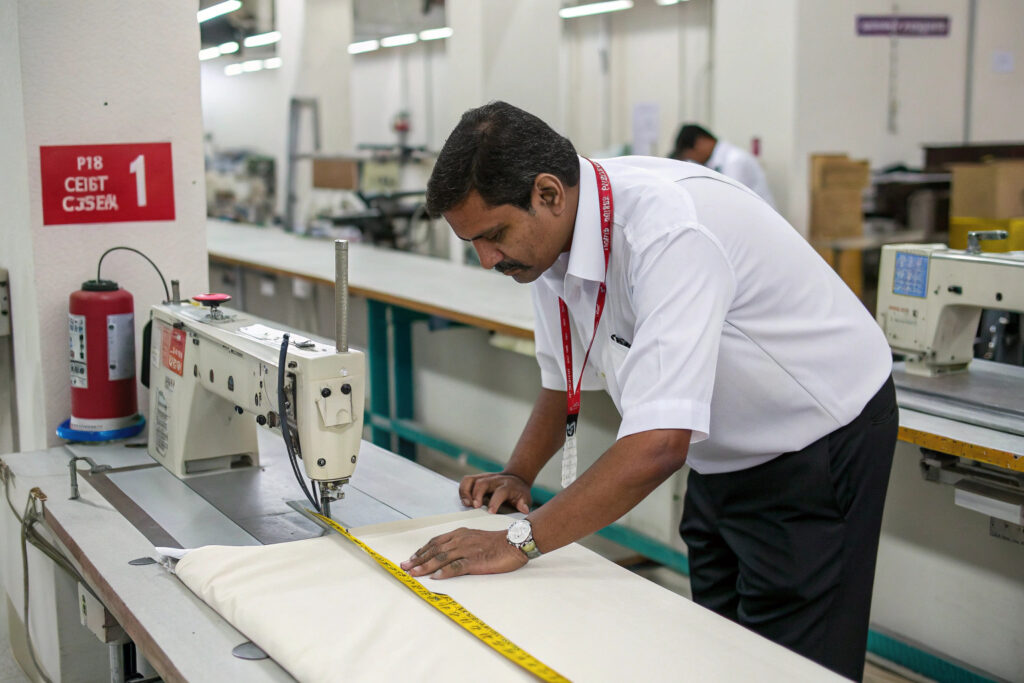
A BSCI audit covers 13 performance areas including social management, workers' involvement, fair remuneration, decent working hours, occupational health and safety, and no child labor. In a hat factory, the auditor inspects the sewing floor for ergonomic chairs, the cutting room for chainmail gloves, and the embroidery station for noise levels. They also check the dormitory if the factory provides housing. The dormitory must have fire alarms and a minimum square footage per worker.
This is not a photo op. It is a deep scan of how the factory treats its people and its environment.
You need to understand the specific stress points in a headwear factory. The auditor walks the same floor our operators walk every day. They look at details a buyer never sees on a video call.
How Does the Auditor Verify Working Hours and Overtime Compliance?
Overtime is the silent killer of social compliance. The market demands fast delivery. The factory pushes the workers. The auditor looks for the double book. One set of timecards for the client. One real set hidden in a drawer.
The BSCI auditor checks the electronic punch-in records. They compare them to the handwritten production logs. They look for "ghost shifts." If the payroll shows 8 hours but the production output is impossible in 8 hours, they dig deeper. They interview workers privately. They ask, "What time did you leave last night?" If the worker says 10 PM but the record says 6 PM, the factory is flagged.
In our factory, we use a biometric attendance system. The auditor can download the raw log file. They scan for consecutive 7-day workweeks. BSCI allows a maximum of 60 hours per week including overtime. One rest day per week is mandatory. We enforce this with a shift schedule lock in our ERP software. The production planning team cannot book a worker on Sunday. The system blocks it. This automated control impresses auditors. It shows the rule is not just a poster on the wall.
What Specific Safety Tests Are Conducted on Hat-Making Machinery?
A sewing machine needle travels at 900 stitches per minute. A cutting bandsaw spins a razor-sharp blade. These tools are dangerous. The auditor treats the factory floor like an accident scene waiting to happen.
The auditor tests the needle guards on the sewing machines. A clear plastic shield must be present to stop the operator's finger from sliding under the needle. The cutting machine must have a two-hand activation switch. This prevents the operator's hand from being on the table when the blade drops. The steam iron station must have a thermostat lock to prevent the water from exceeding a safe temperature and scalding the presser.
I installed automatic blade retraction on our cutting tables. When the operator releases the handle, the blade instantly retracts into the housing. The auditor also tests the earth leakage circuit breakers. A hat factory has a lot of static electricity from the fabric friction. A bad earth can spark a dust fire. We log the resistance test of every machine's ground wire monthly. The safety logbook is the first document the auditor requests.
Why Do European Buyers Demand BSCI Certified Hat Manufacturers?
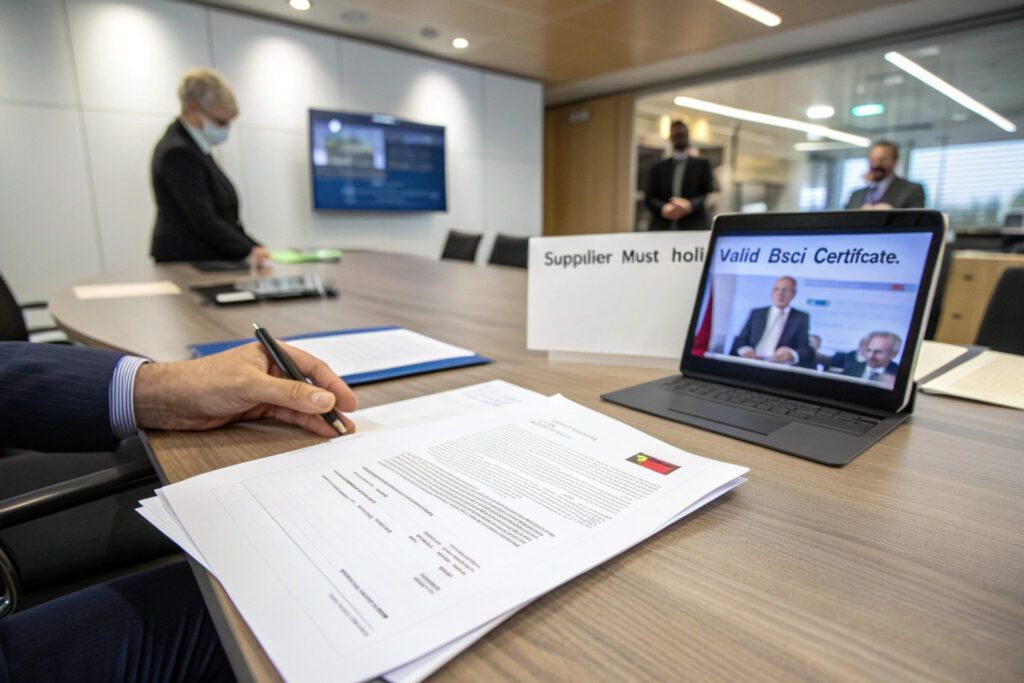
You send a quote to a German retailer. The buyer likes the bucket hats. The price is right. Then they send their Vendor Code of Conduct. It is 40 pages. It requires an independent social audit. You don't have one. The deal evaporates. European retail is not a handshake market. It is a documentation market.
European buyers demand BSCI certified hat manufacturers because the EU Due Diligence Act and national laws require companies to audit their supply chains for human rights and environmental risks. A retailer caught sourcing from a sweatshop faces fines, import bans, and massive brand damage. The BSCI audit is a pre-competitive tool. It allows many brands to share one audit report. This saves the factory from doing 20 separate audits for 20 different buyers.
When a German department store sees our BSCI report on the Amfori platform, they tick their compliance box instantly. The deal moves forward.
The legal pressure is intensifying. This is not a trend. This is a regulatory avalanche. The buyers are not just demanding the audit to be nice. They are protecting themselves from prison sentences.
How Does the German Supply Chain Due Diligence Act Impact Hat Importers?
The German Lieferkettengesetz (LkSG) went into force in 2023. It applies to companies with more than 1,000 employees. It requires them to identify, prevent, and remedy human rights violations in their supply chain. If their hat supplier uses forced labor, the German CEO is personally liable.
This law turns a blind eye into a crime. The German buyer must perform a risk analysis. A factory in a high-risk country without a social audit is automatically a "red flag." They cannot legally place the order. The BSCI audit is the green light. It shows the buyer performed due diligence.
I had a German buyer ask for the specific risk assessment matrix we use internally. We shared it. They were satisfied. The LkSG also requires a complaint mechanism. We have a worker hotline number posted on the factory floor. Anyone can call and report abuse anonymously. This grievance mechanism is a key part of the BSCI standard. European buyers need to see it.
Why Is the Amfori BSCI Platform Preferred Over a One-Off Factory Audit?
A one-off audit is a snapshot. A BSCI audit on the Amfori platform is a continuous monitoring tool. The buyer can log into the platform and see the audit history of the factory over time. They see if the factory improved or declined.
The Amfori platform uses a shared cost model. The factory pays for one audit. Many buyers view the results. This is efficient. A one-off audit only benefits one buyer. The factory would need to pay for audits for every client. The cost would be passed on to the wholesale cap price.
The BSCI platform also tracks the Corrective Action Plan. If the auditor found a gap, the factory must upload evidence of fixing it. I upload photos of the new fire doors. The buyer gets a notification. The loop is closed. A one-off paper audit has no follow-up. The platform is the evidence that the factory takes compliance seriously. It is a living document, not a dusty file.
How Do You Verify a BSCI Certificate Is Genuine for a Cap Supplier?
The factory sends you a certificate PDF. It has a logo. It has a stamp. It looks official. But you have a gut feeling. The date looks odd. The font is wrong. You are about to send a deposit. You need to be sure. A fake certificate is worse than no certificate. It is active fraud.
You verify a BSCI certificate by logging onto the Amfori Sustainability Platform and searching for the factory's name or DBID number. The platform shows the current audit status, the validity date, and the overall rating. You do not trust a PDF. You verify the live database record. The certificate PDF is just a printout of the database. The database is the truth.
I always send my clients a direct link to our live Amfori profile. I invite them to check it themselves. Transparency is the best trust builder.
You need to look at the specific audit rating and the expiration date. A certificate can be valid but with a failing grade. You need to read the grade, not just the logo.
What Do the BSCI Audit Ratings A, B, C, D, and E Mean for Your Order?
The audit result is not a simple pass or fail. It is a grade from A to E. An A grade is excellent. The factory meets all requirements. A B grade is good. Minor non-conformities exist. A C grade is acceptable. The factory has gaps but a solid corrective plan.
Most good Chinese hat factories score a B or a C. An A is rare because the living wage requirement is extremely hard to prove. If a factory shows you an A certificate, verify it carefully. It might be fake. A D grade is a warning. The factory has major issues. An E grade is a failure. You should not place an order with a D or E rated factory.
I hold a B grade rating. My audit found a minor issue with the chemical storage cabinet labeling. We fixed it within 90 days. The rating is public on the platform. You should ask the supplier, "What was your specific rating and what were the non-conformities?" A good factory answers immediately. A bad factory avoids the question.
How Long Is a BSCI Certificate Valid and What Triggers a Re-Audit?
A BSCI audit is valid for two years from the closing date of the audit. But a poor grade triggers a shorter cycle. An E grade has no validity. A D grade might require a follow-up audit in 6 months.
The factory must undergo a new full audit within two years to maintain the certificate continuity. There is a gap window. If the factory misses the re-audit date by even one day, the status drops to "Expired." You should check the expiry date. A certificate that expires next month is a red flag. The factory might be struggling to pass the re-audit.
A re-audit is also triggered by a major complaint. If a worker files a grievance on the Amfori platform, the scheme manager can order an unannounced audit. We welcome unannounced audits. Our factory is always ready. The fire exits are always clear. The payroll records are always accurate. A factory that fears unannounced audits has something to hide. You should ask the supplier, "When was your last audit and what was the notification window?" If they say, "We always get two weeks' notice," they are not on the top tier of compliance.
What Are the Alternatives to BSCI for Small Cap Wholesale Startups?
You are a startup. You order 200 caps at a time. The factory with BSCI certification has a higher unit price. You cannot afford the premium. You wonder if there is a simpler, cheaper way to prove your caps are ethically made. You don't want to sell sweatshop caps, but the BSCI door feels too heavy to push.
Alternatives to BSCI include SEDEX SMETA, WRAP, and SA8000 certifications. SEDEX is common for the UK market. WRAP is popular in the US. SA8000 is the gold standard for social accountability but is the most expensive and demanding. You can also use a custom supplier questionnaire combined with a third-party inspection report.
For a small startup, a factory with a valid SEDEX report is often a good match. It is recognized by many retailers. It is slightly less expensive for the factory to maintain. You can also accept a factory that has a recent ISO 45001 for occupational health and safety.
You need to compare the specific market acceptance of each standard. A US department store might prefer WRAP. A UK supermarket demands SEDEX. You must match the audit to the customer.
How Does SEDEX SMETA 4-Pillar Compare to BSCI for US Retailers?
SEDEX is a platform. SMETA is the audit methodology. A 4-pillar SMETA audit covers labor standards, health and safety, environment, and business ethics. BSCI covers 13 performance areas. The coverage is very similar. The main difference is the buyer network.
BSCI is a European initiative. It is the default for Germany, France, and the Netherlands. SEDEX originated in the UK. It is strong in the UK, the US, and Australia. US retailers like Walmart and Costco have historically preferred their own responsible sourcing audits, but they often accept SMETA as an equivalent.
I hold both a BSCI audit and a SEDEX membership. The SMETA 4-pillar audit cost me a separate fee, but it opened the UK market. The two audits overlap 80%. The worker interview questions are similar. The safety checks are identical. The main difference is the business ethics pillar in SMETA. It checks for bribery and corruption. BSCI does not explicitly cover bribery. For a small brand selling to a multi-brand boutique, asking the factory for a SMETA report is a very reasonable alternative to BSCI.
Can a WRAP Certificate Suffice for Small-Scale Cap Imports?
WRAP stands for Worldwide Responsible Accredited Production. It is a US-based social compliance program focused primarily on the apparel and footwear industry. It is a 12-principle standard. It is generally seen as less burdensome than BSCI.
WRAP is very acceptable for the US market, especially for promotional products and smaller boutique brands. It certifies that the factory is "WRAP Certified." There are three levels: Gold, Silver, and Platinum. A Gold certificate means full compliance with no issues.
I do not hold a WRAP certificate because my European clients drive my audit choices. But I have collaborated with sub-factories that hold WRAP. The standard is legitimate. It covers child labor, forced labor, harassment, hours, wages, and safety. For a small cap importer who sells exclusively in the USA, a factory with a Gold WRAP certificate is a safe choice. You should still verify the certificate number on the WRAP website. The audit database is public. Type in the factory name. Confirm the status.
Conclusion
A BSCI factory audit is essential for sourcing wholesale caps from China if you sell to major European retailers or market your brand on ethics. The audit covers 13 performance areas, from the worker's chair to the fire escape. It is not a paper exercise. The auditor interviews workers in private and checks payroll data for ghost shifts. European buyers demand it because laws like the German Supply Chain Act make them legally responsible for their supply chain.
You verify the certificate on the live Amfori platform, not from a PDF. You check the audit rating. An A or B grade is excellent. A C is acceptable with a corrective plan. A D or E means do not engage. The certificate lasts two years. Expired means expired.
For startups and US-focused brands, alternatives exist. SEDEX SMETA is a strong equivalent, especially for the UK market. WRAP is a solid US-centric option. The principle is the same. You need a third-party verified social audit.
At Global-Caps, we chose to invest in BSCI and SEDEX certification. It is not because the law forced us. It is because we respect the people who sew our caps. It is because our buyers deserve a transparent supply chain. A clean audit is a promise we keep every day.
If you need wholesale caps from a factory that passes the social compliance test with flying colors, let's talk. Contact our Business Director Elaine. She can share our latest BSCI audit report and our Amfori platform link. Email Elaine at elaine@fumaoclothing.com. Let's build a supply chain you are proud to show your customers.