As a distributor in the promotional products industry, I know the sinking feeling when a client’s big branding moment goes wrong. You promised a premium look. Instead, you receive hats with crooked patches, peeling edges, or colors that don't match the brand's identity. The client is furious, and the event is next week. That delivery is not just a failed product; it is a dent in your reputation.
The best way to vet a factory for custom patch hats is to test their internal structure, not just their sales pitch. You need a partner who controls the patch-making process in-house. A factory that integrates design, embroidery, PVC molding, and quality checks under one roof eliminates communication gaps. When the factory owns the entire workflow from thread selection to attachment, the patches arrive secure, sharp, and exactly as approved.
I have spent years helping distributors escape that panic. Our team at Global-Caps has structured our factory floor to handle high-stakes orders. I want to walk you through the exact process we use internally, so you can apply the same standards when vetting any factory. This is the inside playbook for avoiding patch disasters.
How Does the Factory Source and Apply Custom Patches?
The biggest lie I hear in this industry is that a factory owns the patch process. Often, a hat factory is just a sewing house. They outsource embroidery to a third party. When you ask for a revision, the hat maker blames the patch maker. Delays pile up, and your timeline collapses. That runaround is a nightmare for a distributor on a deadline.
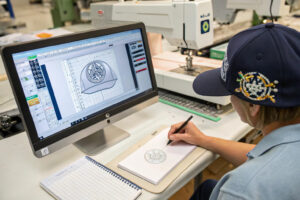
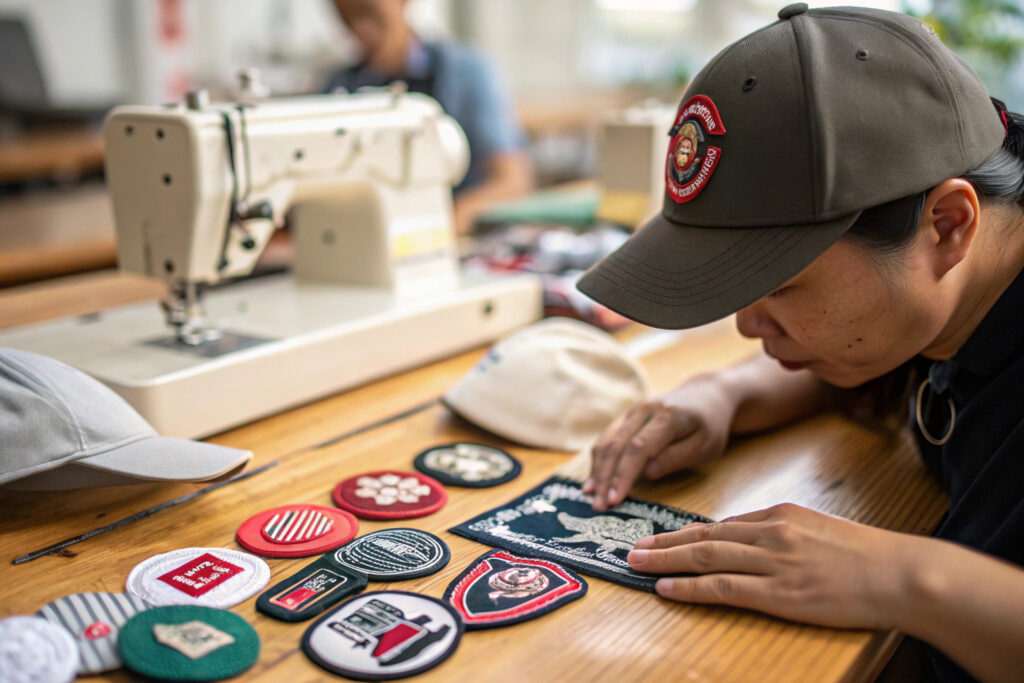
The non-negotiable standard is to pick a factory with an in-house professional digitizing team and a dedicated sample room for patches only. The true test of capability is whether the factory can digitize your complex logo within two hours while you wait. At our facility in Zhejiang, the design team sits next to the embroidery floor. This physical closeness means we turn a PDF logo into a physical patch sample in a single day. A factory that sends designs out for digitizing will always be slower and more error-prone.
To truly understand a factory's competence, you have to dig into their patch sourcing and application logic. It is not just about owning a machine. It is about the culture of precision.
Who Actually Controls the Digitizing Process?
Many sales representatives will tell you they do the digitizing. But when you push them, you find it is an outsourced service. Outsourcing creates a broken telephone. The digitizer has never seen the hat material. This leads to thread breaks or puckering on unstructured caps. You must ask a direct question: is the digitizing staff on your payroll and stationed inside the factory walls? If the answer is no, walk away.
The digitizing technician needs to understand fabric tension. A patch for a soft mesh trucker cap requires a completely different underlay stitch than a patch for a stiff structured snapback. We train our in-house team to write stitch files that complement the hat panels, not fight them. This prevents the wavy edges that scream cheap promotional swag.
How Do You Match Attachment Methods to Product Durability?
The attachment is as critical as the patch itself. A beautiful embroidery piece can destroy a hat if sewn on poorly. Or a heat-sealed PVC patch can fall off in the sun if the glue is cheap. Here is a simple breakdown that our project managers use to guide clients. Use this to vet your supplier's logic:
| Patch Type | Best Attachment Method | Key Question to Ask the Factory |
|---|---|---|
| Embroidered | Sew-on with merrow border | Can you guarantee no puckering on washed cotton? |
| PVC/Rubber | Sew-on with die-cut holes or heat-seal | Is the heat-seal glue certified safe for skin contact? |
| Woven/Damask | Iron-on backing or flat sew | Will the iron-on backing discolor dark fabric? |
| Chenille | Sew-on only | Do you stitch through the felt for added security? |
A knowledgeable factory does not just offer these. They challenge you if you pick the wrong combination. I have stopped shipments before to reprocess patches because the client chose an attachment that would not survive shipping to a humid climate. That is the proactive energy you need.
Does the Factory Have a Robust Quality Control Workflow for Patches?
A great initial sample is easy. Consistency across 5,000 units is the real war. I have seen factories send a perfect salesman sample, then ship bulk production with off-registration stitching where the red thread bleeds into the white border. As a distributor, you cannot open every box. You are betting your client relationship on the factory's internal controls.
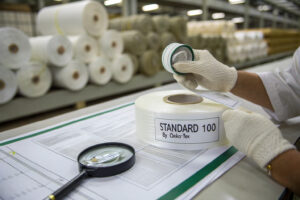
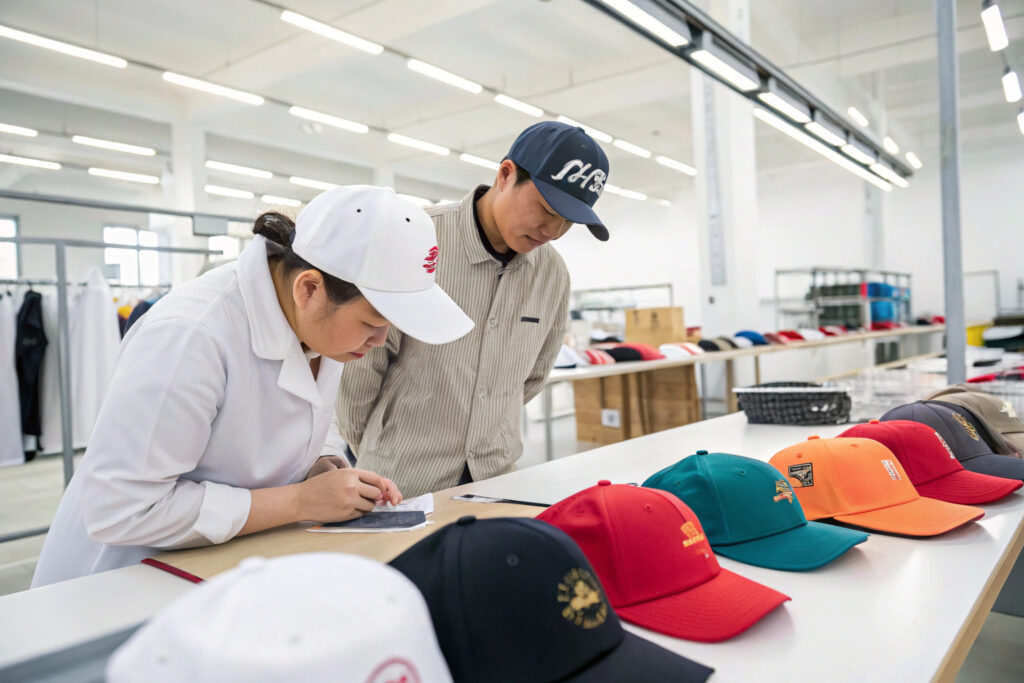
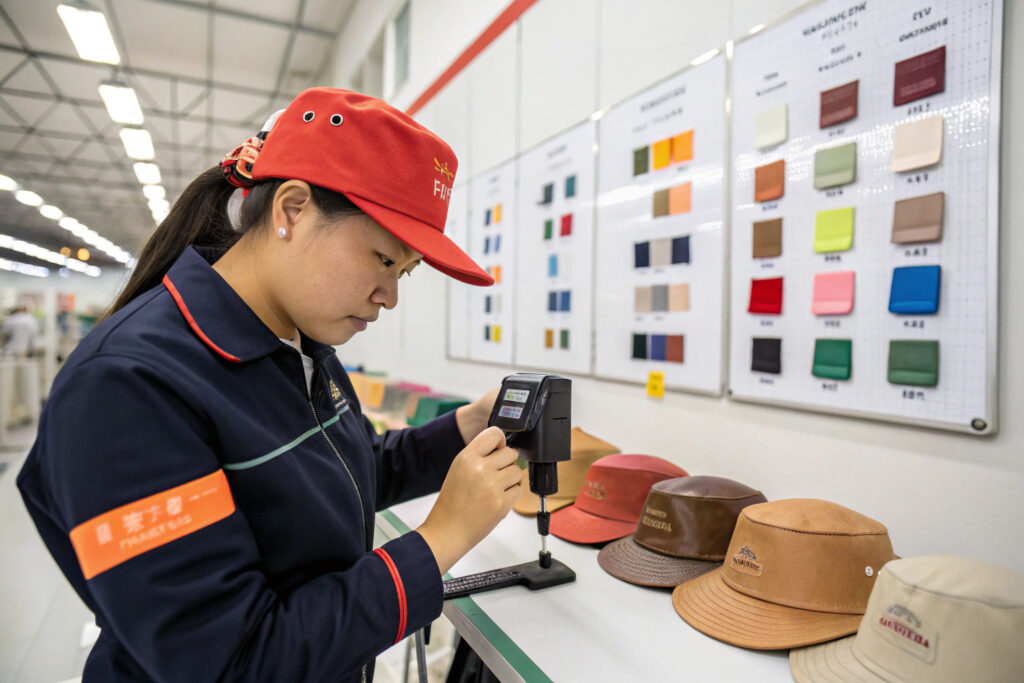
You need to verify that the factory runs a first-off inspection and an inline audit, not just a final random check. We operate an AQL 2.5 system for our patch application. Before a single hat in an order is finished, our QC team pulls the first finished hat off the line. They compare the patch placement against a sealed pre-production sample using a ruler and a color histogram under a lightbox. We check the backside of the patch, too, looking for loose thread tails that would scratch a forehead.
An efficient workflow is not about catching bad hats. It is about building the hats correctly the first time. This requires visibility into the factory's real-time reporting methods.
What Are the 3 Critical Checkpoints for Patch Inspection?
I teach our new project managers a simple rule: the three-point check. First, the material check. We touch the patch. Does the embroidery thread feel soft or wiry? A wire-like feel means cheap rayon, which will snap and fray after three wears. We use durable polyester thread for promotional orders that need to last years in a drawer. Second, the color check. We separate the thread colors under a daylight lamp. A single shade off on a corporate logo can cause a 100% rejection rate. Third, the security check. We tug on the patch from the inside. If we see light between the patch and the hat, it fails the wash test.
Distributors should not need to know the technical specs of thread weight. But you should ask for a photo of these three checkpoints happening in real-time during your production. If the factory cannot provide a photo of the "inside-out tug test" within two hours of asking, their QC is likely just on paper.
How Do Smart Factories Manage Defective Rates on Custom Orders?
A zero-defect rate is a fantasy in custom manufacturing. The mark of a great factory is how they handle the margin of error. Do they make extra patches? How many? You want a factory that automatically produces an oversupply of 3% to 5% on patches alone. This is critical for complex orders. We call this the "wastage buffer." We do not hide the defects. We put them in a red bin. At the end of the order, our QC team scans the red bin and writes a root cause analysis if the waste exceeds our 2% cap. If a heat press machine had a cold spot that caused peeling, we isolate those units and fix the machine before finishing the order. You need a factory with a red bin policy and a repair station manned by senior seamstresses, not junior workers.
How Can a Manufacturer Ensure Speed Without Sacrificing Patch Quality?
Speed kills quality. That is the old saying. But in the promotional market, if you are not fast, you are dead. The client needs 3,000 hats with a complex 3D puff patch for a trade show booth. You find a factory that promises a 10-day turnaround. The patches arrive flat as pancakes or fall off during transport. The rush was not worth the ruin.
The trick is to separate the "hot" and "cold" processes. In our factory, we never accelerate the cooling phase of PVC patches. That would cause shrinkage. We speed up the logistics between departments. We use a batch-tracking card that moves physically with the hats. This eliminates the time wasted searching for matching patch sets. We also keep a safety stock of blank premium hats, dyed in-house, ready to go. This cuts fabric sourcing time from weeks to hours.
True speed is a structural advantage, not a switch you flip. It comes from a factory culture that plans for rush orders before the order even arrives.
Why Does In-House Sample Creation Accelerate the Supply Chain?
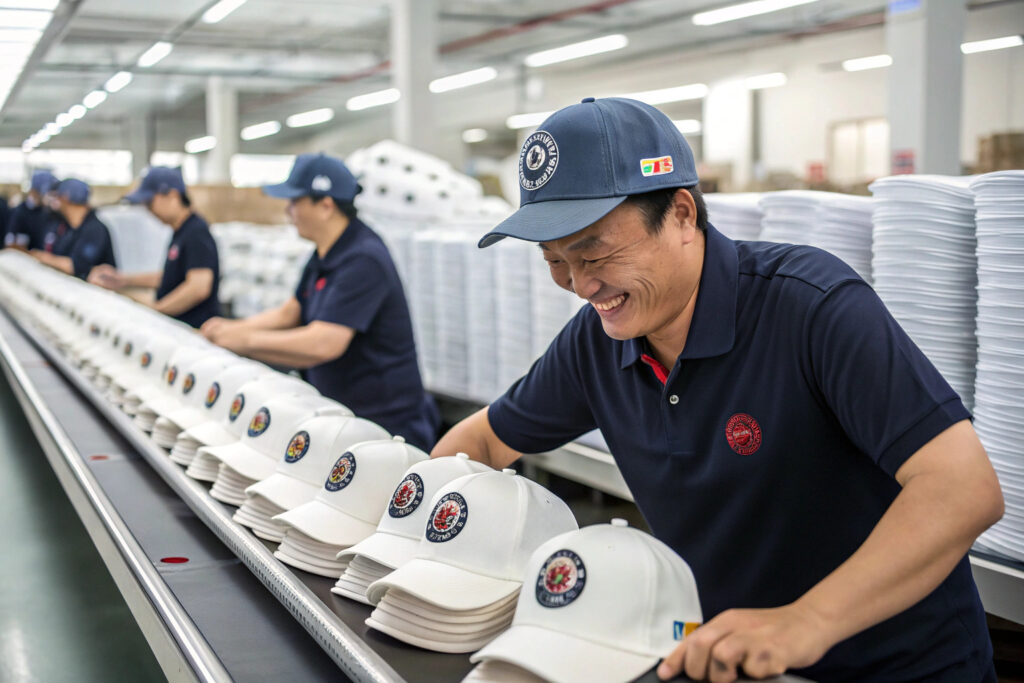
Many factories outsource their sampling to a specialized sample room across town. This is a critical bottleneck. A patch revision that could take two hours takes two days. When you walk into our R&D hall, you see design computers directly connected to laser cutters and digital embroidery machines. There is no courier waiting to take a USB stick across the city. We cut a felt patch prototype, scan it on the hat, and send a video to the client within 24 hours. This immediate digital feedback loop is what makes "fast development" real. It compresses the concept-to-approval stage into a single working day.
Speed in sampling also reveals a factory’s true organizational health. A cluttered sample room with dusty stock hats indicates a team that cannot handle rapid transitions. A clean, modular sample library with color-coded materials shows a team ready for instant action. You should ask your supplier to show you their physical sample catalog for patches. If they hesitate, they rely on Google Images, not real production capability.
What Payment and Logistics Systems Support Fast Turnarounds?
Efficient sailing schedules and shipping timeliness are not just about putting boxes on a ship. They are linked to payment security and customs clearance expertise. We have integrated our production timeline with a flexible payment system that builds trust. This allows the distributor to hold a small margin until the pre-shipment check is passed. When payment terms are clear, there is no administrative delay. We process a container load for US customs within a day because the paperwork is pre-filed as the stitching begins.
Our location in China is not affected by the recent US tariff issues on specific categories, a detail we proactively share with logistics documentation. For a distributor, a factory that navigates customs with zero errors is a factory that delivers a true "DDP" peace of mind, even if the terms are FOB. The boxes arrive without a surprise bill, and the timeline holds.
What Types of Custom Patches Offer the Best Value for Promotional Orders?
Price matters. I know distributors are pinched by the market. But value is not about the cheapest option. It is about the highest perceived retail value for the dollar. If you put a flat, thin embroidery patch on a cap, you are selling a $5 perceived value at a conference. If you use a 3D puff or a faux leather patch, you create a $25 perceived value. The cost difference might be pennies. The brand impact is dollars.
Our product development team focuses on "category killers" for promotional value. We suggest mixed-media patches to clients. This involves combining a woven base with a raised embroidery detail. This mixed-media technique looks incredibly expensive to the end-user. Because we manufacture both the woven labels and the embroidery under one roof, we eliminate the double margin an outsourced factory would charge. You get a complex look for a simple cost.
Understanding the material landscape puts you in the driver’s seat. You stop being an order taker and become a branding consultant. That is how a distributor grows their client base.
Which Patch Materials Deliver Maximum Visual Impact?
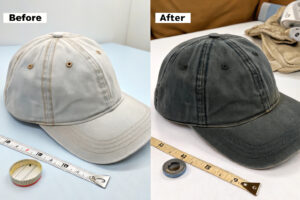
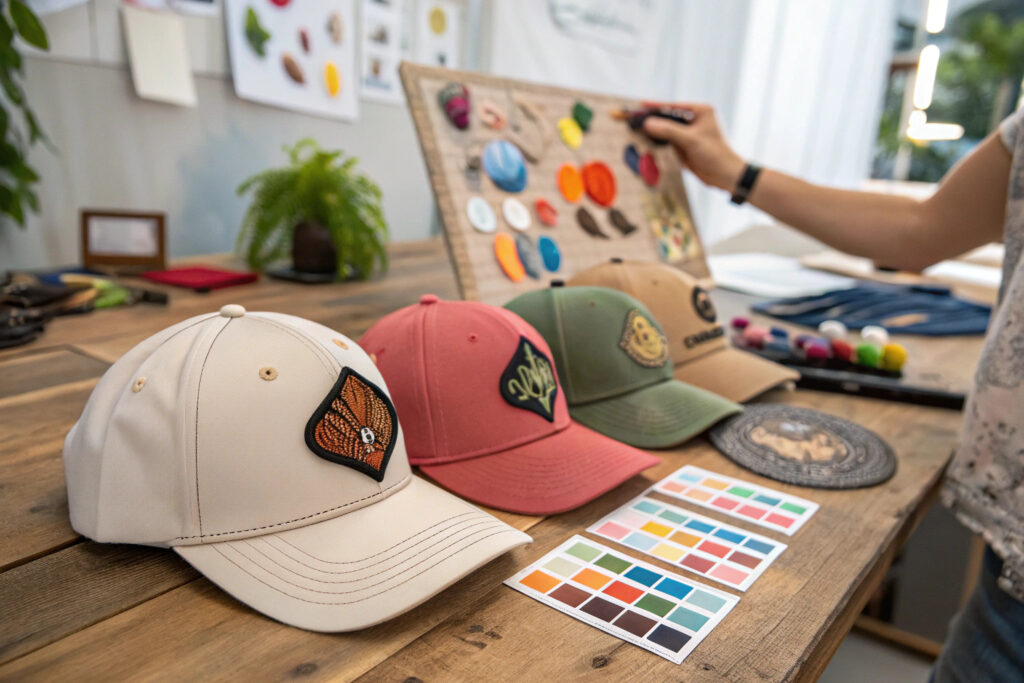
Cotton thread is a staple, but it falls flat. Polyester thread has a sheen that catches light. Metallic threads add a premium flash without a premium price tag. We also recommend PVC patches for outdoor gear. They are indestructible and hold a 3D mold shape perfectly. But the dark horse in value is a direct-embroidered leather patch. We take a thin cut of genuine leather, laser-etch the logo, and then embroider over it. This gives a rugged, authentic texture. For the price of a basic embroidered patch, you can sometimes offer this elevated look because the stitch count is actually lower, with the leather doing the heavy visual lifting.
It is my job to push your options. I often tell the story of a brewery client who swapped a standard woven patch for a shaped PVC patch molded into their bottle cap logo. Their retail hat sales tripled. The patch cost was 15% higher. The perceived value was 200% higher.
How Do You Avoid Common Mistakes in Patch Selection?
The most common mistake is scaling. A logo on a business card looks lost on a hat. You need the patch to fill the space. For a trucker hat, a 3-inch diameter patch is a safe rule. The second mistake is ignoring the attachment color. A black embroidered patch sewn with white thread looks homemade, not professional. We automatically match thread color to the dominant patch border color. This is a basic step that separates a manufacturer from a commodity seller.
Another silent killer is washing. A patch that survives dry heat might curl in a washing machine. For any promotional headwear likely to be washed, we test the patches for shrinkage. We soak them in warm water for 15 minutes as part of our internal batch test. You should ask any prospective factory for their wet-friction test result. If they have never done one, their patches are a time bomb in a laundry machine.
Conclusion
The search for a perfect custom patch hat partner does not end with a cheap quote. It ends with the confidence that every stitch will land where it should, the colors will match the Pantone book exactly, and the delivery will hit your warehouse before your event setup begins. I have laid out the real mechanics here: demand in-house digitizing, inspect the internal QC red bin, measure the speed of their sample room, and prioritize value engineering in materials. These are the levers that separate a catastrophic branding fail from a career-defining campaign.
A bad batch of patches is not just a return. It is lost time, destroyed client trust, and a logistical headache you carry alone. A great batch of patches does not just look good. It transforms a simple cap into a walking billboard that people actually want to wear. This is the standard I have built into our operations at Global-Caps because I know your reputation is stitched into every seam.
If you are tired of the runaround from factories that disappear after the deposit and deliver excuses instead of quality, let us talk. I invite you to reach out to our Business Director, Elaine, directly. She ensures that every client project, from a small startup run to a massive national campaign, receives white-glove, professional service. You can start a conversation about your next custom patch hat project by emailing her at elaine@fumaoclothing.com. We are ready to send you a sample that demonstrates exactly what a reliable, high-yield partnership looks like.