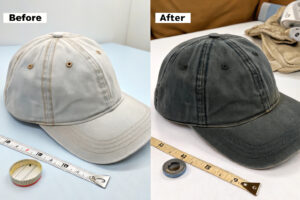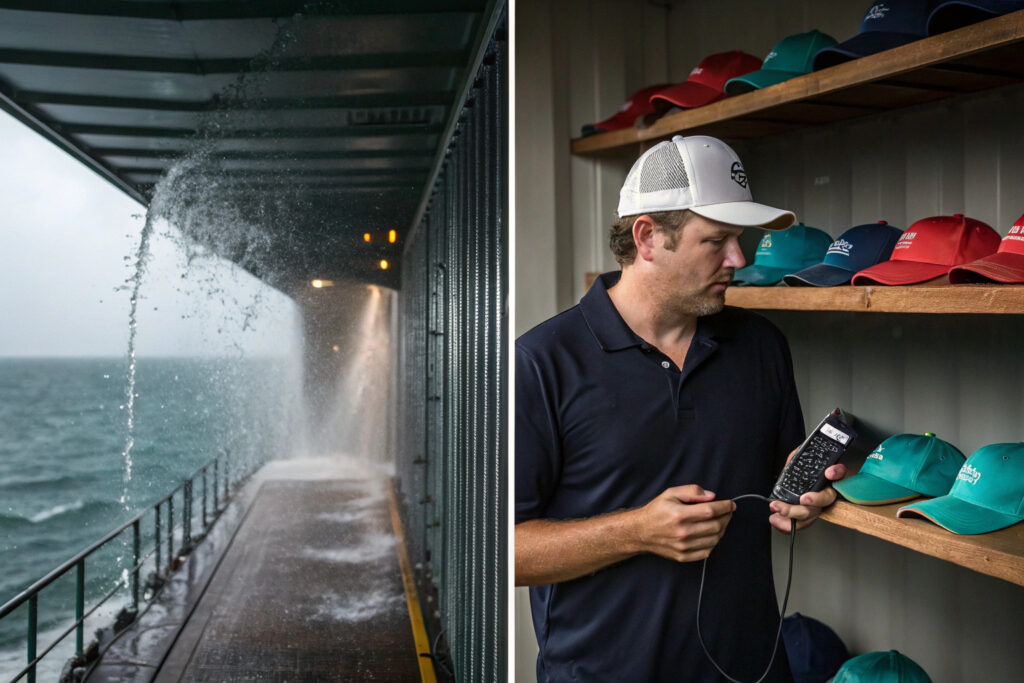
We shipped a container of 5,000 unstructured washed cotton dad caps to Miami in August three years ago. The hats left our factory crisp, with a perfect soft crown and a gentle curve on the brim. They arrived looking like damp dishrags. The crowns had collapsed into flat pancakes. The brims had warped into wavy, uneven curves. The customer refused the shipment. I stood in their warehouse, holding a hat that looked nothing like the sample we had both approved, and I had to figure out why. That $15,000 loss taught me a lesson in container physics that no textile textbook had covered.
High humidity in a shipping container destroys the shape of unstructured caps through a chain reaction of moisture absorption, fiber relaxation, and gravitational deformation. An unstructured cap has no rigid buckram or stiff foam internal frame. Its shape depends entirely on the fabric's ability to hold a molded form. When the container air reaches a relative humidity above 70%, the cotton or cotton-blend fibers absorb water vapor from the air. The hydrogen bonds within the cellulose fibers loosen. The fabric relaxes and returns to its flat, pre-molded state. The crown loses its dome. The brim loses its curve. Then, as the caps sit in a stacked carton for three to four weeks, gravity pulls the softened fabric downward, creating permanent creases and flat spots. The hat you unpack is not the hat you packed.
I turned that Miami disaster into a protocol that has protected every container we have shipped since. I want to walk you through the exact science of what happens inside that container, the measurable thresholds you must respect, and the packaging engineering solutions that keep an unstructured cap intact across 6,000 miles of ocean. This knowledge is the difference between a product that arrives retail-ready and a box of warranty claims.
What Is the Exact Humidity Threshold That Causes Cap Deformation?
The damage does not begin at the moment condensation drips from the container roof. It begins silently, at a much lower humidity threshold, long before visible moisture appears. The structural integrity of an unstructured cotton cap starts to degrade the moment the relative humidity inside the container crosses 65%. At that level, the cotton fibers begin to absorb moisture from the air, even though the fabric feels dry to the touch. The critical failure point is 80% relative humidity sustained for more than 48 hours. At 80% RH, the moisture content of the cotton fibers rises above 10% by weight. At this saturation level, the hydrogen bonds that were locked into place during the pressing and shaping process break. The fabric loses its "memory" of the crown dome. It reverts to its relaxed, flat-woven state. The cap does not just lose shape slowly. It undergoes a phase change. One day it has a crown. Two days later, it has a flap.
We track this threshold with data loggers placed inside our containers. A small, battery-powered sensor records temperature and relative humidity every hour of the voyage. When the container arrives, we download the data. If the humidity never spiked above 65%, the caps arrive perfect. If we see a 72-hour plateau at 82%, we know exactly what the buyer will find before they open the first carton. The data tells the story before the product does. The ocean container environment is a microclimate. Controlling it starts with knowing the numbers.
The humidity number is the trigger, but the fabric's fiber composition determines how severely that trigger fires. A 100% cotton cap and a polyester-cotton blend cap standing side by side in the same container will not suffer equally. The natural fiber is far more vulnerable.
Why Are 100% Cotton Caps More Vulnerable Than Polyester Blends?
Cotton is a hydrophilic fiber. Its molecular structure has abundant hydroxyl groups that form hydrogen bonds with water molecules. This is why a cotton towel absorbs water. It is also why a cotton cap absorbs airborne humidity. Polyester is hydrophobic. Its polymer chains lack these water-loving sites. A polyester fiber absorbs less than 1% of its weight in moisture, even in saturated air.
An unstructured cap made from 100% cotton will lose its shape at 75% RH. A cap made from a 65/35 polyester-cotton blend will hold its shape up to about 90% RH. The polyester fibers act as a skeleton that retains the mechanical form even when the cotton component relaxes. For a brand shipping to humid coastal cities in Florida, Southeast Asia, or the Mediterranean, the fabric blend is a shape-preservation strategy, not just a cost decision. A cotton fiber property guide explains the science of moisture absorption that makes natural fibers so sensitive to container humidity.
How Does the Dew Point Inside a Container Create Condensation?
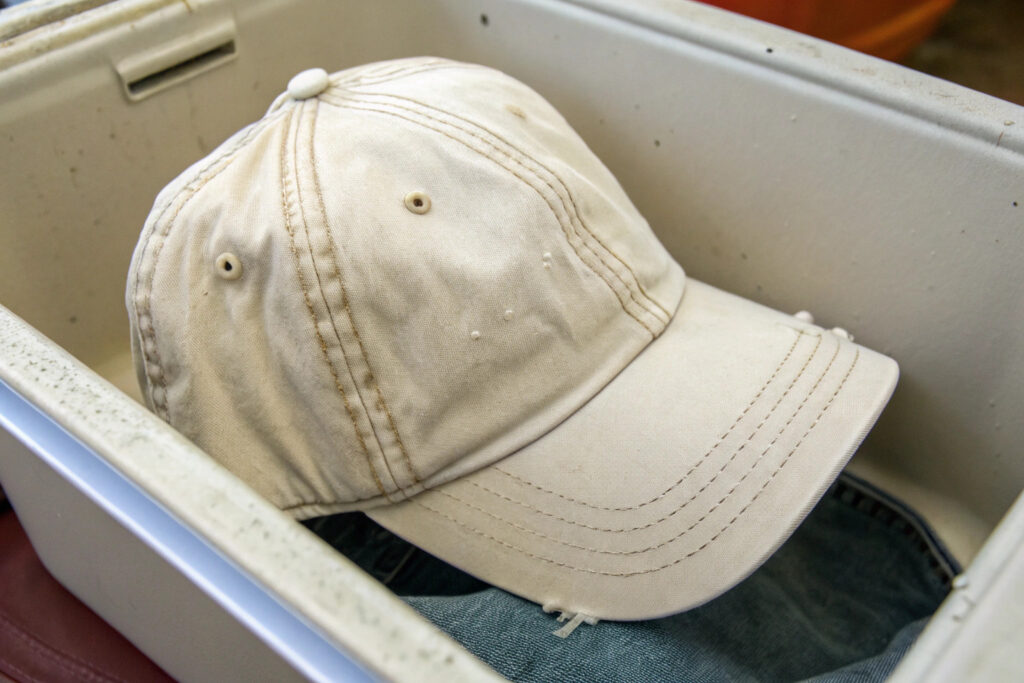
The container is a sealed metal box. During the day, the sun heats the container walls. The air inside warms up and absorbs moisture from the cargo, the carton cardboard, and the wooden pallet. At night, the container walls cool rapidly. When the wall temperature drops below the dew point of the internal air, water vapor condenses into liquid droplets on the ceiling and walls. This is the same physics that forms dew on grass.
These droplets then drip down onto the top cartons. The container rain soaks the cardboard. The moisture wicks through the packaging and reaches the hats inside. A hat that was dry when packed becomes damp in transit. The container dew point calculation is a standard tool in logistics engineering. A factory that does not understand dew point condensation is a factory that packs mold and deformation into every ocean shipment.
How Does the Stacking and Packing Method Amplify the Damage?
Humidity softens the fibers. Gravity and stacking pressure then sculpt the softened fabric into a permanent disfigurement. An unstructured cap at the bottom of a carton stack inside a shipping container carries the weight of 10 to 12 cartons above it for four weeks. If the cap is not internally supported, that weight presses the moist, relaxed crown into a sharp, flat crease. The fibers dry in that creased position. The crease becomes a permanent feature.
The standard packing method for structured caps, where caps are simply folded and stacked flat in a polybag, is a guaranteed shape-killer for unstructured caps in a humid container. An unstructured cap needs an internal cavity filler. We use a recycled, unbleached tissue paper ball inserted into the crown. This paper ball acts as a temporary buckram. It resists the compressive force from above and maintains the dome volume. The tissue paper itself is breathable and does not trap moisture against the fabric. We also switched to double-wall corrugated cartons for all unstructured cap shipments. A single-wall carton softens significantly when its cardboard absorbs moisture. A double-wall carton retains its stacking strength even at 80% RH. The carton is the first structural defense. The internal tissue fill is the second. The cap's own fiber blend is the third. A three-layer defense system is what turns a potential write-off into a perfect delivery.
The internal cavity support is the active shape-retention tool. But the carton's own orientation on the pallet determines whether the hat's brim lives or dies. A brim packed flat against the carton wall under pressure will take a set in that flat position. The brim must be packed in its worn curve.

Why Does Brim Curvature Matter in Packing Configuration?
An unstructured cap usually ships with a pre-curved brim. If that curved brim is packed flat against the rigid carton sidewall under the weight of the stack, the curve flattens. The moist fiber relaxes, the pressure straightens the plastic or cardboard brim insert, and the curve is lost permanently.
We pack unstructured caps with their brims facing inward, toward each other, or we use a simple cardboard brim guard that holds the curve in place during transit. This is a low-cost, high-impact detail. A hat brim curve preserved during shipping is a hat that looks correct on the retail shelf immediately, without the customer needing to steam and reshape it.
How Do You Prevent Carton Crush When Cardboard Absorbs Moisture?
Cardboard loses up to 60% of its stacking strength when saturated with moisture. The bottom carton on a pallet that absorbs container rain collapses. The caps inside are not just exposed to humidity. They are physically crushed.
We apply a water-resistant coating to the outer cartons, a wax-based varnish that repels condensation drips. We also mandate the use of pallet top-sheets and a full container desiccant program. The desiccant bags, usually calcium chloride, absorb airborne moisture before it can condense and drip. The combination of a moisture-resistant carton, a top-sheet rain shield, and desiccant dehumidification creates a dry microclimate around the caps, even when the container walls are sweating. A corrugated packaging strength guide explains the science of moisture-induced carton failure.
What Pre-Shipment Treatments Can Prevent Humidity Damage?
You cannot control the weather at sea, but you can control the moisture content of the hat before it enters the carton. A cap packed with an internal moisture content above 8% is already halfway to deformation. The remaining damage happens inside the container. A cap packed at 5% moisture content has a buffer before it reaches the critical 10% threshold. This 3% headroom can be the entire safety margin needed for a 28-day ocean voyage.
We implemented a mandatory pre-packing moisture equilibration step after the Miami incident. Every unstructured cap, after final pressing and shaping, enters a climate-controlled staging room set to 50% relative humidity and 22 degrees Celsius for a minimum of 24 hours. The caps hang on racks, not stacked, so air circulates freely around each unit. We spot-check the fabric moisture content with a pin-type moisture meter before the caps are released to the packing station. If a cap reads above 6.5%, the entire batch stays in the conditioning room until it drops. This step costs a day of dwell time. It has saved us tens of thousands of dollars in rejected shipments. The conditioning room is not a luxury. It is an insurance policy.
The factory-side moisture control is the primary defense. But the container itself can be actively managed during the voyage. Desiccants are the silent workhorses of ocean freight, and their correct specification is a science, not an afterthought.
How Much Desiccant Is Needed for a 40-Foot Container?
A standard 40-foot high cube container requires approximately 1.5 to 2 kilograms of calcium chloride desiccant per cubic meter of internal volume. This translates to roughly 100 to 140 kilograms of desiccant for the entire container. The desiccant is not scattered loosely. It is hung in breathable bags along the container walls, where it absorbs water vapor from the air before it can condense.
We use a desiccant supplier that calculates the exact quantity based on the voyage duration, the route climate, and the moisture content of the cargo. The desiccant bags are installed immediately after the container is loaded and the doors are sealed. This container desiccant technology is standard in the electronics and pharmaceutical industries. It belongs in the textile headwear industry as well.
Why Is a Pre-Shipment Heat Treatment Effective for Shape Memory?
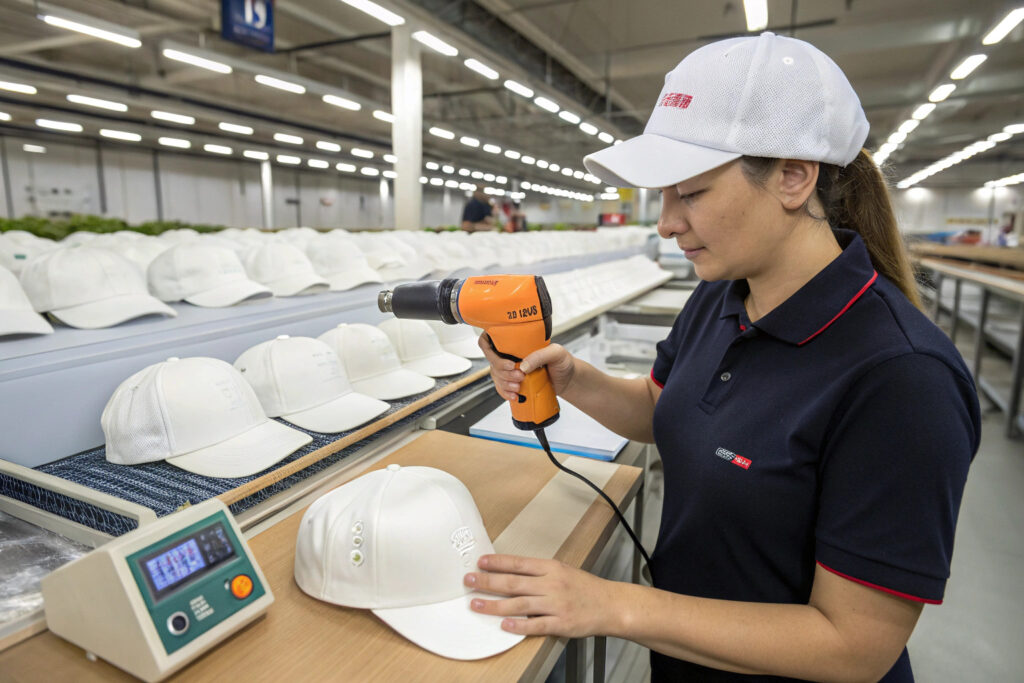
Heat can be used to lock a shape into a synthetic fiber, but for cotton, heat alone is not enough. Cotton requires a combination of heat, pressure, and low humidity. We use a hat pressing machine that applies steam heat and a vacuum simultaneously. The steam relaxes the fibers and allows them to mold to the head form. The vacuum extracts the moisture immediately, leaving the fibers locked in the new shape with a low moisture content.
This "steam and vacuum" process is not the same as a standard ironing. A standard iron press leaves residual moisture in the fabric. The vacuum extraction step is what makes the shape stable for ocean transit. A steam pressing machine designed for headwear is an investment that pays for itself in reduced shape-related returns.
Conclusion
The ocean container is a hostile environment for an unstructured cap. The humidity, the temperature swings, the condensation, and the stacking pressure conspire to turn a beautifully shaped hat into a flat, creased piece of fabric. But this destruction is not inevitable. It is predictable, measurable, and preventable. The defense is a system, not a single fix. You monitor the container climate with data loggers. You pack the caps with internal tissue supports and brim guards inside moisture-resistant double-wall cartons. You pre-condition the caps to a low, stable moisture content in a climate-controlled room. You load the container with correctly specified desiccants. And you choose a fiber blend that is engineered for humidity resistance if the destination market is coastal or tropical.
I think about that Miami container often. It taught me that a factory's responsibility does not end at the factory gate. It ends when the buyer opens a carton and pulls out a hat that looks and feels exactly like the sample they approved. That moment of delighted recognition is what a professional shipping protocol delivers.
If you are shipping unstructured caps to humid climates and want to review your current factory's moisture control, packing, and container preparation procedures, let us share our internal standard. Our Business Director, Elaine, can send you our Unstructured Cap Shipping Protocol document, including our moisture content tolerances and desiccant specifications. Reach her at elaine@fumaoclothing.com and ask for the Humidity Defense Package. We want your hats to arrive as crisp as the day they left our finishing room.