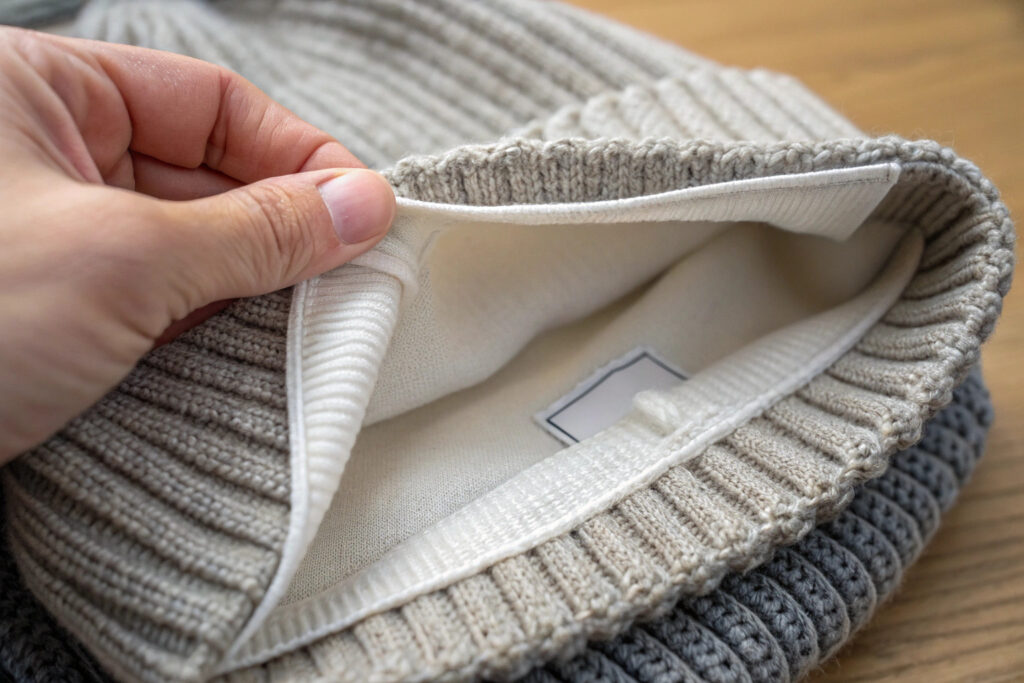
You invest in developing a premium winter beanie. The outer knit is a luxurious merino-cashmere blend. The fleece lining is plush and warm. The sample arrives, and from the outside, it looks beautiful. Then you turn it inside out. The internal seams are covered with seam tape, a thoughtful detail that adds comfort and a clean finish. But the tape is rippling. In some places, it is stretched tight and pulling the knit into a pucker. In other places, it is loose and baggy. When you stretch the beanie gently, the tape does not move with the knit. It resists, then buckles. This internal finishing flaw destroys the premium hand feel and signals to the customer that the beanie was made carelessly, regardless of how beautiful the outside looks.
Seam tape tension management is one of the most technically demanding aspects of high-end cut-and-sew headwear manufacturing. It is a specialized process that separates premium factories from commodity producers. I run Global-Caps, and we manufacture lined winter beanies for brands that demand flawless interior finishing. Managing seam tape tension is not just about setting a machine correctly. It is about understanding the interaction between two different materials, the knit shell and the tape, that have different stretch, recovery, and thermal properties. In this article, I will walk you through the technical process we use to ensure seam tape lies flat, moves with the fabric, and remains invisible to the wearer's comfort, for the life of the beanie.
What Materials Are Used for Seam Tape, and How Do Their Properties Affect Tension?
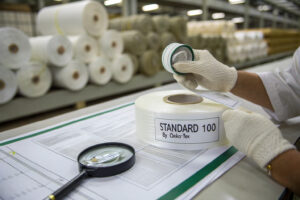
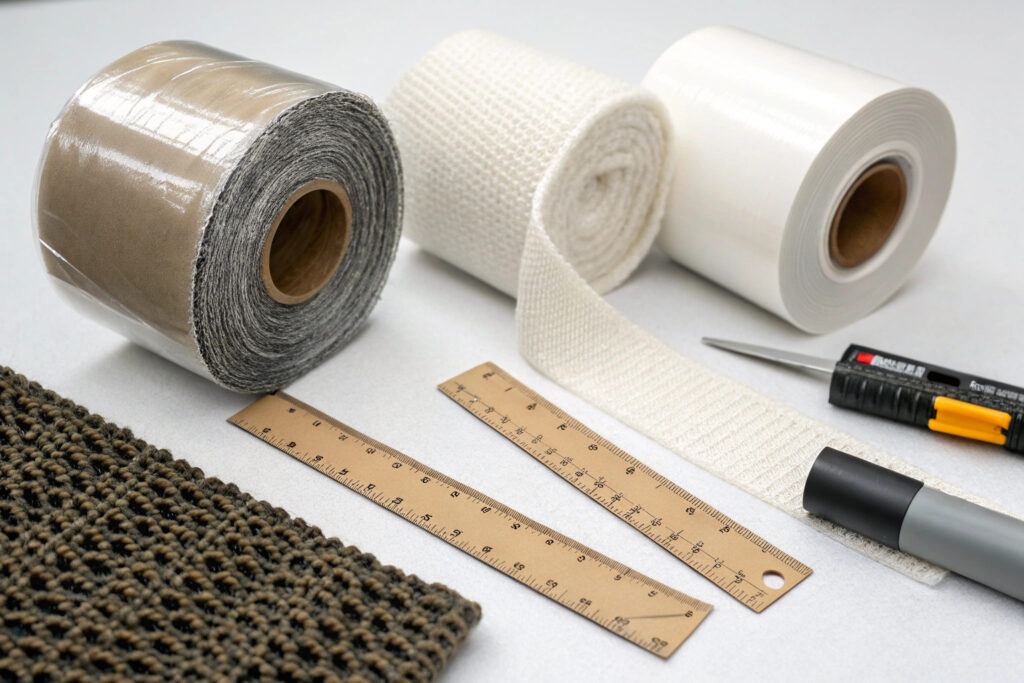
Seam tape is not a single product. It is a family of materials, each with distinct stretch, recovery, adhesion, and hand feel characteristics. The choice of seam tape material is the first and most critical decision in managing tension. The tape must be compatible with the shell fabric. If the tape stretches less than the shell, the seam will pucker when the beanie is worn. If the tape stretches more than the shell, the tape will bag and ripple. The goal is to select a tape that matches the stretch and recovery curve of the knit shell as closely as possible.
The most common seam tapes for high-end winter beanies are two-layer or three-layer laminates. A typical construction is a thermoplastic polyurethane film for waterproofness and adhesion, bonded to a polyester knit or non-woven backing for softness and hand feel. The TPU layer provides the stretch, recovery, and bonding properties. The fabric backing provides the tactile comfort against the wearer's head and protects the TPU from direct skin contact. The stretch of the tape is primarily determined by the TPU film. TPU films can be engineered with a wide range of elongation at break, from 100% to over 500%. For a knit beanie that may stretch 30% to 50% when worn, the tape should have an elongation capacity significantly higher than the maximum expected stretch of the shell, and, critically, it should have near-complete elastic recovery so that it returns to its original length without permanent deformation.
A second critical material property is the heat activation temperature. Seam tapes are applied using a hot air or heated wedge tape-sealing machine. The TPU adhesive layer is heat-activated. The activation temperature must be high enough to create a strong, durable bond with the shell fabric, but not so high that it damages or shrinks the knit fibers. Merino wool and cashmere are protein fibers that are sensitive to heat. Excessive heat can cause yellowing, stiffness, and shrinkage. The tape must bond at a temperature compatible with the shell fiber. I specify low-activation-temperature TPU tapes, typically activating around 120 to 140 degrees Celsius, for our natural-fiber beanies.
How Do You Select a Tape That Matches the Shell Fabric's Stretch?
The selection process begins with a simple mechanical test. A swatch of the shell fabric is cut to a standard size and stretched to a specified extension, typically 30%, on a tensile testing machine or with a simple manual stretch gauge. The force required to achieve that extension is recorded. The fabric is then released and its recovery is measured. The same test is performed on candidate seam tapes. The ideal tape will have a very similar force-extension curve and recovery profile to the shell fabric.
In practice, this means the tape supplier provides a technical data sheet with the stretch modulus and recovery percentage. Our development team tests the tape on a sample seam, sewing and taping a mock-up beanie panel. We stretch the seamed panel by hand, observing whether the tape and the fabric move as a single unit. If the tape lags behind the fabric, creating a wrinkle, or if it pulls ahead, creating a pucker, the stretch match is incorrect. We test multiple tapes until we find the one that moves invisibly with the knit. This material matching process is laborious but is what separates a premium, comfortable interior seam from an itchy, puckered one.
What Is the Role of the Tape Backing in Comfort and Durability?
The backing fabric is the surface that touches the wearer's head. For a high-end beanie, the backing must be soft, smooth, and non-irritating. A brushed polyester tricot backing is an excellent choice. It has a velvety hand feel and good stretch. A nylon tricot backing is smoother and more durable but less soft. The backing also protects the TPU film from abrasion and from skin oils, which can degrade some TPU formulations over time.
The backing also affects the tape's sewing performance. The tape is applied over a sewn seam. The sewing needle penetrates the tape, the shell fabric, and the lining fabric. A backing that is too dense or too tightly knit can deflect the needle, causing skipped stitches or needle breakage. The backing must be needle-friendly. I work closely with our tape suppliers to select backings that are soft, durable, and sewable. This is a detail that a premium factory manages proactively. A commodity factory uses whatever tape is cheapest and available, regardless of the backing's compatibility.
What Machine Settings and Process Controls Ensure Consistent Tape Tension?
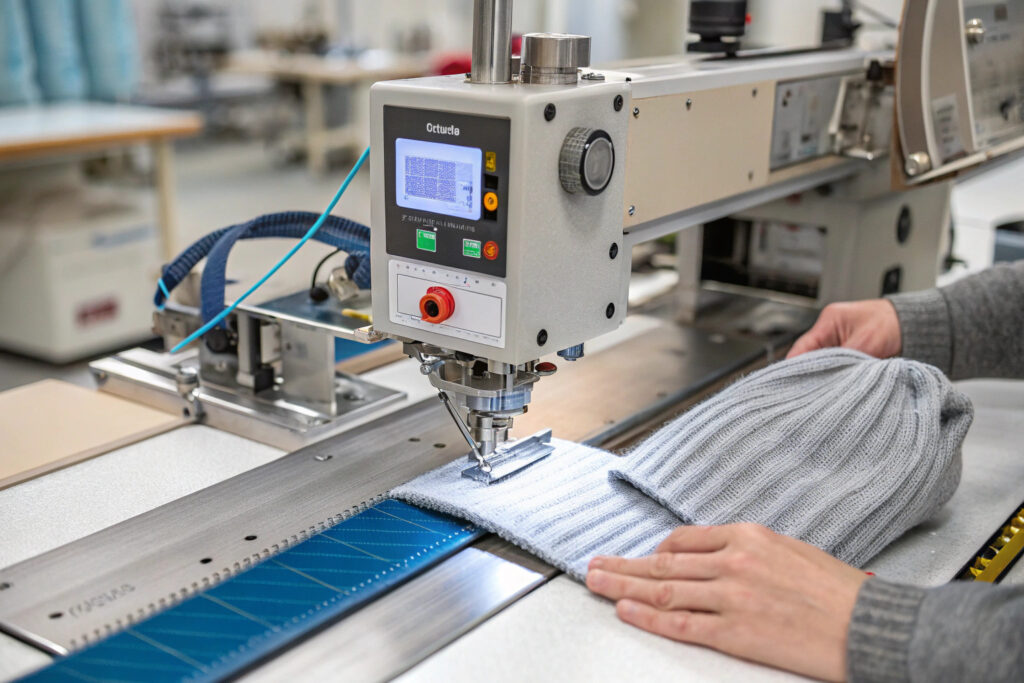
The material match is the foundation. The machine setup and process controls are the execution. Seam tape is applied using a specialized taping machine that combines heat, pressure, and feed control. The machine has a heated nozzle or wedge that directs hot air precisely onto the tape and the fabric seam. It has pressure rollers that press the heated tape onto the seam, bonding the TPU adhesive to the fabric. It has a tape feed system that controls the tension of the tape as it is unwound from the roll and applied.
The three critical machine parameters are temperature, speed, and pressure. Temperature must be precisely controlled to activate the TPU adhesive without damaging the shell fabric. The temperature is measured at the point of application, not at the heater element. We use a contact thermocouple to verify the temperature at the nip point, where the tape meets the fabric. The temperature tolerance for a merino wool beanie is tight, plus or minus 5 degrees Celsius. Speed determines the dwell time, the time the tape and fabric spend under the heated nozzle and in the pressure rollers. Too fast, and the adhesive does not fully activate. Too slow, and the fabric can scorch. The speed is set based on the tape manufacturer's specification and verified by a bond strength test on the first-off sample. Pressure is applied by the rollers. The pressure must be even across the width of the tape. Uneven pressure creates areas of weak bond that can delaminate in wear or washing.
The tape feed tension is the fourth, often overlooked, parameter. The tape is fed from a roll through a tensioning system. If the tape is fed under too much tension, it is pre-stretched when it is bonded to the unstretched seam. When the tension is released, the tape tries to contract, creating an immediate pucker in the seam. If the tape is fed under too little tension, it is loose and can fold or wrinkle under the pressure roller, creating a rippled bond. The tape feed tension must be set to zero or near-zero stretch at the point of application. We use a dancer arm or a servo-controlled feed system that actively meters the tape, ensuring it is applied in a relaxed state. This is a critical control point that requires operator training and regular calibration.
How Do You Set the Tape Feed Tension for a Curved Seam?
Beanie seams are not straight lines. They curve around the crown of the head. Applying tape to a curved seam introduces differential tension. The inner edge of the tape on the curve travels a shorter distance than the outer edge. If a straight, flat tape is applied to a curve under uniform tension, it will buckle on the inner edge.
The solution is to use a tape that has some width-wise conformability, often provided by a knitted backing that can stretch or compress independently across its width. Additionally, the machine's tape guide can be slightly angled to follow the curve, and the operator manually steers the fabric. For severe curves, the tape may need to be pre-shaped by a slight stretching of the outer edge as it feeds. This is a skilled manual operation. Our taping machine operators are specifically trained on curved seam taping. It is a distinct skill within the finishing department.
What Is the First-Off Approval Process for Seam Taping?
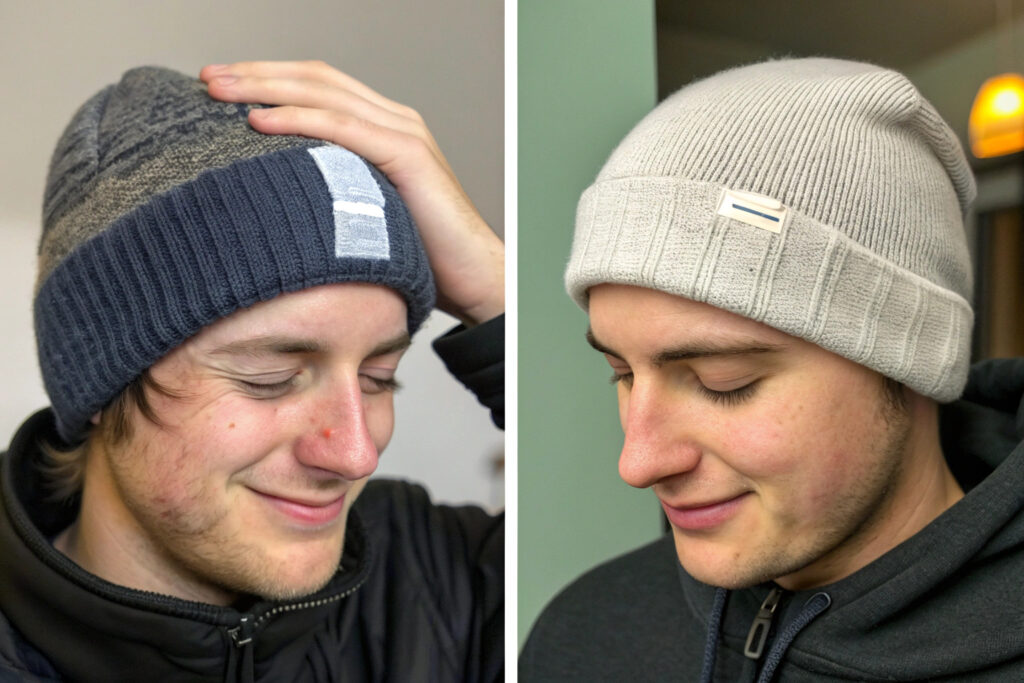
Before a production run begins, the taping machine is set up and a first-off sample is produced. This sample undergoes a rigorous approval process. The seam is inspected visually for flatness, absence of puckers or ripples, and even tape coverage over the stitch line. The beanie is stretched by hand over a head form to simulate wear. The taped seam is observed during stretching. The tape should move with the fabric seamlessly, with no lifting, buckling, or separation.
A bond strength test is performed. A section of the taped seam is cut and placed in a tensile tester. The tape is peeled from the fabric at a controlled angle and speed. The peel force is measured. We have a minimum peel strength specification for each material combination, typically 1.5 to 2.0 Newtons per centimeter of tape width. The failure mode is also noted. A clean adhesive failure, tape separates from fabric, is unacceptable. A cohesive failure within the fabric or the tape backing is preferred, indicating the bond is stronger than the material itself. Only when the first-off sample passes the visual, stretch, and bond strength tests does production begin.
How Does Seam Tape Tension Affect the Beanie's Fit, Comfort, and Durability?
The tension of the seam tape is not just an aesthetic issue. It directly affects the beanie's fit, the wearer's comfort, and the garment's long-term durability. A poorly tensioned seam tape creates a cascade of functional problems that degrade the user experience.
Fit is affected because a taped seam that is too tight acts like a rigid tendon within the stretchy knit. It restricts the overall stretch of the beanie. A beanie that is designed to fit head circumferences from 56 to 60 centimeters may only comfortably fit 56 to 58 centimeters because the taped seam is preventing the knit from stretching fully. The wearer feels a tight, constricting band along the seam line. Conversely, a taped seam that is too loose adds excess bulk inside the beanie. It creates a baggy, sloppy fit and can cause the beanie to slide around on the head.
Comfort is directly tied to the smoothness and flatness of the taped seam against the skin. The forehead and the crown of the head are sensitive areas. A ridged, puckered, or rippled seam tape will be felt as an irritation. In a high-end beanie, the interior should feel as luxurious as the exterior. The seam tape should be virtually undetectable to the wearer. This requires not only correct tension but also a tape with a soft, smooth backing, as discussed earlier, and a seam construction that positions the seam allowance flat before taping. A bulky, untrimmed seam allowance under the tape will be felt as a hard ridge, regardless of the tape tension.
Durability is compromised by incorrect tension. A tape applied under excessive tension is in a constant state of stress. Over time, this stress can cause the adhesive bond to creep and fail, leading to edge lifting and delamination. The stretched tape can also fatigue and crack, especially in cold temperatures where TPU becomes less flexible. A tape applied with insufficient tension can catch and abrade during washing, as the loose tape rubs against itself and other garments. A correctly tensioned tape is mechanically neutral. It is neither fighting the fabric nor flapping loose. It sits in equilibrium with the knit, and this equilibrium is what ensures it survives hundreds of wear-and-wash cycles.
How Do You Test the Long-Term Durability of a Taped Seam?
We subject taped seam samples to accelerated wash testing. A finished beanie is washed according to the care label instructions, typically a gentle wool cycle at 30 degrees Celsius, and air-dried flat. This is repeated for 10, 20, and sometimes 50 cycles. After each set of cycles, the taped seam is inspected for edge lifting, delamination, cracking, and any change in hand feel. The seam is also stretched over a head form to verify that the fit has not changed.
A more aggressive test is the burst strength test. A section of the taped seam is clamped in a burst tester, and increasing pressure is applied from one side until the seam fails. This simulates the stress of pulling a tight beanie over a large head. The burst strength of the taped seam should meet or exceed the burst strength of the original, untaped seam. This ensures the tape is reinforcing the seam, not weakening it.
How Does the Tape Interact With the Lining Material?
In a lined winter beanie, the seam tape covers the join between the shell and the lining. The tape is bonded to the shell fabric on one side and faces the lining on the other. The lining, often a fleece, is not bonded to the tape. It floats freely against it. If the tape surface is tacky or has a high coefficient of friction, the lining can catch and bunch against it during wear. This creates an annoying internal wrinkle that the wearer can feel.
The tape backing must be low-friction against the lining material. A brushed polyester tricot backing against a polyester fleece lining is a good combination. The two fabrics slide smoothly against each other. The tape should also be breathable to some degree, so that moisture vapor from perspiration can pass through the seam rather than being trapped. A solid TPU film is a vapor barrier. A microporous TPU film offers breathability. For a high-end winter beanie intended for active use, I specify a breathable tape construction.
Conclusion
Managing the tension of seam tape inside a high-end winter beanie is a sophisticated manufacturing discipline that integrates material science, precision machinery, and skilled human judgment. The tape material must be carefully selected to match the stretch and recovery of the shell knit, with a soft, durable backing and a heat activation temperature compatible with the fibers. The taping machine parameters, temperature, speed, pressure, and tape feed tension, must be precisely set and verified through a rigorous first-off approval process that includes visual, stretch, and bond strength tests. The tape feed tension must be zero-stretch at the point of application, a control that requires specialized equipment and trained operators, especially for the curved seams of a beanie crown. The result of correct tension is a seam that is visually flat, physically comfortable, and durable through repeated wear and washing. The result of incorrect tension is a seam that puckers, irritates, and delaminates, undermining the premium quality of the entire beanie.
The internal finishing of a beanie is the truest measure of the factory's quality commitment. The outside is what the customer sees on the shelf. The inside is what the customer lives with every time they wear it. A factory that obsesses over seam tape tension is a factory that understands this truth.
If you are developing a premium winter beanie line and need a manufacturing partner who treats internal finishing as a priority, not an afterthought, I invite you to contact Global-Caps. We have invested in the taping technology, the material testing protocols, and the operator training to produce flawless taped seams. We can provide you with seam tape material samples, stretch test data, and a finished beanie sample with our standard interior finishing for your evaluation. Reach out to our Business Director, Elaine, at elaine@fumaoclothing.com with your beanie design. Let's create a beanie that feels as exceptional on the inside as it looks on the outside, a product your customers will love to wear, not just to look at.