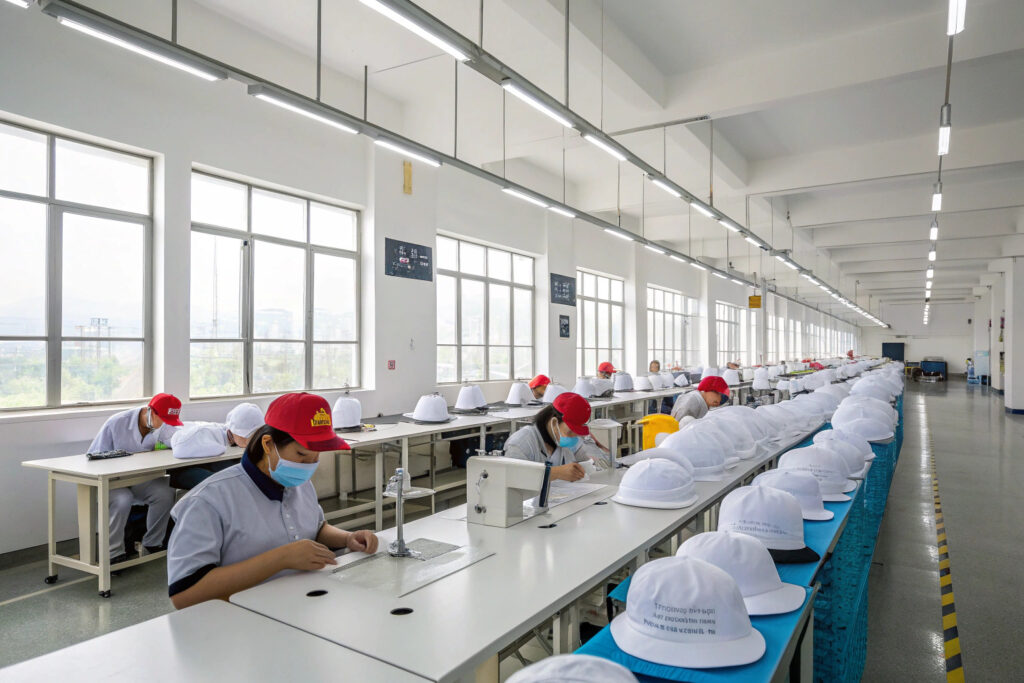
Every time I place a new custom headwear order, a small worry sits at the back of my mind. I think about the hands that stitch my caps. I wonder if those hands belong to people who are treated fairly. That worry is not just about ethics. It is about my own business risk. A single labor scandal can destroy a brand I spent years building. I used to rely on supplier promises. I trusted certificates they emailed me. But I soon learned that paper can lie. A real factory audit report does not just check boxes. It validates the actual working conditions behind every baseball cap and knit hat I import. It gives me proof, not just promises.
A factory audit report validates working conditions by sending a trained third-party inspector directly into the production facility without notice. The inspector checks real-time records, speaks privately with workers, and observes the physical environment. The resulting report confirms whether fire exits are unblocked, whether wages meet legal standards, and whether overtime is voluntary. This process turns an invisible supply chain into a transparent one. It is the only way to truly know if your custom headwear factory meets the standards your customers expect.
I remember the first time I walked through my own factory in Zhejiang with an auditor from an American client. The auditor was thorough. He opened emergency exit doors. He checked the fire extinguisher expiration dates. He even pulled random workers aside for confidential interviews. That experience taught me something important. A clean factory floor is easy to fake for a scheduled visit. Genuine working conditions are only visible when the audit is unannounced and the questions are sharp. If you are sourcing custom hats right now, understanding how an audit report actually works can protect your business. Let me explain the process from the inside.
How Does a Third-Party Factory Audit Ensure Ethical Headwear Production?
I used to think hiring a third-party auditor was an extra cost I did not need. I was wrong. A real audit from an independent company changes everything. When I say "third-party," I mean an organization that has zero financial interest in whether my factory passes or fails. This independence is the foundation of trust. My factory in Zhejiang has hosted auditors from several major firms over the years. Each time, the process follows a strict protocol that no factory owner can manipulate.
A third-party factory audit ensures ethical headwear production by introducing an independent inspector who follows a standardized checklist based on recognized frameworks like SMETA or BSCI. The auditor arrives without a vested interest in the outcome. They check payroll records against time cards. They measure air quality on the production floor. They verify the age of every worker through official identification documents. Because the audit firm's reputation is on the line, they will not soften the findings for a repeat client. This independence guarantees that the report you read reflects reality.
Auditors operate on a zero-tolerance policy for critical issues. I have seen factories lose major contracts because an auditor found a locked fire exit during an unannounced visit. A locked door takes five seconds to unlock. But for that moment, it is a life-threatening violation. The audit report captures that truth without sugarcoating it. The auditing company's own business model depends on accuracy. If they get a reputation for taking bribes or missing violations, their entire value proposition collapses. This system works precisely because the person holding the clipboard does not answer to the factory owner. They answer to a global compliance firm whose only asset is credibility.

How Do Auditors Verify Worker Treatment Without Factory Interference?
Worker interviews are the part of the audit that makes factory managers nervous. I understand why. You cannot control what a worker says. For my team at Global-Caps, this has never been a problem because we treat our people well. But I have seen other factory owners sweat through these sessions. The auditor selects workers randomly. The factory cannot suggest who to interview. The meeting happens in a private room away from any supervisors. This is non-negotiable.
The auditor usually asks simple but revealing questions. "Can you leave the factory during your break?" "Do you keep your own ID card?" "When was your last day off?" "How much overtime did you work last month?" These questions cut through fake records. If payroll shows 40 hours but a worker says 60, the auditor digs deeper. One of the most common violations found during these interviews is the withholding of original ID documents. Some factories hold passports to prevent workers from leaving. A legitimate factory returns all documents immediately after registration. My factory has a strict policy on this. New hires receive a handbook in their native language explaining their rights. The auditor will ask to see this handbook and confirm the worker actually understood it. Transparency at this level is what separates an ethical cap supplier from a risky one. The Sedex Members Ethical Trade Audit methodology provides an excellent framework for conducting these confidential sessions without bias.
What Specific Safety Violations Do Headwear Factory Audits Typically Uncover?
Safety violations in headwear factories often fall into predictable patterns. Fabric dust accumulation is a big one. Cutting and sewing cotton and wool generates fine particles. If the ventilation system is poor, those particles hang in the air. Workers breathe them in all day. A proper audit checks the airflow rate and inspects the dust collection bags. Electrical wiring is another common problem area. I once visited a competitor factory where extension cords snaked across the floor in puddles of water from a leaking roof. That factory is now closed.
Fire safety is the most critical category. Auditors check if exit doors open outward. They verify that exit signs have backup batteries. They test the fire alarm to see if it reaches the dormitory area. Blocked aisles are a quick failure. In a crowded sewing room, rolls of fabric often spill into walkways. My factory keeps aisles painted in bright yellow with strict rules about keeping them clear. Our daily checklist includes an aisle sweep before every shift. Chemical storage is less obvious but equally important. Hat production uses adhesives for stiffening brims and bonding logos. Some adhesives contain volatile organic compounds. The audit verifies that these chemicals are stored in ventilated cabinets away from heat sources. Workers handling them must have protective gloves and respirators. The auditor checks the material safety data sheets for every solvent in the building. If a factory ignores chemical safety, the audit report will flag it immediately. The standards set by the Worldwide Responsible Accredited Production certification cover these exact safety protocols in detail.
What Information Is Included in a Headwear Factory Audit Report?
I read every audit report on my factory as if my business depends on it. Because it does. The document usually lands in my inbox as a PDF, twenty to thirty pages long. It is dense but structured. The first few pages give you the overall score. A color-coded system is typical. Green means compliant. Yellow means improvement needed. Red means critical failure. The rest of the pages drill down into specific categories with photographs and timestamps.
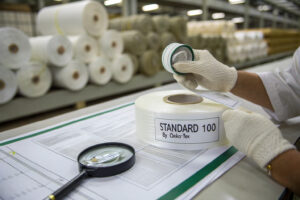
A headwear factory audit report includes photographs of the production floor, copies of payroll records with names redacted, timecard punch data, and certificates for equipment testing. It documents the factory's legal business license and any subcontractor registrations. The report breaks findings into modules. Labor standards is one module. Health and safety is another. Environmental impact and business ethics are separate sections. Each finding is cross-referenced with photographic evidence. If a missing machine guard is reported, a photo of that exact unguarded machine appears beside the description. This evidence-based approach makes it nearly impossible for a factory to dispute legitimate findings.
The audit report also shows historical data if the factory has been audited before. This is crucial. A single snapshot can be misleading. A factory might scramble to fix everything for one day. But a trend line tells the truth. I am proud that my facility shows consistent green marks across multiple audits spanning five years. The report also includes the auditor's professional credentials and signature. This is a legal document. The auditor stakes their professional license on its accuracy. For buyers, the corrective action plan section is the most actionable part. It lists every non-compliance and what the factory must do to fix it, with a deadline. If a factory ignores that plan, the next audit will catch it. A buyer can also request a follow-up audit focusing only on those corrective actions. This creates a continuous improvement loop that keeps factory conditions from slipping backward over time.

Can a Factory Audit Report Reveal Subcontracting Without Authorization?
Unauthorized subcontracting is the dirty secret of the apparel and headwear industry. A factory takes your order. You think your caps are being sewn on their main floor. But late at night, half-finished panels get loaded onto a truck and sent to a small, unlicensed workshop three miles away. That workshop never passes an audit. It is cheap and invisible. The prime factory pockets the margin difference. This practice is extremely risky for buyers. You lose all visibility into working conditions and quality control.
An audit report can detect unauthorized subcontracting through several forensic methods. The auditor counts the actual production capacity. They compare the number of sewing machines and workers against the factory's reported output. If the numbers do not add up, something is being produced off-site. They also check utility bills. Electricity consumption should correlate with production volume. A sudden drop in power usage while output stays high is a red flag. The auditor also inspects the shipping and receiving logs. Incoming raw material weight should roughly match outgoing finished product weight after accounting for waste. Discrepancies suggest materials are being processed elsewhere. During my own BSCI audit preparation, our auditor spent an entire morning in the warehouse area cross-checking inventory tags against production schedules. It was tedious but necessary. A buyer who receives an audit report should specifically look for capacity analysis comments. Those few paragraphs can reveal whether the factory actually makes what it sells.
How Do Payroll and Timecard Checks Validate Fair Wages?
Wage verification is the most technical part of the audit. It is also the part where factories most frequently try to cheat. The auditor starts with the legally mandated minimum wage for the region. Zhejiang's minimum wage is different from Guangdong's. A proper report clearly states which standard applies. The auditor then pulls a random sample of workers. They look at net pay deposits on bank statements. They compare that to gross pay on the factory's payroll ledger. Deductions must be itemized and legal.
Overtime pay calculation reveals the most violations. Chinese labor law caps overtime at 36 hours per month. It requires a 1.5x rate for weekday overtime and 2x for weekend work. The auditor manually recalculates the overtime rate for the sampled workers. I have seen reports where the factory paid the base rate for all hours, effectively stealing workers' overtime premium. Piece-rate payment systems are common in hat sewing. Workers get paid per dozen caps finished. This is legal if the rate ensures average productivity achieves at least minimum wage. The auditor runs a simulation. If a worker producing at a normal pace cannot reach the legal minimum wage, the piece rate is flagged as non-compliant. The report also checks for timely payment. Wages must be paid at least once a month. Delays suggest cash flow problems or intentional withholding. The Fair Labor Association provides detailed guidelines on how these wage and hour audits should be conducted to meet global standards.
How Does an Unannounced Audit Differ From a Scheduled Factory Visit?
I have hosted both types of audits. The scheduled visit is a performance. The unannounced audit is the truth. When I know an auditor is coming on Tuesday at 9 AM, my team prepares. We do a final deep clean. We remind workers of the rules. We gather all our certificates into a neat binder. The factory looks perfect for those few hours. This is not necessarily deceptive. It is human nature to clean up for guests. But the snapshot you get from a scheduled visit is the factory on its best behavior.
An unannounced audit differs from a scheduled visit by capturing the factory in its normal operating state without preparation time. The auditor simply shows up at the gate with identification and demands immediate access. This method reveals whether fire exits are habitually unblocked, not just cleared that morning. It shows the real pace of work and whether supervisors are respectful or abusive under normal pressure. The psychological dynamic shifts completely. During an unannounced audit, management is reactive, not proactive. The auditor sees the factory breathing naturally, for better or worse.
The most revealing difference is in the small housekeeping details. During a scheduled visit, the restrooms are spotless and stocked with soap. During an unannounced visit, you might find empty soap dispensers or a broken toilet that maintenance has ignored for weeks. These little things reflect management's daily commitment to worker dignity. I remember an unannounced audit at my facility where the auditor walked straight into the workers' canteen at lunchtime. He wanted to see the food, not the sample platter I might have prepared. He sat down and ate with the staff. That level of access is simply not replicable during a planned event. Unannounced audits also prevent document fabrication. Payroll records for a scheduled audit can be adjusted in advance. Fake timecards can be printed. But when an auditor walks in without warning, they go straight to the HR office and ask to see the raw clock-in database on the computer server. That data does not lie. If your custom hat supplier only agrees to announced audits, that is a negotiation you should reconsider.

Why Do Unannounced Audits Lead to More Accurate Working Condition Reports?
A factory manager once told me he could hide anything if given 24 hours notice. He was exaggerating, but only slightly. The accuracy difference between announced and unannounced audits comes down to how human organizations behave under observation. Every factory has an ideal operating procedure manual. And every factory has a real, messy, everyday routine. The gap between those two is the risk you are buying when you source custom hats.
Unannounced audits are more accurate because they prevent the temporary concealment of systemic problems. A factory can unlock fire exits for one day and chain them up again the next. An unannounced auditor sees the chain. A factory can bring in fake "supervisors" to stand in for real line managers during the visit. An unannounced auditor sees who is actually giving orders on the floor. The accuracy extends to document verification. Hard drive files have creation dates. Freshly fabricated spreadsheets will have a timestamp of the night before the visit. The auditor checks metadata. The report gains credibility because the evidence chain is unbroken. For high-volume headwear programs going to major retailers in America, unannounced audits are becoming the default requirement. The major social compliance auditing firms now offer semi-announced protocols where they give a short window, like two weeks, without specifying the exact day. This balances practicality with surprise. The factory knows the month but not the moment.
What Should You Do if a Supplier Refuses Unannounced Audits?
A supplier's reaction to an unannounced audit request is a litmus test. If they immediately agree, even if they request that the window be narrowed to a specific month, that is a sign of basic confidence in their operations. If they hesitate, offer excuses, or flatly refuse, you have a serious problem. I have seen this play out many times from the supplier side. Factories with nothing to hide do not fear surprise inspections.
If a supplier refuses unannounced audits, you should treat this as a major red flag and consider pausing the partnership. The refusal usually masks one of three problems. First, the factory uses unauthorized subcontracting and cannot control conditions in those sub-workshops. Second, they maintain dual payroll records and need time to hide the real set. Third, they have structural safety issues that are too expensive to fix permanently, so they only address them for scheduled visits. Your response should be direct. Send a formal email explaining that unannounced audit rights are a non-negotiable term in your purchase agreement. If the supplier still resists, you should diversify your sourcing immediately. Contact alternative suppliers who have recent, transparent audit reports. Many brands keep a backup list for exactly this scenario. At Global-Caps, we specifically highlight our openness to unannounced audits in our initial capability presentations. It reassures serious buyers. You should also check the supplier's history on platforms where other buyers leave reviews about audit cooperation. The absence of this willingness is not a bargaining position. It is an admission of vulnerability. Your brand's safety is not worth a discount on cap pricing.
How Should You Interpret Audit Scores and Corrective Action Plans?
The first time I saw an audit report for my own factory, I felt defensive. A few yellow marks felt like a personal failure. My project managers had to explain that yellow is normal. Yellow means "needs improvement," not "illegal." Over time, I learned that a perfect report with zero findings is actually suspicious. It suggests the audit was superficial or the factory was extremely good at hiding things. Real factories have real friction. The value is in how they respond to it.
You interpret audit scores by focusing on severity levels and recurrence patterns rather than a simple pass or fail summary. A critical red finding, such as child labor or a blocked fire exit during working hours, should be a dealbreaker. An orange finding on a missing first aid kit refill is a minor fix. Look at the trend. If a factory gets the same orange finding across three consecutive audits, it reveals a management blind spot or a deliberate choice to ignore the issue. The corrective action plan is your most valuable management tool. It lists specific corrective actions with responsible persons and deadlines. You should treat it as a contract amendment, not a suggestion. Ask the supplier to provide photographic evidence of every completed fix by the deadline. This shifts your relationship from passive monitoring to active quality partnership.
The scoring methodology itself varies by auditing body. Some use a simple A-B-C grade. Others use a percentage. Do not get lost in the final number. The details in the supporting narrative hold the real insight. I review my factory's audit narratives line by line with my quality control manager. If an auditor writes, "Worker appeared hesitant to answer questions regarding overtime," that single sentence is a red flag regardless of the overall score. You need to ask follow-up questions. Scores are lagging indicators. The auditor's observations are leading indicators of potential future problems. Focus there. If you lack experience reading these technical documents, ask the supplier to walk you through the report via a video call where they share their screen. Their comfort level in discussing findings will tell you more than the scorecard.

Should You Accept a Factory With a Yellow or Orange Audit Grade?
I would absolutely accept a factory with a yellow or orange grade, under specific conditions. In fact, some of the best factories I know operate in the yellow zone. Orange is more serious but often fixable. The decision depends on what exactly caused the grade and how fast the factory can fix it. A yellow grade for a minor documentation inconsistency is very different from an orange grade for inadequate fire drills.
Accept a yellow or orange grade if the findings are minor, non-systemic, and the factory provides a credible remediation plan within 30 days. Examples of acceptable yellow findings include a single expired fire extinguisher that was immediately replaced, a payroll typo affecting one worker that was corrected and back-paid, or a missing safety poster on one floor. These are administration gaps, not ethical failures. Orange findings demand more scrutiny. If the orange mark is for excessive overtime, verify the root cause. Was it a short-term seasonal spike with proper consent and premium pay? Or is it chronic overwork? Ask for the last six months of overtime data, not just the audit snapshot. If the factory cannot provide that, walk away. My factory once got a yellow mark because a new employee's contract was filed one day late due to a public holiday. We showed the auditor the holiday calendar and the timestamped digital filing the next morning. It stayed yellow on that report but did not recur. Buyers who understand this nuance build more resilient supply chains. They do not constantly chase a perfect score, which can incentivize factories to hide problems rather than fix them. The Ethical Trading Initiative base code provides a practical framework for judging which findings are truly critical versus which are administrative.
How Can You Verify That Corrective Actions Are Actually Implemented?
A signed corrective action plan is a promise. Implementation is the fulfillment of that promise. You cannot just trust a supplier's email saying "fixed." I learned early in my career that some factory managers consider a problem solved once they have typed a reply. That is not verification. As a buyer, you need evidence that exists independently of the supplier's word.
You verify implementation by requesting timestamped photographic evidence, scheduling a focused follow-up audit, or conducting a live video walkthrough of the corrected areas. Start with photos. Ask for close-ups of the new fire extinguisher inspection tag showing a current date. Ask for a screenshot of the payroll software showing the corrected overtime calculation for the affected employees. But photos can be staged. That is why a short follow-up audit, often called a "limited scope audit," is the gold standard. It is faster and cheaper than a full audit because it only checks the previously flagged issues. If a full follow-up is not in the budget, a live video call works as a reasonable alternative. I have done this for buyers many times. They ask me to walk onto the factory floor with my phone camera. They ask to see the exact exit door that was blocked last time. I show them the clean, clear path in real-time. No chance to stage it. You can also use a digital compliance platform where the supplier uploads documents that get verified by a third-party remotely. The key is eliminating the time gap between the "fix" and the verification. The shorter the gap, the more reliable the evidence. This active follow-up also sends a powerful message to the supplier: you are a buyer who reads reports carefully and holds people accountable. That reputation alone improves your supply chain compliance over time.
Conclusion
A factory audit report is not a piece of paper. It is a physical record of your brand's integrity stitched into every seam of the custom hat you import. When I look at the baseball caps and knit hats leaving my Zhejiang facility, I see the hundreds of hours of auditor scrutiny that validated the conditions inside those walls. I see the unannounced walkthroughs, the private worker interviews, and the payroll forensics. All of it confirms something simple but profound. The people making your products work in a place that respects their safety and their dignity. For a brand owner in America or Europe, that confirmation is worth more than any margin you might squeeze from a cheaper, unaudited supplier. The market has changed. End consumers now check tags. They ask questions on social media. They demand proof. An audit report is your answer. It protects you from scandal. It builds trust with your retail partners. It ensures your shipment does not get stuck at customs because of forced labor allegations. Moving forward, require audit rights in your contracts. Prioritize suppliers who welcome surprise inspections. Read the corrective action plans as carefully as you read your order confirmations. And do not be afraid of yellow scores. Be afraid of suppliers who claim they are perfect.
If you are looking for a reliable custom headwear partner who can provide transparent, verifiable audit reports and a consistent commitment to ethical production, I invite you to connect with us at Global-Caps. We have spent years refining our factory systems to meet and exceed global compliance standards. We do not fear the unannounced visit. We welcome it as a chance to prove our values. For any serious sourcing inquiries, technical discussions about compliance, or to schedule a virtual tour of our facility in Zhejiang, you can reach our Business Director Elaine directly at elaine@fumaoclothing.com. She can walk you through our latest SMETA audit documentation and show you how we manage quality and compliance from development through final shipment. Let us build a hat program you can be proud to sell.