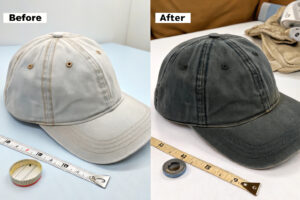
I learned this lesson the hard way in my first year of business. I sent a simple email to my cutting room: "Green caps, same as last time." I assumed the team would reference the archived shade. They did not. I shipped 5,000 forest green caps to a client who expected lime green. The client rejected the entire shipment. My email was legally worthless. It contained no measurable standard, no delivery window, and no penalty clause. I ate a $12,000 loss because I failed to write a real purchase order.
You lock in hat quality and lead times by writing a purchase order that functions as a legally binding production contract, not just a payment request. The PO must contain four non-negotiable elements. First, a product description that references an approved physical sample and a sealed tech pack. Second, a measurable quality tolerance for key points like brim curvature, colorfastness, and stitch density. Third, a ship date backed by a liquidated damages clause for late delivery. Fourth, an inspection right that lets you reject the entire lot before final payment. If any of these four pillars is missing, your PO is a wish list, not a contract.
I have shipped millions of hats to North America and Europe using this exact PO framework. It has saved our clients from guessing games and protected our factory from false claims. I will show you how to build a PO that makes both sides sleep well at night. This is the practical, clause-by-clause system that turns a casual order into a professional, enforceable agreement.
What Essential Clauses Should Every Hat Purchase Order Include?
A standard PO template from an accounting software is not enough. It covers the billing address and the quantity. It ignores the reality of textile manufacturing. A shipment of hats can match the PO quantity exactly and still be commercially worthless because the sweatband is the wrong thickness or the snap closure is off-color. You must add clauses that speak the language of the factory floor.
I divide a professional hat PO into four technical clauses. The "Golden Sample Reference" clause states that the final bulk production must be materially identical to a sealed, signed sample held by both parties. The "Quality Tolerance Matrix" clause defines acceptable defect limits using an agreed AQL, usually 2.5 for major defects and 4.0 for minor defects. The "Lead Time and Delay Penalty" clause locks in the exact ex-factory date and imposes a 1% to 3% discount per week of delay. The "Pre-Shipment Inspection Right" clause requires the factory to pause shipment until you or your appointed third-party inspector signs off. These four clauses transform a simple order form into a quality control instrument.
Clauses alone are not enough if the product description itself is vague. You must first ensure the PO describes the hat with the precision of a forensic scientist. This prevents the factory from substituting cheaper materials after the contract is signed.

How Do I Reference a Sealed Pre-Production Sample Correctly?
You cannot just write "same as sample." The factory can claim the sample was lost, or a different sample was the "real" reference. I require a physical "Golden Sample" that is signed with a permanent marker across the sweatband by both the buyer and the factory QC manager. We then photograph it from five angles and attach the photos as an appendix to the PO document.
The PO text must state: "Bulk production must match the sealed Golden Sample dated [Date] and signed by [Names] in all materials, colors, and construction details. Any deviation must be approved in writing via a counter-signed amendment." This makes the physical sample a binding reference. If a thread color is one shade off, you can point to the appendix and demand a correction. No ambiguity remains.
Why Must You Define an Acceptable Quality Limit in Writing?
Without an AQL, your rejection of the shipment is an opinion. The factory can argue that you are being unreasonable. An AQL 2.5 means that if more than 2.5% of the inspected hats have a major defect, like a broken buckle or a stained panel, the entire lot fails. This is an international standard.
I always suggest adding a "critical defect" line. A critical defect is any flaw that could harm the user, like a needle tip left inside the sweatband. The AQL for critical defects must be zero. You write into the PO: "Critical defects: AQL 0. Major defects: AQL 2.5. Minor defects: AQL 4.0. Inspection Level II, ISO 2859-1." This AQL standard is globally recognized. A factory that refuses to commit to a specific AQL is a factory that expects a high failure rate.
How Can I Specify Dimensional Tolerances for Hat Fit and Shape?
A hat that is half an inch too shallow will not sit on a customer's head. It will feel like a child's cap. A brim that is two degrees off-spec will look lopsided in a retail display. You must write dimensions into the PO, but you also must allow for a realistic textile tolerance. Fabric stretches and rebounds. A zero-tolerance spec is impossible to achieve. A smart spec is tight where it matters and relaxed where it does not.
I specify three critical dimensions for every cap style. The crown height, measured from the center front base to the top button. The visor width, measured tip-to-tip along the outer curve. The closure length, measured from the buckle base to the end tip. The acceptable tolerance for a structured cotton cap is plus or minus 3 millimeters on the crown height and 5 millimeters on the visor width. Anything beyond that indicates a cutting or sewing error, not a natural fabric variation. We also test the sweatband opening circumference against the size chart. A "one size fits most" cap must stretch comfortably between 55 and 60 centimeters. The PO must state this test method: "Sweatband to be tested on a spring-loaded hat stretcher to 60 cm without seam rupture."
Dimensions control the fit, but the materials control the feel. A cap that measures perfectly but feels like sandpaper to the touch is still a failure. You must extend your precision from the tape measure to the fabric swatch book.

How Do I Lock In the Exact Shell Fabric and Sweatband Material?
Fabric names are traps. "Cotton twill" covers a hundred variations. You must specify the gram weight per square meter, the yarn count, and the dye method. I recommend writing: "Shell: 100% Cotton Twill, 260 GSM, 20s x 10s yarn, reactive-dyed for colorfastness."
The sweatband requires even more detail because it touches the skin. Do not accept just "cotton sweatband." Write: "Sweatband: 100% Cotton Terry, 400 GSM, black, OEKO-100 certified, with a latex-free elastic insert." This sentence blocks the factory from using a cheap polyester-blend terry that will pill and crack. If you are sourcing from us, you can directly reference our standard certified sweatband spec. For other suppliers, insist on a fabric specification sheet signed by the mill. This becomes Exhibit B of your PO.
What Is a Realistic Color Matching Tolerance in a Hat PO?
Pantone codes are essential, but not foolproof. A dyed cotton twill will never perfectly match a Pantone ink printed on coated paper. The texture of the fabric shifts the eye's perception of the color. I set a standard of "Delta E ≤ 1.5 under D65 daylight lighting." This is a measurable color difference that matches what the human eye can barely perceive.
The PO should also state how the color check will be performed. "Supplier to provide a lab dip on actual shell fabric for approval before bulk dyeing. Bulk color must match the approved lab dip, not the Pantone paper swatch." This color matching protocol prevents the most common dispute in the hat industry. The buyer looks at a paper book. The factory dyes cotton. The two substrates will never be identical. The lab dip bridges this gap.
What Payment and Penalty Terms Protect a Hat Importer?
A supplier who refuses penalty clauses is a supplier who plans to miss your ship window. A supplier who demands 100% payment before shipment is a supplier who has no working capital. The payment and penalty terms in your PO are the ultimate test of a factory's financial integrity. You must protect your cash flow while giving the factory a workable schedule.
I advise buyers to structure payment in three gates. Gate one: 30% deposit with the PO and approved sample signing. This funds the raw material purchase. Gate two: 40% upon a "pass" from a third-party inline inspection during production. This verifies that the work is real and the quality is tracking correctly. Gate three: 30% T/T against a copy of the bill of lading, or at sight, after a successful final inspection. Never pay the full balance before you have an independent inspection report in your hand. I tell our clients this directly: if you pay 100% upfront, you turn yourself into a beggar. You should be a customer, not a supplicant.
The penalty structure is just as critical. A delivery window is a promise. A penalty gives that promise teeth. But the penalty must be fair enough to be enforceable in a real business relationship, not so punitive that the factory abandons the order entirely.

How Do You Enforce a Liquidated Damages Clause for Late Shipment?
A liquidated damages clause compensates you for the lost sales caused by a delayed seasonal launch. The key is to make the penalty predictable and capped. I accept a clause that states: "For each full week of delay past the agreed ex-factory date, the supplier shall deduct 2% of the total PO value, capped at a maximum of 10%." This is a real incentive.
If the delay reaches four weeks, you have the right to cancel the order and receive a full refund of the deposit. This clause must be explicitly written. Without a cap, the clause may be unenforceable in a Chinese court as it looks like a punishment rather than a true estimate of damages. I have paid a 5% deduction on an order once when our embroidery machine breakdown caused a 15-day delay. It hurt, but it was fair. The client used the deduction to offset their customer's discount demand. The relationship survived because the penalty clause was clear from day one.
Why Should You Link Final Payment to an Independent Inspection Report?
Your eyes are biased. The factory knows this. A third-party inspection company like Bureau Veritas, SGS, or AsiaInspection provides a legally defensible report with photographs, defect lists, and an AQL pass/fail verdict. You write into the PO: "The final 30% payment is conditional upon the buyer's receipt of a 'PASS' result from a pre-shipment inspection conducted by an ISO 17020-accredited agency."
This clause removes the emotion from the payment release. The factory cannot pressure you to pay because "the container is already at the port." If the inspection fails, the shipment does not move until the defects are reworked and a re-inspection passes. This is the most powerful quality inspection tool a buyer has. I welcome these inspections at our facility. A factory that resists an independent inspection is a factory that hides a dirty production line.
How Do I Structure a PO to Manage Multiple Shipment Batches?
A single PO for 10,000 hats does not mean all 10,000 must arrive at once. Many retail distributors need a phased delivery schedule to match store opening dates or Amazon FBA inventory limits. A smart PO breaks the bulk order into "call-off" batches. This gives you inventory control and ensures the factory does not rush the entire order through finishing in one chaotic 24-hour shift.
I call this a "Batch Delivery Schedule" clause. The PO header might state a total quantity of 6,000 caps. Then a table below divides this into three tranches. Batch 1: 2,000 units, ex-factory date March 15. Batch 2: 2,000 units, ex-factory date April 1. Batch 3: 2,000 units, ex-factory date April 15. Each batch has its own inspection right and payment milestone. This structure forces the factory to plan their production line properly. They cannot steal resources from your order to fill another client's rush job, because your second and third batches are already locked into the schedule. The inspection on Batch 1 also provides an early warning system. If Batch 1 fails, you can halt production on Batch 2 before it starts.
A batch structure creates a rhythm of delivery, but it only works if the labeling and documentation for each batch are flawless. A mixed-up pallet can shut down your warehouse operation and incur chargebacks from major retailers.

What Labeling Requirements Prevent Warehouse Receiving Chaos?
Each carton in a batch must be externally marked with the PO number, the batch number, the quantity inside, and the destination if it is a cross-dock shipment. You spell this out in the PO: "Outer cartons to be marked with a 4" x 6" label affixed to two sides. Label to include: PO# [XXXX], Batch [X of Y], Carton [X of Z], Net Weight, and a unique barcode."
We pre-send our clients a PDF of the exact shipping marks for approval. This prevents a situation where your 3PL charges you a sorting fee because the cartons arrived unmarked. For Amazon sellers, the PO must also confirm that each individual hat has a FNSKU barcode sticker applied, and that the factory is using approved polybags with a suffocation warning. This detail converts a factory shipment into a retail-ready delivery.
How Do I Use the PO to Confirm Packaging and Insert Standards?
The hat itself may be perfect, but a crushed box or a missing insert card can trigger a retail refusal. Your PO must include a packaging spec sheet. This sheet defines the fold pattern of the cap, the type of tissue paper insert, the polybag thickness, and the placement of the hangtag.
Write this into the general notes: "Each cap to be folded with a recycled tissue paper insert to maintain crown shape. Each cap to be inserted into a clear, self-seal polybag of minimum 1.5 mil thickness. Hangtag to be attached through the sweatband sizing label, not through the front panel." This level of detail separates a professional PO from an amateur one. You can find standard packaging specifications guides from GS1 US that help define these rules.
Conclusion
A purchase order is not a formality. It is the single most important document you will exchange with your hat factory. A well-written PO eliminates the space where mistakes hide. It locks the color to a lab dip, the fit to a millimeter tolerance, the delivery to a calendar date with financial teeth, and the final payment to an independent, verifiable inspection result. When a dispute arises, you do not argue opinions. You both return to the signed PO and the sealed Golden Sample. The document tells the truth.
I have built the Global-Caps order processing system around the belief that a clear PO protects both the buyer and the maker. We actively help our first-time clients draft a PO structure that captures every spec we agreed upon during the sampling stage. We want your order to be boringly predictable. A predictable order builds trust, and trust builds a business that lasts decades.
If you are ready to issue a detailed purchase order for a custom headwear project and want a manufacturing partner who will honor every clause, reach out to our Business Director, Elaine. She can send you our standard PO checklist and help you translate your quality requirements into measurable, enforceable specifications. Email her at elaine@fumaoclothing.com to start building a supply chain that runs on clarity, not assumptions.