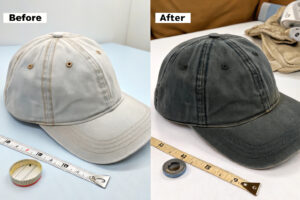
You finalize the design of your new snapback cap. The crown fabric is perfect. The embroidery is sharp. The brim curve is exactly right. You place a bulk order of 10,000 units and ship them to your retail partners. Two weeks later, the emails start. Customers are complaining that the plastic snaps at the back of the cap are cracking. Some snap buttons are falling off entirely. The closure will not stay closed. Your retail partner is furious. They are issuing chargebacks and threatening to return the entire shipment. You test a few caps in your office and discover the plastic is brittle, the prongs are snapping, and the sockets are deforming. You just learned the most expensive lesson in headwear sourcing: the weakest component defines the entire product's quality.
The plastic snap closure is a tiny, inexpensive part. It costs pennies. But when it fails, it renders the entire cap useless. A cap with a broken closure is not a cap. It is a piece of fabric that cannot be worn. I run Global-Caps, and over the years, I have seen snap failures destroy brand relationships. The good news is that snap strength is entirely testable before a single cap is packed. In this article, I will teach you the simple, practical tests you can perform yourself, the test data you should demand from your factory, and the material specifications that predict long-term snap durability.
What Physical Tests Can I Perform on a Snapback Closure Sample Right Now?
You do not need a laboratory to get a meaningful initial assessment of snap quality. You can perform several low-tech tests on a pre-production sample in your own office. These tests will not give you a precise Newton force value, but they will expose the most common catastrophic failure modes: brittle cracking, socket deformation, and prong breakage. They are fast, free, and will immediately tell you if a sample is worth sending to a lab for formal testing.
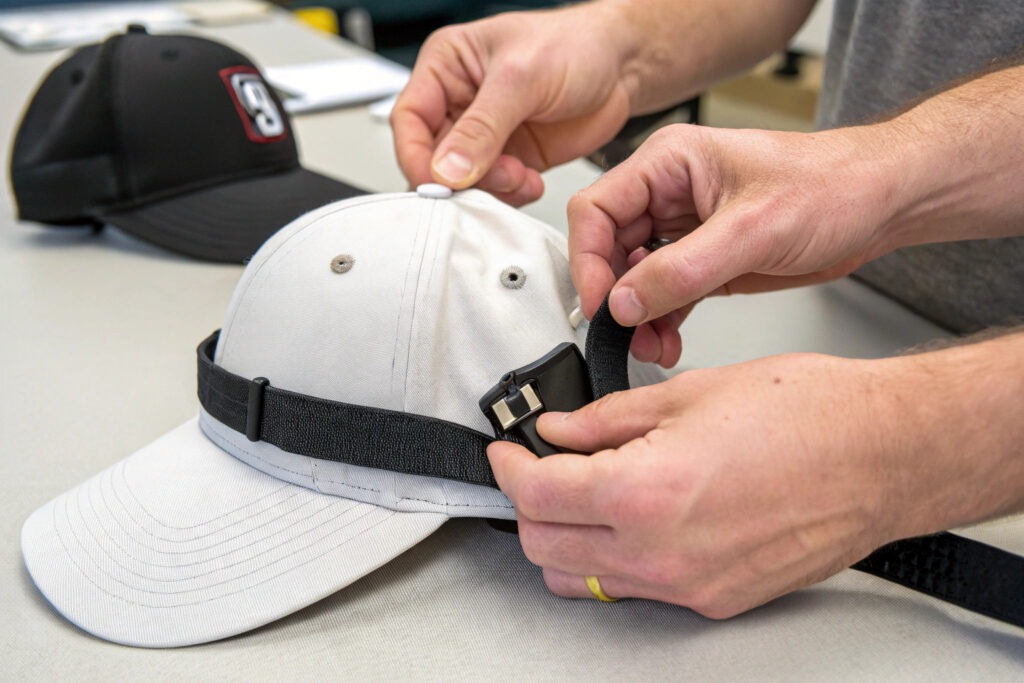
Start with the engagement and disengagement cycle test. Simply snap and unsnap the closure 50 times in a row. Do it at a steady pace, about one cycle per second. Pay attention to how the snap feels. A quality snap will have a consistent, positive engagement feel throughout all 50 cycles. The "click" should be crisp and audible. If the engagement feel becomes loose after 10 or 20 cycles, or if the snap starts to spontaneously disengage, the socket is deforming permanently. This is a sign of low-grade plastic that lacks elastic memory. Next, perform the overload flex test. Close the snap. Grip the cap on either side of the closure and pull firmly outward, applying pressure from inside the cap band, simulating the stress of a wearer with a larger head size or someone adjusting the cap roughly. Pull to a reasonable tension and hold for five seconds. Inspect the snap prongs where they attach to the strap. Look for white stress marks, also called crazing, at the base of the prongs. White marks mean the plastic is beginning to fracture. A quality snap made of durable acetal or nylon will not show stress marks under reasonable manual force.
The third manual test is the single prong push test. Disengage the snap. Push the tip of your thumbnail firmly against the side of one prong. Attempt to bend it outward slightly. A good prong will flex slightly and spring back. A bad prong will snap off immediately or remain permanently bent. This test simulates the kind of rough, off-axis force a snap experiences when someone pulls the strap open quickly by yanking one side rather than squeezing both prongs evenly. Finally, perform a visual inspection under a bright light with a magnifying glass or a phone camera zoomed in. Look at the mold parting lines on the prongs. A sharp, raised parting line indicates a worn-out mold. That sharp line is a stress concentrator. It is exactly where the prong will break. Quality snap molds are maintained to produce clean, smooth parting lines. These four manual tests take five minutes. If a sample fails any of them, the bulk order will fail in the field.
How Does the Audible Click Indicate Snap Quality?
The sound a snap makes when it engages is not just satisfying. It is diagnostic. A sharp, single "click" indicates that the socket and stud are dimensionally matched and that the prongs have snapped into their locked position cleanly. A muffled or grinding sound indicates that the plastic surfaces are rubbing and galling against each other. This abrasion generates micro-plastic dust, which accelerates wear.
A double click or a hesitant engagement suggests the prongs are not entering the socket simultaneously. One prong is catching before the other. This uneven loading will concentrate stress on the engaged prong, causing it to fail prematurely. In a production environment, I train our QC inspectors to close their eyes during the snap test. They listen for the click. A consistent, single click across a sample of caps is a reliable indicator of dimensional consistency in the snap components. If the click sound varies, the mold cavities might be worn and producing slightly different prong geometries.
What Does the "Float Test" for Socket Collapse Tell You?
The socket is the female side of the snap, the round receptacle into which the stud and prongs insert. A common failure is socket collapse, where the circular wall of the socket deforms and no longer holds the prongs. You can test for this tendency manually. Engage the snap. Then, with the snap closed, press down firmly on the top of the socket with your thumb. Rock your thumb side to side. Feel for any yielding or squashing. A quality socket made of a rigid engineering plastic will feel solid. It will not deform under thumb pressure.
After you release the pressure, disengage the snap and re-engage it. If the engagement feel is now loose, the socket collapsed under your thumb and did not recover. This is a definitive failure. The plastic is too soft, likely a cheap polypropylene instead of a more durable acetal or nylon. Caps with this defect will fail the first time a customer sits on them, packs them tightly in a suitcase, or simply adjusts them firmly.
What Are the Industry Standard Test Methods for Snap Closure Strength?
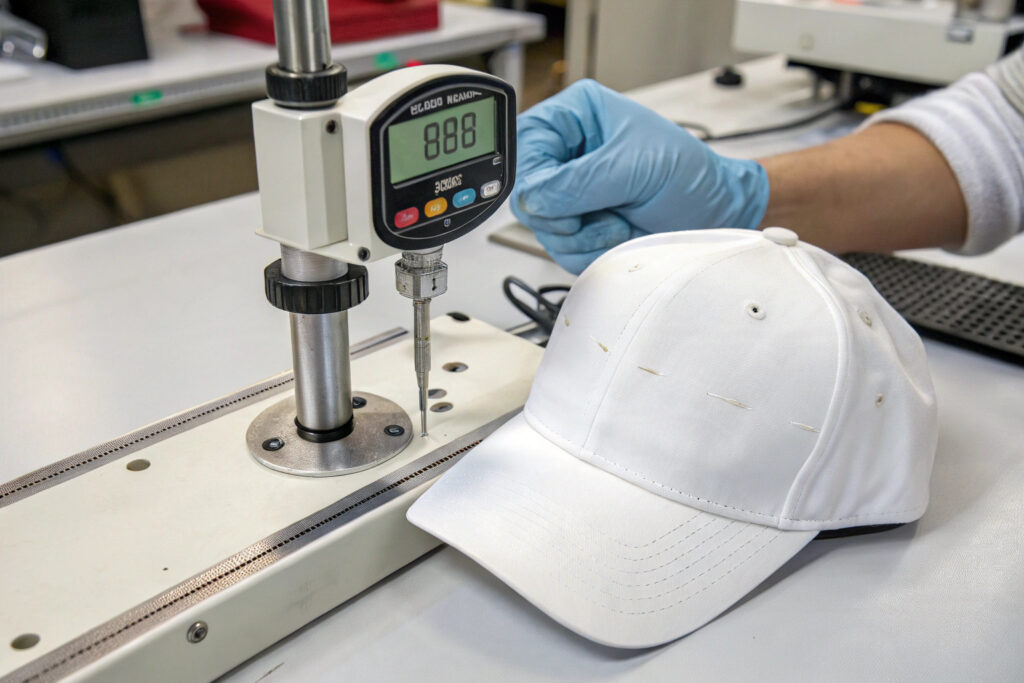
Manual tests give you a quick, subjective feel. Formal, standardized testing gives you objective, defensible data that you can write into a purchase contract. The two most relevant standards for snap closure strength are the ASTM D7142 standard for snap fastener pull strength and the ISO 13935 standard for seam tensile properties, which can be adapted for snap testing. These tests use a universal testing machine, often called a tensile tester, to measure the exact force required to disengage the snap and the force at which the material or attachment fails.
The primary test is the snap pull-out test. The testing machine has two clamps. One clamp grips the cap fabric near the snap socket. The other clamp grips the strap near the snap stud. The machine pulls the two clamps apart at a controlled speed, typically 100 millimeters per minute, until the snap disengages or a component breaks. The machine's software plots a force-extension curve. The peak of this curve is the maximum force the closure withstood, recorded in Newtons or pounds-force. For a snapback cap intended for adult use, I set our internal pass standard at a minimum of 80 Newtons, which is approximately 18 pounds-force. This is significantly higher than the force a normal head adjustment would apply, but it provides a safety margin for dynamic loading, like the cap being snagged on something. For children's caps, the standard is different. The closure should be secure but also release under extreme force to prevent a strangulation hazard. This requires a different, balanced specification.
The second critical test is the snap attachment strength test. This test does not disengage the snap. Instead, the snap is kept closed, and the testing machine pulls the entire snap assembly away from the fabric it is attached to. The clamps grip the fabric on either side of the snap, and the machine pulls. This test measures whether the plastic snap prongs will tear through the fabric strap before the plastic itself breaks. Both failure modes, fabric tear-out and plastic fracture, are unacceptable. A well-designed snap on an appropriate fabric should withstand a specific minimum force without any failure. I require a minimum attachment strength of 150 Newtons for the socket side, because the socket is attached to the main cap body and a failure there ruins the cap.

How Do You Read a Snap Test Force Curve?
The raw data from a universal testing machine is a graph with force on the vertical axis and extension on the horizontal axis. A clean, successful snap disengagement looks like a steady climb, a sharp peak, and an immediate drop to zero. The sharp peak is the exact moment the prongs release from the socket. A jagged, saw-tooth curve before the peak indicates the prongs are slipping and catching repeatedly. This is a sign of poor dimensional match between the stud and socket.
If the curve climbs but does not drop sharply at the peak, and instead shows a long, slow decline, the snap is not releasing cleanly. The plastic is deforming and yielding. The prongs are bending and pulling through the socket without the characteristic snap release. This is a ductile failure, and it means the snap will be unusable after a single cycle. I ask our testing lab to provide the full curve, not just the peak number. The curve shape tells the story of the snap's behavior. A factory that only reports a peak force and cannot provide the curve is likely cherry-picking data.
What Is the Difference Between Static and Cyclic Fatigue Testing?
The standard pull-out test is a static test. It applies one continuous pull until failure. But in the real world, a snapback closure is cycled hundreds or thousands of times. A customer adjusts their cap every time they put it on or take it off. A snap that passes a static test might still fail after 500 engagement cycles due to plastic fatigue.
Cyclic fatigue testing is a more advanced procedure. A specialized machine engages and disengages the snap repeatedly, counting the cycles. The test runs until a predefined number of cycles, say 1,000, or until the snap fails. The engagement and retention force is measured at cycle 1, cycle 50, cycle 100, and then every 100 cycles thereafter. A quality snap will maintain over 80% of its initial engagement force after 500 cycles. A poor snap will show a rapid force drop-off, indicating the socket is wearing and the prong spring force is relaxing. This test is more expensive and time-consuming, but for high-volume promotional orders where the cap is expected to last, it is the gold standard. I recommend cyclic testing for any order over 10,000 units or any order destined for a retail partner with a warranty program.
What Material Specifications Predict Long-Lasting Snap Durability?
The performance of a snap closure is determined by the polymer it is molded from. You cannot assess this by looking at the snap. You need the material specification. Two snaps can look identical in shape and color, but one is made of a high-grade engineering thermoplastic and the other is made of a cheap commodity plastic with recycled content of unknown origin. The material choice dictates the snap's strength, flexibility, fatigue resistance, and even its behavior in cold weather.
The two polymers I trust for snapback closures are acetal, also known as polyoxymethylene or POM, and nylon, also known as polyamide or PA. Acetal is my preferred material for snaps. It has a unique combination of stiffness, strength, and natural lubricity. The low coefficient of friction means the prongs slide smoothly into the socket without galling. Acetal also has excellent fatigue resistance; the prongs can be flexed thousands of times without losing their spring-back force. Nylon is also a strong choice, particularly for snaps that need to be dyed to match custom strap colors. Nylon has slightly more flexibility than acetal, which can be an advantage for prongs that need to endure off-angle pulling. The material I explicitly prohibit in our factory is polypropylene. PP is cheap, but it has poor fatigue resistance and becomes extremely brittle at low temperatures. A PP snap that works fine in a warm office will shatter when a customer wears the cap outside during a Chicago winter.
When I receive a snap sample from a new vendor, I demand a material certification sheet. This sheet should state the polymer type, the grade, and the manufacturer. For acetal, I look for a homopolymer grade, such as Delrin from DuPont, rather than a copolymer. Homopolymer acetal has higher crystallinity, which translates to higher strength and fatigue resistance. The material cert should also show the melt flow index. This is a measure of how easily the plastic flows during injection molding. An MFI that is too high can indicate a lower molecular weight, which reduces strength. A reputable snap manufacturer knows these specs and shares them without hesitation. A trader who sources generic snaps from a commodity market will not have this data.

Why Is Cold Temperature Impact Resistance a Critical Spec?
Plastic polymers can undergo a ductile-to-brittle transition at low temperatures. A snap that is wonderfully flexible and tough at room temperature can become glass-like and shatter under impact at -10 degrees Celsius. This is not an edge case. Caps are worn in winter. They are shipped in unheated cargo holds and truck trailers in northern climates. A cap that arrives in a customer's mailbox in Minnesota in February should not have a cracked snap right out of the box.
The material spec to request is the notched Izod impact strength, measured at both 23 degrees Celsius and -30 degrees Celsius. A quality acetal snap will retain a significant percentage of its room temperature impact strength at the low temperature. If the supplier cannot provide low-temperature impact data, assume the material will fail in the cold. I have tested generic snaps that shattered like potato chips when cooled to freezer temperatures and tapped with a small hammer. A branded acetal snap, subjected to the same test, just bounced. The difference in field performance is absolute.
How Does UV Stabilization Affect Snap Longevity?
Caps are worn outdoors in the sun. Ultraviolet radiation degrades plastics over time, causing discoloration, surface chalking, and embrittlement. A snap without UV stabilization will fade and crack after a single summer of regular outdoor use. A UV-stabilized snap will maintain its color and strength for years.
The material certification should state whether the polymer contains UV stabilizers. For acetal, a UV-stabilized grade is essential for any cap that will be used outdoors, which is virtually all caps. Carbon black is a highly effective UV stabilizer, which is why black snaps tend to last longer in the sun than natural or white snaps. If your cap design requires a light-colored snap, you must insist on a UV-stabilized grade that does not rely solely on carbon black. The supplier should provide a weathering test report, such as an accelerated QUV test result, showing the color change and strength retention after simulated sun exposure.
How Can I Build a Snap Quality Specification Into My Purchase Contract?
The final, most important step is translating your quality expectations into the purchase agreement. A verbal discussion about "good snaps" is unenforceable. A written specification that references a measurable standard and a defined consequence is the foundation of a professional sourcing relationship. This specification protects both parties. It tells the factory exactly what you expect, and it gives you a clear remedy if the bulk production falls short.
Your contract should include a Component Quality Specification appendix. This appendix should state the snap material, for example, "UV-stabilized acetal homopolymer, virgin grade, no regrind content." It should state the performance standard, for example, "Snap pull-out force shall exceed 80 Newtons when tested per ASTM D7142 at a pull speed of 100 mm/min. Snap attachment strength shall exceed 150 Newtons." It should state the acceptable quality level, for example, "Random sampling per ANSI/ASQ Z1.4, AQL 1.0 for critical defects (snap breakage or failure to engage). AQL 2.5 for major defects (visible stress marks or difficult engagement)." The appendix should also name the approved gold-seal sample that both parties have signed and sealed. This sample becomes the physical reference standard.
Critically, the contract should link the snap specification to the inspection process. The buyer, or a designated third-party inspection company, has the right to perform on-site snap testing during production and before shipment. If the test results fall below the specified values, the factory is required to quarantine the affected lot, investigate the root cause, and replace the defective snaps or rework the caps at their expense. This clause makes the specification actionable. It is not just a wish list. It is a binding requirement with a predefined consequence.

How Do You Specify an Approved Snap Supplier in the Contract?
Sometimes the surest way to guarantee snap quality is to specify the brand and model of the snap itself. There are well-known global manufacturers of quality plastic snaps and fasteners. If you have tested and approved a specific snap from a specific manufacturer, you can name that snap in your contract. For example, "Snap closure shall be [Brand Name] Model [Number] in color [Code], or a pre-approved equivalent with documented material and performance parity."
This approach takes the material guesswork out of the factory's hands. The factory orders the specified snaps from the approved vendor. The risk of a material substitution is greatly reduced. The buyer can even request a copy of the factory's purchase order for the snaps as part of the documentation package. This adds a layer of supply chain traceability. I have used this method with clients who had a very specific, tested snap platform for their entire headwear line. It standardizes the component across all their styles, simplifying their own QC process.
How Do You Integrate Snap Testing Into the Production Timeline?
Testing should not be a last-minute panic before shipment. It should be scheduled as a milestone in the production timeline. The ideal sequence is this: First, the factory sources the approved snaps and sends you a snap sample card. This card has 10 or 20 loose snaps attached. You can perform your own manual tests or send them to a lab for material verification. Second, once the snaps are approved, the factory makes a pre-production sample with the approved snaps sewn onto the cap fabric. You test this sample. Third, the factory begins bulk cutting and sewing. An inline inspector pulls the first 50 finished caps off the line and conducts the manual snap engagement and pull tests on-site, comparing them to the gold-seal sample. If these pass, bulk production continues. Fourth, a final random sampling is conducted by a third-party inspector during the final audit.
This phased testing schedule catches snap problems at the component level, then at the sewn-product level, before the factory has invested in producing thousands of units with defective snaps. It is far cheaper to quarantine a bag of 10,000 loose snaps than to rework 10,000 finished caps. This is the logic of upstream quality control.
Conclusion
The strength of a snapback closure's plastic snaps is not a lottery. It is a predictable, measurable characteristic of the material, the mold, and the assembly process. You now have the tools to verify it at every stage. The manual tests, the engagement cycle, the overload flex, the thumbnail prong test, and the auditory click check give you an immediate, no-cost assessment of any sample. The standardized laboratory tests, the static pull-out per ASTM D7142, the attachment strength, and the cyclic fatigue protocol provide the objective data you need to write a contract. The material specifications, acetal homopolymer, UV stabilization, cold-temperature impact resistance, and virgin grade, define the invisible chemistry that makes a snap last for years rather than weeks.
The final piece is the contractual integration. A signed appendix that specifies the material, the performance standard, the AQL, and the approved gold-seal sample turns your quality research into a legally binding requirement. This is how professional buyers protect their brands from the catastrophic failure of a ten-cent component.
If you are preparing to place a bulk snapback order and you want a factory that treats snap quality as seriously as you do, I invite you to contact Global-Caps. We have pre-vetted snap suppliers, documented material certifications, and in-house testing fixtures that we use on every production run. Our team can send you a snap sample card and a material certification sheet before you even finalize your cap design. Reach out to our Business Director, Elaine, at elaine@fumaoclothing.com. Let's engineer a closure system for your caps that your customers will never have to think about, because it simply works, every single time.