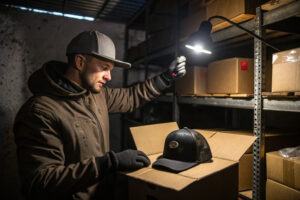
Your factory sends you photos. The hats look perfect. You wire the balance payment. The container arrives. You open the first carton. The logo is crooked. The sweatband seam is coming apart. The color is a shade off. You paid for premium hats. You received factory seconds. The factory's own QC passed them. You trusted the fox to guard the henhouse.
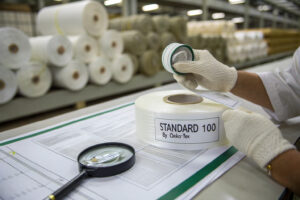
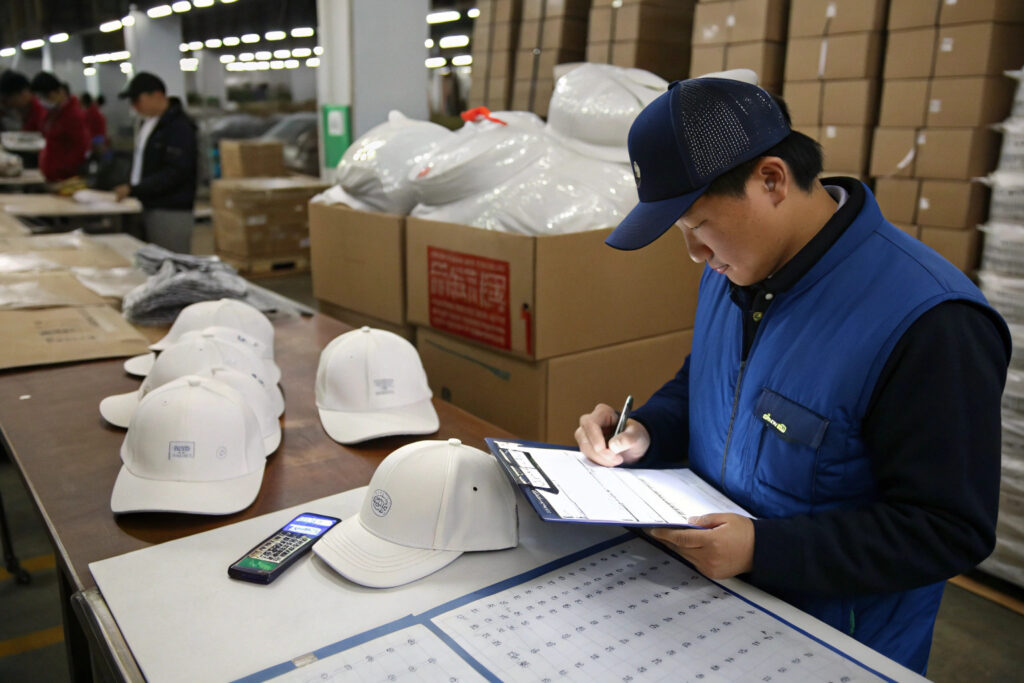
You conduct a third-party quality inspection of your custom dad hats in China by hiring an independent inspection company to visit the factory and audit your shipment against an agreed standard before you pay the balance. You book the inspection after at least 80% of the order is finished and packed. You provide the inspector with your approved pre-production sample, your spec sheet, and your quality tolerance document. The inspector counts the cartons, pulls a random sample based on the AQL table, and checks every detail: the fit, the stitching, the embroidery, the color, the labels, and the packaging. You receive a detailed report with photos within 24 hours. You decide to ship or reject.
At Global-Caps, I welcome third-party inspections. I schedule them for my clients. I reserve a table in my QC room with good lighting and a power outlet. A factory that fears inspection is a factory you should fire.
What Is an AQL Inspection and How Does It Apply to Custom Dad Hats?
You ask the inspector to check every single hat. The order is 5,000 units. The inspection would take a week and cost $2,000. You don't need a 100% check. You need a statistically valid random sample that predicts the whole batch with 95% confidence. That is what AQL does.
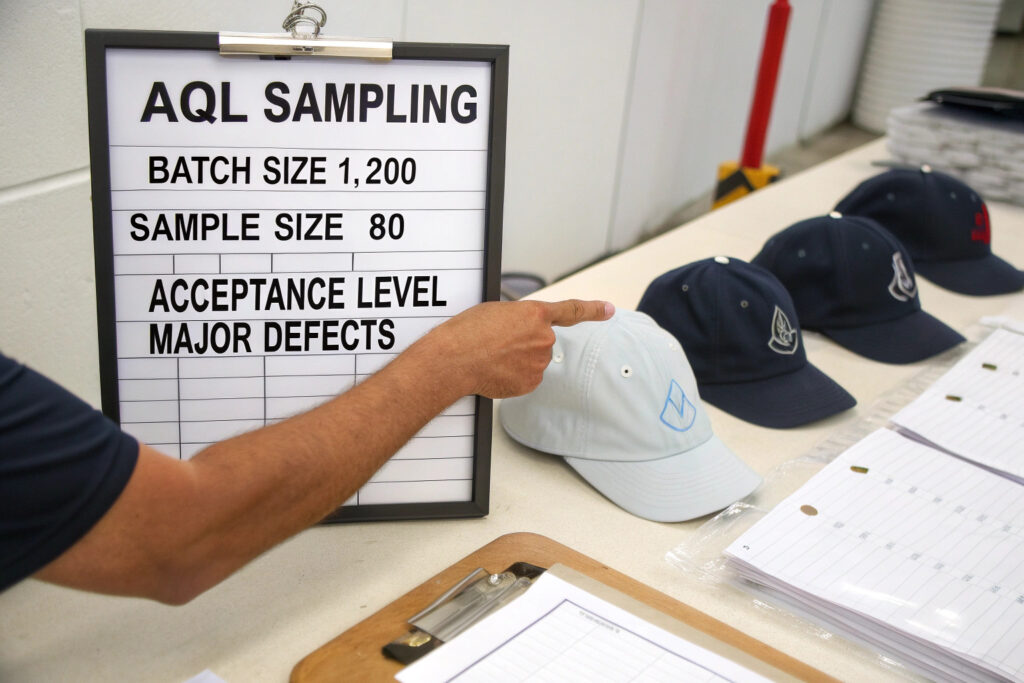
AQL stands for Acceptable Quality Level. It is a statistical sampling method defined by the ISO 2859 standard. For custom dad hats, the industry standard is AQL 2.5 for Major defects and AQL 4.0 for Minor defects. The inspector counts the total cartons, selects cartons randomly, and pulls the required sample size from the AQL table. For a batch of 5,000 hats, the sample size is 200 hats. If 10 or more Major defects are found, the batch fails.
I use the same AQL standard for my internal QC. The third-party inspector and my QC team speak the same statistical language. There is no argument about what "good" means. The AQL table defines it mathematically.
The defect classification is the core of the inspection. Not all defects are equal. A loose thread and a missing logo are not the same category.
What Are Critical, Major, and Minor Defect Classifications for Headwear?
A Critical defect makes the product unsafe or illegal. In a dad hat, a Critical defect is a needle fragment left in the sweatband, a sharp burr on a metal buckle, or a product labeled as a different fiber content than it actually is. The acceptance level for Critical defects is zero. One Critical defect fails the entire batch.
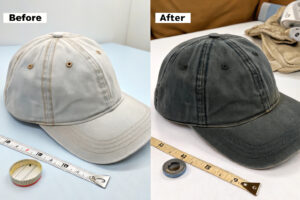
A Major defect makes the product unsellable or likely to cause a customer return. A crooked logo, a color mismatch outside the Delta E tolerance, a broken seam, a stained fabric panel, or a sweatband that is sewn twisted. The AQL 2.5 standard means the batch fails if the number of Major defects exceeds the limit in the sampling table.
A Minor defect is a cosmetic imperfection that does not affect the function or overall appearance. A loose thread end that can be trimmed, a slight puckering inside the crown not visible from the outside, or a hangtag string that is slightly off-center. The AQL 4.0 standard is more lenient for Minor defects.
I provide my clients with a defect classification guide specific to dad hats. It has photos of each defect type. The client gives this guide to the inspector. There is no ambiguity.
How Many Cartons Should an Inspector Open for a 1,200-Unit Order?
The inspector follows the AQL sampling standard. They identify the total number of cartons. They use a square root formula or the AQL table to determine how many cartons to open. For a 1,200-unit order packed in 24 cartons of 50 hats each, the inspector typically opens 8 to 12 cartons.
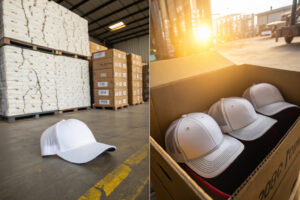
The carton selection is random. The inspector does not let the factory guide them to specific cartons. They walk the warehouse and point to cartons. They check that the carton markings match the packing list.
I ensure my warehouse team stacks the cartons with the shipping marks facing outward. The inspector can easily identify the product. The random selection prevents the factory from preparing a "show carton" with perfect hats and hiding the defective hats in the back.
How to Choose a Reliable Third-Party Inspection Company in China?
You Google "inspection company China." You get 50 results. Prices range from $150 to $400 per day. You pick the cheapest. The inspector shows up late, takes blurry photos, and misses a color mismatch. The inspection report is useless. You paid $150 for false confidence.
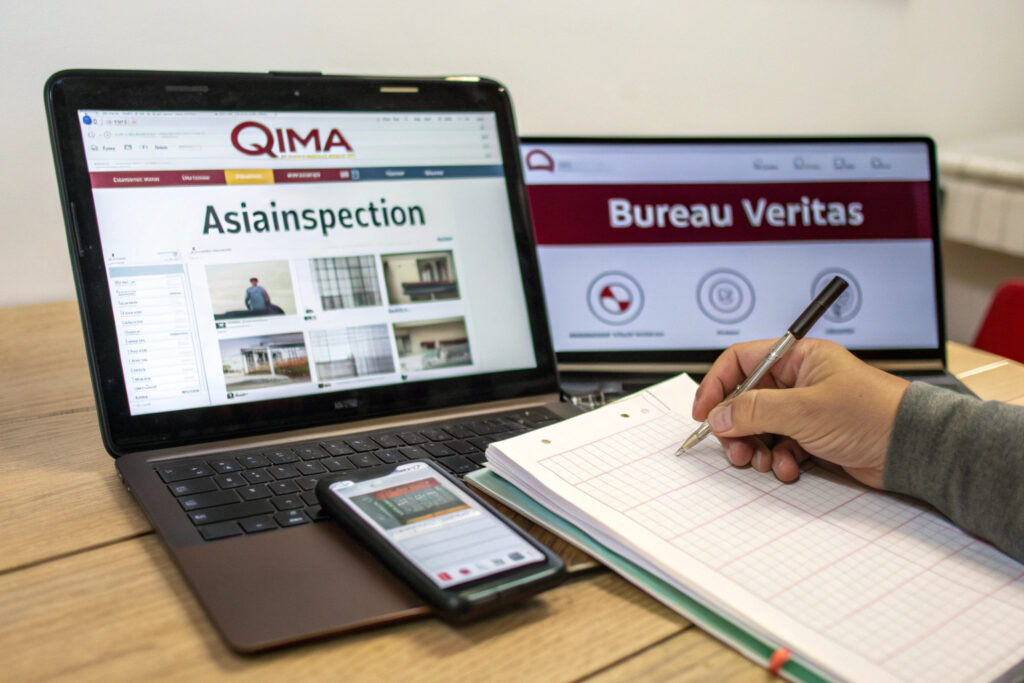
You choose a reliable third-party inspection company in China by selecting a firm that is ISO 17020 accredited for inspection bodies, has specific experience in textile and headwear products, and provides a sample report template before you book. The major global players are QIMA, AsiaInspection (now part of QIMA), Bureau Veritas, SGS, and Intertek. There are also reputable China-based companies with strong local networks.
I have worked with all the major firms. My recommendation is to use a company that has a permanent office in the province where your factory is located. The inspector knows the local supply chain. They can visit the factory on short notice.
The inspection cost is driven by the man-day rate and the travel expenses. A single inspector can check about 200 hats in a full day.
What Questions Should You Ask an Inspection Agency Before Booking?
You need to verify their competence before you pay them. Ask these five questions.
One: "Are you ISO 17020 accredited? Can you provide the certificate number?" The accreditation means their inspection process is independently audited. Two: "Do you have an inspector who has specifically inspected headwear or textile accessories before? Can I see their profile?" A generalist inspector who checks electronics and toys will miss hat-specific defects. Three: "What is your standard report turnaround time? Can I see a sample report for a hat inspection?" The report should be detailed, with photos, and delivered within 24 hours. Four: "What is your price per man-day? Does it include travel and report fees?" Get an all-in quote. Five: "Can you accommodate an unannounced inspection or a half-day re-inspection after a failure?"
I require my clients' inspectors to have ISO 17020 accreditation. The textile experience is non-negotiable. A hat is a specific product.
Should You Use a Global Firm Like SGS or a Local Chinese Agency?
A global firm like SGS or Bureau Veritas offers brand-name recognition. Your retail buyer will recognize and trust an SGS report. The cost is higher, typically $400 to $500 per man-day. The process is standardized. The report format is globally accepted.
A local Chinese agency like V-Trust or Jonkpin offers lower cost, typically $200 to $300 per man-day. The inspectors are locally based, reducing travel costs. The local knowledge is deep. The report may not carry the same brand recognition with a European buyer.
I recommend SGS or Intertek for orders destined for major retailers who specify an approved inspection partner. I recommend a local agency for startup brands where cost is a primary concern and the buyer is managing quality directly. Both are competent. The choice is about cost and brand recognition.
What Should a Custom Dad Hat Inspection Checklist Include?
The inspector arrives. They pull out a generic apparel checklist. They check the fabric feel and the general appearance. They miss that the dad hat sweatband is sewn with a twisted seam. They miss that the metal adjuster is rusting. They are using the wrong checklist. The inspection is superficial.
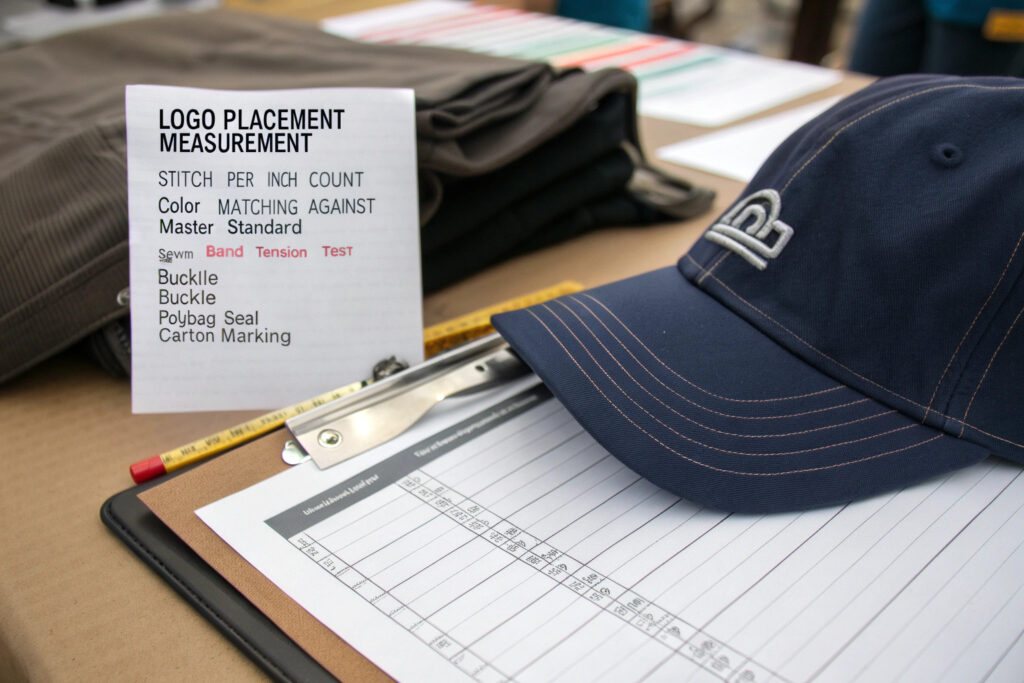
A custom dad hat inspection checklist must include hat-specific checks: the crown depth measurement, the visor curve symmetry, the sweatband twist test, the size adjuster functionality test, the embroidery placement measurement, the stitch per inch count, the color match against the master standard, and the internal seam neatness check. The checklist is built from your approved spec sheet and your pre-production sample.
I provide my clients with a pre-written dad hat inspection checklist. They customize it with their specific logo placement tolerances and color standards. They give the final checklist to the inspector.
The measurement tolerances must be specified numerically. "The logo looks centered" is not a measurement.
How Do You Measure Embroidery Placement Consistency Across a Batch?
The inspector uses a transparent acrylic template or a flexible measuring tape. The measurement reference points are the center front seam and the visor stitch line. The approved pre-production sample defines the target measurement.
The inspector measures the distance from the center seam to the left edge of the logo and to the right edge of the logo. The difference between the two distances must be within 2 millimeters. The inspector also measures the distance from the visor stitch line to the bottom of the logo. The tolerance is plus or minus 1.5 millimeters.
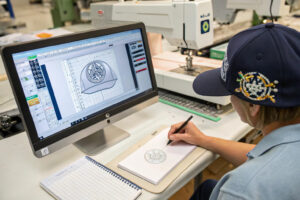
I create a placement template for each logo design. The template is laser-cut from clear acrylic with the target logo outline and crosshairs for the center seam. The inspector places the template on each sampled hat. The template instantly shows if the placement is within tolerance.
What Functional Tests Apply to Metal Adjusters and Buckles on Dad Hats?
The metal adjuster is a wear point. The customer pulls it repeatedly. A sharp edge cuts the finger. A weak clamp slips and the hat falls off.
The inspector performs three functional tests. One: the sharp edge test. The inspector runs a cotton glove over the metal surface. If the glove snags, the edge is too sharp. Two: the clamping force test. The inspector pulls the strap with a spring scale. The adjuster must hold at least 3 kilograms of force without slipping. Three: the corrosion check. The inspector visually checks for rust spots, especially inside the clamp mechanism where moisture can hide.
I source my metal adjusters from a supplier that provides a salt spray test report. The adjuster must withstand 24 hours of salt spray without rust. The inspector checks the lot number on the adjuster bag against the test report.
When Should You Schedule a Pre-Shipment vs During-Production Inspection?
You book a pre-shipment inspection. The inspector arrives. The hats are finished and packed. The inspection finds a major embroidery defect in 15 out of 200 sampled hats. The batch fails. But 5,000 hats are already sewn and packed. The factory must unseal cartons, strip embroidery, re-embroider, and repack. The shipment is delayed by two weeks. The problem was found. But it was found too late to fix efficiently.
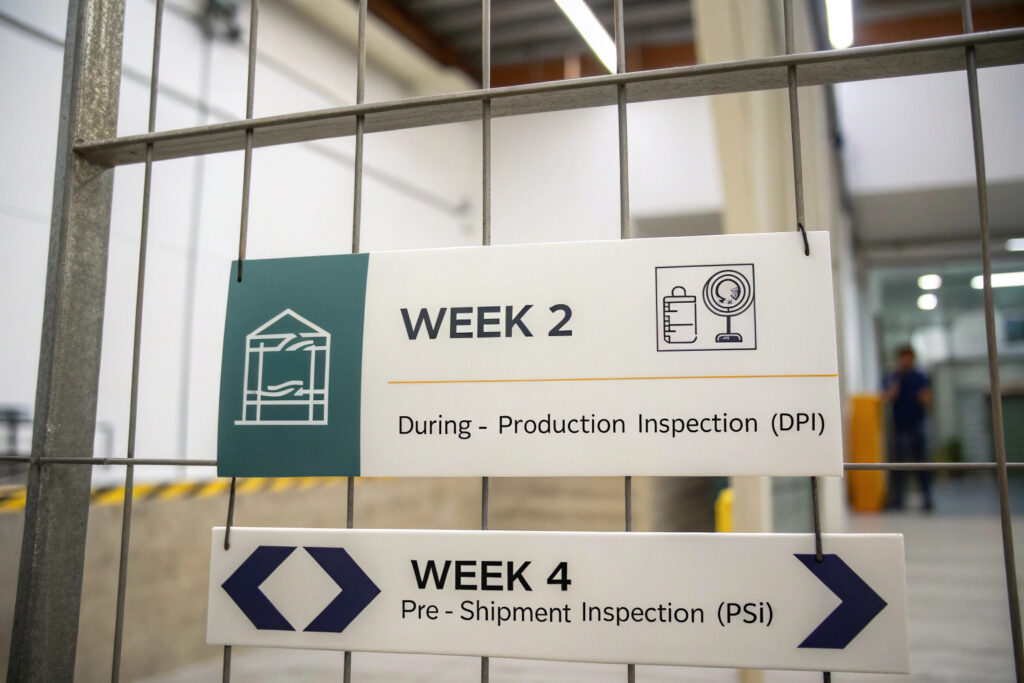
You schedule a During-Production Inspection when the first 20% to 30% of the order is finished, especially for a new supplier or a complex design. The inspector catches problems early. The factory fixes the process before the remaining 70% is produced. You schedule a Pre-Shipment Inspection when at least 80% of the order is finished and packed, especially for a repeat order with a trusted supplier.
For a first-time order of custom dad hats, I recommend one DPI and one PSI. The DPI catches the process problems. The PSI validates the final shipment.
The DPI is a process audit as much as a product check. The inspector looks at the semi-finished goods on the production line.
Why Is a During-Production Inspection Critical for a First-Time Dad Hat Order?
A first-time order has unknown variables. The factory has never sewn your design before. The operator is learning your logo placement on the fly. The first 50 hats off the line are the learning curve. The process stabilizes after 100 hats.
A DPI catches the learning curve errors. The inspector checks the first 100 hats. They find that the embroidery density is too high, causing puckers. They find that the visor insertion is slightly off-center. They report these findings. The factory adjusts the embroidery tension and fixes the visor jig. The remaining 900 hats are corrected.
I welcome DPI inspections on first-time orders. They catch my internal QC blind spots. They demonstrate to the client that I am committed to fixing problems, not hiding them.
What Percentage of the Order Must Be Finished for a Valid Pre-Shipment Inspection?
The industry standard is 80% finished and packed, with at least 20% of the packed cartons available for random sampling. If only 50% of the order is packed, the inspector cannot pull a valid sample that represents the final shipment.
If the inspector arrives and the factory has only packed 50%, the inspection is rescheduled. The factory pays the re-inspection fee. This is stated in the inspection agreement.
I coordinate with my production scheduler to ensure the 80% threshold is met on the agreed inspection date. I send a photo of the packed cartons to the client 24 hours before the inspection. The client confirms. The inspector arrives to a ready shipment.
Conclusion
Conducting a third-party quality inspection of custom dad hats in China is a systematic process. You hire an ISO 17020 accredited inspection company with textile experience. You provide them with your approved sample, your spec sheet, your defect classification guide, and your measurement tolerances. You book a During-Production Inspection for first-time orders to catch process errors early. You book a Pre-Shipment Inspection when 80% of the order is packed.
The inspector follows the AQL 2.5 standard for Major defects. They pull a random sample from random cartons. They use a placement template to verify logo positioning, a spectrophotometer to verify color, and functional tests for metal adjusters. They classify defects as Critical, Major, or Minor. The batch passes or fails based on the AQL table.
The inspection report arrives within 24 hours. You make a data-driven decision to ship or reject. You never again trust the factory's word alone. You trust an independent auditor's report.
At Global-Caps, third-party inspection is not an insult. It is a standard part of my production process. My factory is always ready for inspection. My QC room has a dedicated inspection table. My warehouse team is trained to assist the inspector with carton sampling.
If you need a custom dad hat supplier that welcomes third-party inspection and consistently passes AQL 2.5 audits, contact my Business Director Elaine. She can coordinate your inspection booking, provide our defect classification guide, and schedule your DPI or PSI directly with QIMA or your preferred agency. Email Elaine at elaine@fumaoclothing.com. Let's ship hats that match your standards, not just your hopes.