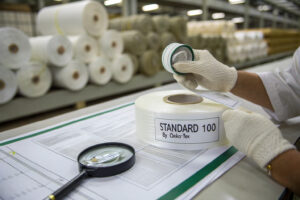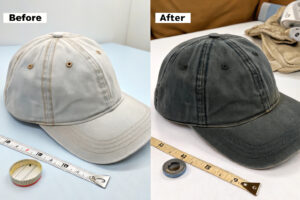
I sat in a buyer's office in Amsterdam three years ago. He had just rejected a 5,000-unit cap order. The embroidery was a disaster. The thread tension was loose. The logo was off-center. The backing was scratchy. He had audited the hat factory's main facility and it was pristine. What he did not know, and what the factory did not disclose, was that the embroidery was sub-contracted to a small, unventilated workshop three kilometers away. The factory had never mentioned the sub-contractor. The buyer had never asked. The sub-contractor had never been audited. The hats were ruined. The money was lost. The relationship ended.
You audit a potential hat supplier's sub-contractors for embroidery and printing by demanding a complete sub-contractor disclosure list before you place the order, by conducting a physical on-site inspection of each sub-contractor using the same audit checklist you use for the main factory, and by implementing a sub-contractor approval and change-control clause in your manufacturing agreement. The disclosure list must include the company name, address, contact person, and the specific process they perform for your order. The on-site audit must verify the sub-contractor's machinery condition, quality control procedures, worker skill level, chemical handling practices, and social compliance status. The change-control clause must state that the factory cannot change sub-contractors without your prior written approval. A factory that refuses to disclose its sub-contractors, or that prevents you from auditing them, is a factory that is hiding a quality or compliance risk. Walk away from that factory.
I have learned through painful experience that a hat is only as good as its weakest production step. The embroidery and printing are the most visible, brand-critical elements of a custom cap. If they are sub-contracted to an unvetted workshop, your entire order is at risk. I want to share the exact audit process, the checklist, the red flags, and the contractual protections that ensure your supplier's sub-contractors meet the same standards as the supplier. This is the due diligence that separates a professional supply chain from a gamble.
Why Must You Audit a Hat Factory's Embroidery and Printing Sub-Contractors?
A hat factory is an assembly operation. It cuts fabric, sews panels, and attaches trims. Many hat factories, particularly small and medium-sized ones, do not have in-house embroidery or screen printing capability. Embroidery machines are expensive. A multi-head commercial embroidery machine costs $15,000 to $50,000. A screen printing carousel with a curing oven costs $10,000 to $30,000. A factory that produces a moderate volume of custom caps may outsource the decoration to a specialized sub-contractor to avoid the capital investment. This outsourcing is common and is not inherently a problem. The problem is when the outsourcing is hidden, uncontrolled, or directed to low-quality workshops to save cost. The buyer who does not audit the sub-contractor is buying a decoration service from an unknown entity with unknown quality standards.
The risks of an unaudited embroidery sub-contractor are specific and severe. First, the sub-contractor may use old, poorly maintained machines that produce inconsistent stitch quality, thread breaks, and needle damage. Second, the sub-contractor may use cheap, non-certified embroidery thread that contains restricted chemicals, which would void any OEKO-TEX or similar certification on the finished cap. Third, the sub-contractor may use incorrect backing materials that are scratchy, non-breathable, or chemically non-compliant. Fourth, the sub-contractor may have no quality control process, meaning defective embroidery is not detected until it reaches the final customer. Fifth, the sub-contractor may violate labor laws, employing underage workers, paying below minimum wage, or operating in unsafe conditions. If a brand is discovered to have products made in a sweatshop sub-contractor, the reputational damage is catastrophic, regardless of how clean the main factory is. The main factory's social compliance audit is meaningless if the sub-contractor is not also audited. The supply chain transparency requirements of major retailers and the modern slavery legislation in the UK, Australia, and the EU increasingly require brands to disclose and audit their entire supply chain, including sub-contractors.
The sub-contractor risk is a quality risk, a chemical safety risk, and a social compliance risk. But the most immediate risk for a brand owner is the loss of control over the decoration quality. The embroidery is the most visible element of the cap. It is the logo. It is the brand identity. If the sub-contractor produces poor quality embroidery, the entire cap is rejected, and the brand owner may not even know which sub-contractor did the work.
What Percentage of Hat Factories Sub-Contract Embroidery and Printing?
Based on my experience in the industry, I estimate that 60 to 70 percent of small to medium-sized hat factories in China sub-contract at least some of their embroidery and screen printing. Larger, vertically integrated factories are more likely to have in-house decoration capability. Smaller factories that focus on blank cap production and offer custom decoration as a service almost always outsource the decoration. The outsourcing rate is higher for specialized techniques like 3D puff embroidery, embroidery on leather patches, and high-color-count screen printing. These techniques require specialized equipment or expertise that a general hat factory may not possess. The apparel supply chain outsourcing data confirms that decoration processes are among the most commonly sub-contracted operations in the garment and accessories industry.
Why Is the Sub-Contractor Often the Weakest Link in Quality Control?
The main factory's quality control system usually stops at the factory gate. The incoming fabric inspection, the inline sewing audit, and the final pre-shipment inspection are all conducted on processes that the factory controls. When a batch of caps is sent to an external embroidery workshop, it leaves the factory's quality system. The workshop may have no formal QC process. The workshop may mix up different clients' caps. The workshop may use the wrong thread color because the work order was unclear. When the embroidered caps return to the main factory, the factory may perform only a cursory visual check, if any. The defect is discovered by the buyer at the final inspection, or worse, by the consumer. The sub-contractor is the quality control blind spot in many hat supply chains. The quality control in outsourced manufacturing requires specific audit and monitoring procedures that go beyond the main factory's walls.
How Do You Obtain a Complete Sub-Contractor Disclosure From a Hat Factory?
The sub-contractor disclosure request is a test of the factory's transparency. An honest, well-managed factory will provide the disclosure willingly and completely. A factory that hesitates, provides incomplete information, or refuses to disclose is signaling that it has something to hide. The request must be made formally, in writing, and before the purchase order is placed. It must be framed as a standard due diligence requirement, not as an accusation. The factory's response to this request will tell you whether to proceed with the audit or terminate the supplier evaluation.
I make the sub-contractor disclosure a mandatory part of my supplier qualification process. I send the factory a one-page Sub-Contractor Disclosure Form. The form requests the following information for each sub-contractor that will work on my order: the legal company name, the full physical address including the building number and workshop location, the contact person name and phone number, the specific process the sub-contractor will perform such as flat embroidery, 3D puff embroidery, screen printing, heat transfer, the estimated percentage of my order that will be processed by this sub-contractor, the number of workers employed by the sub-contractor, and a copy of the sub-contractor's business license. I state in the cover email that this disclosure is a prerequisite for order placement and that failure to disclose a sub-contractor, or submission of false information, will constitute a material breach of the manufacturing agreement. I also state that I reserve the right to audit any disclosed sub-contractor before production begins and at any time during production. This formal, written disclosure process establishes the legal and commercial framework for the sub-contractor audit. The supplier disclosure requirements are standard practice in professional procurement.
The disclosure form is the initial filter. But a factory can disclose a sub-contractor that looks acceptable on paper and still hide other sub-contractors that are less acceptable. The on-site audit is the verification that the disclosure is complete and that the disclosed sub-contractors meet the required standards.

What Should You Do If a Factory Refuses to Disclose Its Sub-Contractors?
A refusal to disclose is a definitive red flag. There is no legitimate business reason for a factory to hide its sub-contractors from a buyer who has a direct financial and legal interest in the production process. The factory may claim that the sub-contractor information is proprietary or that they fear the buyer will bypass them and go directly to the sub-contractor. These concerns can be addressed with a non-circumvention agreement. If the factory still refuses after a non-circumvention agreement is offered, the reason for the refusal is almost certainly that the sub-contractors have quality, safety, or labor violations that the factory does not want you to see. Terminate the supplier evaluation. A factory that hides its sub-contractors is a factory that cannot be trusted. The supplier transparency best practices in ethical supply chain management are clear: sub-contractor disclosure is a minimum requirement for a responsible business relationship.
How Can a Non-Circumvention Agreement Reassure the Factory About Disclosure?
Some factories resist sub-contractor disclosure because they have experienced buyer disintermediation. A previous buyer obtained the sub-contractor information, bypassed the factory, and placed orders directly with the sub-contractor, cutting the factory out of the business. This is a legitimate concern. A well-drafted non-circumvention agreement addresses this concern. The agreement states that the buyer will not directly contact, solicit, or place orders with the disclosed sub-contractors for a specified period, typically two to three years, without the factory's written consent. The agreement provides the factory with legal protection against disintermediation. Offering to sign this agreement before requesting the disclosure demonstrates good faith and removes the most common legitimate objection to disclosure. The non-circumvention agreement is a standard commercial tool in multi-tier supply chain relationships.
What Should an On-Site Embroidery Sub-Contractor Audit Cover?
The on-site audit of an embroidery sub-contractor is not a quick walk-through. It is a structured, documented inspection that covers machinery, materials, processes, quality control, and working conditions. The audit must be conducted before the first production order is placed, and ideally repeated annually or when a significant change in sub-contractor ownership, location, or capacity occurs. The audit uses a standardized checklist to ensure consistency and completeness. The audit findings are documented in a written report with photographs and a corrective action plan for any non-conformances.
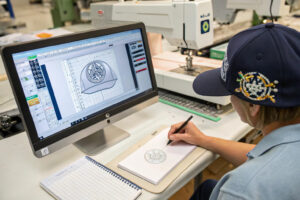
My embroidery sub-contractor audit checklist covers seven areas. Area one: machinery condition. I check the brand, model, and age of the embroidery machines. I look for Tajima, Barudan, or Happy machines as indicators of quality equipment. I check the needle condition, the bobbin case cleanliness, and the thread path for signs of wear or poor maintenance. I ask to see the machine maintenance log. Area two: thread and materials. I check the thread brand and type. I ask to see the thread inventory and the thread certification documents, such as OEKO-TEX certificates for the thread. I check the backing material type and weight. I confirm that the thread colors match the approved Pantone references. Area three: digitizing capability. I ask to see a recent digitized file and a stitch-out sample. I evaluate the stitch density, the underlay, and the overall digitizing quality. Area four: quality control process. I ask to see the first-off sample approval procedure. I ask to see the inline inspection procedure. I ask to see the final inspection procedure. I ask to see records of recent inspections. Area five: color management. I check the lighting conditions in the inspection area. I ask to see a Pantone reference book. I ask how they match thread colors to Pantone codes. Area six: production tracking. I ask how they track work orders. I ask how they segregate different clients' caps to prevent mixing. I ask how they handle rush orders. Area seven: social compliance and safety. I check for fire exits, fire extinguishers, first aid kits, adequate lighting, adequate ventilation, and the general cleanliness of the workshop. I observe the workers. I note any signs of underage workers, excessive overtime, or unsafe working conditions. This embroidery audit checklist provides a comprehensive assessment of the sub-contractor's capability and reliability.
The audit checklist covers the technical and operational aspects. But the most revealing moment in an embroidery audit is the stitch-out test. A live test reveals the true capability of the digitizer, the operator, and the machine in a way that no record or interview can.
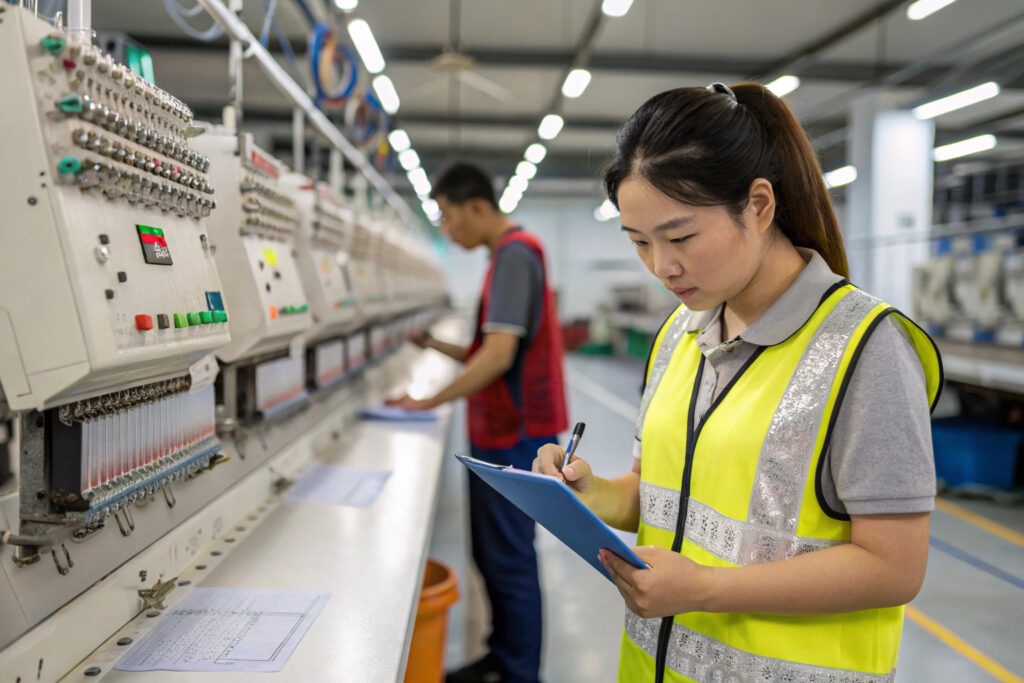
How Do You Conduct a Live Stitch-Out Test During an Embroidery Audit?
A live stitch-out test is a practical demonstration. You provide the sub-contractor with a test logo file, preferably your actual logo or a test design with small text, fine details, and a mix of fill and satin stitches. You ask the sub-contractor to digitize the file if they have in-house digitizing, or to load a pre-digitized file, and to stitch it onto a cap panel fabric that you provide. You watch the process from digitizing through machine setup to finished stitch-out. You time the process. You inspect the finished stitch-out immediately. You check the stitch density, the thread tension, the registration of color changes, the trim quality, and the backing condition. You cut the stitch-out and examine the back. This live test reveals the digitizer's skill, the operator's competence, the machine's mechanical condition, and the overall workflow efficiency. A sub-contractor that produces a clean, accurate stitch-out in a reasonable time is a capable sub-contractor. A sub-contractor that produces a puckered, misaligned, or thread-broken stitch-out is not ready for production. The capability test in supplier auditing is a standard method for verifying claimed competencies.
What Are the Key Differences When Auditing a Screen Printing Sub-Contractor?
A screen printing audit covers similar areas to an embroidery audit but with different technical specifics. The machinery check covers the printing carousel condition, the screen tension, the squeegee sharpness, and the curing oven temperature accuracy. The materials check covers the ink types, such as plastisol, water-based, or discharge inks, and the ink certifications. The process check covers the screen preparation, the ink mixing, the print registration, and the curing process. The quality control check covers the print durability testing, such as a stretch test and a wash test. The social compliance check is identical. The key additional check for a screen printing sub-contractor is chemical safety. Screen printing inks and solvents contain volatile organic compounds and other hazardous chemicals. The audit must verify that the sub-contractor has proper ventilation, proper chemical storage, proper worker personal protective equipment, and proper hazardous waste disposal. The screen printing safety standards are regulated in most jurisdictions. A sub-contractor that does not meet these standards is a regulatory violation risk and a health risk to its workers.
How Do You Enforce Sub-Contractor Quality Standards Contractually?
The audit is the verification. The contract is the enforcement. The manufacturing agreement with the main factory must include specific clauses that govern the use of sub-contractors. Without these clauses, the factory can change sub-contractors without your knowledge or approval, rendering your audit obsolete. The contractual framework creates a legal obligation that survives beyond the audit day. It gives you the right to approve or reject sub-contractors and the remedy if the factory violates the agreement.
The sub-contractor control clause in my manufacturing agreement contains four provisions. Provision one: disclosure obligation. "The Manufacturer shall disclose to the Buyer a complete list of all sub-contractors to be used in the production of the Goods, including the sub-contractor's legal name, physical address, and the specific production process to be performed. This disclosure shall be made before the commencement of production and shall be updated immediately if any sub-contractor is added or changed." Provision two: approval right. "The Buyer reserves the right to audit any disclosed sub-contractor before production begins and at any time during production. The Buyer may approve or reject any sub-contractor in its sole discretion. The Manufacturer shall not use a rejected sub-contractor for the production of the Goods." Provision three: change control. "The Manufacturer shall not change, add, or remove any sub-contractor used in the production of the Goods without the prior written approval of the Buyer. Any unauthorized change of sub-contractor constitutes a material breach of this Agreement." Provision four: quality responsibility. "The Manufacturer remains fully responsible for the quality, safety, and compliance of all Goods, regardless of which sub-contractor performed any production process. The use of a sub-contractor does not relieve the Manufacturer of any obligation under this Agreement." These four provisions create a complete contractual control system for sub-contractor management. The supply chain contractual controls are standard in professionally managed manufacturing agreements.
The contract establishes the legal framework. But the enforcement of the contract depends on your ability to detect a violation. A factory that changes sub-contractors without approval is unlikely to volunteer that information. You need a monitoring method that detects unauthorized sub-contractor changes before the goods ship.

An unauthorized sub-contractor leaves traces on the product. A pre-shipment inspection conducted by an independent third-party inspection company can detect these traces. The inspector compares the finished product to the approved pre-production sample. Differences in stitch quality, thread sheen, backing material, or label placement can indicate a different sub-contractor. The inspector can also check the carton labels and the internal production records at the main factory. If the production records reference a sub-contractor that was not disclosed, the inspector flags this in the inspection report. The inspector can also ask to visit the sub-contractor during the inspection if the production is still in process. An on-site visit to the disclosed sub-contractor confirms that the sub-contractor is real, is operating, and is producing your order. If the main factory cannot provide access, it suggests the sub-contractor disclosure was falsified. The pre-shipment inspection services from major inspection companies include sub-contractor verification as a standard or optional service.
The consequences are specified in the contract and should be enforced consistently. The immediate consequence is a hold on the shipment. The goods are not shipped until the unauthorized sub-contractor is disclosed, audited, and approved, or until the goods are re-produced by an approved sub-contractor at the factory's expense. If the unauthorized sub-contractor is found to have produced defective goods, the goods are rejected and the factory is required to re-produce the order using an approved sub-contractor, again at the factory's expense. If the unauthorized sub-contractor is found to have serious social compliance violations, such as child labor or forced labor, the order is canceled, and the buyer is entitled to a full refund. The unauthorized change is a breach of contract. The contract enforcement remedies are well-established. The key is to enforce them. A buyer who waives a sub-contractor violation once will find that the factory interprets the contract as a suggestion, not an obligation.
Conclusion
The embroidery and printing sub-contractor is often the most important and least visible link in a custom hat supply chain. A beautiful cap with a poorly embroidered logo is a reject. A safe, certified cap with a chemically non-compliant printed patch is a liability. A clean, ethical main factory with a sweatshop sub-contractor is a scandal waiting to happen. The sub-contractor audit is not optional due diligence. It is core due diligence. The process is clear. Demand a complete sub-contractor disclosure before you place the order. Conduct an on-site audit using a structured checklist that covers machinery, materials, quality control, and social compliance. Execute a stitch-out test to verify capability in real time. Incorporate sub-contractor approval and change-control clauses into your manufacturing agreement. Verify compliance through pre-shipment inspection. Enforce the contract if violations are found.
I know which of my sub-contractors I trust because I have audited them repeatedly. I have ended relationships with sub-contractors who failed an audit and could not or would not correct the issues. I disclose my sub-contractors to my clients proactively because I want them to have the same confidence in the sub-contractor that I have. This transparency is a competitive advantage. It tells the buyer that there are no hidden workshops, no hidden risks, no hidden surprises.
If you are evaluating a hat supplier and want to include their embroidery and printing sub-contractors in your audit scope, let us share our approach. Our Business Director, Elaine, can provide a sample of our Sub-Contractor Disclosure Form, our Embroidery Audit Checklist, and our standard sub-contractor control clause for your reference. Email her at elaine@fumaoclothing.com and request the Sub-Contractor Audit Kit. We will help you build a supply chain where every link is visible and every link is strong.