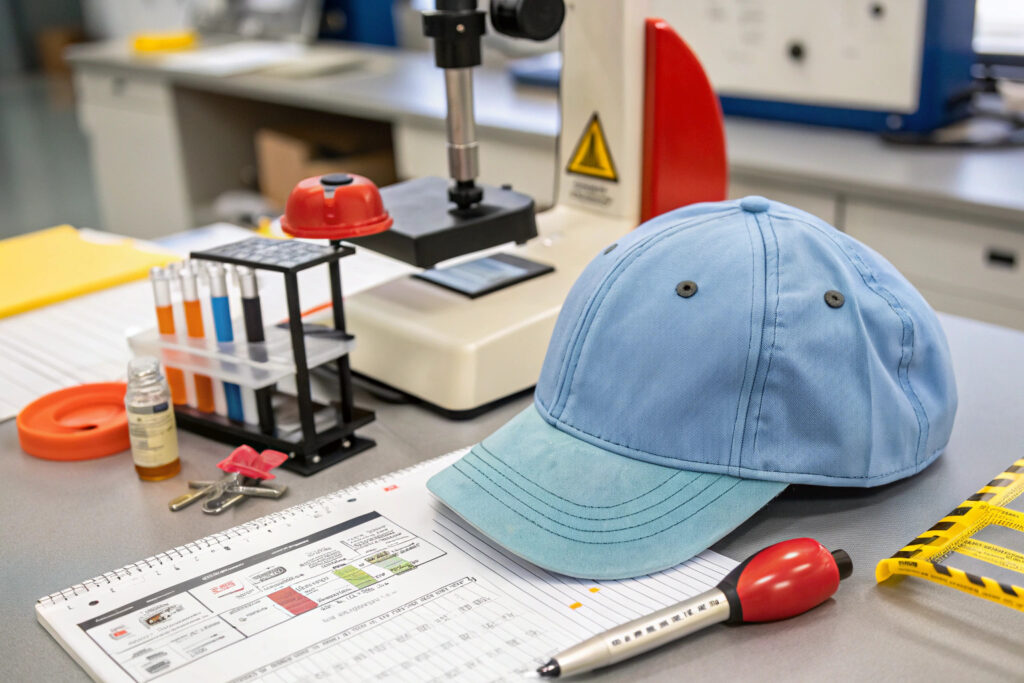
You design a beautiful kids' baseball cap. You test the crown fabric. It passes the lead limit. You test the sweatband. It passes. You test the plastic snap closure. It passes. You assume the cap is fully compliant. You are wrong. The small fabric-covered button on the very top of the crown—a component you never thought about—contains a metal shell with a lead-soldered joint or a plastic core with a lead-based stabilizer. The CPSIA lead limits apply to that button with the same force as the main fabric. The cap fails because of a component the size of a dime. The failure is not in the big things. It is in the tiny thing you overlooked.
CPSIA lead limits affect the button on top of kids' baseball caps by requiring that every component of the button—the fabric covering, the metal shell, the internal plastic core or spring mechanism, and the attachment thread—individually meets the 100 parts per million lead limit for accessible substrates. The button is a distinct component. It is not exempted by its small size. A child can mouth the top button. The button can detach and be swallowed. The lead in the metal alloy, the plasticizer in the core, or the solder in the joint can leach into the child's body. The button must be tested as a separate homogeneous material, or the component parts must be tested individually.
At Global-Caps, every component of my kids' baseball caps is tested for lead content. The crown button is on the component testing checklist. I source buttons from a CPSIA-compliant supplier who provides batch-specific test reports. The button is small. The risk is large. The testing is mandatory.
What Components Make Up a Baseball Cap Button and Which Ones Contain Lead?
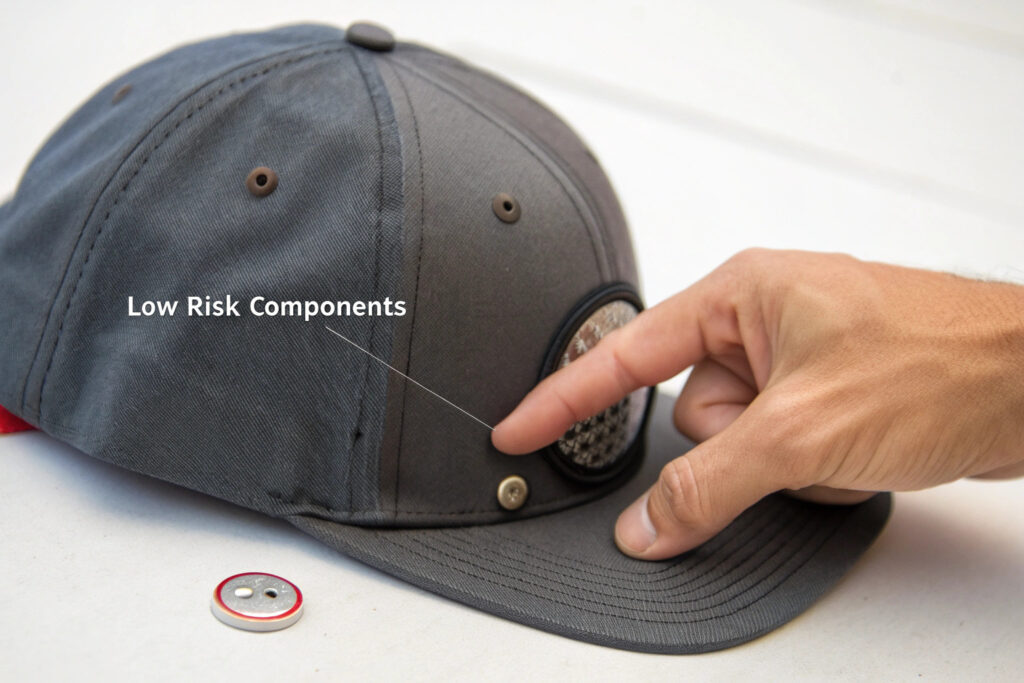
You look at the button on top of the cap. It looks like a simple piece of plastic wrapped in fabric. It is not. It is a multi-material assembly. The visible fabric covering is sewn over a metal shell. Inside the metal shell is a plastic core or a small metal spring that provides tension. The entire assembly is attached with a heavy-duty thread that passes through the crown. Each of these materials—metal, plastic, fabric, thread—is a separate homogeneous material under CPSIA. Each must be tested individually or the entire assembly must be tested as a single component and pass.
The metal shell is the highest-risk component. Stamped brass shells often contain lead in the alloy to improve malleability. Steel shells may have a lead-soldered joint. The plastic core is the second-highest risk. PVC cores contain lead as a heat stabilizer. Polypropylene cores are generally lead-free but must still be tested. The fabric covering and the polyester thread are low-risk but must be included in the testing scope.
My button component testing protocol requires the supplier to disassemble the button and test each homogeneous material separately.
The total lead content test measures the lead in each material, not just the surface coating.
Why Are Metal Alloy Buttons More Likely to Contain Lead Than Plastic Ones?
Metal buttons are manufactured by stamping or casting metal alloys. Brass, an alloy of copper and zinc, often contains a small percentage of lead added to improve the machinability and stamping characteristics. The lead content in brass alloys can range from 0.5 to 4 percent, far exceeding the 100 parts per million CPSIA limit.
Plastic buttons made from polypropylene or nylon are generally manufactured without lead. The polymer itself does not require lead. The colorants and additives used in the plastic must be lead-free, which is standard practice for modern plastic production. Plastic buttons that are not made from PVC are low-risk for lead content.
I exclusively source polypropylene crown buttons for kids' caps. I do not use metal alloy buttons in children's products. The risk of lead in the alloy is too high.
Does the Thread That Attaches the Button Need Separate Lead Testing?
Yes. The thread that attaches the button to the crown is a separate accessible component. A child can chew on the top of the cap and mouth the thread. The thread must meet the 100 parts per million lead limit for substrates.
Most polyester sewing thread is lead-free. The dye used on the thread may contain trace heavy metals. The thread should be included in the component testing scope, either as a separate test specimen or as part of the finished button assembly test.
My component testing matrix for kids' caps lists the crown button attachment thread as a separate line item with its own test requirement.
What Is the Difference Between Surface Coating and Substrate Lead Limits for Buttons?
You test the button. The lab reports lead at 95 parts per million. You panic. Then you read the report more carefully. The 95 ppm result is for the substrate—the solid plastic core. The substrate limit is 100 ppm. The button passes. If the 95 ppm were on the painted surface, it would fail, because the surface coating limit is 90 ppm. The two limits are different. The distinction between coating and substrate is legally critical.
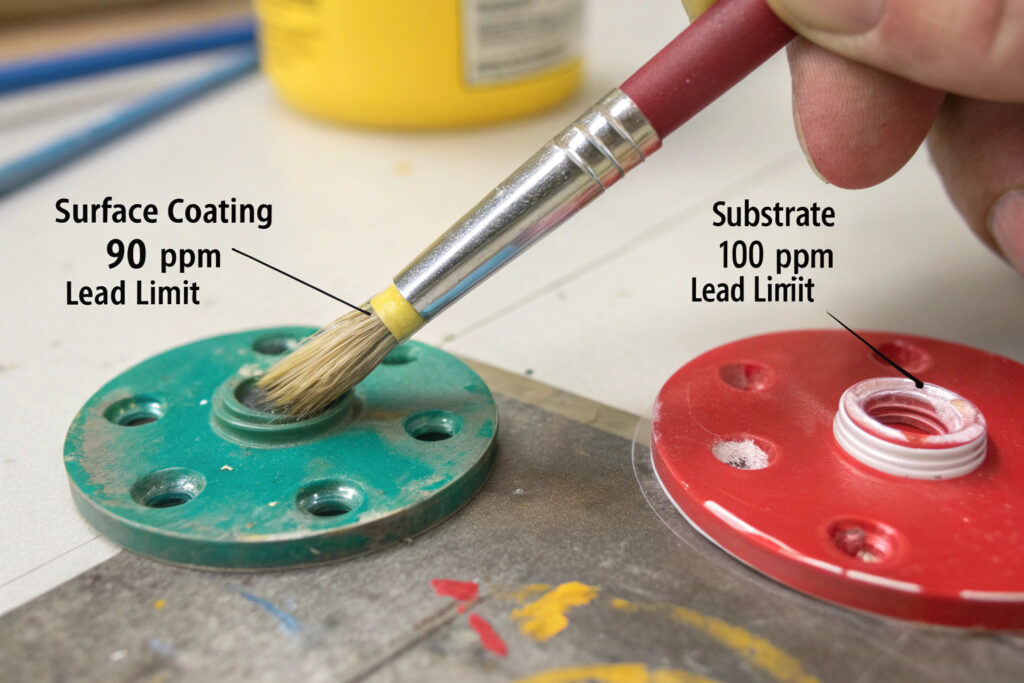
The CPSIA sets a 90 parts per million lead limit for surface coatings—paints, inks, screen prints, and lacquers applied to the surface of a component. The limit for the underlying substrate—the solid material itself—is 100 parts per million. A painted metal button must have the paint tested at the 90 ppm limit and the metal tested at the 100 ppm limit. A solid plastic button with no coating is tested only at the 100 ppm substrate limit. A fabric-covered button with a printed logo on the fabric has the print tested at 90 ppm and the fabric tested at 100 ppm.
My test request form specifies the test method and the applicable limit for each component. The lab separates the coating from the substrate and tests each to the correct limit.
The scraping test is the physical process that separates the surface coating from the substrate for independent analysis.
How Is the "Scraping Test" Performed to Separate Coating From Substrate?
The laboratory technician uses a clean scalpel or scraper to physically remove the surface coating from the substrate material. The coating is scraped onto a clean collection surface. The scraping continues until all visible coating is removed and the bare substrate is exposed. The collected coating material is weighed and analyzed for lead content. The remaining substrate is separately ground or digested and analyzed.
The scraping test ensures the coating and substrate are not averaged together, which would dilute a high coating lead result with a low substrate lead result. The two materials are tested independently to their respective limits.
My lab partner uses a micro-scraping technique for small components like crown buttons.
What Happens If the Button Has a Printed or Painted Decoration?
A printed or painted decoration on the button—a team logo, a character face, a colored pattern—is a surface coating. The decoration must be scraped off and tested at the 90 parts per million lead limit. The underlying button material must be tested at the 100 parts per million substrate limit.
If the decoration uses multiple ink colors, each color must be tested separately or a composite sample of all colors must be tested. A multi-color printed button has a higher testing cost because of the multiple surface coating samples.
I recommend solid-color buttons without surface decoration for kids' caps. The design is simpler. The testing is simpler. The compliance is more certain.
How to Request a Component-Specific Lead Test Report From Your Factory?
You email the factory: "Are your buttons lead-free?" The factory replies: "Yes, all our buttons are lead-free." You file the email as your compliance documentation. This is not documentation. This is a sentence in an email. The CPSIA requires a test report from a CPSC-accepted laboratory. The factory's verbal assurance has zero legal weight. The email is a comfort blanket, not a compliance document.
You request a component-specific lead test report by specifying the exact components to be tested, the test method, and the laboratory accreditation. The request must ask for total lead content testing per the CPSC-approved test method CPSC-CH-E1002-08.3 for substrates and CPSC-CH-E1003-09.1 for surface coatings. The components to be tested must be individually listed: the button metal shell, the button plastic core, the button fabric covering, and the button attachment thread. The laboratory must be CPSC-accepted for lead content testing.
My lead test report request to the lab specifies each button component as a separate test item. The report returns a lead result for each component.
The CPSC-accepted laboratory list is the definitive registry. Not all laboratories are authorized for all tests.

What Test Method Should the Lab Report Reference for CPSIA Lead Compliance?
The lab report must reference CPSC-CH-E1002-08.3 for the determination of total lead content in non-metal substrates, including plastic, fabric, and thread. For metal components, the report must reference CPSC-CH-E1001-08.3 for the determination of total lead content in metal substrates. For surface coatings, the report must reference CPSC-CH-E1003-09.1.
The report must state the detection limit, the measured lead concentration in parts per million, and the applicable regulatory limit. The report must include the laboratory's CPSC accreditation number and ISO 17025 accreditation details.
My test report review checklist verifies that the correct test methods are referenced for each component material type.
How Often Should the Button Be Re-Tested for Ongoing Kids' Cap Production?
The button must be re-tested at least annually for periodic testing compliance. It must be re-tested immediately if the button supplier changes, if the button material formulation changes, or if the button design changes. A "material change" under CPSIA triggers a mandatory re-test.
For high-volume kids' cap production, I recommend testing every new production batch or every six months, whichever is more frequent. The button supplier can change the alloy composition without notifying the cap factory. The re-test catches the unannounced change.
My periodic testing schedule for kids' cap components includes the crown button with a six-month testing interval.
What Are the Consequences of a CPSIA Lead Violation for the Cap Importer?
You import 5,000 kids' caps. They clear customs. They sell in stores. A CPSC spot check at a retail store tests the crown button. The button contains lead at 250 parts per million. The CPSC issues a recall order. You must recall all 5,000 caps from stores and consumers. The recall cost is $25,000. The CPSC imposes a civil penalty of up to $100,000 per violation. Your brand is publicly listed on the CPSC recall database. Your retail buyers cancel all future orders. The button that cost you $0.03 per cap has cost you your business.
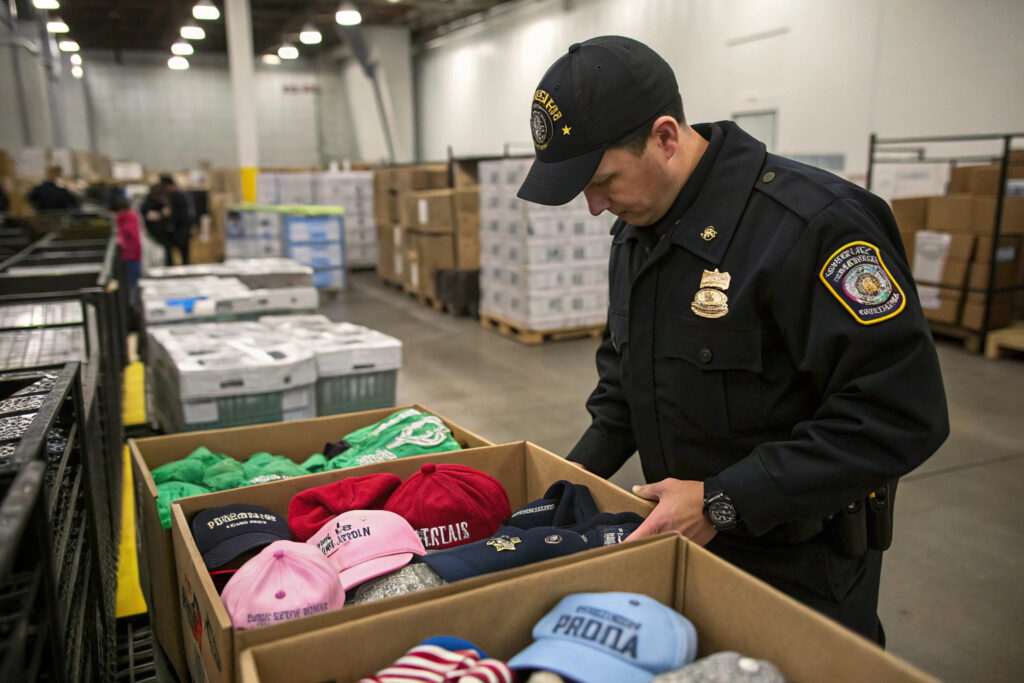
The consequences of a CPSIA lead violation for the cap importer include mandatory product recall, CPSC civil penalties, potential criminal liability for knowing violations, product seizure by Customs, state attorney general enforcement actions, and private civil lawsuits including class actions. The importer of record is legally responsible for compliance, regardless of whether the factory made the error. The importer cannot shift liability to the Chinese factory in a US enforcement action.
My CPSIA compliance program for kids' caps is designed to prevent a lead violation. Every component is tested. Every test report is verified. The button is on the checklist.
The CPSC recall database is public and permanent. A recall notification is a permanent scar on a brand's reputation.
Can the Importer Be Held Personally Liable for a Knowing Lead Violation?
Yes. Under the CPSIA, a director, officer, or agent of a corporation who knowingly and willfully violates the lead limits can be held personally liable for civil penalties. The CPSC can pursue individuals, not just corporate entities, for knowing violations. Criminal penalties, including imprisonment, can apply for willful violations that result in serious injury or death.
The "knowing" standard does not require actual knowledge of the lead content. It can be satisfied by deliberate indifference or reckless disregard for the compliance status of the product. An importer who never asks for test reports may be found to have acted with deliberate indifference.
My legal compliance guidance to importers is to maintain a rigorous, documented testing program. The documentation is the defense against a knowing violation charge.
How Does a Recall Affect Your Brand's Standing With US Retail Buyers?
A CPSC recall is a catastrophic event for retail relationships. Major retailers maintain internal databases of suppliers with compliance violations. A supplier with a recall is flagged. Future purchase orders are blocked. The supplier may be permanently delisted.
The recall is public. The retailer's reputation is damaged by association. The retailer's compliance team will be disciplined internally for approving the supplier. No buyer will risk their career by re-approving a supplier with a recall history.
My retailer compliance record is clean. I protect my clients by testing every component before it reaches the retailer's shelf.
Conclusion
CPSIA lead limits affect the button on top of kids' baseball caps by requiring every homogeneous material in the button assembly to meet the 100 parts per million limit for substrates and the 90 parts per million limit for surface coatings. The button is a multi-component assembly: fabric covering, metal shell, plastic core, and attachment thread. Each material must be tested separately. The metal shell is the highest-risk component due to lead in brass alloys and soldered joints.
The importer must request component-specific lead test reports from a CPSC-accepted laboratory. The test report must reference the correct CPSC test methods for each material type. The button must be re-tested annually and upon any material change. The consequences of a lead violation include mandatory recall, CPSC penalties, personal liability for knowing violations, and permanent damage to retail relationships.
The button is the smallest component on the cap. It is also one of the most dangerous if it contains lead. A child can mouth it. It can detach and be swallowed. The compliance program that tests the fabric and ignores the button is a compliance program that will fail.
At Global-Caps, my kids' cap component testing program covers every component, including the crown button. I source polypropylene buttons from CPSIA-compliant suppliers. I test every new button lot. The test reports are included in the Children's Product Certificate. The button is small. The testing is mandatory.
If you need kids' baseball caps with fully tested, lead-free components, contact my Business Director Elaine. She can provide our crown button lead test reports, our component testing matrix, and a sample Children's Product Certificate. Email Elaine at elaine@fumaoclothing.com. Let's make sure the top button is as safe as the rest of the cap.