You booked a flight. You are coming to inspect my factory. You want to see the production floor, the QC station, and the sample room. But before you pack your bags, you want to verify that our OEKO-TEX Standard 100 certificate is real. You have been burned before by a factory that hung a fake certificate on the wall. The logo looked official. The paper was a forgery. You discovered the truth only after a shipment failed a random lab test. That anxiety does not leave you.
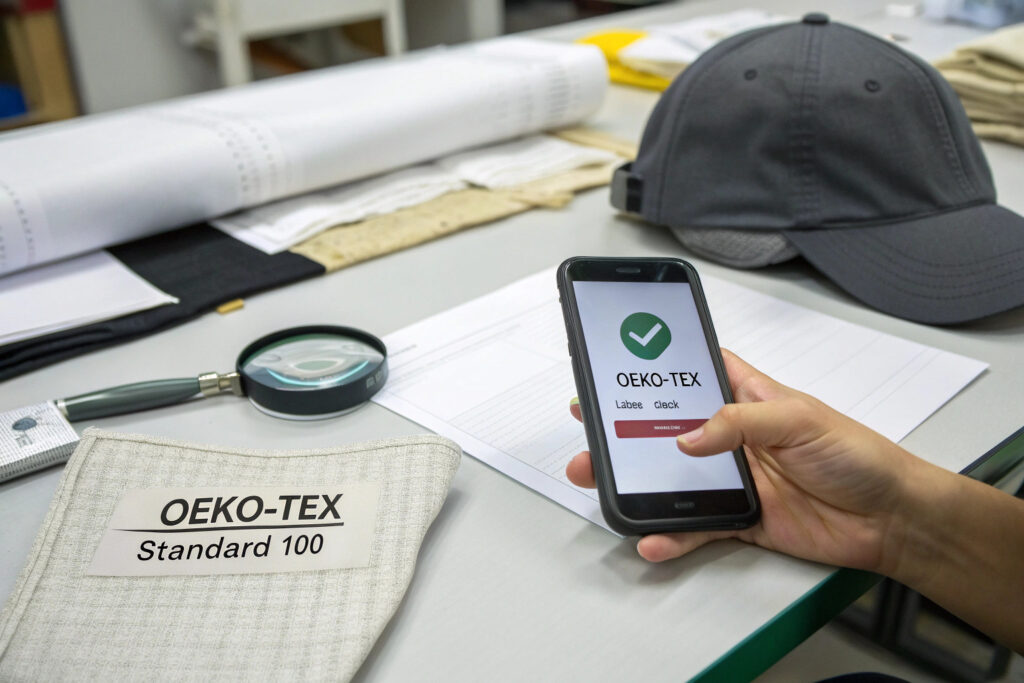
You can verify the OEKO-TEX certificate of Fumao Clothing before your factory visit by using the official OEKO-TEX Label Check tool on their website. I will provide you with our certificate number. You enter that number into the online database. The system returns the certificate holder name, the product description, the issuing institute, the product class, and the validity dates. If the returned name matches Fumao Clothing, the certificate is authentic. This check takes thirty seconds. You can do it on your phone in the taxi from the airport.
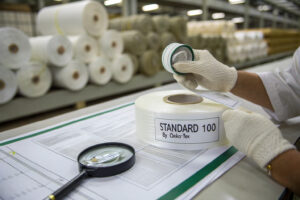
I want you to verify the certificate independently before you walk through my door. When you arrive, the physical certificate binder will be on the conference room table. The digital record and the paper document will match perfectly. You can spend your visit inspecting production quality instead of auditing paperwork.
Why Should You Verify an OEKO-TEX Certificate Before Visiting a Factory?
You travel 7,000 miles. You spend $2,000 on flights and hotels. You arrive at the factory. You ask for the certificate. The factory owner stammers. The certificate is expired. Or the certificate belongs to a different legal entity. Or the certificate is a color photocopy with the dates altered. Your visit is wasted. You cannot inspect production because the compliance foundation is missing. You should have checked before you booked the flight.
Verifying an OEKO-TEX certificate before visiting a factory saves you from wasting time and money on a supplier who cannot back up their safety claims. The verification takes thirty seconds online. It costs nothing. It reveals instantly whether the certificate is active, whether it belongs to the factory you are visiting, and whether it covers the specific products you intend to order. If the certificate fails the online check, you cancel the trip. You lose nothing.
I send my certificate number to every client who schedules a visit. I want them to verify it before they board the plane. A client who arrives already confident in the paperwork is a client who can focus on the product.
The alternative is arriving unprepared and spending your visit in a conference room sifting through questionable documents.

What Specific Details Does the OEKO-TEX Label Check Database Reveal?
The Label Check database reveals six specific data fields. The certificate number confirms the unique identifier. The certificate holder name confirms the legal entity that holds the certification. The issuing institute confirms which independent body audited the factory. The product description confirms the certified article groups. The product class confirms the safety level. The validity dates confirm the certificate has not expired.
If any of these six fields do not match the information provided by the factory, the certificate is suspect. If the holder name is a different company, the factory is borrowing someone else's certificate. If the product class is Class III for decorative materials but the factory claims it covers headwear, the factory is misrepresenting the scope.
I ensure my Label Check record is updated annually. The database is the single source of truth.
How Can an Expired Certificate Damage Your Brand's Retail Partnerships?
Major retailers maintain approved supplier lists. The supplier must provide a valid OEKO-TEX certificate. The retailer's compliance team checks the certificate number. If the certificate is expired, the supplier is suspended from the approved list. The purchase order is canceled. The shelf space is lost.
If a consumer group discovers your product lacks valid certification, they publicize the finding. The retailer drops your brand to protect their own reputation. The cost is not just one order. It is the entire retail relationship.
I track my certificate expiry date in my compliance calendar. The re-audit is scheduled three months before expiry.
How to Use the Official OEKO-TEX Label Check Database?
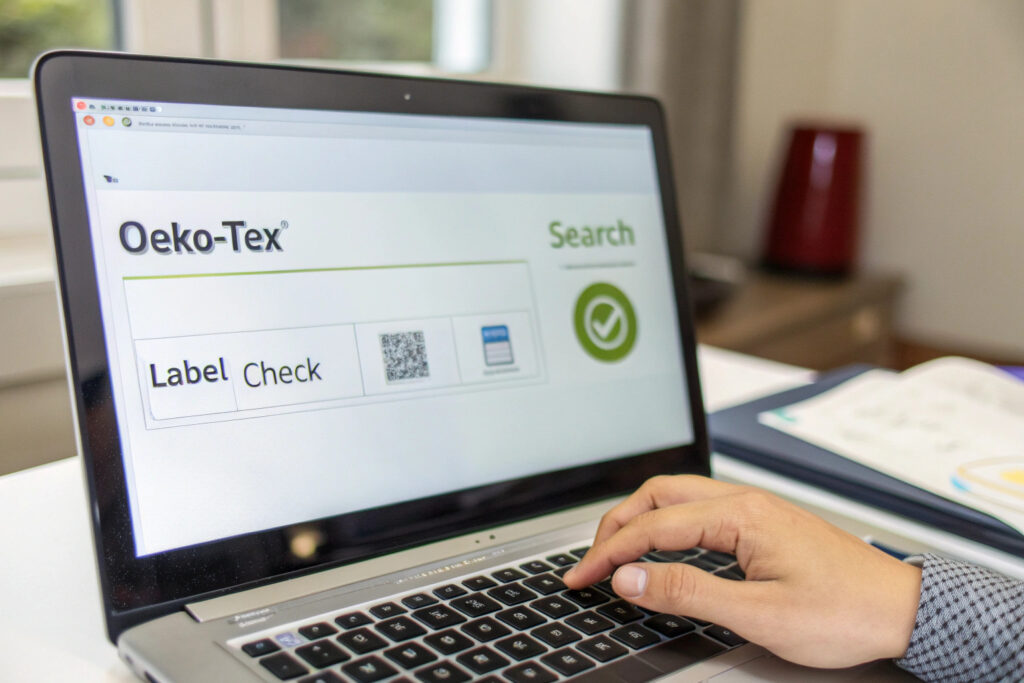
You type the certificate number into Google. The search results show a random blog that mentions the number. You think you verified it. You did not. You verified nothing. The only legitimate verification source is the official OEKO-TEX Label Check database. Any other source is unverified and could be part of the fraud.
You use the official OEKO-TEX Label Check database by navigating to the OEKO-TEX website, clicking on the "Label Check" link in the main menu or footer, and entering the certificate number exactly as it appears on the document. The database searches the global registry of certified products. The result appears instantly. You review the six data fields. You confirm the certificate is active and matches the supplier.
I bookmark the Label Check page on my phone. I demonstrate the check to clients during video calls. I share my screen. I enter the number. The result appears.
The certificate number format has a specific structure. Understanding the structure helps you spot a fabricated number.
What Is the Structure of an OEKO-TEX Certificate Number?
An OEKO-TEX certificate number typically follows the format: Institute Code-YY-NNNNNN. The institute code is a two-letter or three-letter abbreviation identifying the issuing body. SH stands for the Shanghai institute. HK stands for Hohenstein. BEW stands for the Austrian institute. The YY represents the year of issuance. The NNNNNN is a sequential number.
If the certificate number on the document does not follow this format, it is suspicious. If the institute code does not match the issuing institute named on the certificate, the document is fabricated.
My certificate number structure is consistent with the standard. I explain the code to my clients.
Can You Verify the Certificate Using a Smartphone During a Video Call?
Yes. The OEKO-TEX Label Check page is mobile-responsive. You can open the browser on your smartphone, navigate to the Label Check page, and enter the certificate number. The result displays clearly on a phone screen.
I ask my clients to do this during our first video call. I hold my certificate up to the camera. They read the number. They enter it on their phone. They read the result back to me. The verification is complete in under a minute. It builds trust instantly.
The mobile verification is the most efficient way to eliminate certificate fraud from your supplier vetting process.
What Product Categories Should Be Listed on a Headwear Certificate?
You see "OEKO-TEX Certified" on the factory's website. You assume the whole cap is covered. The certificate only lists "Cotton Woven Fabric." The sweatband is not listed. The thread is not listed. The plastic snap is not listed. The factory's certificate is valid, but it only covers the main fabric. The cap as a whole is not certified. You are buying a certified component, not a certified product.
The product categories listed on a headwear certificate must include the main crown fabric, the sweatband material, the stitching thread, and any plastic or metal accessories that come into prolonged skin contact. The appendix of the certificate must explicitly list each of these components. A certificate that only lists the fabric is insufficient for a finished cap.
My OEKO-TEX certificate appendix lists woven cotton twill, knitted polyester mesh, elastic sweatband material, continuous filament polyester thread, and injection-molded polypropylene snap closures. Every skin-contact component is covered.
The appendix is the legal boundary of the certification. Anything not listed is not certified.
Why Must the Sweatband and Stitching Thread Be Individually Certified?
The sweatband is the component with the most intense and prolonged skin contact. It sits against the forehead for hours. It absorbs sweat. The chemicals in the sweatband are in direct contact with the skin. If the sweatband is not certified, the cap's OEKO-TEX claim is meaningless for the wearer.
The stitching thread runs through every seam. It touches the skin at the sweatband seam, the crown seams, and the visor edge. Uncertified thread can contain heavy metals in the dye or formaldehyde in the finishing agent.
I certify my sweatband material and my embroidery thread separately. Each has its own supplier certificate or lab test report.
Does the Plastic Snapback Closure Require Its Own Certification?
Yes. The plastic snapback closure sits against the back of the head. It is in direct and prolonged skin contact. The plastic can contain phthalates, heavy metals, or other restricted substances. The closure is a separate component from the fabric.
The OEKO-TEX appendix must list the closure under the "Accessories" category. If the appendix does not list accessories, the closure is not covered. The factory must provide a separate test report for the closure material.
My plastic snap closures are tested for phthalates and heavy metals. The test report is referenced in my compliance pack.
What Documentation Should You Request Before Your On-Site Visit?
The factory says, "We will show you everything when you arrive." You fly there. The compliance manager is "on leave." The documents are "in the accountant's office." The accountant is "at a meeting." You spend your visit waiting for papers that never materialize. A transparent factory sends the documents before you travel.
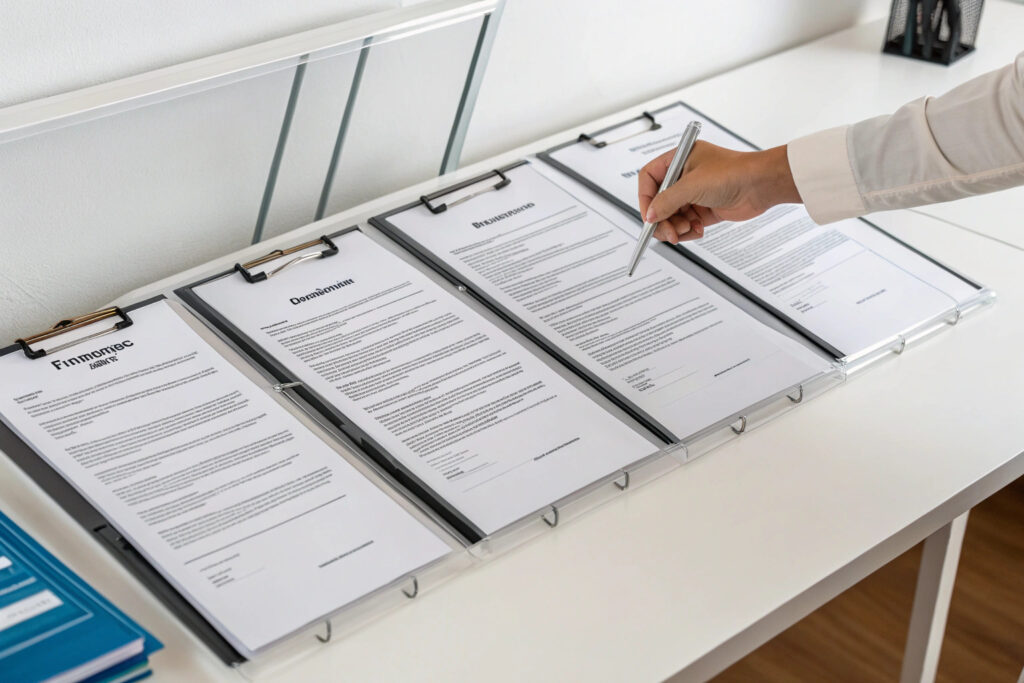
You should request four documents before your on-site visit: the current OEKO-TEX certificate with the full appendix, the most recent fabric lab test report, the thread and accessory supplier certificates, and the dye lot traceability log for a recent production batch. These documents prove the certification is active, the testing is current, and the traceability system functions.
I email a digital compliance pack to every client before their visit. The pack is a PDF with the four documents. The client reviews them on the plane. The visit is for physical verification, not document discovery.
The lab test report is more specific than the annual certificate. It proves batch-level compliance.
How Does a Fabric Lab Test Report Differ From the Annual Certificate?
The annual OEKO-TEX certificate is a license. It states the factory is authorized to produce certified products. It is issued after an audit of the quality management system and a round of product testing. It is valid for one year.
The fabric lab test report is a specific test on a specific dye lot. It is issued when a new roll of fabric arrives at the factory. It proves that the exact fabric used for a specific order met the OEKO-TEX limits.
I test every incoming fabric lot. The test report is linked to the roll number.
What Is a Dye Lot Traceability Log and Why Should You Review It?
A dye lot traceability log records the journey of a specific batch of dyed fabric from the dye house to the finished product. It links the dye lot number to the fabric roll number, the cutting batch, the sewing line, and the final carton number.
If a chemical problem is discovered later, the log identifies every cap produced from that dye lot. It enables a targeted recall instead of a total recall. It is the foundation of a responsible supply chain.
I maintain a traceability log for every certified order. It is available for client review at any time.
Conclusion
Verifying the OEKO-TEX certificate of Fumao Clothing before your factory visit is a thirty-second digital process. You use the official OEKO-TEX Label Check tool. I provide the certificate number. You enter it. The database confirms the holder name, the product class, the product description, and the validity dates. You do it on your phone before you board your flight.
When you arrive, the physical compliance pack is ready. The pack contains the certificate with the full appendix listing every skin-contact component, the fabric lab test reports for recent dye lots, the supplier certificates for thread and accessories, and the dye lot traceability log. The digital record and the paper documents match.
Your visit is then productive. You inspect the production floor. You check the QC station. You approve the samples. You do not spend a single minute auditing paperwork that should have been verified before you traveled.
If you are planning a factory visit to Fumao Clothing, contact our Business Director Elaine. She will send you our certificate number, the Label Check link, and the full digital compliance pack. Verify us online. Then come see us in person. Email Elaine at elaine@fumaoclothing.com. We are ready for your inspection.