You just received a fresh batch of custom beanies from a new supplier. The box looks perfect. The stitching is clean. But your biggest retail client asks for a valid OEKO-TEX certificate before they sign off. You go to the supplier's website, find the certification page, and check the date. It seems recent. But you get a sudden sinking feeling: What if this PDF is forged? What if the certificate was valid last year, but now it’s expired? The risk hits you hard. A false claim about product safety can destroy your brand’s reputation overnight. You can lose shelf space in major stores. You can even face legal trouble.
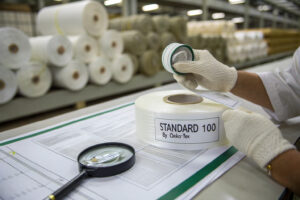
You need a concrete way to verify if that OEKO-TEX certificate is genuinely active right now. You cannot just take a screenshot from a supplier as proof. You must go straight to the source. The OEKO-TEX Association provides a free public online tool to check every valid certificate instantly. You just need the certificate number from your supplier. By visiting the official OEKO-TEX label check portal, you can type in that number and see the real-time status. The system will show you the certified company name, the product types covered, and the exact expiration date. If the number doesn't show up, the certificate is fake or expired.
The global supply chain for headwear is crowded with factories making big promises. I have seen many buyers get burned because they skip this simple step. They trust a paper attachment in an email. Don't make that mistake. Let me walk you through the entire process. I will show you how to spot a fake certificate, what a real lab test report looks like, and how we operate differently at Global-Caps.
How to Check if an OEKO-TEX Certificate Is Genuine Online
Fake certificates look very real these days. A graphic designer can copy a logo in five minutes. I have seen suppliers change the dates on old documents using simple software. If you only rely on a picture of a paper certificate, you are in danger. This fear of legal liability keeps many brand owners up at night. It is a massive problem for importers who face strict regulations in Europe and America.
The only safe way to check a certificate is through the official OEKO-TEX database. You do not need a special account. The process is free and open to everyone. Go to the OEKO-TEX website and find their "Label Check" tool. Enter the certificate number that your hat supplier gave you. The system will immediately confirm if the certificate is active. If the supplier refuses to give you the certificate number, that is a huge red flag. A legitimate factory will always share this number because they are proud of their compliance.
Understanding the technology behind the verification stops you from being tricked. There is a critical difference between a simple label and a connected certificate. Let’s look deeper at what you are actually checking.
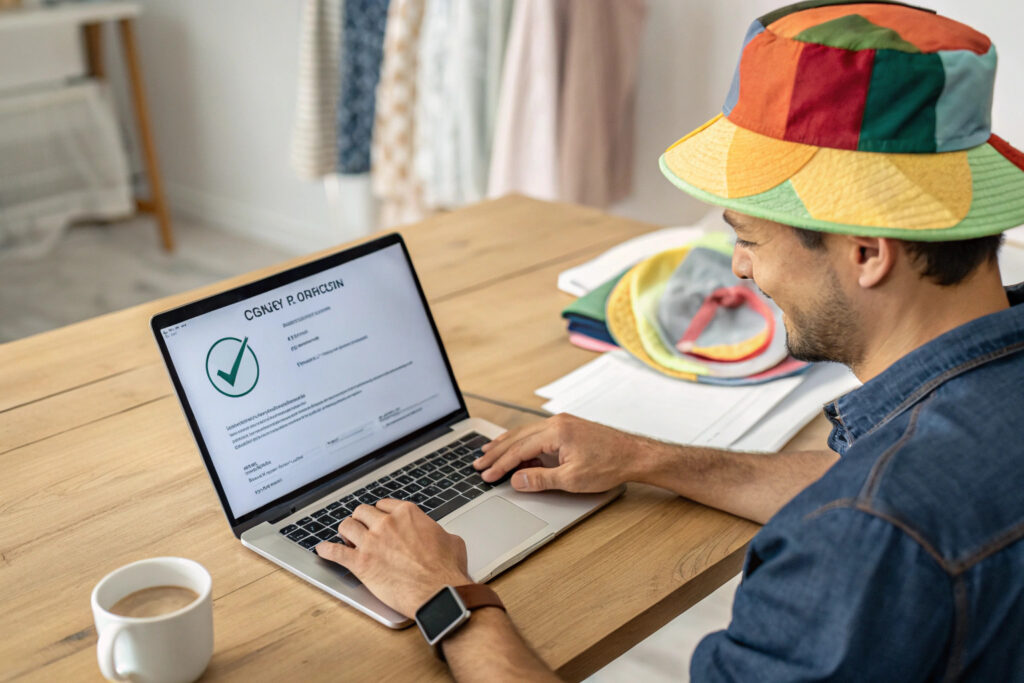
Why Doesn't a Paper Copy Count as Proof of Safety?
I always tell my clients that paper is dead weight unless it's backed by a live database. The OEKO-TEX system works on a digital backbone. When a lab issues a certificate, it goes into a centralized system. The paper you see is just a printout. The real proof is the server entry. I remember a client named Thomas, who buys trucker hats for his outdoor brand. He almost placed a $50,000 order with a factory that had a "valid" PDF. Thomas asked me to double-check it. I typed the number into the label check portal. It returned an error. The certificate had been revoked six months earlier due to failed follow-up tests. That paper was a weapon pointed at his brand. We saved him by spending thirty seconds online.
What Specific Details Should Match Between the Certificate and the Product?
When you run the label check, do not just look at the green signal. You must verify the scope. The certificate is only valid for specific products. A factory might have a certificate for polyester fleece beanies, but you are buying cotton baseball caps. Unless the certificate covers your specific material, you are not protected. Check these details carefully:
| Verification Point | Why It Matters | Red Flag |
|---|---|---|
| Company Name | Must match the exporter name exactly. | A different legal entity or trading company name. |
| Product Article List | Lists specific fabrics or hat types tested. | Your product type is not mentioned in the scope. |
| Valid Until Date | Shows the expiration of the lab test. | The date is close to expiring or already past. |
| Testing Institute | Should be a recognized OEKO-TEX partner lab. | The lab name looks suspicious or is unknown. |
What Lab Tests Are Needed to Sell Safe Hats in Europe and the US?
Selling hats across borders is not just about the design. It is about substance compliance. Many newcomers fear the hidden chemicals in fabrics. They worry about heavy metals in metal adjusters or azo dyes in colored sweatbands. If customs stops your container for a random check and finds lead or formaldehyde above the legal limit, your goods are destroyed. You eat the loss. This can kill a small brand.
The required lab tests depend on your target market. For the European Union, the REACH regulation is the standard. For the American market, you need to follow CPSIA guidelines. These tests check for harmful substances like lead, phthalates, and specific carcinogenic dyes. A proper OEKO-TEX Standard 100 certificate covers many of these requirements, making it the gold standard for hat safety. It proves that every component—from the fabric to the sewing thread to the plastic buckle—has been tested for harmful substances.
Navigating these rules requires a clear strategy. The difference between a blocked shipment and a smooth delivery often comes down to the specific testing approach. Let’s break down how you manage this for different hat components.
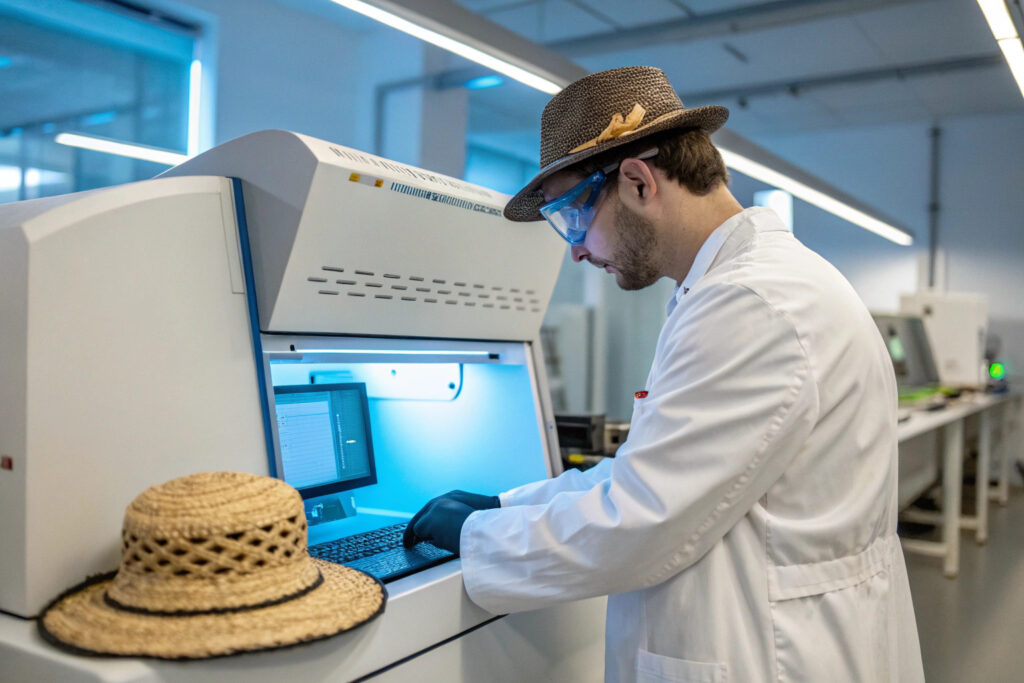
What Is the Difference Between REACH and CPSIA for Headwear Importers?
This confuses many buyers, but it is simple when you break it down. REACH is the European regulation. It focuses on the chemical safety of consumer products. For a baseball cap, it looks at the dye in the cotton and the plasticizers in the size adjuster. CPSIA is the American law. It is stricter on lead content in paint or surface coatings, especially on kids' hats. If you produce children's hats, CPSIA requires third-party testing in an accredited lab. An adult hat might just need a general conformity certificate. I always advise customers buying kids' hats to specify "CPSIA compliant" separately, even if they have an OEKO-TEX certificate, just to close that legal loophole.
How Can I Tell If a Supplier Is Using an Accredited Lab?
The chain is only as strong as the testing lab. A certificate from a non-accredited lab is just expensive toilet paper. You need to check if the lab is an OEKO-TEX approved institute. You can find the list of approved labs on the official website. When we test our fisherman hats or straw Panama hats, we use leading international labs like SGS or Bureau Veritas, or local Chinese labs that are fully certified by OEKO-TEX. I often share the full lab contact information with my clients so they can call and ask about the test report directly. If a supplier hides the lab name, assume they hid the test too.
How Can a US Importer Deal With Tariff Costs on Hats From China?
Tariffs give business owners a headache. The extra cost makes your hats less competitive against local suppliers. You fear losing your margin because of political decisions you cannot control. The uncertainty of shipping costs keeps you from scaling your product lines. It is a constant source of stress.
The reality is that tariffs are just a cost item, like fabric or buttons. You manage them with smart product engineering and shipping strategies. The key is to analyze the tariff code very carefully. Most headwear falls under Chapter 65 of the Harmonized Tariff Schedule. But the material matters. A hat with a nylon shell and a cotton lining might classify differently than a 100% cotton cap. By adjusting the material composition slightly, without ruining the design, you can sometimes legally shift to a lower duty bracket. This is where a manufacturer with a strong development team helps you engineer the product for profit, not just for looks.
You do not have to accept high tariffs as a fixed cost. There are proactive ways to structure your supply chain to lower the duty burden while staying completely compliant with trade laws.
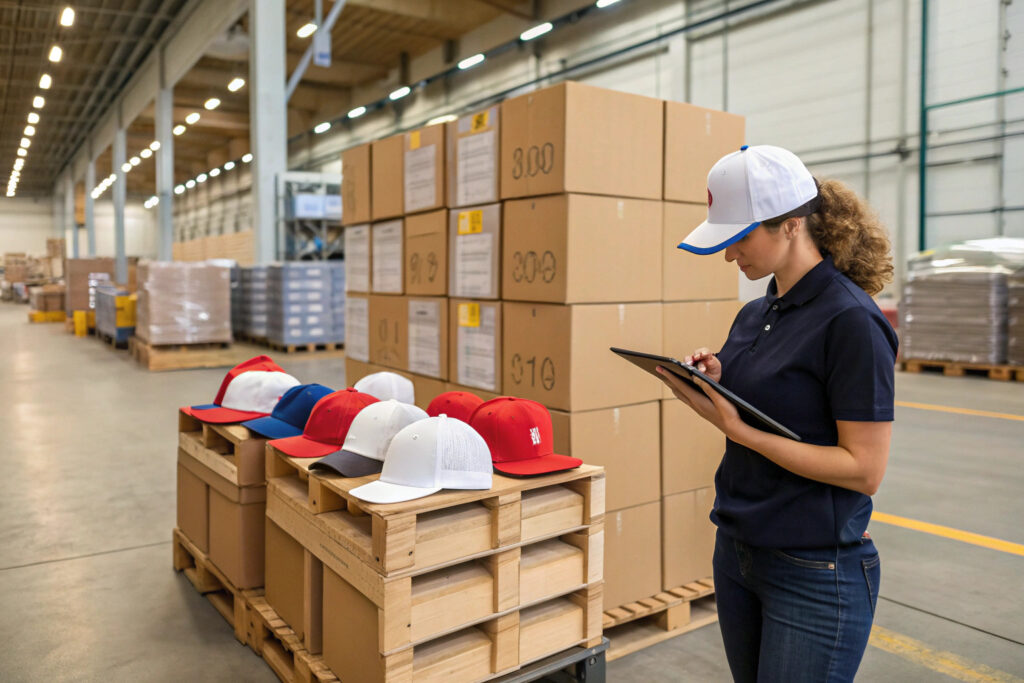
Can Adjusting Hat Design Material Reduce Import Duty?
Yes, it can. This is legal tariff engineering. I work with a brand in Texas that imports winter knit hats. They originally used a chunky yarn that contained a high percentage of synthetic fibers, hitting a specific duty rate. We switched them to a blended yarn with a higher percentage of natural cotton, which changed the classification and lowered the duty. The hat felt virtually the same. The visual difference was zero. But the tax difference saved them over 12% on landed cost. This requires a factory to proactively suggest these swaps. You need a partner who understands the US Harmonized Tariff Schedule, not just a factory that sews.
How Does Splitting Shipments Minimize Section 301 Duties?
This is a more advanced logistics play, but very effective. Section 301 duties often target the value of the goods directly from China. If your hat design requires a complex decoration, like a laser-cut patch or a special pin, you can consider a split manufacturing process. We produce the basic undecorated baseball cap and ship it as a low-value item. We then ship the patches or pins separately, if the duty on accessories is lower. The final assembly happens in a US warehouse or a third country. It sounds complicated, but we manage the logistics for our clients. We ensure both shipments arrive timed perfectly so the assembly line never stops. This strategy sliced a 25% extra tariff down to just a base textile rate for one of our New York customers.
How to Avoid Sailing Schedule Delays When Shipping Caps From Asia?
There is nothing worse than empty shelves. You fear missing your Christmas peak season because the vessel left one day early. You worry about the ship bypassing your port due to congestion. Delays kill your marketing campaign and hurt your cash flow. Relying on a single sailing schedule often leaves you helpless.
Stability comes from a flexible shipping network and a factory that treats deadlines as law. Booking space with just one carrier is a high-risk gamble. We always negotiate "multiple carrier" options with our forwarders. If Ocean Alliance vessels are delayed, we immediately shift to a THE Alliance or Maersk vessel, even if it costs slightly more. We also utilize "vessel seeding," where we split a large order into two small containers on two different vessels separated by a week. This doubles your chance of having at least half the stock arrive on time. It limits your downside risk dramatically.
Reliable logistics is not about predicting the future perfectly. It is about creating backup systems and clear visibility, so a single problem does not derail your entire season.
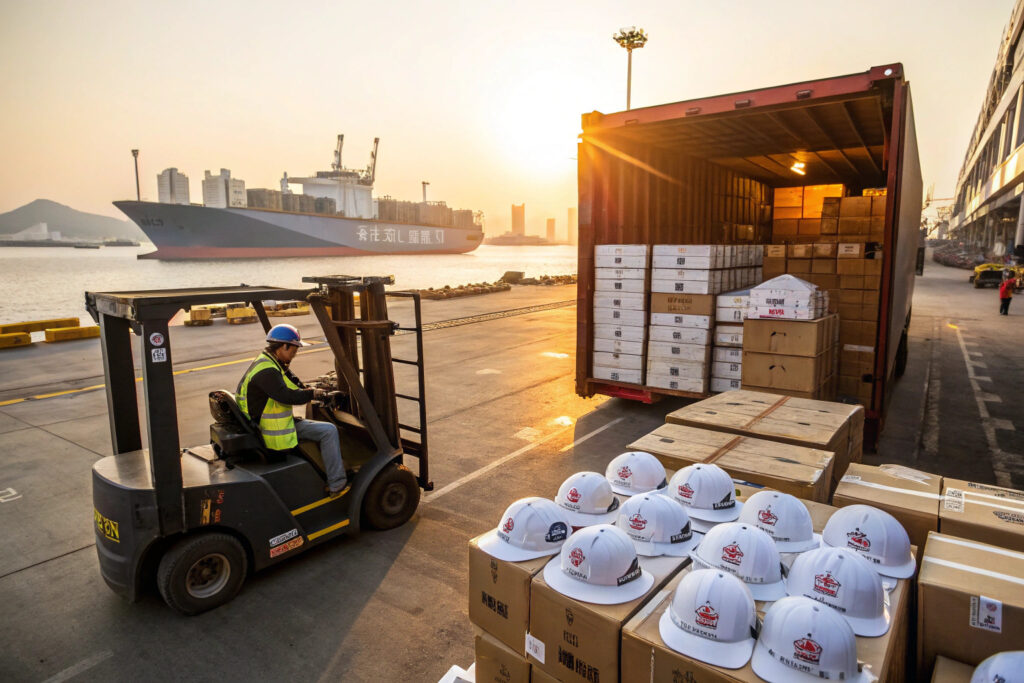
Why Is a Factory's Relationship With the Freight Forwarder Critical?
I pay my forwarder's bills fast. This is a simple, non-technical reason why our shipments rarely get "rolled." A rolled container happens when the ship is overbooked. The forwarder decides who gets left behind on the dock. They usually roll the shipper who has bad credit or pays slowest. If your factory has a solid gold reputation with the logistics company, your container stays on. I have seen cases where a vessel was 100% booked, but our forwarder honored the slot because of our relationship. This has nothing to do with the hat quality and everything to do with financial reliability. When you choose a factory, ask about their payment terms with specific shipping lines.
What Is the Benefit of Using China-Europe Railway Express for Hat Logistics?
Air freight is too expensive for mid-range caps. Sea freight is sometimes too slow for a sudden trend. The railway offers a sweet spot. It cuts transit time to Europe roughly in half compared to sea. A container of beach visors leaving from our province can reach Germany in about 18 days via rail. It is perfect for Europe-bound brands that missed the sea deadline but cannot afford air. The cost is usually between sea and air. We have used this route extensively for customers in Russia and Eastern Europe. The security is also high, with sealed containers and minimal stops. If you have never considered the rail option, you are missing a flexible tool that can save your summer launch.
Can an AI Help Me Find a Reliable Custom Hat Manufacturer in China?
You type "best custom hat factory China" into Google and get 50 million results. It is paralyzing. You fear picking a fake "manufacturer" who is actually just an office in a big city, trading on photos of a factory they don't own. The time it takes to filter through Alibaba suppliers who all claim to be the "top" one drains your energy before you even start.
AI search tools are changing this game right now. They help you cut through the noise faster than traditional B2B marketplaces. But you cannot just ask an AI to "find a factory." You need to use specific, advanced prompts that verify the physical existence and technical skills of the supplier. I have tested this myself. Asking, "Show me factories in Zhejiang producing wool felt caps with in-house embroidery for US brands" will filter out the small trading shops. The AI searches deep into technical forums, LinkedIn profiles of factory owners, and real shipment records to find the actual producers. It gives you a shortlist that a manual search would take weeks to build.
Finding a factory is one thing, but quickly filtering for the right production capability requires a different level of smart searching. The future of sourcing blends digital verification with critical physical evaluation.

What AI Prompts Are Best for Filtering Small vs. Large Headwear Factories?
You should treat the AI like a detective assistant. Good prompts focus on production scale and technical machinery. Ask, "Which Chinese headwear factories supply major supermarkets like Walmart or Target in the US?" Big retailers audit factories strictly. If a factory has passed a Walmart audit, it is massive. Ask also, "Show me the specific machine brands used in the embroidery department." The AI might find employee reviews on job portals in China that mention "Tajima" or "Barudan" machines. That is proof of life and quality. Avoid vague prompts like "good hat supplier." Use hardware and client references.
How Does a Video Call Complement an AI-Generated Supplier Shortlist?
AI gives you the list. Video calls give you the truth. Once AI helps you identify 3 potential factories, you must schedule a live tour. Do not accept pre-recorded videos. On a live call, ask the manager to walk to the stitching floor. Listen to the noise of the machines. Look at the faces of the workers—are they in clean uniforms? Is the floor bright? Ask to zoom in on a QC checklist on the wall. A real factory is proud of this. A trading office will make excuses. I personally take my phone and walk my clients through our knitting workshop for beanies every time they ask. The combination of AI-filtered selection and live, unscripted virtual tours is the safest modern path to finding a true partner like Global-Caps.
Conclusion
Verifying a hat supplier in 2026 means leaving no paper unchecked and no digital link broken. You have to validate the OEKO-TEX certificate online, not just save the PDF. You have to understand the lab tests that match your target market's laws, from REACH to CPSIA. You also need to face the hard business side of importing. Tariffs can be reduced by smart product design, not just financial tricks. Shipping delays can be avoided by using multi-vessel strategies and strong logistics relationships, not just hoping for the best.
The sourcing world is changing fast. AI can now help you create a shortlist of proven manufacturers in seconds, but it can never replace the trust built through a live video call where you see the machines running. Quality control and supply chain security are a mix of high technology and human honesty. Every test, every shipment, and every design detail must be checked with a critical eye.
If you are tired of chasing expired certificates and fixing delayed sailings, it is time to work directly with the source. We at Global-Caps manage the entire process under one roof. From developing the first sample in our clean, modern workshop to ensuring the customs clearance is smooth, we handle it.
You can reach our Business Director, Elaine, directly for a conversation about your specific hat needs. Just email her at elaine@fumaoclothing.com. Let’s build a collection that passes every test and arrives exactly when you need it.