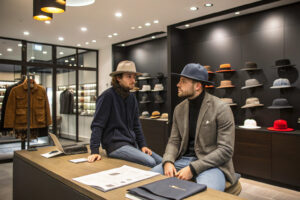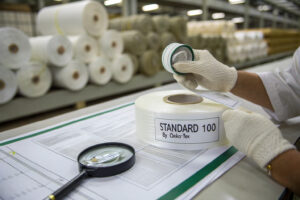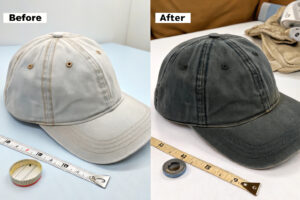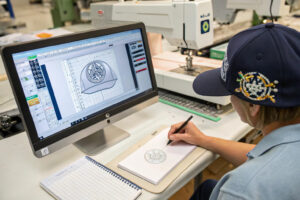
You have a design idea. You sketch it. You email it to the factory. You wait two weeks. A physical sample arrives. The logo is too big. The color is off. You mark up the changes. You send it back. Two more weeks pass. The second sample arrives. The logo is right but the visor curve is wrong. Eight weeks have passed. Your launch window is closing. You are bleeding time. The physical sample loop is a speed trap.
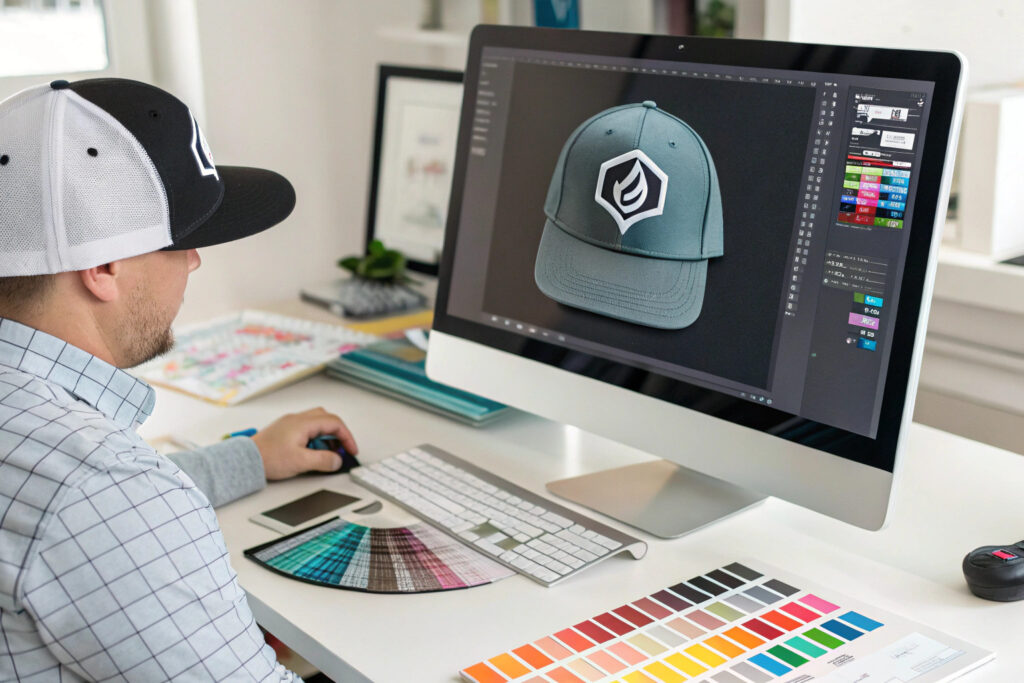
AI 3D sampling speeds up custom headwear design approval by replacing the first two rounds of physical samples with photorealistic digital renders. You upload your logo and select your fabric, color, and structure. The AI engine generates a 3D model of the cap that you can rotate, zoom, and inspect from every angle. You approve the digital sample in hours, not weeks. The factory then produces one physical strike-off sample for final confirmation. The total sampling timeline shrinks from six weeks to one week.
At Global-Caps, I invested in a 3D sampling platform last year. My clients now approve designs on their phones during their morning coffee. The technology is not a gimmick. It is the biggest time-to-market accelerator in the headwear industry.
What Is AI 3D Sampling for Custom Caps and How Does It Work?
You hear "3D sampling" and imagine a clunky video game hat. You think it looks fake. You think it cannot replace a physical sample. I thought the same three years ago. Then I saw a render that I could not distinguish from a photograph. The fabric texture had the right nap. The embroidery had the right thread shine. The visor curve cast the right shadow. The technology had crossed the uncanny valley.
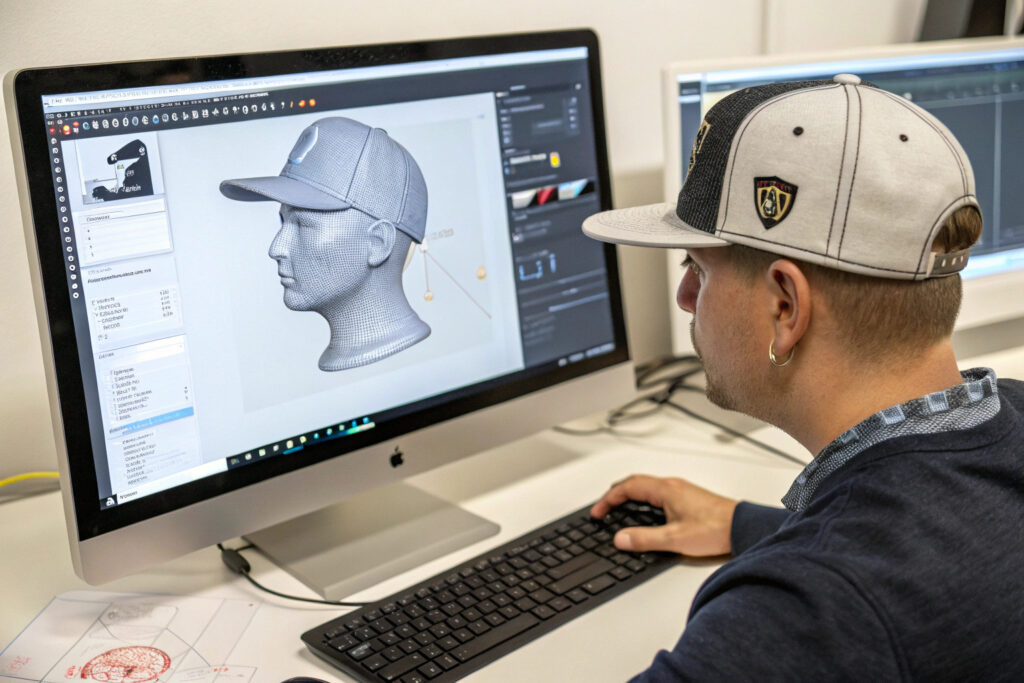
AI 3D sampling is a digital process that creates a photorealistic, 360-degree rotatable model of a custom cap using artificial intelligence and physically-based rendering. The software maps your logo artwork onto a 3D cap mesh. It simulates the fabric drape, the embroidery texture, the color under different lighting conditions, and the structural shape. The output is a render that looks like a professional product photograph taken in a studio.
I use a platform that integrates with my factory's material library. Every fabric I stock is scanned and digitized. The AI knows how my cotton twill reflects light differently from my polyester mesh. The render is not a generic cap. It is a digital twin of the cap I will sew.
The AI is not just a graphics engine. It is a physics simulation. It calculates how the fabric folds, how the embroidery sinks into the crown, and how the visor curves under gravity.
How Does Physically-Based Rendering Simulate Fabric Texture and Thread Shine?
Physically-based rendering simulates how light interacts with surfaces. It calculates the reflection, refraction, and scattering of light rays hitting the virtual fabric. A cotton twill has a rough, matte surface. Light scatters in many directions. A polyester satin has a smooth surface. Light reflects in a concentrated specular highlight.
The rendering engine uses a BRDF model that mathematically describes the light behavior of each fabric. The cotton BRDF has a high roughness value. The satin BRDF has a low roughness value. The embroidery thread has a cylindrical geometry that creates a distinctive anisotropic highlight along the thread direction.
I scan my fabrics with a material scanner that captures the diffuse map, the normal map, the roughness map, and the specular map. These four texture maps feed into the rendering engine. The result is a digital fabric that looks identical to the physical swatch under multiple lighting conditions. The thread shine on the embroidery is particularly convincing because the normal map captures the tiny height variations of each stitch.
Can a 3D Render Replace a Physical Sample for Final Buyer Approval?
No. Not yet. A 3D render can replace the first and second rounds of physical sampling. It is perfect for color selection, logo placement, and overall silhouette approval. But it cannot replace the final confirmation sample. The buyer still needs to feel the fabric hand, test the sweatband comfort, and check the visor stiffness.
The final physical sample is called the pre-production sample or gold seal sample. It is the single physical reference that the bulk production must match. The 3D render gets you to the gold seal sample with zero or one physical iteration instead of three or four.
My approval workflow now is: digital render for design selection, then one physical pre-production sample for final sign-off. The digital render catches 90% of the aesthetic issues. The physical sample catches the tactile issues. The combined process is 75% faster than the old all-physical process.
Why Does Traditional Physical Sampling Delay Custom Hat Orders by Weeks?
You think the factory is slow. You send a design on Monday. The sample arrives on Friday three weeks later. You think they sewed it for three weeks. They didn't. They sewed it in four hours. The rest of the time was queue time, courier transit, and customs clearance. The physical object spent 90% of its journey sitting in a box on a shelf or in a truck.
Traditional physical sampling delays custom hat orders by weeks because the physical sample must travel through international courier networks. A DHL package from our factory to a US buyer takes 3 to 5 business days. Multiply that by three revision rounds. That is 15 days of pure transit time. Then add the factory queue time. The sample maker cannot drop a bulk production job instantly. They schedule samples for the next available slot, which may be 2 to 3 days away.
The courier is the silent time thief. The sample maker is fast. The courier is slow. Digital sampling eliminates the courier from the first two rounds entirely.
The factory's internal scheduling is the other bottleneck. A sample competes with bulk production for the same skilled labor and machines.
How Does Courier Transit Time Add Up Across Multiple Revision Rounds?
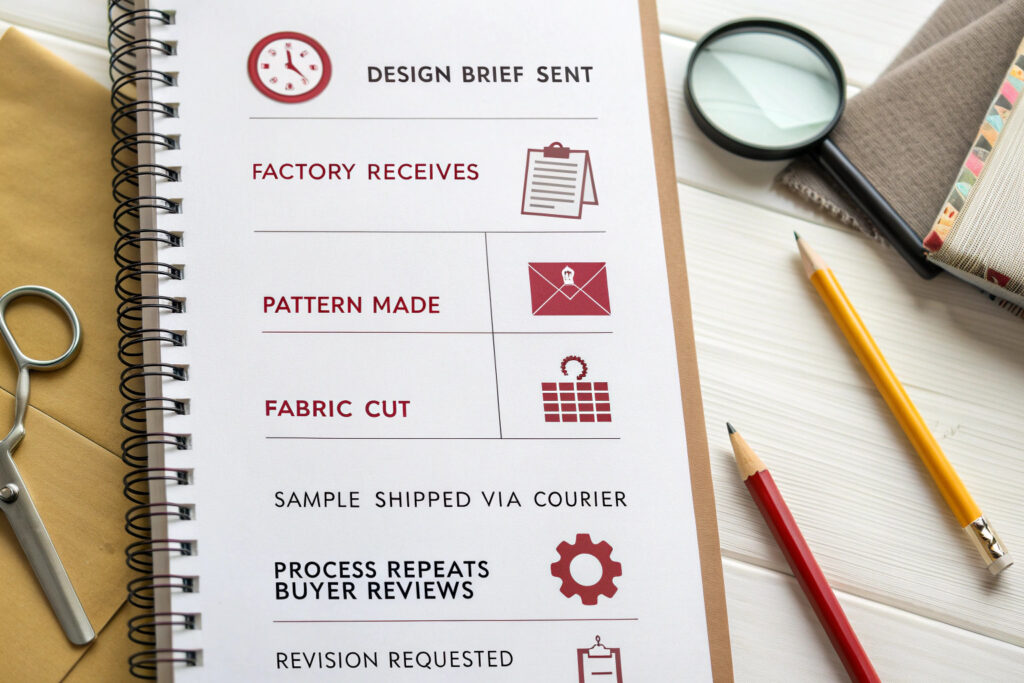
Round one: factory to buyer, 4 days. Buyer reviews, 1 day. Buyer emails revisions, instant. Round two: factory revises sample, 3 days. Factory ships, 4 days. Buyer reviews, 1 day. Round three: factory revises, 3 days. Factory ships, 4 days. Total transit time: 12 days. Total factory time: 9 days. Total elapsed time: 21 days. The courier is 57% of the timeline.
If the buyer is in Australia or South America, the transit time is even longer. The courier network is fast but not instantaneous. The physical sample is a physical object subject to the laws of geography.
I calculated that digital sampling saves an average of 10 courier transit days per project. Over a year of sample development, that is months of saved time.
What Is the "Sample Queue" and Why Does It Create Bottlenecks?
The sample queue is the waiting list for the factory's sample room. The sample room is a small, specialized team. They are the most skilled sewers in the factory. They handle all new development samples. They are a shared resource.
Bulk production orders take priority. A sample for a 50,000-unit repeat order from a major department store gets scheduled immediately. A sample for a 200-unit startup order waits. The sample room capacity is finite. When ten brands request samples in the same week, the queue forms.
My sample room operates on a first-in, first-out basis with priority tiers. Digital sampling reduces the load on the sample room. Brands that approve digital renders first get their physical samples faster because the sample room only makes the final confirmation sample, not multiple revision rounds. The queue moves faster for everyone.
How to Digitize Your Logo and Fabric Choices for a 3D Cap Mockup?
You have a logo. It is a JPEG pulled from your website. It is 72 DPI. You send it to the factory for 3D sampling. The render comes back. The logo is a blurry mess. The edges are pixelated. The 3D artist used the low-resolution file you provided. Garbage in, garbage out. The 3D render is only as good as the source files.
You digitize your logo and fabric choices for a 3D cap mockup by providing a high-resolution vector file of your logo in AI, EPS, or SVG format, and by selecting your fabric from the factory's pre-scanned digital material library. A vector file can be scaled infinitely without losing quality. The 3D software can map it precisely onto the curved cap panel. A JPEG or PNG will pixelate when the software stretches it over the dome shape.
I send my clients a simple design brief template. It asks for the vector logo file, the Pantone color codes, the fabric selection from my digital swatch book, and the visor shape preference. The client fills in the template. My 3D artist has everything they need.
The fabric selection is now a digital experience. The client does not wait for a physical swatch card to arrive by mail. They browse a digital library.
What File Format Is Required for a Sharp 3D Embroidery Render?
Vector files are mandatory. AI (Adobe Illustrator), EPS (Encapsulated PostScript), SVG (Scalable Vector Graphics), and PDF with vector layers are the acceptable formats. These files define the logo as mathematical curves, not colored pixels. The curves can be scaled to any size.
A raster file like a JPEG or PNG is made of pixels. At 300 DPI, a 2-inch logo has 600 pixels across. When the 3D software maps it onto a curved 5-inch cap panel, it stretches those 600 pixels across 1,500 pixels of screen space. The software must invent the missing 900 pixels. The result is blurry.
I require a vector file for all 3D sampling. If the client only has a JPEG, I offer a vectorization service for an additional fee. The automated vectorization is good for simple logos. Complex logos need manual tracing.
How Are Physical Fabric Swatches Turned Into Digital Texture Maps?
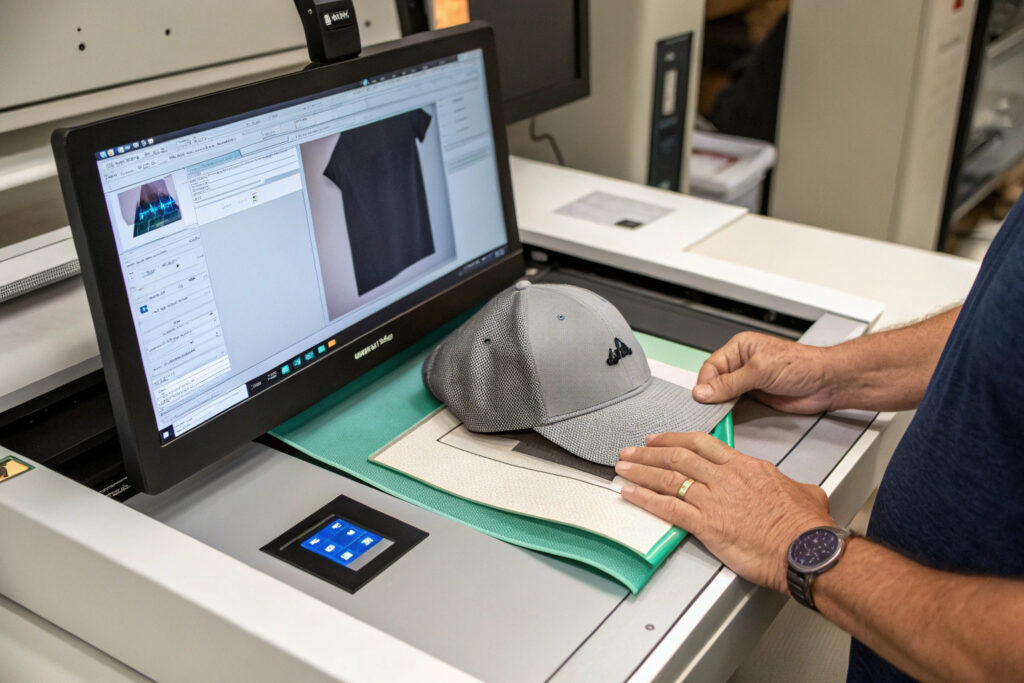
The fabric is scanned with a specialized material scanner. The scanner uses multiple cameras and light sources to capture the fabric's appearance from different angles. It records how the fabric reflects light, how the surface texture casts micro-shadows, and how the color shifts at different angles.
The scanner outputs four texture maps. The diffuse map captures the base color. The normal map captures the surface bumps. The roughness map captures the matte or glossy finish. The specular map captures the reflective highlights. These four maps feed into the rendering engine to create a photorealistic fabric simulation.
I use a Vizoo scanner to digitize my fabric library. Every new fabric I stock is scanned and added to the digital swatch book. The client browses the digital fabric library and selects their material. The 3D artist applies the texture maps to the cap model. The render shows exactly how the fabric will look, including the weave pattern and the sheen.
What Cost and Time Savings Can a Brand Expect From AI Sampling?
You think digital sampling is an expensive premium service. The factory quotes a $50 digitization fee. You hesitate. You compare it to the $0 sample fee from the factory that sends free physical samples. But that "free" physical sample costs you three weeks of your launch timeline. The opportunity cost of a delayed launch dwarfs the $50 digitization fee. The free sample is the most expensive option.
A brand can expect to save 60% to 80% on sampling costs and shorten the approval timeline from 4-6 weeks to 1-2 weeks by using AI 3D sampling. The cost savings come from eliminating two rounds of international courier shipping and reducing the factory's physical sample labor. The time savings come from near-instant digital delivery and rapid revision cycles.
My clients who adopt 3D sampling launch their collections two months earlier than competitors who rely solely on physical sampling. Two months of additional retail shelf time is a revenue advantage that compounds every season.
The courier cost is the most visible saving. A single DHL shipment costs $35 to $65. Eliminating two shipments saves $70 to $130 directly.
How Does Reducing Courier Costs Impact the Overall Sampling Budget?
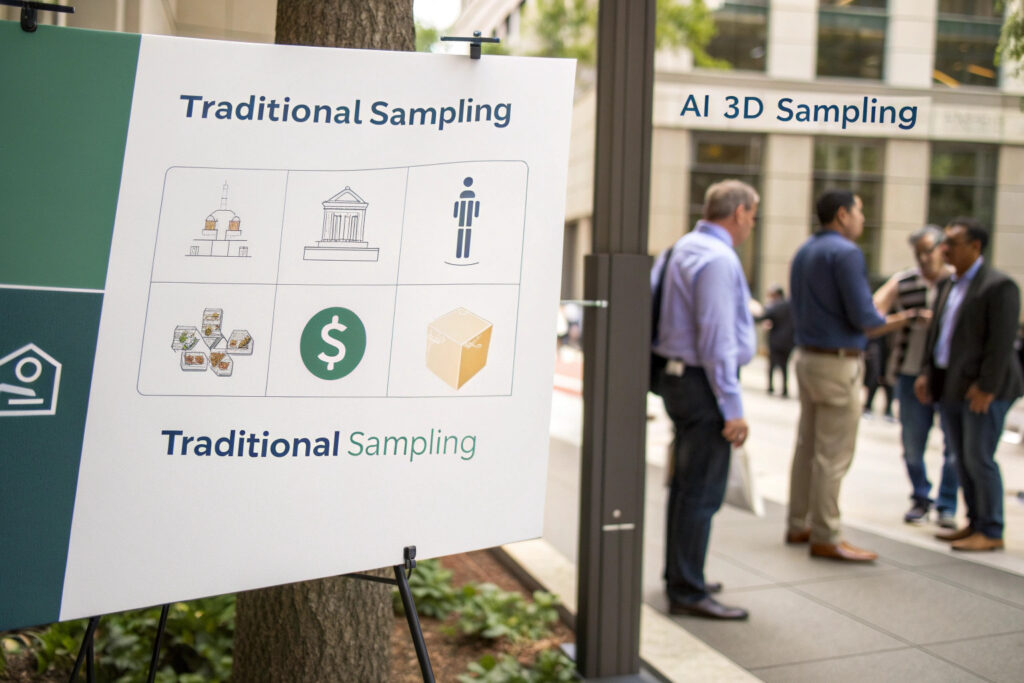
A typical physical sampling project involves three rounds. Round one: factory ships sample, $40 courier cost. Round two: factory ships revised sample, $40 courier cost. Round three: factory ships final sample, $40 courier cost. Total courier cost: $120. The physical sample labor cost is $25 per sample. Three samples cost $75. Total sampling project cost: $195.
With 3D sampling, the project involves one digital round and one physical round. The digital round costs $50 for the 3D artist's time. The physical round costs $25 for the sample labor and $40 for the courier. Total cost: $115. The saving is $80, or 41%.
The courier saving is the biggest line item reduction. For brands developing ten new styles per season, the annual saving is $800 just on shipping. The time saving is the bigger, harder-to-quantify benefit.
Can Faster Approval Cycles Help You Beat Competitors to Market?
Yes. The brand that approves designs in one week can place the bulk order two months before the brand that approves designs in six weeks. The factory allocates production capacity to the earliest confirmed orders. The early brand gets the preferred production slot. The late brand gets the leftover capacity or pays a premium for a rushed slot.
The early brand also gets the retail shelf first. The retail buyer reviews the line earlier. The purchase order is written earlier. The goods ship earlier. The cash flow cycle accelerates.
I have seen a startup brand using 3D sampling beat a major legacy brand to market by four weeks. The startup placed their bulk order in July. The major brand was still revising physical samples in August. The startup owned the back-to-school shelf. The major brand arrived when the season was half over.
Conclusion
AI 3D sampling is a speed weapon for custom headwear design approval. It replaces the slow, expensive back-and-forth of international physical sample shipping with instant, photorealistic digital renders. The technology uses physically-based rendering to simulate fabric texture, thread shine, and structural shape with stunning accuracy. A vector logo file and a digitally scanned fabric library are the inputs. A rotatable, zoomable 3D model is the output.
The time savings are dramatic. A 4-6 week physical sampling process collapses to 1-2 weeks. The courier transit time, which accounts for over half of the traditional timeline, is eliminated from the first two revision rounds. The factory's sample room bottleneck is relieved. The cost savings from eliminated courier shipments are 40% to 50% per project.
The final physical pre-production sample remains necessary for tactile confirmation. But the 3D render gets you there with zero or one iteration instead of three or four. The brand that adopts 3D sampling launches faster, occupies the retail shelf first, and captures the early-season revenue.
At Global-Caps, I have integrated AI 3D sampling into my standard development workflow. My clients approve designs on a web link within hours. The time we save on sampling we invest in production quality.
If you want to see your custom cap design as a photorealistic 3D render before committing to a physical sample, contact my Business Director Elaine. She can arrange a demo render of your logo on one of our stock cap bodies. Email Elaine at elaine@fumaoclothing.com. Let's accelerate your approval cycle and get your caps to market first.