Your brand has built its reputation on sustainability. Your website says your dad hats are made from 100% organic cotton. Your hangtags carry a small green leaf icon. You have been buying "organic cotton" fabric from your hat supplier for years. One day, a journalist emails you. They are investigating greenwashing in the fashion supply chain. They ask you a simple question: "Can you prove your organic cotton came from a certified organic farm?" You contact your supplier. They send you a generic GOTS certificate for the fabric mill. But the certificate does not link to a specific farm, a specific gin, or a specific bale of cotton. The trail goes cold at the fabric roll. You cannot answer the journalist's question. Your brand's organic claim is now a credibility gap, not a proven fact.
This is the traceability crisis facing every brand that markets organic cotton. A certificate at the end of the chain is not the same as a transparent, traceable journey from the soil to the finished product. I run Global-Caps, and I have spent years building a supply chain for organic cotton headwear that does not rely on wishful documentation. In this article, I will show you exactly how a bale of organic cotton can be traced from a specific farm plot through ginning, spinning, weaving, and hat manufacturing, and what documentation must exist at each node to close the chain. Traceability is not magic. It is a disciplined system of physical segregation, transaction certificates, and batch-level record keeping.
What Is the Chain of Custody Model for Organic Cotton Traceability?
Traceability in organic cotton is built on a chain of custody model. Chain of custody means that the organic integrity of the cotton is preserved and documented at every point it changes hands, from the farmer to the ginner, from the ginner to the spinner, from the spinner to the fabric mill, and from the fabric mill to the hat factory. The moment the organic cotton is mixed with conventional cotton or loses its documented linkage, the chain is broken. The final product can no longer legally or ethically be sold as organic.
The most widely recognized framework for this chain of custody is the Global Organic Textile Standard. GOTS certifies the processing stages, from the first processing step after the farm through to the finished textile product. The farm itself is certified under a separate organic farming standard, such as USDA NOP in the United States or the EU Organic Regulation in Europe. These two certifications link together. The farm certificate verifies that the cotton was grown without synthetic pesticides, herbicides, or genetically modified seeds. The GOTS certificate verifies that this organic cotton was kept separate from conventional cotton throughout all subsequent processing and that the chemicals used in spinning, weaving, and dyeing meet strict environmental and toxicological criteria.
The binding document in this chain is the transaction certificate. A TC is a numbered, auditable document issued by a GOTS-approved certification body. It is issued for a specific sale of a specific batch of organic material from one certified entity to another. The TC contains the seller's name, the buyer's name, the product description, the quantity in kilograms, the batch or lot number, the organic content percentage, and the certification body's details. The TC is the legal passport for organic cotton. Without it, the material is just cotton with a story. I build every one of our organic dad hat orders on a complete set of TCs that reach back to the cotton bale. If a single TC is missing, the traceability chain is incomplete, and we will not label that hat as organic.
How Does the Transaction Certificate Connect Each Link in the Chain?
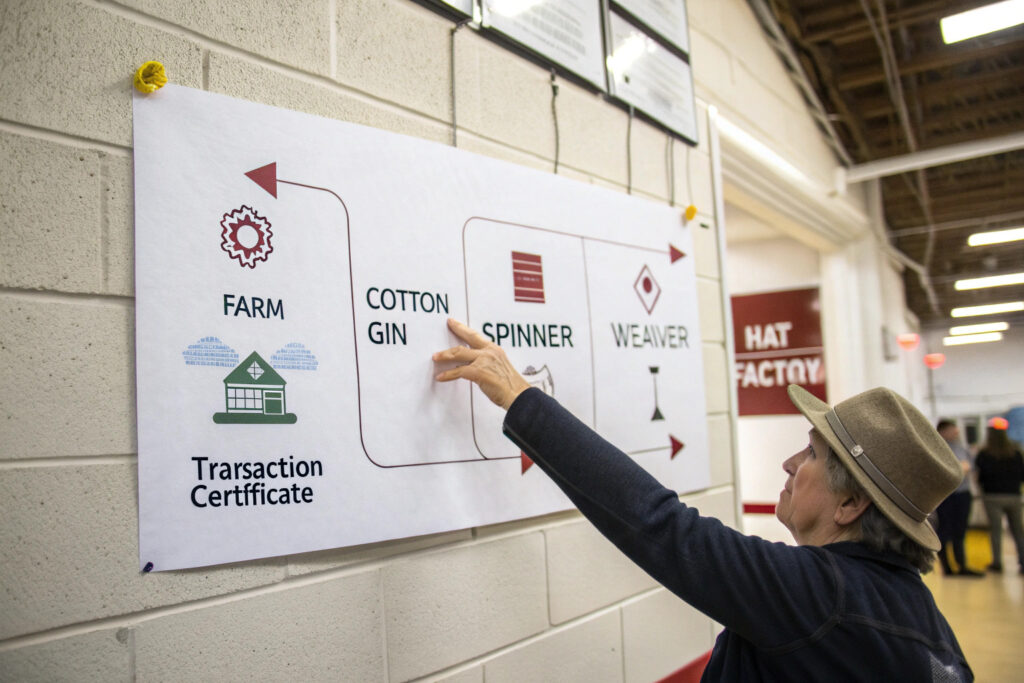
Let me walk you through the TC trail for a specific order of organic dad hats. The journey begins with a certified organic farm. The farmer harvests the seed cotton and sells it to a certified organic gin. The gin issues a TC to the farmer for that purchase. The gin separates the cotton fiber from the seeds and bales the lint. The gin then sells the organic cotton bales to a certified organic spinner. The gin issues a second TC to the spinner, referencing the bale numbers. The spinner spins the cotton into yarn and sells the yarn cones to a certified organic weaving mill. The spinner issues a third TC to the weaver, referencing the yarn lot numbers. The weaver weaves the yarn into fabric and sells the fabric rolls to Global-Caps. The weaver issues a fourth TC to us, referencing the fabric roll numbers. We cut and sew the fabric into dad hats. We issue a final product-level scope certificate and supporting documentation to you, our client, referencing our own GOTS certification and the incoming fabric TCs.
Each TC has a unique number that can be verified on the certification body's online database. I can log in to the Control Union or OneCert portal, type in a TC number, and confirm it is valid. This is the objective, verifiable backbone of organic traceability. If a fabric agent tells me they have "organic cotton" but cannot produce a TC that links their fabric to a specific gin and spinner, I cannot use that fabric for a certified organic hat. The traceability dies at that agent's door.
What Is the Difference Between Physical Segregation and Mass Balance?
Within organic certification, there are two main chain of custody models: physical segregation and mass balance. Physical segregation means the organic cotton is kept physically separate from conventional cotton at every stage. It is stored in separate warehouses, processed on separate or thoroughly cleaned machines, and shipped in separate containers. The final product contains 100% organic cotton, and you can physically trace the fibers back to the bale.
Mass balance is a bookkeeping method. It allows certified organic and non-organic materials to be mixed during processing, as long as the certified organic volume entering the process is accounted for in the certified organic volume of the output. For example, a spinner might run organic and conventional cotton on the same spinning frame. They record that they took in 1,000 kilograms of organic cotton and produced 950 kilograms of organic yarn. They can sell that 950 kilograms as GOTS-certified organic, even though it may physically contain fibers from the conventional run that were not fully purged from the machine. Mass balance is accepted by GOTS for business-to-business transactions, but it does not provide physical traceability to a specific bale. For brands that market "100% organic cotton from a specific farm or region," mass balance is insufficient. I always specify physical segregation for our organic cotton supply chain because it gives my clients the strongest traceability story and the most defensible evidence.
What Documentation Proves the Organic Integrity at the Farm and Gin Level?
The farm is the origin. If the traceability is weak at the farm level, the entire chain is built on sand. You need two key documents to verify the farm's organic integrity. The first is the farm's organic farming certificate, also called a scope certificate. This is issued by an accredited organic certifier, such as Ecocert, USDA-accredited certifiers, or Control Union. The certificate lists the farm's name, address, certified land area, and the crops covered. It has a validity date. You must check that the certificate was valid at the time the cotton was harvested. An expired certificate means the cotton is not certifiable organic, even if the farm was organic the year before.
The second document is the first transaction certificate in the chain, the TC from the gin to the spinner. The critical field on this TC is the product description. It should state "Organic Cotton Lint" or "Organic Cotton Bale" and list the specific bale identification numbers. These bale numbers are the first physical link. An organic cotton bale is tagged with a unique identification number, often a barcode, that connects it to the farm and the harvest lot. When I audit our organic supply chain, I ask the spinner to provide a copy of the TC from their gin supplier. I then ask for photographs of the bale tags that match the TC numbers. A legitimate supply chain will have these photographs. The bale tags are physical, and they are the point where the documentation meets the actual fiber.
The farm certificate also tells you the location. Organic cotton grown in one region may have a different water footprint or social context than organic cotton grown in another. If a brand is making a specific origin claim, like "Indian Organic Cotton" or "Texas Organic Cotton," the farm certificate must corroborate that. I have seen cases where a factory claimed their cotton was from Turkey, but the farm certificate on file was for a farm in a different country. This is a red flag for fraud. The geography on the certificates must be consistent throughout the chain.

How Can I Verify the Cotton Gin's Organic Certification?
The cotton gin is the first industrial processing step. The gin separates the cotton lint from the seeds. It is a noisy, dusty environment where cross-contamination with conventional cotton is a real risk. The gin must also be certified organic to GOTS or an equivalent standard. The gin's scope certificate will list the facility and the processing activity, "Ginning of Organic Cotton." It should also have a valid date range.
A high-quality organic supply chain will use a gin that is exclusively organic or that operates organic and conventional lines on a strict batch schedule with documented clean-down procedures between runs. The clean-down procedure is the physical act of purging conventional fibers from the machinery before the organic run begins. This might involve running a quantity of organic cotton through the gin as a purge, which is then sold as conventional, before collecting the certifiable organic lint. The gin should have a written organic handling plan that describes this procedure. I request a summary of this handling plan from the gin as part of our supplier qualification. If the gin cannot describe how they prevent commingling, their organic claim is procedurally weak, even if they hold a certificate.
What Role Does the Organic Farm Map Play in Traceability?
An organic farm map is a detailed plot plan showing the certified fields, buffer zones, and adjacent land use. The buffer zone is a strip of land between the organic cotton field and any conventional farms or roads. It prevents pesticide drift from neighboring conventional fields from contaminating the organic crop. The farm map is part of the farm's organic system plan, which is reviewed annually by the certifier.
For premium traceability, some farms now use GPS polygon mapping. Each field is mapped with satellite coordinates. The bale tags can include a QR code that, when scanned, pulls up the exact field location where the cotton was grown. This technology is still emerging but is becoming more common. I am actively integrating GPS-mapped organic cotton into our supply chain for clients who want the ultimate level of farm-to-hat transparency. Even without GPS, a traditional farm map with clearly delineated plots and buffer zones, signed by the certifier, is a strong piece of evidence. It shows the farm is not just a paper entity; it is a real, mapped, audited piece of land.
How Does the Spinning and Weaving Process Maintain Traceability?
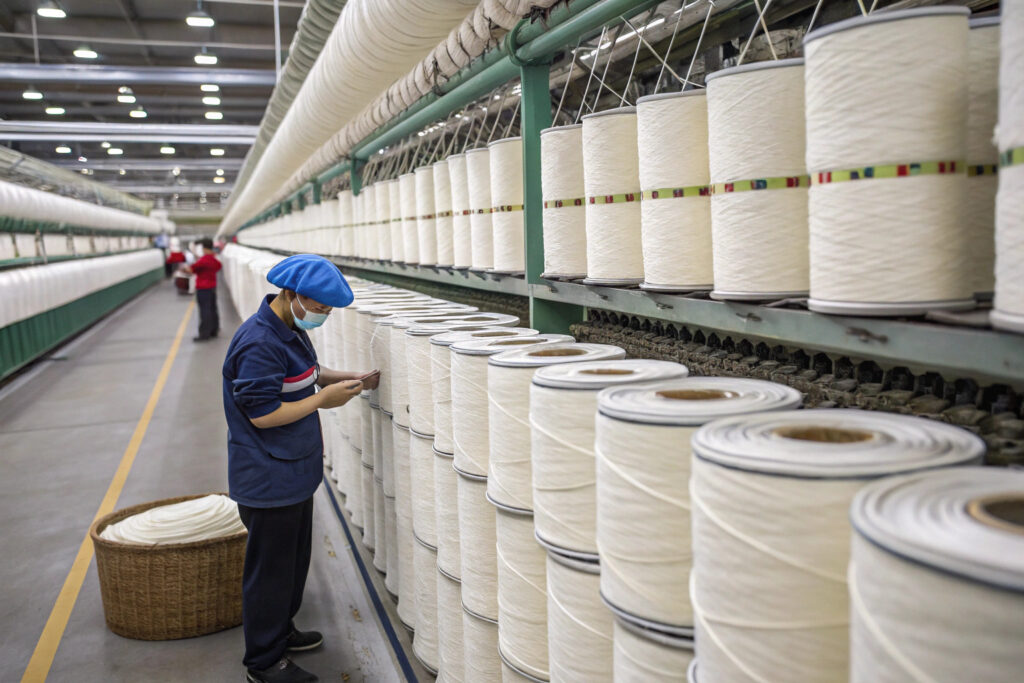
The spinning and weaving stages are where the cotton fiber loses its visible connection to the bale. A bale is fluffy, loose, and identifiable. Yarn is a continuous, uniform strand. Fabric is a flat, woven textile. Traceability through these stages relies entirely on batch management and documentation. The spinner receives the certified organic bales from the gin. They record the bale numbers into their inventory system. They process the bales into yarn in a single, identified production run. The yarn cones are labeled with a unique lot number that is internally linked back to the input bale numbers. This is the critical data handshake. If the spinner's internal traceability system is weak, the link between the bale and the yarn is broken.
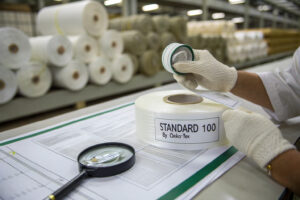
At the weaving mill, the same discipline applies. The weaver receives the GOTS-certified yarn cones. They record the incoming yarn lot numbers. They weave the fabric on a designated loom, often after a documented clean-down if the loom also runs conventional cotton. The finished fabric rolls are assigned a new roll number. The weaver's internal system links the fabric roll number back to the yarn lot numbers. The weaver then issues a TC to the hat factory, referencing the fabric roll numbers. Each roll that arrives at our factory has a label with the roll number, the fabric composition, and the GOTS certification number. Our receiving QC team checks the physical roll label against the TC before the fabric is accepted into our organic inventory. Any roll without a matching label is quarantined and cannot be used for a certified organic order.
This batch-level traceability is the everyday discipline of an organic supply chain. It is not high-tech. It is a manual, paper-and-scanner system that depends on trained workers following procedures. I audit our spinning and weaving partners annually to verify that their batch traceability systems are functioning. I walk the floor, pick a random yarn cone or fabric roll, and ask the warehouse manager to pull the records showing the incoming certified material that produced it. A good system can produce those records in minutes. A bad system produces confusion and excuses.
How Do You Prevent Commingling at the Spinning Stage?
Commingling is the accidental mixing of organic and conventional fibers. In a spinning mill, cotton fibers are airborne. They float in the air and settle on surfaces. When a spinning frame switches from conventional to organic cotton, residual conventional fibers can contaminate the first several kilograms of organic yarn. The standard prevention method is the documented purge run.
The spinner runs a certain quantity of organic cotton through the entire spinning line, from the opening and carding machines through to the spinning frames. This purge material, which is now commingled with conventional residue, is collected and labeled as conventional. It is sold without any organic claim. Only the yarn produced after the purge run is considered certifiably organic. The spinner documents the purge quantity, the machine clean-down, and the time of the changeover. This document is part of the organic processing plan. When I audit a spinner, I ask to see the purge records for the run that produced our yarn. If they cannot show them, I cannot be certain our yarn is free of conventional contamination.
How Is Organic Integrity Maintained During the Dyeing and Finishing Process?
If the dad hat is dyed, the dyeing process must also be certified to GOTS. GOTS restricts the chemicals that can be used. Chlorine-based bleaches, toxic heavy metals, formaldehyde, and aromatic solvents are prohibited. The dyehouse must use GOTS-approved dyes and auxiliaries. The dyehouse's GOTS scope certificate confirms this.
Traceability through dyeing requires that the greige fabric is processed in a segregated dye bath or after a documented cleaning of the dyeing vessel. The dyehouse records the incoming fabric roll numbers, the dye lot number, and the GOTS-compliant chemicals used. The dyed fabric rolls are assigned new roll numbers, and the dyehouse issues a TC to the hat factory. The dye lot also has a quality implication beyond traceability. The color of organic cotton dyed with low-impact, GOTS-approved dyes can vary slightly from lot to lot. At our factory, we cut each new dye lot separately and mark the production traveler with the dye lot number. This allows us to keep dye lots together in the finished hat cartons, ensuring color consistency for the end consumer. It also allows us to trace a specific hat back to a specific dye lot if a quality issue arises.
What Can I Do as a Buyer to Verify the Traceability Claims of My Hat Supplier?
You do not have to take your supplier's word. You can actively verify the traceability claims that support your organic marketing. The process is straightforward and does not require you to be a textile chemist or a professional auditor. It requires you to ask for specific documents and then to verify those documents independently. A legitimate supplier will welcome this verification. A supplier with something to hide will resist, delay, or offer vague assurances instead of documents.
Start with a document request. Ask your hat supplier for a complete traceability package for your specific order. This package should include the farm's organic farming certificate, the gin's GOTS certificate, the spinner's GOTS certificate and the TC from the gin, the weaver's GOTS certificate and the TC from the spinner, the dyehouse's GOTS certificate and the TC from the weaver, and the hat factory's own GOTS certificate and the TC from the dyehouse. This is a complete document chain. If any link is missing, ask why. A missing farm certificate means the traceability does not reach the field. A missing gin TC means the connection between the farm and the spinner is undocumented. Once you have the documents, verify the certificate numbers on the certification body's public database. Each GOTS-approved certifier, Control Union, Ecocert, OneCert, SGS, has a searchable online directory. Type in the certificate number and confirm that it is valid and matches the entity name on the document. This verification takes ten minutes and closes the door to fake or expired certificates.
Next, ask for the physical evidence. Request photographs of the bale tags that correspond to the gin TC. Request photographs of the yarn cone labels and the fabric roll labels. These photographs should show the lot numbers that match the TCs. Physical labels are much harder to falsify than PDFs. I provide these photographs to my clients as part of our standard organic compliance package. Finally, ask for a supply chain map. This is a single-page visual document that shows each entity in the chain, its location, its certification number, and the material flow. It should be simple enough to put on your website or share with a curious journalist. A supplier that can produce this map has a traceability system. A supplier that says it is too complex or confidential is protecting opacity, not proprietary technology.

What Red Flags Indicate a Weak or Falsified Traceability Claim?
There are several warning signs that a supplier's organic claim is unreliable. A certificate that is close to its expiry date or already expired. A certificate that is for a different company name than the entity you are buying from. A TC that shows a quantity of organic material that is suspiciously small compared to the size of your order, suggesting mass balance dilution. A TC that lists the product as "organic cotton" but does not specify the percentage, which could mean a blend. A refusal to provide the farm certificate or the gin TC. An explanation that these documents are "confidential" and cannot be shared. Traceability documents are not trade secrets. They are evidence of a public claim.
Another red flag is a supplier who cannot show a clean-down procedure for the spinning or dyeing stage. If they do not know how commingling was prevented, they are not managing organic integrity. A final red flag is a price that is too good to be true. Genuine certified organic cotton, with full segregation and traceability, has a real cost. It is more expensive than conventional cotton. If a supplier offers organic cotton hats at a price close to conventional, they are almost certainly cutting corners in the supply chain, using mass balance to dilute the organic content, or simply lying about the origin of the fiber.
How Can a Third-Party Audit Strengthen My Organic Claims?
If your brand is making organic claims on a large volume of products, investing in a third-party organic supply chain audit is wise. An independent auditor, commissioned by you, can visit the hat factory and trace the organic material from the finished hat back through the factory's records to the incoming fabric TC. This is a traceability audit. The auditor checks that the documented organic inputs match the documented organic outputs, verifying that no organic material was lost or substituted.
Some brands go further and commission a full supply chain audit that visits the spinner and the gin. This is expensive but provides the highest level of assurance. As a factory, we welcome these audits. They validate our own internal systems and give our clients independent confidence. The audit report becomes a legal-grade document that supports the brand's organic marketing claims. In a world where greenwashing accusations can damage a brand overnight, this independent verification is a strategic asset.
Conclusion
Tracing a bale of organic cotton from the field to your finished dad hat is a journey through six or seven distinct entities, each of which must hold a valid organic certification and issue a transaction certificate to the next. The chain begins with a mapped, certified organic farm. It passes through a certified gin that tags each bale with a unique number. It moves through a certified spinner and weaver who maintain batch-level traceability and documented clean-down procedures. It arrives at a certified dyehouse and then at a certified hat factory. At every handoff, a transaction certificate links the buyer and the seller, the product quantity, and the batch numbers. When the chain is complete, you can hold a dad hat in your hand and know, with documented evidence, exactly which field grew the cotton, which gin baled it, and which spinner twisted it into yarn.
This traceability is not a marketing slogan. It is a legal and ethical backbone for your brand's organic claim. It protects you from greenwashing accusations, satisfies the most rigorous retailer compliance portals, and gives your customers a story they can trust. As a hat factory owner, I have built this traceability into our supply chain because I believe that a sustainable product without a transparent chain of custody is just a conventional product with a green hangtag.
If you are ready to source dad hats with fully traceable, field-to-finished-product organic cotton, I invite you to contact Global-Caps. We can provide you with a sample traceability package, including a supply chain map and a redacted set of transaction certificates, so you can see the level of documentation that supports our organic production. Reach out to our Business Director, Elaine, at elaine@fumaoclothing.com. Let's build a supply chain for your brand that is as transparent as it is sustainable. Your customers deserve to know where their hat came from. We can prove it.