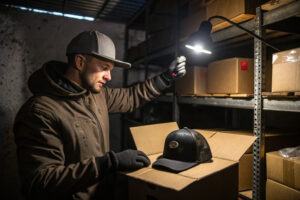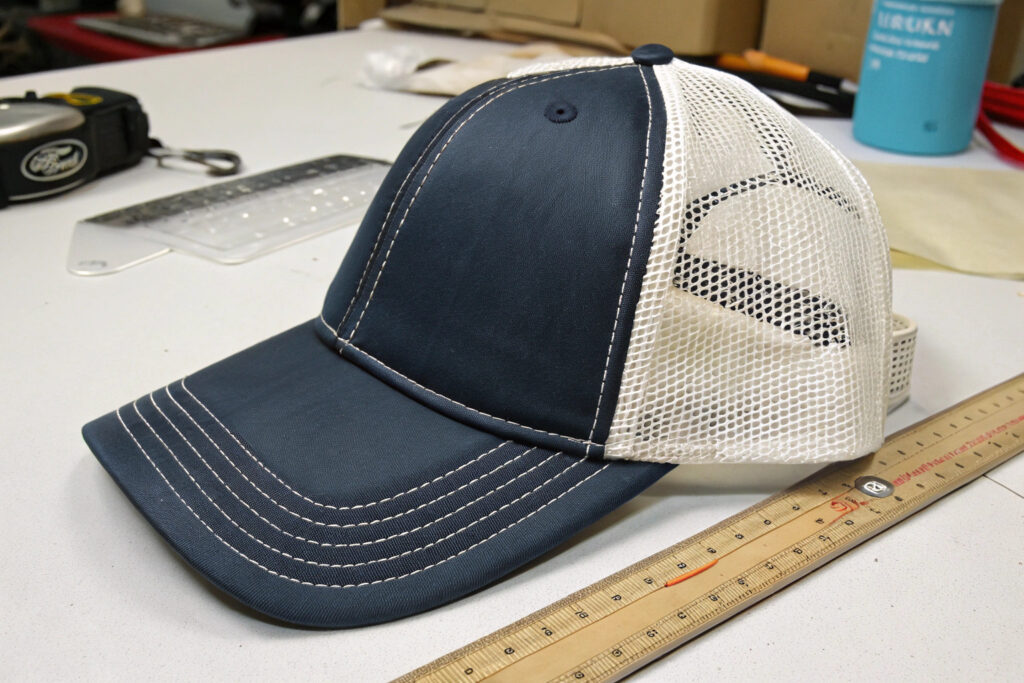
A startup brand owner sent me a trucker hat sample from a low-cost factory she found online. The price was $0.85 FOB per cap. She asked me to evaluate the quality. I opened the polybag and a wave of synthetic, sweet, chemical smell hit my nose. The plastic snap closure felt greasy, leaving a slight residue on my fingers. The mesh back panel was unnaturally soft, almost sticky to the touch. I knew the smell. It was the calling card of cheap, non-certified phthalate-plasticized PVC and soft plastic components. That $0.85 hat was a product liability lawsuit waiting to happen.
You can tell a cheap trucker hat factory is using non-certified phthalate plastic by using four detection methods. First, the odor test. Open a sealed polybag of hats and smell the plastic components immediately. A pungent, sweet, vinyl or chemical smell indicates volatile phthalate plasticizers off-gassing. Second, the touch test. Rub your thumb firmly on the plastic snap closure, the mesh, or the adjustable strap. If the surface feels oily, greasy, or leaves a residue, the phthalates are migrating to the surface. Third, the material label test. Legitimate certified plastic components carry a material code or a certification stamp. If the plastic has no marking, or the factory cannot produce a phthalate-specific lab test report, assume it is non-certified. Fourth, the price test. A complete trucker hat at $0.85 to $1.20 FOB cannot possibly contain certified, phthalate-free plastic components. Certified raw materials alone cost more than the total FOB price of a cheap hat. If the price is too low, the chemistry is too dirty.
I have built our Global-Caps supply chain on certified, phthalate-free plastic components. I test incoming materials because a single bad batch of snap closures can contaminate an entire production run. I want to equip you with the field-detection skills to spot these dangerous plastics before they reach your customers' skin. This knowledge protects your brand from a recall that can destroy a business overnight.
Why Are Phthalates Used in Cheap Trucker Hat Components?
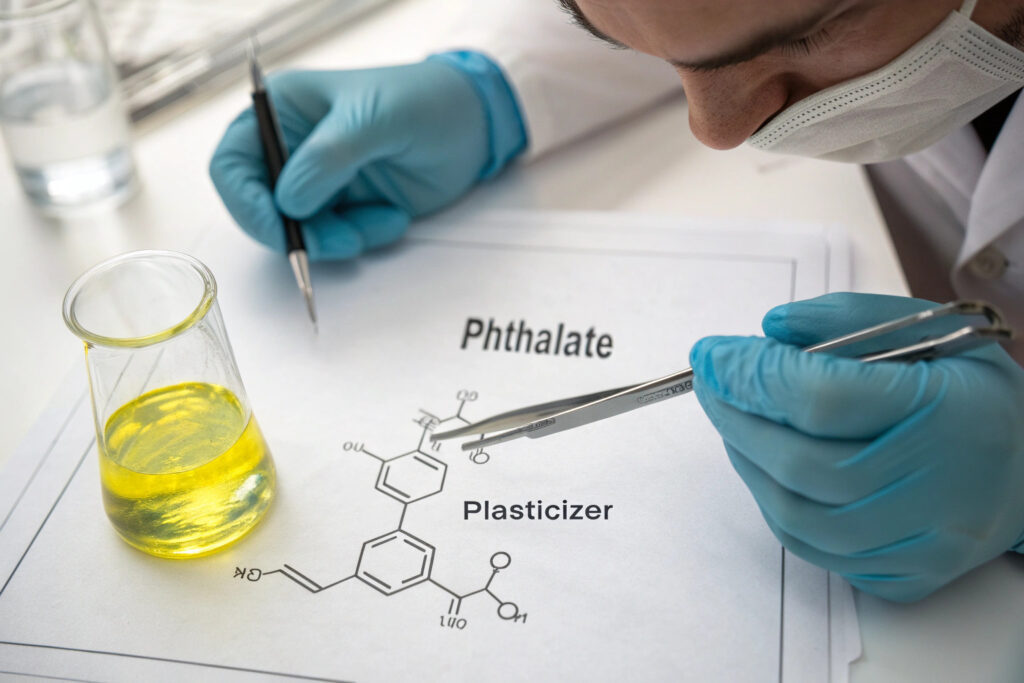
Phthalates are not a secret ingredient snuck into hats by malicious factory owners. They are a functional, cheap plasticizer that makes rigid PVC plastic soft and flexible. A trucker hat contains several plastic components that need to be flexible: the snap closure, the adjustable strap, sometimes the mesh back panel, and the inner sweatband if it is a synthetic leather. Pure PVC is hard and brittle. To make it flexible enough to bend thousands of times without cracking, the plastic compounder adds phthalates. The most common ones are DEHP, DBP, and DINP. These chemicals act like tiny springs between the PVC polymer chains, giving the plastic its rubbery, flexible feel. The problem is that phthalates are not chemically bonded to the PVC. They are physically mixed in. Over time, they migrate out of the plastic. They evaporate into the air and deposit onto the skin of the person wearing the hat. The flexible plastic that makes the snap closure easy to adjust is slowly releasing a reproductive toxin directly onto the wearer's forehead and hands. This is not a manufacturing defect. This is a chemical property of the material.
The certified alternatives to phthalate plasticizers exist. Citrates, adipates, and other non-phthalate plasticizers are chemically stable and safer. But they cost three to five times more than standard phthalates. The cheap factory making a $0.85 trucker hat cannot absorb that raw material cost increase. It would eliminate their entire margin. So they use the cheap, effective, toxic version. The market price of the hat tells you the chemistry inside it.
The economic incentive for using phthalates is overwhelming at the low end. But the specific components where these chemicals concentrate are predictable. You do not need to test every inch of the hat. You need to target the flexible plastic parts where plasticizers are functionally necessary.
Which Specific Hat Components Are the Highest Phthalate Risk?
The number one risk is the PVC snap closure. This is a soft, flexible plastic piece that is handled directly by the consumer every time they adjust the hat. It sits against the back of the head, in contact with hair and skin oils that can accelerate phthalate migration. The second risk is the synthetic leather sweatband. Cheap synthetic leather is a PVC-coated fabric with a high plasticizer content to give it a soft, leather-like drape. It sits directly against the forehead for hours. The third risk is the soft, clear plastic tube tip on the end of an adjustable fabric strap. This small aglet is often pure, heavily plasticized PVC. The fourth risk is the mesh back panel if it is a soft, stretchy material rather than a crisp, rigid polyester. Some low-cost meshes are a PVC-coated polyester yarn. The phthalates keep the coating flexible. A phthalate risk assessment from a health authority can provide the toxicological context for why these specific contact points matter.
Why Do Phthalates Migrate More in Hot and Humid Conditions?
A trucker hat worn at a summer festival in Texas experiences conditions that accelerate phthalate migration. Heat increases the mobility of the plasticizer molecules within the PVC matrix. Sweat provides a moist, slightly acidic solvent that can extract phthalates from the surface. The combination of a 35-degree Celsius forehead temperature and saline sweat creates an ideal extraction environment.
This is why a hat that smells faintly chemical in a cool warehouse might reek when worn in direct sun. The heat volatilizes the lighter phthalate molecules. The user inhales them and absorbs them through the skin. A chemical migration study explains the physics of how temperature and contact media accelerate the transfer of these compounds from plastic to human tissue.
What Simple Physical Tests Can I Do in a Warehouse?
You do not need a gas chromatograph to screen for phthalates. Your senses and a few simple tools can detect the presence of migrating plasticizers with alarming accuracy. These physical tests are not definitive lab proof, but they are extremely reliable indicators. A plastic component that fails these tests is almost certainly non-certified and should be lab-tested for confirmation. A plastic that passes may still contain phthalates, but it is less likely to be a high-risk, heavily plasticized formulation.
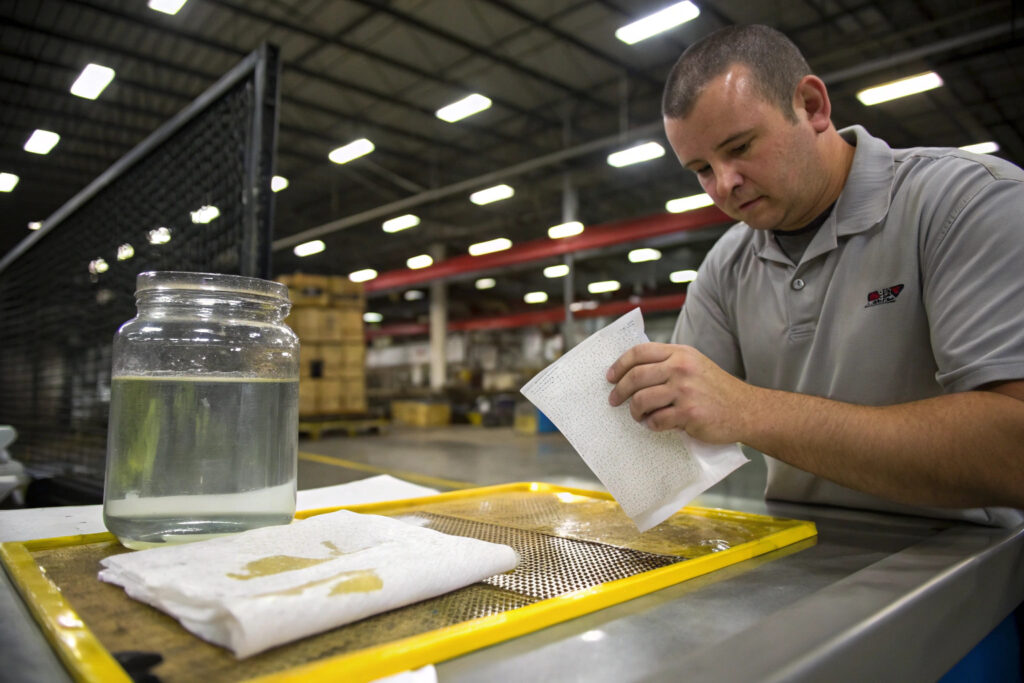
The four rapid field tests I teach our QC inspectors are the white paper rub test, the jar headspace test, the cold flex test, and the solvent swab test. Each test takes less than five minutes and requires only common items found in a warehouse or office. The white paper rub test is the simplest. Take a clean, uncoated white paper towel. Rub it firmly against the plastic snap closure or sweatband for ten seconds. Examine the paper. If you see a greasy, oily, or yellowish residue, plasticizer migration is occurring. Certified phthalate-free plastics do not leave a visible grease mark because the plasticizer molecules are larger and less mobile. The jar headspace test isolates the smell. Cut a small piece of the suspected plastic, place it in a clean glass jar, seal the lid, and place the jar in a warm spot for fifteen minutes. Open the jar and smell the air immediately. A sharp, sweet, vinyl or chemical odor confirms volatile plasticizers. The cold flex test checks for cheap plasticizer formulation. Place the hat in a freezer for thirty minutes. Remove it and immediately flex the plastic snap closure. A heavily phthalate-plasticized component will become noticeably stiffer in the cold because the plasticizer molecules slow down. A certified elastomeric plastic retains its flexibility. The solvent swab test uses a common rubbing alcohol wipe. Rub the plastic surface firmly with the alcohol wipe. Phthalates are soluble in alcohol. The wipe will pick up a yellowish residue from the surface of a non-certified plastic. These four tests together create a behavioral profile of the plastic.
The physical tests are field triage. They tell you whether to escalate to a formal lab test. But there is one instrument that bridges the gap between a sensory check and a lab report. A portable XRF analyzer gives you an elemental fingerprint of the plastic in seconds.
How Does a Portable XRF Analyzer Detect Phthalates Indirectly?
A handheld XRF, or X-ray fluorescence, analyzer does not directly detect phthalates because phthalates are organic carbon-based molecules. But it detects the heavy metals that are often present in cheap, non-certified plastic formulations. Lead, cadmium, and tin compounds are frequently used as heat stabilizers in PVC production. If the XRF scan shows elevated lead or cadmium in the plastic snap closure, the plastic is almost certainly a non-certified, cheap formulation that likely also contains phthalates.
The XRF is a $15,000 instrument, but many third-party inspection companies can bring one to a factory audit. I recommend requesting an XRF screening on plastic components during any pre-shipment inspection of low-cost hats. The XRF analysis provides a numerical result that is hard for a factory to argue with. A lead reading of 300 parts per million in a plastic snap closure is a definitive signal to reject the lot and demand full phthalate lab testing.
What Does a Phthalate Migration Residue Look Like on Paper?
The residue from the white paper rub test has a characteristic appearance. It is not a dry powder. It is an oily, translucent smear that feels greasy between your fingers. It may have a yellowish or brownish tint. Under a UV flashlight in a darkened room, the smear often fluoresces with a faint blue or green glow due to the aromatic ring structure of many phthalates.
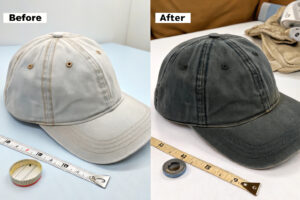
Photograph this smear next to a ruler and a written note with the sample identification. This photo is powerful evidence in a quality dispute. A factory representative cannot claim the plastic is "supposed to feel like that" when you present a photograph of oily residue that has migrated onto a paper surface. The plasticizer migration visual evidence is immediate and intuitive.
What Documentation Should a Legitimate Factory Provide?
A factory that uses certified phthalate-free plastic components is proud of that fact. They have the paperwork organized and ready to share. A factory that uses cheap, non-certified plastic will deflect, delay, and provide vague assurances. The documentation request is itself a screening tool. The way the factory responds to the request tells you as much as the document content.
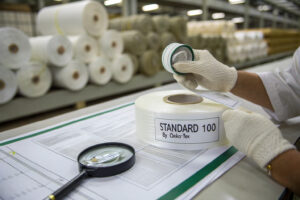
You should request three specific documents. First, a phthalate test report from an ISO 17025 accredited laboratory, dated within the last twelve months, that specifically tests for the six restricted phthalates under EU REACH and US CPSIA regulations. The report must reference the exact plastic component type, such as "PVC snap closure, black, model number X." Second, a material safety data sheet or a product composition declaration from the plastic component supplier that declares the plasticizer chemistry. Third, a certification of compliance that traces the specific lot of plastic components used in your production run to the test report. A factory that provides all three documents with matching lot numbers is operating a controlled, transparent supply chain. A factory that says "our plastic is certified, trust us" without a lab report is operating on hope. Hope is not a chemical safety strategy.
The lab report is the gold standard. But a lab report for one batch of plastic does not prove the plastic in your specific hat is the same. You need to verify the chain of custody from the lab report to the production floor. The lot traceability system is the missing link in most cheap factory operations.

How Do I Read a Phthalate Lab Test Report Correctly?
The report will list the test method, usually CPSC-CH-C1001-09.4 or EN 14372. It will list each of the restricted phthalates and the detected concentration in parts per million or percentage. The regulatory limit for each restricted phthalate in children's products is 0.1%, or 1000 parts per million. For a product that touches skin, I recommend a stricter internal standard of 100 parts per million total phthalates.
Look for the specific plastic component description. If the report says "sample: PVC pellets" but does not specify "PVC snap closure," the report may be for the raw material, not the finished molded part. Molding can introduce contamination from recycled plastic regrind. A proper report tests the finished component exactly as it appears on the hat. Also, check the accreditation body logo on the report. The lab should be ISO 17025 accredited, and the accreditation should be verifiable on the accrediting body's website. A phthalate testing guide from a major lab explains the methodology and reporting standards.
What Is a Material Composition Declaration and Why Does It Matter?
A material composition declaration is a document from the plastic component supplier that lists every substance intentionally added to the plastic formulation. It is not a test report. It is a recipe disclosure. A legitimate supplier will disclose the polymer type, the plasticizer chemistry, the stabilizers, and the pigments.
If the declaration lists "phthalate esters" or "DINP" as the plasticizer, the component is non-certified. If it lists "citrate ester" or "adipate ester," it is likely a certified, safer alternative. This document is often confidential, but a factory that has a strong relationship with its component supplier can request a summary version. A factory that cannot obtain any composition information from its plastic supplier is buying from a commodity trader with no chemical knowledge. The material declaration process is a standard practice in the electronics industry and is increasingly expected in textile accessories.
What Are the Reliable Alternatives to Phthalate-Plasticized Components?
The market has moved. Certified, phthalate-free alternatives are available for every plastic component on a trucker hat. They cost more, but the cost differential is shrinking as demand increases and production scales. A factory that tells you there is no alternative to phthalate plastic is a factory that has not updated its supply chain in a decade. The alternatives are proven, scalable, and certifiable.
For the snap closure, the most common alternative is TPE, thermoplastic elastomer. TPE feels similar to soft PVC but achieves its flexibility through a block copolymer structure rather than a migratory plasticizer. It requires no phthalates. It is inherently stable. For the adjustable strap, the best alternative is a woven fabric strap with a metal or natural wood slider. This eliminates plastic entirely from the closure system. For the mesh back panel, a certified, phthalate-free polyester mesh is standard. The mesh is woven from a yarn that is inherently flexible without plasticizer coating. For the synthetic leather sweatband, a water-based polyurethane leather is a premium alternative to PVC leather. It is soft, breathable, and contains no phthalates. These alternatives raise the FOB cost of a trucker hat by approximately $0.25 to $0.45 per unit. That cost buys chemical safety, regulatory compliance, and brand protection.
The alternative material landscape is mature. The barrier to adoption is not availability. It is the willingness of the factory and the buyer to invest in a safer supply chain. The cost increase is real but small relative to the cost of a product recall or a consumer lawsuit.

What Is TPE and Why Is It a Safer Choice Than PVC?
TPE is a family of polymers that behave like rubber but process like plastic. The key difference from soft PVC is that TPE does not require a low-molecular-weight plasticizer additive to achieve flexibility. The soft segments are chemically bonded into the polymer backbone. They cannot migrate out. TPE is inherently phthalate-free because it does not need phthalates to function.
TPE snap closures feel matte, slightly grippy, and do not leave a greasy residue. They pass the white paper rub test perfectly. They are also recyclable in some municipal systems, whereas soft PVC is notoriously difficult to recycle. The TPE material technology is widely used in medical devices and food-contact applications, which is a strong safety signal for skin-contact headwear components.
How Do Metal and Fabric Closures Eliminate the Plastic Problem Entirely?
The most elegant solution is to remove plastic from the high-contact components entirely. A trucker hat does not need a plastic snap closure. It can use a metal tri-glide buckle on a woven cotton strap. It can use a natural wood bead slider on a hemp cord. It can use a brass military-style clasp.
These material choices transform the hat's aesthetic while solving the chemical problem at the root. A metal closure is inherently phthalate-free and infinitely durable. It adds a premium, artisanal feel to the hat. The cost of a simple zinc alloy buckle is comparable to a TPE snap closure. For brands marketing a "clean," "organic," or "sustainable" product, a plastic-free closure is a powerful marketing asset as well as a chemical safety guarantee.
Conclusion
A cheap trucker hat that smells like a vinyl shower curtain is chemically suspect. The price, the smell, the greasy feel of the plastic, and the missing documentation all converge on the same conclusion: the plastic components contain non-certified phthalate plasticizers. These chemicals are not locked into the plastic. They migrate onto the skin of the person wearing the hat. They are not necessary. Safer, certified alternatives exist and are used by responsible factories every day.
The detection toolkit I have described costs almost nothing to deploy. Your nose, a white paper towel, a glass jar, and a simple documentation request are all you need to screen a factory's plastic quality before you place an order. The factory's response to your request for a phthalate lab report is the single most revealing moment in the entire vetting process. A transparent factory provides the report within a day. An evasive factory loses your number. Your brand's reputation depends on the chemical safety of every component that touches your customer's skin. The plastic snap on a trucker hat is a small part, but its toxic potential is enormous.
If you want to work with a factory that has already done the work of qualifying a phthalate-free, fully certified plastic component supply chain, we are ready to provide our documentation package before you commit. Our Business Director, Elaine, can share our phthalate test reports, TPE component certifications, and material composition declarations for every plastic part on our hats. Email her at elaine@fumaoclothing.com and request our Chemical Safety Documentation Set. We test our plastic so you do not have to worry about yours.