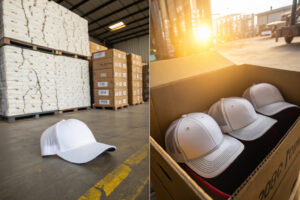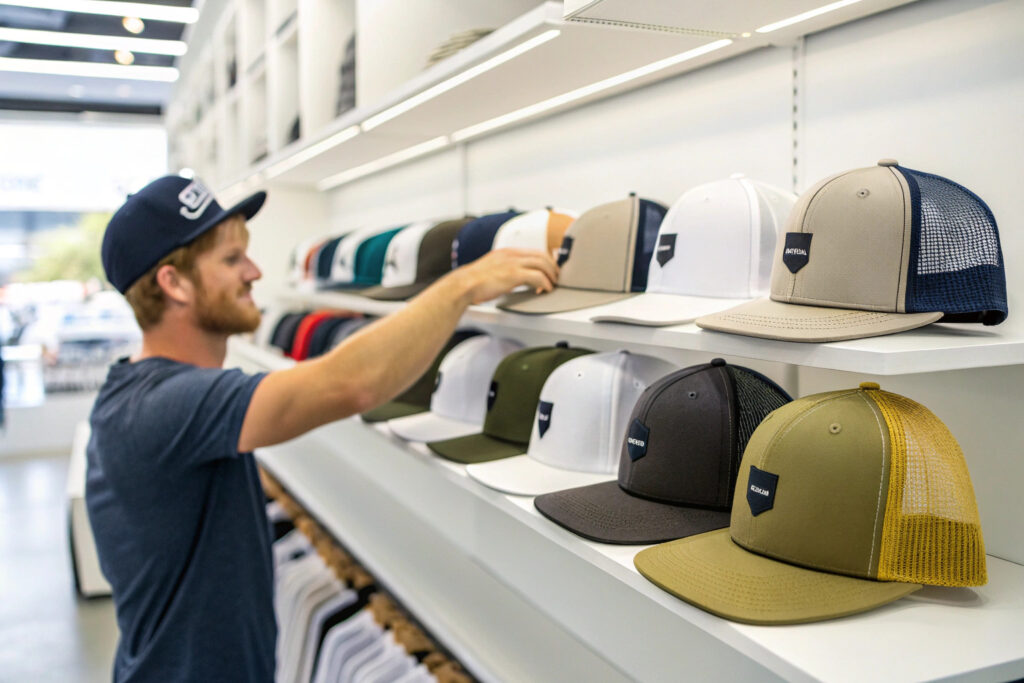
A startup brand founder sat across from me at a trade show last spring. He had a sketch of a two-tone trucker hat. A forest green cotton front panel with a cream mesh back. He had received three quotes from other factories. Each quote included a line item called "custom two-tone construction surcharge," ranging from $0.45 to $0.75 per unit. He asked me why a simple color change cost extra. The answer was that those factories did not stock two-tone mesh. They stocked solid-color mesh. They had to order a custom-dyed mesh run for his order, and they passed that cost to him. He was paying a customization fee for a product that can be sourced as a standard option.
You source two-tone mesh trucker hats without paying extra customization fees by selecting from a factory's existing library of pre-stocked, standard two-tone color combinations. A factory that regularly produces two-tone trucker hats maintains an inventory of mesh rolls in the most popular contrast colors: black, white, navy, grey, red, royal blue, and khaki. When you choose a front panel fabric color that pairs with one of these pre-stocked mesh colors, the factory pulls both materials from the shelf. No custom dye run is required. No minimum order quantity surcharge for the mesh is applied. The two-tone construction is a standard bill of materials, not a custom deviation. The key is to ask the factory for their standard two-tone combination list before you design your hat. Design within their existing material library. The customization fee is a tax on designing outside the library.
I have built our trucker hat material library to include over 30 standard two-tone combinations. My clients select from these combinations and pay the same unit price as a solid-color hat. I want to share the economics of why two-tone construction costs more at some factories and not at others, the standard color combinations that are always available, and the sourcing questions that identify a factory with a genuine two-tone inventory. This is how you get the premium two-tone look on a solid-color budget.
Why Do Some Factories Charge Extra for Two-Tone Mesh Construction?
The two-tone surcharge is not a random fee. It is a direct reflection of the factory's material procurement economics. A factory that primarily produces solid-color trucker hats buys mesh fabric in large volumes, typically in black or white. Their mesh inventory is one or two colors. When you request a two-tone hat with a specific mesh color that is not in their inventory, they must source that mesh from their supplier. The mesh supplier has a minimum order quantity for a custom dye lot, typically 50 to 100 meters. Your order might only need 10 meters of mesh for 500 hats. The factory must buy 50 meters and absorb the leftover 40 meters as dead inventory, or charge you the full cost of the minimum lot. That cost is the customization surcharge. The factory is not profiting from the fee. They are passing through the supplier's minimum lot cost.
A factory that regularly produces two-tone trucker hats operates on a different economic model. They have made a strategic inventory investment. They stock mesh rolls in six to ten standard colors. They buy these colors in full-roll quantities, 200 to 300 meters at a time, and they turn this inventory over regularly across multiple client orders. The mesh is pulled from the shelf, not ordered per job. The cost of the mesh is absorbed into the standard material cost, which is amortized across all orders. The client who wants a navy front with a white mesh back pays the same price as the client who wants a solid navy hat. The factory's inventory strategy, not the client's design choice, determines whether a surcharge appears on the quote. The fabric sourcing economics are straightforward. Standard inventory equals standard pricing. Custom procurement equals custom pricing.
The surcharge is a supply chain signal. It tells you that you are designing outside the factory's normal material flow. The factory that charges a surcharge is not being unfair. They are being transparent about their cost structure. The factory that does not charge a surcharge has simply already paid the inventory cost and is not allocating it to your specific order.

What Is the Minimum Order Quantity for a Custom Mesh Dye Lot?
A typical mesh fabric supplier in China requires a minimum dye lot of 50 to 100 meters per color, depending on the mesh type. Standard polyester trucker mesh is usually a 100-meter minimum. A finer, performance mesh like a micro-perforated nylon tricot may have a 50-meter minimum due to the higher cost of the base fabric. For a standard trucker hat, one meter of mesh fabric yields approximately 12 to 15 back panels, depending on the panel size and the cutting efficiency. To use 50 meters of mesh, you need an order of approximately 600 to 750 hats using that specific mesh color. If your order is 300 hats total, split across two colors, you are using roughly 10 meters of each mesh color. The factory must buy 50 meters and waste 40. That waste cost is the surcharge. The fabric minimum order quantity is the fundamental driver of customization fees in any textile product.
How Does a Factory's Inventory Strategy Determine Your Unit Price?
A factory with a narrow inventory stocks only black and white mesh. Their inventory carrying cost is low. Their per-unit mesh cost is low, but only for black and white. Any other color triggers a custom order. A factory with a broad inventory stocks six to ten mesh colors. Their inventory carrying cost is higher. They have capital tied up in mesh rolls sitting on shelves. But they can offer a wide range of two-tone combinations at standard pricing because the inventory is already paid for. The broad-inventory factory's unit price may be slightly higher than the narrow-inventory factory's base price, but it will be significantly lower than the narrow-inventory factory's custom surcharge price. When you compare quotes, you must compare the price of the actual color combination you want, not the base price. The inventory management strategy is the invisible hand that sets your final unit cost.
What Standard Two-Tone Color Combinations Are Usually Available Without a Surcharge?
The standard two-tone combinations available without a surcharge are determined by the intersection of the factory's front panel fabric inventory and their mesh inventory. The front panel fabric, typically a cotton twill or a polyester twill, is stocked in a wide range of colors because solid-color caps are the factory's highest-volume product. The mesh inventory is the limiting factor. A factory with a mature two-tone program will stock mesh in black, white, and at least four to six additional colors. The combinations that pair these mesh colors with any front panel color in the library are standard, no-surcharge options.
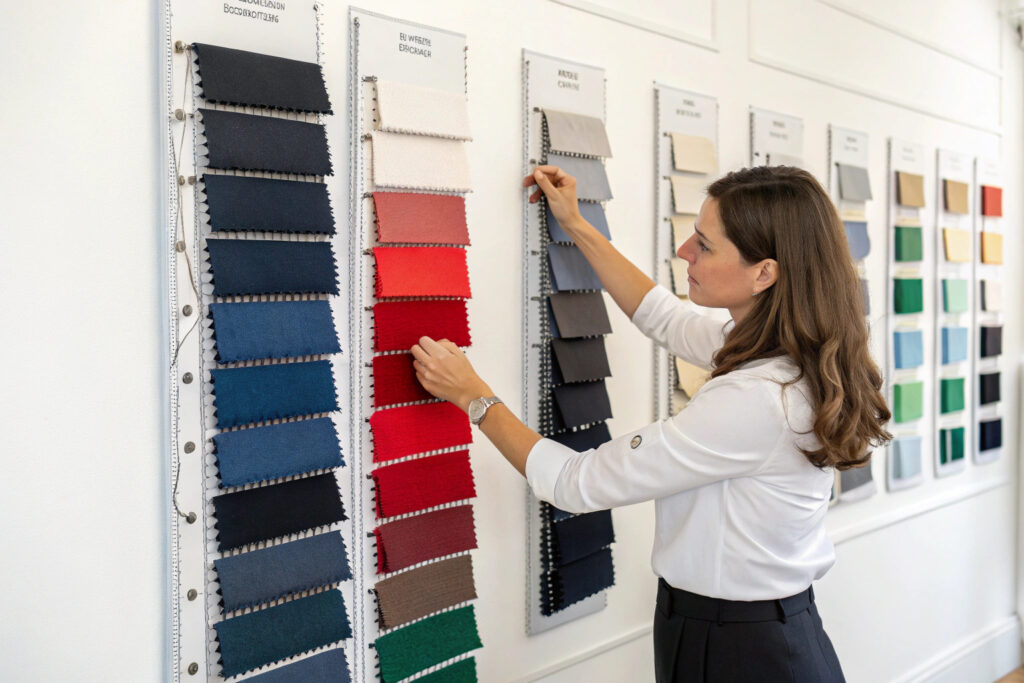
Our standard mesh inventory includes black, white, charcoal grey, navy, red, royal blue, and khaki. Our front panel twill inventory includes these same colors plus heather grey, forest green, olive, burgundy, burnt orange, sand, and several others. Any combination that pairs a front panel from the full list with a mesh from the mesh list is a standard two-tone. For example, a forest green front with a khaki mesh back is standard. A navy front with a white mesh back is standard. A black front with a red mesh back is standard. A burgundy front with a royal blue mesh back is standard. The key is that the mesh color must be on the pre-stocked list. If the mesh color is not on the list, such as a neon yellow or a pastel pink, that is a custom dye lot and a surcharge applies. I publish our standard two-tone combination list on a one-page PDF that I send to clients during the design phase. The client selects from the list. The design is locked into the standard inventory. The quote comes back with no surcharge.
The standard combination list is the menu. Ordering from the menu avoids the surcharge. But even within the standard menu, some combinations are more readily available than others. The highest-volume combinations, such as black and white or navy and khaki, are always in stock. A lower-volume combination, such as burgundy and royal blue, might be standard but temporarily out of stock. You should always confirm current stock availability before finalizing a design.
What Are the Most Popular Two-Tone Combinations for Trucker Hats?
The most popular combinations, based on our sales data, are black front with white mesh, navy front with white mesh, charcoal front with black mesh, red front with black mesh, and khaki front with navy mesh. These five combinations account for roughly 70% of our two-tone trucker hat orders. They are popular because they offer a classic, high-contrast look that works well with a wide range of logo colors.
If you are launching a new brand and you want a safe, commercially proven two-tone combination, start with one of these five. They are always in stock at any factory with a serious two-tone program. They are the classic trucker hat colorways that have been retail-tested for decades.
How Can You Request a Custom Two-Tone Combination Without Paying the Full Custom Fee?
If your heart is set on a mesh color that is not on the standard list, you still have a negotiation path that is less expensive than the full custom surcharge. Ask the factory if they have any upcoming orders that will use your desired mesh color. If another client is already paying for a custom dye lot of that color, the factory may be willing to add your yardage to that dye lot at a marginal cost, rather than charging you for the entire minimum. This is called a piggyback order. The timing must align. Your order must be placed during the same production window as the other client's order. If the factory has no upcoming orders in that color, ask if they have any leftover mesh inventory from a previous custom dye lot. Factories often have partial rolls of custom colors sitting in their warehouse. They may offer these at a reduced surcharge just to clear the inventory. The piggyback production strategy is a standard practice in garment manufacturing. It requires a flexible timeline and a cooperative factory, but it can unlock a custom color at a fraction of the normal surcharge.
What Sourcing Questions Reveal a Factory's True Two-Tone Capability?
A factory's sales representative may say "yes, we do two-tone" to secure the order, but their definition of "yes" may be "yes, with a custom surcharge." You need to ask questions that reveal whether the factory has a genuine two-tone inventory or is simply willing to source custom mesh on demand. The answers will determine whether you pay a surcharge.
Ask these five questions. First, "Can you send me your standard two-tone mesh color list with current stock availability?" A factory with a genuine program will have this list as a ready-to-send PDF. A factory without a program will hesitate or send a list of front panel colors only. Second, "Which mesh colors do you stock in inventory right now, and what are the roll quantities?" A genuine factory can answer this in minutes. A non-genuine factory will need to "check with the supplier." Third, "Is the two-tone construction the same unit price as a solid-color hat, assuming I select from your standard mesh colors?" The answer should be an immediate "yes, same price." If the answer is "it depends" or "let me calculate," the standard pricing is not standard. Fourth, "Can I see a physical sample of a two-tone hat in a combination I am considering, made from your standard inventory?" A factory that has this sample in their sample room has a real program. A factory that needs to make the sample from scratch is creating the program for your order. Fifth, "What is the minimum order quantity for a two-tone hat with a standard mesh color?" The answer should be the same as the factory's standard MOQ for any trucker hat, typically 100 to 300 units per color combination. If the MOQ is higher for two-tone, the factory is protecting against a custom mesh purchase. These five questions filter out the pretenders.
The questions reveal the factory's inventory position and pricing model. But the most decisive question is the sample request. A factory that can show you a physical sample of a two-tone hat in a standard combination is a factory that has produced that hat before. You are ordering a repeat product, not a new development.

Why Is the Mesh Inventory List the Most Important Document to Request?
The mesh inventory list is the factory's two-tone capability in written form. It lists the mesh colors that are pre-stocked. It may also list the current roll quantities. This document tells you exactly which color combinations are available at standard pricing. It also tells you the factory's commitment to the two-tone category. A factory with a printed, regularly updated mesh inventory list has made a business decision to serve the two-tone market. A factory that scribbles a few color names on a sticky note has not. The supplier capability assessment framework emphasizes documented, verifiable capabilities over verbal assurances.
How Can You Test the Factory's Pricing Transparency on a Sample Order?
Before placing a bulk order, place a small sample order for a two-tone hat in a standard combination and a solid-color hat in the same front panel fabric. The sample invoice should show the same unit price for both samples. If the two-tone sample has a higher unit price, the factory is charging a two-tone surcharge, even on standard combinations. This is a transparency test. A factory that charges a surcharge on a sample will charge a surcharge on bulk. The sample order pricing is a reliable indicator of the bulk pricing model. Do not assume the bulk price will be different. The sample invoice reveals the true pricing structure.
How Can You Design Your Hat to Stay Within the Standard Inventory?
The most reliable way to avoid a customization surcharge is to design your hat within the factory's existing material library. This requires a small adjustment to your creative process. Instead of designing a hat in isolation and then finding a factory to produce it, you request the factory's standard material options first and design within those constraints. This is not a creative limitation. It is a creative framework. The standard library at a well-stocked factory offers dozens of color combinations. The likelihood that your exact vision requires a color that is not in the library is low. When it does, a slight adjustment to a closely related color that is in the library preserves the design intent without the surcharge.
I guide my clients through this design process. They tell me the general color direction: "I want an earthy, natural look with a contrasting light mesh back." I pull our standard mesh colors that fit "earthy and light": khaki, sand, cream, light grey. I pull our front panel colors that fit "natural": olive, forest green, rust, brown, natural cotton. I lay these swatches on the table during a video call. The client mixes and matches in real time. They see that a forest green front with a khaki mesh back achieves their earthy, contrasting vision perfectly. Both colors are in our standard inventory. The design is locked. The price is standard. The design for manufacturing principle applies to material selection as much as to construction. Designing within the factory's material library reduces cost, lead time, and quality risk.
The collaborative design session is the most effective way to match your creative vision to the standard inventory. But if you are designing independently and want to check whether your color combination is likely to be standard before you contact a factory, there is a simple research method you can use.
How Can You Research Standard Mesh Colors Before Contacting a Factory?
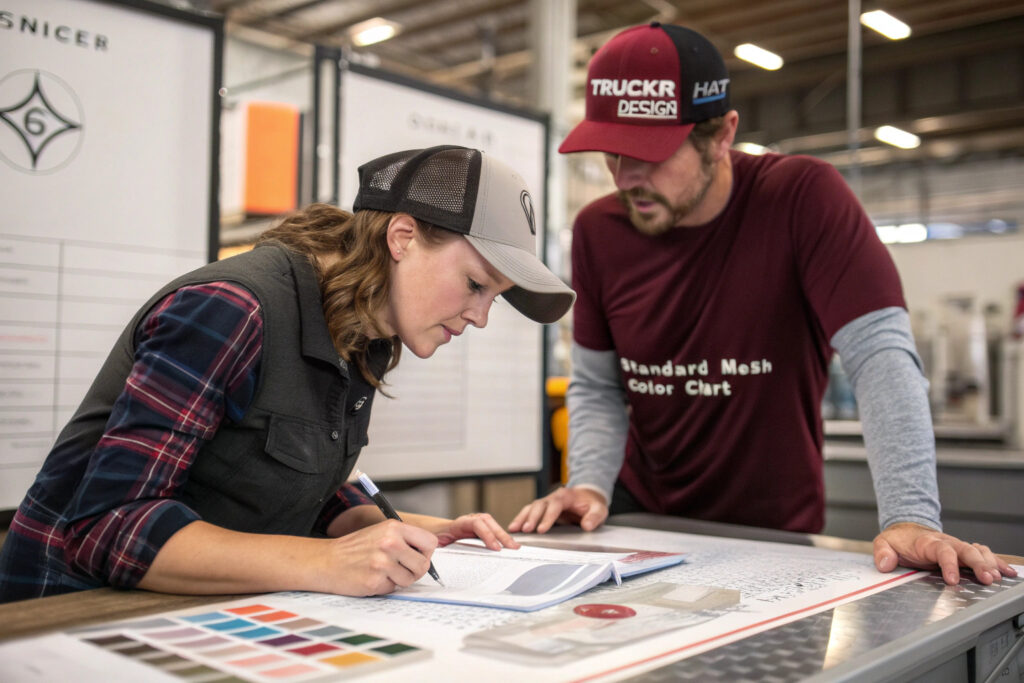
Visit the websites of major blank apparel wholesalers and promotional product distributors. Look at their trucker hat product pages. Filter by color. The mesh colors they offer as standard options are a reliable guide to the mesh colors that the manufacturing market considers standard. If a color combination is offered by multiple wholesalers as an in-stock, no-surcharge option, it is almost certainly a standard combination at the factory level.
This research takes 30 minutes and gives you a realistic sense of the market's standard color palette. You can then design your hat within this palette and approach factories with a specification that you already know is standard. The competitive product research method is a free, publicly available source of market intelligence.
What If Your Brand's Signature Color Is Not in the Standard Mesh Library?
If your brand's identity depends on a specific, non-standard color, such as a particular shade of teal or a branded Pantone match, you have three options. Option one is to accept the custom surcharge and pay for the minimum dye lot. This is the price of brand distinctiveness. Option two is to find the closest standard color and use it. The visual difference may be small enough that the consumer does not perceive it. Option three is to negotiate a phased inventory investment with the factory. Commit to a multi-order volume that justifies the factory stocking that color as a standard inventory item. If you guarantee to purchase 2,000 meters of teal mesh over the next 12 months, the factory may absorb the initial dye lot cost and treat teal as a standard color for your account. This strategic supplier partnership approach converts a custom color into a standard color through a volume commitment.
Conclusion
A two-tone mesh trucker hat is a premium-looking product that should not carry a premium price when sourced correctly. The surcharge that some factories apply is a real cost driven by minimum dye lot quantities, not an arbitrary fee. The factory that stocks a broad mesh inventory has already absorbed that cost across their client base and offers standard two-tone combinations at the same unit price as solid-color hats. Your job as a buyer is to identify that factory, request their standard mesh color list, and design your hat within that list.
I stock seven mesh colors and over a dozen front panel colors in our standard inventory. The resulting two-tone combinations number over 80. Most brand visions can find their perfect match within that library. When a client comes to me with a design, my first response is not a quote. It is a color chart. We find the combination that works, we lock it into standard inventory, and the quote reflects standard pricing. That is how a partnership factory operates. It aligns its inventory with its clients' design needs so that the creative work does not trigger a hidden cost.
If you are designing a two-tone trucker hat and want to see our standard mesh color list before you finalize your design, let us send it to you along with physical swatch samples. Our Business Director, Elaine, can prepare a Two-Tone Inventory Kit with our current mesh and front panel fabric swatches, our standard combination list, and a sample two-tone hat in a combination of your choice. Email her at elaine@fumaoclothing.com and ask for the Two-Tone Standard Options Package. We will help you design a hat that looks custom but costs standard.