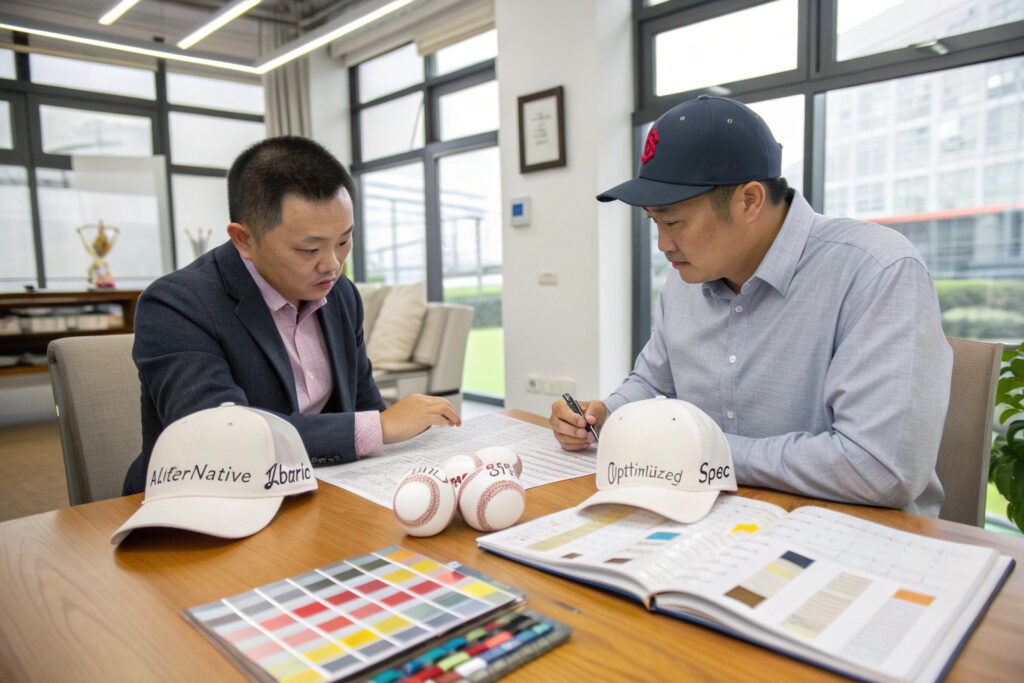
I learned a hard lesson about the cost of silence about fifteen years into running this factory. We had a long-standing client, a mid-sized American apparel brand, who sent us the same spec sheet for a heavy brushed cotton dad cap season after season. We made it exactly as ordered. The fabric was a premium 280gsm brushed cotton, beautiful hand feel, expensive freight weight. One day, their new purchasing manager visited our Zhejiang factory floor. He picked up a sample of a 260gsm washed cotton we were running for a European client. He rubbed it, held it up to the light, and asked why his caps didn't feel that soft at a lower weight. I told him he never asked for alternatives, and our team didn't want to overstep. He was visibly frustrated, not at us, but at the missed savings over three years of production. That moment fundamentally changed how I train my project managers.
To get your custom hat factory to suggest cost-saving alternatives, you must first give them explicit permission and a clear framework. A factory is afraid that suggesting a cheaper material makes them look like they are cutting corners. You need to reframe the conversation from "cheaper" to "value-engineered." Send a formal email stating that you welcome proposals for alternative materials, construction methods, or logistics optimizations, provided they fall within a defined tolerance for quality. At Global-Caps, we respond best when a buyer gives us a "target FOB price" and a "do not exceed" quality threshold. When we know the boundary, our design team can swap a costly imported buckle for a domestically sourced zinc alloy version that looks identical. We can suggest a different seam structure that saves sewing time without affecting durability. But we will stay silent if we think the buyer is rigidly fixed to a spec and views any deviation as a factory trick.
The key is creating a partnership where the factory sees your margin improvement as their retention strategy. I don't want to make a quick extra dollar on one order by sneaking in a cheaper thread. I want to keep you coming back with ten orders a year because you trust that my team actively protects your bottom line. This requires a shift in how you brief your sourcing partners. Let's walk through the specific strategies that actually trigger helpful cost-saving suggestions from us on the production floor.
What Cost-Saving Material Swaps Should I Ask My Hat Manufacturer About?
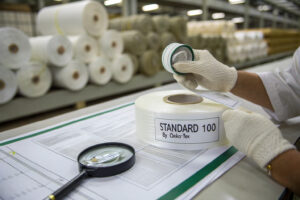
When a client asks me this directly, my shoulders relax. I know I am dealing with a professional who understands that material engineering is not just about luxury. It is about efficiency. The most impactful place to look for savings is the hidden structural components of the hat. Everyone focuses on the outer crown fabric. But the inner buckram, the sweatband composite, and the closure mechanism often hold more fat than the visible shell. A basic non-woven buckram can be replaced with a stiffer, lighter-weight version that uses less material by thickness but maintains the front panel structure through a tighter resin application. This lowers the shipping weight and the piece cost simultaneously.
For the outer fabric, blends are your best friend. A 60/40 cotton-polyester blend often looks and feels nearly identical to a 100% cotton twill but costs less and resists shrinkage far better. I also suggest looking at your sweatband. A 100% cotton tape sweatband is heavy, shrinks, and is a false economy. We frequently propose a polyester-foam composite that saves money, reduces the hat's gram weight for freight calculations, and significantly cuts the return rate. Another major win is the peak insert. Original cardboard inserts are cheap but warp instantly when wet. A polypropylene insert costs a tiny fraction more but eliminates returns from people caught in the rain. That swap saves the brand money in the long run, even if the piece cost rises by a cent.

How Can Recycled Polyester Fabric Offer a Premium Look at a Lower Price?
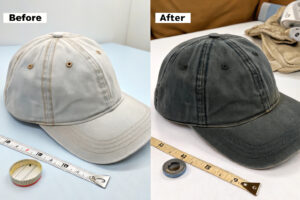
The market perception of recycled polyester, often called rPET, has flipped completely. Five years ago, brands viewed it as an eco-tax they had to pay. Now, the production scale of recycled fibers has grown so massive, particularly here in China, that the raw material cost has dropped below virgin polyester in some yarn counts. This means you can achieve a textured, matte finish that looks like a high-end technical fabric for less money than standard virgin materials. Recycled polyester takes dye beautifully, holding deep blacks and vibrant blues without color migration issues.
At Global-Caps, we run thousands of rPET hats every month. The fabric has a natural, slightly heathered appearance when spun in certain ways, which hides crease marks far better than flat 100% cotton. This means your warehouse team spends less time steaming and reshaping hats that arrived slightly crushed during transit. The labor savings add up. Recycled polyester is also inherently moisture-wicking and dries about four times faster than cotton. You can market this as an eco-conscious performance feature, justifying a premium retail price while actually reducing your landed cost. It is a rare scenario where the story, the performance, and the margin all move in the same direction. When we run a line for a client, I often ask if they will allow an rPET alternative quote alongside the cotton quote. More and more, the rPET quote wins because the math and the aesthetics line up.
Why Does a Lower GSM Fabric Sometimes Perform Better Than Heavier Materials?
GSM, or grams per square meter, measures fabric weight. The assumption is that higher GSM always equals better quality. That is a trap. A lower GSM fabric with a high-tension weave and good yarn twist can be far more durable and shape-retentive than a loosely woven heavy fabric. Think about a heavyweight loose-knit beanie. It stretches out in ten minutes of wear and looks baggy and old. A lightweight, tightly knit acrylic or merino blend beanie snaps back to shape every time. The performance comes from the construction, not the weight.
In baseball caps, a 240gsm twill with a dense pick count resists tearing and maintains its structured shape better than a fluffy 280gsm twill with a low pick count. The lower GSM option also makes the cap easier to sew, reducing needle breakage on our production line. This speeds up production and lets us lower the labor charge per piece. For the buyer, the cap weighs less, cutting air freight or sea freight bills immediately. I always advise my clients to test the tensile strength of a fabric, not just rub the surface. Ask us for a tear-strength test result. You will see that a properly engineered lighter fabric can endure more physical abuse. Don't let the "grams" number alone dictate your assumption of quality. Trust the performance data.
Which Hat Construction Techniques Cut Production Costs Without Affecting Durability?
When a buyer tells me they need the FOB price to come down but the hat still needs to survive a season of active use, I immediately open my construction playbook. The fastest way to cut sewing costs is panel reduction. A classic six-panel baseball cap with a heavy top button and a sweatband with four rows of stitching is labor-intensive. We can switch to a five-panel silhouette. A five-panel cap removes the two front eyelets and replaces complex front seam work with a single flat fabric piece that can still hold a structured crown. This instantly removes minutes of sewing time and reduces material waste in the cutting room.
Another technique is eliminating unnecessary hardware. Many fashion hats have metal adjusters, buckles, and faux leather strap details that add little to functional durability but cost a lot in component price and manual installation labor. We often suggest a self-fabric back strap with a simple hook and loop closure. If the brand identity still needs a metal touch, we suggest an antique brass-plated alloy instead of a solid brass component. The weight savings reduce freight, and the visual difference is nearly undetectable. The hat remains sturdy, but the production cost drops noticeably.
The stitching technique matters too. A double-needle lockstitch is the gold standard for durability on cap seams. However, we often see brands over-specifying this. They ask for a double-needle stitch on the label attachment, the sweatband edge, and even the inner taping. This is unnecessary and adds thread cost, time, and bulk. We propose reserving double-needle lockstitch for high-stress areas like the crown side seams and the brim attachment. For interior labels and sweatband edges, a clean single-needle chain stitch, properly tensioned, will outlast the hat's useful life. These small adjustments, when multiplied across 10,000 units, deliver significant savings.
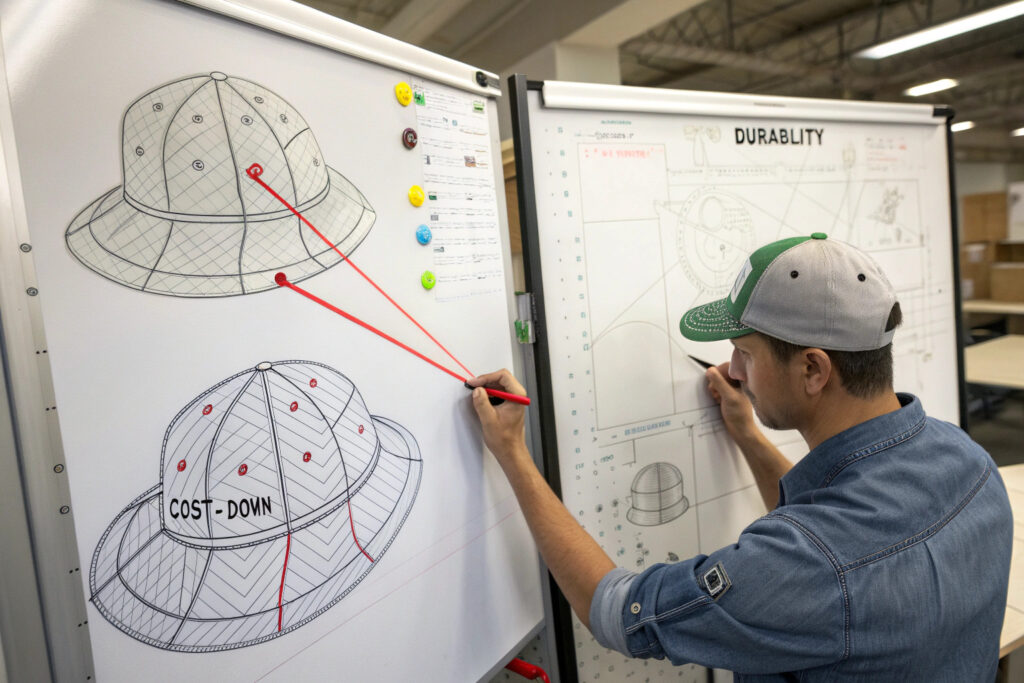
How Does Stitch Count Optimization Reduce Manufacturing Time While Maintaining Seam Strength?
Stitch count refers to the number of stitches per inch along a seam. A higher stitch count, say 12 to 14 stitches per inch, looks tight and premium. However, it also punches more holes into the fabric, which can actually weaken the seam if the needle cuts the yarn fibers. For most hat crown seams, 8 to 10 stitches per inch is the optimal balance between strength and production speed. Each stitch requires a cycle of the sewing machine needle. Reducing the stitch count by just two stitches per inch translates into a faster sewing pace across hundreds of meters of seam line per production lot.
The machine operator can feed the fabric through the sewing machine faster without sacrificing hold. The seam remains strong because the real holding power comes from the type of thread and the seam geometry, not just the number of holes. We test seam slippage in our in-house lab. A proper double-needle seam with 8 stitches per inch can withstand over 40 Newtons of pull force before deformation. A 14-stitch-per-inch seam on the same fabric might fail at 38 Newtons because the fabric is perforated too densely, creating a tear-off postage stamp effect. I always show these test results to skeptical buyers. Once they see the data, they agree that optimized stitch count is smarter engineering, not a corner cut.
Why Does Simplified Crown Paneling Lower Waste and Labor in Cap Production?
Panel simplification is the single most powerful lever for sustainability and cost reduction in a hat factory. A traditional six-panel cap creates a significant amount of fabric scrap between the curved panel cuts. Our cutting room operators have to carefully place the pattern pieces to minimize waste, but with the deep curves of a six-panel crown, about 15 to 20 percent of the fabric square ends up as unusable offcuts. A five-panel hat, or especially a military-style cap with a flat front panel, dramatically increases the pattern nesting efficiency. Fabric utilization jumps to 85 percent or higher.
Less waste means you pay for less raw fabric per finished cap. Labor costs also drop. Sewing six curved panels together with consistent seam allowances requires highly skilled operators and more time. Matching stripes or patterns across six panels is a nightmare that slows production to a crawl. A five-panel hat cuts that work by nearly a third. The front panel provides a clean, uninterrupted canvas for embroidery or heat-transfer logos. The structural integrity remains high because the front seam is eliminated. For brands concerned about the "cheap trucker cap" connotation of a five-panel, we offer premium textured fabrics and structured front buckrams that make the hat feel substantial and expensive. The simplification happens in the construction, not in the perceived quality.
How Can Smart Packaging Choices Lower My Hat Importing Expenses?
Packaging is the silent margin killer in the headwear business. I have seen buyers agonize over shaving five cents off the hat cost, only to ship those hats in thick cardboard inner boxes that add thousands of dollars to their freight bill. The air inside a box costs the same as the hat that fills it. Smart packaging starts with dimensional weight optimization. Every courier and freight forwarder now uses volumetric weight calculations. A fluffy, individually boxed hat takes up more volume on the pallet, bumping the chargeable weight higher than the actual physical weight.
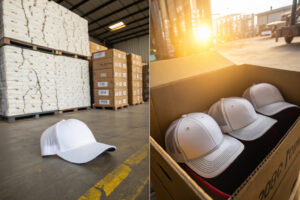
We propose a shift to flat-pack nesting. Instead of stuffing each hat with tissue to hold its shape, which creates a balloon effect, we carefully fold the crown and nest the hats together like spoons. This increases the quantity per carton by 30 to 40 percent. The cardboard carton dimensions shrink, lowering your sea freight or air courier rate per unit. We also recommend eliminating individual polybags if your retail channel allows it. If not, we use a thin, biodegradable polybag that still protects the hat from moisture but adds almost nothing to the weight or volume. These decisions happen in the packing specification sheet we create with clients before mass production. A small change here saves more money than switching from a brass buckle to an iron buckle on the hat itself.

How Does Nesting Hats for Shipping Reduce Freight Volume Charges?
Nesting is a specific packing technique where the crown of one cap is placed inside the crown of another, offsetting the brims so they lay flat. This eliminates the empty cavity inside each hat. When hats are packed individually with inflatable crown shapers or wads of paper, they become rigid balls. A standard carton might hold only 48 caps. When we nest them flat, that same carton can hold 72 or even 96 caps, depending on the brim style. The external box size might even shrink from a 60x40x40cm box to a smaller 50x35x30cm box.
Shipping lines and air freight carriers charge by volumetric weight. That formula multiplies length by width by height and divides by a volumetric factor. A smaller box directly lowers the chargeable kilograms per shipment. For a 5,000-cap order, this can mean three pallets instead of five. The pallet space savings on a container ship translate directly to lower Less than Container Load charges or allow you to consolidate more product into a Full Container Load, bringing the per-unit freight cost down sharply. Nesting requires the factory to train packing staff properly. The hats must be folded consistently to avoid permanent creasing. We use a light tissue barrier between nested layers to protect logos and delicate fabrics. It takes discipline, but it is the single fastest way to reduce landed cost without touching the product design.
Why Does Eliminating Individual Polybags Work for Specific Retail Hat Programs?
Many sustainable fashion brands and big-box retailers have already made the switch to bulk packing. If your hats ship directly to a warehouse for e-commerce fulfillment, not to a retail shelf where customers handle them loose, individual polybags are often redundant. The hats sit in a pick bin until an order comes in, then they go into a branded shipping mailer anyway. The individual polybag just becomes waste the warehouse staff has to rip open and discard. That waste costs money to buy and money to dispose of.
Eliminating polybags also supports your brand's plastic reduction story, a marketing asset. For programs shipping to retailers like Costco or Sam's Club, the display requirements might still demand a polybag. But for direct-to-consumer warehousing or Amazon FBA programs, a bulk-bagged master carton with a single outer moisture barrier works perfectly. The hats stay clean and protected. We recommend placing a desiccant pack inside the master carton instead of wrapping each hat individually. This controls humidity without the plastic waste. The per-unit cost reduction is small, maybe two to four cents. But the freight volume impact compounds. Fewer polybag sleeves mean less air trapped in the carton, tighter packing, and fewer cartons overall. It aligns cost reduction with environmental responsibility.
What Negotiation Strategies Encourage a Hat Supplier to Proactively Reduce Costs?
The worst way to ask for a cost reduction is to send a one-line email that says, "Price too high. Give us a 10% discount." That instantly frames the conversation as a zero-sum fight. I receive those emails and I know the sender sees me as a vending machine, not a partner. The most successful long-term clients use a different strategy. They align the factory's business interests with their own cost goals.
The most powerful tool is the volume commitment roadmap. Instead of negotiating a single purchase order, you present a 12-month rolling forecast. When I see a guaranteed 50,000 units over the next year, I can negotiate with my raw fabric mills for better bulk pricing. I can reserve a dedicated production line, which smooths out labor allocation and reduces idle time costs. These savings get passed back to the buyer because my risk is lowered. Another strong strategy is consolidating your supplier base. If you currently split hat orders across three factories, each factory sees only a fraction of your potential business. No factory will invest engineering time into cost-reduction brainstorming for a client representing 5% of their capacity. Tell us you want to make us your primary partner, and our project managers will come to meetings with a list of value-engineering ideas we have been wanting to try but didn't think you would approve. Transparency creates initiative.
Payment terms also unlock savings. A factory's price includes a hidden financing cost to cover the cash flow gap while we wait 60 or 90 days for payment after shipment. If you can offer a deposit structure that covers raw material purchasing upfront, or shorter net payment terms, we can strip that financing buffer out of the unit price. I have personally lowered FOB prices by several percentage points for clients who pay a 50% deposit and settle the balance within 15 days of the Bill of Lading. This is a direct partnership play.

How Does a Long-Term Purchase Forecast Unlock Volume Pricing for Custom Headwear?
A purchase forecast is not a firm purchase order, and that is fine. It is a signal. When a buyer shares a forecast of 20,000 pieces for Spring and 30,000 for Fall, it allows our procurement team to buy raw greige fabric in bulk before the seasonal price spikes. Cotton and polyester prices fluctuate. Mills offer discounts for large forward-bought quantities. If we wait for your firm PO, we might have to buy at the spot market rate, which is almost always higher. The forward buy saves us money, and a professional factory shares that saving.
The forecast also lets us schedule production across the year, filling otherwise slow months. If we know your big order comes every September, we can run your fabric preparation in July when our factory floor is less frantic. This smooth production flow reduces our overtime labor costs. Overtime wages in China are significantly higher than standard hourly wages. Avoiding overtime means lower labor cost per cap. This is an industrial efficiency you cannot buy with a single purchase order. When I sit down with a client who has brought a forecast, I feel secure enough to open my cost sheet and show them exactly where the margins can flex. It shifts the conversation from suspicion to shared logistics planning.
Why Does a Design-for-Manufacturing Review Lead to Smarter Cost-Saving Suggestions?
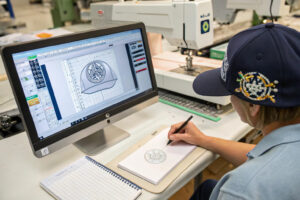
A Design-for-Manufacturing review, or DFM, is a structured meeting where your factory's production engineers analyze your hat design not for aesthetics, but for manufacturability. This is where the real magic happens. When a designer submits a sketch, they might not realize that the triple-layer embroidery they specified requires three separate hoopings on the embroidery machine, tripling the decoration cost. A DFM review catches this. Our team can suggest a digital print with a texture effect that costs a fraction of the embroidery and looks stunning.
We also look at seam placement. A decorative seam crossing a stress point is a recipe for fabric tearing during wear. In a DFM review, we might suggest moving that seam 5 millimeters. The visual difference is invisible to the customer, but the cap survives the stretch test. This prevents warranty claims. We also analyze the bill of materials for component consolidation. If your hat uses three different thread colors that are almost identical, we might ask if two of them can be combined. The factory no longer needs to stop the line to swap threads, saving production time. These suggestions don't feel like cost-cutting to the end consumer. They feel like a well-engineered product. When a buyer gives us permission to do a DFM review, they are signaling that they trust our manufacturing expertise. That trust unlocks our team's deepest creativity.
Conclusion
Getting your factory to proactively suggest cost-saving alternatives is about building the right relationship infrastructure. It is not about squeezing us for pennies. It is about giving us the permission, the data, and the long-term security to apply our engineering creativity to your product. When you frame the request as "value engineering" instead of "price cutting," you signal that you respect the quality standards we also take pride in. This changes the dynamic from transactional to collaborative.
The factories with real expertise, like ours at Global-Caps, have decades of accumulated knowledge about fabric performance, shipping logistics, and production efficiency. We know which material swaps deliver a better hand feel at a lower weight. We know which seam structures reduce labor time without failing a durability test. We know how to pack a carton so you pay for hats, not air. But we will keep this knowledge locked away if we think a buyer views every suggestion as a trick. Your job is to unlock it.
Present a forecast. Ask for a Design-for-Manufacturing review. Set a target FOB price and invite alternative proposals. When you make these moves, you transform your supplier relationship into a strategic partnership. The suggestions will flow, and your margins will strengthen without your hat losing its quality or its market appeal.
If you are ready to start a conversation about value-engineering your next custom hat production run, I want to connect you with someone who can execute on these ideas immediately. Our Business Director Elaine has guided countless brands through the DFM process and has a sharp eye for identifying cost traps without compromising the final product. She knows our factory's capabilities inside and out and can put together a tailored cost-optimization proposal for your specific designs. Reach out to her directly at elaine@fumaoclothing.com, and let's start building headwear that performs brilliantly on both the retail shelf and your balance sheet.