You have landed a big contract. A European music festival wants 20,000 custom caps for their summer tour. The buyer loves your organic cotton fabric and your ethical production certification. Then, just before signing, they send over their packaging compliance rider. Single-use plastics are banned. Polybags are forbidden. The entire packaging suite must be recyclable in standard European municipal streams or certified home compostable. You look at your standard packaging specs. Your caps are wrapped in individual OPP polybags to protect them during ocean transit. Your master cartons are sealed with polypropylene packing tape. Suddenly, your perfect cap is a compliance liability, and the deal is at risk.
I have guided many clients through this exact transition at Global-Caps. Shifting to plastic-free packaging for the EU market is not a simple swap of materials. It is a systematic rethinking of how you protect headwear from moisture, dust, and crush damage during the long journey from our factory floor in Zhejiang to a distribution center in Rotterdam. The good news is that we have already engineered solutions that meet the strictest EU directives without sacrificing the crisp, retail-ready presentation your caps need. In this article, I will walk you through the exact regulations you face, the material alternatives that actually work for headwear, and how to verify that what you are buying is genuinely compliant.
What Are the Current EU Directives Governing Plastic Packaging for Textile Products?
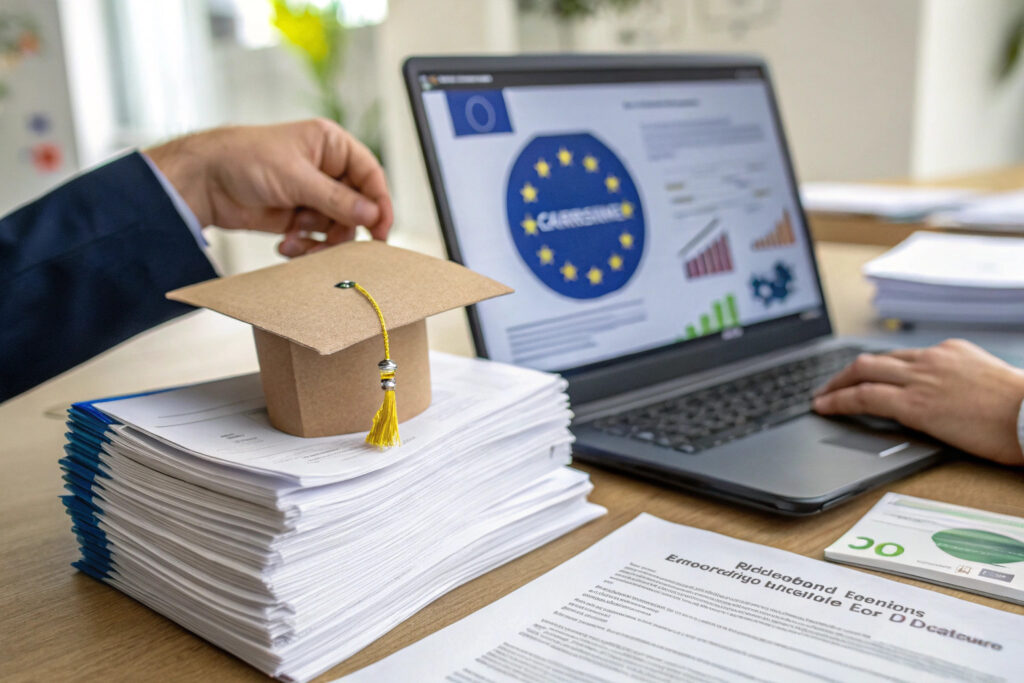
The regulatory landscape in Europe has shifted decisively against single-use plastics. For a promotional cap importer, the most critical piece of legislation is the EU Packaging and Packaging Waste Directive, specifically the amendments under the Circular Economy Action Plan and the Single-Use Plastics Directive. These are not vague suggestions. They carry financial penalties for non-compliance and, increasingly, they trigger automatic rejection at European customs checkpoints. You cannot afford to treat this as a secondary concern.
The core principle is that all packaging placed on the EU market must be either reusable or recyclable in an economically viable way by 2030. However, several member states have accelerated their own timelines. France, for example, has already phased out single-use plastic packaging for many consumer goods. Spain has introduced a plastic packaging tax. Germany's VerpackG requires registration and licensing of all packaging, with fees scaled by material recyclability. Plastic incurs the highest fees. If your promotional caps arrive in a retail-ready package containing a polyethylene polybag, you are creating a downstream cost for your client in waste fees, and you are risking the shipment being flagged for non-compliance with national phase-out laws. The definition of "plastic" is also broad. It captures conventional polymers like LDPE and PP, but also bio-based plastics that are chemically identical to fossil-based polymers. A PLA bag derived from corn starch is still a plastic under EU law and still requires industrial composting facilities to break down, which are not universally available. Therefore, true compliance points toward fiber-based, paper, or board solutions.
It is also vital to understand Extended Producer Responsibility. Under these schemes, the entity that first places packaged goods on the EU market, often your client, is financially responsible for the end-of-life management of that packaging. If you ship caps in plastic bags, your client must report those packaging kilograms and pay a fee. If you switch to paper-based packaging, the fee per kilogram is significantly lower in most EU member states. This directly affects your client's landed cost calculation. When I present packaging options to buyers like Ron, who is laser-focused on the total cost of ownership, I show them the procurement price of the packaging plus the estimated EPR fee their EU-based entity will pay. Often, the supposedly more expensive plastic-free packaging becomes cheaper overall once the regulatory fees are factored in. This makes the commercial case for sustainability very easy to close.
How Does the SUPD Affect Individual Cap Packaging?
The Single-Use Plastics Directive targets specific items, but its philosophy extends to all packaging. Individual polybags with a thickness below 50 microns are under the most intense scrutiny and are already restricted in many contexts. Even thicker polybags are being phased out by proactive retailers. Many major European supermarket chains and fashion brands have published their own packaging charters that go beyond the law. They mandate zero single-use plastic in their supply chain, full stop. If you are supplying promotional caps to a large retailer's giveaway or loyalty program, your packaging must align with their published sustainability report.
This means the thin polybag that protects your cap from dust and scuffing during transit must be replaced. But a bare cap in a cardboard box is also not acceptable. Friction between the caps during shipping causes abrasion on the fabric and the embroidery. The SUPD pressures us to innovate a protective layer that is not plastic. My development team has settled on a few effective alternatives: tissue paper wraps made from FSC-certified acid-free paper, or a thin, translucent sheet of glassine paper, which is fully recyclable and biodegradable. Glassine has the smooth, non-abrasive surface of a plastic bag without the polymer structure. It passes the recyclability test in standard paper mills. For the end consumer, unwrapping a cap from glassine paper feels more premium than tearing open a plastic bag. It aligns with the sensory experience that sustainable brands want to deliver.
How Are EU Member States Enforcing Plastic Packaging Bans?
Enforcement is fragmented but intensifying. Italy has required mandatory labeling of all packaging materials for recyclability since January 2023. If your packaging is not clearly coded for the correct recycling stream, it can be blocked. The Netherlands has an active inspection regime for imported textiles and accessories. Customs officials will pull samples and check for prohibited single-use plastics. If found, the goods can be re-exported at the importer's cost. Sweden and Denmark have robust EPR systems that financially penalize plastic weight in packaging.
You should also be aware of the EU's upcoming Digital Product Passport framework. While initially focused on textiles and electronics, it will extend to packaging data. The composition of your cap packaging will need to be declared digitally. If you are still using conventional plastic, this data becomes a visible red flag in procurement databases. Brands are already mapping their Scope 3 emissions, which include packaging. A cap supplier that offers a pre-engineered plastic-free packaging solution becomes a strategic partner, not just a vendor. When I speak with our European clients, I provide them with a packaging material declaration sheet that lists the exact material composition, the relevant EN 13432 compostability certification if applicable, and the appropriate EU waste stream code. This documentation allows them to upload the data directly into their compliance portal without having to reverse-engineer our packaging.
What Plastic-Free Packaging Materials Work Best for Promotional Headwear?
Selecting the right material is a balancing act between protection, presentation, and cost. You cannot simply throw a cap into a brown cardboard box and call it a day. The cap has a structured form, often a curved brim and a raised crown that must not be crushed in transit. The packaging must also present the cap beautifully if it is intended for retail or as a premium promotional gift. Through years of trial and error, I have identified a core material toolkit that meets EU compliance while keeping your caps in showroom condition from China to Europe.
The primary enclosure for a single promotional cap should be a custom-sized rigid or semi-rigid cardboard box. We specify a minimum E-flute corrugated or solid bleached sulfate board weight that resists crushing without being overweight, which drives up freight costs. Inside, we replace the standard polybag with an acid-free tissue paper wrap. The tissue is folded around the cap to prevent the fabric from rubbing against the box interior during vibration. For the crown cavity, we use a die-cut cardboard insert instead of a plastic bubble form. This insert is tucked inside the cap to maintain its dome shape. The entire package can then be sealed with a kraft paper tape, which uses a natural rubber adhesive that is fully repulpable. No polypropylene tape is used anywhere. The result is a package that a European consumer can flatten and place directly into their paper recycling bin without removing any components. This is the key to high recycling participation rates: simplicity.
For multi-unit packs, the master carton must also be compliant. We use paper-based water-activated tape instead of plastic packing tape. The carton itself is sealed with starch-based glue. The individual boxes are separated by molded pulp dividers, which are made from recycled newspaper and are curbside recyclable. There is zero plastic in the entire shipping unit. This is auditable and documentable, which your client's sustainability officer will appreciate.

Why Is Kraft Cardboard the Gold Standard for Cap Boxes?
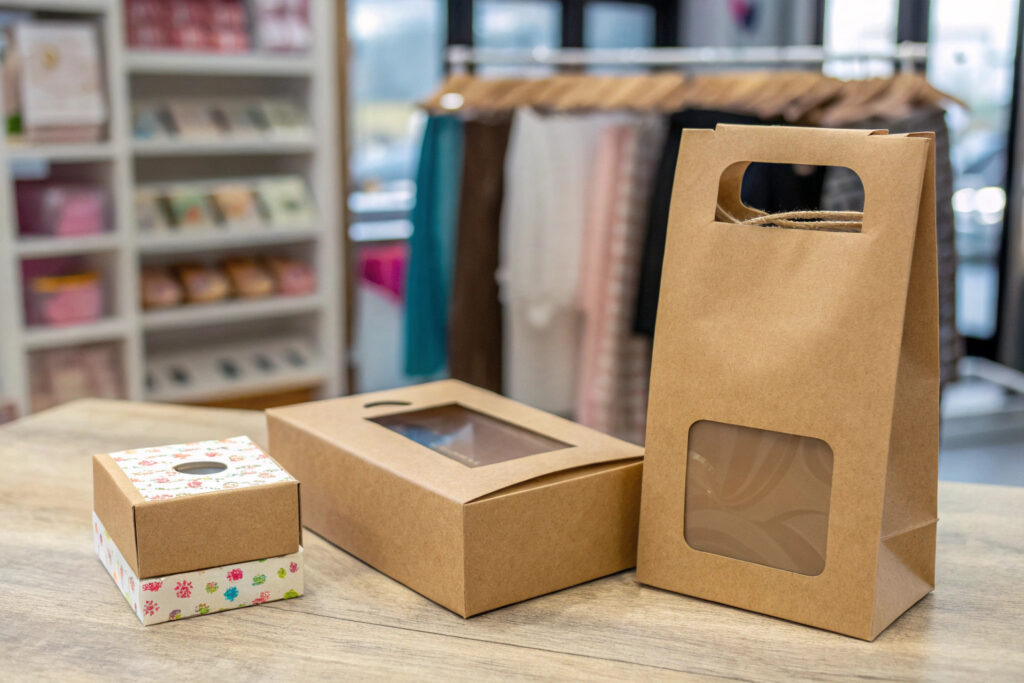
Kraft cardboard is made from unbleached wood pulp, giving it a natural brown color that visually communicates sustainability without any printing. It requires less chemical processing than bleached white board, and it has excellent structural rigidity. For a promotional cap, a tuck-top box made from 350-400 gsm kraft board provides a premium unboxing experience. The lid can be die-cut with a window, and we can cover that window with a compostable cellulose film made from wood pulp, not petroleum.
This cellulose window is a game-changer. It looks like plastic film, but it is certified home compostable under EN 13432 standards. It allows the end user to see the cap logo without opening the box, which is critical for retail shelf appeal. The cost of this film has come down significantly in the past two years as production has scaled. I now recommend it as a standard option for brands that want plastic-free packaging without sacrificing visibility. The entire box, including the window, can go into a home compost heap or the paper recycling bin. There is no layer separation required by the consumer, which is a major compliance advantage. Authorities penalize packaging that looks recyclable but requires the consumer to peel off a plastic window from a cardboard frame.
This is often forgotten. You have a beautiful plastic-free box, but the cap inside has a hangtag attached with a nylon string or a plastic swift-tack. That tiny piece of plastic violates the spirit of the directive and could cause a box-level rejection if a customs inspector is being thorough. We have fully transitioned to natural alternatives. The hangtag itself is printed on recycled cardstock. The string is organic cotton or hemp twine. The fastener is a small metal safety pin or simply a knot.
For branded sticker seals, we use paper stickers with a cellulose-based adhesive. These are repulpable and do not contaminate the paper recycling stream. The industry has moved fast, and many large European brands now explicitly ban plastic swift-tacks from their packaging manuals. When you are ordering 20,000 caps, the labor to thread a cotton string through a hangtag is marginally higher than using a plastic dart, but the compliance risk reduction is enormous. I always include the cost of natural fasteners in the initial quote so there are no surprises. Buyers who negotiate this line item down are often not aware of the customs exposure they are creating for themselves.
How Can You Verify and Certify Your Packaging Is Genuinely Plastic-Free?
Claiming your packaging is plastic-free is easy. Proving it to a European customs authority or a retailer's compliance team is another matter entirely. The proof lies in accredited third-party certifications and documented supply chain traceability. You need a certification that goes back to the paper mill, not just a claim from the packaging converter. Without this, you risk a greenwashing accusation, which can be more damaging to a brand than a simple compliance failure.
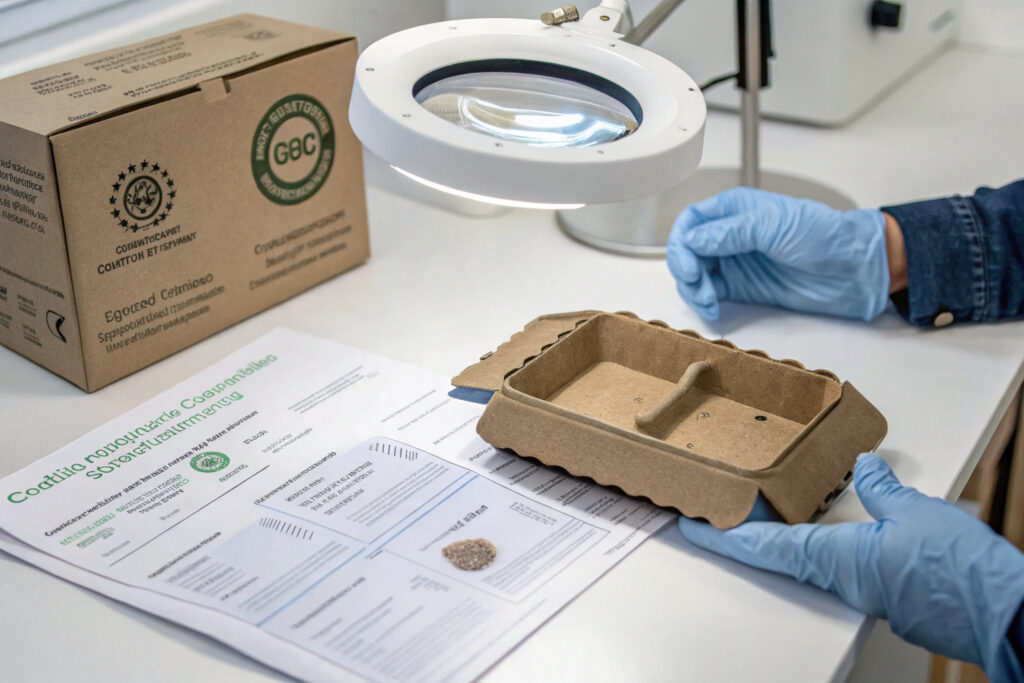
I have built a library of certified packaging materials at Global-Caps. Each material we use, from the kraft board to the cellulose window to the ink on the printing, has a corresponding certificate. The two most recognized standards in the EU are the FSC chain-of-custody certification for responsible forestry and the EN 13432 certification for industrial compostability or the OK Compost HOME certification for home compostability. For recyclable paper packaging, we also rely on the PTS method testing from German laboratories, which confirms the repulpability of the material. When a European buyer asks for proof, I send them a digital compliance pack. This pack includes the FSC certificate of the board mill, the compostability test report for the window film, and the EN 71 safety test report for the printed inks.
The process of verification should begin before production. Ask your supplier for a physical "material passport" sample board. This is a board that has a small swatch of each packaging component glued to it, with labels identifying the material, the supplier, and the certification number. You can then have this board independently tested if you have doubts. During a third-party inspection of your caps, the inspector should also verify that the packaging materials used in bulk match this passport board exactly. Substitution is a real risk. A factory might show you a beautiful certified material in the sample room and then switch to a cheaper, non-certified look-alike during bulk production. The material passport, cross-referenced with the inspector's field verification, closes that gap.
What Are the Key Certification Logos to Look For?
You should train your eye to recognize a few critical logos. The FSC logo with the license code confirms the paper comes from responsibly managed forests. The Seedling logo confirms industrial compostability to EN 13432. The OK Compost HOME logo is even stronger; it confirms the material will break down in a home garden compost pile at ambient temperatures. The Resy logo, commonly used in Germany, confirms the paper is recyclable and compatible with the German dual system.
However, a logo alone is not enough. I always ask for the certificate number behind the logo and then verify it on the issuing body's public database. FSC has an online portal where you can enter the license code and confirm it is valid and matches the supplier's name. TUV Austria and DIN CERTCO have searchable databases for compostability certificates. I do this verification myself for every new material batch we commission. It takes ten minutes and completely eliminates the risk of fraudulent logo use. I encourage my clients to do the same spot-check. If a supplier is legitimate, they will be proud to give you the certificate number. If they hesitate or say the logo is just a "generic symbol," you are likely looking at unverified material.
How Do You Document Compliance for EU Customs Clearance?
Your shipment documentation must proactively address packaging compliance. The commercial invoice and packing list should include a specific statement about packaging. I use a standard clause that states the total net weight of packaging, the material composition, and the applicable EU waste codes. For example, a cap box might be described as "Solid Bleached Sulfate Board, Paper Waste Code 15 01 01, 100% Recyclable." The cellulose window is declared as "Regenerated Cellulose Film, EN 13432 Certified Compostable, Waste Code 15 01 05."
This level of detail signals to the customs officer that you have done your compliance homework. It often prevents a physical inspection because the data is transparent. Additionally, for German-bound shipments, your client will need this data to register with the Zentrale Stelle Verpackungsregister. We pre-fill this data for our clients and send it along with the shipping documents. This is a value-added service that a generalist factory typically cannot offer because they do not manage their packaging supply chain to this level of traceability. It also protects your client from fines for under-declaring or mis-declaring their packaging volumes.
What Are the Cost and Lead Time Implications of Switching to Plastic-Free Packaging?
The most frequent pushback I hear from buyers is the assumption that plastic-free packaging will be significantly more expensive and slower. This was true five years ago. The supply chain for eco-packaging was niche, and the order volumes were small. Today, the cost gap has narrowed dramatically, and in many cases, the total cost difference is negligible when you account for the EPR fees and the marketing value. Lead times have also stabilized as paper mills and converters have scaled up their sustainable lines.
The raw material cost of a custom-printed OPP polybag is indeed very low, often just a few cents per unit. A custom kraft box with a cellulose window will cost more per unit, perhaps several times the polybag price. But you are not comparing like for like. The box replaces the bag, but it also replaces the header card, the insert card, and often the retail hangar, because the box can be designed to hang on a retail hook itself. When you consolidate these packaging items into one integrated solution, the total packaging cost often comes within a close range of the old system. More importantly, the perceived value of a boxed cap is far higher. A promotional cap that arrives in a beautifully designed, sustainable box feels like a gift. The end user keeps the box, uses it for storage, and the brand impression lasts longer. This marketing value is a real return on the packaging investment.
Lead times for plastic-free packaging require more upfront planning. OPP polybags can be printed and delivered from a local packaging supplier within a week. Custom kraft boxes with die-cut windows and cellulose film take longer to produce, typically two to three weeks, and require the making of cutting dies. We manage this by treating the packaging as a key path item in the production schedule. We order the packaging materials at the same time we order the cap fabric. By the time the caps are sewn and finished, the boxes are already in our warehouse, inspected and ready for packing. This parallel scheduling eliminates any additional lead time for the client. The critical success factor is locking the packaging design early. Late-stage changes to artwork or box dimensions will cause delays because the die has to be remade. We advise our clients to finalize their packaging specs at the proto sample stage, not at the bulk order confirmation.
How to Budget for a Plastic-Free Packaging Transition?
I recommend setting a packaging budget as a percentage of the total FOB cost rather than a fixed per-unit cost. For a mid-volume promotional cap order, plastic-free packaging typically represents a moderate single-digit percentage increase over conventional polybag packaging. This premium is often fully offset by the avoidance of EPR fees in the destination market. I build a simple total-cost model for my clients that shows the FOB price with packaging, the estimated EPR fees for plastic versus paper, and the freight cost difference due to potentially heavier packaging.
Paper-based packaging is slightly heavier than plastic bags. This can increase the air freight or sea freight chargeable weight. However, promotional caps are usually shipped by sea, where the cost per kilogram is low. The weight penalty of a cardboard box over a polybag might add a small amount per container. I offset this by optimizing the box dimensions to cube the shipping carton perfectly. A well-designed box nests efficiently and does not waste space. I have seen cases where a consolidated paper-based packaging system actually reduced the overall shipment cube because it eliminated bulky plastic bubble forms and allowed denser packing. Every order requires its own calculation, but the key takeaway is that the net financial impact is marginal when viewed holistically. The biggest risk to your budget is not the unit cost of the box; it is a customs hold due to non-compliant packaging.
How to Manage the Transition Without Disrupting Your Order Timeline?
The best strategy is to run a pilot order first. Do not switch your entire annual cap program to plastic-free packaging in one go. Pick one style, perhaps your best-selling organic cotton dad cap, and redesign its packaging as a case study. Work closely with your supplier on the artwork and structural design. Order a small batch of 500 units in the new packaging and ship them to your European warehouse. Gather feedback from the warehouse team on handling and from the marketing team on presentation. Use this pilot to refine the box structure and the packing process before scaling to 20,000 units.
At Global-Caps, we often produce a fully functional packaging sample and ship it to the client by courier before any cap samples are even made. This allows the client to hold the box, test its rigidity, and get approval from their own sustainability department. This step is a strategic pause that prevents rushed decisions. The packaging is the first physical thing the end consumer touches; it deserves the same care and iteration as the cap itself. By decoupling the packaging development from the cap sampling, we compress the overall timeline. When the final cap sample is approved, the packaging is already signed off and ready for bulk production.
Conclusion
Securing plastic-free, EU-compliant packaging for your promotional caps is a challenge that requires technical knowledge, supply chain control, and a genuine partnership with your manufacturer. The European directives are not static guidelines; they are a moving target of phase-out dates, EPR fee structures, and member-state enforcement actions. Navigating this requires a supplier who has already built the material certifications, the paper-based supply chains, and the documented audit trail to prove that what you are importing is exactly what it claims to be. The shift away from polybags is not a trend. It is the new baseline for doing business in Europe, and it is rapidly spreading to other markets.
You do not have to solve this puzzle alone. At Global-Caps, we have already done the hard work of sourcing certified kraft boards, testing cellulose window films, and establishing the parallel production scheduling that ensures your plastic-free packaging arrives on time and within budget. We can provide you with a material passport and a digital compliance pack that gives your European client total confidence at customs.
If you are ready to transition your promotional cap program to fully plastic-free packaging that complies with all current EU directives, let's talk. Contact our Business Director, Elaine, at elaine@fumaoclothing.com. She can send you a sample pack of our sustainable packaging options and work with you to engineer a solution that protects your caps, elevates your brand, and keeps your shipments moving smoothly through European customs. Let's make your next order a benchmark for sustainability in promotional headwear.