I received a lab report from a client last winter that made my stomach tighten. The report claimed the cotton twill fabric on his custom caps had a formaldehyde content of 85 parts per million, well above the 75 ppm limit for adult products. The client was furious. He was ready to cancel the order and file a dispute. Something about the report felt wrong to me. The lab was one I had never heard of. The report layout was inconsistent with ISO 17025 standards. The sample description was vague. I asked for a retest at a different accredited lab. The result came back at 18 ppm. The first report was either a lab error or a deliberate misrepresentation. The client had nearly killed a perfectly compliant order based on bad data.
You demand a retest of your custom cap fabric by invoking the chain-of-custody protocol and the right to a second opinion at an ISO 17025 accredited laboratory of your choice. Your demand must be specific, documented, and procedurally unassailable. You state that the initial report contains anomalies, which you list specifically. You state that under the agreed quality control clause in your purchase order, you are exercising your right to a confirmatory test at an independent lab. You identify the specific lab you have selected. You require that the retest sample be drawn from the same bulk fabric lot in the factory's possession, witnessed by a third-party inspector or via a live video call. You state that the retest results will be binding, and the party whose position is contradicted by the retest will bear the full cost of both tests. This demand is fair, procedurally correct, and difficult for a factory to refuse without admitting guilt.
I have managed fabric testing disputes from both sides of the table. I know what a valid lab report looks like. I know the common failure modes of cheap or fraudulent labs. I want to share the forensic checklist for spotting a suspicious report, the script for demanding a retest, the correct sampling procedure, and the lab selection criteria. This is the quality assurance equivalent of a second medical opinion. It can save a good order from a bad test.
What Are the Red Flags in a Dubious Fabric Lab Report?
A genuine, legally defensible lab report follows a predictable format because it is generated by a laboratory quality management system that is itself audited to ISO 17025. A dubious report often contains formatting errors, missing information, or logical inconsistencies that are immediately visible to a trained eye. You do not need to be a chemist to spot these red flags. You need to know what a real report looks like and then check for deviations.
The first red flag is the laboratory's accreditation status. A legitimate textile testing lab will prominently display its ISO 17025 accreditation logo and certificate number on the report. Go to the accreditation body's website, such as A2LA, UKAS, or CNAS, and verify that the lab's accreditation is current and covers the specific test methods listed on the report. If the lab is not accredited, or if the accreditation does not cover textile chemical testing, the report has no legal or commercial standing. The second red flag is an incomplete or vague sample description. A proper report describes the sample as "woven cotton twill fabric, navy blue, 260 GSM, Style # XYZ, PO # 12345, sampled from bulk production lot # ABC on date DD/MM/YYYY." A report that describes the sample as "blue fabric" is either incompetent or deliberately vague so the result cannot be tied to a specific production lot. The third red flag is missing or inappropriate test methods. A formaldehyde test for textiles must reference a specific standard method, such as ISO 14184-1, EN 14372, or AATCC 112. A report that states "formaldehyde test" without a method reference is not a valid test report. The fourth red flag is a result that is suspiciously close to the limit, such as 74 ppm on a 75 ppm limit, combined with an unrealistically small measurement uncertainty. Every measurement has an uncertainty. A result reported without an uncertainty range is incomplete. These four checks take five minutes and will identify the majority of dubious reports.
The document-level red flags are the first screen. But a sophisticated fraudulent report may look perfect on paper and still be wrong because the sample that was tested was not the sample that came from your production. The sample provenance is the invisible thread that connects the report to your fabric.
Why Is the Sample Description the Most Important Field on the Report?
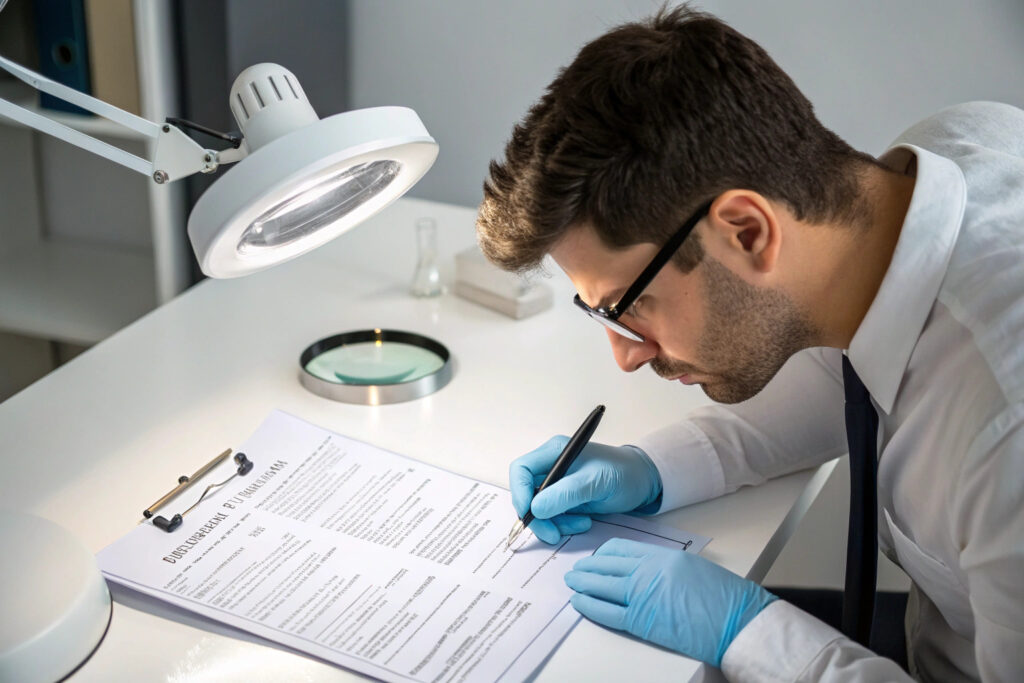
The sample description is the legal link between the test result and your product. If the description is vague, the factory can later claim that the tested sample was not from your production lot. "That failed sample was a development swatch, not the bulk fabric." "That was a different supplier's fabric, not the one we used for your order." These defenses work if the sample description does not tightly specify the origin.
I require that every fabric test report include a sample description that matches the purchase order, the style number, the fabric lot number, and the date of sampling. I also require a photograph of the sample, with the sample label visible, to be attached to the report. This photograph is the bridge between the physical fabric and the paper result. The sample identification standards in textile testing are clear. A properly identified sample is the foundation of a valid test.
How Can You Verify a Lab's ISO 17025 Accreditation Online?
The International Laboratory Accreditation Cooperation maintains a global network of accreditation bodies. Each accreditation body maintains an online directory of accredited laboratories. Go to the website of the accreditation body whose logo appears on the report. Search for the lab by name or by accreditation certificate number. Check that the accreditation scope includes "textiles" and the specific test method reported.
If the lab does not appear in the directory, or if its accreditation has expired or been suspended, the report is not a valid ISO 17025 report. I once checked a lab that a buyer's agent had used. The lab's accreditation had been suspended six months earlier for data integrity violations. The buyer's agent had not checked. The entire shipment's quality approval was based on a report from a disgraced lab. The ISO 17025 accreditation verification process is a public, free resource. Use it on every lab report you receive.
How Should You Formally Request a Retest in Writing?
The retest request is a formal business document. It is not a phone call. It is not a WeChat voice message. It is a written email or letter that creates a record. The tone must be professional, factual, and firm. Do not accuse the factory of fraud. Do not express anger. State the facts, reference the contract, and specify the required action. An emotional email gives the factory an opportunity to deflect the issue into a personal conflict. A factual, contract-referencing email keeps the issue on a legal and procedural track where you have the advantage.
The request email should have a clear subject line: "Formal Request for Confirmatory Fabric Retest – PO #XXXX." The body should open with a brief statement of the issue: "We have reviewed the lab report dated [Date] from [Lab Name] for fabric lot #XXXX. We have identified several anomalies that prevent us from accepting this report as a valid basis for quality acceptance." List the anomalies in bullet points. Reference the specific clauses in your purchase order or manufacturing agreement that govern quality control and testing. State your demand: "We therefore exercise our right under Clause 7.2 of our Manufacturing Agreement to request an independent confirmatory retest." Specify the retest lab: "The retest will be conducted by [Accredited Lab Name], ISO 17025 accreditation number [Number]." Specify the sampling procedure: "The retest sample will be drawn from the same bulk fabric lot currently in your possession. The sampling will be witnessed by a third-party inspector from [Inspection Company Name] on [Proposed Date]. Alternatively, the sampling may be witnessed by us via live video call." Specify the cost arrangement: "As the initial report is disputed on documented grounds, we propose that the costs of the retest and the inspection be borne by the party whose position is contradicted by the retest result." Close with a deadline: "Please confirm your agreement to this retest procedure by [Date]. Your cooperation is appreciated and will facilitate a swift resolution of this matter." This email is a document that can be shown to a mediator, an arbitrator, or a trade assurance platform. It demonstrates that you followed a fair, transparent process.
The written request invokes your contractual rights and establishes the procedural framework. But the most critical element in that framework is the sampling witness. A retest conducted on a sample provided by the factory without independent witness is just a second data point from an untrusted source.
Why Must the Retest Sampling Be Witnessed by an Independent Party?
A factory that provided a dubious first report may also provide a manipulated sample for the retest. They could select a piece of fabric from a compliant lot, not the actual production lot. They could wash the fabric to remove formaldehyde before sending it to the lab. An unwitnessed sample chain-of-custody is a broken chain. The retest result is just as suspicious as the first result.
I recommend using a third-party inspection company, such as SGS, Bureau Veritas, or Intertek, to witness the sampling. The inspector goes to the factory, identifies the bulk fabric lot using the purchase order and lot number, randomly selects the sample, seals it in a tamper-evident bag, and ships it directly to the retest lab. The inspector documents the process with photographs and a sampling report. This chain of custody is unbroken and legally defensible. If the cost of a physical inspector is prohibitive, a live video call with screen recording is a practical alternative. The factory walks the camera through the warehouse, shows the bulk fabric roll with the lot number label, cuts the sample on camera, places it in a sealed bag, and hands it to the courier on camera. The video creates a record of the sampling. The sampling witness protocol is a standard service offered by all major inspection agencies.
What Is the Correct Lab for a Confirmatory Fabric Retest?
The retest lab must be ISO 17025 accredited for the specific test methods required. It must not be the same lab that produced the disputed report. It should ideally be a major, internationally recognized laboratory with a reputation that neither party can challenge. I recommend SGS, Bureau Veritas, Intertek, or TÜV Rheinland. These labs have offices in major textile manufacturing regions, including China, and their reports are accepted globally.
You can also use a laboratory in your own country if you are willing to pay for the courier cost and the time delay. A US-based lab testing a sample sent from China adds a week to the timeline but provides complete independence. The accredited laboratory directory for textile testing provides a searchable database of qualified labs.
What Should You Do If the Retest Confirms a Material Failure?
The retest has confirmed that the fabric fails the agreed specification. This is a painful moment, but it is a moment of clarity. You now have a valid, defensible lab report from a credible laboratory. You have a documented chain of custody. You have the contractual quality standard. The factory cannot argue with the data. The conversation shifts from "is the fabric bad" to "what are we going to do about it." Your preparation for this moment determines whether the resolution is fast and fair or slow and contentious.
Your purchase order or manufacturing agreement should have a clause that specifies the remedy for a confirmed material failure. The standard remedy is that the factory replaces the fabric at its own cost and covers any resulting production delays, either by upgrading the shipping method to air freight or by absorbing the delay penalty. You invoke this clause immediately upon receiving the confirmatory retest. You do not negotiate. You state: "Per our agreement, the confirmed fabric failure triggers the material replacement clause. Please confirm that you are sourcing compliant fabric and provide a revised production timeline that absorbs the delay within the original delivery window, using air freight if necessary." If the agreement does not have this clause, you are in a negotiation. Your leverage is the valid lab report and the threat of a formal dispute through your payment platform or trade assurance program. A factory that values the relationship will negotiate a fair remedy. A factory that refuses a fair remedy on a confirmed failure is a factory you should stop doing business with after this order is resolved.
The remedy negotiation is the immediate commercial resolution. But a confirmed fabric failure is also a systemic problem that requires a root cause investigation. You need to understand why the fabric failed so the problem does not recur on the replacement fabric or on your next order.
How Do You Ensure the Replacement Fabric Is Actually Compliant?
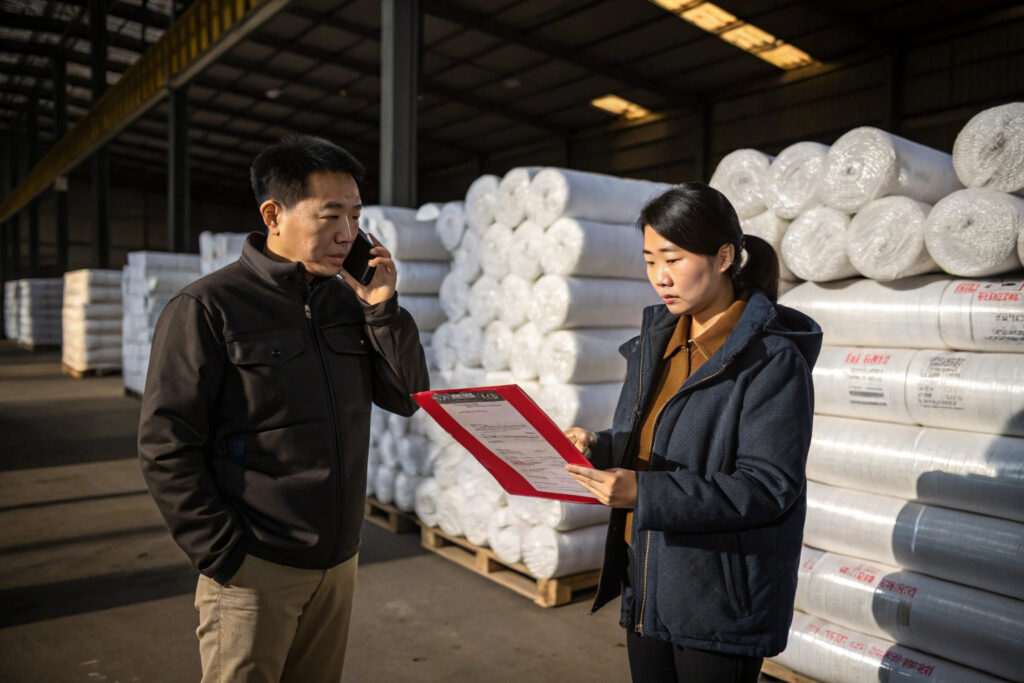
The replacement fabric must be tested before it is cut. Do not accept a verbal assurance that the new fabric is "from a better supplier" or "tested internally." The replacement fabric must be sampled and tested by the same independent lab that conducted the confirmatory retest, using the same sampling witness protocol. The production does not begin until the replacement fabric passes the test. This is the "test before cut" rule. I enforce this rule on my own factory when a fabric failure occurs. The delay caused by waiting for the test result is a small cost compared to the cost of manufacturing an entire order from non-compliant fabric a second time. The material replacement protocol is part of the corrective action process that a responsible factory implements after a quality failure.
What Are Your Options If the Factory Refuses a Valid Retest?
A factory that refuses a valid, independently witnessed retest is effectively admitting that it knows its fabric will fail. This is a breach of the manufacturing agreement and, in most cases, a breach of the terms of service of the payment platform or trade assurance program you used. Your options depend on the payment method. If you paid via Alibaba Trade Assurance, file a dispute immediately and upload the initial suspicious report, your retest request email, and the factory's refusal. Alibaba's dispute resolution team will review the documentation and rule. If you paid via wire transfer against a purchase order, your recourse is a formal demand letter from a law firm practicing in the jurisdiction specified in your agreement. This is a more expensive and slower process, but a refusal to cooperate on quality verification is a strong legal position. The trade assurance dispute process is designed to resolve exactly this type of quality disagreement with an independent evidentiary standard. Use it if it is available to you.
Conclusion
A suspicious lab report is not the end of the road. It is the beginning of a structured process that either validates the report through an independent retest or exposes it as an error or a fraud. Your tools are the red-flag checklist for the report itself, the formal written retest demand that references your contract, the independently witnessed sampling procedure that secures the chain of custody, and the selection of a globally recognized, ISO 17025 accredited laboratory for the confirmatory test. These tools transform a subjective argument about quality into an objective, evidence-based resolution process.
I have been on both sides of this process. I have submitted fabric that was questioned by a buyer, and I have agreed to a retest at their lab. I have also initiated retests on reports that buyers sent me that looked suspicious. In every case, the process led to a clear, defensible result that allowed the order to move forward with confidence or be corrected before it was too late. The process is the protection. A factory that respects the process respects the partnership. A factory that fights the process is telling you something you need to hear.
If you are looking at a fabric test report right now that does not look right, and you need a partner who understands the testing process from the inside and can help you navigate a retest, let us provide our perspective. Our Business Director, Elaine, can review the report with you, identify the red flags, and help you structure a retest request that is procedurally correct and commercially fair. Email her at elaine@fumaoclothing.com with the lab report attached. We will help you get to the truth of your fabric, whatever that truth turns out to be.