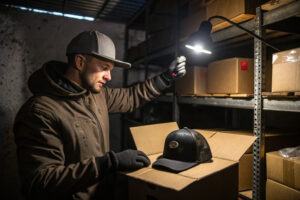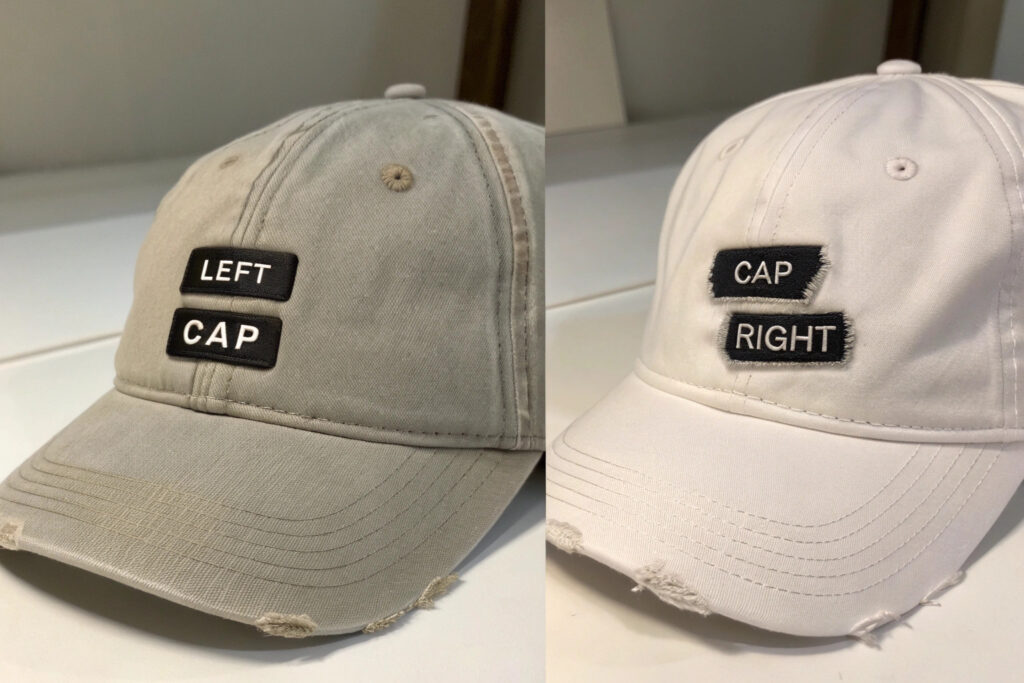
You finalize your sports cap design. Everything is dialed in. The moisture-wicking fabric, the reflective brim binding, the breathable mesh back panels. You approve the sample and place a bulk order. Six months later, a customer posts a photo in an online review. They are holding your cap, and the inside label, the one with your brand logo and care instructions, is a smeared, illegible blur. The print has cracked and flaked off after a summer of sweaty workouts and machine washes. The cap itself is still in great shape, but the label has failed. The brand identity on the product is destroyed. You check your own sample cap, which you have never washed, and the label looks perfect. You have just discovered that your label choice did not survive real-world use.
The label on a sports cap is the hardest-working component you never think about. It lives in a dark, hot, salty, high-friction environment against the wearer's forehead. It is stretched every time the cap is put on and taken off. It is soaked in sweat, sunscreen, and hair products. It is washed and dried repeatedly. A label that looks great on a new cap in a polybag can disintegrate after one season of active use. I run Global-Caps, and I have seen label failures destroy the perceived quality of an otherwise excellent cap. In this article, I will show you how to systematically compare woven and printed labels for sports cap applications, so you can choose the one that will outlast the cap itself.
What Are the Fundamental Construction Differences Between Woven and Printed Labels?
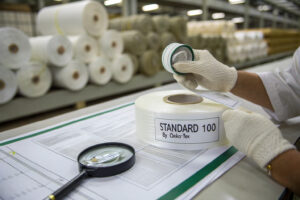
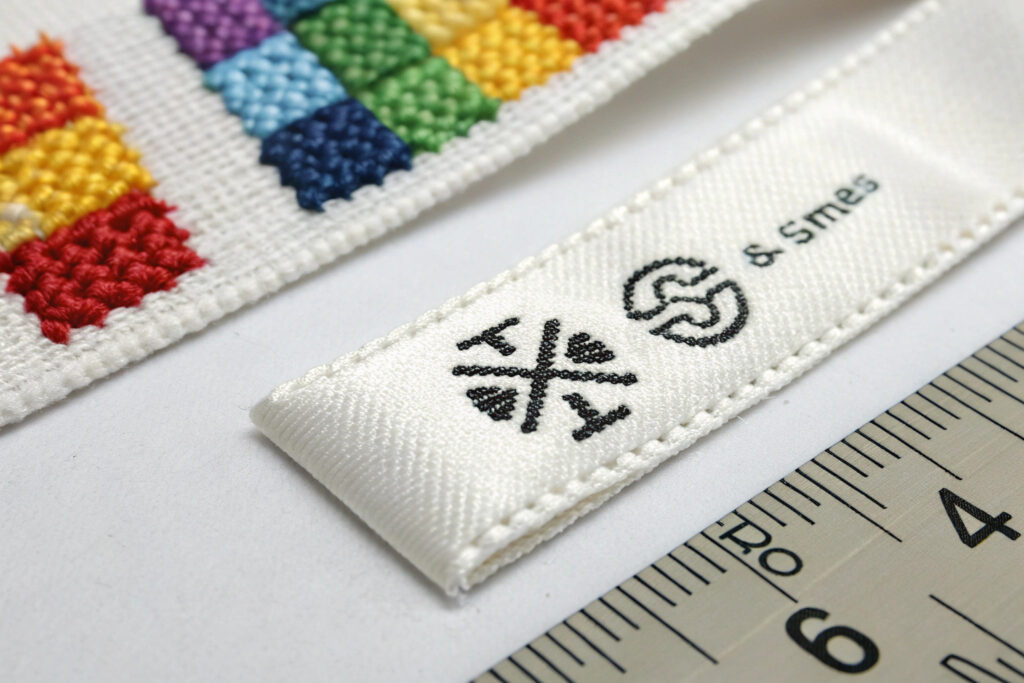
Woven and printed labels are fundamentally different material systems. A woven label is a textile. The design, the logo, the text, the background color, is created by interlacing different colored yarns. The most common yarn is polyester, sometimes blended with cotton for a softer hand feel. The design is structural. It exists within the fabric, not on top of it. A high-density woven label uses very fine yarns, often 50 denier or finer, to achieve sharp detail. The surface of a woven label has a subtle texture. The text and graphics are slightly raised because they are formed by the floating warp threads of the design.
A printed label is a surface coating. The design is printed onto a pre-existing label substrate, typically woven-edge polyester satin ribbon, using a printing method such as screen printing, thermal transfer, or flexographic printing. The ink sits on top of the substrate. The bond between the ink and the substrate is a chemical adhesion or a heat-fused mechanical bond. The quality of a printed label depends on the substrate smoothness, the ink chemistry, and the curing process. A well-printed label can be extremely sharp and detailed, sharper than all but the finest woven labels. But the design is a layer. It can be worn away, dissolved, or detached from the substrate. A woven label's design cannot be removed without physically destroying the label itself.
This fundamental difference dictates the durability profile. A woven label degrades by mechanical abrasion of the fibers. The surface may fuzz slightly over time, but the design remains legible because the colored yarns go all the way through the structure. A printed label degrades by ink loss. The ink cracks, flakes, peels, or dissolves. Once the ink is gone, the underlying white or plain substrate is revealed, and the design is illegible. The choice between them for a sports cap is a choice between designing for abrasion resistance and designing for ink adhesion under chemical and thermal stress.
How Does Thread Density Affect Woven Label Durability?
Woven label quality is largely determined by thread density, measured in picks per inch or threads per centimeter. A high-density woven label has more yarns packed into the same area. This creates a tighter, more durable surface. The individual yarns are less exposed to snagging and abrasion. The design edges are sharper. Low-density woven labels use fewer, coarser yarns. They are cheaper and faster to weave, but the surface is looser. Individual yarns can snag on Velcro closures or zipper teeth. The design looks coarse and blocky.
For a sports cap, I specify a minimum of 50 picks per inch for the warp and a high thread count for the weft. This produces a label that is smooth, dense, and resistant to the friction of repeated wear. The label can be bent, folded, and rubbed against the forehead without developing a frayed, hairy surface. When comparing woven label samples from different suppliers, a simple friction test tells you a lot. Rub the label vigorously against a piece of denim or a rough towel for 30 seconds. A high-density label will show minimal surface change. A low-density label will begin to fuzz and lose definition.
What Substrate and Ink Combinations Determine Printed Label Life?
The substrate for a printed label on a sports cap is almost always a synthetic, either polyester satin, nylon taffeta, or Tyvek for tear-resistant applications. The substrate must be dimensionally stable, resistant to water, and able to withstand the heat of the curing process. The ink system is the critical variable. Screen printing with a plastisol ink creates a thick, rubbery layer that sits on top of the substrate. Plastisol is durable but can crack with repeated flexing. Thermal transfer printing uses a heat-activated adhesive on the back of a pre-printed film. The print is sharp, but the bond can fail under high heat and moisture, leading to peeling.
The most durable printed label for sports applications uses a UV-cured inkjet or flexographic ink on a chemically treated polyester substrate. The substrate is primed with a coating that creates a strong chemical bond with the ink. The UV curing process cross-links the ink polymers instantly, creating a hard, abrasion-resistant surface. This system is more expensive than basic screen printing, but it withstands sweat, washing, and flexing far better. When I evaluate a printed label sample, I perform a fingernail scratch test. I drag my thumbnail across the printed area with firm pressure. A poorly adhered ink will scrape off immediately. A well-cured ink on a primed substrate will resist the scratch without any ink transfer.
How Do Sweat, Sunscreen, and Washing Chemicals Attack Label Integrity?
A sports cap label is not just worn. It is chemically assaulted. Human sweat is a complex solution of water, salt, urea, lactic acid, and trace minerals. It is mildly acidic, typically with a pH between 4.5 and 7.0. Over many hours of wear, this acidic, salty solution soaks into the label. Sunscreen, hair gel, and skincare products add oils, alcohols, and UV-absorbing chemicals to the mix. Then, the cap is washed. Laundry detergent is alkaline, with a pH often above 10. It contains surfactants, enzymes, and bleaching agents designed to break down organic matter.
This chemical cycling, acidic sweat to alkaline detergent, repeated dozens of times, is an extreme durability test for any material. Printed labels are particularly vulnerable to chemical attack because the ink-polymer system is exposed. The surfactants in detergent are designed to break down oils and lift them from fabric. They can also break down the binder resins in some inks, causing the ink to soften and detach from the substrate. Sunscreen often contains benzophenones and other organic compounds that can act as solvents on certain ink systems, causing the print to become tacky and smear. Woven labels, made of inert polyester yarns, are chemically much more resistant. The yarn itself is not dissolved by sweat, detergent, or sunscreen. The dye inside the yarn is colorfast and protected by the polymer.
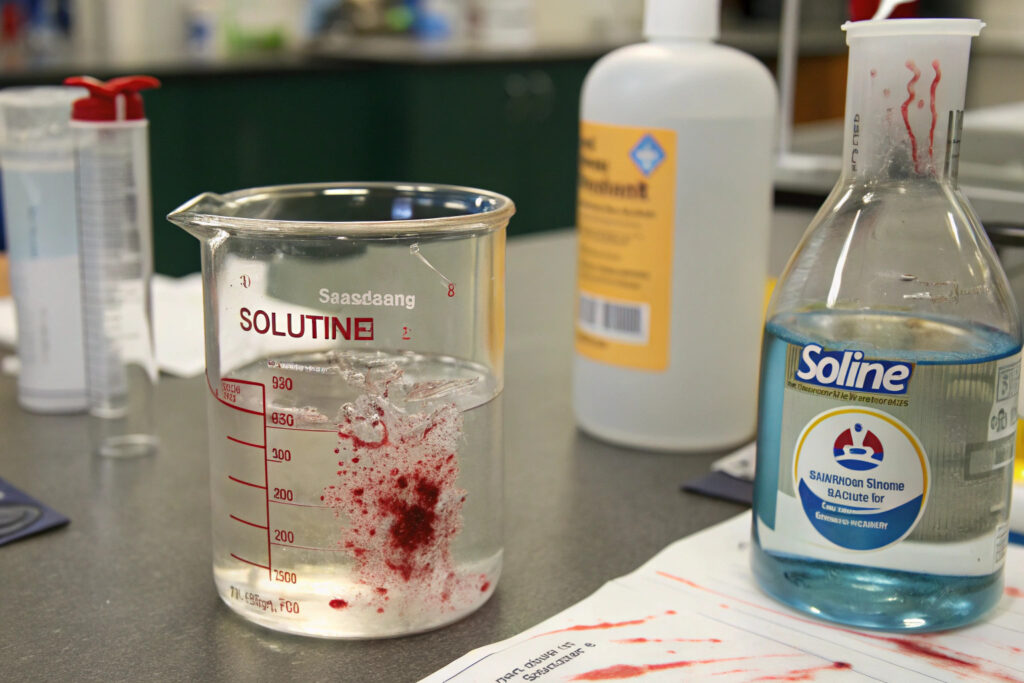
The most aggressive chemical test I perform on labels is a 24-hour soak in a synthetic sweat solution, followed by a standard machine wash and dry cycle. Synthetic sweat, formulated per ISO 105-E04, is a precise mixture of sodium chloride, lactic acid, and other components. After the soak and wash, I examine the printed label for ink bleeding, edge feathering, and color change. I examine the woven label for any dye bleeding or staining of the background yarn. A sports-grade label must pass this chemical assault with no visible change.
Why Is Perspiration Colorfastness a Critical Test for Labels?
Perspiration colorfastness is a specific, standardized test. It measures whether the dyes or inks on a textile will bleed or stain when exposed to simulated sweat. The test uses a multifiber fabric strip pressed against the label under a standardized pressure and temperature for a specified time. After the test, the multifiber strip is examined for color transfer. The degree of staining is rated on a grey scale from 1, severe staining, to 5, no staining.
For a sports cap label, I require a perspiration colorfastness rating of 4-5 for both acidic and alkaline solutions. This is a high bar. Many cheap printed labels fail this test, especially dark colors printed on white substrates. The sweat causes the dark ink to bleed, staining the white background and turning the label into an illegible smudge. A woven label with solution-dyed polyester yarns will inherently pass this test because the color is inside the yarn, not sitting on the surface. When I present test reports to clients, the perspiration colorfastness number is often the single most convincing data point in favor of woven.
How Does Chlorinated Water and Pool Chemical Exposure Affect Labels?
If the sports cap is intended for swimming, poolside wear, or triathlon use, chlorinated water exposure is another chemical stressor. Chlorine is a powerful oxidizing agent. It attacks many organic dyes and polymer systems. A printed label exposed to chlorinated water can experience accelerated ink fading and embrittlement. The chlorine effectively bleaches the ink and makes the binder resin brittle.
The test for this is a chlorine resistance test, often based on ISO 105-E03. The label is immersed in a dilute sodium hypochlorite solution at a controlled concentration, typically 20 ppm available chlorine, for a specified time. After the test, the label is evaluated for color change. A woven label made from dope-dyed polyester is highly resistant to chlorine because the pigment is encapsulated within the polymer fiber. A printed label may or may not be resistant, depending on the ink chemistry. If your cap is marketed for aquatic sports, you must request chlorine resistance data from your label supplier.
What Mechanical Stress Tests Simulate Real-World Label Wear?
Chemical resistance is half the story. The other half is mechanical durability. The label on a cap is constantly flexed, rubbed, and stretched. It is sewn onto a fabric that expands and contracts with the wearer's head. The label itself is bent and creased when the cap is thrown into a gym bag. The abrasion from the wearer's hair, particularly short, coarse hair, acts like fine-grit sandpaper on the label surface over hundreds of hours of wear.
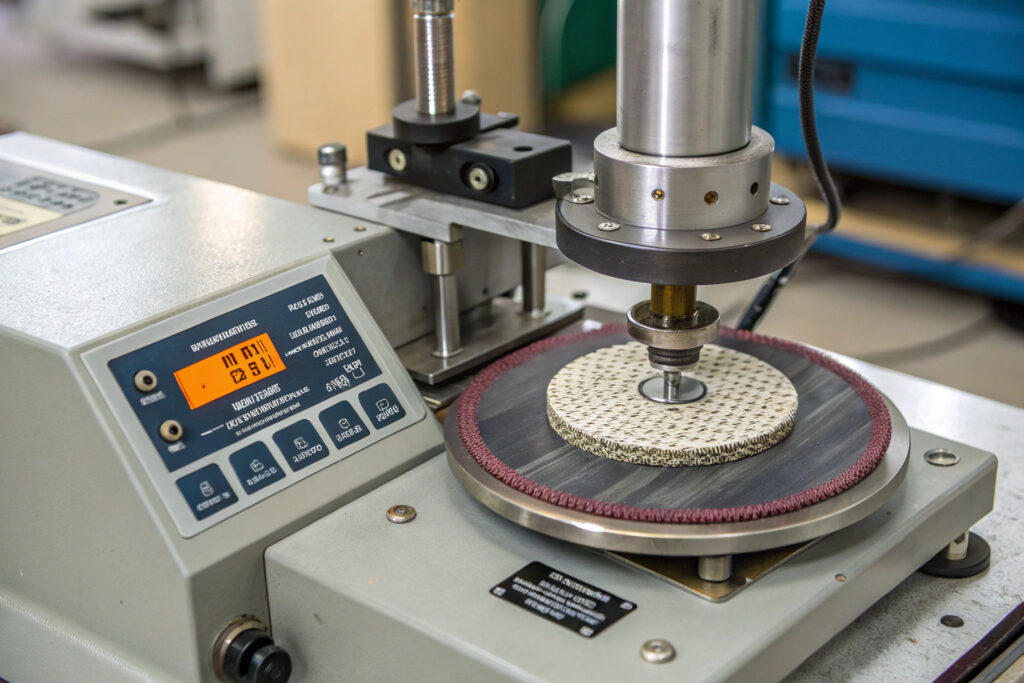
The standard test for surface abrasion is the Martindale test, ASTM D4966. A circular label sample is mounted on the machine and rubbed against a standard wool abrasive fabric in a complex geometric pattern. The test runs for a specified number of cycles, often 5,000 to 10,000 for a high-durability application. The label is evaluated at intervals for surface fuzzing, pilling, ink loss, and hole formation. A woven label will gradually fuzz as individual fibers are abraded, but the design will remain legible for thousands of cycles. A printed label may show rapid ink loss at the high points of the texture, exposing the substrate.
Another critical test is the flex test. A label sewn into a cap is repeatedly flexed as the cap is worn, removed, and stored. A simple lab simulation is the Gelbo flex test, ASTM F392, adapted for labels. The label is attached to a test fixture that repeatedly twists and crumples it for a specified number of cycles. This test is particularly good at revealing the cracking tendency of printed labels. A printed ink layer that is too thick or too rigid will develop a network of fine cracks after flexing. These cracks expose the substrate and create a pathway for sweat and detergent to undermine the ink-substrate bond, accelerating peeling.
How Can You Test Label Attachment and Seam Durability?
The label itself may be durable, but if the stitching that attaches it to the cap fails, the label will curl, fold, or detach. The attachment method matters. A woven label is typically sewn on all four sides with a tight, dense stitch. A printed label, if it is a thin substrate, might be sewn only on two sides to save cost, leaving the unsewn edges to curl after washing.
The test for attachment durability is a seam strength test, ASTM D1683. The label is gripped in a tensile tester and pulled away from the cap fabric. The test measures the force required to break the stitching or tear the label. A well-attached label should withstand a significant pull force without the seams breaking or the label tearing. In addition to the lab test, a simple manual test is revealing. Grip the label between your thumb and forefinger and pull it firmly away from the cap. The label should not lift, the stitches should not pop, and the label material should not tear. This is a quick field test that any QC inspector can perform.
What Is the "Wash-Down" Visual Comparison After 20 Cycles?
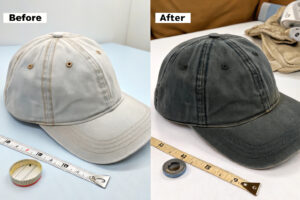
The ultimate integrated test is a 20-cycle wash-and-dry test, followed by a visual comparison against a retained original sample. 20 wash cycles simulate approximately one to two seasons of regular use for an active consumer. The cap with the attached label is washed according to the care instructions, dried, and inspected after cycles 1, 5, 10, and 20.
The comparison criteria include label legibility, the text and logo must be clear and readable; color integrity, no significant fading or bleeding; surface integrity, no cracking, peeling, or excessive fuzzing; edge condition, no curling, fraying, or thread breakage; and attachment integrity, no lifted corners or broken stitches. I photograph the label at each interval under standard lighting. The photographic record is more powerful than a written description. A client can see, visually, how a woven label at cycle 20 is still crisp and professional, while a printed label at cycle 20 may look tired and worn. This visual evidence makes the durability comparison concrete and actionable.
How Do Cost, Lead Time, and Minimum Order Quantities Factor Into the Label Decision?
Durability is not the only factor. Cost, development lead time, and minimum order quantities play decisive roles in the label choice, especially for smaller brands or promotional orders. A woven label requires the creation of a weaving loom setup or a jacquard loom program. This has a one-time setup cost, often called a loom charge or a plate charge. The MOQ for woven labels is typically higher, often 2,000 to 5,000 pieces per design, because setting up the loom for a short run is not economically efficient. The production lead time is longer, typically two to four weeks after artwork approval.
A printed label has a lower setup cost. For screen printing, there is a screen charge per color. For thermal transfer or digital printing, there may be no setup charge at all. The MOQ for printed labels can be very low, sometimes as low as 100 pieces. The production lead time is shorter, often one to two weeks. This makes printed labels attractive for start-up brands, limited-edition runs, or promotional caps where the budget is tight and the anticipated wear life is short. However, the lower upfront cost must be weighed against the potential brand damage of a label that fails prematurely. A promotional cap given away at a trade show might only be worn a few times, so a printed label is perfectly adequate. A performance sports cap sold at a premium price and expected to endure marathon training must have a woven label or a very high-end printed label with proven durability.
The cost comparison should be done on a total-cost-of-ownership basis. Factor in the setup charges amortized over the order quantity, the unit price of the label, the sewing cost, which may differ slightly between label types, and the risk cost. The risk cost is the potential loss of brand reputation and customer goodwill if the label fails. This is a qualitative factor, but it is real. I guide my clients through this calculation openly. If their product is a premium, long-lasting cap, I strongly advise woven. If their product is a one-time promotional item with a short expected life, I present the printed option with full transparency about its limitations.

How Does Label Complexity Affect the Woven vs. Printed Choice?
The design complexity of the label artwork can push the decision in one direction. Woven labels achieve detail by using finer yarns and higher loom densities. Extremely small text, below 1.5mm in height, or photographic gradients are difficult to render cleanly in a woven label. The woven medium is inherently pixilated by the thread structure. Printed labels, on the other hand, can reproduce very fine detail, small text, and smooth gradients with high fidelity.
If the brand logo contains a small registered trademark symbol, an intricate crest, or a gradient fade, a printed label may be the only way to achieve the desired visual quality on a small label format. In this case, the durability challenge shifts to selecting the most durable print system available, a UV-cured ink on a chemically primed substrate, and then subjecting it to the rigorous test protocol described earlier. The choice is not always "woven is better." It is "which technology best serves the design, and how do we maximize the durability of that choice?"
What Are the Lead Time Implications for Urgent Orders?
Urgent orders can force the label decision. If a client needs 5,000 sports caps in three weeks, a woven label with a four-week lead time is mathematically impossible. The decision is made by the calendar. In these cases, I work with our label suppliers to identify a fast-turnaround printed label option that still offers acceptable durability. Digital thermal transfer printing, for example, can produce labels in a few days with no setup charge, and the print quality is very good.
The key is to not let the urgent timeline create a permanent specification downgrade. I treat the printed label on the urgent order as a temporary solution. I document the label spec and advise the client that for the reorder, with a proper lead time, we should transition to a woven label or a more durable printed system. This approach manages the immediate deadline without compromising the long-term quality standard of the brand.
Conclusion
Comparing the durability of woven and printed labels for sports caps is a multi-dimensional analysis. Woven labels offer superior mechanical and chemical durability because the design is structural, colored yarns interlaced through the label, not a surface coating. They resist sweat, washing, abrasion, and flexing with minimal degradation. Their primary limitation is a higher cost, a higher MOQ, and a grainier resolution for very fine details. Printed labels offer faster turnaround, lower cost, lower MOQs, and superior detail resolution. Their durability is entirely dependent on the substrate and ink system, and they are vulnerable to cracking, peeling, and chemical bleeding under the harsh conditions of active sports use.
Your decision should be guided by a performance specification, not just a visual sample approval. Demand perspiration colorfastness test reports, Martindale abrasion test results, and 20-cycle wash-down photographic comparisons. Match the label technology to the intended use case and the brand's quality promise. A premium performance cap demands a woven label. A short-lived promotional cap can use a printed label with the right ink system. The worst outcome is a beautiful label on a new cap that becomes an illegible smudge after one summer of use.
If you are developing sports caps and want a factory that treats label durability as a core quality parameter, not an afterthought, I invite you to contact Global-Caps. We have established test protocols for both woven and printed labels, and we can provide you with comparative durability data on your specific artwork. Our team will guide you to the right choice for your market position and your end user's expectations. Reach out to our Business Director, Elaine, at elaine@fumaoclothing.com with your label artwork and your performance requirements. Let's ensure your brand mark stays sharp and legible for the life of the cap, and beyond.