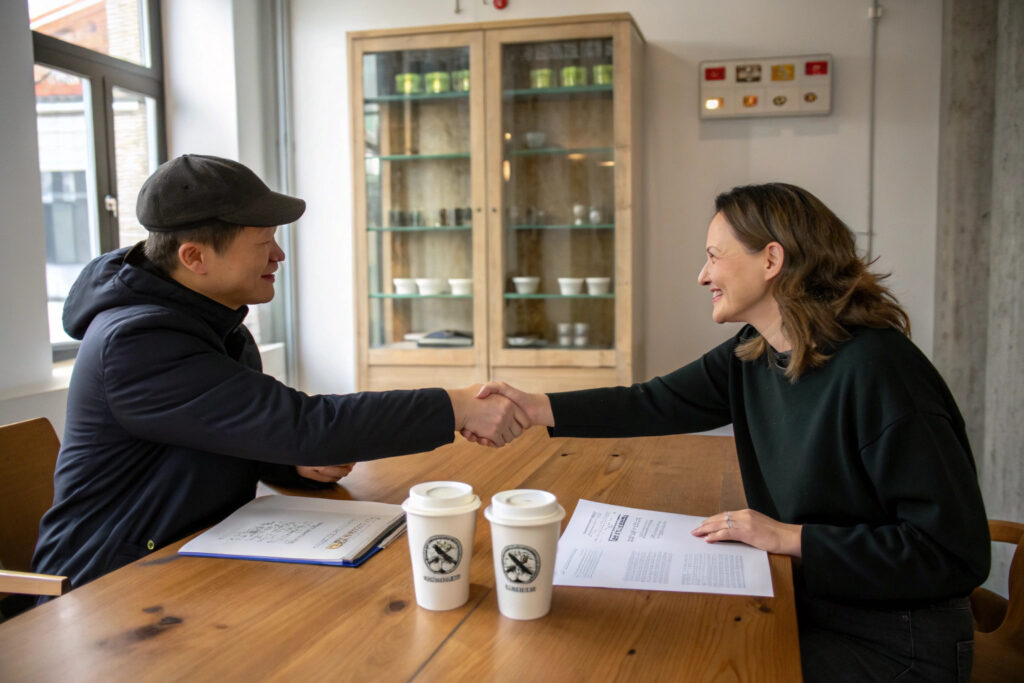
I received a WhatsApp message from a former client last spring. He had left our factory two years earlier to work with a cheaper supplier. The message was a screenshot of his exact cap design being sold on a streetwear website under a different brand name. The cheaper factory had taken his custom pattern, his unique embroidered patch design, and his color palette, and sold it to another client. He had no legal recourse. He had no contract. He had only a low price and a hard lesson. He was writing to ask if we would take him back.
You build a long-term partnership that protects your designs by selecting a factory whose business model depends on your repeat orders, not on selling your designs to others. This factory will sign a detailed Non-Disclosure and Non-Circumvention Agreement that names your specific designs, patterns, and customer list as protected property. It will archive your patterns and samples in a locked, client-segregated storage system. It will not show your samples to other buyers. It will not post your designs on social media without written permission. And it will invoice you with a clear paper trail that establishes your legal ownership of the design files. This factory is not the cheapest option. The cheapest factory monetizes your designs because that is part of its margin. The factory you partner with monetizes your loyalty because that is its long-term strategy.
I have built Global-Caps on the partnership model. My clients' designs are their intellectual property. I am a custodian of their patterns, not an owner. I want to share the specific legal, operational, and relational practices that create a design-safe manufacturing partnership. This is the framework that lets you sleep at night while your designs are on a production floor 6,000 miles away.
What Legal Agreements Should You Put in Place Before Sharing Your Designs?
A handshake is not a contract. A WeChat message that says "we will never share your designs" is not a contract. An email that says "trust me" is not a contract. A legally enforceable contract is a written document signed by both parties that defines the protected property, the prohibited actions, the jurisdiction for dispute resolution, and the financial penalties for breach. This document must exist before you send your first tech pack. The moment you send a design file to a factory without a signed agreement, you have published your design into a legal gray zone where your ownership rights are difficult to prove and nearly impossible to enforce.
I recommend three documents as a minimum legal framework. The first is a Non-Disclosure Agreement that covers all design information, technical specifications, customer lists, and pricing data shared between the parties. The NDA must define "Confidential Information" broadly and explicitly include "hat patterns, embroidery digitizing files, fabric specifications, trim designs, and customer order data." The second is a Non-Circumvention Agreement that prevents the factory from directly contacting your customers or selling products bearing your designs to any third party. The third is a Manufacturing Agreement that includes a clear intellectual property ownership clause. The clause states that all designs, patterns, molds, dies, and digital files created for the buyer's order remain the sole intellectual property of the buyer. The factory is granted a limited, non-transferable license to use these materials solely for the purpose of fulfilling the buyer's purchase orders. The factory may not use, reproduce, or modify these materials for any other client or purpose. These three documents, signed, dated, and executed under the laws of a jurisdiction with strong IP enforcement, such as Hong Kong or Singapore for international contracts, create a legal foundation that is enforceable in both Chinese and international courts.
The legal framework is the shield. But a shield is only useful if it covers the right assets. The most common mistake in design protection is failing to define what exactly is being protected. A vague NDA that covers "business information" does not protect a specific embroidery pattern. The agreement must be granular.
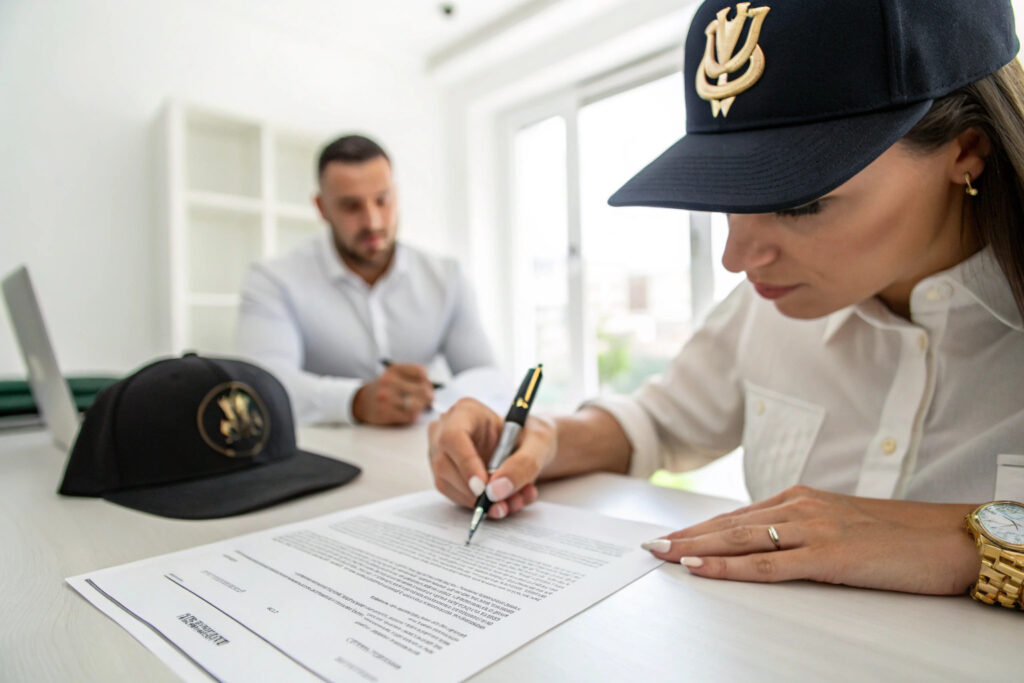
How Do You Define "Confidential Information" to Include Hat Patterns and Embroidery Files?
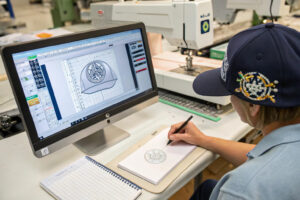
A strong NDA includes an appendix or an exhibit that lists the specific categories of protected information. I help my clients draft an "Exhibit A" that includes: original hat pattern blocks and graded size sets, embroidery digitizing files in .DST or .EMB format, custom fabric weave or dye specifications, unique trim designs including custom buttons, eyelets, and closures, customer order data including quantities, pricing, and delivery schedules, and marketing plans and launch dates for branded headwear collections.
This list transforms a generic legal document into a design-specific protection tool. If a dispute arises and the buyer must prove that the factory misappropriated protected information, the Exhibit A is the documented evidence of what was shared and what was covered. The confidential information definition in a well-drafted NDA is the single most important clause for design protection.
What Jurisdiction Should You Choose for Dispute Resolution?
Chinese courts have improved their IP enforcement significantly in recent years, but the process can be slow and unfamiliar for foreign parties. I recommend Hong Kong or Singapore as the arbitration jurisdiction for international manufacturing agreements. Both are common law jurisdictions with sophisticated commercial courts, strong IP precedent, and arbitration centers that are respected globally.
The clause should read: "Any dispute arising out of or in connection with this Agreement shall be referred to and finally resolved by arbitration administered by the Hong Kong International Arbitration Centre under the HKIAC Administered Arbitration Rules in force when the Notice of Arbitration is submitted." This clause provides a neutral, efficient, and enforceable resolution mechanism. Chinese court judgments from Hong Kong are enforceable in mainland China under the Arrangement on Reciprocal Enforcement of Judgments. The international arbitration framework provides a practical enforcement path that a US or EU court judgment alone may lack.
How Should a Factory Physically Segregate and Protect Your Designs?
A signed legal agreement is paper. The physical security of your designs on the factory floor is the operational proof that the agreement is being honored. A factory that treats your samples and patterns as shared resources, accessible to any salesperson or visiting buyer, is a factory that has not internalized the concept of design protection. The physical handling of your intellectual property reveals the factory's true culture.
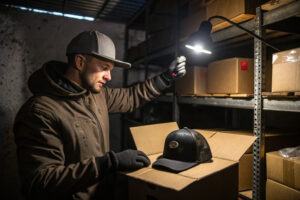
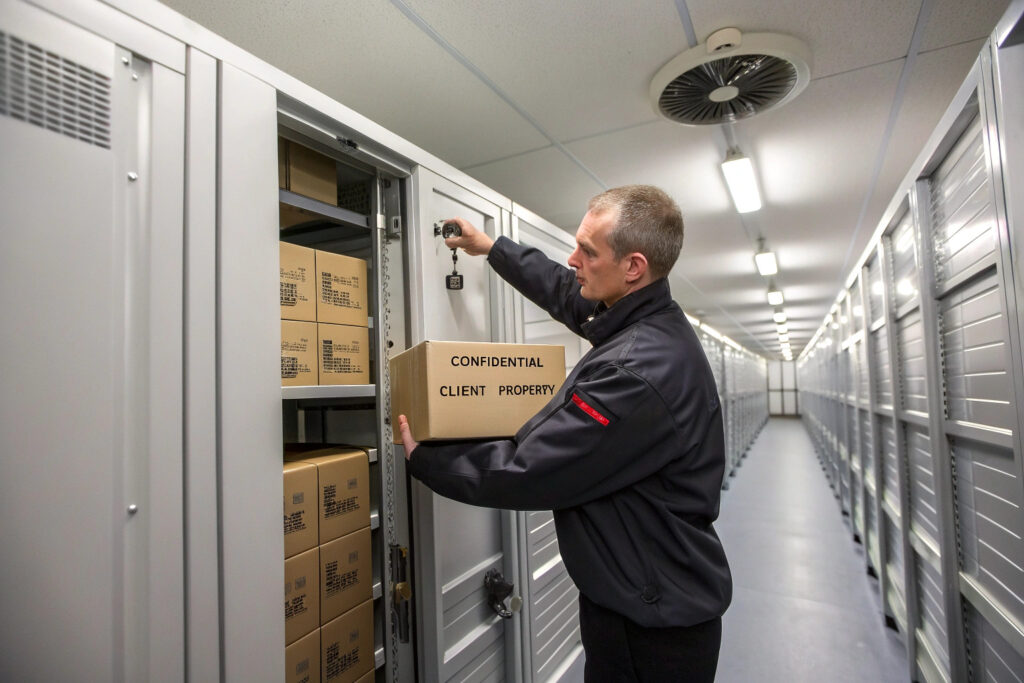
I maintain a locked, access-controlled sample and pattern archive. Each client's physical samples are stored in a dedicated box or cabinet labeled with the client's brand name and a "Confidential" designation. Only the assigned project manager and the archive supervisor have a key. The embroidery digitizing files are stored on a password-protected server with access restricted by user login. Each client's files are in a separate folder that is not accessible to other project managers. The paper patterns for custom crown shapes are stored in a hanging file system in a locked pattern room. When a production run is complete, the paper patterns are returned to the archive immediately, not left on the cutting table. The cutting table is a public space where any visiting buyer can see the patterns. I also enforce a clean-desk policy for client designs. At the end of each day, all physical samples, tech packs, and design sketches are returned to the archive. No client design material stays on a desk overnight. This physical discipline prevents casual information leakage through a cleaning crew, a visiting supplier, or a curious employee.
The physical archive protects the master samples. But the production floor is where multiple clients' products are being manufactured simultaneously. The visual exposure of your product during production is a risk that must be managed through production scheduling and floor layout.
How Should a Factory Handle Visitor Access to the Production Floor?
A factory tour is a standard part of a buyer visit. But a buyer from one brand should not be able to see another brand's products in production. I schedule production runs for different clients so that the production floor is "clean" of one client's goods when another client visits. If two clients must be run simultaneously, I use physical screens or curtains to partition the relevant production area.
I also enforce a no-photography policy on the production floor for all visitors, including other clients. Any visitor who needs to photograph their own products for quality documentation must do so in a designated photography area with only their products visible. The factory visitor policy is a simple operational control that prevents a casual photograph from capturing another client's design in the background.
What Should Happen to Unused Samples and Excess Production Units?
A factory that sells "excess inventory" or "sample sale" items is a direct threat to your design protection. The samples produced during your development process and the overrun units from your production are your property, not the factory's. The manufacturing agreement should specify that all samples, except the one retained by the buyer, must be destroyed or returned to the buyer. Excess production units beyond the ordered quantity must be offered to the buyer at cost or destroyed, not sold to a third party.
I document the destruction of samples and excess units with photographs and a signed destruction certificate. This certificate lists the quantity, style number, and a photograph of the items before and after destruction. The certificate is sent to the client with the final shipping documents. This is a zero-ambiguity process. The client knows that their designs have not entered the secondary market. The product destruction protocol is a standard practice in luxury and branded goods manufacturing.
How Can You Verify Your Factory Is Not Selling Your Designs to Others?
Trust is built slowly and verified continuously. You do not need to hire a private investigator, but you do need a systematic monitoring process that would detect a leak early. A factory that knows you are actively monitoring the market is a factory that is far less likely to share your designs. The monitoring program is a deterrent as much as a detection tool. I encourage my clients to monitor the market because it demonstrates that they are vigilant and serious about their IP. A vigilant client is a respected client.
I recommend a four-part monitoring program. First, set a Google Alert for your brand name and your key product descriptions. This captures any online mention of your brand or similar products. Second, conduct a quarterly reverse image search of your best-selling hat designs. Upload a product photo to Google Images or TinEye and see if that image appears on any unauthorized website. Third, periodically search major B2B platforms, including Alibaba, Made-in-China, and Global Sources, for your specific hat style description. A factory that has put your design into their catalog will list it with a similar or identical description. Fourth, visit one or two trade shows per year where your factory exhibits. Walk the aisle and look for your designs on their display shelves. A factory that is selling your designs will show them at a trade show because that is where they find new buyers. If you find your design on an unauthorized platform, you have the signed NDA and manufacturing agreement as the basis for an immediate cease-and-desist letter and a demand for compensation.
The online monitoring catches digital leaks. The trade show visit catches physical leaks. But the most subtle form of design theft is not an exact copy. It is a derivative design that uses your custom pattern or your unique embroidery technique with a different logo. This is harder to spot and harder to prove.
How Can You Embed a Unique, Traceable Element in Your Design?
A unique, non-functional design element can serve as a forensic marker. This could be a specific stitch pattern on the sweatband attachment, a hidden embroidered dot inside the crown, a custom eyelet shape, or a unique thread color combination used on an internal seam. These elements are not visible to the consumer. They are not part of the aesthetic design. They are present only for identification purposes.
If you find a suspicious product on the market and you open the sweatband to find your hidden stitch pattern, you have forensic proof that the product originated from your production line. This evidence is powerful in a legal dispute. I have helped clients embed these traceable elements into their tech packs. The element is documented in the confidential design file. Only the client and I know it exists. The product authentication markers used in the luxury goods industry operate on the same principle. A hidden, unique marker that only the brand owner can verify.
What Is the Value of a Factory That Voluntarily Segregates Its Own Brand?
A factory that also sells its own branded products is a direct competitor. The factory's brand is competing for the same retail shelf space as your brand. The factory has a financial incentive to borrow your successful designs for its own line. I made a strategic decision early in my business to not launch a Global-Caps consumer brand. We are exclusively a B2B manufacturer. We do not sell to consumers. We do not compete with our clients.
When you evaluate a factory, ask if they have their own consumer brand. If they do, ask how they segregate their design team from their client services team. A factory that claims to have a "Chinese wall" between its own brand and its OEM business is asking you to trust a structure that has an inherent conflict of interest. The safer choice is a pure OEM factory with no consumer-facing brand. The OEM manufacturing model aligns the factory's incentives with the client's success. Our only revenue comes from our clients' orders. Our only brand is our reputation as a manufacturer.
How Do You Transition From a Transactional Order to a Design Partnership?
A transactional relationship ends when the order ships. A design partnership continues between orders and deepens over time. The transition from transaction to partnership is not automatic. It is built through a series of trust-building interactions where the factory demonstrates that it values the relationship more than any single order. You know you have a partnership when the factory proactively brings you design ideas, when they alert you to a fabric trend before it becomes widely available, when they hold production capacity for your unconfirmed forecast, and when they tell you about a potential delay before you have to ask.
I initiate this transition with my clients by offering a seasonal design consultation. Twice a year, before the spring and fall buying seasons, I schedule a video call with my key clients. I present fabric developments, new embroidery techniques, and emerging silhouette trends that our design team has observed in the market. I do not charge for this consultation. It is an investment in the partnership. The client leaves the call with new ideas for their collection. Some of those ideas become orders. The conversation itself builds a shared creative vocabulary. I also offer a "first-look" program. When I source a new, innovative fabric or develop a new cap construction technique, I offer it to my existing long-term clients first, before I present it to new buyers. This preferred access is a tangible benefit of the partnership. The client knows that they have a competitive advantage in material and technique because of our relationship. This exclusivity is a powerful retention tool.
The seasonal consultation and first-look access are structural benefits. But the emotional foundation of a partnership is the factory's willingness to absorb a reasonable cost to protect the relationship. A factory that says "yes, we made a mistake, and we will fix it at our cost" has passed the partnership test.

What Does a Proactive Factory Communication Cadence Look Like?
A transactional factory communicates when there is a problem or when an order is ready to ship. A partnership factory communicates on a predictable, scheduled rhythm regardless of whether there is an active order. I send a monthly "Fabric and Trim Availability Update" to my active clients. The update lists current inventory levels of our standard fabrics, any upcoming shortages, and any new additions to the standard library. This information allows the client to plan their orders around material availability and avoid rush surcharges.
I also send a post-order debrief after every shipment. The debrief summarizes the production timeline, the quality inspection results, any issues encountered and resolved, and a suggestion for one improvement on the next order. This debrief is a continuous improvement tool. The client sees that I am analyzing my own performance and looking for ways to serve them better. The supplier relationship management best practices emphasize regular, structured communication as the primary driver of partnership longevity.
How Does Joint Design Development Strengthen Mutual Commitment?
When a client and a factory co-develop a custom fabric, a new pattern block, or a unique decoration technique, both parties have invested resources in the outcome. The client has invested design time and market knowledge. The factory has invested sampling time, material sourcing, and technical development. This joint investment creates a mutual dependency that is stronger than any contract. Neither party can walk away without losing the value of their investment.
I co-develop at least one custom element with each of my key clients per year. It could be a custom-dyed fabric color, a unique washed finish, or a combined embroidery and print technique. The development process involves shared costs, shared risk, and shared reward. The resulting product is exclusive to that client for an agreed period, typically twelve to eighteen months. This co-development agreement is documented in a simple addendum to the manufacturing agreement. It specifies the exclusivity period, the cost-sharing arrangement, and the ownership of the final developed technique. This is the deepest level of manufacturing partnership.
Conclusion
A design-safe, long-term hat factory partnership is built on three pillars. A legal framework of signed NDAs, non-circumvention agreements, and IP ownership clauses that name your specific designs and are enforceable in a neutral jurisdiction. An operational framework of locked sample archives, segregated digital files, clean-desk policies, and documented destruction of excess units that physically secures your intellectual property. And a relational framework of proactive communication, seasonal design consultations, first-look material access, and joint development projects that aligns the factory's long-term interests with your brand's success.
The factory that protects your designs is not the cheapest factory. The cheapest factory monetizes every asset it can access, including your designs. The right factory monetizes your repeat business. It measures its success in the length of your partnership, not the margin on a single order. I have built Global-Caps on this long-term philosophy. My clients' designs are the core assets of their brands. My job is to manufacture those designs to the highest quality and to protect them as if they were my own. The trust this builds is the most valuable product in our factory.
If you have had a design stolen, or if you are entering a new manufacturing relationship and want to establish ironclad design protection from day one, let us share our standard legal framework and our physical security protocols. Our Business Director, Elaine, can send you our template NDA, non-circumvention agreement, and a document describing our sample and pattern archive security system. Email her at elaine@fumaoclothing.com and request the Design Protection Package. We will show you how a partnership factory protects your creative work before you share your first sketch.