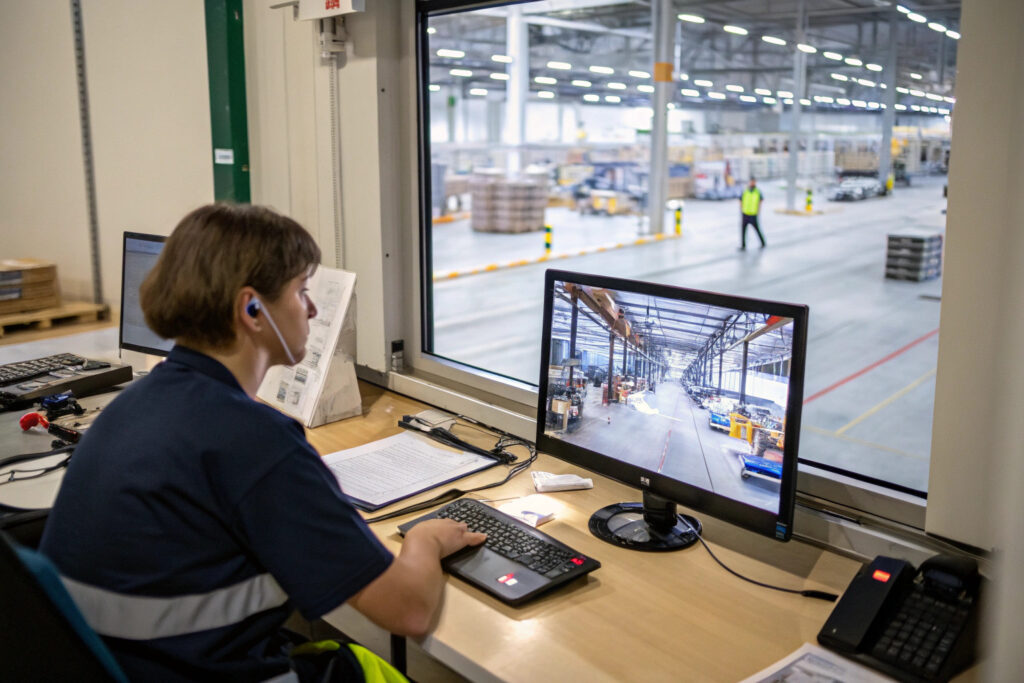
You find a factory online. The website is professional. The samples look good. The price is right. You want to place an order. But you cannot fly to China. The flight is expensive. The time away from your business is prohibitive. You have a family. You have a day job. You are a startup founder wearing every hat except the one you are trying to produce. You feel stuck. You cannot verify the factory without visiting. You cannot order without verifying. The travel barrier is blocking your business.
You audit a Chinese headwear factory without traveling there by combining four remote verification methods: a third-party audit report from a recognized body, a live video call walkthrough of the production floor, a professional third-party quality inspection of a pre-production sample or a recent production batch, and a digital verification of the factory's compliance certificates through official databases. None of these methods requires you to board a plane. All of them together provide a level of assurance that rivals an in-person visit. The third-party audit verifies the management systems. The video call verifies the physical reality matches the audit report. The sample inspection verifies the product quality. The certificate verification confirms the compliance claims are genuine.
At Global-Caps, I work with remote-first brands every day. My BSCI audit report is current. My OEKO-TEX certificate is verifiable online. I conduct live video walkthroughs on request. I welcome third-party inspectors. The remote audit is not a compromise. It is a structured, rigorous process.
What Third-Party Audits Can Verify a Factory's Social and Quality Systems Remotely?
You ask the factory for their certifications. They send a BSCI certificate with a logo you recognize. You accept it. You do not check the grade. You do not read the findings. You do not verify the certificate number on the Amfori platform. You do not confirm the certificate belongs to the factory you are talking to. You audited the presence of a logo. You did not audit the factory.
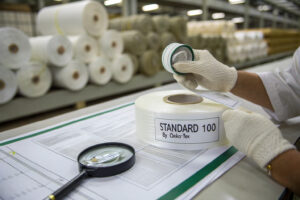
Third-party audits that verify a factory's social and quality systems remotely include the BSCI social compliance audit, the SMETA 4-pillar audit, the WRAP certification, and the ISO 9001 quality management system certification. These audits are conducted by independent, accredited auditing bodies. The audit report is a detailed document that describes the factory's management systems, identifies non-conformities, and assigns a grade or pass/fail result. The report can be verified on the audit body's online platform using the report number. The buyer reviews the report, checks the grade, reads the non-conformities, and verifies the report on the platform.
My BSCI audit report is available on the Amfori platform. My SMETA report is on the Sedex platform. I provide the report numbers so the client can verify independently.
The audit platform verification is the step that separates a genuine report from a fabricated PDF.
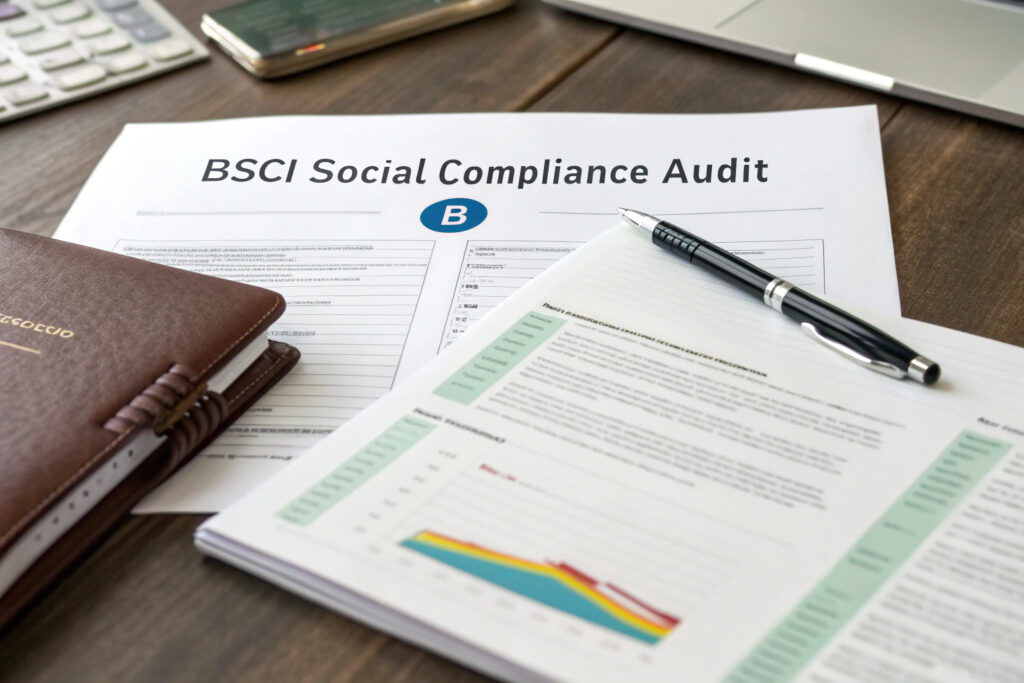
How Do You Verify a BSCI or SMETA Audit Report on the Official Platform?
For a BSCI audit, the buyer requests the factory's DBID number or audit report number. The buyer logs into the Amfori Sustainability Platform—or requests the factory to share the report through the platform—and reviews the audit summary. The summary shows the audit date, the audit grade, the number of non-conformities, and the validity period. The buyer confirms the factory name and address match the supplier.
For a SMETA audit, the buyer requests the factory's Sedex membership number. The buyer logs into the Sedex platform and reviews the audit report. The report is available to Sedex members. The buyer confirms the audit is a 4-pillar audit covering labor, health and safety, environment, and business ethics.
My Amfori profile and Sedex profile are active. I share the platform links with clients.
What Is the Difference Between a BSCI Audit and an ISO 9001 Certification for Headwear?
A BSCI audit focuses on social compliance—how the factory treats its workers, its working hours, wages, safety conditions, and ethical business practices. It is a people-focused audit. An ISO 9001 certification focuses on quality management systems—how the factory controls its processes, documents its procedures, manages non-conformities, and drives continuous improvement. It is a process-focused certification.
A BSCI audit tells the buyer the factory is ethical. An ISO 9001 certification tells the buyer the factory is organized. Both are valuable. Both should be verified. A factory with both certifications has demonstrated social responsibility and quality management capability.
My factory holds BSCI certification and ISO 9001 certification. The two certifications cover the social and the operational dimensions of reliability.
How to Conduct a Live Video Walkthrough of a Hat Factory?
You ask the factory for a video. They send a pre-recorded promotional video with background music and drone shots of the building exterior. The video is beautiful. The video is useless for an audit. It shows you what the factory wants you to see. It does not show you the working conditions, the production reality, or the current state of the floor. You audited a marketing asset.
A live video walkthrough is conducted via a real-time video call where the factory representative walks through the production floor holding a smartphone or tablet. The buyer directs the walkthrough. The buyer asks to see specific areas: the cutting room, the embroidery station, the sewing line, the QC inspection area, the material warehouse, the finished goods storage. The buyer asks the representative to show specific details: a fire extinguisher with a current inspection tag, a worker's payslip on a notice board, a material lot number on a fabric roll. The live, interactive nature of the call prevents the factory from staging a Potemkin village.
My live video walkthrough protocol is a standard part of new client onboarding. I schedule a 45-minute call. The client directs the tour. I hold the camera.
The interactive, unscripted nature of a live call is what gives it audit value. Pre-recorded videos have no audit value.

What Specific Areas Should You Ask to See on the Factory Floor?
The buyer should ask to see six specific areas in sequence. First, the raw material warehouse: check that fabric rolls are stored off the floor on racks, that lot numbers are visible, and that certified materials are segregated. Second, the cutting room: check that patterns are organized, cutting tables are clean, and fabric is being handled properly. Third, the embroidery department: check that machines are running, thread cones are branded, and operator workstations are organized. Fourth, the sewing line: check that operators are in uniform, workstations are clean, lighting is adequate, and fire exits are clear. Fifth, the QC inspection area: check that a lightbox, checking fixtures, and measurement tools are present and in use. Sixth, the finished goods warehouse: check that cartons are stacked, labeled with shipping marks, and stored in a dry area.
My factory walkthrough guide provides a checklist for each area. I offer to show every area on the list.
How Can You Verify Worker Treatment and Safety During a Video Call?
The buyer asks the factory representative to show the fire safety equipment: fire extinguishers with current inspection tags, clearly marked and unobstructed fire exits, an evacuation map posted on the wall. The buyer asks to see the first aid station. The buyer asks to see the worker notice board where wages, working hours, and factory policies are posted. The buyer asks the representative to walk through the worker break area and the canteen if one exists.
The buyer can also request that the representative briefly interview a worker on camera, asking simple questions through the representative about their tenure, their role, and their working conditions. The worker's demeanor and the representative's willingness to facilitate the interaction are informative.
My worker welfare is documented and visible. I am comfortable showing any area of the factory on a live call.
What Role Do Third-Party Inspection Companies Play in Remote Audits?
You video call the factory. The factory owner walks you through a clean, organized production floor. You are impressed. You place the order. The caps arrive. The quality is inconsistent. The stitching is loose. The colors are off. The factory you saw on the video call was not the factory that made your caps. The video call showed you a snapshot of the best corner of the factory. The third-party inspector would have checked the actual production.
Third-party inspection companies like QIMA, AsiaInspection, Bureau Veritas, SGS, and Intertek play the role of independent, professional eyes on the ground. You hire the inspection company. They send an inspector to the factory. The inspector audits the production against an agreed checklist—AQL sampling, measurements, functional tests, packaging checks. The inspector is not employed by the factory. The inspector has no incentive to hide defects. The inspection report arrives within 24 hours with photos, measurements, and a pass/fail decision.
I welcome third-party inspections from any of the major companies. My QC room has a dedicated inspection table. My team assists the inspector with carton sampling.
The inspector's independence is the value proposition. The factory pays for the product. You pay for the truth about the product.
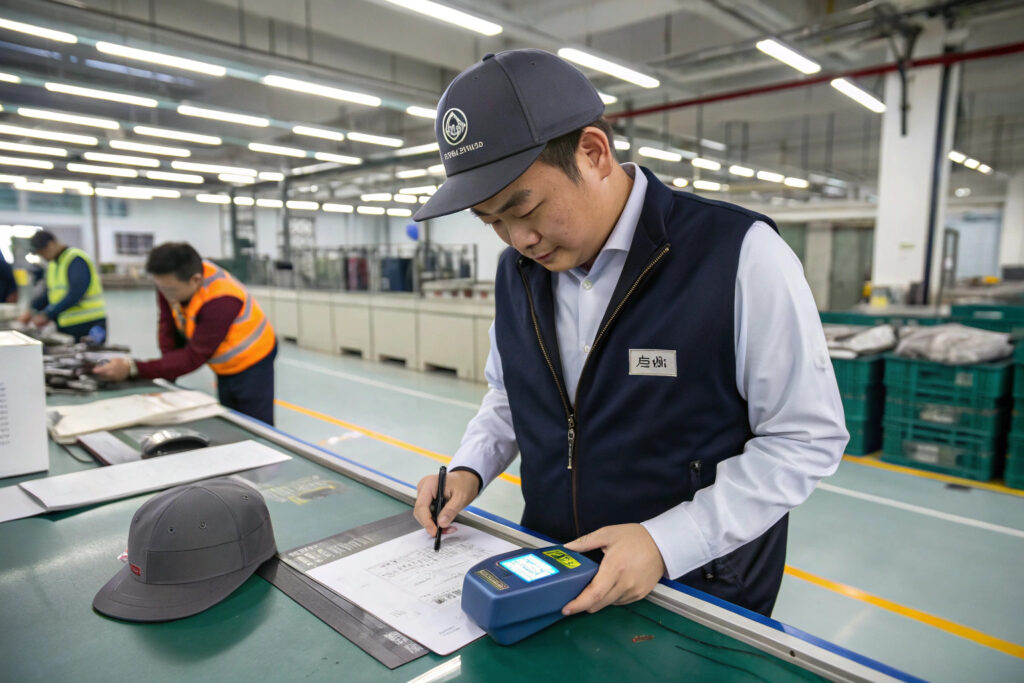
How Do You Hire a Third-Party Inspector in China Without Local Contacts?
You visit the website of a major inspection company—QIMA, AsiaInspection, Bureau Veritas, SGS, or Intertek. You create an account. You enter the factory's address, the product details, the inspection type, and the inspection date. You upload the product specification sheet, the approved sample photos, and the defect tolerance. The company assigns an inspector from their local office. The inspector travels to the factory on the scheduled date.
You do not need local contacts. The inspection company has the local infrastructure. The entire booking process is online. The report is delivered by email.
My inspection booking guide for clients includes the direct booking links for the major companies.
What Is the Difference Between a During-Production Inspection and a Pre-Shipment Inspection?
A During-Production Inspection occurs when 20 to 30 percent of the order is produced. The inspector checks the semi-finished goods on the production line. The inspection catches process errors early, before the entire order is affected. A DPI is recommended for first-time orders with a new factory.
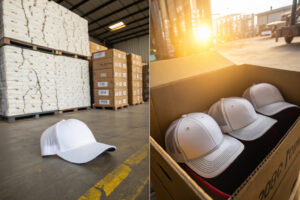
A Pre-Shipment Inspection occurs when 80 to 100 percent of the order is produced and packed. The inspector pulls a random sample from the finished cartons and checks against the AQL standard. The PSI is the final quality gate before shipment. It is standard for all orders.
I recommend a DPI for first orders and a PSI for every order. The two inspections together provide end-to-end quality assurance.
How to Verify a Factory's Certifications Through Official Databases?
You receive certificates from the factory by email. They are PDF attachments. The logos are sharp. The stamps are official. You save them to a folder. You consider the audit complete. A PDF is not a verified certificate. It is a file that can be edited with software available on any computer. The factory's claims are unverified. The certificates are unverified. Your audit is based on trust in a PDF. Trust is not an audit method.
You verify a factory's certifications through the official databases maintained by the certification bodies. For OEKO-TEX, you use the Label Check database at oeko-tex.com. For BSCI, you use the Amfori Sustainability Platform. For GOTS, you use the GOTS public database. For GRS, you use the Textile Exchange directory. You enter the certificate number or the factory name. The database returns the current certification status, the scope, and the validity dates. The database is the single source of truth. The PDF is a printout. The database is the certification.
I provide the verification links for every certificate. I encourage clients to verify independently. A factory that refuses to provide certificate numbers for database verification is hiding something.
The certificate number is the key. Without the number, you cannot access the database record.
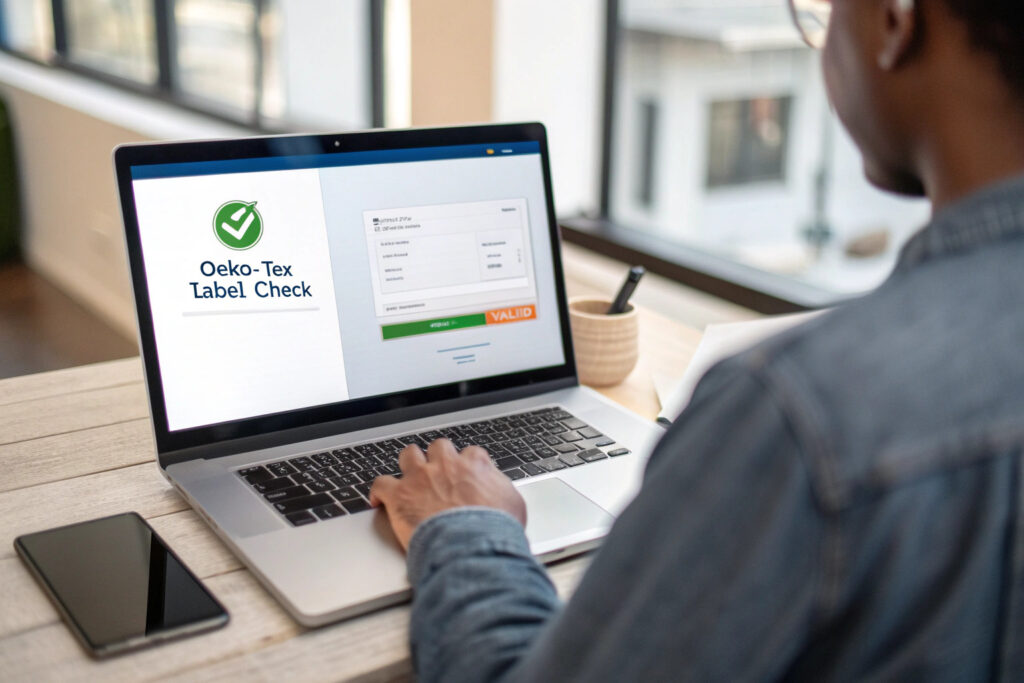
Why Must the Certificate Holder Name Match the Factory's Legal Entity?
The certificate is issued to a specific legal entity. The legal entity name is on the certificate and in the database. If the factory you are contracting with is "Zhejiang Fumao Clothing Co., Ltd." but the certificate holder is "Zhejiang Fumao Garments Trading Company," the certificate does not belong to the factory. It belongs to a different company.
A mismatched holder name indicates the certificate is borrowed from a related company, or the factory is operating under a different legal entity than the one that was audited. In either case, the certificate does not cover the factory you are contracting with.
My business license and certificate holder name are identical. I provide both documents for comparison.
How Often Should You Re-Verify Certifications for an Ongoing Supplier Relationship?
Certifications should be re-verified at the start of every new production order, and at a minimum every six months for an ongoing relationship. A certificate that was valid in January may have expired by July. The factory may not proactively notify you of the expiry.
The database check takes 30 seconds. It should be part of the purchase order issuance process. The buyer verifies the certifications are active, the scope covers the product, and the holder name matches before signing the purchase order.
My certification expiry dates are published to clients. I send a reminder 30 days before renewal.
Conclusion
You can audit a Chinese headwear factory without traveling there by combining third-party audit reports, a live video walkthrough, a professional third-party inspection, and digital certificate verification. The third-party audit—BSCI, SMETA, or WRAP—verifies the social compliance management systems. The live video walkthrough verifies the physical reality matches the audit report and allows you to see the production floor, the worker conditions, and the QC area in real time. The third-party inspection provides independent eyes on the actual product quality. The digital certificate verification on official databases confirms the factory's compliance claims are genuine.
None of these methods requires a plane ticket. All of them together provide a multi-layered audit that rivals an in-person visit in rigor. The factory that welcomes these remote audit methods is a factory with nothing to hide. The factory that resists them is a factory that relies on information asymmetry to win orders.
At Global-Caps, I am built for remote auditing. My BSCI report is on the Amfori platform. My OEKO-TEX certificate is verifiable online. My factory floor is ready for a live video walkthrough at any time. My QC room has a dedicated inspection table for third-party inspectors. I do not ask for trust. I provide access.
If you need to audit a headwear factory without traveling to China, contact my Business Director Elaine. She can schedule a live video walkthrough, provide our BSCI and OEKO-TEX certificate numbers for independent verification, and coordinate a third-party inspection with your preferred agency. Email Elaine at elaine@fumaoclothing.com. Let's build trust through transparency, not travel.