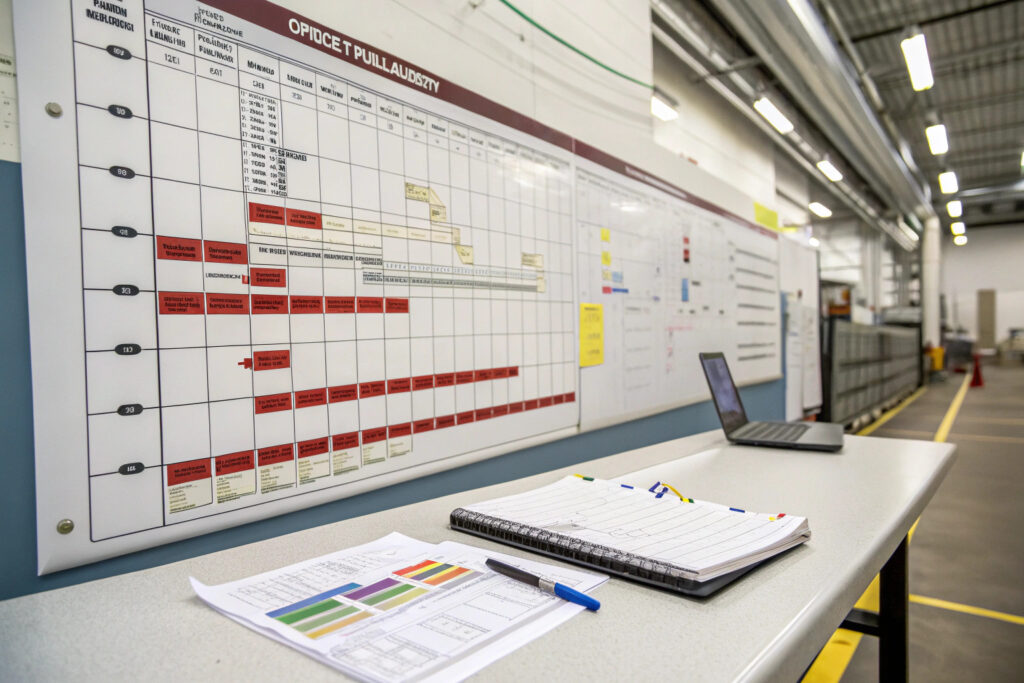
You finalize your design in August. The factory tells you the lab dips will take one week. You plan your launch for early October. One week passes. No lab dips. You email. The factory says the dye house is busy. Two weeks pass. The lab dips arrive. The color is off. You reject them. The dye house reformulates. Two more weeks pass. You finally approve the lab dip in late September. The bulk fabric dyeing cannot start until October. The cutting cannot start until late October. The sewing cannot finish until November. Your early October launch is now a late November arrival. You missed the fall retail window. The lab dip was the first domino. The delay at the first step amplified through the entire timeline.
Delays in lab dip approval push a seasonal cap launch back by weeks because the lab dip is the gatekeeper for the entire bulk production timeline. Bulk fabric cannot be dyed until the lab dip is approved. The fabric cannot be cut until it is dyed and delivered. The caps cannot be sewn until the fabric is cut. The caps cannot be shipped until they are sewn, finished, and packed. A one-week delay in lab dip approval is not a one-week delay in the launch. It is a one-week delay at the start of a sequential process, which pushes every subsequent step forward by at least one week. If the delay occurs during peak production season, the factory's production slots are already booked. Your order cannot simply shift by one week. It must wait for the next available slot, which may be two or three weeks later. The one-week lab dip delay becomes a three-week or four-week launch delay.
At Global-Caps, I treat lab dip approval as the most critical early milestone in the production timeline. I submit lab dips within five working days of the order confirmation. I use a dye house with guaranteed development capacity. I communicate delays within 24 hours with a revised timeline. The lab dip is the foundation. A delayed foundation delays the entire building.
Why Is the Lab Dip the Critical First Gate in the Cap Production Timeline?
You think production starts when you place the order. It does not. Production starts when the lab dip is approved. The purchase order is a commercial agreement. The lab dip approval is the technical authorization to begin. The factory will not dye 500 kilograms of fabric based on a Pantone code. They will dye it based on an approved lab dip that is the physical, signed color standard. Until that standard exists and is signed, the dye house is on hold. The cutting table is on hold. The sewing line is on hold. The entire production line is waiting for a small piece of dyed fabric.
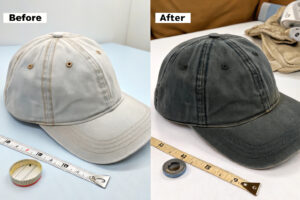
The lab dip is the critical first gate because it establishes the physical color standard against which all bulk fabric will be measured. The lab dip is a small-scale dyeing of your specific color on your specific fabric. It proves the dye formula works on the substrate. It proves the color matches your target under the specified lighting conditions. It proves the dye house can execute your color. Without an approved lab dip, the factory has no color standard. Without a color standard, the factory cannot order the bulk dye lot. The bulk dye lot is the longest single step in the production process, taking two to four weeks from order to delivery. Every day the lab dip is delayed is a day the bulk dye lot start is delayed.
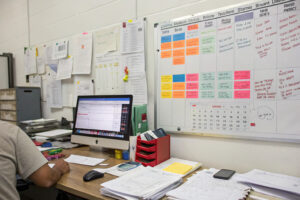
My production timeline is published to clients at the order stage. The lab dip milestone is Day 1. The critical path is calculated from the lab dip approval date.
The bulk dye lot is the longest lead time item in the production sequence. It cannot be expedited easily.
How Does the Bulk Dye Lot Lead Time Amplify Lab Dip Delays?
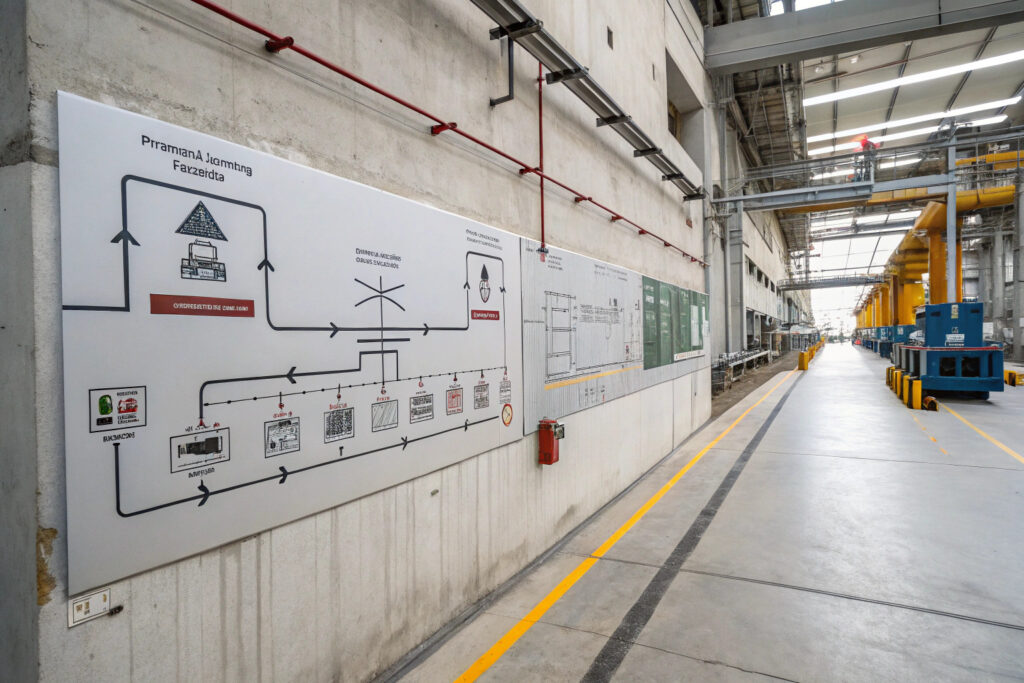
The bulk dye lot takes two to four weeks from order placement to fabric delivery. The dye house schedules the dye run, prepares the dye bath, dyes the fabric, checks the color against the approved lab dip, fixes any issues, dries the fabric, finishes the fabric, and ships it to the factory. This timeline is relatively fixed. It cannot be compressed without risking quality.
If the lab dip is approved on September 1st, the bulk fabric arrives on September 15th to September 30th. If the lab dip is delayed by two weeks and approved on September 15th, the bulk fabric arrives on October 1st to October 15th. The two-week lab dip delay pushes the fabric delivery back by the same two weeks. The subsequent steps—cutting, sewing, finishing—shift forward by the same two weeks. The launch is two weeks late. During peak season, the delay can be longer because the dye house is operating at full capacity and cannot fit the delayed order into an already-full schedule.
My dye house contract includes a guaranteed development capacity clause. A specified number of lab dip slots are reserved for my orders each week.
Why Can't Bulk Production Start Without a Signed Lab Dip Approval Form?
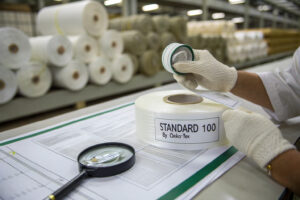
The signed lab dip approval form is the legal authorization for the factory to proceed with bulk production. The form states that the client has evaluated the lab dip, confirmed the color matches the target under the specified lighting conditions, and accepts the lab dip as the color standard for the bulk order.
Without the signed form, the factory bears the financial risk of producing bulk fabric that the client may reject. If the factory dyes 500 kilograms of fabric without client approval and the color is wrong, the factory absorbs the cost of the wasted fabric and the re-dye. No factory will take this risk. The signed approval form transfers the color risk from the factory to the client.
My lab dip approval form is sent with every lab dip submission. The form includes the spectrophotometer readings, the light source evaluation, and a signature line.
What Are the Most Common Causes of Lab Dip Rejection and Re-Cycle Delays?
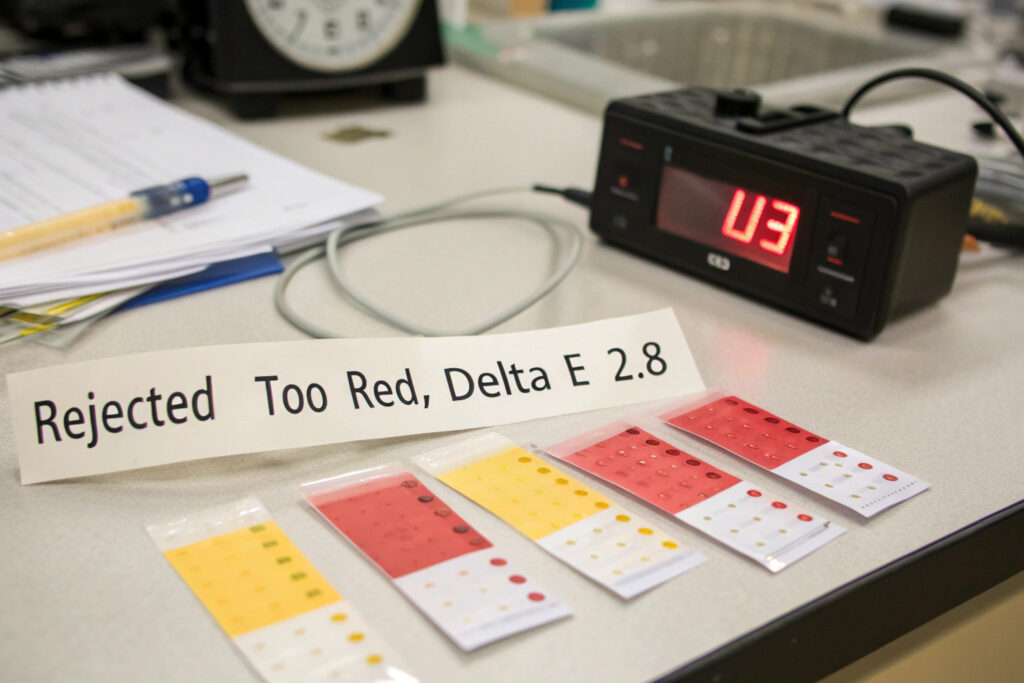
You reject the first lab dip. You wait a week for the second. You reject the second. You wait another week. You reject the third. The color still is not right. You begin to wonder if the dye house is incompetent. The problem is not always incompetence. Sometimes the color you chose is difficult to achieve on the fabric substrate. Sometimes the metamerism is inherent to the dye-fabric combination. Sometimes the communication of the rejection was unclear, and the dye house guessed at the correction. Each rejection adds a week. Three rejections add three weeks to a timeline that had no buffer.
The most common causes of lab dip rejection and re-cycle delays are metamerism, where the color matches under one light source but fails under another; inaccurate target communication, where the dye house matches a different reference than the client is using; substrate mismatch, where the lab dip is produced on a different fabric than the bulk order; and dye formulation limitations, where the target color is at the edge of the achievable gamut for the specific dye-fabric combination. Each rejection triggers a reformulation cycle that takes 5 to 7 days. Three rejections can add three weeks to the approval timeline.
My lab dip submission package includes the spectrophotometer readings under both D65 and TL84, reducing the risk of metamerism-related rejections.
Metamerism is the most frustrating cause of rejection because the color looks right in the factory but wrong in your office.
How Does Metamerism Cause a Color to Match Under One Light But Not Another?
Metamerism occurs when two materials—the Pantone paper chip and the dyed fabric—have different spectral reflectance curves. The curves represent how much light the material reflects at each wavelength across the visible spectrum. The curves may intersect under one light source, such as the factory's fluorescent tube, making the colors appear to match. Under a different light source, such as your office daylight LED, the curves diverge and the colors appear different.
The dye house matched the color under their lighting. You evaluated it under your lighting. The spectral difference was always there. The different lighting revealed it. The solution is to evaluate the lab dip under multiple light sources—D65 daylight and TL84 store light—and to measure the metamerism index with a spectrophotometer.
My lab dip evaluation protocol requires a metamerism check under D65, TL84, and incandescent light before the lab dip is submitted to the client.
What Happens When the Dye House Misinterprets the Pantone Reference?
The dye house has a Pantone book. You have a Pantone book. The books may be different editions. The chips may have faded from light exposure. The dye house may have matched the Pantone code using a digital library that is slightly different from the physical chip. The dye house may have interpreted a color name differently than you intended.
The result is a lab dip that matches the dye house's reference but does not match yours. The rejection is not due to technical inability. It is due to reference mismatch. The solution is to send a physical Pantone chip with the lab dip request, or to provide a spectrophotometer reading of your specific chip.
My lab dip request form includes a field for the Pantone code and a request for the physical chip to be sent. The digital code is the backup. The physical chip is the primary reference.
How to Build a Buffer Into Your Seasonal Launch Timeline for Color Approval?
You plan your timeline assuming one lab dip round and one-week approval. The assumption is optimistic. The reality is that the average number of lab dip rounds for a new color on a new fabric is two to three. The average total approval time is two to three weeks. Your timeline had no buffer for the second round or the third round. The delay was not unexpected to anyone except you. The factory has seen it a hundred times. The delay is predictable. Your timeline should have accounted for it.
You build a buffer into your seasonal launch timeline by planning for three lab dip rounds and three weeks of approval time, not one round and one week. You start the lab dip process six to eight weeks before the bulk fabric order must be placed. You build the buffer into the front end of the timeline, not the back end. A buffer at the back end—"just in case" time before the launch—is consumed by every delay upstream. A buffer at the front end—extra time allocated to the lab dip stage—absorbs the predictable variation at the stage where it occurs.
My production timeline template for clients includes a minimum three-week buffer for lab dip approval on custom colors. The buffer is front-loaded.
Starting the lab dip process early, before the bulk purchase order is finalized, decouples color approval from order commitment.

Why Should You Start the Lab Dip Process Before the Bulk Order Is Finalized?
The lab dip process can run in parallel with the finalization of the purchase order details—the quantity, the packaging specifications, the delivery schedule. The lab dip requires the color target and the fabric substrate. These are known early in the design process. The purchase order requires the commercial terms, which may take longer to negotiate.
By starting the lab dip process early, the color approval clock starts ticking while the commercial details are being finalized. When the purchase order is signed, the lab dip may already be in its second round. The overall timeline is compressed. The color risk is retired early.
My development timeline separates the color development phase from the order finalization phase. The two processes run concurrently.
How Can Choosing a Stock Color Eliminate the Lab Dip Delay Entirely?
A stock color is a pre-dyed fabric color that the factory keeps in inventory. The factory has already completed the lab dip process for that color. The color standard is established. The bulk fabric is available. Choosing a stock color eliminates the lab dip process entirely. The color approval step is replaced by a simple confirmation: "Match the attached stock color swatch."
The timeline savings are 2 to 4 weeks. The cost savings are the elimination of the custom dye minimum. The trade-off is a limited color palette. For brands with tight seasonal deadlines, the stock color option is the fastest path to launch.
My stock fabric program includes 20 colors in heavyweight brushed cotton and standard twill. The stock colors ship in 2 weeks instead of 6.
How to Expedite Lab Dip Approval Without Sacrificing Color Accuracy?
You need the color approved fast. You tell the factory to rush. The factory rushes the dye house. The dye house skips the metamerism check. They send a single swatch. You approve it quickly by looking at it under your office light. The bulk fabric arrives. The color fails under store lighting. The "fast" approval created a $5,000 mistake. Speed without process is expensive.
You expedite lab dip approval without sacrificing color accuracy by submitting a spectrophotometer reading of your target color with the request, requesting three swatches per round—on-target, slightly lighter, slightly darker—to bracket the acceptable range, using a live video call for the evaluation where the dye house technician demonstrates the match under the lightbox and shares the spectrophotometer screen, and providing a same-day approval decision. The technology enables speed. The process protects accuracy.
My expedited lab dip service guarantees a 3-day turnaround for the first round. The service includes spectrophotometer data and a video call evaluation option.
Submitting a spectral data file with the color request gives the dye house a head start on the formulation.

How Does Submitting a Spectrophotometer Reading Speed Up the First Dip?
A spectrophotometer reading provides the dye house with the exact spectral reflectance curve of your target color. The dye house's computer color matching software compares this curve to its database of dye formulations. The software calculates a starting recipe that is mathematically close to the target. The first lab dip is based on data, not a visual guess.
Without a spectrophotometer reading, the dye master starts from a visual assessment or a Pantone code lookup. The first dip is an estimate. The estimate often requires more correction cycles. The spectrophotometer reading eliminates the guesswork and typically produces a first dip that is Delta E 1.5 or better.
My lab dip request form includes a field for uploading a spectral data file. Clients who provide the file receive first dips that are, on average, 50 percent closer to target.
Can a Digital Color Render Approve the Shade Before a Physical Lab Dip Is Made?
Yes. A digital color render is a calibrated screen simulation of the dyed fabric color. The render is generated from the dye formulation software and displayed on a color-calibrated monitor. The client evaluates the render as a first-pass approval. If the render is accepted, the physical lab dip is produced as a confirmation, not an exploration.
The digital render can eliminate one round of physical lab dips. The time saved is 5 to 7 days. The render is not a replacement for the physical lab dip. It is a pre-filter that catches significant mismatches before the physical dip is made.
My digital color approval option is offered for repeat colors and stock fabric programs. The render is evaluated on a calibrated monitor under controlled lighting.
Conclusion
Delays in lab dip approval push a seasonal cap launch back by weeks because the lab dip is the first domino in a sequential production process. The bulk fabric cannot be dyed until the lab dip is approved. The fabric cannot be cut, sewn, or shipped until it is dyed. A one-week delay at the lab dip stage cascades through every subsequent stage. During peak production season, the delay compounds because factory slots are fully booked and a delayed order must wait for the next available window.
The most common causes of lab dip rejection are metamerism, inaccurate color reference communication, and substrate mismatch. Each rejection adds a 5 to 7-day reformulation cycle. The buffer for lab dip approval should be three weeks, not one week, to absorb the predictable variation. The lab dip process can be started before the bulk purchase order is finalized, running color development in parallel with commercial negotiations.
The lab dip process can be expedited without sacrificing accuracy by submitting spectrophotometer data, requesting three swatches per round, and using live video calls for evaluation. Digital color renders can pre-filter mismatches before physical dips are made. Choosing a stock fabric color eliminates the lab dip process entirely.
At Global-Caps, my lab dip process is designed for speed and accuracy. I submit lab dips within five working days. I provide spectrophotometer data with every submission. I offer stock colors for the fastest turnaround. The color approval is the foundation of the production timeline. I treat it with the urgency it deserves.
If lab dip delays have pushed your seasonal launch off schedule, contact my Business Director Elaine. She can provide our expedited lab dip service, our stock color program, and a realistic production timeline that includes buffer for the predictable. Email Elaine at elaine@fumaoclothing.com. Let's get your color approved and your production moving.