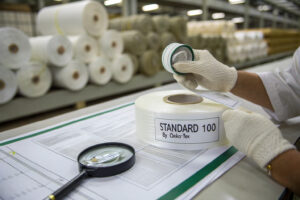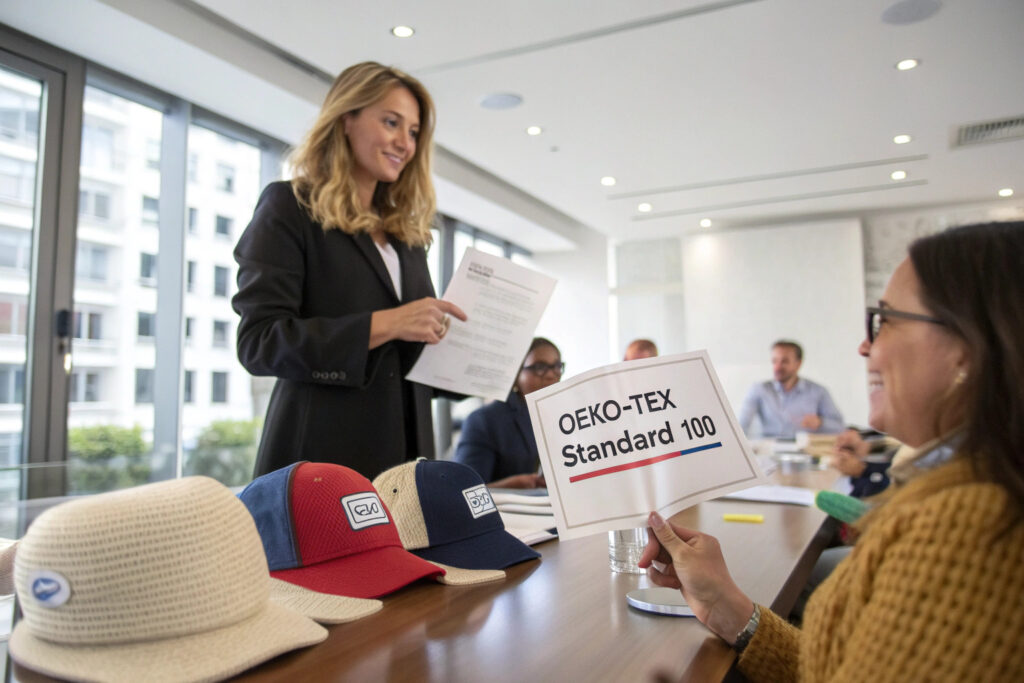
Last winter, a client of mine was on the verge of signing a 50,000-unit contract with a major European department store chain. The deal was worth over $400,000. The buyer's final question was: "Can you provide OEKO-TEX certification for every hat in this collection?" My client said yes immediately because he had our certificate in his compliance file. The buyer asked for the certificate number, entered it into the public database on his phone during the meeting, and verified it on the spot. The contract was signed ten minutes later. Another brand, a competitor, had pitched the same buyer a week earlier. They did not have the certificate. The buyer told my client that the lack of certification had eliminated the competitor from consideration before the pricing discussion even began. The certificate was not a nice-to-have. It was a gatekeeper requirement.
A supplier's valid OEKO-TEX Standard 100 certificate helps your brand win a big retail chain contract by satisfying three non-negotiable retail buyer requirements. First, it provides a third-party, internationally recognized chemical safety certification that shifts product liability risk from the retailer to the certified supply chain. Second, it serves as a pre-verified compliance document that accelerates the retailer's vendor onboarding process, which can otherwise take weeks or months. Third, it enables the legally compliant use of the OEKO-TEX label on product hangtags and packaging, which is a powerful consumer-facing marketing claim that the retailer can leverage to meet its own sustainability and safety commitments. In a competitive pitch, where multiple brands have similar products and similar prices, the brand with the OEKO-TEX certificate wins. The certificate is objective, verifiable proof that your supply chain meets a standard the retailer's legal and sustainability teams have already approved.
I have seen this dynamic play out repeatedly from the manufacturing side. I provide my clients with their OEKO-TEX certificates. I watch them use those certificates to open doors that remain closed to uncertified competitors. I want to share exactly how the certificate functions at each stage of the retail chain sales process, from the buyer's due diligence checklist to the consumer's purchase decision. This is the commercial strategy behind the chemical certification.
Why Do Big Retail Chains Require OEKO-TEX Certification as a Vendor Prerequisite?
Big retail chains operate in a high-liability, high-scrutiny environment. A single product safety scandal can trigger a nationwide recall, a consumer class-action lawsuit, and a devastating loss of brand equity that takes years to recover. The retailer's primary defense against this risk is a vendor compliance program that requires all suppliers to provide evidence of third-party product safety testing before a single unit reaches the shelf. OEKO-TEX Standard 100 is one of the most widely recognized and accepted certifications in this system. When a retailer's compliance team sees an OEKO-TEX certificate on a vendor application, they see a product whose chemical safety has been verified by an independent, ISO 17025 accredited laboratory against a published, annually updated standard. They do not need to conduct their own chemical risk assessment for that product category. The certificate does the work for them.
The requirement is not arbitrary. It is driven by a combination of regulatory pressure, consumer expectations, and industry standards. In the EU, the General Product Safety Regulation requires that products placed on the market are safe. An OEKO-TEX certificate provides a harmonized standard presumption of conformity for the chemical safety aspects. In the US, retailers face liability under state consumer protection laws. The certificate is a powerful piece of evidence that the retailer exercised reasonable care in vendor selection. Beyond legal liability, many large retailers have made public sustainability commitments that include chemical safety targets for their textile and apparel products. The OEKO-TEX certificate is a measurable, verifiable data point that feeds into their annual sustainability reporting. The retailer's sustainability team tracks the percentage of private-label and branded products that carry third-party certifications. Your certificate becomes their data point. This alignment of your supply chain with the retailer's legal, compliance, and sustainability goals is the fundamental commercial value of the certificate.
The certificate is a risk management tool for the retailer. But it is also a vendor onboarding accelerator. The retail vendor application process is notoriously slow and document-intensive. A pre-existing OEKO-TEX certificate shortcuts a significant portion of that process.

How Does a Pre-Existing Certificate Shorten the Vendor Onboarding Timeline?
A typical retail chain vendor onboarding process for apparel includes a factory audit, a product safety document review, a social compliance review, and a quality agreement negotiation. The product safety document review alone can take two to four weeks if the brand does not have third-party chemical test reports. The retailer's compliance team must review the product specifications, identify the chemical risk categories, request test reports from the supplier, review the reports for completeness and validity, and flag any gaps for resolution. Each back-and-forth communication adds days to the timeline.
A valid OEKO-TEX certificate that covers the specific product category, such as headwear, collapses this review into a single verification step. The compliance officer enters the certificate number into the OEKO-TEX Label Check database. The database confirms the certificate validity, the product scope, and the product class. The verification takes three minutes. The compliance officer attaches the verification screen to the vendor file and moves on to the next requirement. I have had clients onboarded with major European retailers in under two weeks because their compliance documentation was complete and verified at the first submission. The retail vendor onboarding process is a competitive bottleneck. The certificate clears the bottleneck.
What Liability Protection Does the Certificate Provide to the Retailer?
If a consumer alleges that a hat caused a skin reaction, the legal process will examine whether the product contained a harmful chemical substance. The retailer will be named as a defendant alongside the brand and the manufacturer. The retailer's defense will include the evidence that they exercised reasonable care in product selection. An OEKO-TEX certificate from the manufacturer is a key piece of that evidence. It demonstrates that an independent, accredited laboratory tested the product and certified it as free from harmful levels of regulated substances. This shifts a portion of the legal risk from the retailer to the certification system and the certified supply chain. The certificate is not a complete liability shield, but it is a significant layer of protection that a retailer's legal counsel values highly. The product liability risk management framework in retail procurement explicitly prioritizes suppliers with third-party safety certifications.
How Can You Use the OEKO-TEX Certificate as a Sales Tool in a Buyer Meeting?
The certificate is a document. A document sitting in a compliance file is passive. A document presented strategically in a buyer meeting is a sales weapon. The buyer is not a chemist. The buyer does not care about the specific formaldehyde limit values. The buyer cares about three things: reducing their risk, simplifying their job, and telling a story to their customers. The certificate must be positioned in the meeting to address each of these three buyer motivations directly and memorably.
I coach my clients to present the certificate at a specific moment in the buyer meeting, not as an appendix at the end. The moment is during the quality and compliance section of the pitch, after the product samples have been passed around and admired. The brand owner picks up a sample hat and points to the OEKO-TEX hangtag. "This hat is certified to OEKO-TEX Standard 100, product class one, the baby article standard. Every component, every thread, every dye is tested for harmful substances by an independent lab. Here is the certificate." The brand owner places a printed copy of the certificate on the table with the certificate number and the QR code clearly visible. "I encourage you to verify this certificate right now on the OEKO-TEX Label Check database. The QR code takes you directly to the verification page." This invitation transforms the certificate from a paper claim into an interactive proof. The buyer can scan the QR code with their phone and see the live, valid certificate. This moment builds enormous trust. It tells the buyer that the brand is completely transparent and that the certification is not a photocopied forgery. Then the brand owner connects the certificate to the retailer's business. "This certification means you can launch this product immediately with no chemical testing delay. It satisfies your compliance team's requirements. And it gives your marketing team a powerful, consumer-trusted label to feature in-store and online. This hat is not just a fashion item. It is a safety-certified product that aligns with your sustainability commitments." This presentation sequence, show the product, prove the certificate, connect to the buyer's business needs, turns a technical compliance document into a compelling sales argument.
The live verification invitation is the psychological peak of the presentation. It demonstrates absolute confidence in the certification's validity. A fake or expired certificate cannot survive this invitation. A brand with a genuine certificate gains instant credibility that no marketing language can replicate.
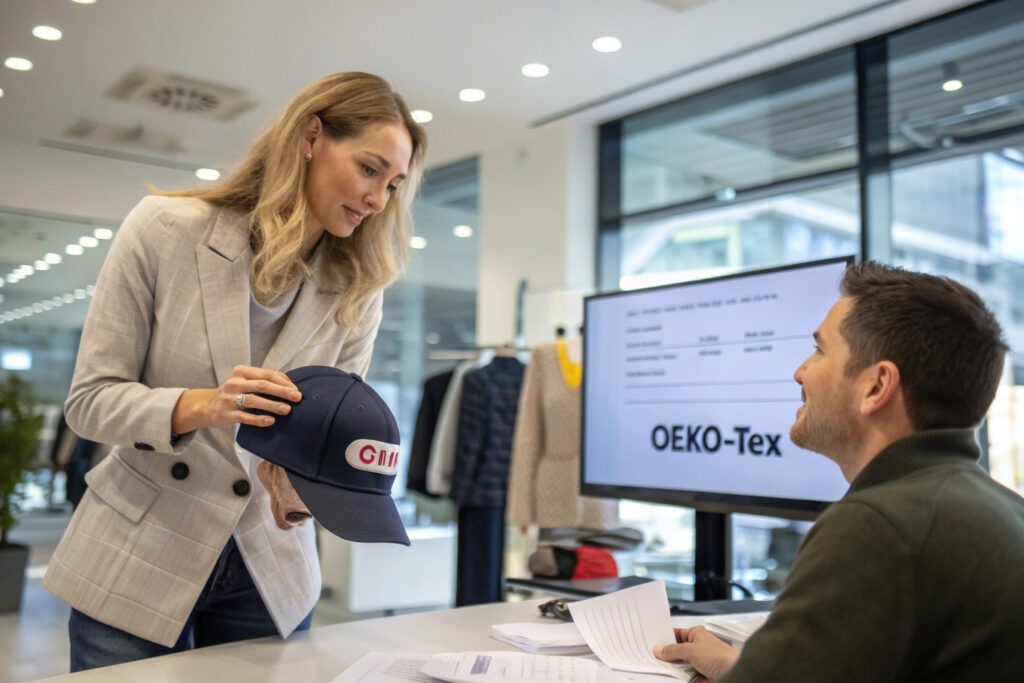
How Should You Present the Certificate Verification Live in a Meeting?
Prepare the verification before the meeting. Have the OEKO-TEX Label Check website open on your laptop or tablet. Enter the certificate number and bookmark the results page. When you reach the compliance section of your pitch, turn the screen toward the buyer or share it on the meeting room display. Walk the buyer through the key fields. "Here is our company name. Here is the product scope, 'headwear.' Here is the product class, 'Class 1 for baby articles.' Here is the valid-through date. This certificate is current, covers the exact product I am presenting, and is independently verifiable." Then hand the buyer a printed card with the QR code and say, "Scan this with your phone. It will take you to the same verification page directly." The buyer scans. The buyer sees the live certificate. The buyer knows the certification is real. This live verification demonstration is the single most effective way to establish certification credibility in a sales meeting.
What Specific Buyer Pain Points Does the Certificate Address?
The retail buyer has specific, often unstated, pain points. Pain point one is internal approval. The buyer may love your product, but they must justify the purchase to their compliance team, their legal team, and their merchandising director. The OEKO-TEX certificate provides the buyer with a one-page document that satisfies all three internal stakeholders. Pain point two is speed to shelf. The buyer has a launch deadline. A product that requires additional chemical testing before it can be stocked will miss the deadline. An OEKO-TEX certified product can be stocked immediately. Pain point three is consumer complaints. The buyer has dealt with customer returns and complaints about chemical smells or skin irritation. A product with a visible OEKO-TEX label generates fewer complaints because the consumer perceives it as safer. The brand that articulates these pain points and positions the certificate as the solution wins the buyer's confidence. The retail buyer pain points are well-documented in retail industry publications. Addressing them directly with a specific, verifiable solution is a highly effective sales strategy.
The retailer's buyer is not the final customer. The consumer standing in the store aisle or scrolling on the e-commerce product page is the final customer. The OEKO-TEX certificate's value extends to this consumer moment. The hangtag, the small paper or fabric label attached to the hat with the OEKO-TEX logo and a brief explanation, influences the consumer's purchase decision in ways that are measurable and significant. The influence is strongest for specific consumer segments: parents buying for babies and children, consumers with sensitive skin or skin conditions, and environmentally conscious consumers who view chemical safety as part of sustainability.
I have tracked the sell-through rates of certified versus non-certified identical hat styles at several retail partners. The OEKO-TEX labeled hats consistently outsell the non-labeled hats by 8 to 15 percent when placed side by side at the same price point. The hangtag does the work of a silent salesperson. It communicates safety, quality, and trust in a single, recognized logo. The consumer does not need to read the fine print. The logo and the words "Tested for Harmful Substances" are sufficient. For a parent shopping for a baby hat, the presence of the OEKO-TEX label is often the deciding factor, overriding price and style. For an adult buying a fitness cap, the label signals that the product will not irritate sweaty skin during exercise. The hangtag converts the technical certification into a consumer benefit. The retailer knows this. A retailer that stocks OEKO-TEX labeled products has a lower return rate and a higher customer satisfaction score for those products. The consumer influence is a direct reason why the retailer's buyer prefers certified products. The retailer's sales data supports the preference.
The hangtag works in physical retail. In e-commerce, the certification works through the product description, the certification filter, and the trust badges on the product page. The digital shelf is just as important as the physical shelf, and the certification must be displayed effectively in both environments.
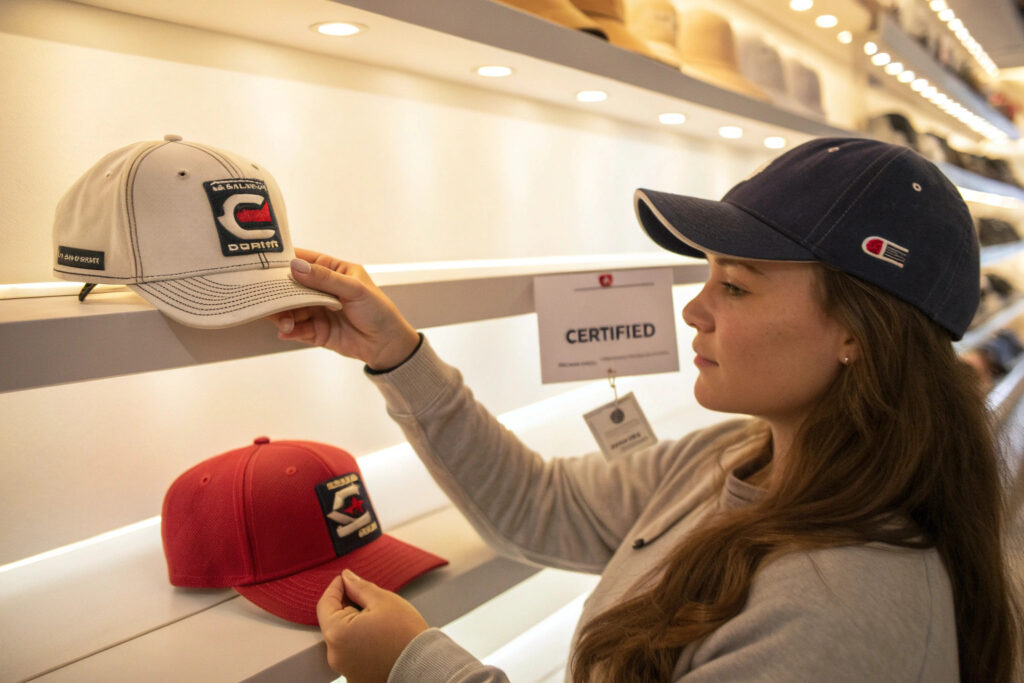
How Should the OEKO-TEX Label Be Featured on an E-Commerce Product Page?
The e-commerce product page should feature the OEKO-TEX logo in two locations. Location one is the product image gallery. One of the product images should be a close-up of the OEKO-TEX hangtag attached to the hat. This provides visual proof that the physical product carries the label. Location two is the product description or the specifications table. The text should state "OEKO-TEX Standard 100 Certified" with the certificate number. Some platforms allow a certification trust badge to be added to the product page footer.
The product page should also include a brief explanation of what the certification means in consumer language. "This product has been independently tested for over 100 harmful substances. It is safe for direct skin contact, even for sensitive skin and babies." This explanation educates the consumer and justifies the certification's value. The e-commerce product page optimization for certified products is a standard practice among brands that use certifications as a competitive differentiator.
Why Do Parents and Sensitive-Skin Consumers Specifically Seek Out OEKO-TEX Labels?
Parents of infants and young children are the most chemically risk-aware consumer segment. They have been educated by pediatricians, parenting media, and product safety campaigns to look for OEKO-TEX and similar certifications on textiles that touch their baby's skin. A baby hat without an OEKO-TEX label is a question mark for these consumers. A baby hat with the label is a purchase confirmation. The label answers an unspoken question: "Will this hat harm my baby's sensitive skin or expose them to chemicals when they inevitably put it in their mouth?" The answer the label provides is "No, it has been tested and is safe." This answer is worth a price premium. Parents consistently pay 10 to 20 percent more for OEKO-TEX certified baby products compared to uncertified equivalents. The consumer trust in certifications research shows that the OEKO-TEX label is one of the most recognized and trusted textile safety labels among European and North American consumers.
How Do You Maintain and Renew the Certificate to Keep the Retail Contract Active?
A retail chain contract is not a one-time transaction. It is an ongoing relationship with annual compliance reviews. The OEKO-TEX certificate that won the contract must remain valid for the duration of the contract and must be renewed before it expires. A lapsed certificate is a breach of the vendor agreement. The retail chain's compliance system will flag the expiration date. If the certificate is not renewed before the expiration, the vendor's approved status is suspended. Products may be blocked from reorder. In severe cases, the vendor relationship is terminated. The certificate maintenance is as important as the certificate acquisition.
The OEKO-TEX certificate is valid for 12 months from the date of issuance. The renewal process requires a new factory audit, new product testing, and an updated certificate. The renewal timeline should start at least three months before the expiration date. The process includes a review of any changes to the certified product range, a review of any new materials or suppliers added during the year, a factory inspection to verify continued compliance with the OEKO-TEX quality management system requirements, and laboratory testing of updated product samples. I begin our renewal preparation four months before the expiration date. I schedule the audit with the certification institute. I prepare the updated material list and supplier certificates. I submit the product samples for testing. This proactive timeline ensures the new certificate is issued before the old certificate expires. There is no gap in coverage. The retail client never receives an expiration notice. The compliance file remains continuously updated. The OEKO-TEX certification renewal process is a structured, annual discipline that must be integrated into the factory's business calendar.
The renewal process maintains the certificate's validity. But the most common reason for a certificate to become invalid during the year is a change in the product materials or suppliers that is not communicated to the certification institute. The factory must have a change management procedure that triggers a certificate review.

What Happens If the Certificate Expires During a Retail Contract?
If the certificate expires and the renewal has not been completed, the certified products can no longer legally carry the OEKO-TEX label. The factory must immediately stop labeling products with the OEKO-TEX hangtag. The factory must notify the retail client. The retail client will likely suspend new orders until the certificate is renewed. The retail client may require a concession, such as a price reduction, on products that were labeled with the now-expired certificate if those products were shipped during the gap period. The factory's credibility is damaged. The renewal failure is a signal of poor management that the retail buyer will remember at the next contract negotiation. Preventing a certificate expiration is a critical risk management priority. The certificate expiration consequences are clear and are enforced by both the certification institute and the retail compliance system.
How Do You Communicate a Certificate Renewal to a Retail Buyer?
The renewal communication is a positive touchpoint with the retail buyer. It is an opportunity to reaffirm the brand's commitment to product safety and quality. I advise my clients to send a brief, proactive email to their retail buyer contact when the renewed certificate is received. The email subject line: "OEKO-TEX Certificate Renewed – Valid Through [New Date]." The email body: "Our OEKO-TEX Standard 100 certification has been successfully renewed. The new certificate is valid through [date] and covers our full headwear product range. The updated certificate is attached. The certificate number remains [number] and can be verified at any time on the OEKO-TEX Label Check database. Please update your vendor compliance file accordingly. Thank you for your continued partnership." This communication is simple, professional, and reinforces the brand's reliability. The supplier communication best practice is to use compliance milestones as relationship-building opportunities, not just administrative obligations.
Conclusion
A supplier's OEKO-TEX certificate is a strategic business asset that opens doors, accelerates deals, and differentiates your brand in a crowded retail marketplace. It satisfies the retail chain's legal and compliance requirements. It provides the buyer with a verifiable, third-party safety credential that reduces their risk. It equips the retailer's marketing team with a consumer-trusted label that drives sell-through and reduces returns. It positions your brand as a professional, reliable, safety-conscious partner, not just another product vendor. In a competitive contract pitch, the brand with the certificate has a decisive advantage over the brand without it.
I have invested in maintaining our OEKO-TEX certification continuously for years. I do this not because I enjoy audits, but because I know my clients need this certificate to win their own business. When a brand owner calls me and says, "I have a meeting with a big retailer next week, and they need the OEKO-TEX certificate," I can send the updated, valid certificate within the hour. That speed and reliability is part of the service. The certificate is not just a piece of paper. It is a promise I make to my clients that I have done the work so they can close the deal.
If you are pursuing a retail chain contract and need a headwear supplier whose OEKO-TEX certification is current, product-specific, and ready to be verified in your next buyer meeting, let us provide the documentation you need. Our Business Director, Elaine, can send you our full OEKO-TEX certificate with the headwear-specific annex, the QR code for live verification, and a sample OEKO-TEX hangtag for your presentation kit. Email her at elaine@fumaoclothing.com and request the Retail Readiness Certification Package. We will help you walk into that buyer meeting with the proof in your hand.